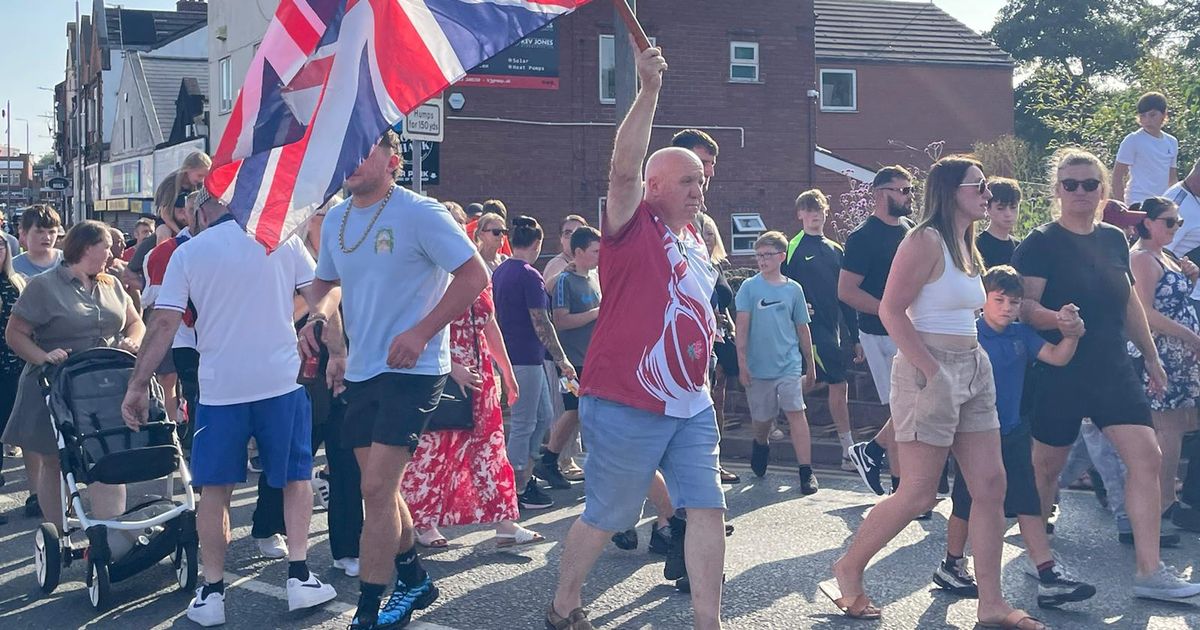
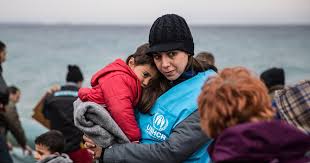
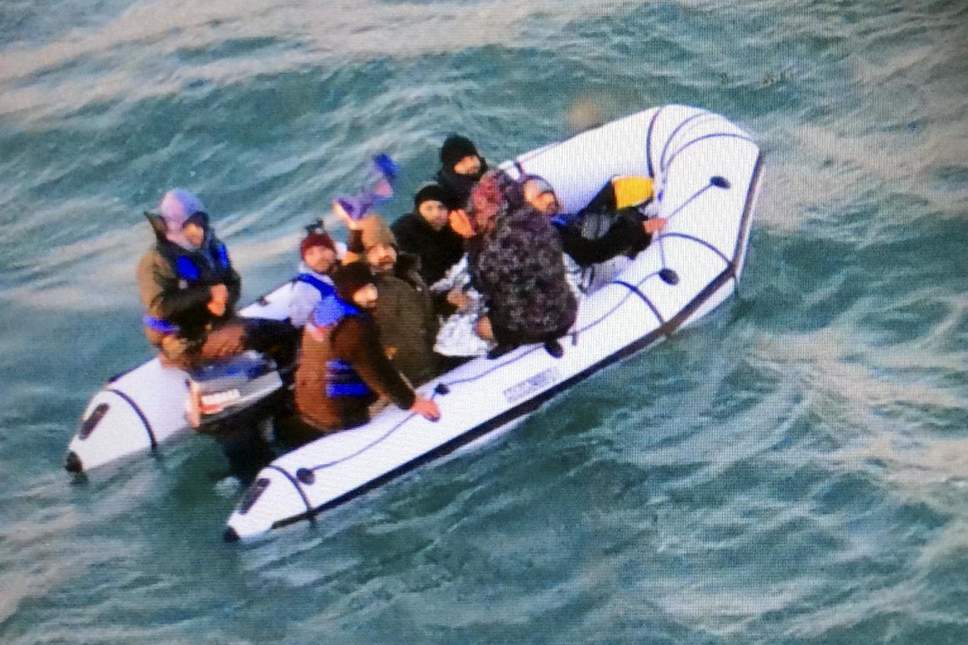
According to our home secretary (herself the daughter of immigrants) this is the problem we are facing, and she has the solutions to the problem.
The solution, it seems is to bring in the most draconian policies against refugees ever attempted.
Why are we doing this?
Is this really a necessary corrective to an unfair, out-of-control, chaotic situation that is dividing our country? Is this about taking back control of our borders and keeping our streets safe from marauding gangs of rapists and pick-pockets?
Or is this just performative cruelty, intended to assuage the far right scapegoating of a tiny minorty? The desperate move of a deeply unpopular government lead by a prime minster seeminly devoid of an ideas that might bring hope of compassion to a country beaten down by cost of living rises, decades of austerity and rampany inequality.
It is almost as if the people who arrive here seeking asylum are not people at all… as if their pain is not our pain, as if it belongs elsewhere. We can justify this lack of compassion only by asserting our own victimhood, and it is this that Reform and Tommy two-names are exploiting as a political blunderbus, aimed downwards at those most vulnerable.
Labour appear to have decided that the answer is to get a blunderbus of their own.
What we are not seeing in this ‘debate’ is any real attempt to address the so-called refugee crisis on the basis of facts. The ecomonic/demographic analysis of the impact of refugees in this country is always secondary to political perspective and the fear and hatred whipped up by those able to use it as a political weapon. Lets push back on this if we can. What can we say about the numbers?
Is the UK facing a particular problem not seen elsewhere?
Well, in terms of numbers of assylum seekers per head of popuation, the UK is in 17th place in Europe so this is clearly a global problem, not a UK problem. If the ratio of brown faces to white faces is the concern here (and I think it might be that simplistic for many) then despite our colonial history which makes our connection to – and responsibiity for – many of the most troubled places in the world, still there are 17 nations within Europe that take more people than we do.
Are there too many people here already?
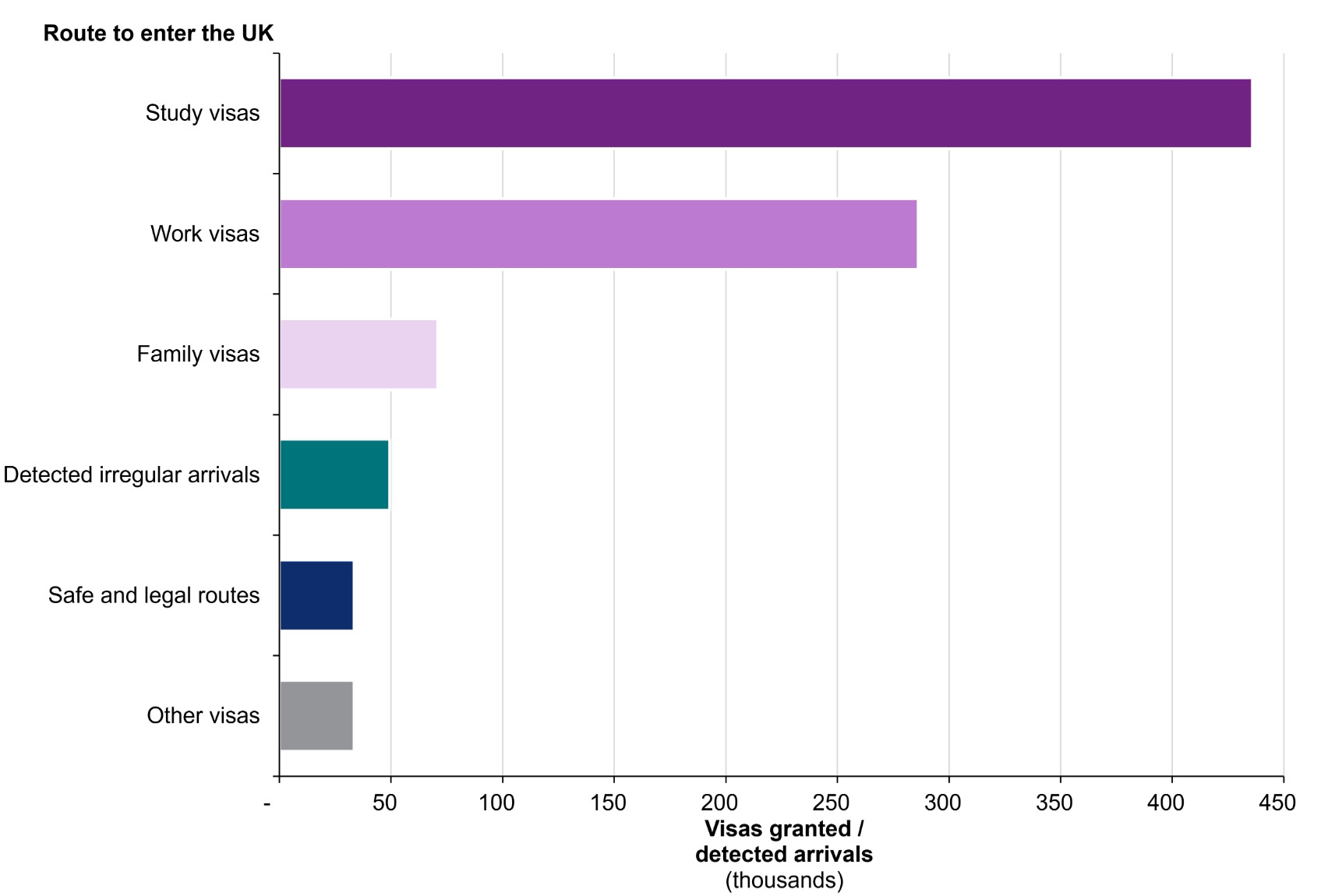
Is Britain full? Are we being overwhelmed? Numbers can be so difficult to get our heads round, but here are the stats for this year’s immigration to this country from the UK government’s own figures.
The vast majority of immigration into this country is people who come here to work or study.
Is the system broken and out of control?
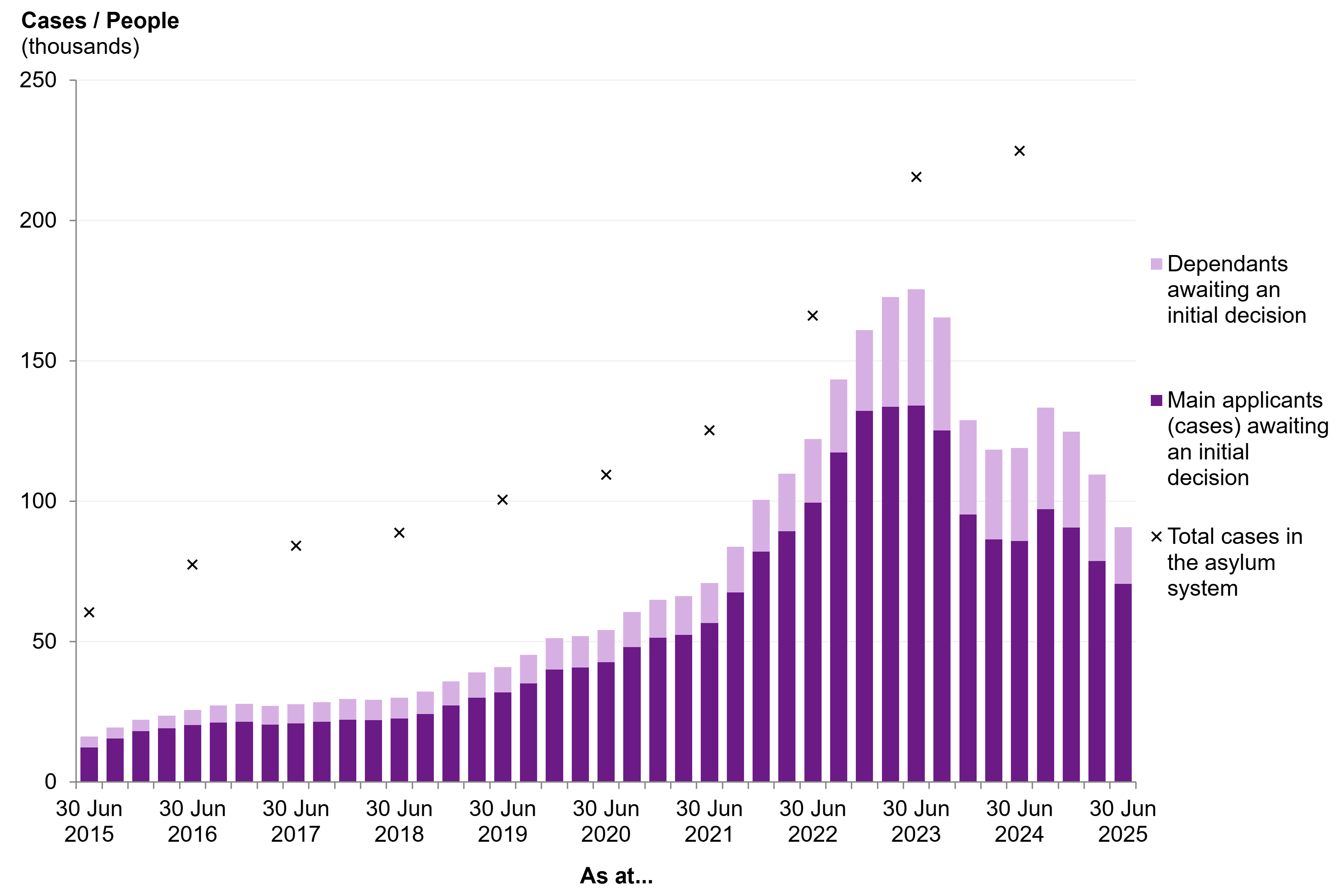
Here are the numbers of people who are currently in the asylum system, waiting to be processed. As in the Channel 4 documentary clip above points out, people in this system have years of waiting, followed often by seemlingly arbitary and draconian decisions which then go back to court, and meanwhile people live half-lives of waiting in poor accomodation, excluded from participation in economic or community life.
We perhaps have to conclude that this system is indeed broken, but that this has been the result of political choices driven by ideology of the sort that Labour are now embracing.
Are migrants a drain on our economy?
This is certainly the message we see pounded out repeatedly on our media outlets – the cost of hotels, the fact that the NHS cannot cope etc etc.
Leave aside the fact that asylum seekers are not allowed to work, or that the benefits they recieve are miniscule (£49.18 per person per week if they live in self-catered accommodation, or £9.95 per person per week if meals are provided. This money is loaded onto a pre-paid debit card and is intended to cover basic needs like food, clothing, and toiletries.)
Leave aside also how the NHS, and many of our other institutions are dependent on immigrant workers to sustain their activities, or the fact that our aging population desperately needs the creativity, vitality, youth and enterprise brought by incomers.
And consider this report which offers wholy different approach to that which our Labour government are pursuing;
Welcoming Growth – the case for a fair and humane asylum system is a new policy report, supported by PCS, which has launched today (17). The report reveals that every refugee accepted into the UK would contribute over £260,000 to the UK economy if the proposed changes within the report were adopted. This includes a net benefit to the public purse of £53,000 each.
The four key policy changes within the report include:
Asylum claims to be processed within six months
Legal assistance at all stages of the application process
English language support from day of arrival
Employment support from day of arrival.
Speaking ahead of the launch in parliament, PCS general secretary Fran Heathcote said: “Today we are witnessing the government neglect its own plans for growth by taking a harder line against some of the most vulnerable people who come to this country, fleeing war, persecution and violence. To threaten refugees with the removal of their only belongings to pay for their cases is frankly a line I would expect from Reform.
“Our report shows that through embracing a humane and fair approach to asylum we could assimilate refugees into our communities whilst ensuring they can contribute and support themselves. This report provides positive solutions, not divisive decisions which continue to fan the flames of hate.”
Other key findings within the report include:
Overall economy – The four changes to the asylum system would mean a contribution to the UK economy from every refugee of £265,788 over 12.5 years from arrival.
Accommodation – The changes to the system would result in a net saving in accommodation costs of £42,000 per asylum seeker over a 12.5-year period from arrival. This equates to a 34% saving in the total cost of accommodation for asylum seekers over the period (from £144,000 to £79,000). This is because by expediting the application process to six months, people can be self-sufficient sooner – meaning housing costs would be paid by the individual, rather than the state, a year earlier.
Public Purse – The four interventions in the model would benefit the UK exchequer by £53,000 per refugee over 12.5 years from arrival. This includes a net contribution of £7,000 for every refugee to the public purse just by expediting the asylum application system to six months and providing legal assistance throughout the process. This financial benefit takes into account all the associated costs of supporting asylum seekers from arrival, as well as the expense of creating and implementing the four proposed changes to the asylum system.
Employment – Every £1 invested in English classes and employment support from day one results in £9 in increased salary–over the 12.5 years from arrival. This equates to a 76% increase in total employment income, reflecting the cumulative effects of faster processing, language training, and employment support. This, in turn, means significant benefit to the economy and public purse.
The London School of Economics (LSE) report, commissioned by PCS and Together With Refugees
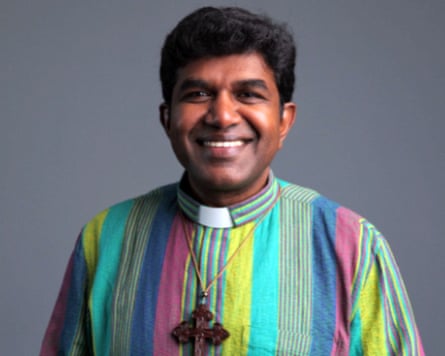
If then, these draconian, punishing proposals by appear NOT to be based on actual research, or on factual understandings of the challenges brought by the arrival of refugees on our shores, why are they being proposed at all? I was so heartened to read these words from Rt Rev Dr Anderson Jeremiah, the bishop of Edmonton.
“We are scapegoating asylum seekers for the failures and political divisions caused by successive governments in the last 15 years – the failures of successive governments to address wealth inequality, funding for education, the cost of living and primary healthcare and infrastructure.
“Every day I meet homeless people who have fallen through the cracks in our system. And yet in singling out asylum seekers we are laying the burden of society’s problems on less than 1% of the UK population – when the number of millionaires and billionaires is on the rise.
Rt Rev Dr Anderson Jeremiah: ‘We can’t isolate one section of people and label them as a problem that can be easily addressed.’ Photograph: supplied
“There are politicians who are trying to hold on to compassion in public life. But at the same time there is a pressure to have a singular problem on which all things can be blamed.
“But we are a connected society. Our environmental crisis is deeply connected to the conflicts which lead to people to our borders. We can’t isolate one section of people and label them as a problem that can be easily addressed. If one part of the body hurts, it hurts the entire body.”
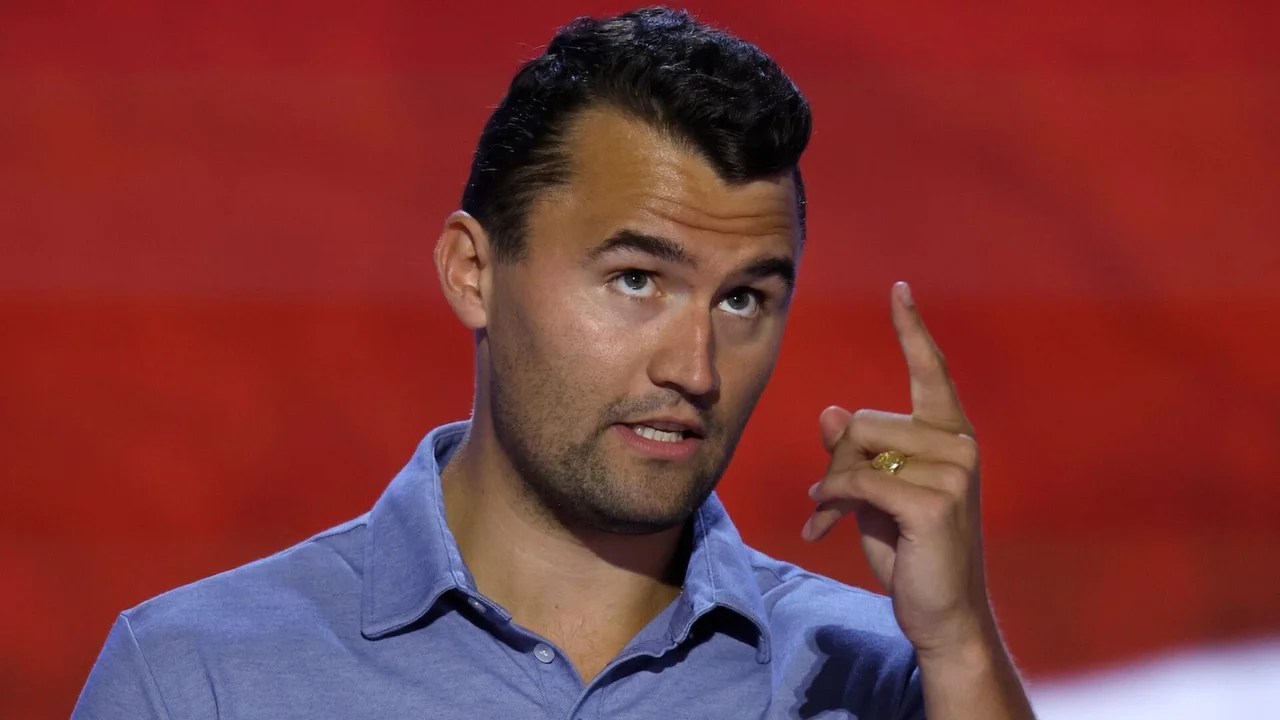
Even from here in rural Scotland, the death of a 31 year old hard right Christian gun advocate has been inescapable. Perhaps it was the horrific irony of the moment of his death- shot during a discussion about gun violence, or the controversial nature of many of his views, most of which where framed in Christian language as if from some kind of MAGA prophet.
For many on one side of the political divide, he is a martyr for his faith, achieving the Protestant equivalent of sainthood. His ’cause’ is a like a flag to be picked up on the battlefield against rising hoards of athiest islamic left-wing nut-jobs massing at the border seeking to replace the great American theocracy with trans-gender abortion and lesbian weddings.
Meanwhile, over in the other camp, people are actively celebrating Kirk’s death. A young father, aged 31, cut down in his prime is an evil that has been greeted with glee. There have been righteous protestations of condemnation of violence, but always these have been posed alongside discriptions of the outrageous things that Kirk said and represented. The message is clear- he brought this down on himself.
What might this moment represent to us with the hindsight of history? Might it be the moment when we realised that the politics of polarisation an only ever lead towards violencehat – that this kind of language, when used quite deliberately as a political strategy to breakthrough democratic deadlock, might destroy our fragile peace?
Or will it instead mark the point when that destruction entered a new phase towards the end game that was to come? Only future-us can know the answer…
Two important issues stand out to me. The first is this one;
Hyper-polarisation
Perhaps this article from back in 2016 – which already feels like an age ago – is a good place to start in understanding this phenomenon.
Bringing all of this together in Why Washington Won’t Work, Marc Hetherington and Thomas Rudolph paint a picture of a nation overwhelmed by dislike and distrust of the other side and, consequently, a political process incapable of compromise and mired in gridlock. It is easy to see how this sort of distrust and dysfunction manifests itself in assumptions about the motivations (malice, greed, bigotry, moral bankruptcy, or most charitably, naiveté) of those on the other partisan team. Those on the other side no longer just disagree about the issues, they are bad people with dangerous ideas. This paves the way for efforts to delegitimize electoral outcomes and the leaders they produce by way of conspiracy theories and claims of fraud and rigging. Perhaps most dangerously, it also can be used to justify nearly any effort to thwart the opposition.
Let’s be clear- this phenomenon is not going away. In some senses this is because it is a deliberate political strategy- create division using simplistic fear-based stories then exploit this opening by offering a ‘solution’. This is pretty much the whole strategy of The Reform party in the UK, but you can find plenty of examples on the left too. The Cambridge Analytica saga should have been the moment of awakening on the danger to our democracy of this kind of politics, but this seems to have been largely forgotten. Rather than choosing to find ways of regulating and reforming, we moved on.
Polarisation is also an emergent property of our increased reliance on social meda, both in terms of the way that algorythms feed us ever more extreme versions of what it feels will engage our interest, and also because of how we increasingly export a part of our ‘selves’ in the form of on-line avotars that then become places of disembodyment and almost ritualistic tribal defence and offence cycles.
Polarisation perhaps also emerges from our own fragile bruised humanity. This from here;
central theoretical assumption is that ideological extremism is rooted in a psychological quest for personal significance: A desire to be respected and to matter in the eyes of oneself or important others (Kruglanski et al., 2014; see also Webber et al., 2018). People can acquire such a sense of personal significance through the combination of many sources, such as family, work, and the pursuit of meaningful goals. Sometimes people may experience a loss of significance, however, when they encounter grievances such as humiliation, injustice, or insecurities. Such grievances prompt a sense of meaninglessness, and therefore stimulate a desire to restore a sense of personal significance through a worldview in which perceivers are focally committed to specific ideological goals. Put differently, extreme ideologies help perceivers to restore a sense of significance through a worldview in which they appear to be supporting a meaningful cause.
Some studies have pointed out the way that this ritualistic process might be compared to religion, in the way that it becomes a set of goggles – or a hermaneutic – through which all facts or opinions become mediated, and this takes us to the second of the issues that occupy my thoughts in relaiton to this dreadful shooting.
Christianity and extreme ideology
Kirk’s avowed and much proclaimed Christian faith has been a central part of both his political activities and the subsequent narrative around his death. As someone with many friendships and social media contacts with people across the spectrum of the Christian faith, I was still a little shocked when I read a post this morning that said something along these lines;
So touched by his life and story. At his heart was communicating deeply held truth and wisdom in many matters, in spite of the flack, and the risk. He might have been outspoken but to me he clearly had a heart to teach, demonstrate and guide a generation of whom so many are lost. When society is chaotic and unstructured people suffer, when we accept God’s ways for life there is joy, peace, security. Above all of his debating he said faith and finding Jesus is most important. Tonight I’m praying people once again find their identity in Christ, who is a firm foundation to build our lives on. Praying Christians can speak the truth in love to a world that needs to hear it.
My first response to this was through the lens of my own place on the polarised spectrum. Had this person not seen all the lies, the misogyny and racism? Had they no concerns about the rise of American Christian nationalism? Surely they must recognise the disconnect between the way of Jesus and the politics Kirk espoused?
Then I stopped and started to think about how extreme narratives are pulling at us all, particularly in the religious sphere. We, above all, have to find ways of building bridges, not barracades. It seems that – sadly – we religious people are very much part of the problem. This from here.
Conservative and liberal Christians, like all liberals and conservatives, are inclined to denigrate those on the other side of the political spectrum; and each side is convinced that the other side is treated more leniently than their own side in the media, and by other third parties that try to give an objective account of matters under dispute (36–39). However, how have Christians on the two sides of the political divide dealt with discrepancies between their own political positions and the apparent dictates of their faith? Some, no doubt, have felt pressure to moderate their positions to achieve greater congruency with traditional Christian teachings. Others may have narrowed their reference group and, for those whose faith is highly central to their personal identity, engaged in attempts at persuasion and proselytism. However, we argue and attempt to demonstrate empirically, contemporary American Christians also have adjusted their perceptions of Christianity itself. More specifically, they have adjusted their perceptions of the political positions that Jesus of the New Testament would hold if he were alive today.
A provocative series of studies by Epley and colleagues showed that the egocentric tendency to believe that others share one’s beliefs is more pronounced when individuals are asked about God than when they are asked about the average American or various prominent individuals (40). The present research is distinct from those studies insofar as its focus is more specifically on such “projection” in the views and also the priorities that liberal and conservative Christians attribute to Jesus Christ. Our specific hypotheses are very much in the dissonance tradition (26). The dissonance researchers reversed conventional formulations by focusing not on the effects of attitudes on behavior but on the effects of behavior on subsequent attitudes. We essentially reverse conventional formulations by focusing not on the effects of religion on political views but the effects of political views on the content of religious beliefs.
What can we do about it?
There is the question.
The egotistical polariser in me wants to call out the lies and wrong doing of the other. The peace maker in me wants to draw us all back towards compassion and the way of love as a precurser to all things. I want the latter to win, in me as well as the world…
… and so I choose to tread carefully. I try not to do battle, particularly one line. When I do so, I try to make sure that I react in service of justice for others, not myself.
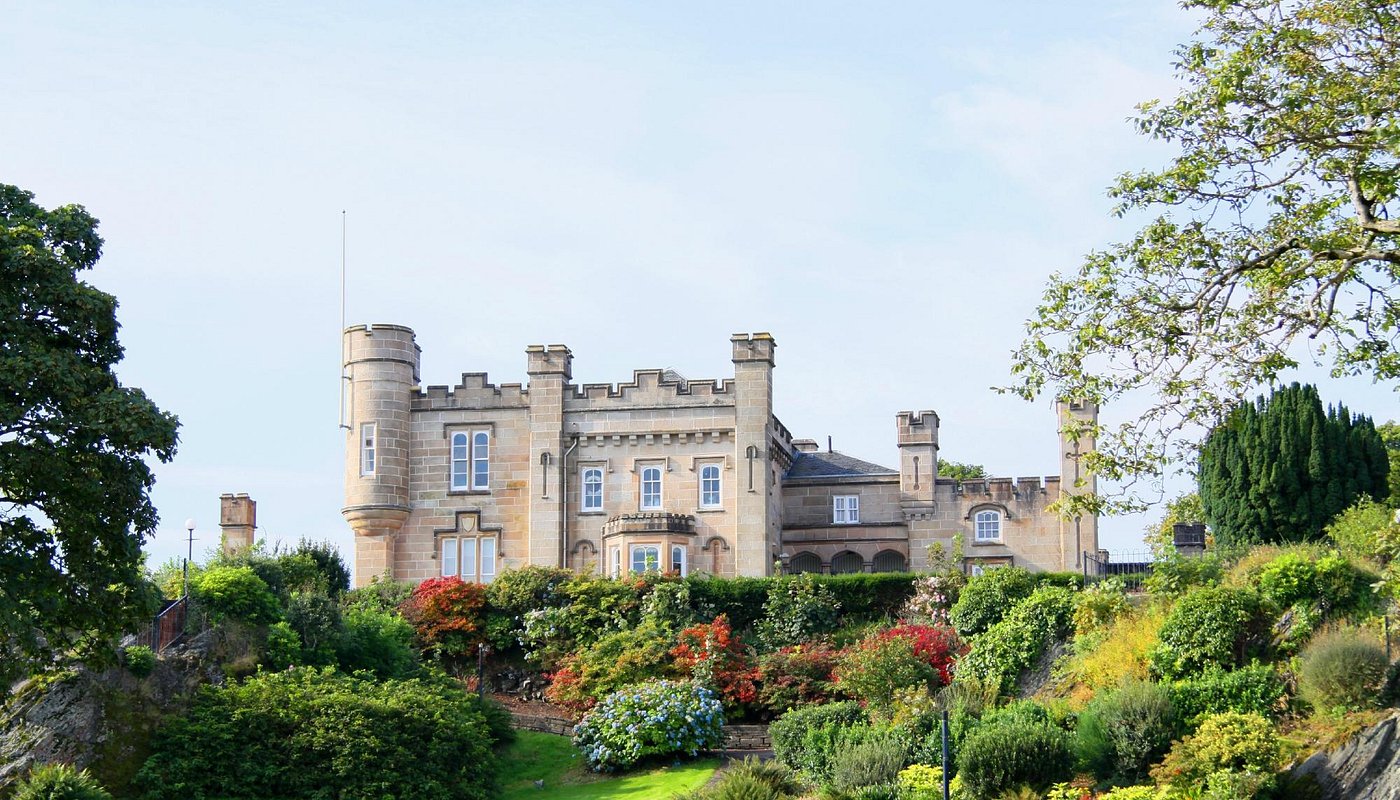
This is Castle House, the large holiday home built by James Ewing, Lord Provost of Glasgow, as a holiday home in 1822. It put Dunoon on the map, literally, and became the start of a move to Cowal peninsula (where I now live) by many of Glasgow’s great and good, who built their versions of the Castle all along the shorelines in every direction.
A few months ago, Michaela and I went to a talk given in Castle house – which is now a museum – by Dr Stephen Mullen, on the subject ot the aforementioned James Ewing. In this talk, Ewing was revealed as a particularly unpleasant figure, whose power and influence was built on vast wealth built from slavery in Jamaica. More than this, through his political activities, clubs and networks, he was able to delay the abolition of slavery for decades, as well as being part of the negotiaton that led to compensation being paid by the government to slave owners.
His ancestors still own plantations in Jamaica to this day.
This is a version of some of the chat from Stephen Mullen- he is a very engaging speaker.
In the wake of this inglorious wealth building, Ewing then turned to philanthropy. He became the benefactor to many good causes, including Glasgow University, who have been through a very painful process in 2018 (assisted by Mullen) of attempting to divest and compensate enslaved people for the wealth that it still owned from their brutal enslavement.
It has taken Edinburgh University longer- today, the role of leading figures in promoting racist and zenophobic ‘science’. This from today’s Guardian;
The University of Edinburgh, one of the UK’s oldest and most prestigious educational institutions, played an “outsized” role in the creation of racist scientific theories and greatly profited from transatlantic slavery, a landmark inquiry into its history has found.
The university raised the equivalent of at least £30m from former students and donors who had links to the enslavement of African peoples, the plantation economy and exploitative wealth-gathering throughout the British empire, according to the findings of an official investigation seen by the Guardian.
The inquiry found that Edinburgh became a “haven” for professors who developed theories of white supremacism in the 18th and 19th centuries, and who played a pivotal role in the creation of discredited “racial pseudo-sciences” that placed Africans at the bottom of a racial hierarchy.
It reveals the ancient university – which was established in the 16th century – still had bequests worth £9.4m that came directly from donors linked to enslavement, colonial conquests and those pseudo-sciences, and which funded lectures, medals and fellowships that continue today.
Does any of this matter? Is it not just ancient history, from different, less ‘woke’ times? Of course, there are many voices – historical, political, journalistic – that would loudly proclaim processes of revisionism such as those undertaken by the two universities above as political correctness gone mad.
Some of this argument has polarised around the renaming of streets, or the removal of statues. The issue has become totemic in the culture war that is raging in our politics – a convenient way to create outrage, and to appeal to a kind of empire nostalgia for Great Britain and her glorious history.
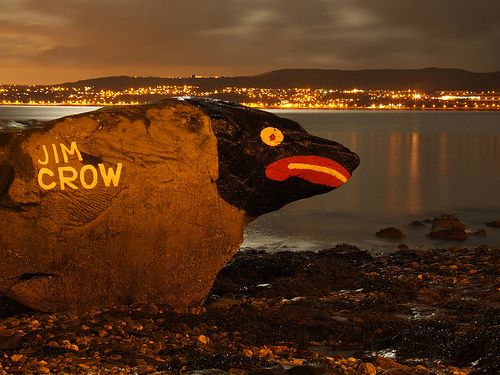
Dunoon had its own battle, over this racist Victorian grafiti which survived until only a few years ago. Some here will still insist it was harmless fun (including local historians!)
Presently it feels as though the anti-woke warriors might be winning the culture wars. Views that might once have been politically radioactive are now seen as vote winners. Trump and all his imitators compete to say ever more outrageous things, and point to any attempt to understand the darkness that we unleashed on the world through the Empire as ‘the problem’ not the solution.
I am weary of culture wars. I wish we can just agree that some things are good (compassion, justice, peace) and some things are bad (conquest, slavery, exploitation.) Once we do this we also have to acknowledge that the privileges we enjoy in this country- despite the perception of decline – were built on the bad things more than the good.
What we do with this conclusion marks us for generations.
Feeling powerless in the face of such egregious injustice can result in a loss of trust or faith, not just in governments and institutions but also in the moral order of the world, and its ability to protect children. I wonder what the impact of this will be: will it, as certain politicians no doubt hope, result in a numbness that presents as indifference? Traumatic events can result in a lack of affect – millions more people should be marching and raising their voice – but they can also be channelled into righteous anger.
I certainly feel a profound loss of faith. Something I felt to be true about humanity – that people are fundamentally good, that we owe it to children to protect them – has shifted because of this conflict. I walk around with a feeling of heaviness that I cannot seem to shake. Thousands of miles from Gaza, I am changed by the past 18 months. I have learned that, for some people, compassion for children has political limits. What does one do with that terrible knowledge once it sits inside you like a leaden stone? I don’t seem be able to find an answer.
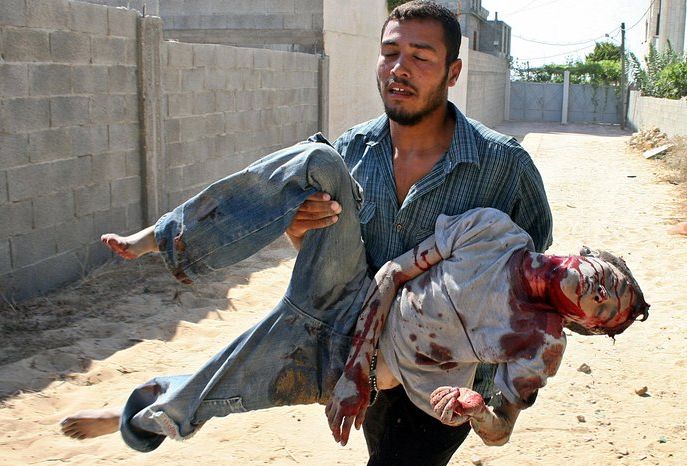
Whilst, I refuse to join her on her loss of faith in the goodness at the heart of humanity, It is impossible not to agree with the seeming numbness we feel towards the on going horror unfolding in Gaza. Like the photo above, we look from distance – worse than this, we look only through the goggles we are given.
A channel 4 news report yesterday made the rather sobering point that the images of dead and starving children in Gaza are NOT SHOWN in Israeli media at all.
This is shocking, right? Can it really be true that in this so-called bastion of democratic liberal western civilisation, media outlets are so compliant as to generally not show the consequences of Netanyahu’s vengeful war crimes?
But what about the rest of us? How is it possible to see reports like this and ignore the human suffering – to demote it to something less important than OTHER human suffering, or even worse, render it as necessary for the pursuit political or economic expediencies?
Or even worse than that – obscure it behind religious doctrines, like Zionism?
We are all living in the shadows cast for us by algorithms made from our search histories, our viewing habits, our social media connections. To pretend any of us are free from influence or constructed sectarianism is foolish indeed. However, what is happening just now is more than just the consequences of our media bubbles. In the face of such horror, we have switched off.
Some of us have stopped looking, others never looked at things like this in the first place.
Let me tell you a story. I must be careful how I tell it, because I do not want to create more hurt and division. It is a story in which I am certainly not the hero – in fact it is one that ends in defeat. Perhaps I should have titled this piece ‘How not to speak to Zionists.’
In the early days of the current Israeli invasion of Gaza, I posted this on a forum I was hosting. It was a discussion about using art, spirituality in the service of social justice, and I was interested in the fact that a church in London had hosted this gathering.
I then found myself in an extended discussion via message and e-mail with a friend who saw things very differently than I did. Their concern was firstly about Roger Waters, who they felt was a proven antisemitie.
As the discussion went on, it became clear that my friend also believed strongly that the protests against the war in Gaza within the progressive Christian circles we had both moved in were also antisemitic, and that the use of words like ‘apartheid’ and ‘genocide’ in relation to Israel’s necessary war – triggered as it was by the horror of October the 7th – placed Jews all over the world at risk.
Our discussion was always polite, but we were never able to find much common ground, despite having so much else in common. My friend shared how, when the October the 7th events were unfolding, they had felt a huge collective wave of fear, related to the past persecution and present uprise in antisemitic attacks all over the world. The very present need for a modern state of Israel as a home for Jews was a holy, Godly pursuit in this context. It was Shiloh.
In return, I tried to talk about the generations of injustice and increasing oppression of the Palestinian people, and how Zionism has had terrible consequences for indigenous residents of the Holy Lands. I raised the issue of the West Bank settlements and abandonment of the rule of law. The shooting of children throwing stones. The forcing of people from their homes and ancestral lands. The unequal health and educational outcomes and so on.
I tried to talk about those cases in which war crimes by the IDF had been investigated – for example the terrible case of Hind Rajab, the 6 year old killed beside her family whilst on the phone to the emergency services – and the ambulance staff killed trying to reach her. My friend became quite irritated, saying that ‘we can all find terrible stories’ and anyway, ‘the IDF is the most humane army in the world’.
In the end, all we could do was agree to differ, and to go our seperate ways as the terrible war continued to get worse and worse. As thousands more children died under the rubble.
I often found myself thinking about our conversation though. I even wrote this poem in an attempt to process it all in my head;
.
Victims
.
My victims are more victimised than yours
She said, pointing to the blown-out bus
And the young bodies under blankets
Swimming in pools of broken glass
.
My genocide is more genocidal than yours
She said, pointing to a pile of scuffed shoes
To empty wooden huts behind rusted wires
And a yellow star on a stained jacket
.
The prejudice we experience is more prejudicial than yours
She said, pointing out the broken synagogue windows
The graffiti and the students protesting peacefully
In a public park
.
She must not know about Ahmed’s beautiful little sister
There was a time when it seemed like the war in Gaza might be over. A very unequal ceasefire was negotiated and prisoners were being exchanged for hostages. Bodies were being pulled out from beneath the rubble of hospitals, schools and mosques. People were making the long walk home, or at least to the pile of rubble that had once been their homes.
Meanwhile I was still wondering about my friend and feeling uncomfortable with how our discussion had ended. I was also wondering if they had changed their position at all, so I reached out again and asked if they wanted to talk. This time it would be face-to-face, via Zoom. My friend graciously said they would like to do this, and suggested that we start by watching this video;
I watched this video twice. I have a background within the social sciences, so have spent a long time thinking about prejudice, racism and scapegoating. Antisemitism seems to me to come from the very worst of what we are and can be as humans, and I have no argument with almost all of what Sachs has to say in this video. We need to understand how people from a Jewish background feel in the face of rising antisemitism across Europe.
This fear seems to be a big part of my friend’s desire for people like me to stop using pejoritive terms like ‘genocide’ in relation to Gaza. As far as they are concered, this produces direct results in the form of antisemitic attacks.
But there is more we have to talk about in relation to this ugly phenomenon. Firstly, it is not just antisemitic attacks that are increasing, but also anti-islamic violence, which has grown three times more, according to this report by Hope Not Hate.
Tell MAMA, the leading agency on monitoring anti-Muslim hate, has recorded a 335% spike in hate crimes from 7th October 2023 to 7th February 2024 compared to the same time period the previous year, a record high since the charity began in 2011.
British Jews have also faced similar consequences, as events in Israel and Palestine frequently drive increased antisemitism in the UK. The Community Security Trust (CST) recorded reports of 4,103 anti-Jewish hate incidents in 2023, a rise of 147% compared to 2022. Two-thirds of incidents happened on or after 7th October, a 589% increase in reports from the same time period in 2022.
It seems to me that we are now in a strange new world in which the far right – previously the political engine for so much antisemitism – are confused by the fact that Netanyahu’s governement is also on the far right. A lot of that hatred has been redirected towards Muslims, but a lot still remains. Add to that the way that the concept of antisemitism has arguably become a political weapon to silence dissent – used with no sense of irony by right wing newspapers such as the Daily Mail (despite its own shameful record of antisemitism.) There are also the murky waters of Labour party politics, in which the labour left has been silenced in the face of its apparent antisemitism. What we are left with is a new landscape in which hate is rising and old politics are being destablised and undermined. VIolence is always likely in these circumstances.
Where does this take us in relation to Zionism and the war in Gaza, which has now entered a new phase in which ethnic cleansing is being openly talked about as a military aim? In which starvation is talked about by Israeli ministers as a legitimate tactic to drive Gazans out of their land? This was all yet to kick off again when I was talking to my friend, so instead I tried to ask what might be the common ground we could find. I also wondered whether their position had shifted at all – if their views had changed in the face of such overwhelming slaughter and destruction.
It seemed clear that there had been no change at all in the views of my friend. I was genuinely perplexed at this, as I felt them to be a good person, full of spiritual depth and insight. How could the scale of death and destruction not have evoked some kind of empathetic response, critical of the actions of the perpetrators of such slaughter?
The first problem was how to agree on the nature of this death and destruction when you can not agree on the validity of sources of information. My friend made it clear that he no longer consumed any media sources apart from The Times of Israel, because all other sources of information – including the BBC – were biased. This newspaper does seem to be fairly centrist in its approach, but a centre media bias rating does not necessarily mean a source is totally unbiased, neutral, perfectly reasonable, or credible, just as Left and Right don’t necessarily mean extreme, wrong, unreasonable, or not credible.
The only defense against limiting our perspectives is surely to do our best to read outlets across the political spectrum. This is a hard lesson for us all, as we tend to look for articles that confirm our bias or become ways to point out the ‘wrongness’ of the other but without this effort, it is perhaps no surprise that my friend had made no journey of discovery.
The next problem was a religious one, in which my friend said something like this;
Here’s a thought. I wonder if my perspective is a big picture one, yours a close focus. Both of which are important, both of which can learn from the other?
Your perspective is particularly focussed on the misbehaviour of the state of Israel, tiny but in comparison with its close neighbours strong. So the reactions of the IDF in Gaza loom large.
Mine is a big picture, long-term view, shaped by the Shoah and centuries of antisemitism, seeing the current conflict as just the latest example of ongoing concerted attempts to kill Jews and to destroy their place(s) of safety. We are in a struggle for existence.
Was it about the fear we mentioned earlier, leading to a kind of bunker mentality in which survival seems to justify such punitive violence, even for good people like my friend? I can only speculate as pretty soon, our conversation ground to a halt. In the face of the comment above, I found myself writing this rather harsh, angry reply;
I honestly find the idea of it incredulous. I cant go with the big picture/close picture split, no matter how neatly this might enable us to place things.
The ‘big picture’ you describe is entirely one sided. It does not engage with the complex history of the Palestinian people, or the history of violence, displacement, breaking of international laws that have stemmed from that.
My exasperated and rather unkind response- via e-mail too, rather than face to face – was the end of the discussion.
I wish we have been able to talk about a different kind of common ground- after all, we are both followers of Jesus, and yet we spent no time at all seeking to place the teachings of Jesus into this dreadful context. I think I felt like this would have been to use Jesus as a stick to beat my friend with – Jesus as a dialectical debate weapon – which did not feel apprporiate, but in hindsight, I still find myself wondering why this was not our common ground.
Might talking about Jesus have made us think about what loving our enemies or seeking to be peace makers in this context might have looked like? We will never know I suppose. We missed out on this particular blessing.
Clearly I am not the person to answer this question, but talk to them we must.
We have to understand each other, to humanise and seek compassion, particularly with those with whom we have a disagreement. Particularly in a world in which violence is increasingly seen as a legitimate response to political, religious or geographical difference.
Perhaps we have to start too by understanding the way fear works, particularly the legacy of such global hate as the Holocaust. How it is weaponised by people like Netanyahu and his media machine. How it is fostered and monetised by the algorythm.
But we must go beyond fear, back towards compassion. We must name those who are victims on both sides, not just the Israelis. Not just the Gazans.
We must call out the war makers for what they are – on both sides…
…and we must grieve for the children, who grow in this polluted, toxic rubble we have made for them.
What has been happening in the meantime? The lovely Pope died. Trump has continued Trumping. After a fragile ceasfire, Gaza became a killing field again where genocidal racists do their worst. The Labour government has made a scapegoat out of the poor, cutting benefits that were already slashed beyond the point where they could sustain healthy life… this list is dragging me down down down so I had better stop.
Another thing that happened was a that the High Court here in the UK made a ruling – based on an interpretation of existing law – that concluded long-running dispute between some feminist advocacy groups and the Scottish government. It has been an ugly dispute, and the organisation supporting the action (For Women Scotland) has been backed financially by author J K Rowling, herself a divisive figure in this area.
This from Al Jazeera, here.
On Wednesday, five judges ruled unanimously that the term “woman” in the existing UK Equality Act should be interpreted as only people born biologically female, and that trans women, even those with GRCs, should be excluded from that definition.
The ruling further clarified, therefore, that trans women can be excluded from certain single-sex spaces and groups designated for women, such as changing rooms, homeless and domestic violence shelters, swimming areas and medical or counselling services.
“Interpreting ‘sex’ as certificated sex would cut across the definitions of ‘man’ and ‘woman’ … and, thus, the protected characteristic of sex, in an incoherent way,” Justice Patrick Hodge said while summarising the case. “It would create heterogeneous groupings.”
The court added that the ruling was not a “triumph” of one side over the other, and emphasised that transgender people are still protected from discrimination under UK law. However, some protections, the judges clarified, should only apply to biological females and not transgender women.
The campaign to limit the interpretation of sex has gathered much right-wing religious support, but I ave found it difficult to come to a clear view of this for myself. On the one hand, I see just how marginalised transgender people have been, and how dangerous this has been both in terms of violence and exclusion, but also suicide rates. On the other hand, the debate between different kinds of feminists was difficult to understand.
This ruling has forced me towards seeking deeper understanding. Where to start?
I could dig into the biology- which is far from conclusive. This from Steve Chalke via X
Yesterday’s Supreme Court’s ruling was not based on science. Sex determination is not ‘self-explanatory’. Sex is not simply about genitals, but also sex chromosomes & DNA. Courts used to declare it was ‘self-explanatory’ that being gay was a perversion. They were wrong then too! I stand with trans people, made, like me, in God’s image! #NOLO
Then along came a brand new album by Derek Webb. It broke me. Called Survival Songs, it is an album offering love and acceptance to the gay and trans community.
This album did not ‘change’ my mind, but it solidified it.
Given a choice, I will stand with those who are marginalised and excluded.
Between Christmas and New Year, I started a petition.
It was a resonse to a number of things – how money buys influence in our political system and the increasing power of privately owned social media companies, with next to no accountability. There is so much evidence for the corosive affect this is having on our democratic system.
Think about how truth has become weaponised, how lies are now political praxis- not least the Boris Johnson litany of untruths (which he seems to carry no shame for) but also our current prime minister, who (arguably) lied his way to the leadership of the Labour Party.
Consider the Cambridge Analytica scandal, and how little has changed since. Where is the legislation that regulates such manipulation of our electoral system?
Now we have the spectre of a right wing party – actually, a company, owned by Farage – is being bankrolled hundreds of millions by a foreign businessman who has a history of ultra right wing libertarianism. The fact that Musk appears now to have fallen out with Farage only underlines the degree of chaotic intervention we are accepting within our politics.
What can we do to register our protest? Sometimes it feels like we can do nothing – but we can do this…
Please, sign this petition. If you can, give it a push on social media yourselves… Lets play them at their own game!
Elon Musk wants to fund Farage. This is the tip of the iceberg in terms of the way money and vested interests influences and shapes UK political narrative. We think this is a direct threat to our democracy, undermining and corrupting the whole project, leaving the door open for popularist extremes on both the right and left.
Money whould not buy influence. Neither should it be able to shape political narrative by controlling media – particularly our social media – to create shifts in public opinon.
We urgently need innovative and powerful new bill of rights to include the following;
Social media – a restoration of truth
We have to hold platforms like Facebook and X to account for spreading lies and misinmformation. We need to do this by the process of law. Huge conglomerates can not be allowed to shape our societies through algorithms. This requires meaningful fines and even breaking up the hold of individuals through monopoly laws. We need a powerful independent body who will hold all media to account.
Political funding and lobby groups.
We have to take the money out of politics. We are heading towards an American system where money buys influence. Make spending on political campaigns limited, and even public funded. Ban lobbying. Refuse Think Tanks access to media outlets unless they publish where their money comes from.
Political and corporate links to end.
If you work in an industry and then go into government, you cannot go back. No minister can take a cosy job on a board either whilst in office or afterwards. All contact between people in public office and commercial/private interests to be subject to a binding code of conduct.
Truth in political office.
Introduce a three strikes rule in public office. Establish public watchdog to police it. Hold all politicians to account for spreading misinformation and missusing statistics. Penalties on a slinding scale – starting with gagging periods in which politicians are banned from making public statements for fixed periods, right through to exclusion from public office.
Eight years ago, I wrote this, quoting Richard Rohr;
Our very suffering now, our crowded presence in this nest that we have largely fouled, will soon be the one thing that we finally share in common. It might be the one thing that will bring us together politically and religiously. The earth and its life systems, on which we all entirely depend, might soon become the very thing that will convert us to a simple lifestyle, to a necessary community, and to an inherent and natural sense of the Holy. We all breathe the same air and drink the same water. There are no Native, Hindu, Jewish, Christian, or Muslim versions of the universal elements. They are exactly the same for each of us.
It was an attempt to hold on to the idea that things would turn again towards good – in the wake of that first Trump victory in 2016. What I did not say in this post was that I wanted to be an active part of the resistance. I spent years writing and agitating, longing for better. Pleading for a world in which justice-making would push back the war mongers, the hate dealers and those who would exploit our human and non-human brothers and sisters for profit.
It almost seemed possible that the arc of history was turning. Trump lost. Bolsonaro lost. Johnson was toppled. But in a world of Starmer and Biden, any kind of radical shift was managed out of our expectations from the outset.
And now, the Mad King is back once more, vengeful in his dotage, full of fear and thunder, spewing lies and bombast, promising to prosecute an agenda that can only make things worse.
It feels like Nero, fiddling whilst Rome burns.
Perhaps this really is the fall towards the end of the civilisation we have known.
If so, this will not be the first time civilisations have fallen – in fact, they all must, eventually. You could even make a strong argument that would say ours is overdue. In his book Life After Doom: Wisdom and Courage for a World Falling Apart, writer Brian McLaren suggested that there were four possible future scenarios for our planet, based on current climate research- Collapse Avoidance, Collapse/Rebirth, Collapse/Survival, and Collapse/Extinction.
In Collapse/Avoidance, we heed the warning, take radical action, lower emissions, etc. The danger is, all we do is kick the can down the road for a further collapse in the future.
In Collapse/Rebirth we experience the pain of things falling apart – our lifestyles, our security, etc. and we finally wake up to the need to live differently on this planet. We consume less, throw less away, distribute more equally.
The other two outcomes I will leave to your own imagination.
But I can not go back to that same place I found myself in 8 years ago.
I learned that if you spend too long in protest – eating only bitter seed out of a half empty bowl – then you will start to lose yourself. You are in danger of just picking at scabs till they leak.
This is not to say that we should not stand against injustice – of course not. But this is not enough. We must also live and love.
This poem has become increasingly important to me, so I offer it here in a format we have previously offered to our patreon feed. I hope our patreons will forgive me, but it feels very necessary just now….
Tomorrow, we have an election. A couple of weeks ago, I watched this film, made in the constituency I was born in. I even know some of the people interviewed. The current MP is the pantomime villain better known as Lee Anderson. After I watched the film, I felt miserable about it all for days. Is this really the best of what people from where I grew up can reach towards?
Never before have I felt so politcally homeless, not even in the darkest days of Blair’s war years. Back then, even though I left the Labour Party, at least there were many within the parliamentary party who carried forward the traditions of democratic socialism, who worked for social justice and international peace. Those people are no longer welcome in Starmer’s Labour Party.
I should mention that i joined again during the Corbyn years, then left again when Starmer was revealed to have lied to the membership in order to win leadership. It still baffles me as to why there has been no political cost to him of these lies. The only answer to the lack of media scrutiny is that they have already decided that he will form the next government, come what may.
Starmer has inherited a situation in which he does not need to offer anything to the electorate. The Tories are so bad, that all he needs to do is to look ‘safe’ – to not frighten the power brokers or the comfortable folk of middle England. Throw in a bit of red meat for the disenfranchised working classes who have been fed all sorts of fears about immigration and he is home and dry. But he has gone a lot futher than that, purging the party of as many traces of Corbyn as possible, not least Corbyn himself. The justification is always this- it was necessary to be electable, and to secure a significant majority.
But has there ever been an election so devoid of hope? An election with so little new ideas in evidence? Instead we have the promise of more austerity, more poverty, more wealthy people getting wealthier.
I hope I am wrong. I hope Starmer has another three card trick up his sleve that makes me seem foolish. What is the point of a stonking majority if not to action a new political agenda? Perhaps he is about to reveal a whole set of radical policies the moment he rolls in to Downing street?
Even if he does not, perhaps there is enough evidence to suggest that some things will get better even under a leader as unambitious as Starmer? NHS waiting lists perhaps? A slight increase in investment in public services? Perhaps some genuine movements towards net zero?
This is as much hope as I can summon right now.
As doe my own vote, I am faced with very little choice. For the first time in my life, I can not in all conscience vote Labour. I would vote Green, but there is no Green candidate in Argyll. I have met Brendam O’Hara, who is a good man. Even though I am slightly worse than ambivalent about Scottish independence, I think it might be a vote for someone I beleive to be intelligent, honest and passionate about social justice. Not to mention his stance on Gaza.
Some say the SNP have been in power too long, and that Labour may be on the way back even in Scotland. If so, I hope Brendan will be still making speaches like this in parlament.
I saw a post on a certain social media platform yesterday that disturbed me. Perhaps this is foolishness, because surely what people splurge out into on-line spaces is mostly just ephemera, irrelevant to real life, so why give it any second thought?
Actually, we know now the power we have ceded to social media algorithms. Yes, there is much meaningless, dross and distraction, but also something much more sinister is in the mix, in part through unintended consequence, but also because of the deliberate manipulation by corporations (for profit) and politicians (for power.) Even when we consider ourselves aware and able to ‘read the feed’, we may be kidding ourselves. None of us are immune.
In fact, part of the reason this post disturbed me is because I don’t tend to see this kind of material in my feed. The algorithm understands me well and, in order to keep me hooked in, tends to deliver me material more sympathetic to the prejudices it has (correctly) identified. Or perhaps, in a more subtle way, a tweak in the algorithm is seeking my engagement in a different way, through outrage. After all, nothing titilates like offence. We all love our ‘rightness’ to be revealed by the wrong in others.
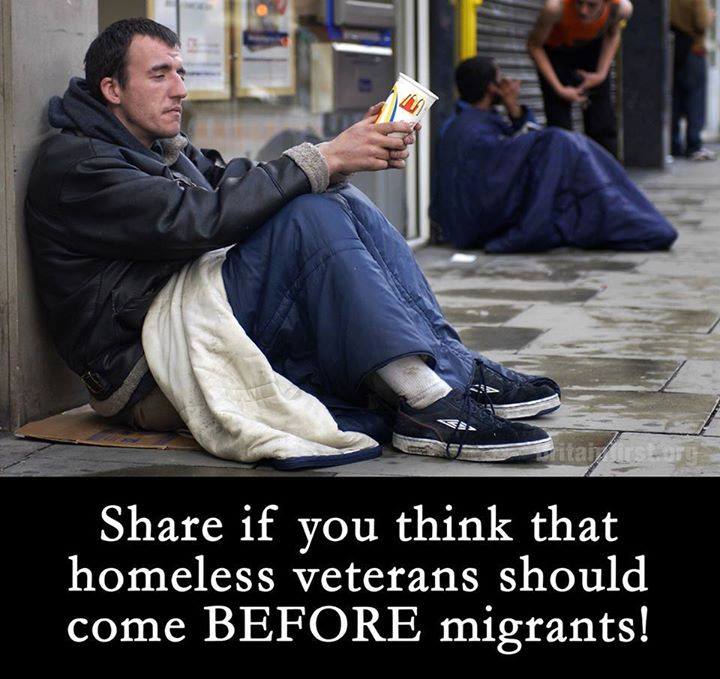
Here then, is the post in question. It was this picture;
One of my contacts had accepted the request and shared this to her feed, which was how I cam to see it. She is someone I went to school with a long time ago and have not spoken to for decades, but I remember her as a good person – a quiet, kind girl. The nature of social media links means that I only know her through her avatar now, which is full of family, love and horses. I wish her every goodness.
This connects me to part of my own story, growing up in a broken working class community, during the political and economic upheaval of the 1980’s, when Margaret Thatcher fought a war against the mine workers union in the cause of Hayek and free market. In my corner of Nottinghamshire this meant open warfare between striking miners and the police and eventually mass unemployment, poverty and a loss of community cohesion and pride. It is perhaps no secret that the current MP of this constituency is former miner (and former Labour party activist), Lee Anderson, whose bigotted ‘plainspeaking’ strident views have seen him elevated to the position of deputy chairman of the Conservative party. This transition from working class solidarty to a cruel game of blame-the-victim causes me deep shame for my place of origin.
I wanted to try to identify where this photograph came from. Google lens gives some limited tools to identify the origin of an image and as far as I can see, back in 2017, the photograph was first used by The Independent newspaper to illustrate an article by Sirena Bergman under the title of ‘Budget 2017: While pledging to help privileged house-buyers, Philip Hammond insulted homeless people across the country’. Back then, Hammond made comments about increasing taxation of cheap alcohol, which he calously and without anyevidence linked to homelessness, clearly playing to the gallery of middle English privilege.
In other words, this image was first used in an article which called out the scapegoating of the most vulnerable and broken people in our country. Here is some of what Bergman said;
The overt elitism in these measures is unfathomable. His comments on “vulnerable people” “cheap alcohol” and “so-called white cider” intentionally or not evoked images of the homeless population – currently standing at a quarter of a million people in the UK – and reinforced the idea that the privilege of not living on the streets gives us a right to dictate how they should spend their money.
Hammond did mention homelessness in his Budget – for about a minute, if that. He pledged £25m to tackle the problem, compared to the £10bn he’ll spend on helping people who want to buy a home.
Apparently, as a young person, home ownership is my dream. While I don’t doubt it must be nice to not be held hostage by exploitative landlords and have some semblance of security for my future, much higher on my list of dreams is to live in a world where the very basic of human rights – to have a roof over one’s head – is assured to every citizen.
I live in Hackney, one of the top ten boroughs of London with the highest levels of homelessness. In interacting with rough sleepers the number one issue people express is a lack of empathy from the public. They are ignored, mocked and abused for begging for spare change – an indignity no one should have to suffer. But a real attempt to tackle homelessness is non-existent in mainstream politics, where people who are out of work are vilified and homelessness is stigmatised and “othered”, despite the fact that one in three families are a month’s salary away from losing their home.
It is clear then that this image hs travelled a long way from it use in the above article. Google lens tells me that its first use associated with the words attached was by someone called Jerry Tilley on what was then called Twitter. I do not have an account on this platform anymore and so am thankfully prevented from a closer examination of Mr Tilley’s other offerings, neither can I be sure that he (if indeed he is a real person) made the image himself, but from a google search the account seems to travel alongside other right wing causes such as opposition to vaccinations. Division and scapegoating has become a feature mainstream politics both sides of the atlantic and perhaps Mr Tilley knows this well. Politicians and activists use this tactic because it works.
What about those veterans who are on the street though? Perhaps my response seems unsympathetic.
Are there a lot of street sleeping ex-service people? How many and what effort are being made to help them?
Is there evidence that the needs of other homeless people – particularly ‘migrants’ – are being promoted above our veterans?
Are veterans needs different to other homeless people? Are they primary?
(As an aside, when did we start using the word ‘veteren’ to describe ex-servicemen and women? It seems to me to be an American import, along with that sickly phrase that has to be intoned every time we meet someone ‘thank you for your service’. I would contend that this kind of solidier worship hides a lot of other problematic concepts, but this is for another time.)
Last year, Johnny Mercer, Minister for Veteran’s affairs, pledged to end veterans sleeping on the streets. He is an ex-serviceman himself, and placed a lot of personal capital in this issue, even saying on national radio “There should not be any veterans involuntarily sleeping rough in this country by the end of this year, and you can hold me to that!”. After news articles suggesting it had actually risen by 14% over the year, he had a very public argument with Carol Vorderman. Sides were taken, but the ‘problem’ remains.
Perhaps we should speak to pepole who are actually experts on homelessness and street sleepers? This article in the Big Issue magazine is perhaps a good place to start. Here are a few quotes;
It’s a matter that the UK government has been vocal in tackling – veterans minister Johnny Mercer has promised to end veteran rough sleeping by the end of 2023, calling the current situation “manageable”.
However, the strong connection between street homelessness and ex-services personnel is not always borne out in the statistics.
While the narrative of British veterans being left on the streets is popular with some quarters of the far-right, the Chain figures show that most veterans on London’s streets originated from outside the UK. Between July and September 2023, 44 British veterans were spotted on London’s streets compared to 92 people with a history in the armed forces outside the UK.
The Westminster strategy to achieve that goal specifically mentions veterans. It speaks about waiving a local connection to areas for veterans asking local authorities for help – a common issue for veterans who may move around the UK or have been away serving.
“It’s the first time there have been specific actions towards ending veteran homelessness,” said Buss-Blair.
“Having a viable route off the street is key. Ending veteran homelessness is eminently achievable.”
Measuring and understanding the causes of homelessness is never easy. It is by nature a hidden problem, and each homelessness story will be different. The common ’causes’ that often cited are sometimes refered to as the ‘eight D’s’- drink, debt, drugs, divorce, depression, domestic violence, dependency culture, and digs, meaning accommodation. These are true for everyone, whether veterans or not. But these ‘D’s’ seem oddly elastic, in that they become more powerful in certain social circumstances. Homelessness grows in situations of greater innequality and poverty, and when housing is short. If you raise the bar, then short people can not reach it.
Which is another way of saying two things; helping homeless veterans is possible, but the problem of homelessness is not seperable from their special case.
The other assumption made in the post that started this discussion is that there are migrants sleeping on our streets and that these people were being housed in hotels, somehow at the expense of efforts to shelter ex-servicemen and women. You do not have to look hard to find how far this concern is being spread.
“Over 6,000 homeless veterans who have given their service to our country will be sleeping rough on our streets tonight. Nearly 48,000 illegal migrants who haven’t given anything to our country will be sleeping in 3/4/5 Star Hotels tonight. The UK in 2020”, reads one post shared hundreds of times on Facebook (here) .
VERDICT
False. Approximately 1,000 asylum seekers are housed in hotels each night. The claim that there are 6,000 veterans sleeping rough each night is unsubstantiated.
There is evidence however that numbers of ‘migrants’ (these words are not neutral) sleeping rough are increasing. There were reports that numbers sleeping on the streets of London in November last year had risen by 800% over a two month period, from 11 to 102. (Remember that counting numbers of street sleepers is almost always impossible, and that actual numbers are almost certainly much higher.)
Why are migrants sleeping on our streets, particularly if many of them are Asylum seekers, with specific protections under international law? Perhaps in part this group of people share more than the ‘eight D’s’ mentioned above with ex-servicemen and women. The trauma and displacement that I have have had described to me by ex-servicemen during my previous work as a therapist has strange echoes in the stories of people escaping violence, forced out on to dangerous roads in search of sanctuary.
The rise in negative language around ‘migrants’ in the UK is not just a right wing phenomenon. The Labour party are picking around the edge of it, critical of incompetance and not ‘stopping the boats’, rather than calling out moral bankruptcy in the scapegoating and gaslighting that has been witnessed even from the dispatch box from our government.
And this is why posts like this one matter. Stoking fear of outsiders is easy. Blaming them for things is easy. We are rendered receptive by these messages by our tribe, and if we feel that tribe to be under threat, then we are even more swift to grasp them.
What is hard is to actually do the hard work of understanding why people are on the streets, and accepting that the job of stopping this happening is far from easy and that in part macro economic decisions are to blame every bit as much as individual decisions and experiences.
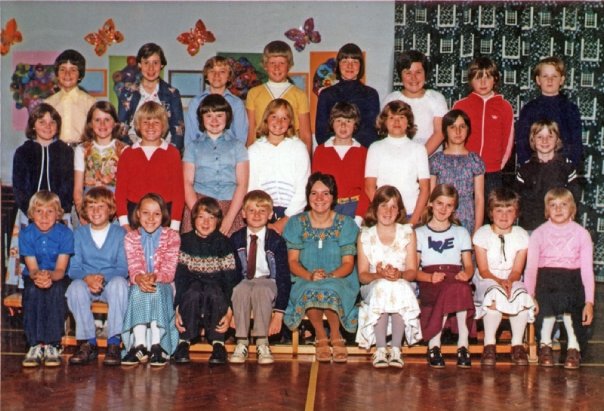
Here is a class photo, with bowl-cut me in yellow in the back row. I think the person who shared the post may be in here too, but my memories of everything back then are fragmentary – the gift of a difficult and damaging childhood.
I wonder how many of this class of mostly working class kids have experienced homelessness? Some will surely have done so, even if they did not sleep on the street.
I wonder how many of them have ever spoken to someone who has slept on the street?
I wonder how many will listen to Lee Anderson’s scapegoating talk and think that he is a man of sound judgement and common sense?
I was going to respond to that post on facebook with something like why do I have to choose? Why can’t we help them both? But I did not, because one of the other defining features of our social media avatars is that they are incapable of changing their minds through external correction. They are only capable of confirmation bias and reactive defensiveness. The sharer of this post is not my enemy, she is one of my community. Perhaps one day we will meet and speak of old teachers and school dinners.
The fact that ‘migrants’ are sleeping rough on our streets causes me deep shame for may place of origin. The same is true for veterans, or gamblers, or drinkers or drug takers. A society that insulates itself from this shame by blaming and scapegoating is heading towards dark places.
In the wake of the Referendum debate up here, we are all wondering if the remarkable upsurge of political engagement can actually lead to real change, and what new/old political or social movements might be the vehicle that will allow this change to take place.
My feeling is that despite all the noise and smoke, real change is not inevitable. This is partly because maintaining momentum is a challenge, (particularly in the wake of the NO vote) and perhaps even more because there is no real clarity over WHAT people want to change. There has been a clear expression of dissatisfaction- both with the current socio-political status quo, and with Westminster (which was usually seen to be English) in particular, but the Yes campaign up here seemed to me a combing together of very great complexity under the deceptively simple duality of yes/no. People were able to invest hopes and dreams along with a way to vent their spleen, but consensus over the sort of society/economy/community that should replace the one we are part of now? This is a wholly different issue.
Regular readers of this blog will know that I was not convinced by the nationalist argument, but that I am desperate for change. The process of engaging with the referendum has therefore been a painful one for me- one that I feel to have driven wedges between myself and things I hold dear- as well as people I hold dear. Aside from the personal aspects of this however, to a certain extent, what has happened is what always seems to happens in the UK- it has become another means by which the political left splits itself apart.
The challenge then for radicals on both sides of the referendum campaign is to find a way to come together again. If the real issue was not nationalism, but a desire to be in charge of shaping things towards our own destiny, then what happens now that these things need to be filtered again through the current political machinery? For the NO voters like me, now that we have rejected one possible change process, what are we going to put in its place?
I have spent hours and hours since the referendum reading stuff about alternatives, and how policy might be different. If you are interested, here are a few links;
The New Economics Foundation. A collection of ideas on how to achieve greater environmental, social and economic justice.
Countless articles in Newspapers (mostly The Guardian, which is the only one to give voice to persistent thoughtful radicals.) Including this one–
The big idea of the three main parties is the same: not capitalism, or neo-liberalism, or social democracy – but growthism. This term was coined by the author Umair Haque to describe the pursuit, above all other things, of economic growth. Never mind who it benefits, who gets left behind or what it destroys; never mind if its practices are unfair or unsustainable: if the numbers go up, everyone is happy, and if they’re not happy, give them a tax break.
Common Weal. “…a vision of what Scotland can be if it rejects the failed Me-First politics that left us all in second place and instead builds a politics that puts All Of Us First.” A collection of reports on a range of political and economic solutions.
The Green Party. The only UK political party that has a comprehensive set of radical policies on everything from social welfare and defence- not just the environment! I confess that as a lifelong (albeit latterly reluctant) Labour supporter, I am on the cusp of making the leap towards the Greens. I am gathering a clarity over the changes I long for and the Greens seem to have most of these things as policy objectives. A change from Growthism to sustainability, and emphasis on social justice and progressive fair taxation, and a defence policy that is as radical as almost anything I have ever seen- a real movement away from the military industrial machine.
I had a long discussion with a friend recently- someone still heartbroken and raw from the referendum. One of the things we talked about was whether change had to be local or more global. My feeling is that it has to be both. Activism has to be rooted in real community, local connection, but it needs to be connected to something bigger- to leadership, creativity and passion that has a wider expression. This is what the Left has failed to achieve for some time- possibly because Labour (ostensibly a Leftist party, but actually as rooted in the accommodation of growthism as any party) was seen as offering all that the Left could offer. However, also this might have something to do with it too;
“The smart way to keep people passive and obedient is to strictly limit the spectrum of acceptable opinion, but allow very lively debate within that spectrum….” ― Noam Chomsky, The Common Good
We need to forge local connections, but we also need to look beyond them. Part of this might well require healing some of those divisions with our political allies. When we look to the left, let us see people of hope, not people of division.