Check out this strangely moving video from the Abandoned Scotland website.
As a meditation on religion in the West, it is quite something…
The glimpses of the outside. The cross on its stained wall. The stained glass with the face of Jesus smashed.
Check out this strangely moving video from the Abandoned Scotland website.
As a meditation on religion in the West, it is quite something…
The glimpses of the outside. The cross on its stained wall. The stained glass with the face of Jesus smashed.
This might suggest otherwise;
History is littered with awkward difficult people who refused to conform. Their lives are often surrounded by conflict, particularly when their convictions confront the people in power. Think of all those Old Testament prophets.
What fuels this kind of dissent? It is often painted (by the after-the-event supporters of the dissenters at least) as a matter of conviction colliding with circumstance. I wonder however whether dissenters also are gifted/cursed with a particular kind of personality- a skew towards a simplistic world view, an arrogance even.
We can all think of people like this- they tend to be difficult to be around. Others shrink from the force of their opinion in groups, or retreat wounded from their harsh words and deeds. People I know who fit this category have often been an almost destructive force in the workplaces and groups I have been part of. They can often be far more focused on ‘the task’ than those whose task it is.
But, these people, for good and ill, are often those who we remember. They make milestones in our personal histories, and also in the history of mankind…

I came across one such man recently when I was doing some reading about those dark times of the reformation (see this post on the Covenanters for example.) I say ‘dark’ because despite the tradition I come from celebrating this as a kind of glorious outpouring of freedom and enlightenment, it often took place in the context of much pain, bloodshed and heartbreak. The question I find myself asking over and over again is whether we can regard something as ‘good’ when so much evil is done in the name of Jesus. Can the ends ever justify the means?
I offer you this story by way of example (If you want to know more of the historical context that he lived in check out the aforementioned post);
John Lilburne aka ‘Freeborn John,’ 1614 – 29 August 1657
John was from a line of dissenters. His father was the last man in England to demand to be allowed to settle a legal dispute via trial by combat. By the 1630’s John was apprenticed to radical opponents of the religious times and already forced to flee to Holland because of his involvement in radical pamphlets.
He was a man whose bravery verged on lunacy. Whilst being whipped, pillaried and imprisoned, he continued unabated in writing, arguing and protesting what he called his ‘Freeborn rights‘. His writings about these were so powerful that he is credited by being a major influence on the fifth amendment of the American Constitution.
The English Civil War saw John become a soldier, rising to the rank of Colonel, a fiend of Oliver Cromwell. However, dissenters do not do well in terms of military discipline and he fell out with his superiors, and then, in April 1645, He resigned from the Army, because he refused to sign the Presbyterian Solemn League and Covenant, on the grounds that the covenant deprived those who might swear it of freedom of religion. In a time of religious extremism, John argued that he had been fighting for this Liberty among others, and would have no part of it.
Alongside such principled stands, John continued falling out with everyone around him- fighting vindictive public spats against former friends and allies.
He then redoubled his efforts to campaign for the freeborn rights of men. His views grew out of the radical movement known as ‘the Levellers‘, but John was more of a leaver than a joiner, so he refused to describe himself in this way. He spent time in and out of prison, not just for his radical views, but also for his pursuit of former colleagues who he continued to attack in print.
And this became John’s life- fighting enemies to the left and right, raising high moral causes, in and out of jail, in and out of exile.
John began life as a Puritan, but ended it a Quaker. After all that violence, he had done with fighting, and came under the influence of a man of peace.
One epitaph written after his death was this one;
Is John departed, and is Lilburne gone!
Farewell to Lilburne, and farewell to John…
But lay John here, lay Lilburne here about,
For if they ever meet they will fall out.
Was this a great life? Certainly John did some great things but he seemed to be cast in the role of a stone-in-shoe for most of his life.
I am left pondering still the power of passion, faith and ideas, mediated through the mess that is humanity.
Thank God for dissenters.
And God save us from dissenters.
The measure of followers of Jesus, despite the context we are in, has to be the example that he set. He too was a dissenter, a table over-turner, a man who made no compromises to unjust ways of being.
But he was also a man who subordinated all things to love.

“I am not religious, but I am spiritual.” How many times have you heard someone say this? I suppose, given the devaluation of the word ‘Christian’ with western culture, and the post-modern slide into an elastic pluralistic individualism it is one of those sentences that increasing numbers of us would use to describe themselves (as can be seen from the recent Census data.)
Despite my continued attempts to hold to the ways of Jesus, the idea of a religion-less spirituality appeals to me too; leaving behind all the baggage and rigidities of proscribed doctrine and setting off on my own spiritual adventure…
However, Sam Dawlatly kindly sent me a link to a story in the Telegraph. Here are a couple of quotes;
People who said said they had spiritual beliefs but did not adhere to a particular religion were 77 per cent more likely than the others to be dependent on drugs, 72 per cent more likely to suffer from a phobia, and 50 per cent more likely to have a generalised anxiety disorder.
They are more likely to suffer from a range of mental health problems than either the conventionally religious or those who are agnostic or atheists, found researchers at University College London.
They are more disposed towards anxiety disorders, phobias and neuroses, have eating disorders and drug problems.
In addition, they are more likely than others to be taking medication for mental health problems.
Professor Michael King, from University College London, and his fellow researchers wrote in the British Journal of Psychiatry: “Our main finding is that people who had a spiritual understanding of life had worse mental health than those with an understanding that was neither religious nor spiritual.”
…The researchers concluded: “We conclude that there is increasing evidence that people who profess spiritual beliefs in the absence of a religious framework are more vulnerable to mental disorder.
“The nature of this association needs greater examination in qualitative and in prospective quantitative research.”
What is going on here then?
Firstly, we must look at the numbers a bit more closely- the study is not huge even though statistically significant;
The study was based on a survey of 7,403 randomly selected men and women in England who were questioned about their spiritual and religious beliefs, and mental state.
Of the participants, 35 per cent described themselves as “religious”, meaning they attended a church, mosque, synagogue or temple. Five in six of this group were Christian.
Almost half (46 per cent) described themselves as neither religious nor spiritual, while the 19 per cent remainder said they had spiritual beliefs but did not adhere to a particular religion.
Members of this final group were 77 per cent more likely than the others to be dependent on drugs, 72 per cent more likely to suffer from a phobia, and 50 per cent more likely to have a generalised anxiety disorder.
They were also 40 per cent more likely to be receiving treatment with psychotropic drugs, and at a 37 per cent higher risk of neurotic disorder.
The interesting thing is that this study is in contrast with a lot of previous research about the impact of religious belief on measures of psychological and sociological health- which sees faith has having clear benefits, even if more recent research has suggested that some of the self esteem benefits depend on the wider societal norms towards religiosity.
Accepting that this research may simply be a rogue study, there seem to me to be a few possible reasons why those who consider themselves Spiritual (but nor Religious) (SBNR) might appear to be vulnerable as a wider group.
Self selection
The link may well not be causal, but correlational. Perhaps those of us who are spiritually seeking outside the edges of organised religion are doing so because life has driven us there. Perhaps even our negative experiences of church has driven us there. It is hardly surprising that we might be seen to be stressed, troubled and even unwell. These things are not necessarily measures of the futility of the journey, but more part of any real human experience- part of the process of changing, becoming, learning to inhabit our own skin. We learn far more about ourselves in crisis than we ever do in prosperity.
The question might remain as to why this is NOT also the case for the religious? Are they not also being challenged, shaped and changed by their contact with scripture/teaching/existential challenge? All I can say is that in my experience in Churches, this is rather rare. The pews offer comfort more than adventure.
In this sense, the idea of spiritual travellers on the road, nursing wounds on the way seems not necessarily a negative- rather it offers hope for our humanity. Despite it all, we still strive for connection with the divine.
Belonging
A lot of the presumed benefit of religion at both a sociological and psychological level seems to be the given sense of belonging, of inclusion and connection to a wider family. Even accepting that in-groups can have all sorts of other problems, this benefit appears to be rather universal. It should not be surprising then that those who are attempting spirituality without community do not experience this benefit.
I have written elsewhere about my conviction that we experience the divine through scripture, through revelation, but perhaps most through community. We humans were made to love- and this is not an abstract proposition divorced from the mess of human contact. Nothing strips us bare, opens us up, sustains us, breaks us down, wounds us, heals us, like community. I also beleive that our approach to theology should also be one of ‘small theologies’ (HT Karen Ward) worked out in community- in respect of ‘big theologies’, but not enslaved to them.
Having said that, it seems that there are surface benefits too in just demonstrating some kind of collective respectability- even if this depends on a wider societal respect for the religious badge that we wear. I confess to less concern about this kind of religiosity. It sounds too much like the stuff that Jesus had no time for.
The lesson here then might be to encourage our spiritual seekers to connect with one another. In these times of total (but fleshless) communication, the deeper community connection described above is a rare commodity, and where it happens it is a precious flame that we should nurture.
Believing
Finally, I have been thinking about the nature of faith itself. We have many models- faith as journey, as destination, as therapy, as national identity, as absolute truth, as means of rescue from hell. From the outside all of these organised expressions of faith appear rigidly codified, doctrinal, dogmatic. They seem to demand blind observance of rules and regulations often policed by male power. Small wonder that we would be suspicious about joining such an organisation. Small wonder that pilgrims remain outside the sites of pilgrimage.
However, I am reminded of this;
Spirituality requires context. Always. Boundaries, borders, limits. ‘The Word became flesh and dwelt among us.’ No one becomes exalted by ascending in a gloriously colored hot-air balloon. Mature spirituality requires askesis, a training program custom-designed for each individual-in-community, and then continuously monitored and adapted as development takes place and conditions vary. It can never be mechanically imposed from without; it must be organically grown in locale. Askesis must be context sensitive.
Eugene Peterson
Perhaps like others who are more comfortable with being SBNR I prefer to regard faith as a journey of engagement with the God-in-all-things. To look for the marks left by Jesus on the whole of creation. But in doing this, It has become clear to me that in order to journey we need a means to travel. We need a road, and shoes to walk it with.
Like it or not, this means of travel is religion.
It is the corrective to the self centred me-first spirituality that can often characterise SBNR journeying. You know what I mean- a pick and mix spirituality tailor made to make me feel better about the choices I have made, and the lifestyle I want to live. A situation where morality and love of strangers are elasticated around our own comfort zone. (Not that these characteristics are not to be equally found in churches of course!)
It challenges us towards connection to others who have journeyed first.
To all of those SBNRs out there- I think you are the hope and the conscience of our generation. The depth and meaning you find in the mess of western civilisation will be recorded in art, law, history and handed on to the generations to come- so may you journey well…


Details of the 2011 UK Census are filtering out of the Office for National Statistics. The Guardian is teasing out some of the headliners- here are a selected few;
• The population of England and Wales on 27 March 2011 was 56.1 million. This is a 7% increase (3.7 million) from 2001, and 55% of that is due to immigration.
• The number identifying themselves as Christians is down 13 percentage points. In 2001, 72% (37.3 million) called themselves Christians. In 2011 that had dropped to 59% (33.2 million).
• Interestingly, Christianity is not down everywhere. Newham, Haringey, Brent, Boston and Lambeth have all shown increases in the Christian population.
• The number identifying themselves as having no religion has increased by 10 percentage points from 15% (7.7 million) in 2001 to 25% (14.1 million) last year.
• 13% of residents were born outside the UK (7.5 million). Just over half of these (3.8 million) arrived in the last 10 years.
• The census shows 2 million households in England and Wales where partners or other household members are of different ethnic groups, 47% more than in 2001.
• India, Poland and Pakistan are the top three countries foreign-born people in England and Wales come from.
• The Muslim population was up from 1.55 million to 2.7 million, an increase of 1.15m from 2001 to 2011. Muslims now make up 5% of the population, compared to 3% in 2001.
So we are seeing a picture of an increasingly ethnically diverse nation, which intermarries more and increasingly sees itself as not needing organised religion.
However we also see a rise in people who view themselves as Muslim, probably through immigration rather than conversion.
The British Humanist Association have already commented on this change;
In spite of a biased question that positively encourages religious responses, to see such an increase in the non-religious and such a decrease in those reporting themselves as Christian is astounding. Of course these figures still exaggerate the number of Christians overall – the number of believing, practising Christians is much lower than this and the number of those leading their lives with no reference to religion much higher.
Religious practice, identity, belonging and belief are all in decline in this country, and non-religious identities are on the rise. It is time that public policy caught up with this mass turning away from religious identities and stopped privileging religious bodies with ever increasing numbers of state-funded religious schools and other faith-based initiatives. They are decreasingly relevant to British life and identity and governments should catch up and accept that fact.
Andrew Copson, quoted in The Guardian.
I have some sympathy with Copson’s comments. The age of Christendom is over.
But the Kingdom of God is near.
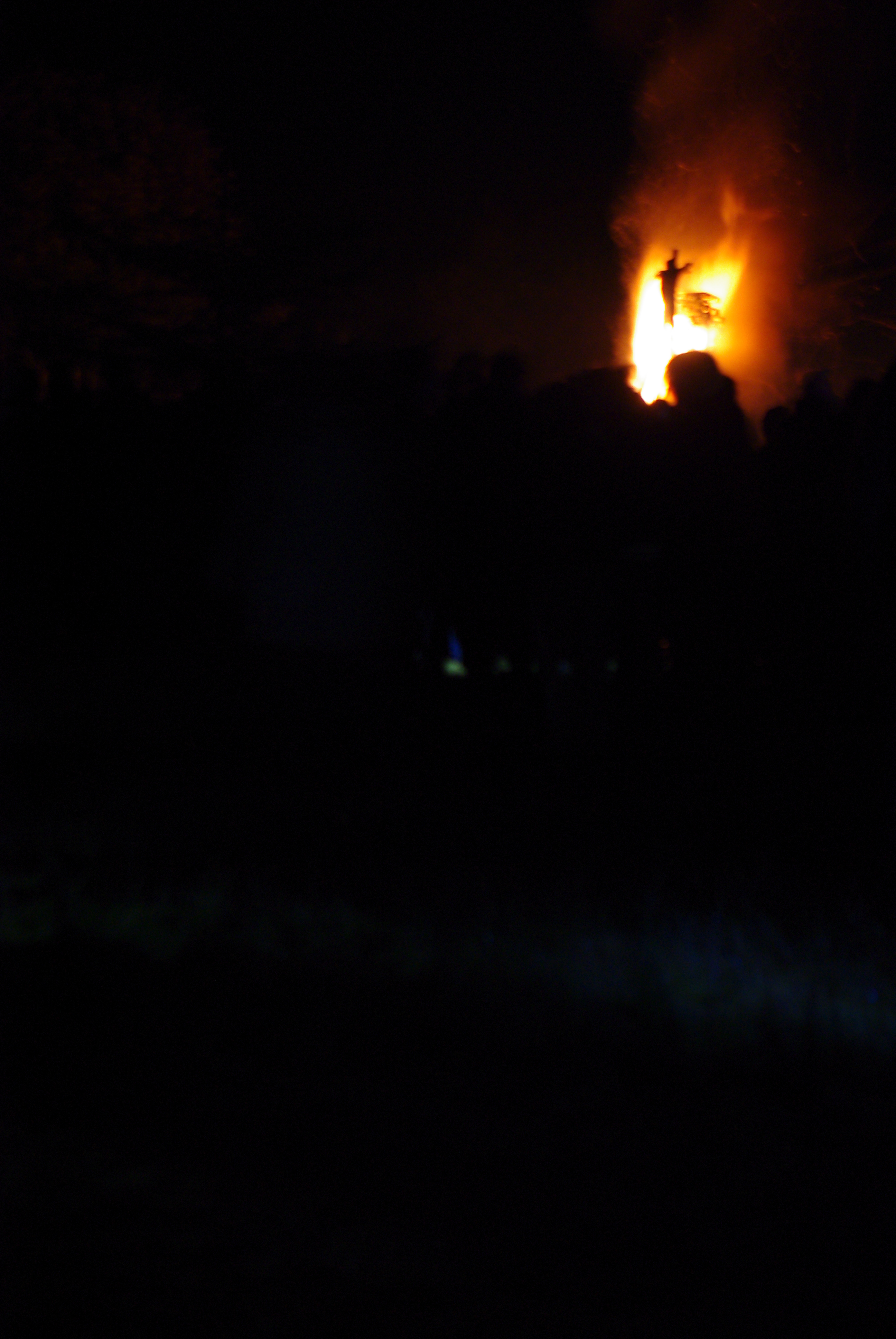
We gathered to celebrate the failed terrorist plot to blow up the houses of Parliament today.
(Or from a different perspective…)
They gathered today to burn another Catholic freedom fighter in effigy.
The photo above freaked me a little- it looked like a man being burnt on a cross- which would be slightly appropriate I suppose.
So I chose to engage with the bonfire and fireworks (both of which I love) as a means to remember a time when Protestant and Catholic were set against one another, and truth tribalism was let loose on the land like a pack of raging wolves.





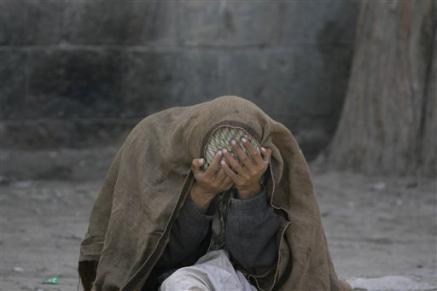
Emily described a news clip she watched the other day- a mother grieving the death of her son, a Jihadi martyr. The poor woman seemed to veer between terrible loss and the cultural sponsored celebration of his violent death.
The terrible contradictions stayed with me.
All those mothers who are told that God is pleased with the death of their sons. Two thousand American and British mothers in Afghanistan. Twelve thousand Afghanis.
The proud, rich culture of Afghanistan is of course well used to war being waged on its soil by foreign invaders; Persian, Greek, Indian, Russian, British, American. The scarred land becomes fertile ground for the raising of revolutionary warriors, but this is not the point of this piece.
Afghanistan is also rich in the tradition of poetry- Ghazal’s have been written there for millennia recording the human conditions- both the pain of loss/separation and the beauty of love in spite of all the pain associated with it. It should then be no surprise that the Taliban in modern times still tell the story of who they are in poetry.
A new book is out telling some of the story;
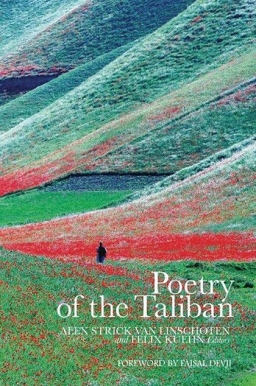
There is more about the book here and here.
There is of course, much war propaganda arising from Afghan recent history;
Moscow still owes us blood,
I write the terms of my debt on the chest of the arrogant.
They will ride the white horses in the red field,
Then we will install the white banner on the Kremlin’s chest.
The day of red blood will become red with the Red’s blood,
The knife that is stuck into the Chechen’s chest today.
My enemy, go and read the history of heroism,
There is a page written about Macnaghten’s chest.
The Pharoah of the time send arrows everywhere, These arrows will finally strike Washington’s chest.
Amid all the glorification of death and the calling for the blood of the foreigner, there appears to be some hope;
…a great deal of this Taliban poetry will be comprehensible to western readers who are unable to understand Taliban ideology. The major themes are recognisable, even universal, and the dominant form is the ghazal, or love lyric, which links the Pashtu language to the classical civilisations of Persia and India. The poems describe a land of mountains and pines, each stone a ruby, each bush a medicine, and of laughing blossoms, dancing tomorrows, of twilight arriving with its lap full of red flowers (a poem called Sunset, reproduced here, reads more like a product of a Zen monastery than of a Deobandi madrasa).
What is interesting is that the Taliban’s official face and past practice has been so fiercely anti-Sufi, anti-historical, and seemingly anti-culture. This book provides an entirely different outlook. Indeed, in their rich memory of 19th-century British invasions, of Afghan folklore and Islamic heroism, the Taliban poets seem more awake to history than we are.
As well as raillery and satire against the foreign enemy and its local servants, there is self-criticism aplenty. “Humanity has been forgotten by us,” writes one poet. “And I don’t know when it will come back.”
(From the Guardian.)
Poetry will do that. It can not be tied for ever to narrow ideology- it has to fly. Let us celebrate the open hand over the clenched fist. The space forced open by love in a wall of hate- wherever we find it.
Back to the news story that Emily told me about. Here is my own response in poetry;
Jihad Ghazal
They tell me his death was holy and so I should rejoice
But what care I for dancing now?
He is dead
Tender flesh of my sucking flesh
Is now blown by foreign flies
He is dead
They tell me that his death had purpose
But once his life was all the purpose I ever needed
He is dead
So what care I for all those virgins whom I will never meet
And will never bear my grandchildren?
He is dead
They tell me his name will be written in the book of martyrs
And poems will be made from his bravery
He is dead
But what care I for war stories
The songs I sing will smoke the air with sorrow
My precious son is dead
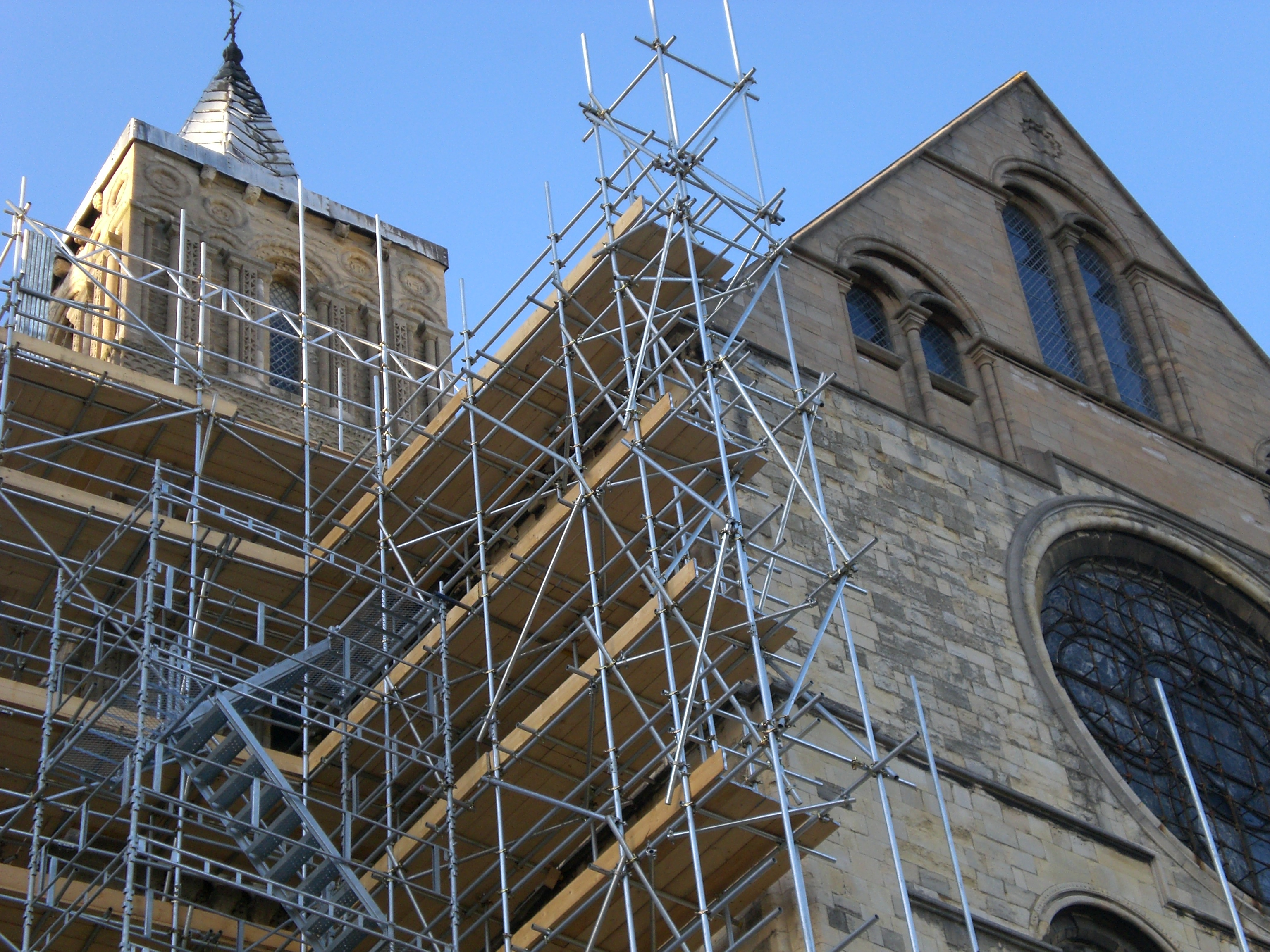
I heard a story about Church the other day from one of my close friends that made my eyebrows shoot skywards. More on this later…
I have spent too long deconstructing institutional Church in all its glorious contradiction. Initially I did this as someone who had been chewed up by a negative experience of church – burnt out by it all – and then latterly, more from a respectful removed distance. Eventually however, all this deconstructing has to stop and we need to start constructing again, or we are remain caught in some kind of pointless cynical loop.
All things change. The usual human cycle of any project of human organisation always goes something like this; new thing-expansion-slowing down-dissatisfaction-deconstruction-emergence of new ideas-start of new thing.
Except in Churches, things sometimes seem to go so slowly. It is almost as if the religiosity of these institutions becomes a gate for the flood of change. If the shape of Church is God-ordained, defined by theology, supported by Scripture and managed by the chosen ones then how could it ever need to change?
My answers to this question, thought over long and hard, are as follows;
Sure, many will suggest that culture may change but not The Truth, but I am afraid I do not agree with this either. What we once held as absolute gospel truth on all sorts of things has shifted- the divine right of Kings, remarriage after divorce, the place of women (even though this is still a work in progress.)
Back to the story;
My friend grew up in a Church in the north of Scotland and she frequently visits her parents there still. The Church they attend has a room at the back, with a glass partition between it and the main auditorium. The sounds of the main Church building are piped in by speakers on the walls, but otherwise the room is a smaller version of the main Church- plain, unadorned, lacking in any distractions such as toys or books.
It is known as ‘The Training Room’- where young people learn how to behave in Church. When to stand and sit, how to keep silent and when to sing, how to dress and to maintain proper decorum.
Initially I was shocked. How far have we come from the Jesus way of putting the kids first (see Matthew 19.)
But is this so very different from what we all have to go through in entering Church? We learn first of all to conform- to how to behave; to what is correct. Later on we may be able to question some of the edges of what we have become, but the pressure to conform, to belong, is too great.
Perhaps this might serve us well in part. We DO have things to learn, and we learn best in our collectives. However, these collectives also need to be learning, changing institutions and this is not an easy thing to achieve. In the worst case scenario the choice we have is to accommodate or take the nuclear option- and leave.
Leaving is no panacea of course, because as individuals or small groups setting out on our own we will start to form our own Training Rooms.
The open question for all of us is; how do we remain open, questioning, teachable, lovers of the way (not sitters on the pew?)
I have some flickerings of an idea as to how we might do this- and it is about being a sent people, not a gathered people. It is about going with love, not staying with doctrinal truth.
Hmmmm.

There is a great video of a discussion between Brian McLaren and Scot McKnight here;
Conversations of being a heretic
McLaren is always worth listening to even if (like McKnight) you find him to have gone too far down the path of heresy. His intelligence and humanity mingled with a deep faith have been for many of us the means by which faith might live on beyond the religious straight jackets that we have gratefully shed. He has been a pioneer into new and deeper understandings, and these people are always seen by the establishment as heretics. Just read the comments under the video clip.
Interesting article in the Guardian about a study led by Lee Ross of Stanford University in California into the interaction between faith and politics.
…the Jesus of liberal Christians is very different from the one envisaged by conservatives. The researchers asked respondents to imagine what Jesus would have thought about contemporary issues such as taxation, immigration, same-sex marriage and abortion. Perhaps not surprisingly, Christian Republicans imagined a Jesus who tended to be against wealth redistribution, illegal immigrants, abortion and same-sex marriage; whereas the Jesus of Democrat-voting Christians would have had far more liberal opinions. The Bible may claim that God created man in his own image, but the study suggests man creates God in his own image.
If you are like me, you are right now deciding that those whose political views you do not share are the ones who have invented more of their Jesus than you have.
Because basically Jesus is like a really good version of me. Me on a good day.
Preachers, politicians and co-believers tend to emphasise and de-emphasise different aspects of the Christian canon; so conservative Americans study the Old Testament with its homophobic rhetoric and eye-for-an-eye morality, whereas liberals look to the New Testament Jesus who was sympathetic to the poor and the meek.
Evangelical politics is not, of course, limited to the US. Many social conservatives in the UK align themselves with the Christian right, and MPs such as Nadine Dorries take inspiration from US campaigns against abortion or gay rights. But perhaps the most striking aspect of the study is that it turns on its head the claims by many religious politicians, such as Republican nomination candidates Rick Santorum (“I’m for income inequality”), Rick Perry (“Homosexuality is a sin”), or the UK’s Nadine Dorries (“My faith tells me who I am”), that their politics is inspired by their God. This study suggests instead that their God is inspired by their politics.
I suppose this was the risk God took in giving us all free will.
The foolishness, the folly of God.
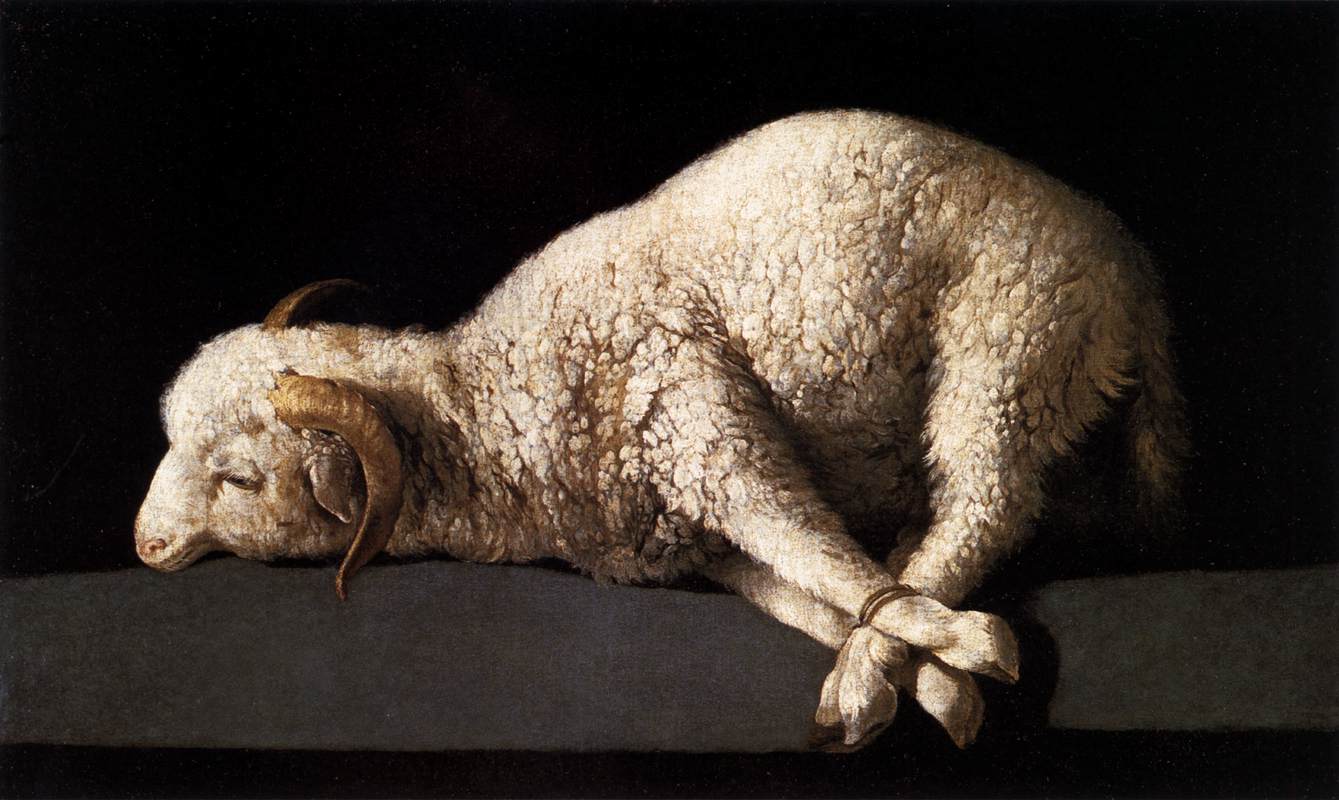
Who lies like a bound lamb on the altars we build.
 this fragile tent