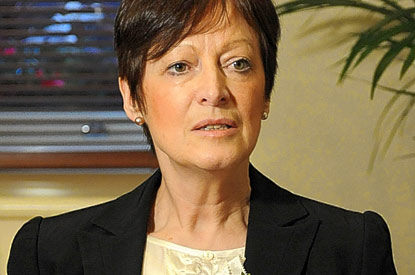
Sharon Shoesmith wins her appeal…

I do not often write about my day job on this blog. You could say that I am usually keen to leave it behind and think about other things. But I have been a social worker for over 20 years now- during a time when social work in the UK has changed dramatically.

One thing that has remained rather constant however has been the fact that the profession of social work is an easy target for media witch hunts- who portray us as a bunch of vegetarian, liberal, arty-farty, moralising layabouts who interfere in peoples lives for fun. They damn us if we do interfere and lynch us when the view is that we do not interfere enough. It is a familiar whinge in any staff room.

And in response to this kind of pressure, politicians have increasingly turned to regulation as a means of dealing with all aspects of social care. Regulation and performance targets have crept into everything that we do- supported by all sorts of recording systems.

I have always worked within mental health services, and increasingly, my staff have little time to put to what we used call ‘social work’- the soft therapeutic activities, community work and capacity building that we valued so highly. These things simply do not give outcomes that are measurable and so justifiable in the current climate.

At times, the pressure to cope with both the demands of the system, and the pain and distress of real people in crisis can be overwhelming. This might be a difficult thing for people outside the system doing other kinds of work to understand- but on a personal basis I have known countless colleagues suffer different kinds of emotional and physical breakdowns- few people manage to sustain front line social work beyond their 40’s, and in America, CNN announced that social work was about the most stress full job you can do.

Here are a couple of quotes I have used before. They date from 1998, but believe me, nothing has changed- and the current financial crisis in Local Authorities has made things worse.

“Modern social work is in a state of crisis. It has always been a profession towards which society has displayed ambivalence and it is now grossly underfunded and understaffed. Tragedies and subsequent vilification of social workers and their managers are reported with increasing frequency. The profession attempts to function in an environment of obstructive administrative ‘systems’, … severe financial restrictions and conflicting demands …” –Davies, p. 9, Stress in Social Work (1998, Jessica Kingsley Publishers).

“Because they deal in actual and emotional injustice, and actual and psychic injury, the reality for social workers much of the time is that while they may bring about some relief or improvement, the most that they may hope for is some damage limitation, particularly in areas such as child abuse and criminality.” –Davies, p. 19, Stress in Social Work (1998, Jessica Kingsley Publishers).

One thing that highlights the state of the profession as much as anything are the fairly frequent media outcries that surround tragic events involving the death of children or vulnerable people who are known to social work. The most infamous one in recent years has been the death of baby Peter Connolley at the hands of his mother and mothers boyfriend. It is a dreadful story that breaks your heart- a tiny boy whose whole life was characterised by pain and neglect, leading to his eventual death before his second birthday.

Inquiries revealed systematic failures on the part of social work, health and police. I wrote a lot about this at the time- see here and here for example.

Very quickly the story centred on the head of social work for the council responsible for Peter’s care- Sharon Shoesmith. She was previously regarded as an extremely competent and committed leader, praised by regulatory bodies, but now she had no chance. Trial first by media, then subjected to a shameful personal attack by government minister Ed Balls, and finally sacked by the council with next to no chance to defend herself. There were several other dismissals of workers after this event. Interestingly enough, despite all these contacts-

78 contacts with health workers, doctors, social workers and police
2 health visitors
3 doctors
1 mental health worker
1 policewoman
4 social workers
1 family friend;
1 childminder
10 hospital visits (to at least 3 hospitals)
4 visits to clinic
5 parenting classes (the last two weeks before his death)
Seen by GP 14 times
Seen by health visitor 7 times
Mother seen by mental health worker 4 times

…despite all these other agencies being actively involved and in a position to raise concerns that might have saved the life of this child, not one single worker from the other professions has been dismissed. The report was equally critical of both the health department and police- who had a joint responsibility to protect.

Perhaps this is for good reasons- I am not party to the facts of how individual workers performed their roles, but I do know a lot about how these large bureaucratic institutions work- how there are always a hundred demands for your attention, and how responsibility easily becomes diluted in the mess and pressure of it all.

I wrote a lot about my feelings about this at the time- here and here.

Since this event, the numbers of children removed from the care of their parents and injected into the all ready over pressured  child care system have doubled. There has been no public debate about this- in terms of whether this is desirable, whether the outcomes for our children are better, and whether the resources needed to achieve good outcomes are readily available (they are not.)

Well, today Sharon Shoesmith won her case in the Court of Appeal against her dismissal. I am not all surprised- I predicted she would win in my earlier post. The BBC’s account of how the case was won is here– it makes devastating reading.

In parliament, David Cameron launched a surprise attack on Prime Minister Gordon Brown, who some say had not been well enough briefed.

Within minutes of their exchanges, a government minister was on the phone to the leader of Haringey Council George Meehan asking if he was going to suspend Ms Shoesmith. He refused.

Ed Balls had a completed serious case review on his desk, outlining the many mistakes and problems involved in the care of Peter Connelly.

But, apparently to head off a growing storm, he ordered another review led by Ofsted to look at safeguarding practice across the health agencies, police and children’s services in Haringey.

He demanded its inspection and report be completed in three weeks, an unprecedentedly short time for a process usually taking four months.

Normal procedures were dispensed with including the opportunity, usually given, for children’s services departments and their senior officials to read a draft report and challenge provisional findings.

During the inspection, the Sun newspaper delivered a petition and tens of thousands of letters to Downing Street, demanding Ms Shoesmith’s removal, with Mr Balls agreeing to be photographed receiving them gratefully.

Ed Balls has defended himself (here) and the government intend to challenge the decision. Balls seems to be saying that he (as minister) should be able to act as he thinks fit- in this instance, this amounts to ignoring employment law.

But the bottom line is this- the mess of wonderful humanity that makes up our societies will always contain dark secrets. Bad things will be done to innocents by damaged and despotic people. Sometimes, despite our best efforts, these things will not be preventable.

Sometimes we will make mistakes. These will be both systemic, organisation mistakes, and by individual workers in all the different professions. We need to learn from these experiences- and recognise the resource implications- in terms of training, money, personnel. Increased regulation will not achieve improvements alone.

To blame one profession (and individuals within it) in a knee jerk and blind fashion will not in any way contribute to the protection of children- if anything, it will make things worse. It will reduce the pool of talented individuals who want to do the job, and populate the social care machine with risk averse automatons whose role is to meet narrow performance targets and to restrict liability wherever possible.

Sometimes I think we are there already- but then I see a moment of real grace and kindness involving one of my colleagues, and I hope again…

20 years of social work…

20 years ago I became a social worker.

It seemed like the thing to do.

I was driven by a desire to do a job that had at its very centre the desire to help other people. I think this was driven by a number of things- my own troubled childhood, a social conscience that was stoked by a progressive education and perhaps above all, my faith.

It was a mix of motivations that I have never quite escaped- despite the frequent screaming frustrations of working within a bureaucracy, and the early disillusionment with the idealism of being a genuine change agent- working both within and against the state.

It survived the huge pressure of work in inner city Greater Manchester with people in mental health crisis- in what could be a very scary, violent place. It survived because I met some wonderful people, and there was value in kindness and caring, even if I often felt impotent and ineffectual when faced with such overwhelming need.

It survived work as a therapist in GP surgeries- seeing 6-7 people a day with a wide variety of brokenness. Along the way I became more aware of my own brokenness- and aspired to become a wounded healer.

It survived a move to Scotland, and an encounter with a different kind of stress- where the busyness was driven by isolation and lack of resources over a wide rural area.

It has even survived a move into management, with all the power mongering and encounters with the sociopaths.

But under the recent onslaught, the flame flickers dimly. I am tired. My blood pressure is high. I suffer from cluster headaches. Sleep fluctuates. All the classic signs of approaching burnout.

But then- it has been a bad day. And there are still better days- perhaps tomorrow…

And I am trying to do the right things to try to keep the balance towards the centre.

In the hope that the motivations that took me into social work survive, well- survive social work.

Sharon Shoesmith speaks out again…

Regular readers of this blog will know that I earn a living in social work- specifically, I manage mental health services, working mainly with vulnerable adults.

But the whole social work world has been hugely affected by the tragic circumstances of the death of Peter Connelly at the hands of his mother, her partner and a lodger.

And by the media circus that followed it.

It was interesting to hear Sharon Shoesmith, the former director of Social Work services for Haringey who was sacked following political intervention, speaking to a House of Commons Committee looking into the way we protect children.

She made the following points (some of which I had previously described- here.)

In her opening remarks to MPs, Ms Shoesmith said the statistics on child murders were shocking – and had stayed the same for more than 30 years.

The Baby Peter case had led to big changes in children’s social services, she said.

“For children, the impact has been far-reaching. Since 2008 the number coming into care has increased 30%. The number we have subject to a child protection plan has doubled. Yet this wider net seems to have had little impact on the number of children who die.”

She said in the year Peter had died – 2007 – a total of 54 other children in England had also died at the hands of their parents or other family members.

In the decade from 1999 to 2009, 539 children had died in this way, she said.

“These are shocking statistics and statistics that are not known. They are too abhorrent for us to consider,” she said.

She is right, I think, to point to the negative effect of the blame culture on those seeking to protect children.

The simple truth is that scapegoating obscures the real issues, and potentially real solutions.

Social work and stress…

Social work is a job for young people. Mostly.

A few survive into their 40’s- possibly by specialising, or (oh dear- like me) becoming a manager, but on the whole, the nature of the job, and the political/economic/social environment we work in simply burns people out.

It is a slow process- and is poorly recognised even within the profession- as it is usually manifested in a loss of effectiveness and responsiveness- and in these days where performance targets dominate every area of practice, this kind of thing wins you no friends in busy teams.

It is a process that must be difficult to understand when you have never been involved in this kind of work. Some of my friends have a go at me as being in an easy lazy public sector job, often in comparison to their ‘real’ jobs. I smile, but inside I want to have a bit of a go back- and ask them to try doing what I do for a while…

I want to ask them who they think will do the jobs we do if we do not?

Who will visit a family living in squalor because of an alcoholic parent?

Who will look after an old cantankerous man who has become to infirm and confused to get out of the house, and has been unable to manage to get himself to the toilet for the last few weeks?

Who will try to build relationships of trust with the people on the margins of society who have lost all social connections?

…etc etc.

Because in devaluing the people that do these things, we potentially devalue the people who need the help.

I read this today-

“Modern social work is in a state of crisis. It has always been a profession towards which society has displayed ambivalence and it is now grossly underfunded and understaffed. Tragedies and subsequent vilification of social workers and their managers are reported with increasing frequency. The profession attempts to function in an environment of obstructive administrative ‘systems’, … severe financial restrictions and conflicting demands …” –Davies, p. 9, Stress in Social Work (1998, Jessica Kingsley Publishers).

“Because they deal in actual and emotional injustice, and actual and psychic injury, the reality for social workers much of the time is that while they may bring about some relief or improvement, the most that they may hope for is some damage limitation, particularly in areas such as child abuse and criminality.” —Davies, p. 19, Stress in Social Work (1998, Jessica Kingsley Publishers).

This is a familiar picture to me. Add to this the fact that the cut backs in public spending are making things worse. I am about to lose my job for the second time in 2 years through ‘reorganisation’. Quite what I will be doing in 2 years I have no clue.

My colleague recently had a health check and was told her blood pressure was very high. A retest suggested that this might just have been temporary as a result of a particularly bad day.

‘I think I am going to take the blood pressure test with a pinch of salt’ she suggested, and then realised what she had said.

We laughed.

Thank the Lord for companionship and good colleagues. As long as we can hold on…

Reflecting on the losing of humanity…

Thank the good Lord for Friday. It has been another long hard week.

Regular readers and friends will know that I earn a living by working as a mental health social worker- for around 20 years now. Or to be honest, these days I do not do a lot of social work (although I still practice as a Mental Health Officer)- I do this other thing called ‘management’.  Some days I am not sure how much longer I can do it.

What has allowed me to survive so long working within a large bureaucratic institution has been two things- firstly the need to provide for my family, and secondly the hope that I might be able to genuinely make a difference to the lives of the people I work with. In management, it is possible to fulfil the first, but the second- well the evidence is not as strong.

Being in contact with people in the extremes of distress and crisis on a daily basis does something to you. It is impossible to stay as emotionally engaged as we do when we first begin these encounters. The best of my colleagues hold on to their compassion however- we nurture it by making it shape our language, our small talk and the way we treat everyone we come across. We have learnt that kindness in the small things, despite terrible external circumstances, can indeed make a difference.

And sometimes that is the only thing we have to offer.

Images by Fred Kleinberg

In the course of my work, I come across people who have done terrible things. People who others would say have lost all sense of humanity.

People who have harmed children, or killed and dismembered people.

Others who have locked themselves away (or been locked away) and have lost or forgotten almost all basic skills of human interaction.

Perhaps most striking is watching people slowly destroyed by addiction. To see them in the later stages of this- near to death- and wonder what incredible life force keeps a person alive when skin is bright jaundice-yellow and all organs are playing discords.

Sometimes it seems that almost all that makes us human is gone.

Almost- but not all.

Because in all of these people, despite their brokenness, what is left- what is most visible, is… their humanity.

Unhidden, undefended, right on the surface like an open flesh wound.

And should we lose sight of this, the danger is that it is not their humanity that will be at risk- but rather our own.

I wrote this in response to a recent event…

Deep in the soup and the stew of him

In the ooze and glisten of his grey matter

Some synapses spark and flicker

Sending out electro-chemical dots and dashes

.

And he- wired almost to breaking point

Is all strung out

Senses dulled

But deadly receptive

.

So bone becomes knuckle

Muscles turn to gristle

And poisoned sinew moves like a snake

Ready to strike

.

Later some said he was evil

That some dark thing was in him

Others called him mad

A flesh machine gone wrong

.

Still others bayed for his blood

-as if enough had not been spilt already

They want eyes put out for the eyes he closed

And every broken tooth smashed in return

.

Me, I stand over a stain in an old carpet

Through which something human has fallen

And feel a little of myself

Drain away

Back to work…

Oh dear.

Tomorrow I return to work for a few days. It is that rather difficult period within social work between Christmas and New Year, and I will be the only manager covering all sorts of things beyond my usual mental health remit. It may be quiet. It may be manic.

Always a shock to system.

To this list (for rather too much of the time) add ‘Social work management’!

In order to cheer myself up, I went searching for other peoples feelings about work, and discovered this TED lecture

Hmmm- at this point, I think castrating lambs with your teeth has it’s attraction…

But then again, what I do has value. I do my best to make a difference, and to be graceful and respectful to those who work with/for me (and sometimes I even manage to do this!)

And because I work, I have a house and other resources that enable me to serve the Kingdom, and to give my kids a start in life that I did not have.

So I will go in tomorrow, reluctantly perhaps, but with a smile.

I plan to give the office a good sort out.

Bare those teeth- and bite!

Sharon Shoesmith- trial by media…

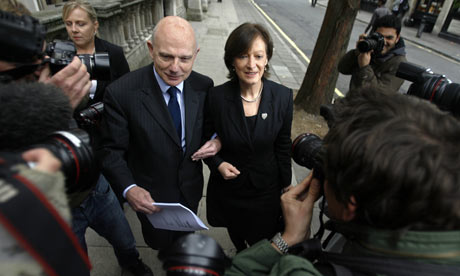
Sharon-Shoesmith-leaves-t-001

Sharon Shoesmith is in the news again. check out this piece from the Guardian which describes some of the twistings and turnings  in the lead up to her sacking.

I have written several pieces about the event in Haringey around the tragic death of a baby called Peter at the hands of her mother and two men, whilst under supervision of the social work department. (See here and here for example.)

Shoesmith was paid a lot of money to manage a complex and pressured social care system for children. Her performance was regarded as exemplary- in bringing positive change in a council not unfamiliar with scandal. She had the full support of experts, local political leaders, and her own staff- that is until a poor performance at a press conference in front of tabloid journalists baying for blood. Blood that was duly served up.

You could say that a leader of a system that fails has to take the consequences.

But again I find myself asking questions of a society that appoints social workers to care for it’s most needy and vulnerable members, then vilifies the profession at every opportunity, whilst at the same time, services remain underfunded, and undervalued.

And there is a chronic shortage of staff who are willing to place themselves in the firing line as social workers doing child protection.

It remains to be seen as to whether Sharon Shoesmith will win her case in the High Court. But many people will hope that out of this process will come some clarity, and debate over the real issues.

Because the idea that kids die in our country because of a bad set of professionals not doing their job properly- it may sell tabloids, but it will not protect children.

Grace, ungrace and brokenness…

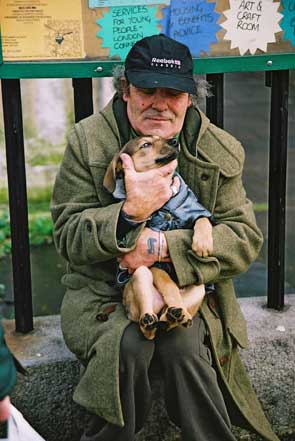
homeless3

For a day job, I manage social work services for people with severe and enduring mental health problems. For the last twenty years I have been a mental health worker and therapist, working in hospitals, GP surgeries, prisons, day centres and clinics.

Even as I have become very frustrated with the nature of organised social work- the inevitable beauocracy, the compartmentalisation of humanity, the feeling that we police people, but do not really help- I have continued to be driven by the hope that broken people can mend.

And the conviction that comes from my faith that people forced to the edges of society by their experience of life can teach us much about our own experience, and in meeting this, we meet Jesus.

I found Philip Yancey’s wonderful book ‘What’s so amazing about grace‘ really helpful at a time in my life when I was struggling. One of the concepts he introduced was the concept of ‘Ungrace’.

Grace is not easy to define but we usually recognize it when we see it. Yancey describes it as `the last best word’ of the English language because in every usage it retains some of the glory of the original. His story-telling style takes `grace’ from a religious context and puts it in the market place, moving it from theological discussion to practical application.

What is obvious to me, is that as we develop as humans, the soil we grow in can be full of the nutrients of grace, or poisoned by a kind of toxicity that can put a stain down generations… you could say that people are grace-impoverished, living in the shadow of ungrace.

That is not to say that this is the only formative or defining force that is acting on us. Illness sometimes just IS- with no clear causal factors, and equally, some grow strong out of dreadfully difficult situations. Grace is built into all of us somewhere deep down.

Today was a fairly typical day, this morning in an Adult Protection meeting, discussing a man who has mental health problems, but is killing himself with drugs and living in squalor. And when you look at his earlier experience, it was easy to see why. In the afternoon, I chaired another conference on a woman who had been admitted to hospital after a fall, but seems to have rapidly deteriorating dementia. A life unraveling after broken relationships, isolation and depression.

Ungrace.

Yancey describes our world as being `choked with the fumes of ungrace’. But, he adds, `occasionally a grace note sounds, high, lilting, ethereal, to interrupt the monotonous background growl of ungrace’.

Grace comes from the outside as a gift.

Grace billows up.

Grace happens.

As for me- I listen for those grace notes.

And hope that I might learn to echo them…

Baby P- Sharon Shoesmith’s story…

sharon-shoesmith-415x275

See also previous posts on this subject here and here.

In the wake of the tradgic death of the small boy known as ‘baby P’ in Haringey, director of Childrens Services Sharon Shoesmith found herself in the middle of a media storm. This well respected former teacher (who had an impressive track record in turning around education in the local authority) did not resign, but was eventually sacked from her post by the council leadership. Given the pressure, they perhaps had little choice- someone must be responsible for this dreadful thing- and as Shoesmith was the boss, the buck stopped with her.

This despite an unprecedented letter of support from many of the head teachers within Haringey for Shoesmith.

Yesterday, as the dust begins to settle, and those in the media looking for scapegoats have moved on to the next media feeding frenzy, we begin to have a chance to consider what really happened in this case, and what actions may be necessary to try to avoid it happening again.

Things have already changed in relation to the protection of children across the UK. Quite simply, the threshold for removing children from home and placing them in care has shifted. We now remove one third more that we were doing a year ago. Society (and no doubt the media) has a decision to make as to whether this is acceptable.

Sharon Shoesmith herself was interviewed on BBC radio 4 womens hour. It was a fascinating interview- she was put under considerable pressure by Jenny Murray the interviewed, but made some telling points.

You can listen again to the interview for a while on this link.

Here’s a summary of some of the detail;

April 2007, concerns raised about parenting. Investigations started, child placed on at risk register

June- SWer raised concerns about injuries. Suspicion that these were non-accidental, but no evidence. Specialist medical assessments not conclusive. ‘Fell on stairs.’

Hv’s Swer visits- not enough to meet threshold for care proceedings- three multi-agency child protection conferences. Robust discussion (police later said ‘we told them to take action’) but course of action agreed by all.

CPS- not enough evidence for charge for neglect- this decision made the week the child died. Baby P seen Monday be SW, Wed(medics), Thurs, SWer again, Friday, dead.

At some point over last 48 hours, there was a brutal attack on the child. No-one has been charged with murder. Swers had no knowledge of the two men living in the home- partner and lodger. Boyfriend hid when professionals visited- in a wardrobe and also in a trench in the back garden! Went to great lengths to hoodwink professionals.

The mother gave the impression that she was willing to work with staff- leading to optimism.

Then the media stuff exploded. The story became about Shoesmith- she was the visible presence. No other photos released of family, or child at first.

Ofsted and government departments knew what had happened days after- they were informed. Serious case reviews happened, made recommendations. Months later (as the press and political response gathers like a storm) ofsted chose to make another inspection, which can be read here. They gave no prior warning of the contents of the report or opportunity to discuss the accuracy of the findings to Shoesmith prior to publishing- very unusual. The report was in stark constrast to earler finding by the same agency.

There was then an interesting discussion as to whether Shoesmith, as the leader of a service that failed to protect Baby P was responsible in some way for the death of the child. Shoesmith answered the question very well, asking searching questions about the role of leadership in public life. She described sleepless nights, long days from 6AM to 10PM dodging the media. How she had even considered suicide. But she did not kill this child. She was responsible for a service who tried to protect, but failed.

She also made a point about the low status that our society awards to staff trying to protect kids- and Social workers in particular- asking which other profession would have been at the brunt of this treatment from the press?

Finally, she made this point, which we all should bear in mind-

Each week, at least one child is killed by a member of family in the UK.

Many many more are saved following interventions. In many of these cases, we can never be sure whether actions to protect were proportionate and necessary- we rely on multi diciplinary discussion and decisions. We will NEVER be able to save all the people we work with.

Should Shoesmith (or other staff) have been subjected to the trial-by-media (a notoriously inaccurate judicial process?) I think not.

Should they have lost their jobs? Perhaps this is a response commensurate with the awful loss of a child’s life. But if this applies to Shoesmith- then should it apply to many other directors of social services across the country?

Or is this issue more to do with how we as a society manage the care of our children and allow media generated hysteria to fuel our decision making?

More on Baby P…

A little lad for whom it is all too late...

A little lad for whom it is all too late...

So, three senior managers find themselves out of work. Two resign and one is suspended pending investigation (Head of Children’s services, Sharon Shoesmith- she will not be back.) Full story here.

I had posted earlier about my own reaction to the tragic news of Baby P’s death and the resignation I felt at the inevitable witch hunt that would surely follow.

Now the Social Work inspection agency (the same one that recently awarded the Haringay children’s services 3 stars for their excellent work) has now found serious failings in leadership, supervision of staff, the sharing of information and, perhaps most worryingly, evidence that kids who are suspected of being abused are not routinely interviewed alone (that is, away from parents.)

So, do I DEFEND these, my colleagues, and their obvious failings?

Well- I stand by my earlier comments- here.

And should there be a disaster in Argyll involving perhaps, a mother who is mentally ill, and a drug using father, who physically abuse a child in this horrendous way, I hope that by a combination of our closer communities, our good working relationships with colleagues in health and the police, and good practice, that we will be able to intervene and save that child.

The truth is, of course, is that even with our imperfect systems- this happens all the time. We intervene and try to make things better. Sometime we succeed. But never without a cost, that is paid out in the lives of young people as they move on into adulthood.

Argyll and Bute Council had a recent inspection from the Social Work Inspection Agency- it is there for all to read on the SWIA website (here.) It was far from positive. However, after hard work, the replacement of just about a whole management system (somehow, I survived!) and by learning the rules by which we were being measured, the follow up report was much more positive- here.

Children are incredibly fragile. And also incredibly adaptive and resilient. They survive, somehow in appalling circumstances. They even survive the states interventions to protect them.

If they are lucky.

For much of my career I have worked with adults in crisis. Many of them have been the survivors of childhood trauma- sexual abuse, beatings, broken homes and all sorts of other dreadful things. I am always amazed at how people survive…

But the dreadful truth is that dreadful things have happened before, and will happen again. And when they do- those whose task is to try to prevent these things happening will be found wanting.

That is not to say that things could not- SHOULD not- be better. But shock-reaction rarely achieves anything other than shock-defensiveness.

Meanwhile there are some very real issues facing us as we look at our attempts to protect children in our society.

  • There are the financial ones, mentioned before.
  • The community ones, in a society where people increasingly lack connection and commonality.
  • The regulatory ones- the constant drive to eliminate risk and bad practice leads to huge complexity, and individual responsibility for social workers- who in turn, take fewer risks.
  • And once we remove kids- where do we put them? Foster care placements can be impossible to find, and the homes that have not already been closed are full, and often highly problematic for the kids there.

I hope that the baby P issue will open up this debate, rather than focus on the ritual execution of yet more social work staff.