this is scary.
Is this kid the most sensible person in this congregation? The most gifted/inspired of preachers?
You decide…
Thanks to Ship of Fools…

this is scary.
Is this kid the most sensible person in this congregation? The most gifted/inspired of preachers?
You decide…
Thanks to Ship of Fools…
I have been thinking a lot about how we come to hold a set of beliefs and understandings towards God.
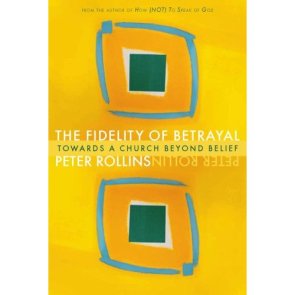
I have found Pete Rollins (part of the Belfast based IKON group) two books really challenging- he has this way of using parenthesis or slashes to convey something of the complexity and essential unknowabilty of our fumblings towards theology. Check these out if your head can cope with this;

One of the problems/blessings (to get all Rollins-esque!) of my particular personality is that I tend to see more gray than black and white. Where others see a simple issue- he is wrong, that is truth, this is what the Bible means by this, this is what is wrong with the world/the organisation/the church- I find myself always saying yes, but…
This is not always helpful. It can result in lack of clarity and prevarication. It can skew me towards a fence sitting position that has lots of questions, but finds no firm ground for to walk forward on. Kind of like some critics would categorise the emerging church do you think?
But how about theology? Is this not all about TRUTH? If we loose sight of the essential propositions that we hold in common, then all is lost, surely? This is how I was brought up. There were some gray areas, but these were overshadowed by the towering edifices of truth that we were given and encouraged to stand on like high stone walls.
So faith converted to theology (our theory and thoughts towards God) in this way;

Except, for me, this never really worked. I spend too much time with people to ever think that simple answers to complex human questions will suffice.
This sometimes leaves me at a place of dissonance with other more concrete but sincerely held theological positions all about me. At times it challenges my faith itself, but I have come to believe far from being a negative thing, this process of engagement, doubting and testing is in fact the very stuff of faith.
And that the ambiguities and difficulties brought to us by our reading of scripture and engagement with the wonders and mysteries of God will always result in a degree of uncertainty and struggle- and it is through honest engagement in this struggle that we encounter the Living God.
Or perhaps this just suits my personality, and so I make my theology accordingly?
This is the question that has been occupying my thoughts recently. Do we always tend to make an Icon out of our own perspective, and seek out others who will agree with us, and therefore make it seem more true, more dependable and therefore give it an illusion of universality?
Perhaps then, we form our theology a little like this;

If this is true, then does it matter?
Perhaps not. Perhaps this is a human trait- the gift of individual perspective.
Where It seems to become problematic is when we think that we are right, and everyone else is therefore wrong. It might be that you have been part of a group or denomination where version one of the theology-receiving model is enforced- leaving no room for any of your own exploration. This can be abusive and damaging.
So can the opposite- let us never be guilty of making God in our own image!
Which of course, unless you agree with me- you are/are not!
So, what it this story all about?
In our little group, we have been doing a study on the Book of Acts, as part of an ongoing attempt to consider the place of Christians in post-Christian, post-modern Britain. (We are using ‘Exilio’, a study on the book ‘Exiles’ by Michael Frost- see here for more information.)
We have just spent some time chewing on this very difficult passage in Acts 6. Here is the story
The early church has begun in a blaze of Holy Spirit fire, and these early followers of Christ came together in beautiful communities, sharing and caring for one another, and giving us a glimpse of heaven.
Then Ananias and his wife Sophira, perhaps to gain influence or status, sell a piece of land, and present the money to the apostles for the communal good, or at least they present some of it- they keep back some for themselves, but pretend that they have given all.
Peter challenges first Ananias, who lies, then drops down dead. Then his wife turns up, and rather than consoling her, Peter asks her the same question, she lies too, and Peter has a few harsh words to say to her, before she too drops down dead.
And everyone was consumed with the fear of the Lord… Well, you would be wouldn’t you…
It is a story that I struggle with. Did God kill these people? If not, what did- an overwhelming sense of guilt? Peter? Was what they did so bad? Have you and I not done worse- and yet lived to feel the guilt, and perhaps seek the promised forgiveness?
The next story is about the squabbling over the handing out of food to the poor- and the need to appoint stewards to keep the hand-outs fair to all concerned. But there is no mention of any of the moaners or unfair dealers being cut down in judgment.
This is (I think) the only story of instant punishment of sinners in the New Testament. It seems like an old testament kind of story…
So why is this story in the Bible? What is God seeking to teach us as we read this? In our discussions we came up with a few possible answers-
What do you think folks? Any thoughts gratefully accepted…
I had an early start this morning- leaving the house at 7.30 am for a two hour drive. As ever, BBC radio 4 was my faithful companion on the road…
And of course, the morning news was full of the current world financial crisis, brought about by the so-called ‘credit crunch’ and the collapse of an American bank sending shock waves round the world’s stock markets.
We await to see whether the giant insurance firm AIG, responsible for trillions of dollars investments, will topple and fall over also.
We are finding out that when a butterfly flaps in the windows of a wall street office, then not even a post office account in sleepy Argyll is unaffected by the resultant tidal waves of monetary insecurity.
And no-one seems to have any clear idea of what happens next. It is almost as if the animal that we created now has a will of its own, and a malevolent will at that… The radio carried interviews of doom mongers, and other folk seeming to suggest that the worst was over, and we just needed to stop the panic, which was the cause of the whole thing in the first place.
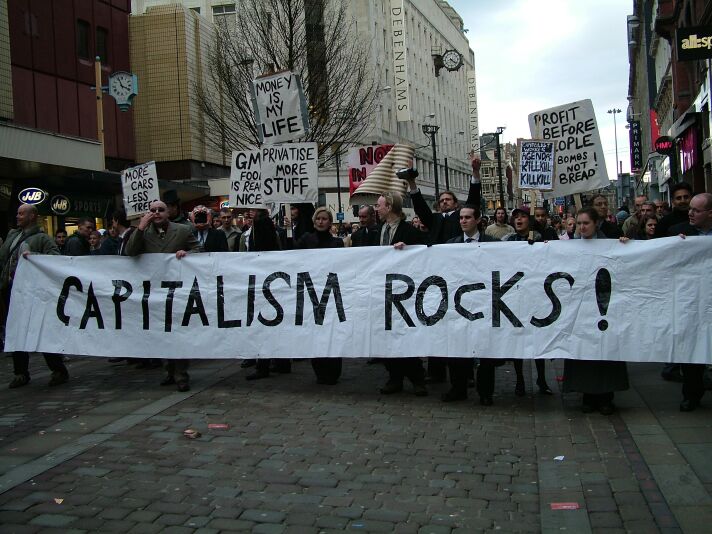
And then there was this other discussion- about the nature of the capitalist system itself, and the greed at the heart of it all.
 And we remember again the words uttered by the fictional stock broker Gordon Gekko in the 1987 film ‘Wall Street’ (played brilliantly by Michael Douglas)- Greed is good…
Gekko has become an iconic figure, acting as an archetypal capitalist, but in the process asking questions about the meaning and nature of a culture built on the pursuit of MORE, always MORE. Capitalism, and neo-liberal economics rule the economic roost at the moment, and no-one seems to be able to challenge the ideological truth of ‘trickle-down’ benefits of the creation of wealth, and the release of entrepreneurial aspiration, red in tooth and claw.
This morning, world renowned economists were asked whether they thought that this crisis had been brought about by greed. Both replied that they thought that it had. They thought that some greed was needed- but there had been too much!
They described how a long period (16 years) of economic growth had resulted in complacency and increased risk taking on the part of bankers, stock brokers and financiers. And how ‘rocket scientists’ (a euphemism for people who design ever more complicated financial products in order to seek out profit) have designed complicated financial processed that are not understood by most of the people whose companies are selling them.
Many of the huge profits generated by the banks have been made by selling and buying products with borrowed money. Sometimes, the borrowing ratio to the assets of banks can be 30-40-even 50 to 1. This is fine as long as there is lots of money sloshing around the system, but it only takes a few variables to change- interest rates, commodity and fuel prices, economic slow down, the rise of the Far East, etc etc, and suddenly, apparently impregnable banks are dreadfully exposed and vulnerable.
These are, after all, human institutions, made after our own image.
But we are made in the image of God are we not? And as a Christian, I find myself experiencing dissonance with any system that depends on greed and grasping as the engine of its very survival. Is there really no other way? Do I have to be complicit with this way of living?
I have a mortgage and a car loan from the Bank of Scotland. This bank has lost 40% of it’s share price in the last two days. Who knows what the future is for the BOS, and for my accounts?
But, is this the most pressing economic reality pressing in on our culture? Is Capitalism really working? Or is it serving only the narrow interests of people like me, who experience many of its benefits at the expense of those who do not?
Is the real economic crisis to be found in a world in which things like this are ever present;
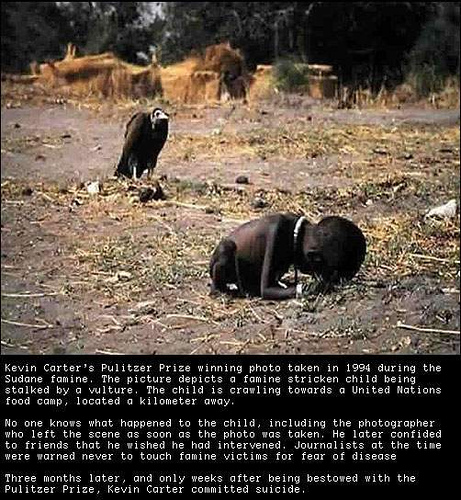
So what on earth can be, or should be our response?
I am humbled again. Reminded that my storehouse is not on earth, but in heaven.
And that when I serve the least of these, I serve Jesus.

Suits.
Stuffed suits. Pin striped suits. Business suits. Power suits. Penguin suits.
Corporate uniforms.
Boys together in gentleman’s clubs.
Power. Control.
Management by the application of… image.
Or do I make too much of this?
Tomorrow I am going to a meeting in Lochgilphead for Social Work and Health managers, which is to discuss some governance issues thrown up by a redesign of Mental Health services (get the language there- ‘governance’ and ‘redesign’.) I will not wear a suit. I reckon I will be in a minority of perhaps, one.
Informality of dress seems to be trendy in some quarters. It is strange to me that within my social work department, things have gone entirely the other way for managers at least. The women, perhaps surprisingly, seem to escape this pressure for the most part.
Another redesign process recently replaced whole swathes of managers. The new folk often do not live in Argyll- they have not chosen to live and contribute to the communities they serve. That is not criticism- but it is just different.
For people like me, who try to find a way to carry that salt and light thing into the places I inhabit, the suits just seem to get in the way…
They seem like a barrier- a way to create distance between people.
I find myself at odds with the world about me… and the visible sign of this comes in the form of a table surrounded by men in dark suits.
I can see the point of this at times- the management thing- distance is sometimes required. But for me, this non-suit wearing has become my little point of rebellion, owing much to a lack of comfort with the work culture of my organisation- which at times seems highly toxic.
It is also how I choose to express something of my individuality- and my spirituality. I may yet be instructed to suit up-
But for now, the only suit I will wear regularly…
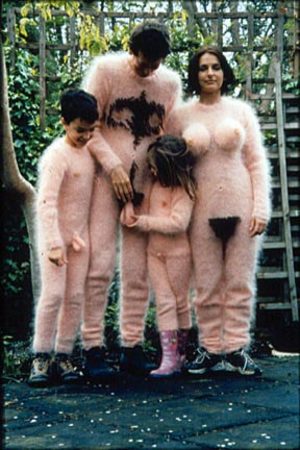
Is my birthday suit.
At Greenbelt Festival, there is a new tradition of hymn singing in the big beer tent.
I stayed away this year, as it becomes very crowded- and the volume of the singing has to be heard to be believed. On one occasion I was about a mile away over the other side of the festival fields, and you could hear the singing clearly above the sounds coming from the mega-amplified main stage.
Here is a clip that gives a flavour of the event. What you see is a hymn choosing process, then a few thousand folk singing ‘Lord the light of your love is shining’.
The beers and hymns event has been criticised by some. As you can see, for some, the beer is central to proceedings- and perhaps the idea of beer-fueled worship, cast alongside the instructions for ‘orderly worship’ by St Paul is a step too far.
But then, if you speak to people who were there, with tears in their eyes as they worshiped…
How this transfers to your town or congregation- who knows!
We have been on the road a lot recently. Twice down to England in as many weeks- each time a 7 hour drive…
It is good to be away- we have been to festivals, and to be part of family wedding celebrations.
But getting home- this is always such a lovely thing…

First glimpse of the Clyde

From the Ferry heading home to Dunoon
I am very proud of my niece, who is part of Nottingham youth dance company. She is just about to start proper ballet school, so all the very best Elizabeth- my very favourite niece… ( I had to have a think then to make sure that she is my only niece!)
Lily and her company were dancing @ the Edinburgh Festival this year, and I have just been looking at some photos of them performing in the street.
I am no dancer. I am six and a half feet tall and almost as wide. People who can dance have a gift that is beyond my understanding, but through watching these talented young people, I am learning to appreciate the power of bodies moving to music- the ability to convey emotion, beauty, even truth.
The Bible too is full of references to dancing. Dancing as worship, dancing as celebration, dancing as a kind of childlike innocence, and dancing to ensnare and entrap.
Dance on then Lily. It will always be a joy to come and watch…


So what do we think about Angels then?
We have just embarked on a plan to set up a worship space on Dunoon pier using the premise of Michaelmas- the festival of Michael and all Angels ( 27th of September… 12 noon till 8. You would be welcome!)
This idea was floated by Kimberley, minister at our local Episcopal church, and fellow blogger, and we had a lovely creative round-table planning meeting a couple of evenings ago. For some reason Michaela had sprinkled the table with glitter to bring a little angel-dust sparkle to the proceedings- and as ever with glitter, it is now everywhere, and on everything…
For me, the creation of these happenings is where the real worship of God can happen- a small community who seek to place God at the centre of everything, and celebrate this together.
But, as a confession, I struggled with the idea a little at first. To set up worship spaces like the one seems to demand a theme that allows creative, even playful, engagement- and I struggled with Angels as a theme…
Angels- Christmas cards, and New Age nonsense… this was my starting point.
But, I soon found that a little persistence can be very fruitful.
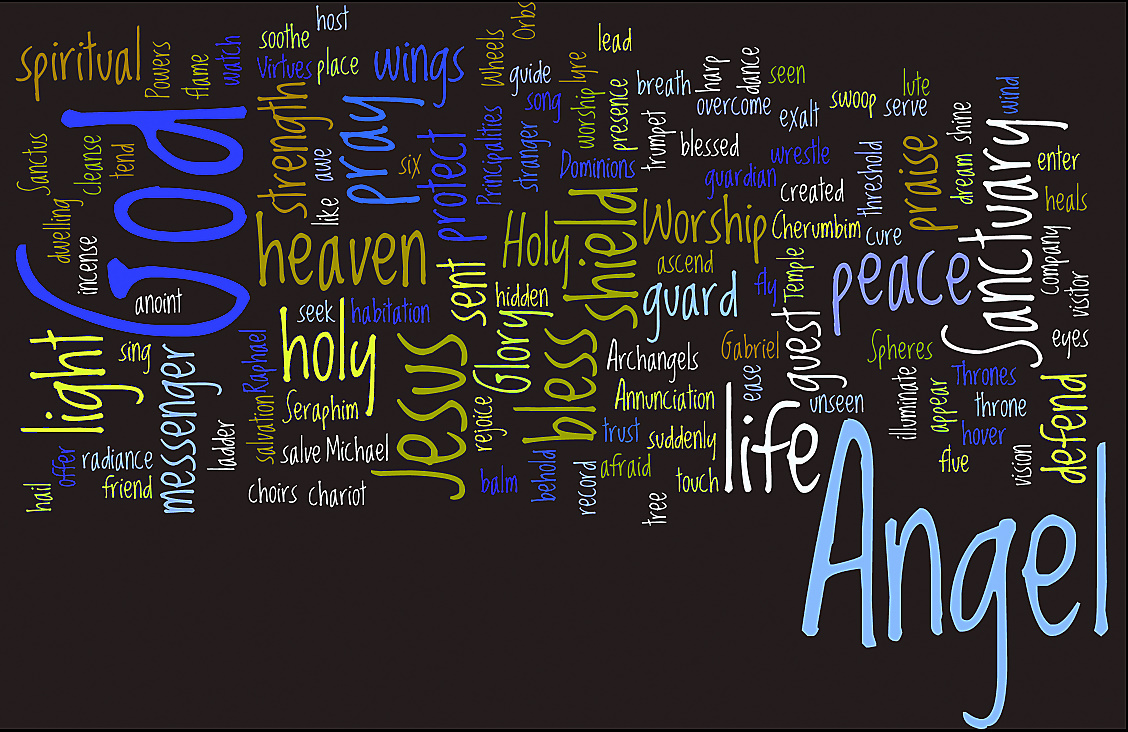
Kimberley had a whole set of words and ideas about Angels, and I soon discovered that Angel literally means ‘gods messenger’. Other folks had paintings, and ideas about how we could use the space, and what ‘stations’ we could prepare, and we were off and running.
One of the ideas was to use postcards to encourage people to send their own messages. I used wordle to generate an image from Kimberley’s words, and ordered some postcards.
Here is the image;

Today is Saturday.
And we have nothing planned.
No visitors are coming to stay (although I love having visitors.)
We have no major tasks at hand (although there is great fulfillment in a job well done.)
I am not on duty (and work can just go hang for a while…)
I do not have to worry about planning church stuff for tomorrow- after years and years of weekend church business, I now can enjoy the occasional sabbath…
Sure there are many things that I could/should be doing- gardening, cleaning, decorating, sorting out, planning for the upcoming Aoradh event. But I feel no pressure to do any of these things.
I may just so nothing…
And days like this, they are like sonnets. And they turn me all poetic.
Slow Saturday
Saturday morning
You and me
Stacked like school chairs
Racked together like delicious dishes in the dishwasher
Quilted by the wonderful possibility
Of an empty dayMe holding you
You wearing me
Like a film star in a fur coatYou told me that I had fallen back to sleep
And that you liked the sound of my snoring
And I curled closerAnd the chatter of a blackbird outside our bedroom window
And the sound of slow diesel engines out on the estuary
The creak of boards as Will heads for an appointment with a pokemon
All these sounds of the approaching day
Are beautifulLike you
So open up day
Like an Alpine picture windowI’ll put on the coffee
13.09.08

 this fragile tent