Freecycle is a UK based network though which you can give stuff away.
It is that simple!
We all have stuff lying around the house that we no longer need or use- cameras, books, bikes, toys etc. A lot of it is destined to end up at the tip. Freecycle enables you to offer it out ot other local people who might be able to use it. If you need something specific, you can put this up as a request.
Over the past few weeks and months we have used it a lot.
We have given away a paddling pool, an old tumble drier and some other odds and ends
We have inherited an old Bell and Howell slide projector to use for worship instalations.
Friends have given away old kitchen units, computers rugs- you name it.
I heard about the tragic story of this young rugby player today (more from the BBC here)
Daniel James, talented rugby player, tipped for great things. Until in March 2007 he suffers a compressed fracture of the spine as a scrum collapsed, and the resultant damage left him a paraplegic and in considerable pain.
And 18 months later, after two previous failed suicide attempts, he traveled to a swiss clinic who were prepared to assist him in his wish to die.
His parents described their experience in an e-mail in this way (as reported by the BBC)
“We returned from Switzerland on the 12 September after accompanying our… son who had been left tetraplegic after a rugby accident,” she wrote.
“Dan found his life so unbearable and had tried to commit suicide three times, other than to starve himself to travel to Switzerland was his only option.
“Whilst we were away some ‘well meaning’ person involved with social services took it upon herself to call the police.
“This person had never met Dan before or after his accident and obviously gave no consideration for our younger daughters who had seen their big brother suffer so much, and the day before had to say goodbye to him.
“I hope that one day I will get the chance to speak to this lady and ask if she had a son, daughter, father, mother, who could not walk, had no hand function, was incontinent, and relied upon 24-hour care for every basic need and they had asked her for support, what would she have done?!
“Our son could not have been more loved and had he felt he could live his life this way he would have been loved just the same but this was his right as a human being, nobody but nobody should judge him or anyone else.”
It is a terrible thing to lose someone you love. We can only begin to guess what this family have gone through. Nor what we might do in their situation faced with such pain and suffering.
But this seems to me to be such a terrible waste. A young man full of talent and aspiration looses everything that he thought life was about. And in the middle of all the searing pain and loss, he finds no hope. He sees no possibility of a future that has any meaning.
His family have been with him every step of the way, but 18 months is a short time for you and me in the stride of our life, but a long long time if every minute is full of misery and agony.
So they eventually accede to his wishes, and take him to one of the few places in the world where assisted suicide is permissible, administered in a modern clinic surrounded by his family.
A peaceful medicinal and narcotic end to what is known, and a passage to whatever is to come…
To lose hope is to lose life itself.
Could this young man have found his way back to life given another 18 months/weeks/days/hours?
No-one will ever know for sure. His actions can not be undone. His parents can not afford to ever think like this, or no doubt it will destroy them.
May they find their own hope.
But what of us, facing our own uncertain future? We have a friend who is a supporter of dignity in dying. She is towards the end of a full life, and lost her husband a couple of years ago. She is an atheist, and sees no point in prolonging life beyond the ability to fend fully for oneself.
These are such difficult issues. As with many deeply human ethical questions, what may seem black and white is shadowed with large areas of grey.
The giving and taking of life is God’s business.
But the sustaining and defining of life- this increasingly is a scientific phenomenon- at least for those who can afford it.
I think our response can only be to be those who accompany, and illuminate beauty and grace particularly those who need it most.
May we be bringers of hope to the hopeless
And singers of songs of freedom to those who are captive
My closest friends know that I have this secret addiction. Some would describe it as an affliction.
It is called… cricket.
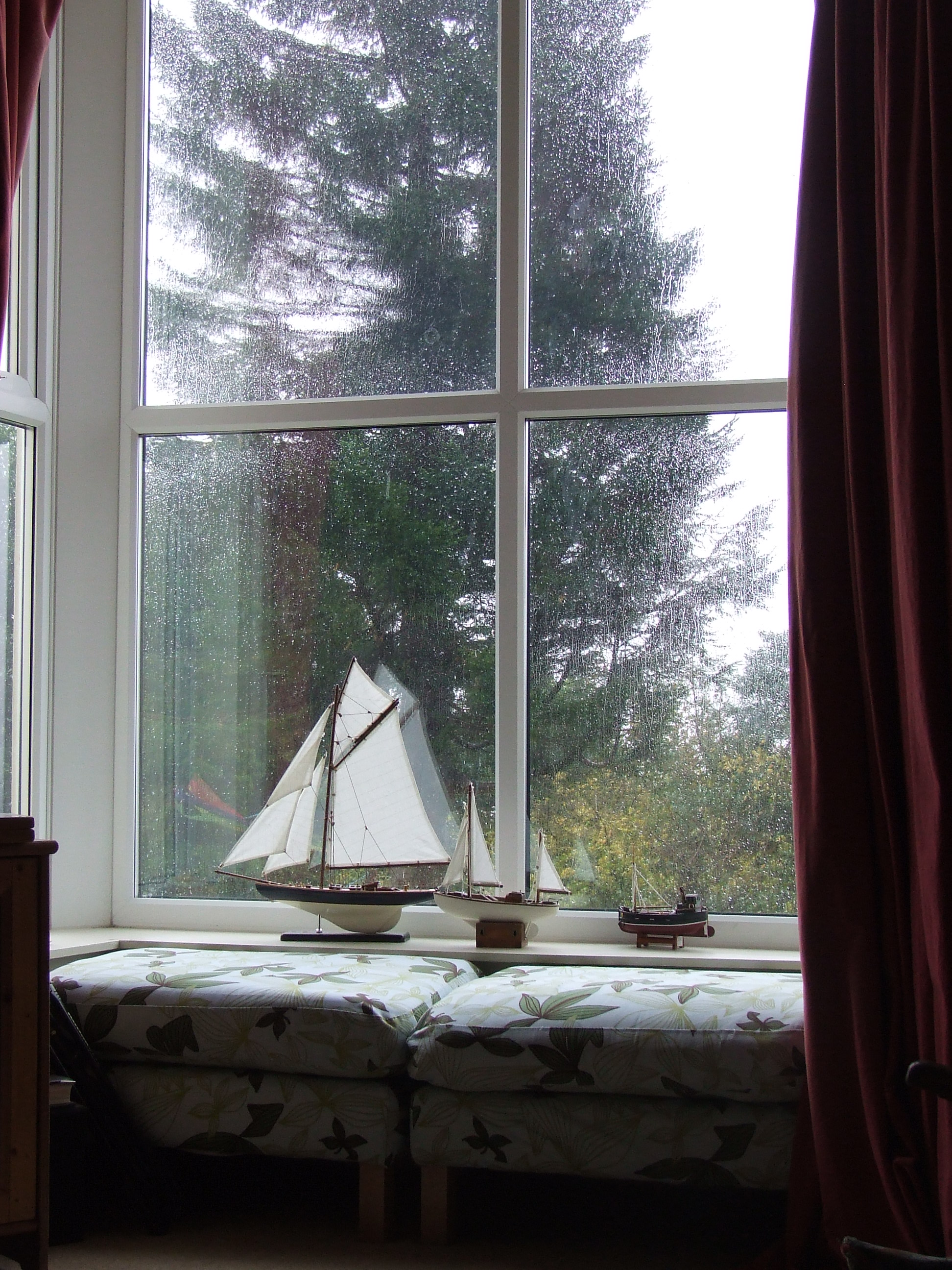
If all sport is distraction then it seems to me that cricket is one of the best ways to waste time. Today, for instance, is Saturday. The weather has closed in outside and the rain is rattling against the windows. We have an empty house after a week full of family and hard work re-plumbing. The house is warm and the kids happy.
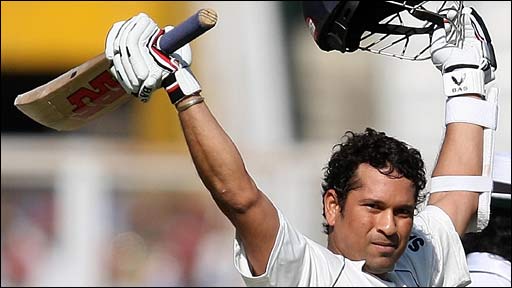
And India are playing Australia in the heat of the Punjab- brought to me by the power of TV here in autumnal Scotland. India are in the ascendancy after a drawn first test match. The Genius Sachin Tendulkar has broken the record by compiling the most runs scored by a batsman in a career, and two spin bowlers are twirling away in the kind of attritional subtle cricket that Indians excel at.
Some of you will not have a clue what I am talking about. Others will already be curling a sardonic smile at my stupidity for suggesting that cricket is worth watching. It is like watching paint dry you say. Here in Scotland, despite the fact that cricket is still played, most people love to have a go at the game. Perhaps this is because cricket is seen as an English game- conjuring up images of imperialism and empire.
This makes little sense- as the powerhouse of cricket has shifted permanently east- where it is the obsession of millions of Pakistani’s and Indians. English teams have become famous for getting well beaten all around the world.
In Scotland, cricket was the most popular sport with working people until around 1900, when that other English invention- football- began to take over. Celtic bought the site of their football stadium from a cricket club.
Well, I thought I would indulge in a little cricket apologetics… For the sake of the argument, I will limit the discussion to international cricket.
Cricket is boring. Some of the games last for 5 DAYS for heaven’s sake!
Test matches do indeed last 5 days. Most purists think this is the ultimate test of skill, captaincy, stamina and strategy. These matches are full of individual one-on-one battles of wit and talent, and the whole thing ebbs and flows with high drama and tension. It is a team game, played out by individuals. Strategy is everything, and the captain’s role is crucial.
Like all things- this will indeed be boring if you do not understand what you are watching- and test matches are not for everyone. Numbers attending have been falling around the world- apart from India, and surprisingly, England, where matches are sold out routinely.
But there are also one day matches- where each team has one innings of 50 overs (each over is 6 balls). whole different set of skills and talents need to be honed.
The current craze is for 20/20 cricket though- each side facing only 20 overs. This is frenetic, crash bang whallop stuff, often played under lights in the evening. Not for the purists, but great fun and seems to be a marketing phenomenon.
It is not a sport- people walk about in white clothes in the sunshine. You can be fat and still play cricket. It is a soft game played by wimps.
Anyone who has ever tried to bowl fast, or face a ball bowled by someone who knows what they are doing and is out to hurt you, will suggest that cricket can be a serious business. At the highest level it demands great fitness, huge concentration, and above all things, strength of character.
It was the West Indian bowlers of the 70’s and 80’s whose tall fast bowlers terrified and humbled cricketers around the world. The bouncer, aimed at up into the ribs of the batsman, or whistling into the odd nose, became stock in trade. Most batsman since these days, despite helmets, padding and glove, walk from the field covered in bruises. This summer a wicked bouncer from James Anderson knocked the teeth from an unfortunate New Zealand batsman. And we were all impressed.
See if you think you could face this kind of pressure. Here is England’s talisman in full flow
Cricket is all about snobbery and English stiff upper lip affectation. It lacks passion and real emotion.
Nonsense.
Cricket is played all over the world (unlike the American baseball so-called ‘world series’) and different nations bring their own characteristics to the the game. So the West Indians bring a calypso cavalier brilliance, the Australians bring ruthless professional gritty determination to win, the New Zealanders somehow maximise the mixed bag of limited talent through working as a close team, and the English- well expectations are usually exceeded by achievements.
Then there is the fine art of sledging- the practice of teasing, humiliating and abusing the batsman. The Australians became past masters at this- a ring of foul mouthed close fielders for whom nothing was off limits. It was criticised around the world- particularly by the ‘whinging poms’ as the English were termed by the Australian media. And damn it- the Aussies kept winning!
But sledging is here to stay- here is another bit of Flintoff. The famous ‘mind the windows Tino’ episode. You decide whether English cricket is soft and gentlemanly!
Cricket is a waste of time.
I could go on about the old imperial stereotypes of preparation for life by the building of character- but of course, cricket is indeed a waste of time.
But there are so many others. I reckon this is better than most.
I saw a face in the crowd
It shouted out loud
With a message profound
I tried not to stare
At the wild red hair
Going white at the roots
But my attention was drawn
To a dress that was torn
Above bright red rubber boots
I breathe in the air
That shares the despair
Of a man in black
Who knows what disease
Is pushed out by the sneeze
Of his passing anorak
I see you but our eyes don’t meet
On the bus I wouldn’t share your seat
If you fell down I’d help you to your feet
Then return to my side of the street.
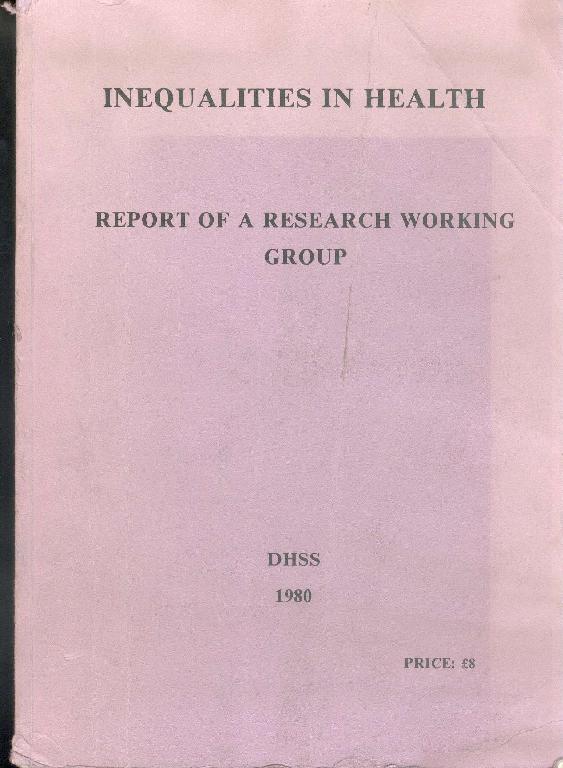
In the dying days of the ill fated Labour government in the late 1970’s, a report was commissioned from Sir Douglas Black into the causes and potential solutions to the inequalities in the health of the people of Britain.
This report, known as the Black report has become infamous amongst political and social scientists.
By the time the report had been completed, Thatcher had been swept into power on a platform of promises to break the power of the Unions, and to cut and control public expenditure. The report must have landed on her desk like an old kipper The Government wanted to bury it, but eventually released it on a bank holiday Monday, with a minimum of publicity. The report was never published- instead 260 photocopies were made available.
What was so controversial?
Black provided convincing figures that showed what many suspected—that the poorest had the highest rates of ill health and death. He argued that these rates could not be explained solely by income, education, mobility, or lifestyle, but were also caused by a lack of a coordinated policy that would ensure uniform delivery of services. He recommended health goals, tax changes, benefit increases, and restrictions on the sale and advertising of tobacco. Patrick Jenkin, the social services secretary, estimated with a shudder that Black’s proposals, which he hinted were little short of outrageous, would cost an unthinkable £2bn a year.
Leaving aside the economic questions raised by the cost of Trident nuclear weapons systems, or a war in the Falklands, the real political dynamite of this report was simply this- poverty makes people ill, and many of them die young.
This report was not talking about people who living marginal existences in sub-Saharan Africa- it was describing families living in one of the richest countries in the world- the worlds first industrialised country- Great Britain.
The Black report was not alone in reaching this conclusion. 28 years later World Health Organisation figures record a gap of 10 years between affluent Kensington and Chelsea, and post industrial Glasgow. Check out this article from the BBC.
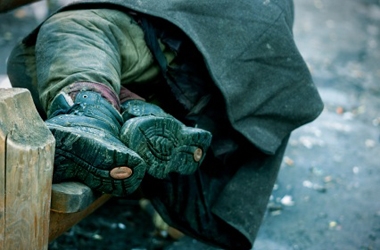
This hides the real issues though- the figures represent areas, not individuals at risk. For example, if you are a homeless rough sleeper, your life expectancy is 42 years.
There have been many discussions about how poverty leads to poor health in Britain. Poor diets, obesity, poor education, poor housing, unequal access to health services, stress- all these no doubt play a part- but the common issue that even the New Labour administration are not happy to dwell on is… poverty.
I do not intend to get into a discussion about how we define poverty- the whole relative or absolute thing. Poverty, once seen, is recognised by most of us. It is easy to blame. It is easy to be repelled and repulsed by squalid living.
Because poverty brutalises.
I have worked as a social worker for all my adult life. I have seen people living in conditions that are hard to believe. A man who lived in a house with a broken overflowing toilet for 15 years. A young woman whose body was broken by drug use and prostitution to the extent that she simply forgot to eat. A woman who was so caught up in her need to escape that she drinks the alcohol based handwashes in the hospital. And many many people who live in fear of a loss of benefit, because life is so marginal- with choices to be made over whether to feed the electricity meter, or the cat, or sometimes- the kids.
These people are not described as poor. We now talk about ‘social exclusion’. Almost as if we stopped inviting them to parties.
There are no easy answers. This, I think, is the reason that Jesus said the the poor would always be with us– and why the early church seemed to have at it’s very heart a desire to serve the poor. Strange then to hear these words of Jesus spoken as justification for inaction.
There are some national policy decisions that will always impact the poor. Progressive taxation, as opposed to the imposition of tax on food or fuel. Public transport, good social housing, employment opportunities and support, adequate benefits- particularly to single parents or vulnerable older people. These things are all good- and we might raise our collective voices in support… but for me there is also a personal dimension.
Because those of us who are paid to try to make a difference soon realise that all we do is administrate. We may have some small success- and this keeps us trying- but ultimately, we bring only sticking plaster to road traffic accidents.
But I believe in redemption and renewal, and lives transformed. And for this to happen- this brings humanity and hope to my own brokenness- and richness to my own poverty. As Jean Vanier put it
Jesus came to bring good news to the poor, not those who serve the poor! … The healing power in us will not come from our capacities and our riches, but in and through our poverty. We are called to discover that God can bring peace, compassion and love through our wounds.
This week I am on annual leave, and am taking the opportunity to do some work on the house.
Our house is old and well lived in so is always in need of renovation and repair. When time, energy and money allows, I will start a project, and work like a slave until it is done. I get stressed as I feel responsible for getting the thing finished.
This time, however, things are different- as I am the understudy to a craftsman.
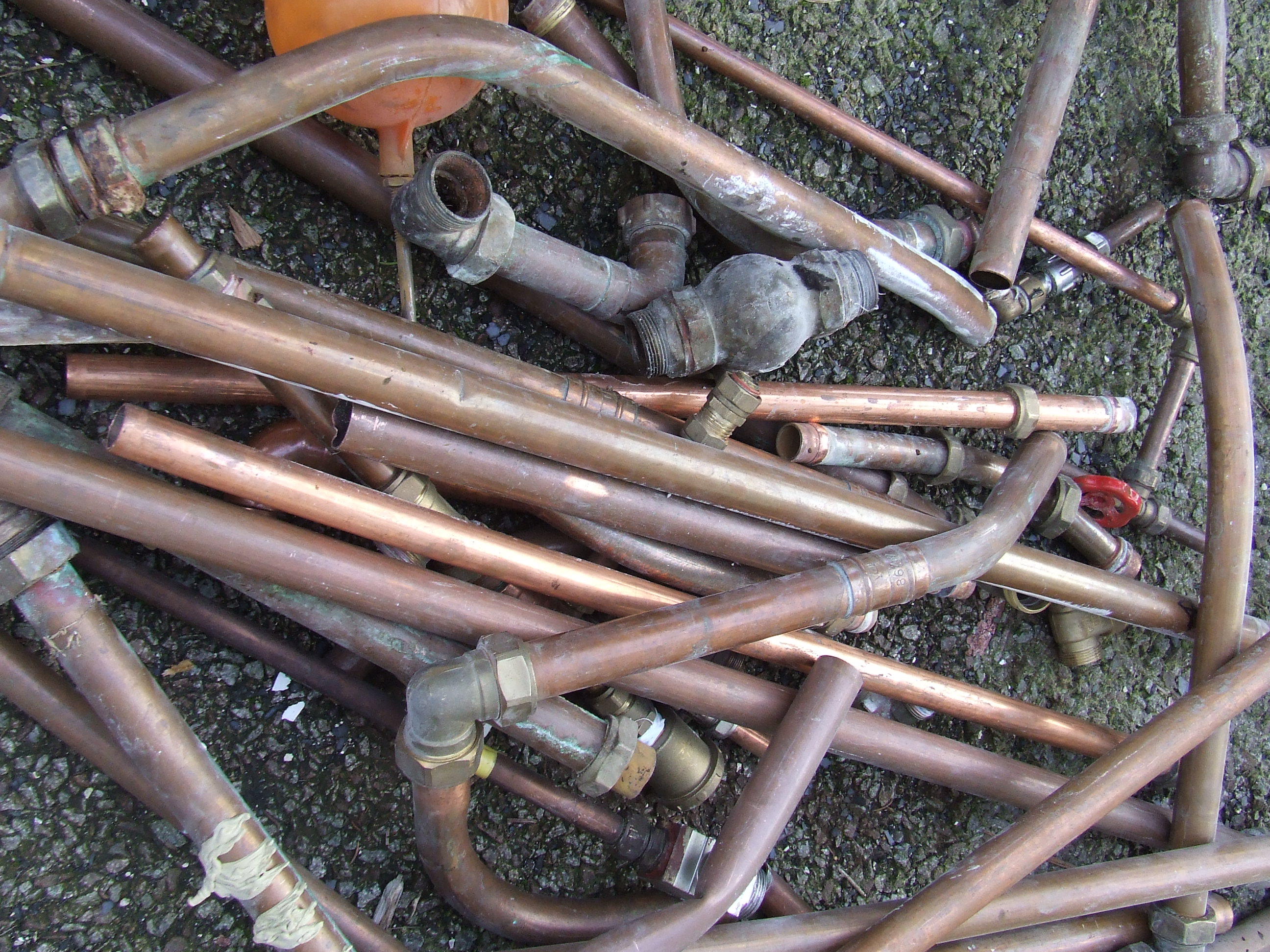
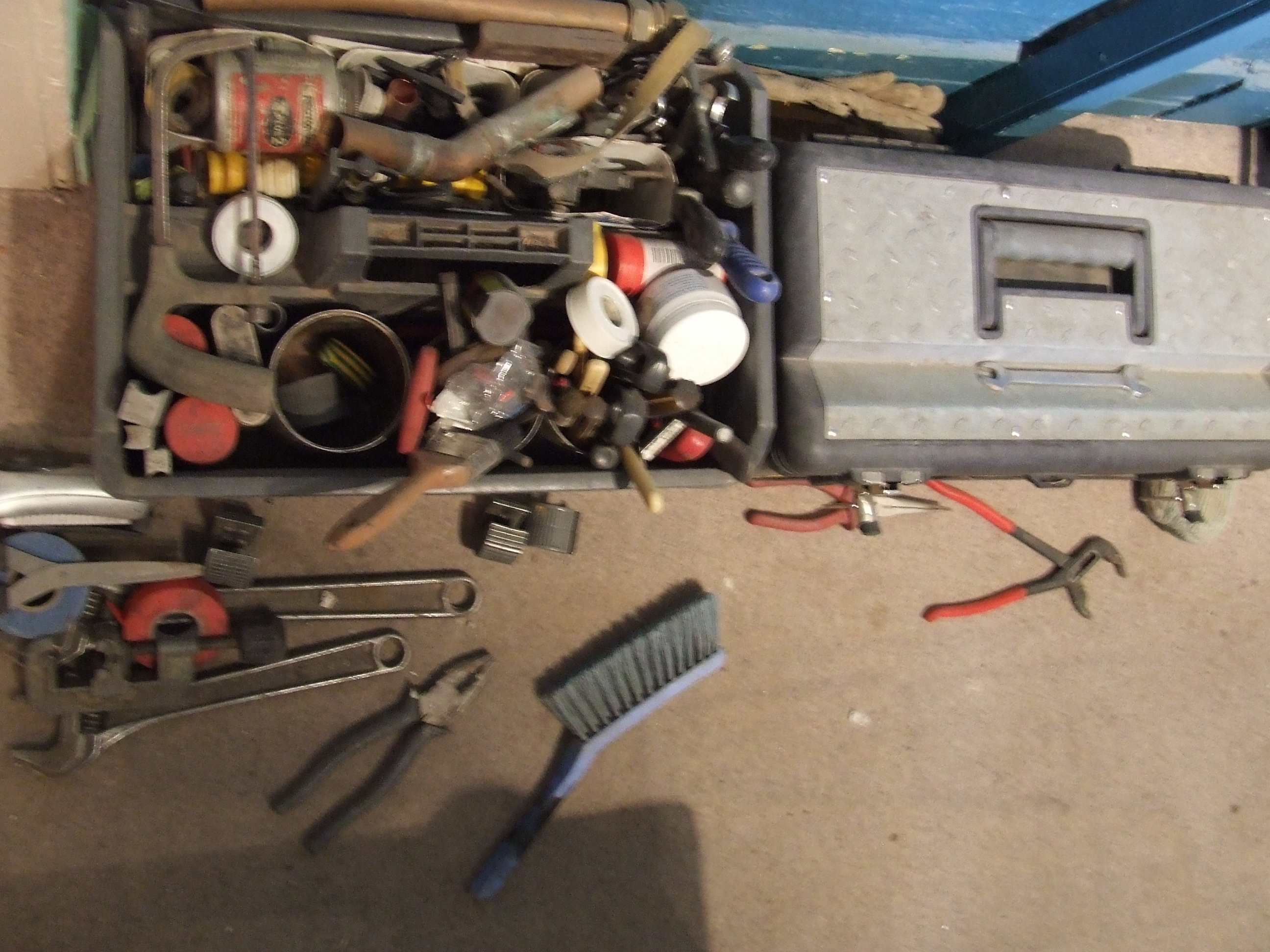
Michaela’s uncle is up here to upgrade the plumbing. This involves ripping out a massive inefficient old boiler that is asthmatic and rusty, and virtually rebuilding the boiler room around a sleek and compact new model. We will then rip out the old hot water tank, which is surrounded by a network of pipes- many of which are redundant.
What we will be left with is something that still burns the same gas, but quite a bit less of it, and will provide the house with heat and hot water just like the old one- only it will be reliable, and cleaner.
And after a day testing my bad back carrying huge bits of old plumbing, and sawing and drilling, I am tired, but not stressed. I am working with a man who has been a plumber for 40 plus years. There is next to nothing he does not know about pipes and plungers. And he has pride in a job not just done, but well done.
So, this left me thinking…
We, the church, are in need also of constant renovation. Some (perhaps me sometimes) would even wish to demolish and rebuild. Houses are to be lived in, and as we live in them, they become tired and worn. Plumbing leaks and boilers break down.
Technology brings new innovations- new gadgets and household appliances, new ways of using space, and so the building evolves and changes- or it’s value will plummet, and it might find itself only fit for selling on to property developers, or- dereliction and demolition.
But- people still need a roof- a place of warmth and shelter, where family can be nurtured and loved.
So renovation- which is born of hope, nurtured in vision and achieved through hard work, broken finger nails and skinned knuckles.
And as we renovate- how we need to learn under skilled craftsmen- men who need to prove nothing, and take no personal glory from the acts of resurrection they release. Rather the quiet satisfaction of a life lived well.











 this fragile tent


