Terrorism and Muslims…

Two words that are often used together in the press and perhaps in our consciousness.

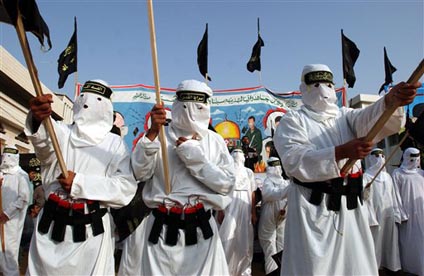
We tend to be of the view that whilst not all Muslims are terrorists, most terrorists are Muslims.

Until you look at the evidence that is.

Brian McLaren posted a link to this information on loonwatch.com-

In my previous article entitled “All Terrorists are Muslims…Except the 94% that Aren’t”, I used official FBI records to show that only 6% of terrorist attacks on U.S. soil from 1980 to 2005 were carried out by Islamic extremists.  The remaining 94% were from other groups (42% from Latinos, 24% from extreme left wing groups, 7% from extremist Jews, 5% from communists, and 16% from all other groups.)

In Europe, data from 2007-2009 showed similar patterns-

The results are stark, and prove decisively that not all terrorists are Muslims.  In fact, a whopping 99.6% of terrorist attacks in Europe were by non-Muslim groups; a good 84.8% of attacks were from separatist groups completely unrelated to Islam.  Leftist groups accounted for over sixteen times as much terrorism as radical Islamic groups.  Only a measly 0.4% of terrorist attacks from 2007 to 2009 could be attributed to extremist Muslims.

Forgive me if I come over all ranty- but I think we need to know this.

We need to consider this in relation to the foreign policies pursued on our behalf by our governments.

And we need to seek understanding with those whose faith is different to ours, not demonise and misconstrue.

And where violence and terror is being propagated in the the name of God, we should perhaps also understand that God has been used as an idolatrous way of achieving power before, and he will be again.

And that violence repaid with violence leads only to more… violence.

Green…

I force my way into the wet wood

Kicking my way through

The tangle of moss covered branches

And the hungry ground sucks at me

Wanting to wrap me in all shades of aggressive green

And from my feet upwards

I am mulched


It could swallow me whole

And I would need no grave


Still, birch bark makes a fine memorial

And the ragged hanging lichens

Will flutter their prayers

Above me


Gunpowder, Empire and old industry…

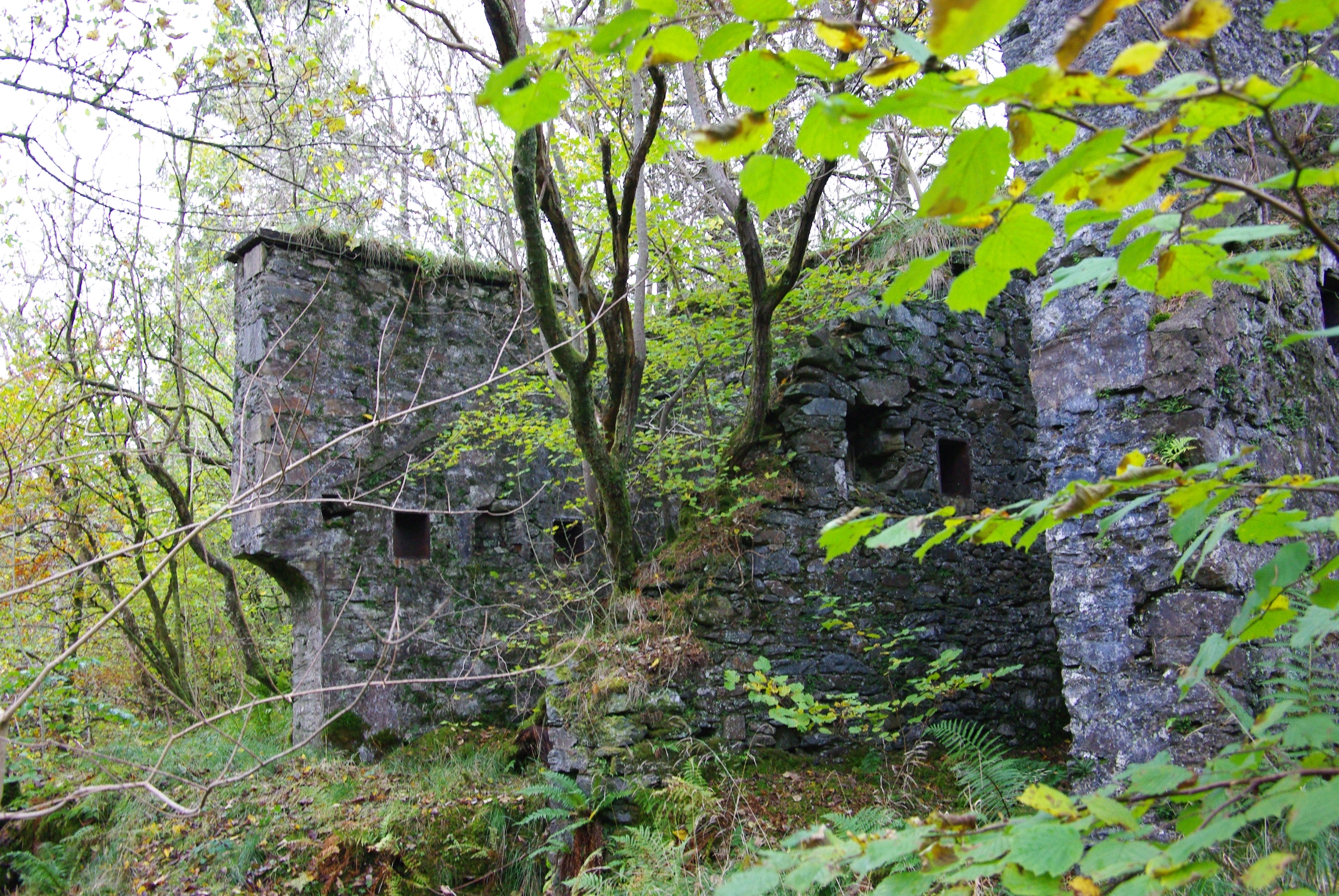
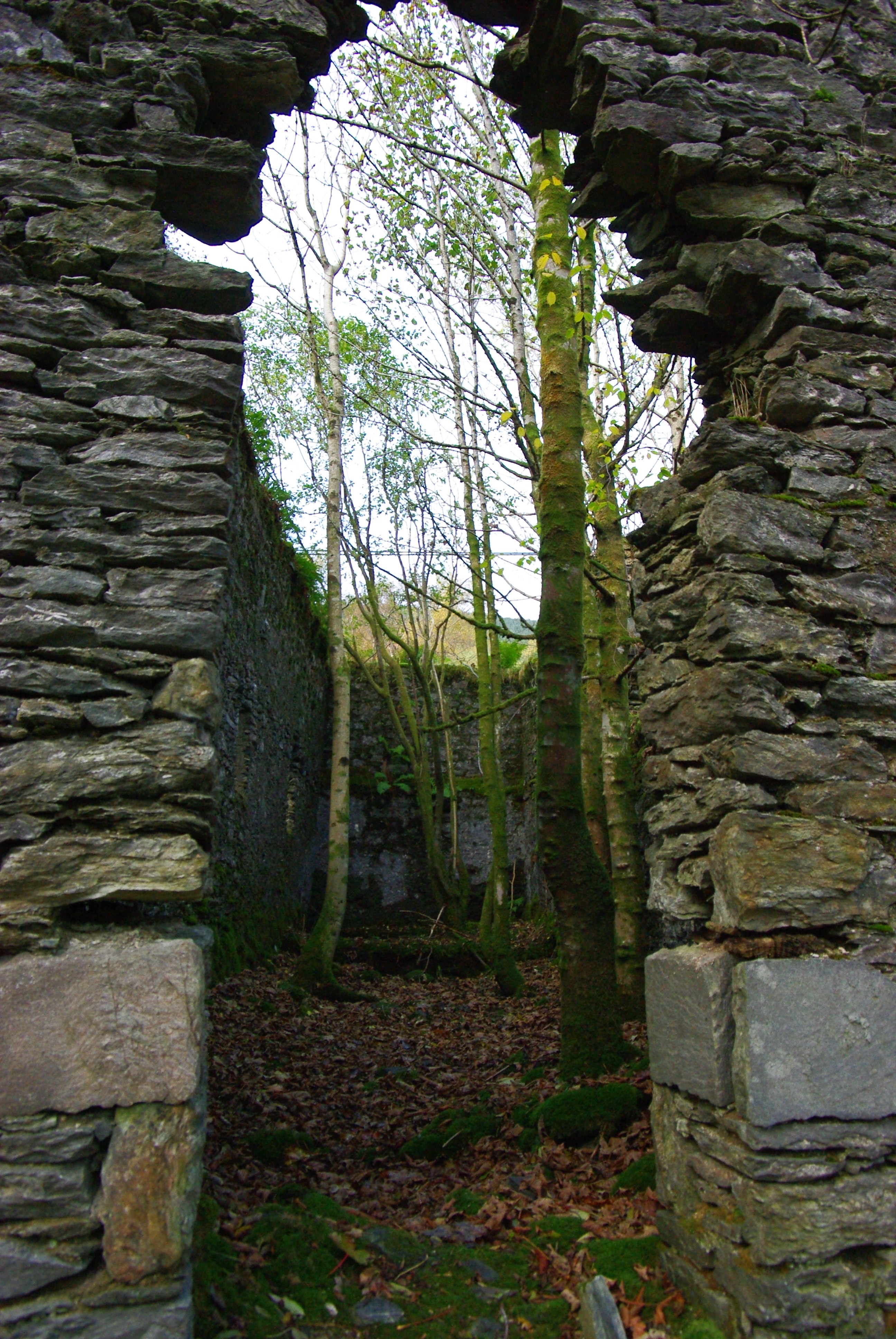
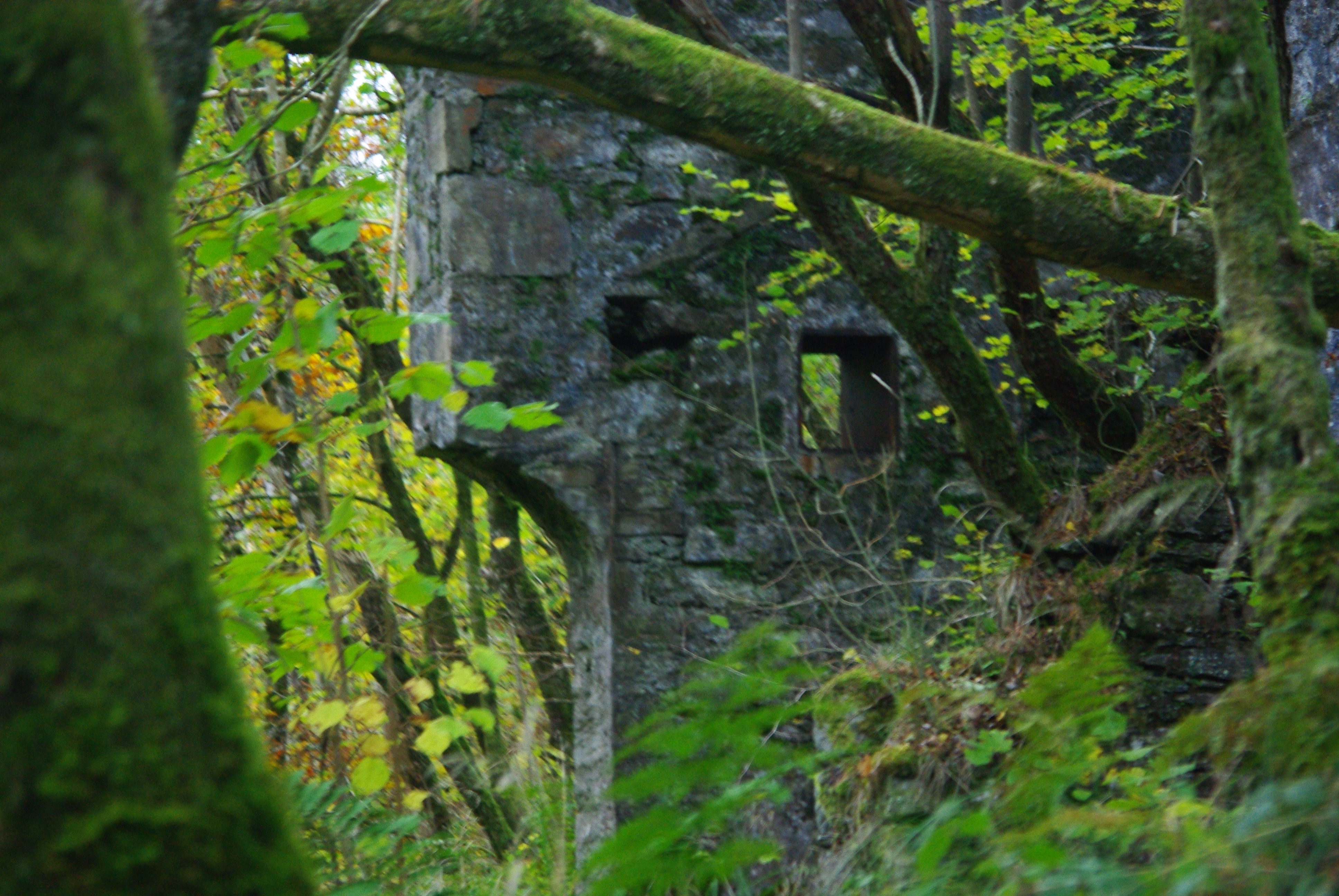
I took a walk out into the woods with my friend Simon this afternoon. I had been wanting to explore an old overgrown collection of buildings out along Glen Lean for a while. The last time we tried, the heavens opened, but today the sun was shining- until we got there that is, but this time we decided that a little rain should not put us off.

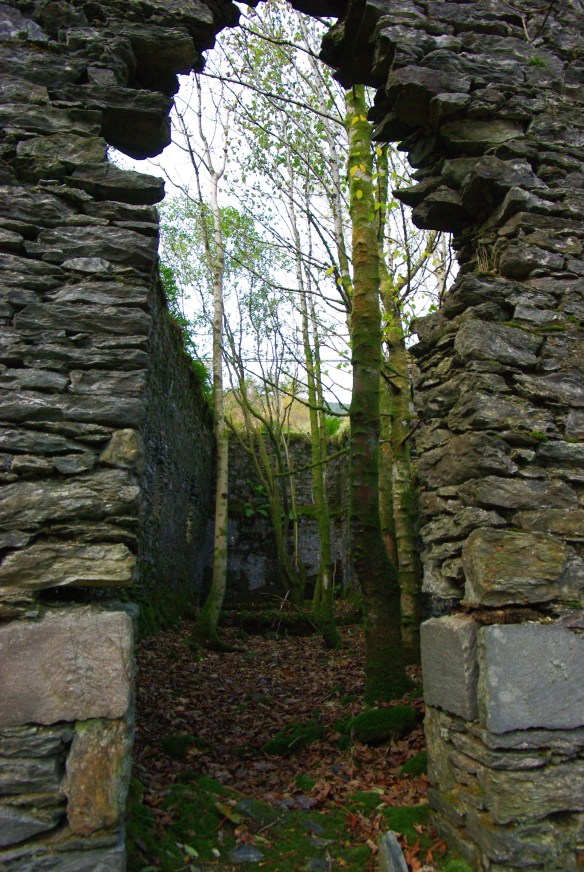
The old buildings were part of the former Argyll Gunpowder works, which operated over 4 sites in the county from around 1840 to 1903.
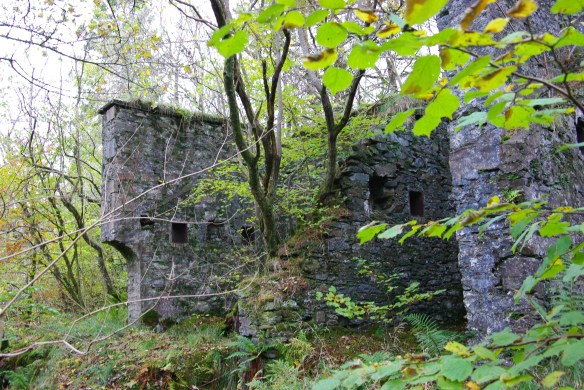
There is very little information about the Glen Lean site on the web- apart from this entry on Secret Scotland. There is however a good article by Kennedy McConnell summarising the history of one of the other locations where gunpowder was manufactured in this area (near Tighnabruaich on the other side of the peninsular) here.

It tells of a time when Argyll was famous for its manufacture of fine quality gunpowder, which was exported all over the world.

Powder used to blast and shoot our way towards the creation of an Empire.
Here is a quote from McConnell’s article-

The conversion of the raw materials from Kames into gunpowder at Millhouse required ten separate processing stages, each accommodated in a specially constructed building known as a “house”. A detailed description of these processes is outwith the scope of this article, but the names used to identify the various houses were Mixing, Charging, Breaking-down, Pressing, Corning, Dusting, Glazing, Stoving, Heading-up and Packing, These processing houses were widely dispersed throughout the grounds to minimise the risk of an explosion spreading from one building to another. Trees were planted in the intervening spaces for the same reason. Horse drawn bogeys were used to convey the goods around the works, and these ran on a small gauge railway system. The production machinery was driven by water power.

It was a dangerous business. He lists a whole series of accidents and explosions in which as many as nine people died. I think we can assume a similar history in Glen Lean.

The location of these mills was no doubt chosen at least in part because of their remoteness, as well as the availability of water power and raw materials. Whole communities developed that were dependent on the mills for work, and were decimated when we found more efficient ways of blowing each other to kingdom come, and so closed the mills one after the other.

I suppose you could say that this area has continued the tradition of providing the means of causing very large explosions. The Faslane naval base, location of the nuclear submarines, is just across the water from here.

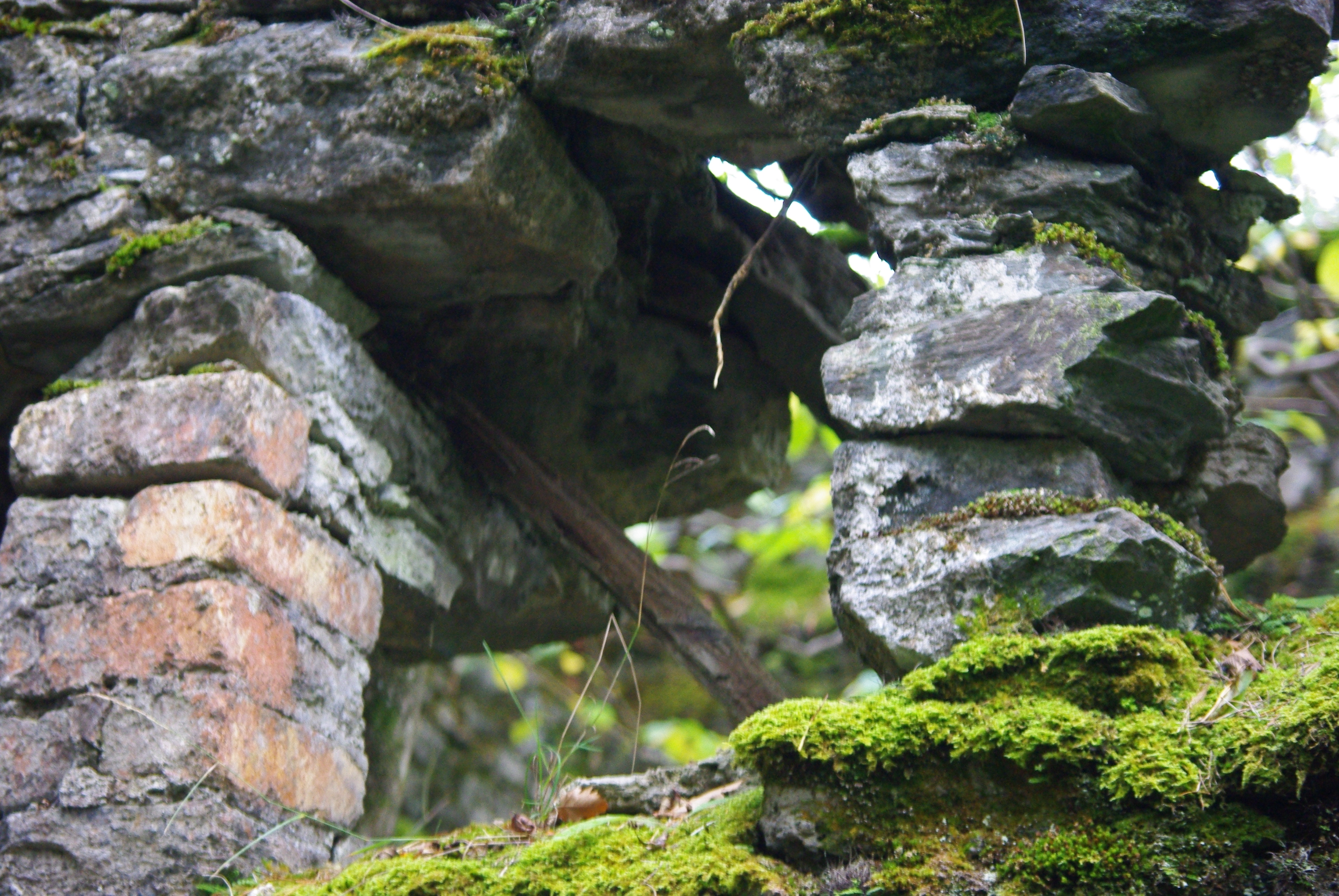
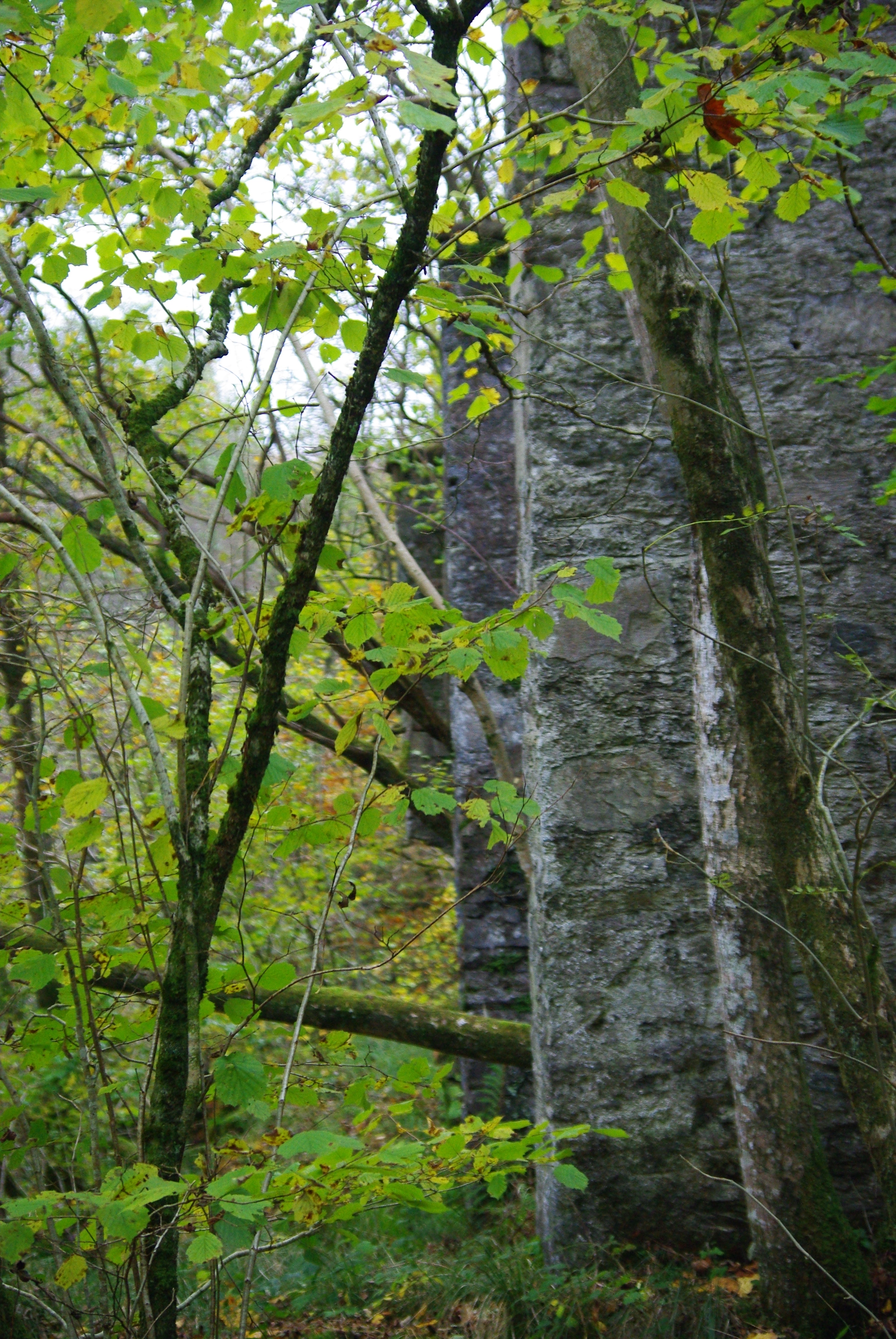
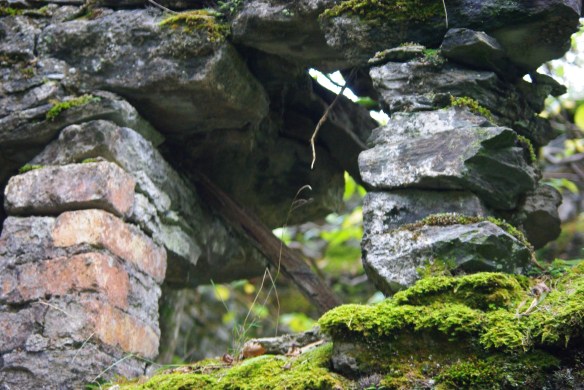
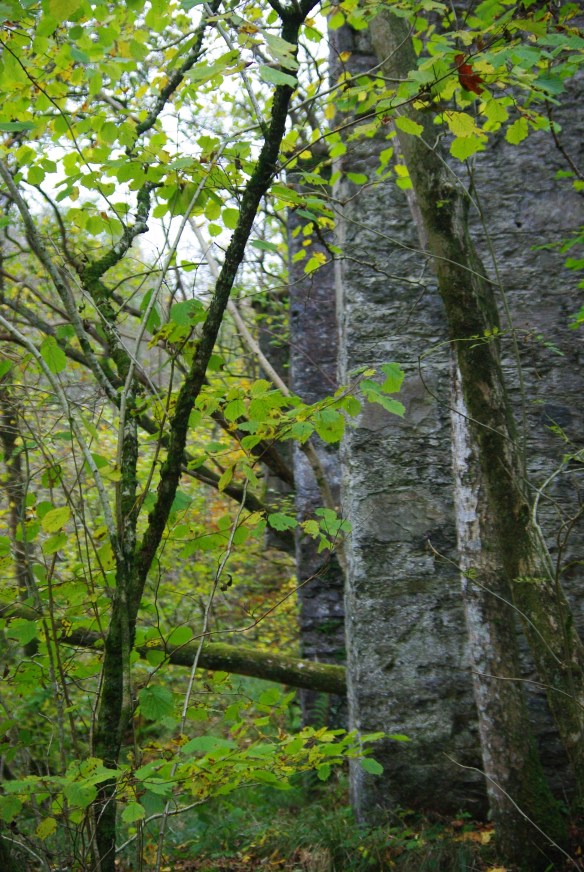
Walking round the old buildings today was a walk through our military-industrial history. They are being swallowed by the encroaching trees, like an Aztec temple in the rain forest.
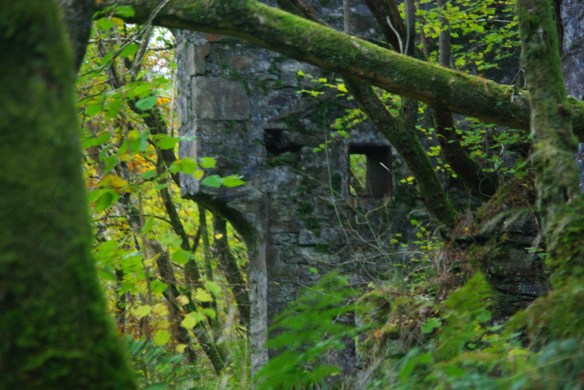
There has been no attempt locally to make this part of our history known. No footpaths into the site- you will need some serious footwear to get anywhere near it- and certainly no interpretive history boards.

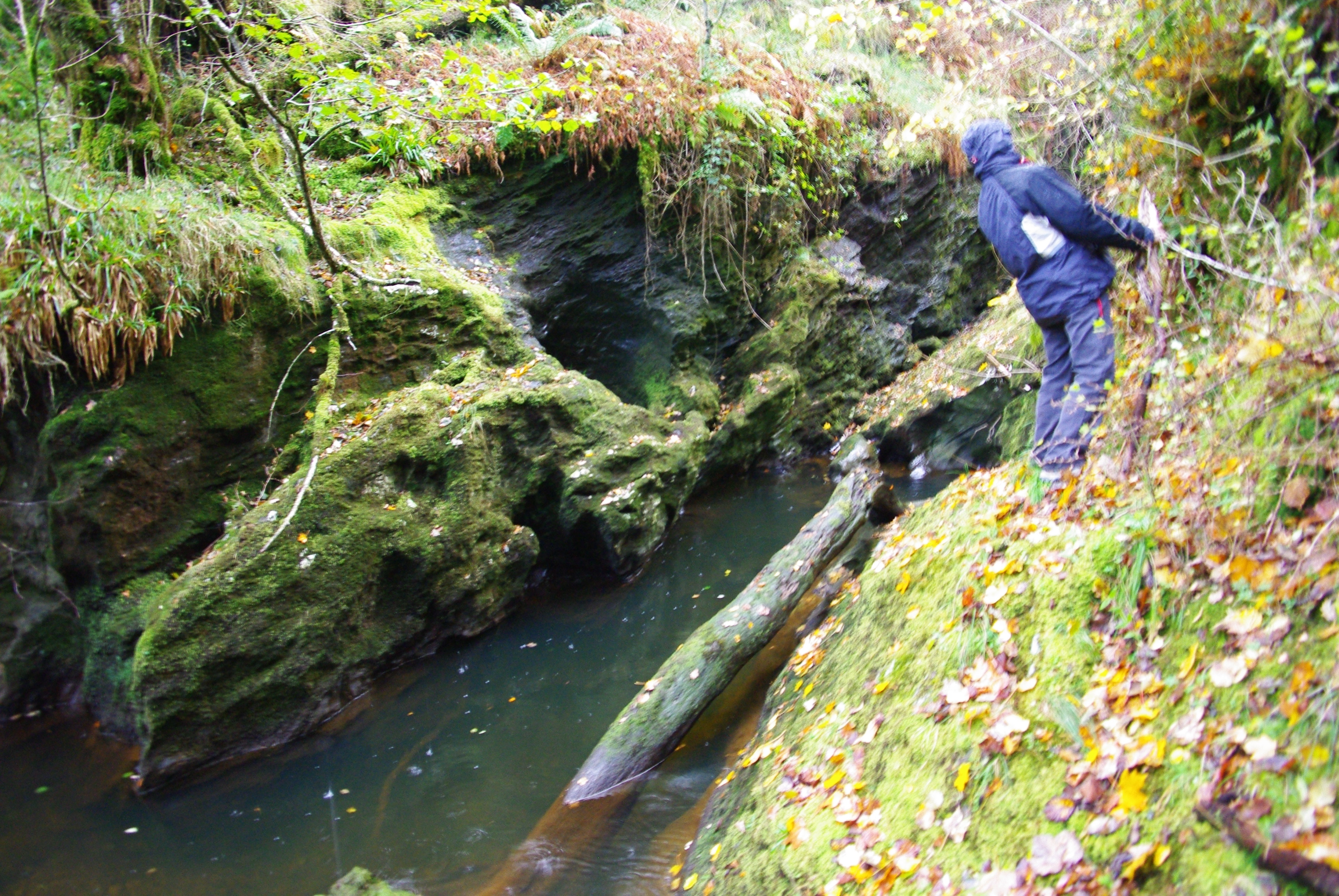
Soon it will all fall into the river below.
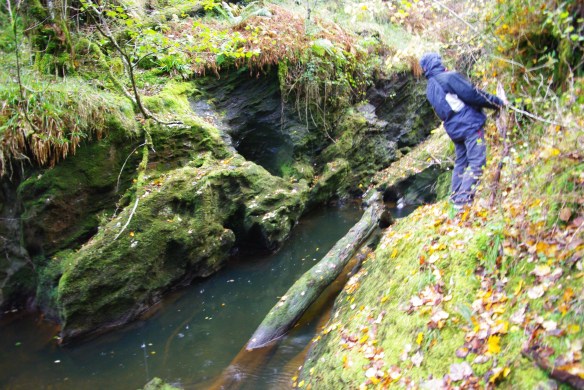
The whole thing seems to be to be a poignant visual analogy of Empire. Our former means of producing arms and ammunition have mouldered away. Obscured and forgotten in a forest of new trees.

And much of what we were, I am glad to leave behind.

And yet there is something still that pulls at me with pangs of regret. Memories of a something precious that we might also have lost. A simpler, more idealistic time, where all things seemed possible.

Or perhaps these are constructed memories, projected onto these old walls.

Old ruins like this tend to foster this kind of thinking.
Praxis…

Praxis is the process by which a theory, lesson, or skill is enacted or practiced, embodied and/or realized.

You could say that it is all about getting your hands dirty.

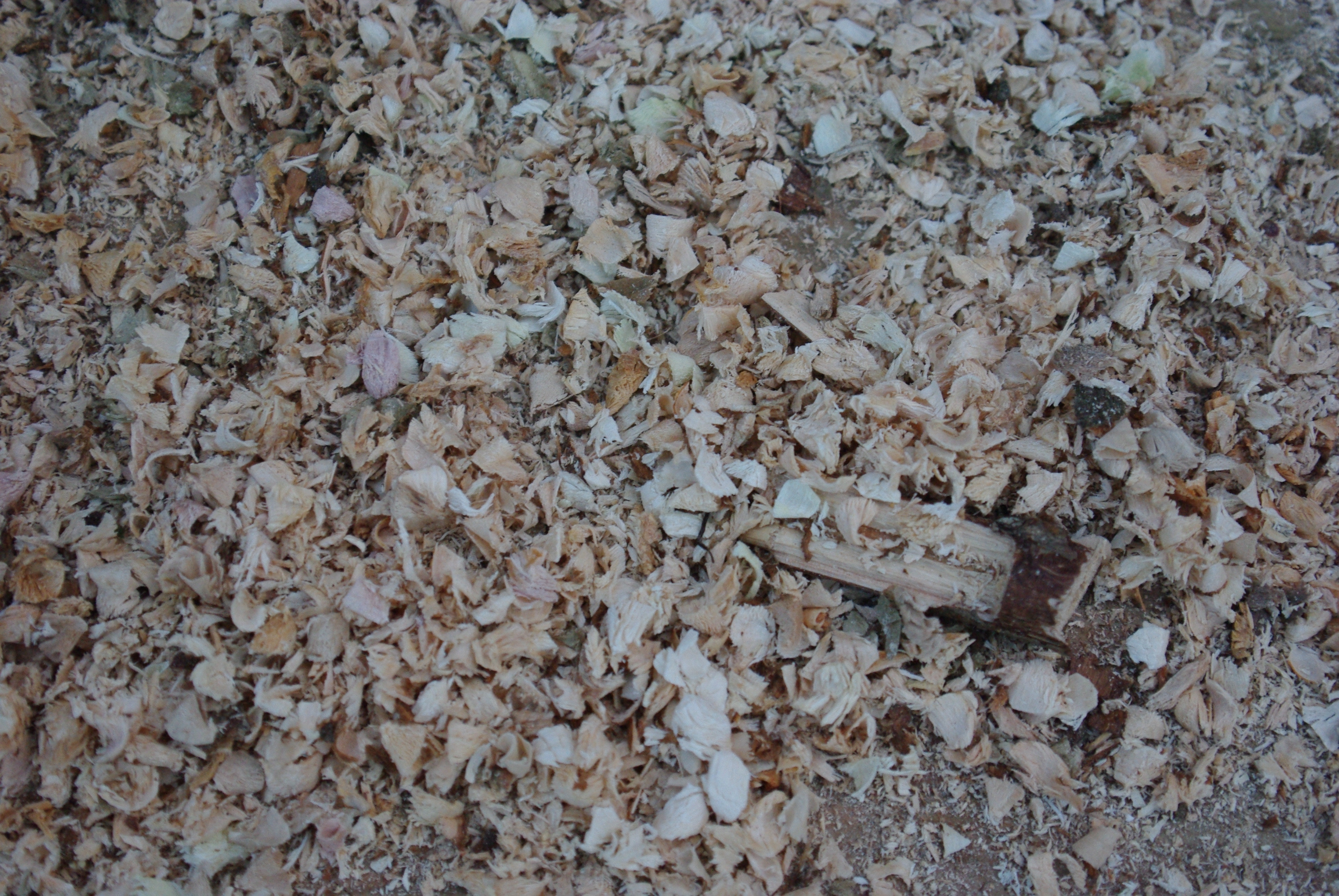
I am on leave from my day job, so spent today day in my shed, making things.

And it was great- sawdust in my hair and things taking shape on a workbench.

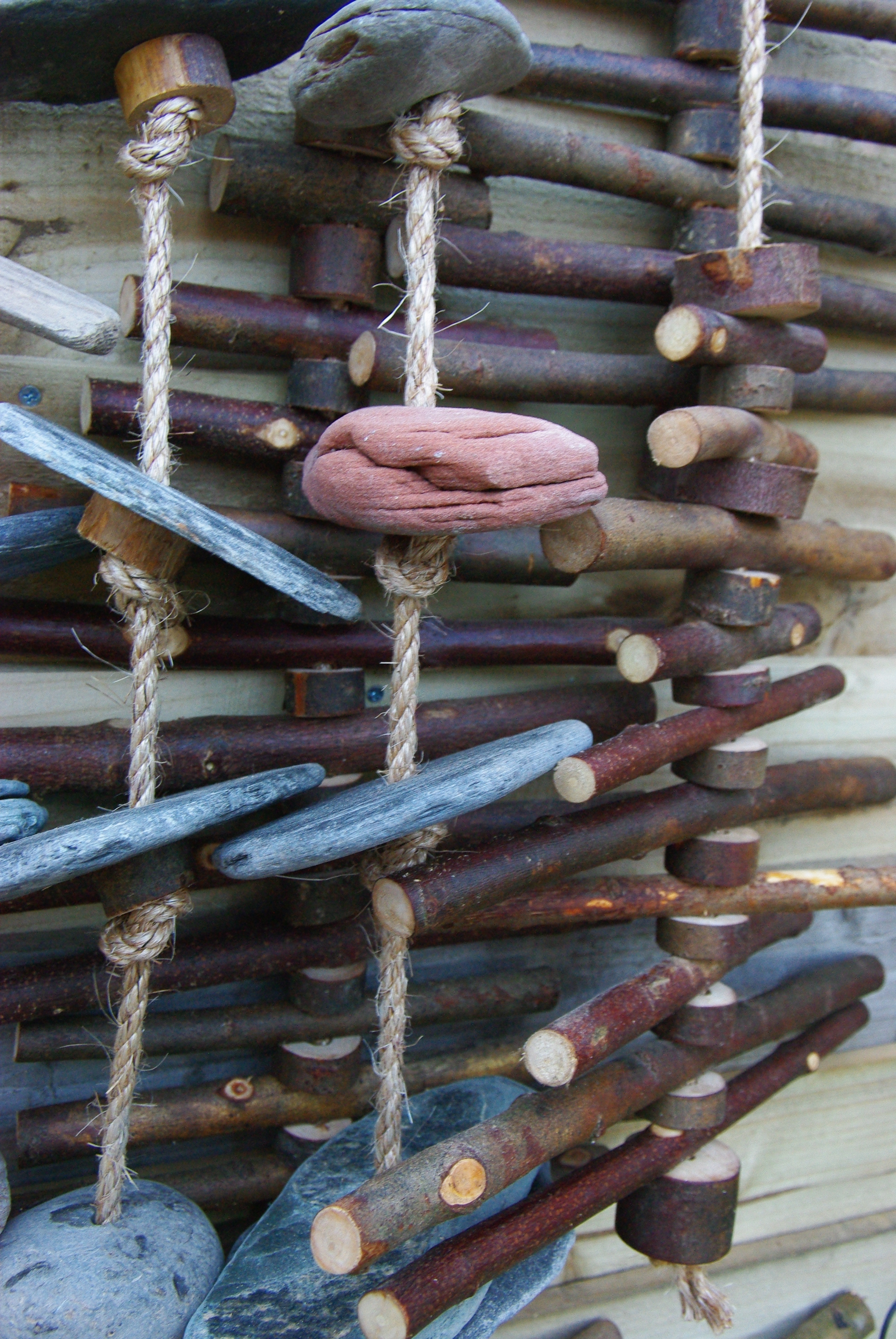
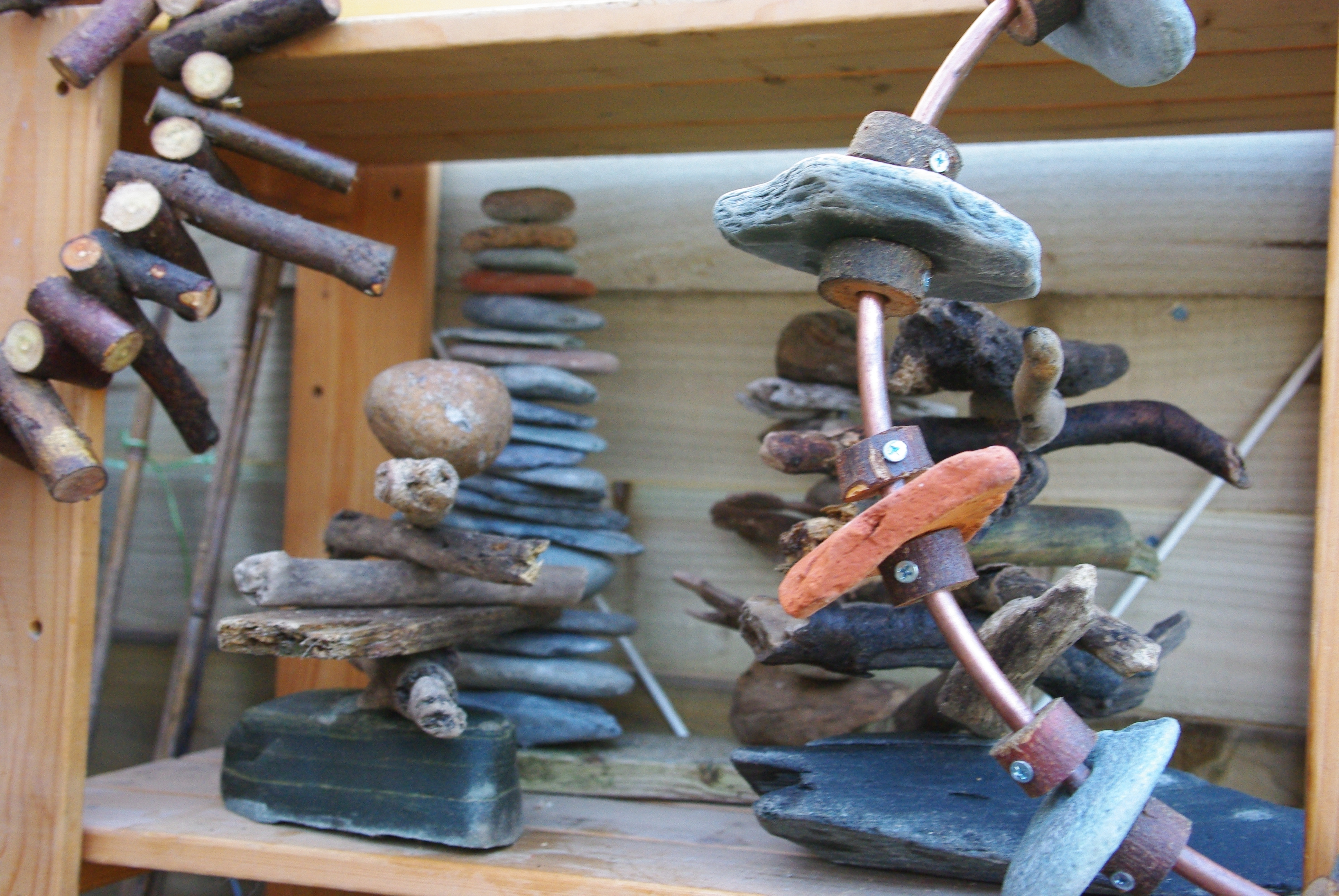
I have come to love creating things out of bits of rubbish- driftwood, fallen branches, old rope. A lot of what I do is cerebral- it happens in an office and has little physical end product.

There is a point to this activity though- we have an embryonic craft co-operative, and my contribution is to be photographs and some sculptures made from ‘found’ objects.

So far I have enjoyed the making, but I have not got round to actually selling anything!


Eschatology and the Book of Revelation…

I have been dipping my clumsy toe back into some murky theological water…

I have written before of my encounters with End Times theology- those folk who believe that the world is about to come to an end.

Otherwise known as eschatology.

For some of you this will conjure up a rather ridiculous picture of some bloke with a sandwich board…

But religious ideas have the power to shape the world, for good and for ill.

The dominance of a particular interpretation of the apocalyptic writing contained in the Bible on American politics is difficult to understand from this side of the Atlantic. It is part of a package of belief that has become part of a middle American world view.

One of the individuals who first put apocalypticism on the bestseller lists in the United States was a charismatic preacher named Hal Lindsey. His book, The Late Great Planet Earth, was published in 1970 and has sold over 35 million copies to date. Ronald Reagan was so influenced by Lindsey’s book, that he wanted his military leaders to fully understand its significance. With Reagan’s blessing, Lindsey was invited to brief the Pentagon on the “divine implications” of their hostilities with the Soviet Union.

Since then, Tim la Haye’s ‘Left behind’ series of novels from 1998 have also had enormous influence, popularising and sensationalising the basic ideas. A 2002 Time/CNN poll found that 59 percent of Americans believe that the prophecies found in the Book of Revelation are going to come true. Nearly one-quarter think the Bible predicted the 9/11 attacks.

This from here

Tune in to any of America’s 2,000 Christian radio stations or 250 Christian TV stations and you’re likely to get a heady dose of dispensationalism, an End-Time doctrine invented in the 19th century by the Irish-Anglo theologian John Nelson Darby. Dispensationalists espouse a “literal” interpretation of the Bible that offers a detailed chronology of the impending end of the world. (Many mainstream theologians dispute that literality, arguing that Darby misinterprets and distorts biblical passages.) Believers link that chronology to current events — four hurricanes hitting Florida, gay marriages in San Francisco, the 9/11 attacks — as proof that the world is spinning out of control and that we are what dispensationalist writer Hal Lindsey calls “the terminal generation.” The social and environmental crises of our times, dispensationalists say, are portents of the Rapture, when born-again Christians, living and dead, will be taken up into heaven.

The most powerful nation on earth has at it’s core an idea that the world is coming to an end soon. Does that worry you?

It is a view that makes looking after our environment pointless. It will all be gone soon.

It is a view that tends to go hand in hand with Christian Zionism– and so to justify military and economic support to Israel, and to encourage crusading interventions in the middle east, with a view to somehow hasten the second coming. Check out articles like this one on Rapture watch.

It may seem mad to you- but for many in the USA, this way of understanding our future is accepted as an unassailable tenet of their faith.

I grew up in an Evangelical Christian world where people had their own version of this belief, more or less. But at the risk of stating the obvious, this is simply not the only way to understand what the Bible says.

If you are interested, some of the main arguments are rehearsed quite well in this video-

Vodpod videos no longer available.

Watching them grow…

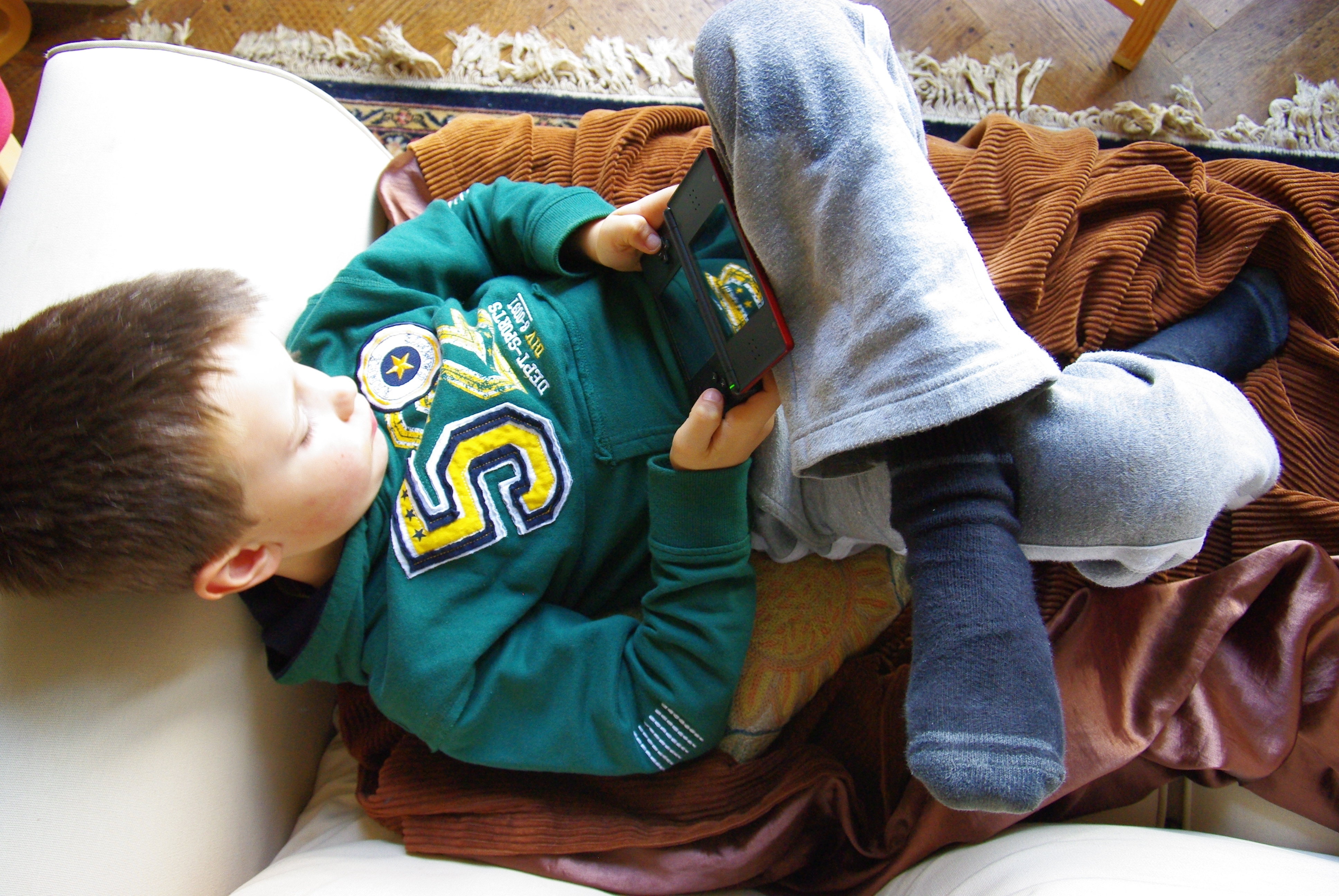
One of the principle sources of deep joy in this life of ours comes from watching our children develop and grow.

Kids get a bad press. All those raised eyebrows and exasperated sighs. The broken ornaments and filthy clothes. The noise on a Sunday afternoon when all should be quiet. The lurking spectre of the teenage years with all those erupting emotions. The cost of shoes and designer clothing.

But they give so much more than they they take.

I speak as a father of a 10 year old and a 14 year old.

Kids, they are great…

1840…

We are in the middle of various renovations of the old house. It is a constant process, but there is a particular burst of activity at present.

  • New ceilings (one collapsed a couple of weeks ago, so we are being extra careful!)
  • Redecorating Emily’s room. This was the first room we decorated when we moved here- so I reckon this is some kind of milestone- the first part of the house we have decorated twice.

  • New kitchen flooring. We had discovered that flotex, even though it is very expensive, is impossible to keep clean.
  • Clearing out all sorts of accumulations of toys, books and clutter to make space for new things to happen. Including (gulp) the cellar, which is chock full of things- wood, bits of metal, almost empty paint tins, broken furniture- that might have come in useful. But now we need the space to install a kiln.

And in stripping back the surface coverings of this old house, you always come face to face with it’s mostly mysterious past. The flowery pencil marks of workmen on the bare horsehair plaster, old brass fittings from doors long gone, bell circuits to summon servants, all hidden under bad renovations done to the building in the 1960s and 70s when the house was a converted into a guest house.

It is impossible not to wonder at the lives lived by previous generations in our old houses.

This house was built in 1840, in a small town on the up. A regular ferry service was established across the Clyde around 1820, and by the 1840’s you could travel direct from Glasgow to Dunoon courtesy of the new fangled steamers. It became fashionable for prosperous Glasgow merchants to have a house ‘doon the watter’ for weekends and holy days. Merchants whose prosperity rested on the commerce of an expanding empire- whose booty poured into Glasgow from plantations of sugar, cotton and tea. A prosperity that rested on the back of slavery and oppression.

Our house was obviously not built by merchants in the top rank. It is one of two identical buildings next to one another and the story goes that they were built for two brothers. They had cornices, but not of the very ornate kind, and the proportions of the rooms were generous rather than expansive. They were sober in their success.

1840. How much has changed, and how much still is the same.

It was the year when the world’s first self adhesive postage stamp was issued- the penny black.

It was the year of the first steam crossing of the Atlantic, by the wooden paddle wheel steamer RMS Britannia.

Napoleon Bonaparte died and his body was brought back to France.

Missionary Scot David Livingstone left Britain for Africa.

Queen Victoria married Prince Albert.

And some great British workmen were knocking in the last nail of a brand new house in Dunoon, Argyll.

Curtains were chosen, and carts lined up to take heavy furniture from the shore up the hill.

A family gathered, excited and thrilled by the smell of new paint.

And here we are, 170 years later.

Screwing together flatpack furniture.

Such progress.

Rest…

“Come to me” he said

“If the turning wheel has broken you”

So I staggered in his direction


“Sit with me” he said

“And we will sip tea

And soak a careful biscuit while

Occasionally raising a listening eyebrow

And enjoying that communal space

When words find rest

In silence.”


And perhaps our dreams will dance in the firelight

For a while this room will be the universe

And it will be possible to believe

In starflight


“Or perhaps it is enough,” he said

“Just to rest.”

For he was gentle

And humble

Of heart


Matthew 11:28-30


Tea, sugar and slavery…

If you were to think of things that define us as a nation, most of us would include our addiction to tea.

Then there is our huge sugar consumption- in tea of course, but also lacing almost all of our other processed foods.

This morning I listened to the wonderful radio programme ‘A History of the World in 100 Objects‘ on Radio 4. It is nearing it’s end, but today’s programme described an early Victorian Wedgwood tea set.

And it brought to be again the need to understand history from the perspective of the small people- not the law makers and war mongers. Because the history of ‘Great’ Britain has often been one of militaristic expansionism, and economic oppression.

Slavery brought us sugar, via the terrible triangle of trade that saw African people stolen from their homelands and shipped like expendable cattle to work in the West Indies.

And tea- this was a much later economic obsession. Stolen from the Chinese, with much double dealing and opium peddling along the way, and increasingly adopted as the drink of high society in Victorian Britain.

But because it was expensive, there was a need to find ways to control the production, distribution and sales of tea on a massive scale. For this, we needed new plantations in a suitable climate.

And of course, we also needed a huge cheap workforce that we could control and dominate.

And so we manipulated, shanghaied and cajoled the poorest of another one of our conquests to move to a country far from their birth and work our new plantations in Ceylon.

To make this seem OK, we had to believe that we were doing them a favour. We had to be able to see these people as less than us, weaker, less human.

So we called them a name that befitted their status- a pejorative name. Coolies.

In the British Empire, coolies were indentured labourers who lived under conditions often resembling slavery. The system, inaugurated in 1834 in Mauritius, involved the use of licensed agents after slavery had been abolished in the British Empire. Thus, indenture followed closely on the heels of slavery in order to replace the slaves. The labourers were however only slightly better off than the slaves had been. They were supposed to receive either minimal wages or some small form of payout (such as a small parcel of land, or the money for their return passage) upon completion of their indentures. Unlike slaves, these imported servants could not be bought or sold. (From here.)

These mass movements of population leave their mark on human politics to this day, as does much of our colonial system. The Tamils who were imported into Ceylon (now Sri Lanka) were fighting a bloody civil war until only last year.

All of which makes my tea taste a bit sour.

And it does not get much better for the tea producing nations today. They are slaves to the free market, with commodity prices rising and falling, and plantations mostly tied to multinational corporations.

All the more reason then to drink tea (and coffee) as well as using sugar that has the fair trade mark– yes I know all about the tokenism thing- but my tea just goes down with more satisfaction.

And given my inherited history, it seems the very least that I should do.