Hospital mortality- fact or political smokescreen?

stock-footage-sick-diabetic-women-in-hospital-room

For those of you who read this blog in the USA, where our National Health Service (free at the point of entry, paid for by taxation) is frequently vilified as inefficient and a yardstick for poor patient care, the news today will no doubt support the stereotype you have been given.

Inspectors sent into hospitals with higher-than-expected death rates found evidence of poor practice such as too few staff, inadequate infection control, patients left unmonitored on trolleys for long periods and badly maintained operating theatres, Jeremy Hunt has said.

The health secretary cited the problems uncovered by an inspection team led by the NHS medical director, Prof Sir Bruce Keogh, into mortality rates at 14 hospitals in England, as he confirmed that 11 of them were being put into “special measures” to push through urgent improvements to patient care.

The Guardian

The NHS lives on in the affections of the British People like some kind of slightly eccentric aunt who is always there when we need her, but is someone we would rather not invite for Christmas dinner. Or at least this used to be the case- until these stories started to dominate the headlines.

We are starting to see a polarisation of attitudes- on the one hand, we have a government whose main party (the Conservatives) are instinctively against public sector spending, and see an opportunity for opening up the hugely lucrative health sector to the white heat of the market forces, whilst on the other hand, others see this whole episode as a smash and grab raid. This was one of the comments made below the Guardian article above which sums things up rather well;

Reduce staffing levels by cutting funding.
Watch as lives are lost due to this.
Blame the NHS at large for the failings.
Cut more funding as punishment.
Repeat until Privatisation.
Profit.

Except, anyone with half a brain who takes time to look at the basis for these claims will understand that the reality is far from simple. The NHS is a highly complex system, full of endless variation- departments that work well hampered by poor professional relationships with key partners, good management but funding shortages, adequate resources but staffing shortages, areas of total excellence in hospitals that are ordinary etc etc.

The other thing that we have to note are the statistics that the claims of an NHS crisis are being based on.

Check out this summary of the problems of the Hospital Standard Mortality Ratios (HSMRs).

Or this account of what the data means from the Guardian.

There is no doubt that the NHS provides health care to each and every member of this country that is the envy of most of the world. What is more, it does this too everyone, regardless of their spending power, or (as in the US) the quality of their health insurance package (which may well be the same thing.) To any of us who have worked in and around the NHS it is also more than clear that the system is not perfect- no system ever is. It needs constant improvement and review.

But what might kill it in the end is if it becomes a political football used to wage an ideological war.

One further thought about hospital mortality. There will always be variation in hospital mortality rates- but what is the primary cause of this? Is it poor hospitals? Staff who do not care? Bad management? And even if these things play a part in the whole, what is the largest causal factor?

Remember the Black report back in 1979?

Or the Marmott Review as recently as 2008?

The Guardian summarises it all like this;

• People living in more deprived areas are more likely to die in hospital
• Greater deprivation is often found in areas where there is more inequality – i.e. where there’s a large gap between the life expectancies of the richest and poorest
• The impact of poverty on life expectancies appears greater for man than women.

It may be tempting for the media to focus on headline numbers in today’s report but they are unlikely to find any. The NHS medical director has signalled:

However tempting it may be, it is clinically meaningless and academically reckless to use such statistical measures to quantify actual numbers of avoidable deaths.

What’s clear is that several factors contribute to mortality rates and without being able to hold these constant, it is impossible to say how many deaths resulted from weaknesses in the 14 hospitals identified.

I am no conspiracy theorist- but I do think that the Conservatives are seeking to make political capital out of these figures- and to give a message that suits a portrayal of a crisis that is simply not there.

And I also believe that the NHS, in all its cluttered glory, is worth fighting to save, to improve, to celebrate as something that we Brits should be proud of.

Highland short break- special offers!

sgath an tighe, bluebells

Sorry to go all commercial, but regular readers of this blog will know that this year we opened some of our house as a bed and breakfast. We are half a season in, and have really enjoyed sharing our house with guests from all over the world.

In these difficult times, we are well aware that many folk are looking to make their hard earned cash stretch as far as they can, and so have decided to offer a couple of special offers- one of which is an exclusive one to readers of this blog!

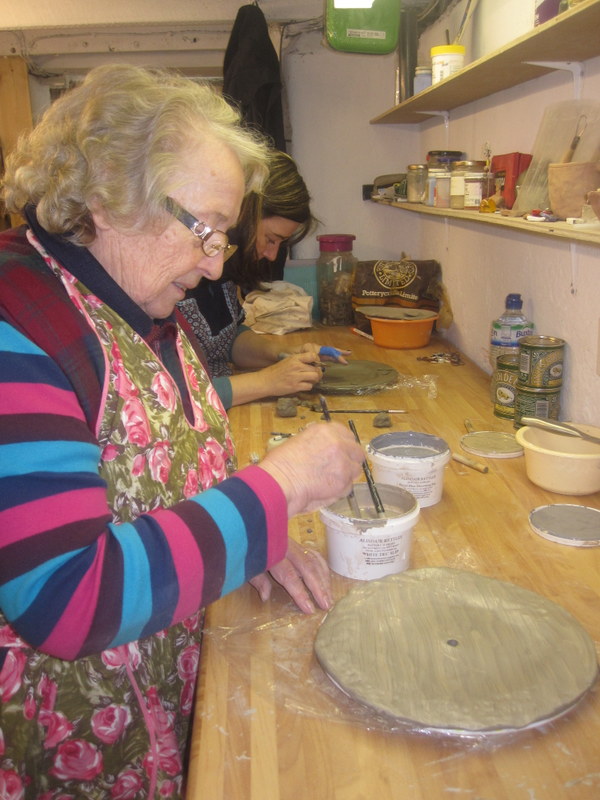
Through the Visit Scotland ‘Surprise yourself’ , people who book two nights in our B and B are entitled to a free pottery taster session in our pottery;

netta potting


However, if you mention ‘this fragile tent’ when you book a couple of nights, then you will get a 10% discount of the cost of your stay too!

The weather has been beautiful up here over the past week or so- temperature in the 20’s, blue sky above the mountains and lochs, space, quietness and peace yours for the making.

We are closer than you think, on the edge of the National Park, near Dunoon;

sgath an tighe

Vanier on community…

jean-vanier

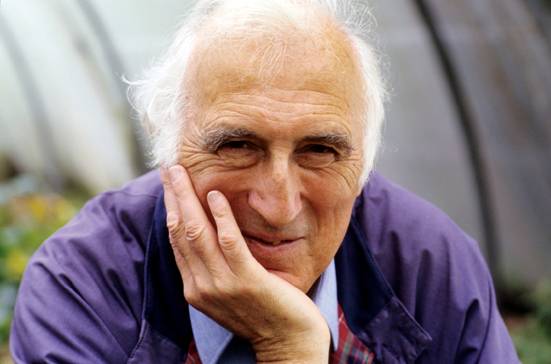
‘Community can be a terrible place because it is a place of relationship; it is the revelation of our wounded emotions and of how painful it can be to live with others, especially with ‘some people.’ It is so much easier to live with books and objects, television, or dogs and cats! It is so much easier to live alone and just do things for others, when one feels like it…. While we are alone, we could believe we loved everyone’.

Jean Vanier ’Community and Growth’
I pinched this quote from my mate Graham’s blog.
.
Because Vanier puts into words what most of us instinctively know to be true. Our relating is mostly driven by self- our need for friendship/entertainment/validation/collaboration.
.
It is this kind of relating that allows us to believe that we live ‘good’ lives, that we are ‘nice’ and that we are ‘Christian’ even.
.
My experience is that community first teaches us that we are none of these things.
.
Most of us recoil at this point- surely there must be something wrong with the people we are communing with? Joe is a pain the arse, Gill is a power hungry despot-in-training, Jim has far too many opinions and should just shut up before I slap him. Better to just go home and watch TV.
.
I confess I have watched a lot of TV.
.
But still, there is community. They have not kicked me out yet…

How to get ahead in Evangelism; find yourself a killer story…


taming_the_tiger_book


…in this case, a kung-fu-killer-assassin story.

For those who have not heard of this book (like me) it tells the ‘true’ story of the life of Evangelist Tony Anthony, who claims to have been taken to China by his grandfather, a Kung-Fu grand master, at the age of fourm where he was trained in the martial arts and became Kung Fu world champion three times. He then moved to Cyprus, becoming an elite bodyguard to businessmen, gangsters and diplomats before being jailed in Nicosia Central Prison for a series of thefts from hotels. It was in prison that Tony Anthony says he became a Christian.

His book has sold 1.5 million copies worldwide, and from the profits Tony set up Essex-based global evangelism charity Avanti Ministries. He traveled the world preaching, visiting prisons and telling his story.

Except it now looks like his story was not true. Check this out.

Finally the Evangelical Alliance and Avanti Ministries were forced to publish a statement;

In October 2012, the Evangelical Alliance received a detailed complaint about the validity of the testimony of an Avanti Ministries’ evangelist, Tony Anthony, and his book Taming the Tiger.

Following discussions between Evangelical Alliance and Avanti Ministries, Avanti agreed to set up an independent panel nominated by the Alliance to investigate in a confidential manner the allegations against Tony Anthony.

The independent inquiry panel was made up of three respected members of the UK council of the Evangelical Alliance: John Langlois (chair of panel), Keith Civval and Robert Amess.

The panel produced its report on 26 June 2013 and concluded, based on the evidence submitted to it, that large sections of the book Taming the Tiger, and associated materials, which claim to tell the true story of Tony Anthony’s life, do not do so.

Both the Evangelical Alliance and Avanti Ministries take serious note of the findings of the report and as a result Avanti has concluded that it is not appropriate to continue to support Taming the Tiger.

The board of Avanti Ministries are now considering the ramifications for Avanti Ministries’ future.

The Alliance and Avanti Ministries would like to thank the independent inquiry panel for their diligence in producing its report.

The Alliance and Avanti Ministries are deeply saddened by the findings of the panel. However, they recognise the good work that Avanti and Tony Anthony have done over the years around the world and the impact this will have on the charity, and specifically Tony and his family.

What is it that makes Evangelicalism vulnerable to con men and fantasists like Tony Anthony?

Or to put it slightly differently, what is it about Evangelicalism that makes all sorts of dodgy means justifiable because of the eternal end- that of saving souls?

I have been giving this some thought, as someone who has been in and around Evangelical churches for much of my adult life;

Firstly, Evangelicalism owes much of its methodology to salesmanship. There is this wonderful product (eternal life) and our job is to ensure market penetration, by any and all means possible.

Because the emphasis is on the sale, not the life long (earthly) warranty of the product, then the most important thing that our energies can be put to is the process of selling. All other things are secondary.

Some people are very good at selling- these people are given the respectful and elevated title ‘Evangelist’. But really they are just good salesmen. They have a slick method and a killer sales pitch. However, selling stuff is by its very nature a dark art. It involves manipulation, psychological game playing. It is divorced from real life, real community, real relationships. Most people who are good at this kind of stuff are not necessarily people who we really want to see in powerful leadership positions (even if that is exactly where they tend to be.)

Some salesmen might rightly be called by another title- sociopaths.

Finally, salesmen who are able to sell their evangelical product on the global media market- these people can not only feed the mansions of heaven, but they can also feed the Christian media machine.

Beware the salesman (or woman, although they tend to be men.) What they claim to be offering is often not what you end up buying.

Wilderness retreat, September, some places left…

The Garvellachs, in the distance

We are planning another wilderness retreat Friday 20th – Sunday 22nd September, for a group of blokes from Garioch Church, Aberdeen. They are particularly interested in finding a way to explore what we might understand to be ‘male spirituality’.

We will be heading out to the Garvellachs again, weather permitting! The last time we tried to get there (in May) the rising swell meant that landing was too big a risk, and so we ended up on Scarba- which was brilliant too.

At present there are 6-7 of us, so room for a few more if anyone wants to join us? Expect costs to be around £50-60, depending on how many actually come (due to fixed costs of boat.)

If you want to come, let me know soon, as there are a few folk interested.

It is a fabulous place to spend time being still…

Jonny and Paul, fire

Accidental beauty…

Table


The small group I am part of – Aoradh– have spent years planning activities and events. Labyrinths, prayer rooms, worship spaces, stations, meditation walks through the forest and along the sea front, etc. At present we are taking something of a rest- there is a lot of pressure and busyness around with members of Aoradh, and so the ‘external’ side of what we do has taken a bit of a back seat. I really miss this- not just for the fact that an important dimension of who we are- the collective ‘mission’ outwards- is missing, but also because I miss the creativity.

Having said that, planning creative events is not always easy. Creative people can easily be caught up in their own ‘thing’, we do not easily listen to the other. My experience is that these planning events work best when visible enthusiasm is combined with patience, love and grace. When these are lacking it can be a tough place to be.

A friend posted something on Facebook the other day called ‘Say Yes‘,  written by an American Pastor called Jenny McDevitt. I really liked this;

A few years ago, on a friend’s recommendation, I read Tina Fey’s book Bossypants. Her writing is equal parts funny, crass, and brilliant (and if you can’t stomach all three, it’s probably best to leave this one on the shelf and ask me for a summary). More than a few pages dramatically changed the way I approach ministry, including her explanation of improvisation.


Improv, she says, depends upon four basic rules. First, say, “yes.” Agree with whatever your partner (or community, or congregation) has created. Second, say, “yes, and.” Agree, and then enter into the creative process yourself and start contributing. Third, make statements. This is a gentler way of saying, don’t be the person that only asks questions. That puts pressure on everyone else to come up with all the answers. Once again, contribute. Help create. And fourth, understand that there are no mistakes, only opportunities. Something didn’t go as planned? Look around and see what unexpected beauty has emerged accidentally. It’s almost always there.


Each one of these is worthy of your consideration. For me, it has been transformative to enter each conversation with a church member assuming I will do everything I can to say yes to whatever idea, scheme, or dream they bring with them. Obviously, I can’t say yes immediately to everything. Sometimes it takes conversation and creativity so we can both say yes to an adapted idea. Sometimes it takes questions to understand the spirit behind the idea, so we can find a different way forward that honors the original intent. (And yes, it’s true: there are times when I have to say no. That’s another post for another day.)


Saying yes has changed the way I approach ministry with others, but also the way I approach daily tasks myself. Shifting the evaluative question from “How could this go wrong?” to “How could we make this work?” invites open, positive dreaming and dialogue. It fosters an expectation of creativity. Frankly, it demands that I be more creative, constantly.


For the community, it communicates that we are all in this together. We’re on the same team, working toward the same goals. Saying yes is not blind acceptance; it is shared initiative and creativity. It honors what people bring to the table, and opens doors to possibilities I would have never imagined on my own.


Theologically, saying yes affirms the ministry of all God’s children and reminds us that creation itself is sacred. In the big picture, saying yes is to look at death, and offer life. It is to look at fear, and offer companionship. It is to look at the dark, and offer light. It is to look at hate, and offer love. In a world that is all too quick to say no, to say yes is to pry open the gates of the kingdom a little bit wider every time.


Poetry collection- still looking for submissions…

typewriterletters


I am gathering poems for a collection of poetry to be published by Proost.

This collection came from the idea that poetry could and should be a valid expression of our spiritual journeys, our protests, our pain, our longing and our hopes. It also came from a conviction that many people write poems, and even the best of these often have no outlet- no way of connecting with other people.

I had no real way of knowing what people would send, but all I can say is that I already have some fantastic writing. I sat on the train coming back from London reading poems that made me cry- one of the best measures of a poem in my opinion!

However- if you are hovering and wondering whether or not to send something in- please do.

The best poems for this collection are not necessarily the ones written by ‘poets’- rather they are ones written by people who have been opened up by something deeper, and are suddenly able to express this on paper.

There are also some of you who I am waiting for content from. You know who you are – don’t make me come and fetch them!

Reading history through objects…

Last year there was a cracking radio series entitled ‘The history of the world in 100 objects’, which concerned itself with objects chosen from the thousands in the British Museum. It was impossible not to be reminded of this as we walked around the museum last week.

What I loved about the series was the way that the presenter (Neil MacGregor, Director of the British Museum) was able to use each object as a time capsule, or some kind of window into where we came from.

Most people who read the Bible find an extra frisson of fascination around objects that have some connections to Bible history. Two of these objects had me thinking again about the way that we use history not just like a distorted telescope lens, but more like a kaleidoscope. The light we see at such distance is bent by all sorts of assumptions and overlaid constructions- never more so than when the Bible is involved.

The first object (or set of objects to be more accurate) is this one- the Lachish relief.

lachish relief

This relief is from a time of  around 3000 years ago- and this too was a time of war. (It is estimated that there were only around 50 Million people in the world then, but still there was an the urge to fight!) In this instance, the fighting recorded was the great siege of Lachish in Judea, 701 BC by King Senacherib.

Lachish is first mentioned in the Bible as one of the cities taken by force from its existing inhabitants by Joshua. In Joshua 10, it is recorded that the King of Lachish started out as an ally of the Israelites, fighting alongside them, before ‘God gave Lachish to Israel’, who ‘took it in two days and killed everyone’. Despite this, somehow Joshua remains our hero. He was establishing Gods promised holy nation…

Jump forward around 4 centuries or so, to around 1000 BC, the kingdom of Judah had more powerful neighbors in the form of the  Assyrian Empire, stretching Iran to Egypt, and maintained by the all powerful Assyrian war machine.

Good King Hezekiah, who seemed to get all the worship purity stuff right, made some rather bad political decisions and defied the Assyrian King Sennacherib.

In 2 Kings 20 there is a story of one of Sennacheribs men delivering insulting blasphemous words about the lack of power of the Jewish god when faced with the power of the sword. Here Hezekiah cleverly pays off the Assyrians, and eventially God kills first most of their army, then Sennacherib himself gets his comeuppance.

The story from the Assyrian records are rather different;

 “In my third campaign I marched against Hatti. Luli, king of Sidon…fled far overseas and perished…In the continuation of my campaign I besieged Beth-Dagon, Joppa, Banai-Barqa, Azuru, cities belonging to Sidqia who did not bow to my feet quickly (enough); I conquered (them) and carried their spoils away.  The officials, the patricians and the (common) people of Ekron –  who had thrown Padi, their king, into fetters (because he was) loyal to (his) solemn oath (sworn) by the god Ashur, and had handed him over to Hezekiah, the Jew (and ) he (Hezekiah) held him in prison, unlawfully, as if he (Padi) be an enemy-had become agraid and had called (for help) upon the kings of Egypt (and) the bowmen, the chariot(-corps) and the cavalry of the king of Ethiopia, an army beyond counting-and they (actually) had come to their assistance.  In the plain of Eltekeh, their battle lines were drawn up against me and they sharpened their weapons.  Upon a trust (-inspiring) oracle (given) by Ashur, my lord, I fought with them and inflicted a defeat upon them…I assaulted Ekron and killed the officials and patricians who had committed the crime and hung their bodies on poles surrounding the city…I made Padi, their king, come form Jerusalem and set him as their lord on the throne, imposing upon him the tribute (due) to me (as) overlord…As to Hezekiah, the Jew, he did not submit to my yoke, I laid siege to 46 of his strong cities, walled forts and to the countless small villages in their vicinity, and conquered (them) by means of well-stamped (earth-)ramps, and battering-rams brought (thus) near (to the walls) (combined with) the attack by foot soldiers, (using) mines, breeches as well as sapper work.  I drove out (of them) 200,150 people, young and old, male and female, horses, mules, donkeys, camels, big and small cattle beyond counting, and considered (them) booty.  Himself I made a prisoner in Jerusalem, his royal residence, like a bird in a cage.  I surrounded him with earthwork in order to molest those who were leaving his city’s gate.  His towns which I had plundered, I took away from his country and gave them (over) to Mitinti, king of Ashdod, Padi, king of Ekron, and Sillibel, king of Gaza.  Thus I reduced his country, but I still increased the tribute and the Katru-presents (due) to me (as his) overlord which I imposed (later) upon him beyond the former tribute, to be delivered annually.  Hezekiah himself, whom the terror-inspiring splendor of my lordship had overwhelmed  and whose irregular and elite troops which he had brought into Jerusalem, his royal residence, in order to strengthen (it), had deserted him, did send me, later, to Nineveh, my lordly city, together with 30 talents of gold, 800 talents of silver, precious stones, antimony, large cuts of red stone, couches (inlaid) w3ith ivory, nimedu-chairs (inlaid) with ivory, elephant-hides, ebony-wood, box-wood (and) all kinds of valuable treasures, his (own) daughters, concubines, male and female musicians.  In order to deliver the tribute and to do obeisance as a slave he sent his (personal) messenger.”

Ancient Near Eastern Texts – Relating to the Old Testament edited by James B. Pritchard, Princeton University Press, New Jersey 1950, quoted here.

The next scene in the relief is the aftermath of battle- people fleeing burning city. This is seen as the first ever depiction of that all-too-familiar modern phenomenon; mass refugees. Why did the Assyrians want to show this in their propaganda? Was it a warning to all those who would challenge the powers of the great king? Note however that the exiles were not all murdered, they travel with their livestock and belongings. The Assyrians showed a degree of humanity that Joshua seems to have lacked.

The great king Sennacherib was assassinated by one of his sons however as described in the Bible- the cycle of war continued.

Cyrus cylinder

One of the other objects I wound myself staring at was this one- the Cyrus Cylinder.

This is one of several such cylinders that have been found in the walls and buildings of ancient Babylonian cities and palaces- it seems that the builders of these places wanted some kind of record to remain in the foundations of what they made.

The text on the Cylinder praises Cyrus, sets out his genealogy and portrays him as a king from a line of kings. The Babylonian king Nabonidus, who was defeated and deposed by Cyrus, is denounced as an impious oppressor of the people of Babylonia and his low-born origins are implicitly contrasted to Cyrus’s kingly heritage. The victorious Cyrus is portrayed as having been chosen by the chief Babylonian godMarduk to restore peace and order to the Babylonians. The text states that Cyrus was welcomed by the people of Babylon as their new ruler and entered the city in peace. It appeals to Marduk to protect and help Cyrus and his son Cambyses. It extols Cyrus as a benefactor of the citizens of Babylonia who improved their lives, repatriated displaced people and restored temples and cult sanctuaries acrossMesopotamia and elsewhere in the region. It concludes with a description of how Cyrus repaired the city wall of Babylon and found a similar inscription placed there by an earlier king.

Again, readers of the Bible will remember Cyrus-

His treatment of the Jews during their exile in Babylon after Nebuchadnezzar II destroyed Jerusalem is reported in theBible. The Jewish Bible’sKetuvim ends in Second Chronicles with the decree of Cyrus, which returned the exiles to thePromised Land from Babylon along with a commission to rebuild the temple.

‘Thus saith Cyrus, king of Persia: All the kingdoms of the earth hath Yahweh, the God of heaven, given me; and He hath charged me to build Him a house in Jerusalem, which is in Judah. Whosoever there is among you of all His people – may Yahweh, his God, be with him – let him go there.’ (2 Chronicles 36:23)

This edict is also fully reproduced in the Book of Ezra.

In the first year of King Cyrus, Cyrus the king issued a decree: ‘Concerning the house of God at Jerusalem, let the temple, the place where sacrifices are offered, be rebuilt and let its foundations be retained, its height being 60 cubits and its width 60 cubits; with three layers of huge stones and one layer of timbers. And let the cost be paid from the royal treasury. Also let the gold and silver utensils of the house of God, which Nebuchadnezzar took from the temple in Jerusalem and brought to Babylon, be returned and brought to their places in the temple in Jerusalem; and you shall put them in the house of God.’ (Ezra 6:3–5)

As a result of Cyrus’s policies, the Jews honored him as a dignified and righteous king. He is the only Gentile to be designated as Messiah, a divinely appointed leader, in the Tanakh (Isaiah 45:1–6). Isaiah 45:13: “I will raise up Cyrus in my righteousness: I will make all his ways straight. He will rebuild my city and set my exiles free, but not for a price or reward, says Yahweh Almighty.” As the text suggests, Cyrus did ultimately release the nation of Israel from its exile without compensation or tribute. Traditionally, the entire book of Isaiah is believed to pre-date the rule of Cyrus by about 120 years. These particular passages (Isaiah 40–55, often referred to as Deutero-Isaiah) are believed by most modern critical scholars to have been added by another author toward the end of the Babylonian exile (ca. 536 BC).[90] Whereas Isaiah 1–39 (referred to as Proto-Isaiah) saw the destruction of Israel as imminent, and the restoration in the future, Deutero-Isaiah speaks of the destruction in the past (Isa 42:24–25), and the restoration as imminent (Isa 42:1–9). Notice, for example, the change in temporal perspective from (Isa 39:6–7), where the Babylonian Captivity is cast far in the future, to (Isa 43:14), where the Israelites are spoken of as already in Babylon.[91]

Here we have a king from outside the chosen people, appointed by God, showing the kind of tolerance, respect for human rights and concern for peace that had been a scarce commodity.

And this very object remains as a testimony to who he was.

Human history; the rise of power, or the journey towards love?

I am interested in understanding who we are, why we are, what we are becoming- in the light of the fact that we are more than flesh that just becomes dust- we are people who have been travelling for millenia towards a deeper encounter with God, however we understand this.

I look at all this through my own distorted set of lens- but I do so consciously. So rather than co-opting history to glorify our own slice of empire (which was the origin of the British Museum after all) perhaps we can understand history in the light of who Jesus was.

In this way, small thing, small people, voices from the margins- these things become important. Great powers less so- they come and go, empires rising and falling like epidemics.

In-groups are broken- we are set free from narrow religious/geographical/ethnic boundaries. Now we can look for the marks of grace and love wherever we find them.

And we can learn to value above all the fruits of the Spirit- love, joy, peace, patience, justice, compassion.

Even when looking back.