Community has to be small, or it becomes bureaucracy…

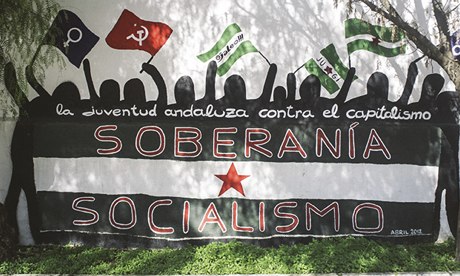
A socialist mural in Marinaleda.

I have never been a communist, not really.

However, I remember vividly the moment when the idea of communism took hold of me. I remember the discussion as a 15 year old boy around how it might be possible to live a different way- where our lives were not controlled by the profit principle, and where we shared what we have in order to live in harmony with one another, not in competition. It was electric.

Alongside all this was a whiff of something else- radicalism, danger. Our heros were no longer empire builders, but rather the challengers of injustice, the small people who stood in front of tanks or challenged corrupt authority only to be shot in their pulpits. There was a possibility of change, of things being better, simpler, more human.

It was also impossible to ignore the fact that communism seemed to fit remarkably well with the ideas of another radical, called Jesus.

Some people say that ideas like this are dangerous. Perhaps they are. For most of us however, they became the background hum of guilt inside our middle class lifestyles. Slowly our radicalism was buried by salaries, mortgages and the shopping run. It survived only in a few donations to charity, the odd sponsored third world child and the choice of newspaper we read.

I never believed in the inevitable rise of man towards utopia. I always doubted that capitalism would be defeated. Partly this was because we had little reason for optimism after Stalin’s purges and Mao’s cultural revolution. Like many I started to believe that Communism could not survive its encounter with broken humanity- that greed and corruption would always mean that the psychopaths would rise and that without the sharp edge of competition for personal gain we become blunted and lazy, leading to a slow decline. Capitalism was not perfect, but perhaps it could be managed I thought, to mitigate against some of the more damaging effects. Social welfare systems, health systems, progressive taxation to redistribute some wealth, protection under law for workers in employment, education for poor kids to give them a fair start. Democracy as the best compromise solution.

Perhaps these ideas are dangerous too however. They mean that certain hierarchies of unequal power and wealth remain fixed and unchanging. However, what real alternatives are there? Communism is bankrupt after all.

Meanwhile the world is in turmoil. Markets rise and fall, governments react paradoxically by blaming poor people for the excesses of the rich and powerful. All those things that might be seen as mitigations on the pursuit of profit are being slashed- education, health, welfare, social housing, unionisation.

In Europe, this is no where more apparent than in Spain. This from here;

Spain experienced a massive housing boom from 1996 to 2008. The price of property per square metre tripled in those 12 years: its scale is now tragically reflected in its crisis. Nationally, up to 400,000 families have been evicted since 2008. Again, it is especially acute in the south: 40 families a day in Andalusia have been turfed out of their homes by the banks. To make matters worse, under Spanish housing law, when you’re evicted by your mortgage lender, that isn’t the end of it: you have to keep paying the mortgage. In final acts of helplessness, suicides by homeowners on the brink of foreclosure have become horrifyingly common – on more than one occasion, while the bailiffs have been coming up the stairs, evictees have hurled themselves out of upstairs windows.

When people refer to la crisis in Spain they mean the eurozone crisis, an economic crisis; but the term means more than that. It is a systemic crisis, a political ecology crack’d from side to side: a crisis of seemingly endemic corruption across the country’s elites, including politicians, bankers, royals and bureaucrats, and a crisis of faith in the democratic settlement established after the death of Franco in 1975. A poll conducted by the (state-run) centre for sociological research in December 2012 found that 67.5% of Spaniards said they were unhappy with the way their democracy worked. It’s this disdain for the Spanish state in general, rather than merely the effects of the economic crisis, that brought 8 million indignados on to the streets in the spring and summer of 2011, and informed their rallying cry “Democracia Real Ya” (real democracy now).

For most of us, all this is happening on a scale that makes it impossible for us to fully grasp. We might focus on one small injustice, even raising voices of protest, but the entirety of the system is unchallengable, because it is too big. So what we have even in Spain is the call for better capitalism, better democracy, but no clear idea of what this might look like.

All of which is a long pre-amble to the reason for this post.

What exists at a human scale that might still gather real alternatives to all this naked profit-and-loss-boom-and-bust madness that we are dwarfed and diminished by?

For a long time, the idea that ‘communism does not work’ has irritated me. The smug example that is usually used to prove this dictum are Soviet Union collective farms- spectres of mass crop failure, starvation, forced labour and perhaps the worst sin of all, lack of productivity.

Today however, I read this about a small Spanish village called Marinaleda ;

When the 1,200-hectare El Humoso farm was finally won in 1991 – awarded to the village by the regional government following a decade of relentless occupations, strikes and appeals – cultivation began. The new Marinaleda co-operative selected crops that would need the greatest amount of human labour, to create as much work as possible. In addition to the ubiquitous olives and the oil-processing factory, they planted peppers of various kinds, artichokes, fava beans, green beans, broccoli: crops that could be processed, canned, and jarred, to justify the creation of a processing factory that provided a secondary industry back in the village, and thus more employment. “Our aim was not to create profit, but jobs,” Sánchez Gordillo explained to me. This philosophy runs directly counter to the late-capitalist emphasis on “efficiency” – a word that has been elevated to almost holy status in the neoliberal lexicon, but in reality has become a shameful euphemism for the sacrifice of human dignity at the altar of share prices.

Sánchez Gordillo once suggested to me that the aristocratic family of the House of Alba could invest its vast riches (from shares in banks and power companies to multimillion-euro agricultural subsidies for its vast tracts of land) to create jobs, but had never shown any interest in doing so. “We believe the land should belong to the community that works it, and not in the dead hands of the nobility.” That’s why the big landowners planted wheat, he explained – wheat could be harvested with a machine, overseen by a few labourers; in Marinaleda, crops like artichokes and tomatoes were chosen precisely because they needed lots of labour. Why, the logic runs, should “efficiency” be the most important value in society, to the detriment of human life?

The town co-operative does not distribute profits: any surplus is reinvested to create more jobs. Everyone in the co-op earns the same salary, €47 (£40) a day for six and a half hours of work: it may not sound like a lot, but it’s more than double the Spanish minimum wage. Participation in decisions about what crops to farm, and when, is encouraged, and often forms the focus of the village’s general assemblies – in this respect, being a cooperativista means being an important part of the functioning of the pueblo as a whole. Where once the day labourers of Andalusia were politically and socially marginalised by their lack of an economic stake in their pueblo, they are now – at least in Marinaleda – called upon to lead the way. Non-co-operativists are by no means excluded from involvement in the town’s political, social and cultural life – it’s more that if you are a part of the co-operative, you can’t avoid being swept up in local activities outside the confines of the working day.

Private enterprise is permitted in the village – perhaps more importantly, it is still an accepted part of life. As with the seven privately owned bars and cafés in the village (the Sindicato bar is owned by the union), if you wanted to open a pizzeria or a little family business of any kind, no one would stand in your way. But if a hypothetical head of regional development and franchising for, say, Carrefour, or Starbucks, with a vicious sense of humour and a masochistic streak, decided this small village was the perfect spot to expand operations, well – they wouldn’t get very far. “We just wouldn’t allow it,” Sánchez Gordillo told me bluntly.

This is one tiny village, even if others are starting to copy what they have done. I am sure it is no utopia. People will squabble and fall out and scratch at one another. The Mayor probably has too much power and charisma and it may well all go to his head.

What it leaves me with mostly is this- community works only in the small scale.

Love is only possible in the press of real relationships. It can not exist in abstract theory. It is not real unless tested in actual shared lives.

We all need to believe in something bigger, something better. For this village it has become a unifying factor. They see themselves as an egalitarian oasis in a mad unsustainable capitalist desert. I admit I am inclined to agree. I liked what the Mayor had to say- “I have never belonged to the communist party of the hammer and sickle, but I am a communist or communitarian,” Sánchez Gordillo said in an interview in 2011, adding that his political beliefs were drawn from those of Jesus Christ, Gandhi, Marx, Lenin and Che.

All this to me is a call back towards real community- let us forget the big scale, the macro economic choices of a distant and devalued government. Let us live an alternative- called community.

How this looks in your locality will have to be different to mine- but the central ideas will be the same, be they the ‘Christian heresy’ that is communism (according to CS Lewis) or actually those words of Jesus that we conveniently ignore.

Where did I put those olive seeds?
Fleet…

driftwood ships 1


Fridays these days usually mean working in my shed. We need to build up some more stock after a particularly successful Cowal Open Studios event.

I am probably going to go back to working for the council full time over the winter months, so these Friday creating days may be numbered.

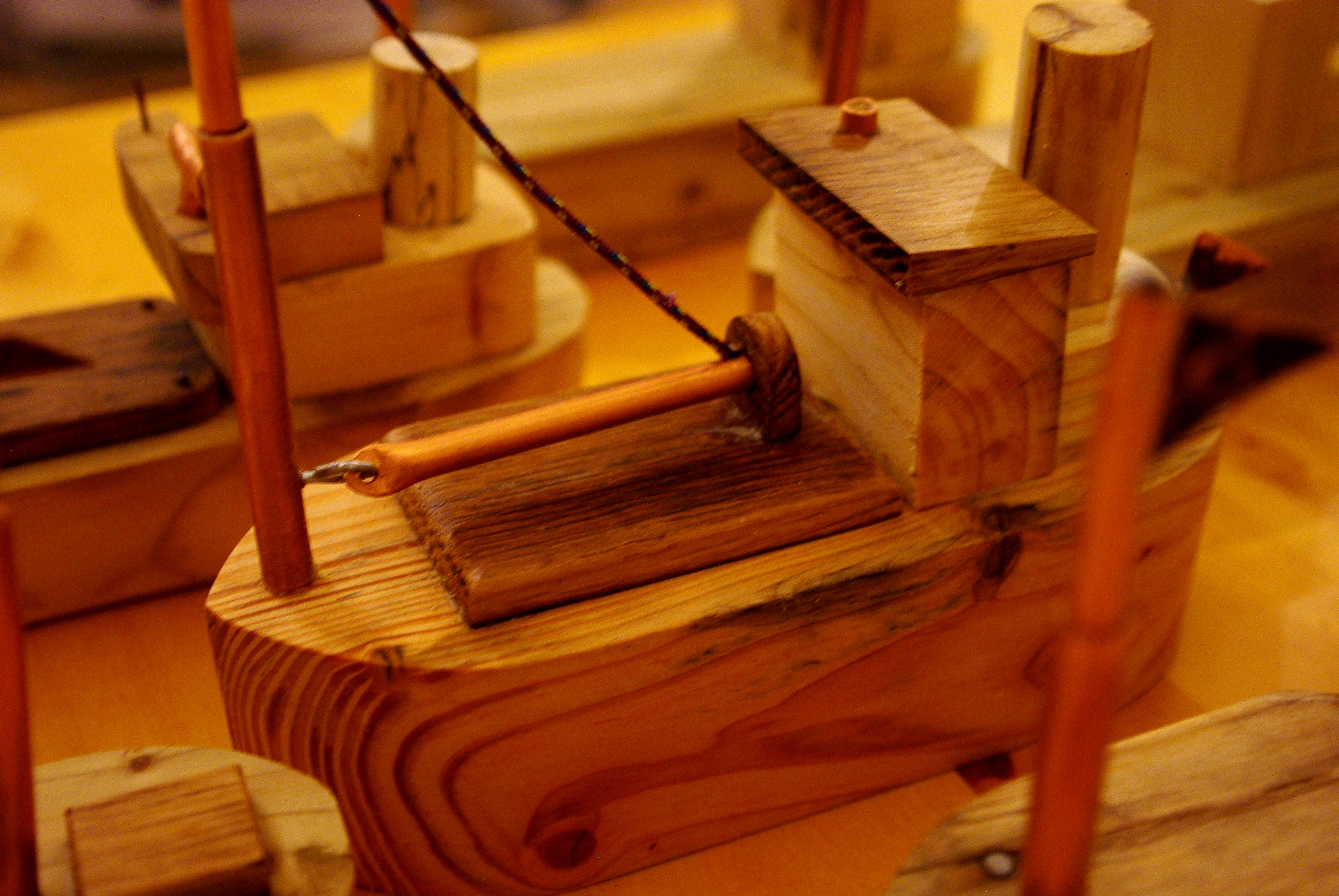
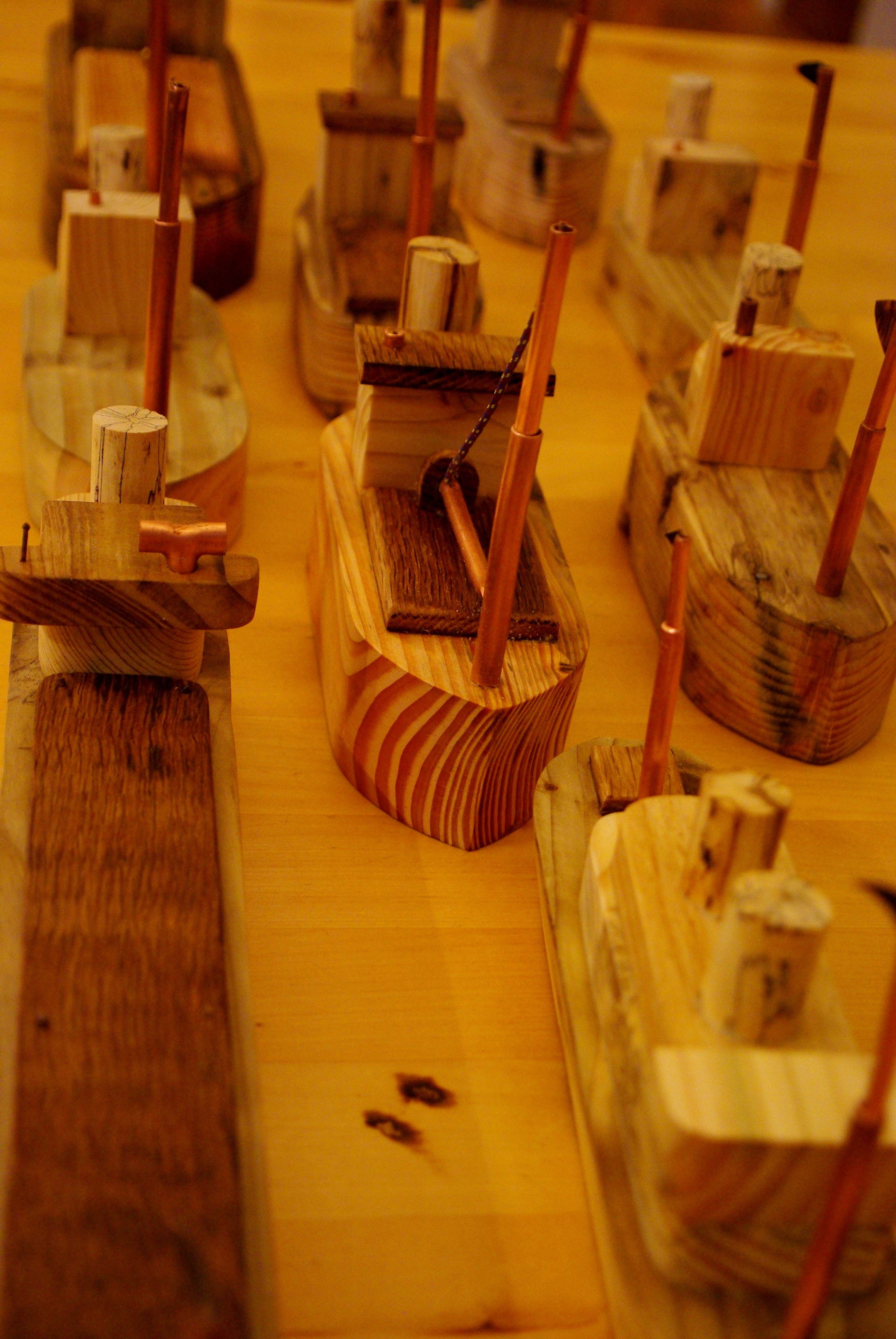
My latest obsession has been making ships out of driftwood- mostly Clyde Puffers. There is now quite a fleet of them on our dining room table…

driftwood ships 2


Meanwhile, most people live as well as they can, where they can…

A few days ago I wrote a piece about home ownership in the UK- suggesting that it has become a national obsession, and that it might be distorting our sense of community and collective identity.

Today Michaela showed me this- I loved the way people made personal spaces out of whatever they can. Life flourishes where we love.

I am beautiful…

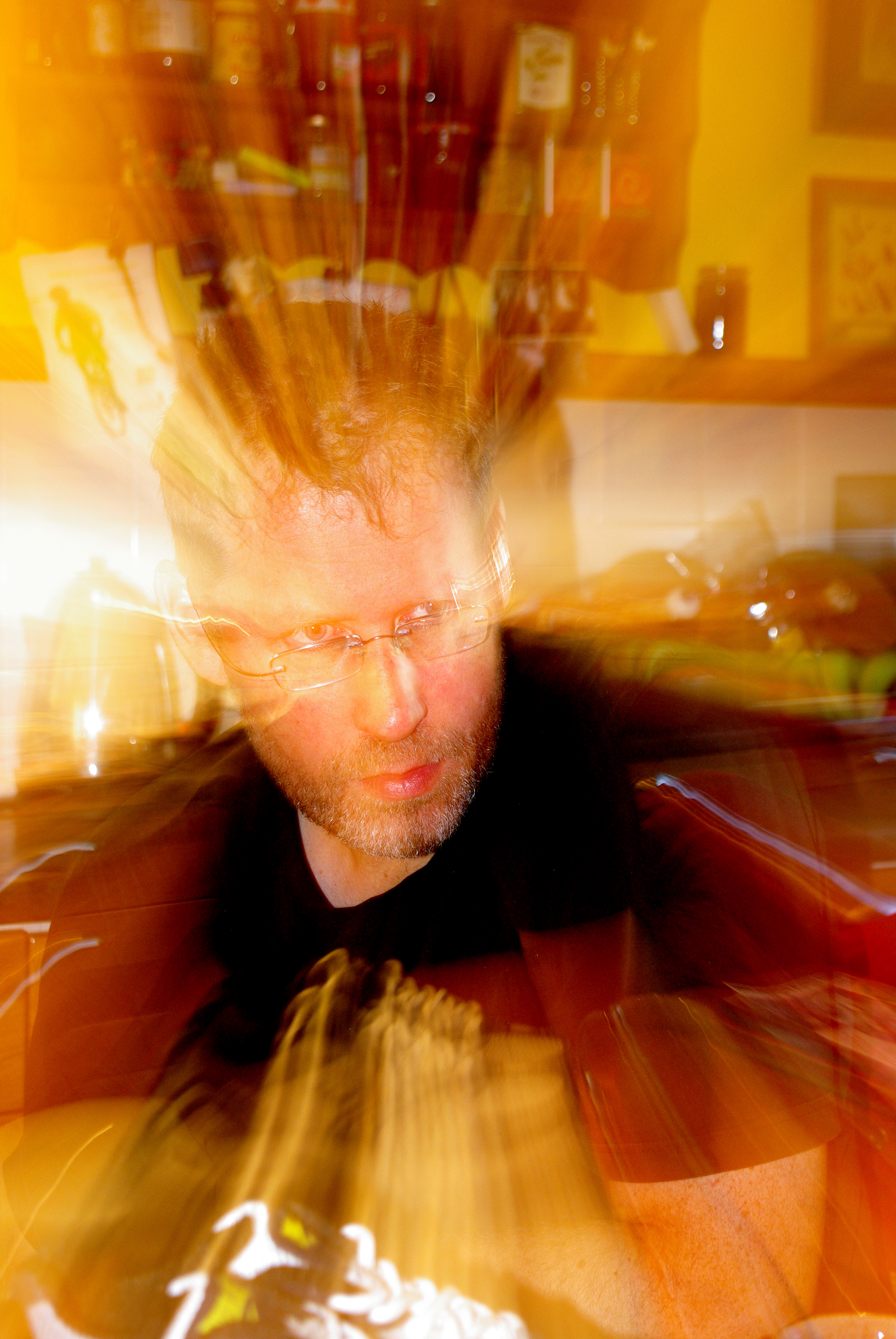
me, fractured

A title that may well expose me to questioning ridicule- stay with me though.

For most of my life I have been affected by a crippling lack of confidence. I manage to hide it some of the time, even to act as though it is not there, but it never quite goes away. Many of you know just what I am talking about; that feeling that in any given social situation things could go wrong. That the others have more brains, more good looks, more talent, more presence.

This is not just an intellectual understanding- I know that my position is not always logical. I am quite good at some things. I even surprise myself sometimes, so do not hit me with your ‘power of positive thinking’ crap. But all my success is nuanced by the shadow of doubt. If I am not careful I know that these negative thoughts become a black hole that I fall in to.

It is not just a spiritual understanding- I know that I am a child of the Living God. I am even convinced that he likes sinners like me, that he has a skew towards those at the back of the class. My experience is that whilst God may not be my divine therapist, still he has this way of turning negative to positive. So my sensitisation can become a way of being sensitive to others. It can become deeply creative. Nevertheless, sometimes depression hangs on me like darkness and I can create nothing, love nothing.

It is not just a psychological understanding- I have been down those roads; the counselling, the self help, the CBT formulation schematics. I know the root of this in my childhood, the factors in my personality that skew me towards the shadow. I understand them in the same way that a man understands how forces of gravity will mean that it will hurt when he surely falls. I am an onion, with each skin stretched from the same damaged DNA.

It is not about appearance, although I avoid mirrors and dodge the pointed lens. They tend to make an unflattering cartoon of my face.

But enough of this.

It is true and also not true.

For despite all these things, I am beautiful.

So those of you who carry your own wounds- know this- you are more. And although I know these words are trite and shallow (I wrote them after all…)

…you are beautiful too.

Guantanamo bay- if Obama won’t/can’t close it, who can?

He promised to shut it down- but it is still there. A prison where people have been taken from all over the world, often after being kidnapped on foreign soil. Once there, they are held in inhuman conditions, tortured and often given no hope of release.

Even when told that they can now be released, there is no guarantee. Years go by whilst people are waiting for the doors to be opened- including British nationals.

How can American people (and their foremost allies, the British) allow this to continue? What justification is there for such flagrant breach of the rule of law?

The official line concerns itself with depicting these men as dangerous terrorists, with information that is fundamental to fighting the ‘war on terror’. Perhaps some of the men were indeed involved in terror groups. What is now certain is that many were not. They were just like you and me, apart from their religion and the colour of their skin. This is what happens when knee jerk fear driven politics are given free reign rather than being made subject to the rule of law.

The stories of what happens to people at Guantanamo have trickled out. A few years ago I wrote a review of a book written by one of the inmates, another British man, Moazzam Begg.

Today we hear from official sources some confirmation of tactics Begg described being used to try to break the spirits of the inmates.

Small wonder that they are driven to making the only protest left open to them- refusing to eat. The Guardian had this on their website today;

In March 2013, reports of a hunger strike at Guantánamo Bay, the US detention camp in Cuba, began to surface. Details were sketchy and were contradicted by statements from the US military. Now, using testimony from five detainees, this animated film reveals the daily brutality of life inside Guantánamo. Today there are 17 prisoners still on hunger strike, 16 of whom are being force-fed. Two are in hospital.

Doing church the new/old way…

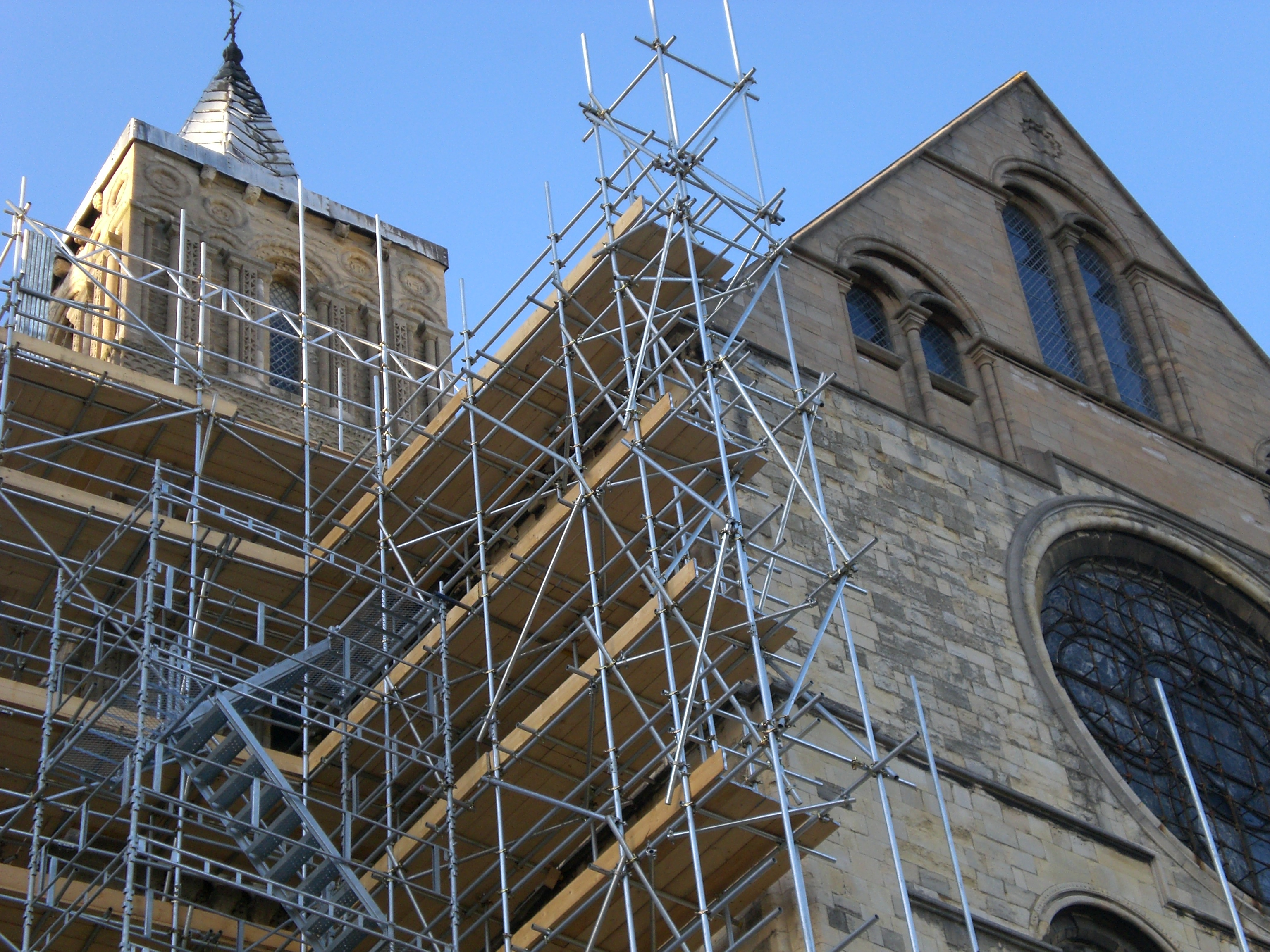
a church under reconstruction?

Michaela and I have just had a really lovely trip up north to spend some time with friends who are part of Garioch Church. We had been asked to be part of something called a ‘sounding board’- a group of people from outside the church who meet a couple of times a year to reflect on where the church is heading, and what challenges it is facing. We were looked after by Andrew and Jane magnificently and it was a privilege to hear something of their story, not least because it enabled us to reflect anew on our own.

Garioch is an area on the outskirts of the city of Aberdeen- a string of villages over a 10-15 mile area. It is a largely affluent place, with pockets of deprivation, fueled by prosperity from the oil industry. We had never spent any time in that part of Scotland before, and in many ways it felt like a different Scotland to the one we knew. It was busy, bustling, full of industry and people had a pace of life very different to our small west coast town.

The church has been trying to find a way of being authentically present in this new context. What they have done is really interesting and genuinely innovative. Rather than seeking to follow a familiar model of church planting, which goes something like- small group of people with lots of energy start a gathering, invite friends, it grows and so house becomes too small so they rent a hall, it grows so they need to buy own hall, appoint staff, etc, they did this;

Gairioch church wanted to remain based around homes, families, small community. They wanted to be a local, connected expression of faith- engaged in their small context. What they now have are three thriving home groups which are the focus of ‘church’. Once a month they meet in a school hall where they can make a bit more noise and feel a wider sense of connection.

Simple huh? Sounds very like that elusive but often used idea of trying to connect with a New Testament idea of what church looked like?

Alongside this deliberate emphasis on the small, they have found themselves having to grapple with some familiar themes- what does leadership look like in this context? How do you survive community? How do you continue reaching out when there is so much to do within the social context of community itself? What does teaching look like when traditional ‘preaching’ no longer fits? What about all the children? How do we manage all these competing demands with such limited time?

It was rather special to see them feeling for answers to all these questions- to appreciate the freedom that allows them to try, and the long tradition of Christian collectives who have done the same.

My own small community feels special too. We are different, in that we are one (rather isolated) community, and in many ways the pressure to lead, to organise, to manage is very different. As a result of this we are less hierarchical, more driven by the need to be joint travelers, not leaders and followers. This made for some interesting parts of our discussion at the sounding board day. How much do we as leaders, in taking responsibility, remove this in both obvious and more subtle ways from the people we lead?

I came home inspired, humbled and also grateful for the fact that people remain inspired by Jesus towards the new. That Christians in these times are still looking for new ways to love better, to live better, to serve better.

Yesterdays post was a rather cynical one about church names- I removed it as although a whiff of controversy in blogging is usually a good thing, I never like giving offence, and it turned out that some friends of mine have a church whose name I accidentally lambasted. As part of yesterdays post however, I said this, and I will repost it as a prayer for our churches everywhere!

I think the words of Jesus lead us on a path emphasising a whole different set of principles. Rather than our success he promised that the last shall be first. Rather than our satisfaction, he promised a hard road. Rather than storing up comfort and riches he pointed us towards the lost and the least.

When Church is defined as being the provider of success and abundance I also cringe for those whose experience has NOT fitted into this shiny stereotype. People who even whilst in this kind of environment feel unable to share pain and brokenness. People whose lives fall apart for no apparent reason.

I pray that the people in the shiny Churches grow in to abundant life, so that they can become a well of blessing for the rest of us whose lives are full of beautiful aching brokenness…

I think we can take heart and courage, because good things are growing in the cracks of Old Church.

The spirit of our age; home ownership…

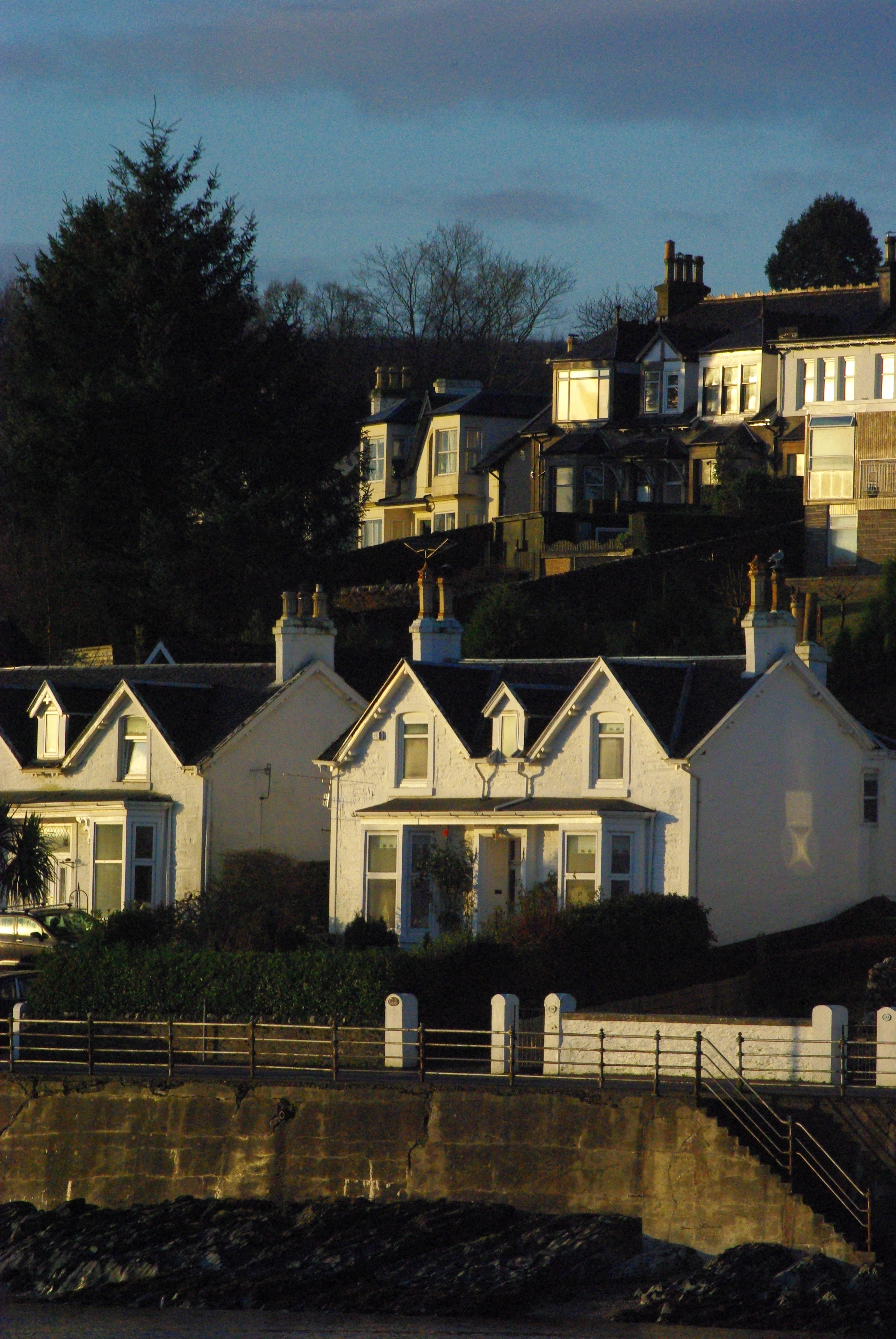
our house, top left

What defines the people of Britain in 2013? What passions push us, what motivates our activity, what things give our lives meaning and satisfaction? I think these are important questions, ones that each generation need to ask, particularly those who have faith. We do this not just to understand, but also to respond in one of two ways;

  1. To celebrate what is good- to participate, to encourage. To enhance the flavours by the sprinkling of salt. To shine light onto good things
  2. To protest and critique when things are bad- where the image of God is trampled, where people are oppressed, where creation is being damaged, where violence rules

This is part of a series of posts in which I will try to grapple with some of these things within my country.

I live in a quiet seaside town, in a large house that was built back in the early Victorian era. Our house overlooks the sea and has lovely high ceilings and an open fire place. If you do not look too close at my rather rudimentary DI, usually done on a minimal budget it might be seen as a place that is the centre of what we British people all long for.

A large house, with views, sort of in the country. If we could have this, life would be happy. We would find fulfillment. We know this because the TV is full of programmes that tell us so. Location/Escape to the country/Grand designs/etc etc.

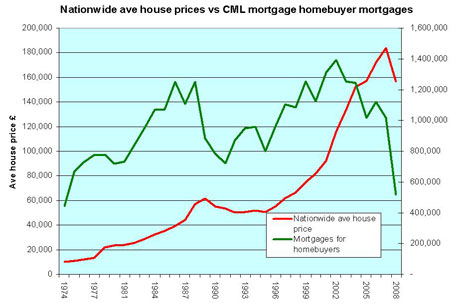
There has been a major change to all this within our lifetimes. In 1918 just 23 per cent of households owned their home. This figure began to rise quickly from 1953 and by 1971 equal numbers owned and rented the property they lived in. In the 1980’s however, Margaret Thatcher introduced a ‘right to buy’ scheme for people who lived in council-owned property (which was itself a massive reaction to slums owned by private landlords, reflected in a massive post-war house building boom.) Thatchers idea spread like wildfire for whom would not want to stand on their own piece of little Britain?

The introduction of the right to buy in 1980 saw a fall in social housing tenants, while the proportion of people in private rented accommodation fell steadily from 76 per cent in 1918 to a low of 9 per cent in 1991 before climbing after that. Prices have been booming and despite the other problems in the econom, they remain high, even climbing still.

Nationwide_450x303

Since then, there has been a slight dip in the proportion of people who own their homes; it currently stands somewhere around 65%. Hardly surprising given the current state of the economy. Our aspirations have not changed but in this country the rich are getting richer and the poor are falling through the cracks.

Also, the high price of homes makes those of us who own property feel very smug and safe. We are sitting on an appreciating asset with that wonderful word ‘equity’. However this means that other people, particularly our kids, will find it next to impossible to join us on that over-used phrase- ‘the property ladder’. The bottom rung is out of reach for most ordinary people. This enforces a sense of social injustice; what seems like a natural right for some is a distant dream for others.

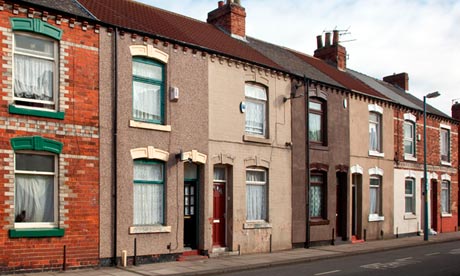
Houses in Middlesbrough

The questions that started me writing this post however is less about the economics of all this, and much more about what this trend of property worship says about us.

Let me tell you a couple of stories from the boundaries of my garden.

On one side there is an argument about the road access, and ownership of some land that has been a commonly used path for generations. Solicitors have been engaged, damage has been done, threats and violence resulted in the police being called and charges leveled. We have kept out of it all and tried our best to remain in relationship with both sides.

More recently another neighbor applied for planning permission to convert property to offer as a holiday let. This was refused at pre-planning stage because of various reasons, primarily the increase in traffic on our little access lane. They protested that their neighbours (us) were doing all that they wanted to do and more, and raised a complaint to planning about our micro enterprises. We had some sympathy about the apparent lack of fairness but tried to remind them that our house used to be a 9 bedroom hotel, and that what we were doing was relatively low scale compared to what it had been previously. However, their response was to engage a high powered planning consultant who is now engaged in a campaign to close down what we are doing. It is all very stressful, but the real pressure on us is an inability to understand how any one can be so apparently vindictive.

A couple of streets away, another friend is embroiled in another dispute over boundaries. Mistakes made by surveyors and land registry people have now meant that her house has been built partially on land owned by another. He has no use for this land whatsoever, it is a strip of waste ground on the edge of a vast piece of other ground, but this man began a campaign of harassment in the courts and in person, trying to extort thousands of pounds from various parties. It seems likely that he knew of the error all along and was biding his time to make an issue of it all.

What is all this about? It is possible that some of the people involved (like the man in the last story) have some psychological issues, even to the point of anti social personality traits. However I also wonder if what we are seeing is an emerging consequence of the spirit of the age.

To be a property owner is to stand on your own mini empire. This gives entitlement, privilege and exclusivity. But all empires need to be defended. Threats to the empire (real or perceived) promotes feelings of fear, insecurity, anger. And nothing angers us more than the sense that our rights are being infringed; that feeling when something that is ‘ours’ is being encroached upon by another.

Rarely do we see this for what it is- a passing delusion. A construct of our ways of living, ways of communing.

There is a long tradition within agrarian economies in which ownership of (or perhaps more accurately access to) the land is vital. It give access, identity, belonging, community, vitality. Alistair McIntosh’s book Soil and Soul captures these ideas brilliantly. In our post modern, post industrial economy, these things have become distorted by seeing land not as a resource, but rather as the ultimate consumer commodity by which we measure personal value.

Carrie'sDreamHouse

What should our response be to all this as followers of Jesus? We have to start with the idea that Jesus had little time for storing up resources on the earth. The sermon on the mount was fairly categorical about all this. Simon Cross posted this quote on facebook the other day;

“The matter is quite simple. The bible is very easy to understand. But we Christians are a bunch of scheming swindlers. We pretend to be unable to understand it because we know very well that the minute we understand, we are obliged to act accordingly. Take any words in the New Testament and forget everything except pledging yourself to act accordingly. My God, you will say, if I do that my whole life will be ruined. How would I ever get on in the world? Herein lies the real place of Christian scholarship. Christian scholarship is the Church’s prodigious invention to defend itself against the Bible, to ensure that we can continue to be good Christians without the Bible coming too close. Oh, priceless scholarship, what would we do without you? Dreadful it is to fall into the hands of the living God. Yes it is even dreadful to be alone with the New Testament.”

Soren Kierkegaard.

Ouch. The call of Jesus was to build communities of love, and to eschew placing our security on earthly things. House ownership seems to run potentially counter to both of these calls on our lives.

Are we in the church less susceptible to house-idolatry, or perhaps even more so? I suspect that the average church goer in the UK is more likely than to be a home owner than not. How do we model a relationship to our property that is not dominated by the same petty-empire building agenda?

There are of course other stories of houses in the NT- Lazarus and his sisters Mary and Martha for example obviously had a big place, able to throw parties and welcome the whole of Jesus’ travelling band of misfits. Jesus loved Lazarus. Then there were all those places that Paul referred to in his letters where secret groups of people met to worship and share life.

The issue, it seems, is not the ownership, but the meaning of the ownership in the lives of those of us who own. Perhaps more importantly, the use we put our places to. There might be an extra pressure on we followers of Jesus who own. It might be that we become camels trying to fit through needles.

I would in no way set myself up as a shining example of how we can work out the challenge of this in our way of living. However, here are some of the things that we are trying to do.

  • To see our house as a resource for the Kingdom, not just ‘ours’. Running a business here has sometimes felt a little in contrast with this, but we see ourselves as primarily providers of hospitality
  • To refuse to participate in border squabbles. The house next door was partially on our land according to the land registry, so we changed the registry record. There is a bigger challenge with other neighbours as mentioned above, but recently we were able to give some roof slates to a workman working on their property. They probably do not know, but it felt like it was good for our souls
  • Being a good neighbour is a process of small acts of kindness and demonstrated positive regard. This is an act of will- wishing the best for those around you, not just peering and sneering, not participating in destructive gossip

There is also a feeling I have that churches can express a collective challenge to the dominant property worship. Many already demonstrate this by using church buildings in flexible community-centred ways, even though many of our church buildings are not necessarily the most warm and welcoming pieces of architecture.

I have this idea for an installation in the middle of my town. It will probably not happen as my friends in Aoradh will politely raise their eyebrows at another one of my crazy ideas and after humouring me for a while will politely change the subject. But the idea is something like this;

A shed in the middle of the square, painted, surrounded by pot plants. All in a ring of barbed wire stopping anyone getting near it. People will be asked to consider their own houses, what they mean to them, their regrets about broken relationships with neighbours, their worries about the exclusion from ownership of their children.

And also, to be grateful for the roof, the warmth and the place for family that many in the wider world, let alone in the UK, lack.

guildfordymcahiddenhomeless2

Home care

old-hands

This story has been on my mind over the last few days.

Increasingly, old people in this country are cared for at home. In some ways, we can be proud of this- people no longer go ‘into a home’ as they become more needful of care, unless they need ‘nursing care’ (which is often a rather ambiguous distinction however.)

This means that increasing numbers of older, frail people are living in their own homes, dependent on electronic monitoring systems and visits by care workers to assist with meals, toileting, even transfers from bed to chair.

And here is the problem. The cost of all this care is squeezed so tight that care workers have tiny slices of minutes before rushing on to the next home. Home care workers have long stopped all activities that are not deemed to be entirely necessary for physical care (cleaning, socializing, sitting with a cup of tea for a chat, shopping.)

Leonard Cheshire care have said that they will no longer participate in any contracts that slice care into 15 minute slots. Good for them. However, the real issue is the degree to which we allow care for our elders (the carriers of wisdom, learning and knowledge) to default to such a low common denominator.

Most home care is now provided by private or voluntary agencies whose workers are probably the lowest paid people in society. Councils are constantly trying to find ways of driving costs down, by re tendering or raising the thresholds for what they will provide. They describe the very real economic factors that force them to do this- reduced funding from central government, increased numbers of older people requiring care etc. These are complex, difficult times for social care provision and let no one pretend that the fault lies with the people trying to manage the front line of care. Some of the people (almost exclusively women) who do the hands on work are, in my opinion, only one step removed from sainthood.

But, forgive me for making a rather cliched simplistic point- Trident nuclear submarines cost about £2.5 billion per annum.

And another one- would an extra pound of tax per month from your wage slip make that much difference?

These are economic decisions that our government regards as politically unacceptable.

Yet we can live with the loneliness and isolation we inflict on our elders.

Home Care

.

The world has become these walls

Covered in pictures of what we once were

Before your heart stopped beating

Some days she hears him whispering

Pulling her closer

No regrets my love-

Just all our memories

Cradle to the grave

.

Each morning she waits for chemical relief

The meat of her is in rebellion

Each joint swollen like wet wood

Each vein pumping pitch black blood

Skin like a stone dressed in lichen

.

There is the rattle of the key from the keysafe

She stiffens, steels herself for dependency

As a stranger in a green tabard clamours in, high on bonhomie

The clock starts

.

How do I use of my fifteen minutes?

A hot meal or a warm bath?

That commode is unmentionable

What was it they said about having to pay for domestic care?

How did it get to this?

.

Then the girl is gone

And she sits alone again

Before her wall of memories