The voice of the Church…

p9_uk_poverty

Over the last few days, a rare thing has been happening- leading voices in the Church have started to speak out, and the media has been taking an interest. More remarkably, the issues that they have spoken on are not the usual internal contortions around homosexuality and the role of women in Church hierarchy; instead the Church is engaging in a debate about things that really matter.

First the new Archbishop of Canterbury, Justin Welby, challenged the British Government over planned welfare reforms, saying that the poorest children in the country were most at risk.

Next the new Pope started to challenge the culture of elitism in the Catholic church, and refocus his mission on the poor- first washing the feet of female inmates at a detention centre (including a Moslem woman) then calling for “peace in the whole world, still divided by greed looking for easy gain, wounded by the selfishness which threatens human life and the family, selfishness that continues in human trafficking, the most extensive form of slavery in this 21st century. Peace to the whole world, torn apart by violence linked to drug trafficking and by the iniquitous exploitation of natural resources”.

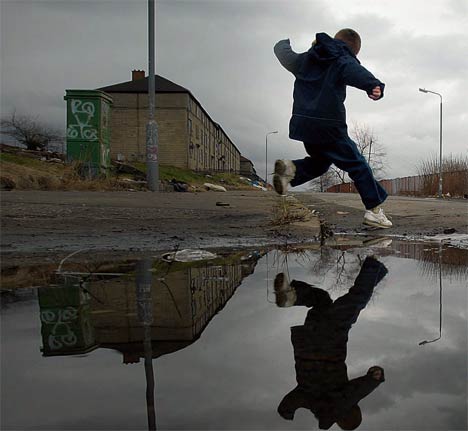
uk-poverty-image

Now, step forward the Evangelicals and non-conformists…

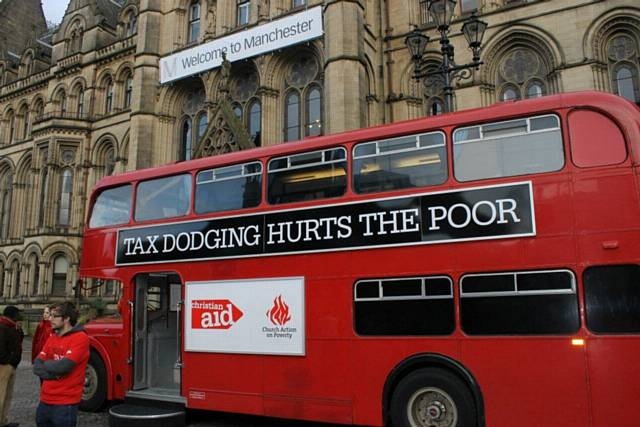
On the eve of the most sweeping and devastating raft of welfare cuts and reforms since the beginning of the Welfare State in the UK, a coalition of churches, including Methodists, United Reformed, Baptist and Church of Scotland raised their voices;

Paul Morrison, public issues policy adviser at the Methodist Church, said the churches were concerned that the benefit cuts were “a symptom of an understanding of people in poverty in the United Kingdom that is just wrong”. Speaking to the BBC, Morrison said: “It is an understanding of people that they somehow deserve their poverty, that they are somehow ‘lesser’, that they are not valued. The churches believe that they are valued and we believe that they should be treated much more fairly than they are being.”

Morrison and other church figures were promoting a report published recently by the four churches accusing politicians and the media of promoting six myths about the poor: that they are lazy; are addicted to drink or drugs; are not really poor; cheat the system; have an easy life; and that they caused the deficit.

“The systematic misrepresentation of the poorest in society is a matter of injustice which all Christians have a responsibility to challenge,” the report says.

Morrison said: “We saw that people who we value, who we believe God values and God loves, we saw them being insulted day in and day out in the media, and that needed to stop. The consequence of the attitudes towards the poor is that welfare cuts like this become more acceptable, so it’s right that we criticise that too.”

Well said.

The church- on the side of the Angels- who knew?

The Government here seem rattled. Grant Shapps, Chairman of the Conservatives has been pushing back– suggesting that there is a moral case for rewarding those in work. Good old Victorian values those- make the workhouses so bad that it is better to shove our kids up chimneys.

Let us remember that at the same time as all these cuts, the government has reduced the top rate of income tax paid over a certain level of income by the very highest earners) from 50% down to 45%.

It all fits the rhetoric- reward the strivers, punish the skivers. Justify this by vilifying those who receive benefits. It matters not that the rhetoric does not fit reality, or what casualties line the roadside.

And those of us who are comfortable, well provided for- we are being told that we dangle over a precipice, and that all this is necessary.  It is not.

The Church should be at the loving heart of this matter- our conscience- a mirror to hold up before those in power. Whilst I feel a shame at what our government is doing, I find hope in the voices coming from Christians.

The Garden, in the cool of the morning…

rainbow through trees, benmore gardens

May this Easter morning bring renewal

May your cross be empty and the stone rolled from your tomb

May every broken egg loose tiny chicks of hope

Though there are teeth in this morning air, the ground beneath is stirring

When we thought it all ended

Perhaps it just began….

For life is no leaky barrel

It is no unwinding spring

Life is no baton to hold a while then drop into another hand

It is a well within me

It is song

It is moment and forever

It is here


Guns into shovels and pistols into pianos…

I loved this;

I heard one of the artists (Pedro Reyes)  talking about this on Radio 4’s Midweek. He described how the guns were seized in some of Mexico’s cities, where the murder rate has sky rocketed.

Previously the group had taken 1527 guns, melted them down into 1527 shovels, and used these to plant 1527 trees.

proportional_620_Weapons-to-Plowshares-by-Pedro-Reyes-8


However, this time they wanted the guns to still be recognisable so that the darkness of their past was not forgotten.

And I suppose to make it clear that we are not ready to beat our swords into ploughshares.

Reyes talked about the nature of guns- the way they are flooding on to the market at the rate of hundreds of thousands every day- perhaps bought as playthings by those (particularly in North America) who fetishize the gun. He pointed out that the things about guns is that they are not like computers or other consumable goods- they do not wear out and need replacing after a couple of years. Virtually any gun ever made is still capable of killing someone.

According to Reyes, the music made on these guns (many of which have taken lives) is like some kind of exorcism, or a requiem.

Hear for yourself;

Poverty in the UK 2013…

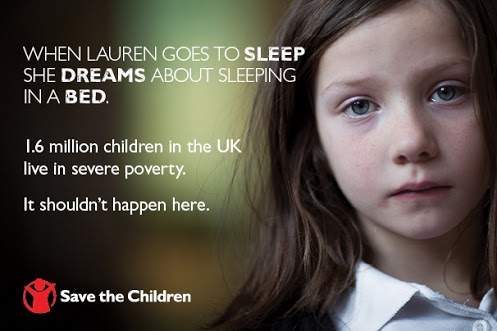
poverty2804_468x431

The strivers/skivers language used by our present government is a shameful smokescreen over what is happening to whole sections of our society.

I make no apologies for this assertion- I have seen it with my eyes, and now there is this;

Senior welfare experts have urged the government to reconsider benefit cuts coming into force next week that will disproportionately hit the poorest families and push a further 200,000 children into poverty.

In an open letter to David Cameron, published in the Guardian, more than 50 social policy professors warn that the welfare reforms, coupled with previous tax, benefit and public expenditure cuts, will result in the poorest tenth of households losing the equivalent of around 38% of their income.

They say the changes will undermine public support for the welfare state – which they call “one of the hallmarks of a civilised society”.

“Welfare states depend on a fair collection and redistribution of resources, which in turn rests upon the maintenance of trust between different sections of society and across generations.

“Misleading rhetoric concerning those who have to seek support from the welfare state, such as the contrast between ‘strivers’ and ‘shirkers’, risks undermining that trust and, with it, one of the key foundations of modern Britain.”

The letter argues that such rhetoric does not reflect the reality of a UK where families move fluidly in and out of work and in and out of poverty.

It adds: “In the interests of fairness and to protect the poorest, as well as to avoid the risk of undermining the consensus on the British welfare state, we urge you to increase taxation progressively on the better off, those who can afford to pay (including ourselves), rather than cutting benefits for the poorest.”

As I read this, I can hear ringing in my head the voices of people who regard poverty in this country as almost entirely the fault of the poor- their poor planning, fecklessness, gambling, smoking, drinkings, laziness, refusal to get out there and find a job. I hear them tell me how benefits are the problem- removing the imperative for change and industry in those who then become a sponge on the productivity of society. ‘Nobody needs to be poor in this country’ I hear them say. ‘Nobody can be regarded as poor if they wear designer trainers and sit on their arses playing X-box all day.’

People who say these things, even those who grew up in poor households, they have rarely had any contact with those living in poverty- whose confidence and hope have been undermined by the brutalising effect of living as a non-citizen in post modern classless Britain.

I too grew up in a poor family- the child of a single mother who often did not eat so we could go to piano lessons, or have a new pair of shoes. I remember still the shame of this life- the feeling that I was less than my peers, and that no matter what I did to try to hide this, it was as if I wore a big badge saying ‘poor’. This was nothing to do with choices that I, or even my mother had made. There was nothing romantic about this experience, nothing that might be regarded as character building. What I became has always been built on these very shaky foundations.

I was reminded again of this when reading this;

A separate report compiled by academics from six UK universities concludes that Britain’s poorest are worse off today than they were at the height of the cuts imposed by Margaret Thatcher’s Conservative government in 1983.

The Poverty and Exclusion project reports that 33% of British households lacked at least three basic living necessities in 2012, compared with 14% in 1983. These include living in adequately heated homes, eating healthily, and owning basic clothing items such as properly fitting shoes.

“Despite the fact that the UK is a much wealthier country, levels of deprivation are going back to the levels found 30 years ago,” says the report, titled The Impoverishment of The UK.

Some of the findings are featured in an ITV Tonight programme titled Breadline Britain on Thursday evening.

The report found:

• Around 4 million adults and almost 1 million children lack at least one basic item of clothing, such as a warm winter coat, while 3 million adults of working age (including over a fifth of those looking for work) cannot afford appropriate clothes for a job interview.

• Roughly 4 million children and adults are not fed properly judged against what most people consider to be a minimally acceptable diet – meaning they do not eat three meals a day, including fresh fruit, meat, fish and vegetables. Over a quarter of all adults skimped on meals so others in their households could eat.

• One-third of all adults can’t afford to pay unexpected costs of £500 (such as if a cooker breaks down), 31% can’t afford to save at least £20 a month, and 1 million children can’t afford to join sports training or drama clubs.

• About 11 million people cannot afford adequate housing conditions and nearly one in ten households are unable to afford to fully heat their home.

The project measures who and how many people fall below what the majority agree are “necessities for life” in the UK today. The list of necessities also includes consumer items such as a washing machine and a telephone, and social activities like visiting friends and family in hospital.

“The results present a remarkably bleak portrait of life in the UK today and the shrinking opportunities faced by the bottom third of UK society,” said the head of the project, Professor David Gordon of Bristol University. “Moreover this bleak situation will get worse as benefit levels fall in real terms, real wages continue to decline and living standards are further squeezed.”

What gets me most about our present government and the politics they espouse is the grubby defensive self serving flavour of it all. Our ambitions for society have become, at best, to carve for ourselves some individual security, and let those who lack our ambition go hang.

How do you find ambition if you feel nothing but defeat? If the zeitgeist all around you is redolent with hopelessness?

My mate Graham posted this quote the other day;

I stored this from a wonderous mailing called ‘Friday night theology’ back in October and is written by someone called Roger Sutton. Most of this could as easily be read by a person with faith or no faith. I love the way that it points us to the other and is not the usual motivational self, self guff. Great for Holy Week:

‘When you believe life is limited, with only so many resources to go round then you naturally hold on to what you have, you grasp and hoard and defend. It’s an ugly place to live, with fear and anxiety at its heart. But if you believe life is unlimited, abundant and providential then you can respond with a grateful heart for the bread we receive each day knowing there will be more bread just around the corner. We can give and bless others and take care of those who are the most vulnerable, knowing that true compassion knows no limit, it has no fatigue element. Stewardship then replaces control, where we take responsibility to make sure the resources are allocated in fair and just ways, but always knowing that we bring our small offering of loaves and fish. It’s simply what we have, and the force of abundance adds to those humble gifts and multiplies them.

We need to challenge our propensity towards anxiety, believing that life is out to get us. We need to trust again in the God of harvest time, the providing abundant force in the universe. The future, as Daniel O’Leary in Passion for the Possible tells us: “is a mother waiting for us with outstretched arms, and a father who is crazy about our  freedom and our fulfillment and longs only for us to let him love us”

Where my friends is this kind of politics, this kind of economics, this kind of social policy?

This kind of religion?
How do you put out a mountain thats on fire?

IMGP4355

I suppose the answer to this is- you do not.

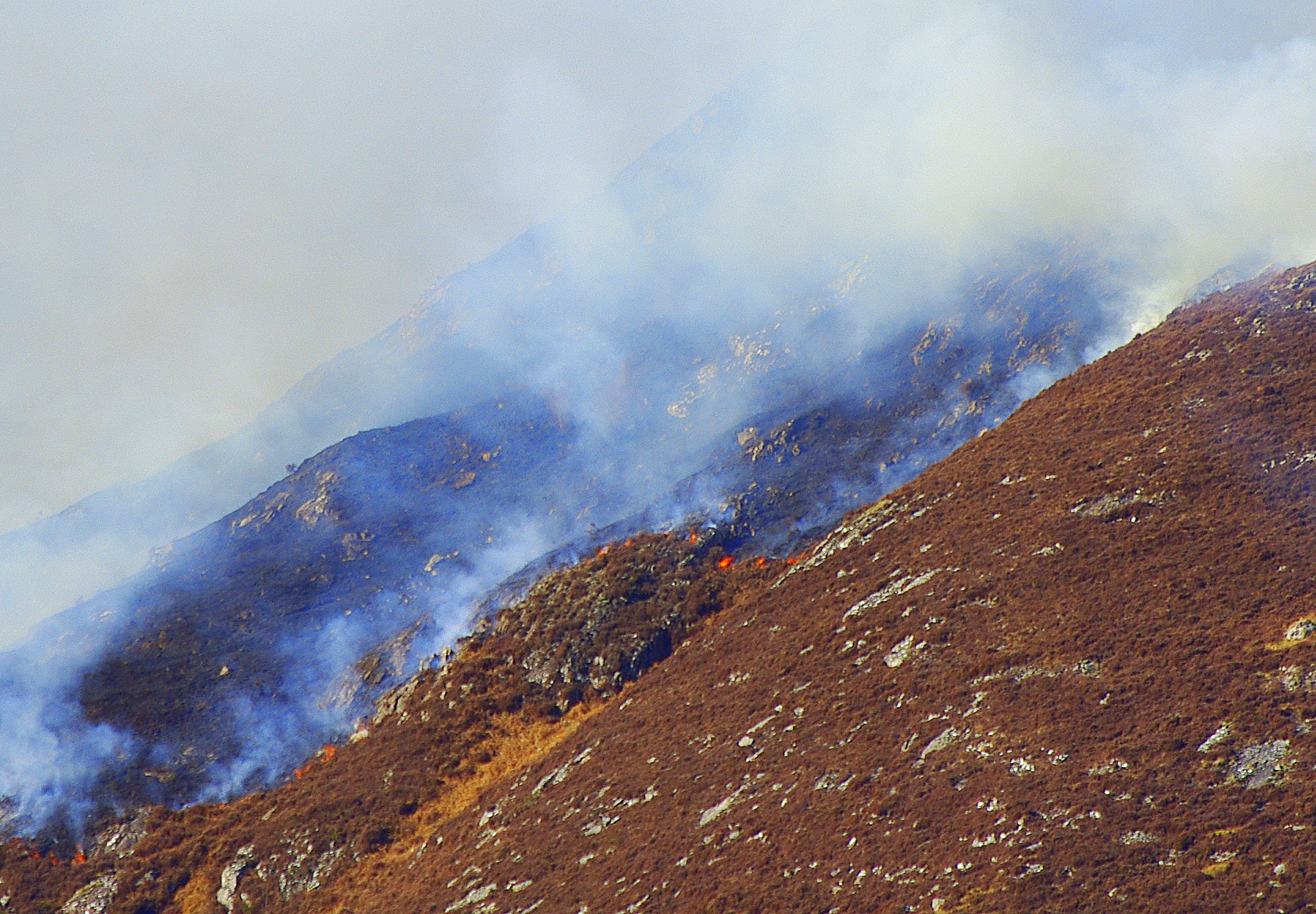
Here are some photos taken from Taynuilt today on my way round to Oban. As far as I could gather from the locals the fire has been burning for two days and looked spectacular last night as the flames lit up the hill. Someone told me she thought that the fire started over the other side of the mountain, and had spread- fortunately only slowly towards the houses this side as the wind was pushing the flames away.

Despite heavy snow falls in parts of Argyll (Campbeltown was cut off for three days over the weekend with no power) the hills are incredibly dry at the moment. What little moisture there is has been held in the form of ice.

Slow down, go deeper…

flintoff

I am not really one for using sport as analogy for life. It seems to me to over value sport and trivialise life. However, I am now going to do exactly that because for all things there is an exception.

I am a lover of cricket. Many of my friends do not get it. They talk about it as like watching grass grow, or paint dry. I have tried to explain the subtle interplay between intellect and skill, the constant procession of events at each curl of leather, the mind games, the simple absorption of all worries in the single moment- but to be honest I am wasting my breath. We can not be convinced of what we will not see.

But whatever your views on cricket- stick with me for the analogy…

Last night a test series finished between New Zealand and England- three test matches, each lasting 5 days, both sides batted twice. All three matches ended in a draw, and so the series was drawn. 15 days of play, some interupted by bad weather, but at the end of it all- no winners, no loosers- just a draw.

But what a glorious draw.

An unfancied, unfashionable side (NZ) takes on one of the big boys (England) and by strength of will, team spirit, luck and skill, give as good as they get in an ebbing and flowing contest. Finally, England are on the ropes, reliant on players to hang on by the skin of their teeth, fighting against their own instincts as well as everything that the NZers can throw at them. In the end, it came down to Englands last player, the hapless Monty Panessar, against the premier fast bowler giving it one last burst. After the last ball was bowled, opponents collapsed into each others arms- it was magnificent.

But it was not quick, it was not easy, it was not instant. It is hard to sum up in soundbite, or display in the form of shortened highlights.

Which kind of does work as some kind of analogy for life.

It is possible to live as if the only thing that is important is the instant, the mountain top, the victorious advance. However, real life is not lived at the exultant pinnacle. Rather it is a consequence of the long faithful movement in a shared direction.

The older we get, the more we come to understand that speed is less important than depth. This is one of the reasons I love cricket.

And at the end of it all, I will be grateful if I achieve an honourable draw…

Right now, need more sleep.

Searching for spring…

The weather up here has been wild- not the weight of snow that has fallen in other parts of the UK (my mother had to dig herself out of the front door in Nottinghamshire) but we have had a cold east wind that has whipped the Clyde to white, stopped all the ferries, and made our house so cold that we have sat huddled under blankets. Old houses in high elevation tend towards the drafty in these conditions!

Michaela and I decided to go and look for spring- we took a walk through Benmore Gardens, searching for the lovely almost-completed Bhutanese pavilion.

We found that Spring was poised in the form of flower buds and the odd green leaf, but that it had regretted its early boldness and was in full retreat.

So we went for a hot chocolate.


The mug at the bus stop…

morning drive, minus 3.5

As I was driving back from Lochgilphead the other day, I passed a bus stop.

It was not like an ordinary bus stop, as it was on a stretch of road with no visible signs of occupation for miles around.

Standing on the ground next to the bus stop was a red mug.

Hmmmmm.

The mug stuck in my mind somehow. So much so that it formed part of some writing I was doing elsewhere- some fiction. Here is an extract;

The bus was virtually empty. Tourists in these parts mostly travelled in cars or big white land barge camper vans. The only people who used the heavily subsidised service were school kids (the early morning and mid-afternoon service buses were ordeals best avoided) and a hardened group of locals whose incomes had no headroom for petrol money.

Despite their shared poverty, Millie often felt like a suburban Leylandii amongst pine trees; they had grown where they were planted; whereas she grew up in a plastic pot- artificial but surprisingly robust, despite the rough treatment.

The bus turned a corner and dropped a couple of gears for a steep hill, before lurching forward almost from a stand still past another empty bus stop. There was no visible sign of habitation for miles around and Millie wondered if anyone ever used it, but then noticed a bright red mug placed on the kerb next to the stop sign.

She found herself captivated by the mug in the middle of the wilderness. Who had left it there? Would they ever return? Which kitchen was it filled in? She found herself imaging all sorts of fantastical explanations involving two lovers thrown apart or last cups of tea before emigration to the Americas before settling on the mundane likelihood of a house hidden in some hollow of ground and a slightly eccentric morning routine.

The cup seemed to capture something about the contradictory nature of life in the Highlands; at once both expansive and claustrophobic. A tiny red dot in the middle of wilderness, swallowed up by towering trees and the sweep of the implacable mountains.

Millie smiled to herself at a sudden certainty that one of the other people on the bus would know exactly whose mug it was. She suspected that some would disapprove of the impropriety of such domestic revelation and that the red cup might yet be used as evidence of weakness of character.

Economic lie number 4; inequality is good for the system…

The whole Capitalist system is dependent on aspiration, or so we are told. Our Chancellor of the Exchequer has just heralded his 2013 budget as something for an ‘aspiration nation’- seeking to help those who want to help themselves- those who want to own their own houses.

Without the wealth creators (business entrepreneurs) there can be no long term prosperity. All that you will have is stagnation- look what happened in the old soviet bloc countries.

Without greed we have bad cars, cabbage soup and bureaucrats in stone washed denim.

Except that the rich are getting richer, even WITHIN our western economies. This from The Telegraph;

The world’s rich are getting richer. The Forbes billionaire list was published this morning (there are now 1,426 of them globally in dollar terms, with 210 new entrants in the last year), and collectively they are $800bn richer than they were a year ago. Each billionaire is, on average, $100m richer than in 2011, with an average wealth of $3.7bn.

And the poor poorer; The Institute of Fiscal Studies forecasts that, as a result of UK tax and benefit policies, there will be significant increases in child poverty in the coming years. In Scotland alone forecast trends would suggest between 50,000 and 100,000 more children being pushed into poverty by 2020. (See here.)

And what is more, the argument can be questioned even by people on the inside;

There is the opposite argument too- that the more equal societies are in terms of income, the better its citizens seem to do. This from here;

In The Spirit Level Wilkinson and Pickett base their analysis on data from 23 rich countries as well as data from the 50 American states. They say that in the main this shows that the following problems are much more pronounced in countries with higher levels of income inequality.

Health inequalities: At the end of the 1990s there was an average gap of 7.3 years in mortality between rich and poor people in unequal societies. This can rise to as much as 28 years in some American states. They argue that research shows these differences cannot simply be explained by differences in health behaviours.
Mental illness: They argue that ‘inequality is  causally related to mental illness’; that rates of mental illness are five times higher in the most unequal societies compared to the least unequal.  Illegal drug taking is also higher.
Obesity: Unequal societies are more likely to have higher levels of obesity, with poor people most at risk, partly because of the attractions of ‘comfort eating’.  Indeed the rate of obesity is six times higher in the most unequal, compared to the least unequal, societies.
Divorce rates: There have been larger rises in more unequal societies. This then creates more stress for children.
Teenage pregnancy: This is more prevalent in unequal societies. Indeed in the USA the rate of teenage pregnancy is four times the EU average.
Violence: Wilkinson and Pickett argue that the strongest evidence or the negative effects of inequality is violence figures. The reasons for this are explored below.
Imprisonment: Unequal societies are more punitive. People are five times more likely to be imprisoned in the most unequal societies than the least unequal.
Social mobility: Inequality leads to less social mobility. Inequality ‘solidifies the social structure’ and also depresses educational attainment for the poor.
Women’s position: In general women are less likely to be in higher status jobs in unequal societies and they also have worse health than women in more equal societies.

Wilkinson and Pickett argue that the problem of inequality is not just for poor people: everyone suffers. The life expectancy figures even for rich people is lower in unequal societies than more equal ones. The reason they advance for this is that unequal societies have lower levels of trust than more equal societies. This lack of trust leads to more hostility, fear and lower levels of community participation. In this way everyone suffers.

In the data they present the societies which are most unequal, and have the biggest health inequalities and social problems, are the USA, the UK, Portugal, Australia and New Zealand. The least unequal are the Scandinavian countries and Japan.