Today’s post is from the brilliant Steve Broadway, a friend I have never ‘met’ – in person anyway. We have history however, in that we have previously collaborated on another advent project, via the curation of Si Smith and also involving meditations by Ian Adams. You can download our efforts here.
Steve is a prodigious talent. He has been an architect, but left all this behind to make art. His sketches, often done ‘live’ in outdoor settings are alternated with photographs on his blog, which I highly recommend. It is like alchemy to me.
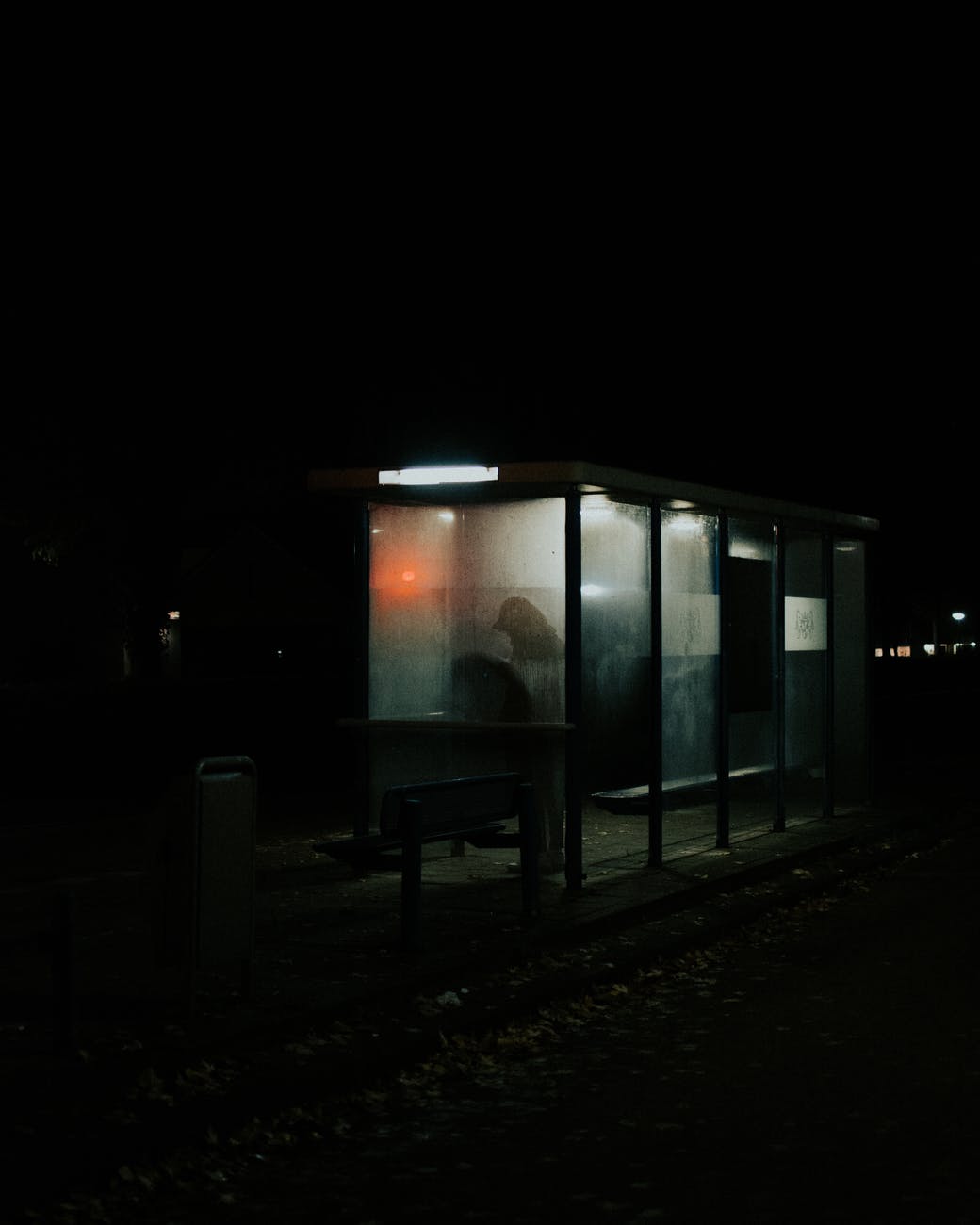
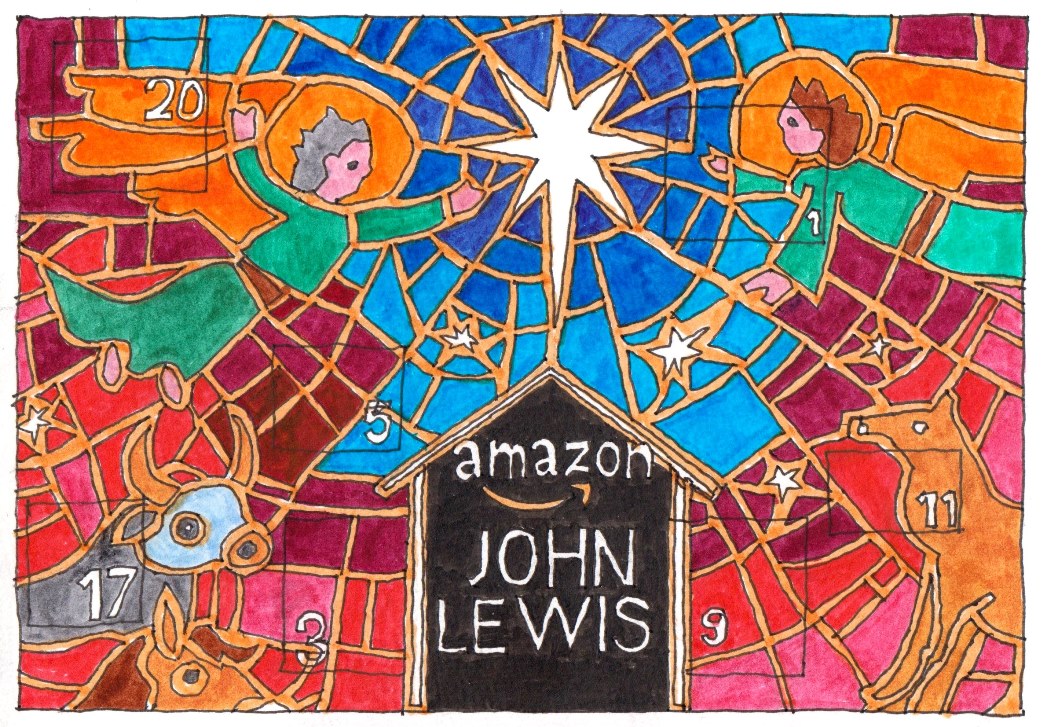
Today, Steve offers us this;
Here is what he had to say about the inspiration;
A TIME OF EXPECTANT WAITING AND ANTICIPATION…
We’ve recently moved and so this will be the first Christmas in our new home. We’ve down-sized to a third-floor apartment and share a core staircase with nine other apartments. We also now have Bristol cathedral as our new next-door neighbour (literally!).
Over the past week or so, I’ve become increasingly aware that Advent – that time of expectant waiting and anticipation – has taken on a double significance. The cathedral has posted lots of Christmas notices inviting people to join in its Advent and Christmas services and the bell-ringers have been very busy showing off their skills…
At the same time, the number of online packages being delivered to our ‘staircase neighbours’ has sky-rocketed (and left at the bottom of the stairs in significant numbers!) – a time of expectant waiting and anticipation for that online Christmas delivery?
The one ‘social’ event I have attended fairly regularly in these Covid times is a music session in our local pub. We sit around tables and play folk music. The quality of the musicianship is… irelevant. I drag myself down there sometimes, but always come home the better for it.
Music is a big part of our advent. The arrival of the Christmas muzak. The promise of carols, just a short while down the road. For us too, there is another kind of Christmas music that makes and appearance; the sort that cuts through to the heart.
Over the Rhine’s Christmas albums for example;
Or Low, or Tracey Thorn, or our dear friend Yvonne;
At some point, Covid allowing, we will gather to sing together. I will play the piano as if wearing boxing gloves, Michaela will play her trumpet, in which we will hear whisps of that Salvation Army band on a busy shopping street… Emily and William will weave some sounds on Fiddle and guitar that will make me weep.
Music carries us. It allows us to feel. It becomes a place marker to give pause in the press of life.
(Musicians need our support more than ever… consider buying some actual albums this year.)
Here is a poem I wrote a year or so ago trying to make sense of the complexity of feelings that overwhelm me at Christmas and how music comes closer.
.
Peace be with us
.
In the quiet space between snowflakes
We listen to sad songs, and
Feel the prickle of tears, pushed
By beautiful broken things
Less than half-perceived
But never forgotten
.
In the warm space you made for me
I hide, guilty for those we left outside
Wishing our table was bigger
That every mouth was filled
Every refugee was home
Like we are. Hoping that
.
In the dark space between all those twinkling lights
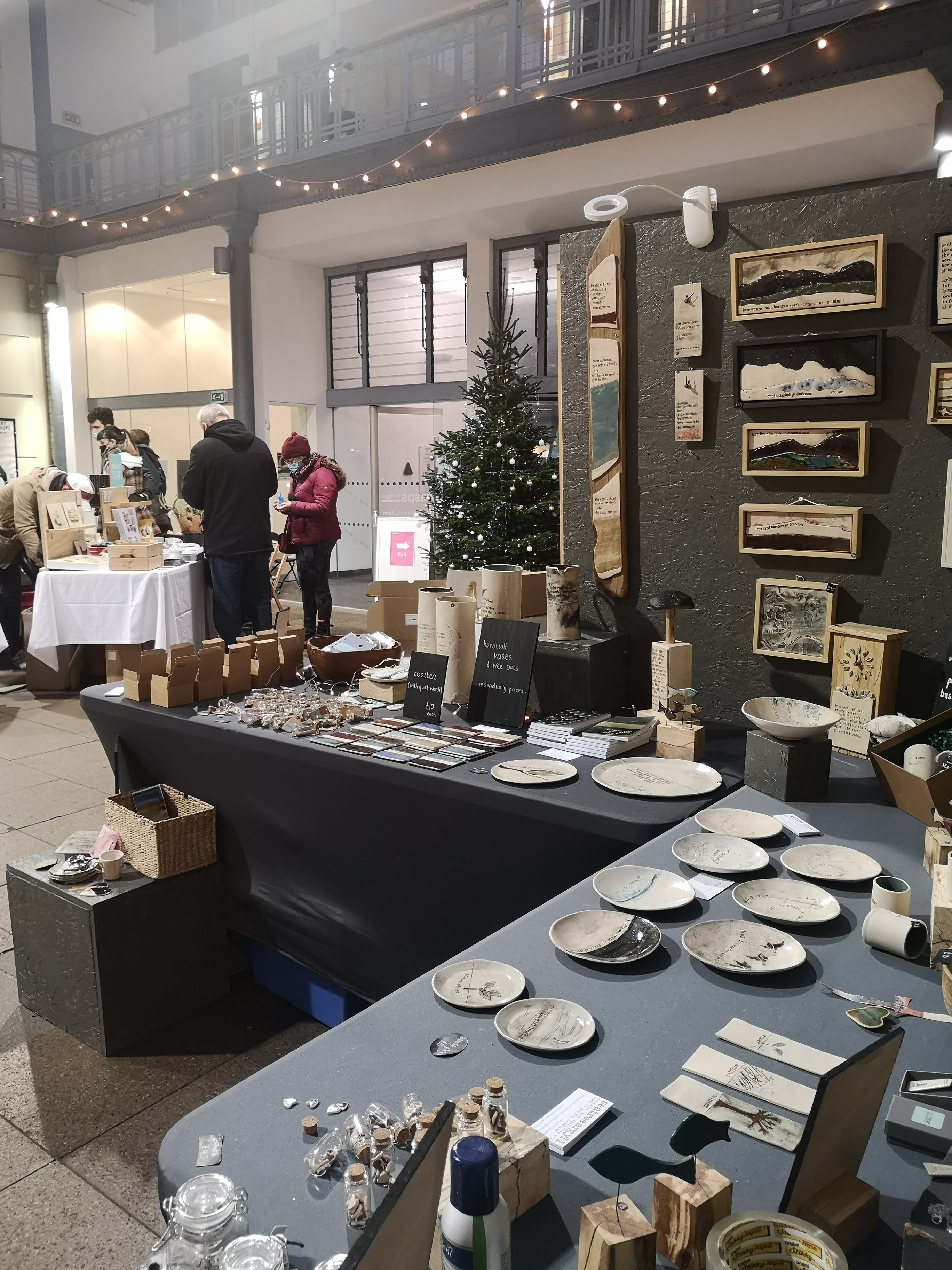
This morning, Michaela and Emily are off to do a pottery workshop for a medical practice over on the other side of Cowal, the lovely place in which were are privileged to live. It was booked as an alternative to a Christmas party, and Emily went off singing carols, declaring herself ‘feeling all Christmassy’.
I promised that this advent journey would be primarily about hope and I intend to stick with this promise. But hope is born in the most unlikely places. How about Britain, in 2021? The Britain of coronavirus, Brexit, unholy hostility fostered by people in power towards the weak and broken? Where do we even start to look for hope, when our news outlets and social media bombards us with ever more extreme versions of the negativity we have already been consuming?
It is everywhere, when we choose to look for it…
…but much like it was two thousand years ago, it is a very different kind of Messiah that we will encounter from the one that was expected. He will not come as a superhero, or a movie star, or a charasmatic game changing politician. He will have no fanfare, no three-point sermons or fancy image managed by a team of consultants.
He will be where the weak and broken are. He will be listening to their conversations, taking a sip from a circulated can of special brew and the odd drag from the stubs gathered from the gutter. He will weep with those who are weeping and laugh out loud with those who have also noticed the absurdities of modern life. He will see each small acts of kindness and quietly flush with pride.
I wrote a new version of my favourite carol last Christmas. A few days later I overheard my son singing it and it broke me open. Here it is, full of humanity. Full of hope.
.
Bleak midwinter
.
What can I give him, wealthy as I am?
Does he need an i-phone, or a well-aged Parma ham?
Should I bring him trainers, a pair of brand-new jeans?
Or Halo for the X-box (whatever the hell that means)
.
In a tower block in Camden, a woman breaks her heart
Her credit score is hopeless, her marriage fell apart
Her cupboards all lie empty, her clothes are wafer thin
Her kids can thank the food bank for turkey from a tin
.
If I were a kind man, I would bring good cheer
I would house the homeless, if for only once a year
I’d buy my cards from Oxfam, for virtue is no sin
I’d send some Christmas pudding to poor old Tiny Tim
.
In the bleak midwinter, frosty winds still moan
And Mr Wilson’s waited ages to get the council on the phone
He’s worried cos his boiler has given up the ghost
And since Mabel got dementia, she feels cold more than most
.
If I were a wise man, I would do my part
I’d sell that gold and incense and invest it for a start
In gilt-edged annuities and solid pension schemes
For without good fiscal planning, what can ever be redeemed?
.
In a lock-up by the roadside a bastard-child is born
To another teenage mother whose future looks forlorn
A host of heavenly angels up high in star-strewn sky
I would contend that any journey worth making will contain elements of the spirit.
By this, I mean that it will often contain a certain depth of meaning – a kind of inherent significance that is often difficult to define and in hindsight is easily dismissed as romanticism or random seredipity.
These moments of encounter are precious, not because they imbue our ordinaryness with something that feeds our own ego; not because we can boast about them on social media or record them on our smart phones for later consumption. Rather because they draw us towards a truer form of ourselves that is not constrained by our bodies.
This is what the mystics have taught for thousands of years and whilst I can claim no great enlightenment, what I have seen and experienced fills me with something that I would describe as ordinary hope.
We are not only this.
There is not only now.
These transendent moments are fleeting. Even as I try to honour them by noting and naming them, even as I try to capture some of them in the things that I write, I must also acknowledge that I often fail to do justice to the light they bring to my life. I too easily fall back on old destructive patterns, old distractions. I too easily fall into the old dualistic patterns in which my profanity seems entire seperate from anything sacred.
Humanity is complex. It is broken and it is beautiful. It is chained and it is free. It is clever but lives in almost total ignorance. It wraps itself up in a cloak of thick cloth in a futile attempt to hide from the consequences of eating the fruit from the tree of knowledge of good and evil.
Today I want to share an old poem with you, written whilst I was on a ten day silent retreat back in 2014. The poem tries to describe an envy of wild things, whose living seems somehow more complete, more connected, more sacred. It was written from the sudden realisation that the religion I was part of had so much baggage, so many barriers and restrictions, so many uncomfortable obligations and compropmises, so much humanity. I longed for a different kind of journey.
May a bird sing an ordinary song of worship and may we hear it, as if for the first time.
This piece was written by Michaela and and speaks of another kind of immanuel…
Often on a Sunday morning, I am the first up. I boil the kettle, tidy up the kitchen a little, feed the chickens then settle with a cuppa and radio 4, in my favourite corner of the kitchen, often listening to the Sunday morning service.
Sometimes I feel no connection to it, but sometimes, the beauty comes through to me.
Either way, Sunday mornings find me sitting, thinking, clearing my head a little, writing down things that need to be done during the week, so I can switch off and enjoy my Sabbath. Then I have a think about whose birthdays are coming up, who has new babies, or new homes or bad news. Who needs a letter or a card or a call…. It is a most comfortable time.
But last Sunday, I woke still feeling agitated from the week’s news. The dreadful deaths of those seeking refuge was hard enough to hear, but to hear it surrounded by political bias, rhetoric, hard voices, accusations, even celebrations that for people to be seeking such danger shows the ‘achievements’ made in closing off the ports. Achievements. My heart broke. My heart breaks.
Then into the anxiety, the fear of what was to come, the hopelessness.. voices from the radio service…
O Come, O Come, Immanuel.
The hope, the pain of longing, the feeling of being held in waiting..
Or even better, set aside twenty-five minutes. I promise it will be worth it. Hear Yvonne’s song embedded in some beautiful and hopeful words but Katie Emslie-Smith, spoken at the Steeple Church on Sunday.
Folowing on from Crawfords post yesterday, this poem seemed apt.
It was my attempt to lift my head towards goodness when it had been bowed down in despair.
(By the way, the photo is of a wildfire that swept over a mountainside above Loch Etive a few years ago. It seemed like the end of everything. It was not.)
The laugh
.
When you feel despair at the state of the world,
Do something small.
Ignore those voices without or deep within
Calling you fool for refusing a tyrannical logic
Achieved only by cynical wisdom –
Then do it anyway.
.
When you feel broken by all the cruelty the world contains,
Reach out, remembering that humanity
Can only be collectively encountered.
Allow empathy to be an umbilical conduit
For a nutrient called kindness.
What else are we for?
.
When overwhelmed by the size of the mountain
Walk slower, saving breath for conversation
For miles pass fast in company, then as words fade
This comes courtesy of Crawford, with whom I have sat around many firesides. Consider it a companion to yesterdays post. He sent me a photo, and some words describing a climb with his son. Let them speak to you as they will…
Here’s a photo. It’s of snow – so is a bit Christmassy.
The footprints you see are Matthews. We climbed a mountain together.
As I followed in his footsteps it made me consider a few things;
He is now stronger than me and more physically capable – that dented my pride and made me proud.
I was happy for him to plough his own route without waiting for me. I didn’t feel the need to call him back. He was enjoying the journey – as was I.
On occasion he stopped and waited for me patiently. without me asking him to.
When the weather turned and we had to navigate off the hill, he followed me down, trusting me to get us home safe. Following in my footsteps.
It was a time spent in the same place, together but apart.
There was something unspoken between us about the experience, something precious, a bond.
It should not have been a surprise- we were already getting used to them. We had been living ever more individualised, isolated lives for decades. We no longer formed or joined clubs, or went to churches. We even drank alone. The community we make increasingly was on-line, which was better than nothing, but none of us can pretend that it is the real thing.
So much for stating the obvious.
I am an introvert and socialise in the way that many exercise – reluctantly – but I mostly end up enjoying it anyway and know that it is good for me, even though I find it exhausting, particularly if I have to indulge in too much small talk.
Nevertheless, like most people raised as an outsider, I have always idealised community. I thought of it as a secret superpower that could rescue and restore. I spent years of my life trying to make inclusive communities with others like me, discovering (unsurprisingly) that community is hard. It strips you bare. It exposes you to all sorts of discomfort and conflict. It is also often dissapointing, particuarly if you are an idealogue like I am, because the reality of these radical communities that I have longed for is that they are often mundane – boring even – riven by small injustices and petty irritations.
The question is then, do I regret all of my attempts at community making?
Not for one moment. There is no better reason for living. There is no better feeling than friendship, no better experience than one that is shared, no better place to be than a crowded fireside.
What has this to do with advent I hear you ask.
Maranatha.
The heart of the meaning of the word is wrapped up in the very nature of our humanity. We are above all things, social. Even people like me. We are made to be with others, not alone. The meaning we find is one that we share, not one that we make alone. The things we value are things to share with those we love (and we are encouraged to love widely).
The God who was distant comes to us, in friendship, to join our fireside conversations. Not so we will be better individuals, but so we might be better friends.
If you think I overstate this, think again.
Forget friendship as a soft power, and think instead of it as a radical force that might change the world.
Here on TFT we notice things like that because they might become roads we travel, if we let them. If we decide to walk them…
You might like to walk this one in company. There will be a post here each day heading towards the uncertainty of what the feast of Christmas will bring us this year. I intend for this journey to include lots of guest posts from writers/artists/friends because all long journeys are best made in companionship. (If you want to contribute to this journey, drop me a message.)
This advent will be my mother’s last. She may not make the whole journey, but I would not put it past her to see in another Christmas. I say this because this is the background to my advent journey. It gives an understandable sense of urgency, of vitality, of woundedness and a bitter-sweetness to each moment.
In these circumstances, the Emmanuel of God is not theoretical. It is not theological. Death and dying can be neither of these things. I say this not as an attempt to sell you a God of the last gasp, but because in these circumstances we come up sharp against the pointed truth of our own being.
But Emmanuel is first and foremost about one thing; hope. I feel this inside of me as if the hand of a God was resting gently on the small of my back.
This is what this series of writings and happenings will be about – or at least I think so. I have no plan, except just to keep walking forward in to the great wide open unknown, trusting that we walk towards love.
Emmanuel.
It means ‘God with us’ of course, but what does that mean?
What does it mean to our personal situations, right now? Is the best we can hope for some kind of sticking-plaster God who serves up ancient platitudes from haughty distance?
What does it mean to our world situation? To our damaged planet? To refugees forced out on to open sea? To yawning inequality and grinding poverty?
Emmanuel.
God with us.
The Shalom of God that passes all understanding.
The Shambala of God.
The kingdom/revolution/insurgency of God.
Perhaps these ideas, which came to us as opaque mystery, are simply not to be explained or contained. They can only be walked towards.
I first came accross the word ‘hermaneutic’ in the conext of trying to make sense of ancient scripture. In that context, it was a helpful way to understand how the ‘googles’ that we wear, albeit entirely unconsciously, affects what we see. In a wider application, this might mean that the dominant world views that underpin our understanding of the cultures we are embedded in prevent us from seeing things that would otherwise be obvious.
One of the most dominant ideas about who we are within arose from enlightenment thinking. We used to believe that evolution was a process of ascendancy in which naturual forces decide, by process of ‘selection’, how progress continues to be made. More recently, this same logic has dominated our economics, in which ‘nature’ has been replaced by ‘the market’.
The market, left to it’s own devices, is then thought to be self-regulating and capable of finding the best solution not just to any economic solutions but to all associated human implications.
Climate change has forced us, kicking and screaming in some cases, to re-evaluate this hermaneutic because free market economics is destroying the very integrated natural ecological system that inspired it.
The second hermaneutic also comes from the natural world. We know already how trees communicate with each other through the mycorrhizal network, but the more we look into this, the more remarkable is the relationship between fungal life (thought to be a third of all life on the planet) and the rest of the natural world. It seems that the truth is inescapable- life is found not in the individual spiecies, but in the ways they connect and interact. The ways the co-operate and support one another.