Dorothy Day- living the gospel…

Thanks Dean for pointing out these videos about Dorothy Day (November 8, 1897 – November 29, 1980), Catholic activist for Jesus in pre and post-war New York City.

I had never heard of Day until pointed her way by TSK’s post- here. He suggested that we would re-discover her work as the next period unfolds– and even if he ‘makes it so’ by mentioning her in this way, then her life and work is well worth further study. Voluntary poverty, living a life of service, non-violent activism. Gentle deep Spirituality- did we not know of her because we Protestants have had a blind spot to all things Catholic?

Let her speak for herself, below. See past the dated clothing and presentation, and remember that this lady was born 112 years ago…

Faith outside church- Spirited Exchanges…

We hear that increasingly, Christians do not go to church. What I mean by this is that many people who would see themselves as having a real and vital faith are seeking to find ways to live out this experience outside organised religious institutions.

A study by George Barna, looking at 20 million American Christian ‘Revolutionaries’ (Oh how Barna loves a label!) had this to say-

“A common misconception about revolutionaries,” he continued, “is that they are disengaging from God when they leave a local church. We found that while some people leave the local church and fall away from God altogether, there is a much larger segment of Americans who are currently leaving churches precisely because they want more of God in their life but cannot get what they need from a local church. They have decided to get serious about their faith by piecing together a more robust faith experience. Instead of going to church, they have chosen to be the Church, in a way that harkens back to the Church detailed in the Book of Acts.”

I liked this description, not because I see myself as a ‘revolutionary’, but because Michaela and I (along with a number of our friends) find ourselves trying to do just this. For me, the issue is not Church as a noun, but Church as an adjective. And at present, where I am, I find that the noun often gets in the way of the adjective. If you see what I mean.

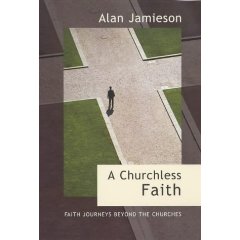
There has been some discussion about ‘Churchless faith’, and whether this will increasingly be the future of faith in the West. Alan Jamiesons book of the same title is well worth checking out on this issue. There is a good summary of the issues from a New Zealand point of view here. Some of the stories told sound very familiar from a UK perspective, and I suspect that we have far more in common with those down under than with the USA faith community in terms of the Post Christian nature of our society.

This seems a good time to give a plug to Spirited Exchanges UK.

I came across Spirited Exchanges at Greenbelt, and later met up with Jenny McIntosh (the New Zealander who came to the UK with a vision to get things going here) at a Tautoko Network weekend. I really liked Jenny, and on this basis alone, I wish them well!

This from their website about what they are-

Spirited Exchanges UK Network is an umbrella name for a variety of initiatives. It is based on the recognition that many people of all ages and backgrounds are struggling with issues related to faith, church and institutional religions:

  • some want freedom to explore the questions without being told the answers
  • some have been abused in a controlling church culture
  • some have had life experiences that cause them to doubt God
  • some are hurting, some are angry, some are bored
  • some are hungry for more spiritual reality
  • some are simply curious


Spirited Exchanges UK :

  • does not try to convert people
  • does not try to lure them back into a church fellowship
  • does not try to “fix” problems
  • does not assume problems are there when they are not

In summary, Spirited Exchanges UK lets God defend God.

I have been thinking about my own journey outside church- the process of having to separate my relationship with God with my relationship with an institution. Having to learn (and then relearn) what spiritual practices allow me to contine to pray and worship and live out a life of faith- and having to take responsibility for this myself, not relying on the developed, even if sometimes uninspiring, programmes that church lays on for me.

Of failing to do this at times.

And having to turn, and turn again.

This journey has been special for me, but I still recognise that CHURCH, in its bricks and mortar form, with all its baggage and stipends and organ funds- this church too is beloved of God.

Our awareness of the false boundaries we made between the ‘sacred’ and the ‘secular’ may have been replaced by a deeper awareness of the present Kingdom of God, but this Kingdom still needs its ambassadorial residences. It still needs places where it’s agents can collectivise and practice the disciplines of love.

Many of us who adventure outside Church may yet return. And if we do not, we are still learning how to become- Church.

More on the ’emerging’ word (weary sigh…)

If this is a new issue for you, it might be worth reading some earlier posts on this blog- here, here and here.

I have been reading various blogs and comments about the jolly old Emerging Church. It all went something like this-

TSK kicked it all off here. In an interesting piece of reflection, he suggested that EC had progressed to a point where the early radicalism and controversy had more or less subsided, as ideas from the early debates and conversations are increasingly adopted by mainstream churches. Here, for example in the UK, by the Church of England, the Methodists, the Church of Scotland and the United Reformed Church amongst others.

TSK also gave a list of more global church developments that have moved from left wing to become more mainstream in this post.

The kiwi feller is far better placed than me to make general statements about the state of the Emerging world. However, he seems to have tweaked a dragons tail. Others, notably Tony Jones appeared to feel that TSK was saying that the EC was OVER. So he had a bit of a go- taking a swipe at a couple of other church movements along the way.

Then there was the inevitable (and rather graceful I thought) response  from TSK here. And other issues started creeping in- marriage, homosexuality, Marx… how I weary of these shallow self defeating arguments. I have met some of the folk involved, and communicated with others. They may be good folk, but this kind of discussion is not good.

It seems an inevitable progression of fragile allegiances of activists however. Eventually they collect as many reasons to disagree as they do to co-operate… and we followers of Jesus continue the same discordant path that we are so familiar with over the last 2000 years.

If this is how we in the EC (or whatever we come to call it) deal with one another- then perhaps we have no right to any kind of organisational future…

I spent a couple of days chewing on it.

The first thing that surprised me, is that I found I did not really care whether the EC was ‘over’ or not. I think I would have done previously. Perhaps this in itself is an indication of some kind of change afoot…

I should be clear that I still hold the term (and the conversation that is around it) in great affection. It is still a label I find useful- in terms of defining who I am, and the streams of good things and good people that it connected me with.

Here in Scotland, it seems to me that we still need connection, encouragement and hope for new things. We are some distance behind other parts of the UK in engaging with the decline of church, and the post modern realities of an unfolding new Scotland. It seems to me that we have more need for the label here still…

As I see things from Dunoon, we still face some real challenges here.

If TSK is right, and established church is adopting the ’emerging’ stuff- then I for one celebrate this. These ideas can be carriers of new life into our declining faith organisations.

But I fear it too. Because establishments tend to kill movements in the cage of their own tradition- or dilute the ideas in a brew that has too many existing constituents for the new yeast ever to succeed. Also-  activists are not good at joining, and tend to be unwelcome in polite circles.

To put it another way- ’emergence’ can be seen as a lifeboat for sinking ships of faith. A way for the empty pews to fill, and leaky roofs to be made secure again. A way of returning to the past. A change of language but business as usual.

For people like me, this will never be enough.

What we hoped for was a new move of the Spirit of God- inspiring and shaping us to think new thoughts about the mission of Jesus. Driving us out of our narrow traditions and religious boxes to where the people are. Not in order to hit them with our bible clubs and capture them for the Lord, but rather to serve and bless wherever we can.

Has this happened already?

Perhaps in a thousand small ways, it already has. A very different kind of revolution.

An emergence…

The art of looking sideways…

This is the theme for next year’s Greenbelt Festival.

The arty-Christian group I am part of-  Aoradh, have still to decide whether we will be going to the next years festival as contributors. We have not even been asked yet! But our discussions had already concluded that most of us would like to go again, but only if in doing so, we did not waste too much of our energy on preparing something for a festival that is a long way from where we are- because Dunoon is our home, not Cheltenham.

We had thought that it might be good to think of a theme for this whole year- including potential involvement at the festival- and try to play with a stream of ideas. Not sure where this will go…

One suggestion (which arose from our take on ‘the art of looking sideways’) was to think about how we relate to one another- in our wider community. So, in this sense, the issue is how we look sideways at others as we journey forwards.

Readers of this blog will know that this is a recurrent theme for me- the issues of community, and relationship, and how we followers of Jesus might learn to live out the call to be collectives who are made distinctive by our love for one another.

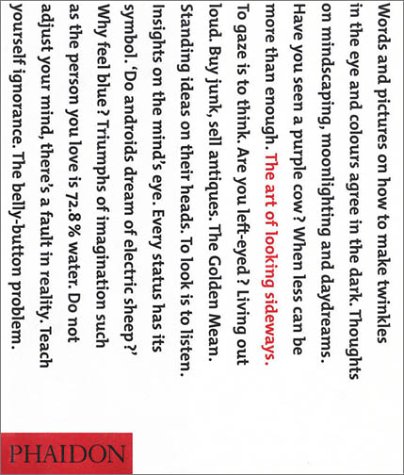
But, in doing a little digging, I think that the Greenbelt theme actually comes from this book

The author, the late great graphic designer, Alan Fletcher, can be seen below promoting his book. Perhaps it might have been better to just show his images. You decide-

Despite this rather inscrutable promo, I ordered a copy. It is a mess of images and ideas that summarise our post modern fractured and disconnected (but beautiful) world.

And even though the spin that we in Aoradh took on the bare words seems to head in a different direction, I think that the issue of how we humans recollect- that is how we again learn to realise the communal and shared part of us- the ‘me’ that we discover only when becoming ‘we’- this is a vital issue for our times.

It continues to seem to me that our post modern disconnection has thrown us into a situation where everything is fast and fluid. We have a million ways to communicate, and a constant immersion in transience. What we have not yet found, but hopefully are still in the process of discovering, is how we might celebrate the depth and variety of each other again, within communal gatherings.

Our workplaces no longer facilitate this.

Our meeting places are increasingly on-line, and lack flesh on flesh contact.

Our clubs and churches are empty, or emptying.

What is the role for the followers of Jesus in this changing culture?

Could it be to stop,

And look sideways?

Advent prayers rising…

We are back in this evening after another day spent out on Dunoons West Bay, serving mulled wine, mince pies, and having lots of good conversations with folk as the came to collect Christmas trees.

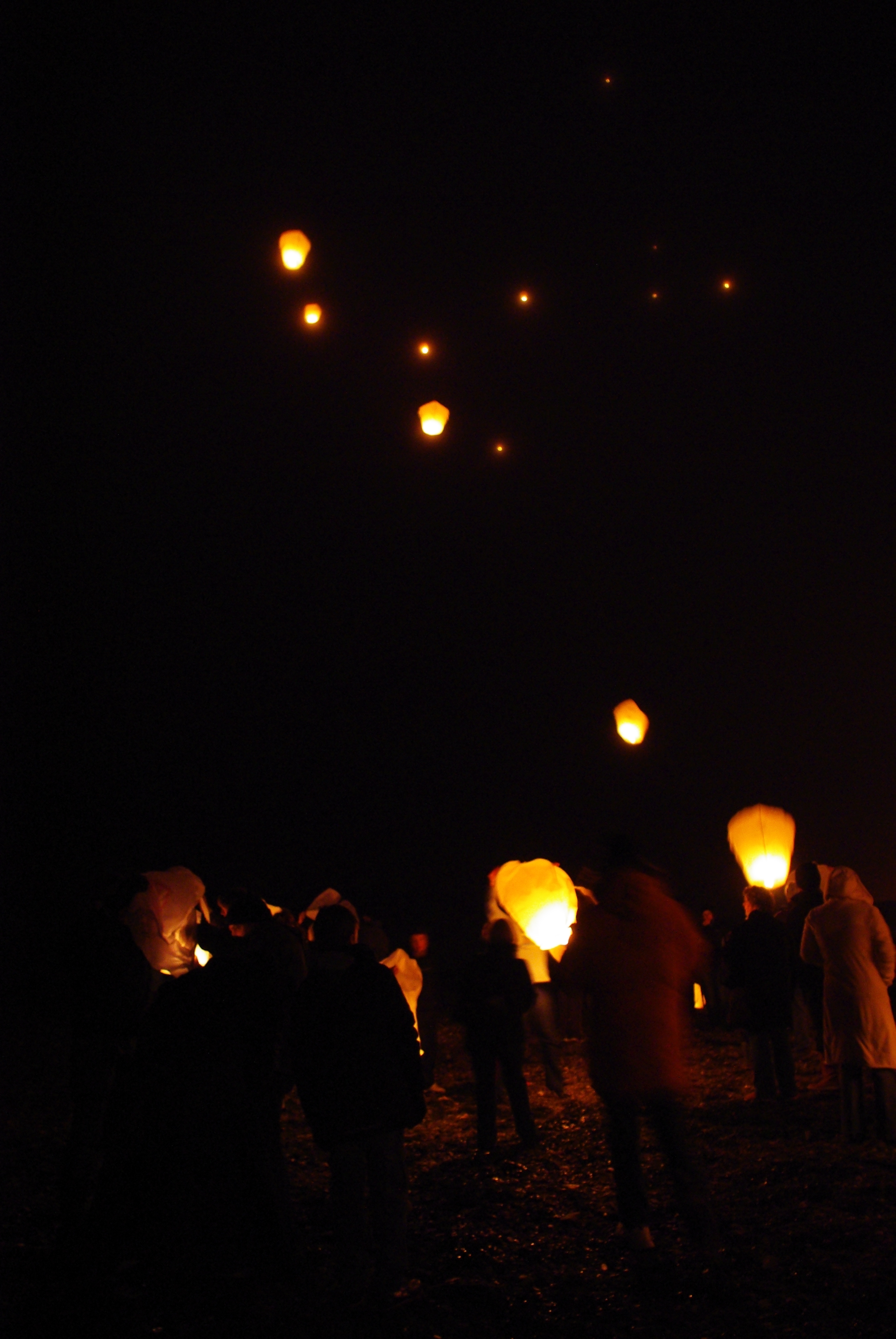
We had also set up some meditation things, did some music (oh my fingers!) and were selling Sky lanterns with the intention of inviting people to write prayers/thoughts on them, and participate in a massed sky lantern launch.

Why did we do it?

  1. To encourage people to be reflective and conscious of the season of Advent- a way for people to become more Spiritually aware, and open again to the Spirit of God
  2. To support work to raise money for CLANN (Community leisure development) and Christian Aid.
  3. To make a lovely spectacle that will linger in people’s minds
  4. To bring people together- and allow community to flourish, in all it’s different forms

And it was great!

We had a mixed blessing with the weather- it was calm, dry, but the Clyde was masked in freezing fog, and echoing with the mournful fog horns as ships passed out to sea.

However, the sight of the lanterns going off up into the mist was wonderful- eery, moving and affecting.

What was even better was the numbers of people who came and took part this evening- from schools, community projects, families, individuals.

Michaela described one family who lit the lantern, then stood together around it as it warmed up, arms around one another in silence. Then they let the lantern rise up into the night sky. Whatever their prayers were, may they be blessed…

Here are the promised photos- Andy took some more, so I will hopefully get to post a few of his soon.

Asylums, churches, and the retreat of the institution…

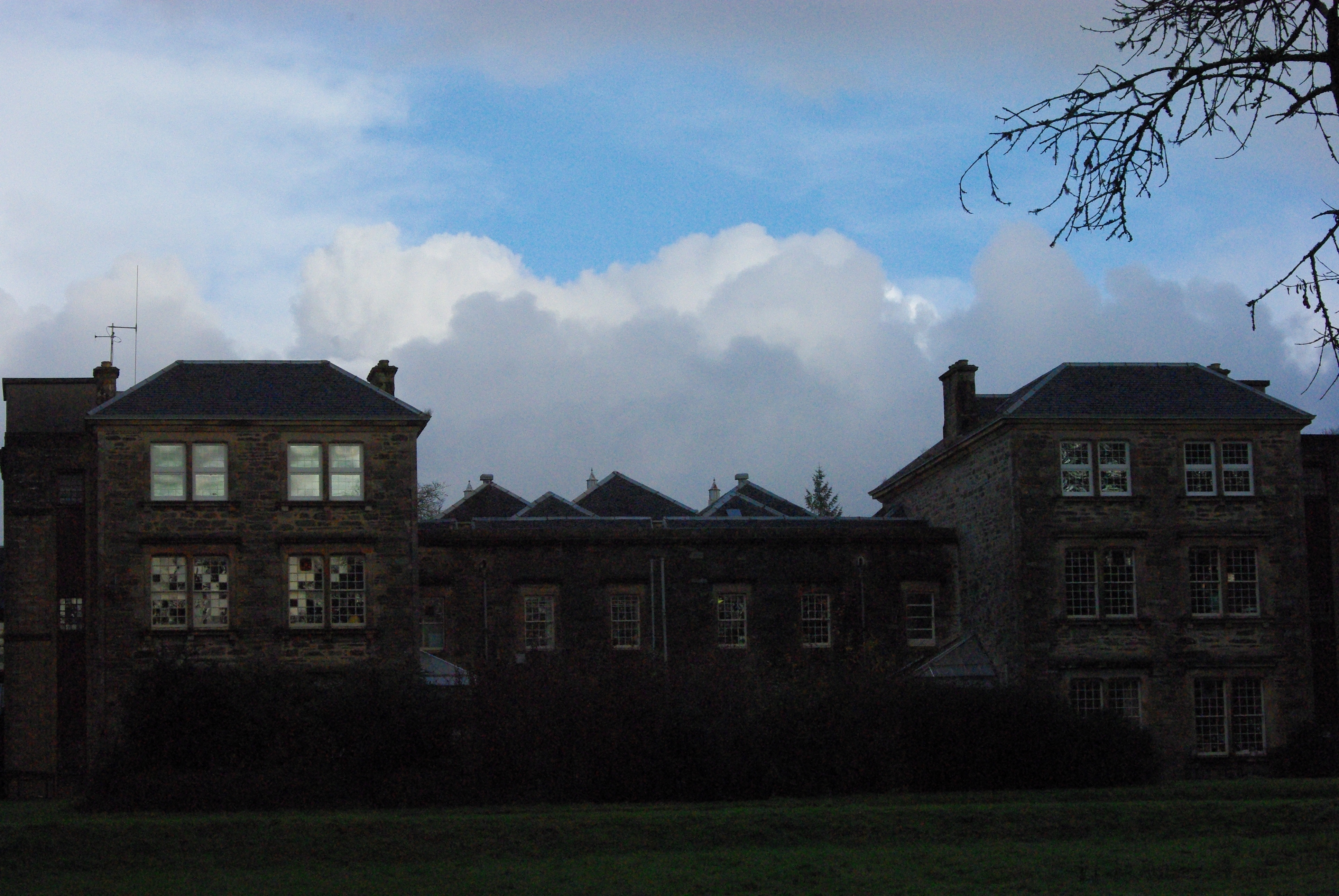
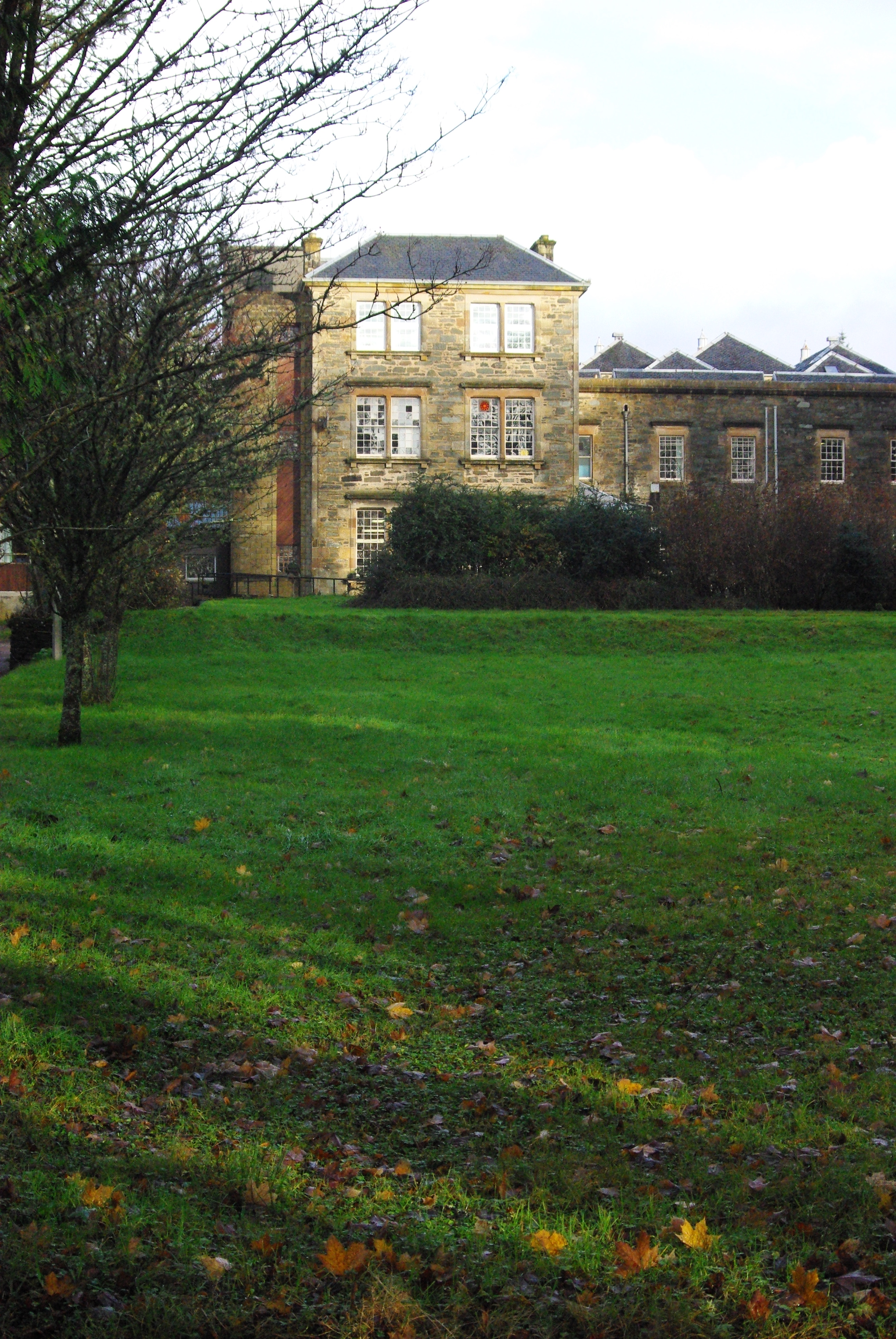
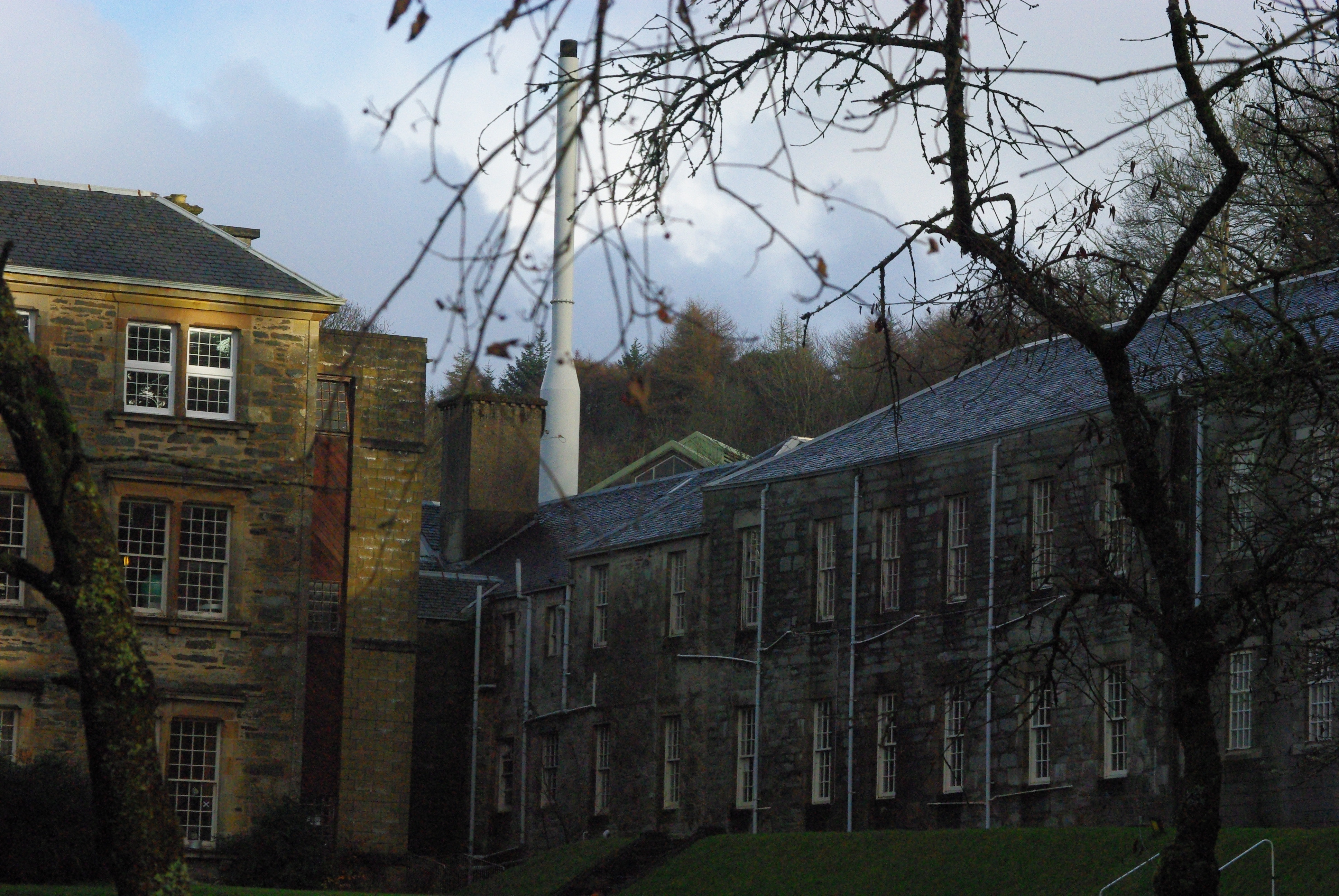
I was in Lochgilphead today, with a series of meetings- including one at Argyll and Bute hospital. The building dates from 1862, and is one of the very few Victorian ‘lunatic asylums’ still in use today.

Lovely old building it might be, but it is a total anachronism. Built to house hundreds of patients from all over this area, only a handful of the original wards are still open, whilst the cost of maintaining the structure eats away at resources desperately needed by community services more fitted to present day understanding of treatment and support of people experiencing mental ill health. It is hoped that a new purpose built facility will (hopefully) replace it soon…

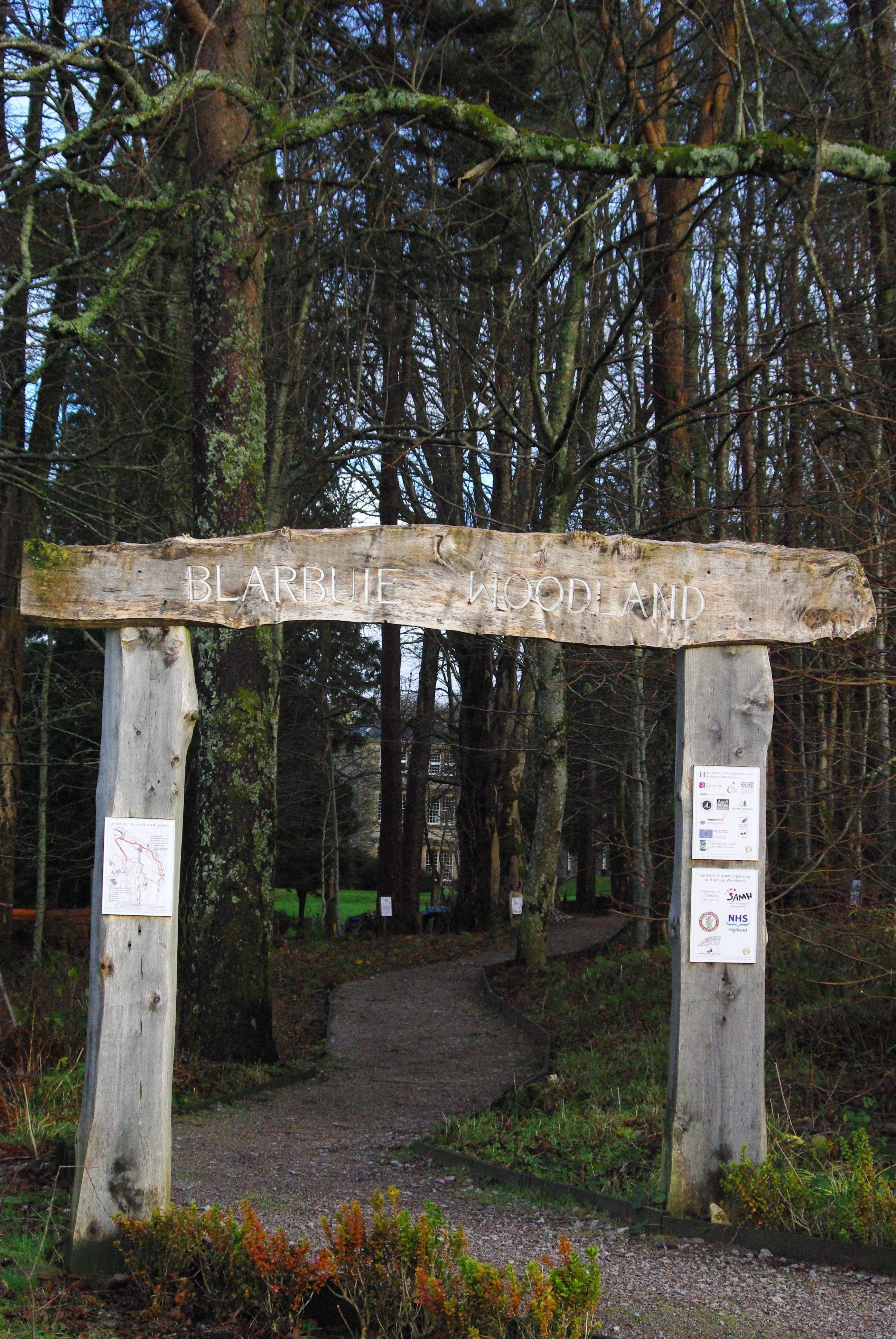
It stopped raining today, and I decided to take the camera into the woods at lunchtime.

I walked into a forest that until recently was managed by a woodland project run by patients from the hospital. The project has lost it’s funding now, as patient numbers have dwindled, and as segregated projects like this are now regarded as a potential obstacle to recovery, as they are not supportive of integration back into the community.

It was lovely though…

The subject I was chewing on as I walked, was the huge change that this areas has seen. The hospital was built as a means of providing what was regarded as much needed humane treatment of ‘lunatics’ and ‘idiots’. These very terms are now insulting and offensive, but at the time the hospital was progressive, impressive and planned to ‘scientific’ principles.

Even the trees I walked in were planted as a means of sheltering (or perhaps hiding) the hospital.

Evidence of the attempts to use the forest as a resource were everywhere- the notices describing different trees, the carvings, the rough wooden tables- and this…

I think it was built to make the best of a view, but in effect, it stands as a temporary monument to a rather meaningless industry.

A bridge into nowhere.

The people that made it are no longer in the hospital. I hope and pray their lives are rich and meaningful, and that the time spent working in these woods is a happy memory. But the fact is, such forms of occupational therapy are no longer part of common psychiatric practice.

And I thought of that other late Victorian institution that I am so familiar with- the modern protestant church. The buildings that were the places of the Protestant institutions still adorn all of our towns and cities- many are lovely too. Most of them are just as empty as this old hospital.

The parallels are pretty obvious. What both offered was good- perhaps even the best of what was possible in their day. They were raised with such energy and optimism. They changed the landscape of their times.

But as time passed, the rituals and routines that they followed became less and less in tune with the wider world. In some case, it was even toxic– what started off as an enclave of hope, became a backwater, where lives stagnated. Escaping such situations can be so very hard…

And what industry there is continued to look towards the institution. It was contained within the stone walls and the boundary fences.

And bridges were built to nowhere.

There will be a new hospital soon, which will not be perfect- there will be more compromises, more challenges- but we hope that the focus will shift to outside these old stone walls and into our homes and houses- where real lives are situated.

I kind of hope the same for church…

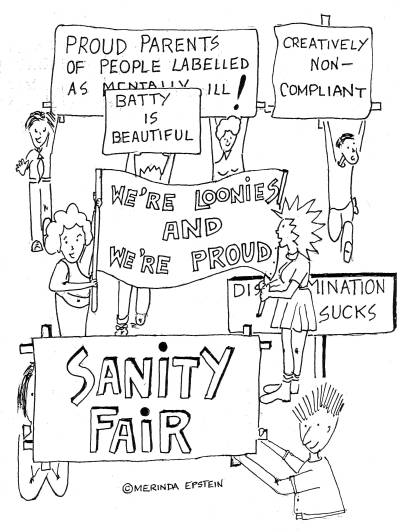
Mental illness and spirituality…

I had a good chat with our friend Kathryn tonight about spirituality and mental health problems.

Kathryn has been studying with ICC in Glasgow and has a passion for working with people who have problems with mental illness. To this end, with her husband Bobby she has been running a furniture recycling/reallocating project- in her spare time that is, as well as her day job!

She also has this idea for a kind of friendship group where people who have mental health problems (and lets face it, this is many of us at some point in our lives.) This has formed part of her studies, and tonight was a chance for us to talk through some of this stuff- which was great, not just because it was good to see Kathryn again, but also because this subject kind of beats in my heart.

The bias that I feel Jesus had towards the poor and broken, and the hope that we feel for a new way of being- categorised by grace, and radical inclusion, according to the rules of the New Kingdom- these things are all in there for me.

As part of her project, Kathryn asked me to consider some questions- which I found surprisingly hard to answer given that this is an area of constant reflection. In particular she was interested in how church might provide help and assistance to people experiencing mental ill health.

Here are some of the things that I was chewing on-

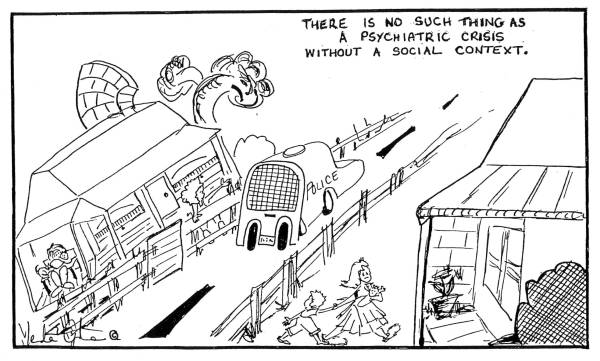
I want to suggest that all of us are potential sufferers of mental ill health- including many people within church. We too easily start with an ‘I’m OK, you are not OK’ way of thinking- which leads us to believe that we have the answers to other people’s problems. Perhaps in part, we might actually be part of the cause!

We often fail to acknowledge MH difficulties amongst people within church- the stigma is as strong, if not stronger, against mental ill health within church as without- because we add assumptions about spiritual weakness to all the other negative assessments.

Another assumption we tend to make is that our job as Christians is primarily to bring people inside the club by making them realise that they are outside. Our job then easily becomes to invite people into our buildings, and hope they will then become like us. The support available within church for people who have MH problems has often been far from perfect, and very poorly integrated with other community resources.

Christian groups/churches seeking to support and provide care for people experiencing mental ill health easily fall into lots of traps. I would include some of these-
The evangelical trap- Our real (covert) motivation is to convert. Most folk see this coming and run a mile. Some may indeed convert- repeatedly. The difficulty is that conversion does not make the illness go away, and we may find ourselves being dishonest and conditional in the way we offer love and support.
The therapy trap- Christians tend to do bad therapy. Bad therapy often does more damage. It is easy to inadvertently be the ‘expert’ and then let people down when we fail to deliver.
The dependency trap- Sustaining relationships with people who have experienced real damage can be extremely hard. If people find something that is helpful and supportive, it can easily become a full stop. The dependency that begins can be an impossible burden for those running groups also, leading to broken promises and further alienation and rejection.

My strong feeling is that Christians ought to be attracted to failure, rather than being seduced by success.  I also believe that Jesus calls us to the poor in spirit.

But I am not sure that he calls us to ‘rescue’ people- rather that he asks us to practice a form of radical inclusion.

I think too that all streams of ‘therapy’ have a thing at the heart of them- for CBT it is about therapeutic allegiance, for person centred counselling it is ‘unconditional positive regard’ and for psychoanalysis it is ‘transferance’. All these seem to me to carry something of Jesus about then- they are related to LOVE. They are in some senses a Christian heresy.

I wonder whether we might yet work out how better to understand the relationship between Spirituality and mental health problems? Is this something that Emerging Church might yet do better?

To accept that our fallability is not a sign of individual weakness, or spiritual corruption, or demonisation. It is just part of who we are.

Part of what it is to be human. Even extra-human.

Where are all the ‘Emerging’ Catholics?

We just had a lovely weekend catching up with our friend Maggy Cooper.

Maggy is originally from Australia, coming over to the UK to become a Nun, before moving into secular work with adults with learning disabilities. She currently works as a community leader of a L’Arche community.

Although she remains Catholic, Maggy began to attend the church we attended in England, Calvary Christian Fellowship in order to learn and share with others from a different Christian tradition. She has been a bridge into a new world for many of us over the last 10 years or so…

So through Maggy I heard about people like Jean Vanier and Henri Nouwen. And she opened up for me a whole new stream of contemplative understanding of the life of faith. Maggy has years of experience as a prayer guide, and in leading retreats- now most commonly at St Beuno’s in North Wales.

Talking to Maggy is always a blessing.

But perhaps the common language that she and I have most in common is that found in and around the ’emerging church conversation’. She reads more books than I do on the subject (some of my friends will find this difficult to beleive!) and  the excitment offered for the future by the ideas and thoughts coming out of the EC debate seems to fit naturally with her Catholic faith.

Indeed, it has been very noticable how much of the ’emerging’ movement has embraced older contemplative practices- in many ways this could be describing a healing of rifts formed by the Reformation- a bringing together of different Christian traditions.

Which kind of makes me ask again- where are all the other Emerging Catholics? I have met a few. Some of them are returnees to the church that they had previously rejected- like Vince down in Ayr. For him, the EC has made it possible to speak about things that previously had no words, or at very least were unmentionable.

This is particularly important here in Scotland, where sectarian division runs deep and toxic.

In this pluralistic world, movements still require leadership– and given the rather conservative stance the Pope takes on most matters Spiritual perhaps this is difficult thing to do within the Catholic Church.

One voice that will be increasingly familiar will be that of Fransiscan Preist Richard Rohr, and his Center for Action and Contemplation in New Mexico USA. He even gets a mention in ChristianityToday.

Here are a couple of clips of him speaking…

I am not interested in seeing us all the converge on a common form of faith. How boring and lifeless that would be! I am fascinated to see these common streams emerging in the different traditions however.

And at the heart of this has to be a kind of generosity to one another’s view points.

I would love to hear about Catholic movements that I have missed…

The Siege of Münster and the Anabaptists, via Melvin Bragg…

The cages hanging from a church in munster which held the corpses of the anabaptist leaders

Another great programme on Radio 4 the other day- available as a podcast for your listening pleasure here.

This one digs into the story of the Anabaptist attempt to create a New Jerusalem in the city of Munster during troubled times in 1534.

I had not heard about this tragic part of church history before- and am grateful to old Melvin for waving it at me through the ether. It is a case study from the beginnings of the protestant experiment- in the early days of the old reformation. Much of what we children of this reformation have come to accept as the bedrocks of faith can be seen in the various sects and streams of the Anabaptists. They were the pioneers.

Indeed if you will forgive me for being partisan for a moment- they were the radical activists of the ’emerging church’ of their day.

But as this programme points out, they were a disparate bunch, who regarded persecution as signs of God’s election- so justifying some pretty odd wacky ideas too. So alongside adult Baptism, the leading of the Holy Spirit, the authority of Scripture (now widely available of course thanks to the technological revolution of the printing press) there were leaders who claimed to be the Godly ordained successors of David, or Gideon, and to claim Biblical justification for polygamy.

Oh- and the Anababtists of Munster thought that the world was about to end- and in such a context, murder, despotism and all sorts of evil became legitimate means to an end…

As ever, we grasp some things of the Kingdom of God, whilst confusing and even perverting others.

Perhaps above all, this is case study of what happens when Jesus (or at least his most fervent followers) and politics are thrown together in troubled and changing times.

Add in a dose of charisma, a dollop of religious zealotry, and the result is bloodshed and destruction.

I think one of the biggest lessons we children of a new unfolding reformation need to learn is that Christians are called to lay down power in the name of love and service.

Or the funeral fires of Munster will have burned for nothing.

Church- moving forward to the 1930’s?

1930s

Just read this really interesting post by TSK.

The comparisons of the economic circumstances of the ‘naughties’ with the great depression of the 1930’s are not new, but the implications for church in this context offered by TSK certainly are (to me at least!)

Partly this is because the erosion of funding experienced by faith based organisations has passed me by- the church things I am involved in require no external funding- and the ‘missions’ that we have been involved in have all been done on a shoestring. I suppose that as long as members of my group have had collective personal resources that we can use together, we are pretty recession proof.

And this is what TSK seems to be saying. He makes the following predictions/comments about the likely moves in church over the next ten years-

The church in the West will use up much of this coming decade to rebound from the financial recession and to restructure in a more sustainable way, much like the church did in the 1930’s after the Great Recession which started about 1929.


In a concerted effort to get church ministry on a solid financial footing, or to start new ministries with a diminished budget, many traditional churches will offer their buildings mid-week as micro-business enterprise labs and will become micro-credit unions for their local communities. The word “fellowship” will regain its meaning of sharing and risk-taking. Emerging church energies will be re-directed from creative worship arts to creative social enterprises which will enable long term sustainability. In both realms, women will come to the front as some of the most successful missional entrepreneurs.

This seems very important. The activities of many of the small ‘alternative worship/missional/emerging groups that I am aware of have tended towards re imagining worship- in terms of what is meaningful and authentic, but perhaps has also have had more than a whiff of exclusivity. We are starting to build community, but my conviction is that the strength and vitality of our enterprise has to be found in deeper and more loving community- and there is nothing like adversity to forge us together! I have noticed that in the middle of most of these groups is a person gifted with the spiritual gift of hospitality. they are the glue, and the oil, and the heart of the thing. Many of these people are women. In this new context- this feels like the most appropriate way to ‘lead’.

Creative social enterprises may well be the way to go- But I work for the public sector here in the UK, so I am not best placed to comment.

1930′ s writings from theologians Barth and Bonhoeffer will continue in their popularity (no-brainer) but we will also revisit Dorothy Day (USA) and Dorothy Sayers (UK).

Barth and Bonhoeffer I know, but Day and Sayers- must do some reading…

Having already “re-traditioned” and “re-sourced” our theological and missiological base for church and mission, we will feel more confident to launch out further into the world with transformational models that will change the world without draining the next generation’s resources. The next decade will be a time of sustainable outreach, measurable by a far more holistic criteria of success.

So this sounds like the possibility of church offering models of intervention- in the same way that social change happened in the 1930’s through small scale social projects and missions. Big, corporate level stuff is no longer viable, or no longer trusted. The alternatives are local, community generated and sustainable within local resources.

I hope TSK is right in this. It remains to be seen whether church can really make an impact for good in these rather troubled and vacuous times.

It is my impression that the 1930’s also saw a dominance of a form of Christianity that could be seen as ‘liberal’, left wing, socially motivated and engaged. This seems another echo with today.

Hmmmm…