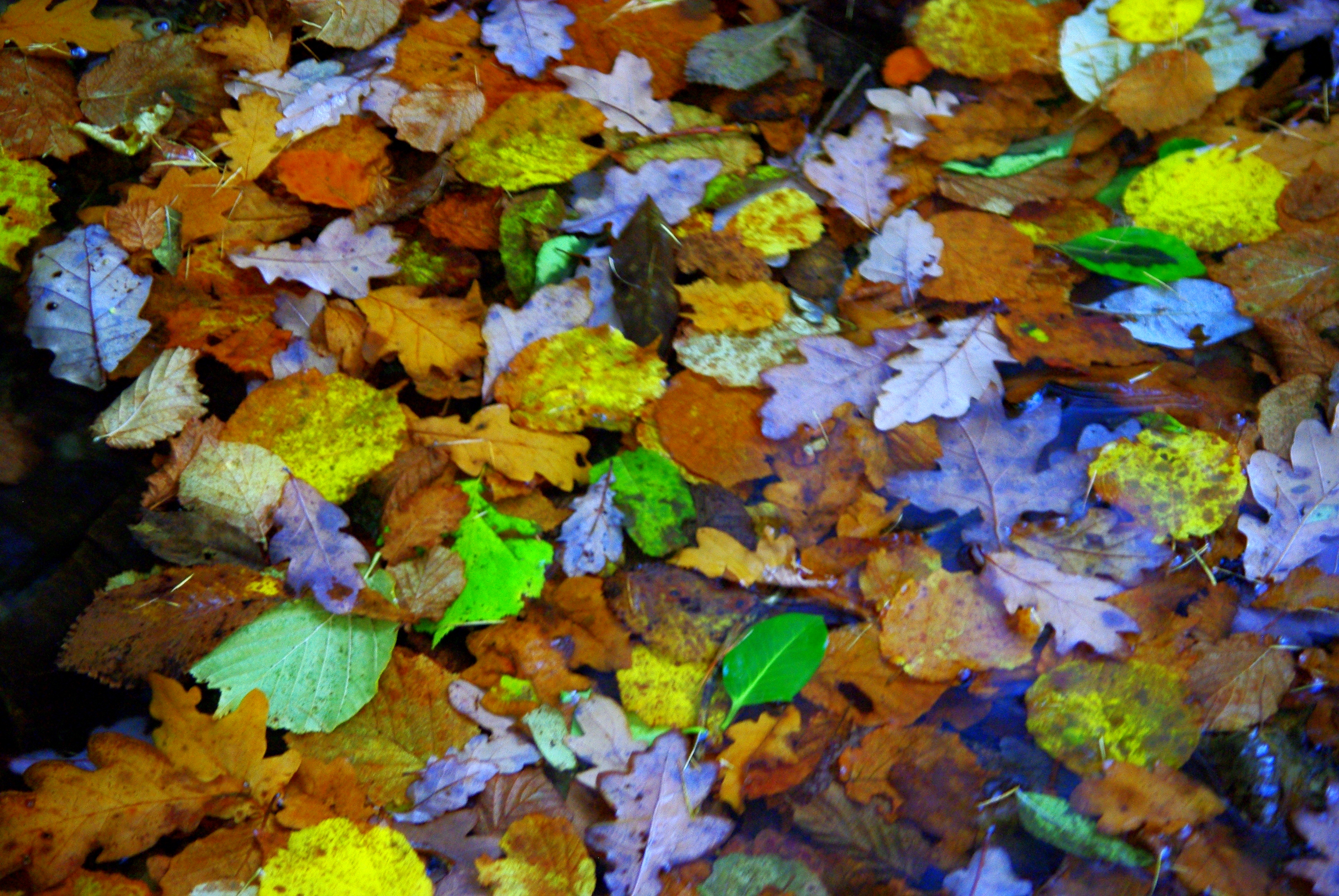
A ghost of memory
An absence
~
The triple tine puncture
Of regret
~
Staring into moving water
Wondering
~
If

A ghost of memory
An absence
~
The triple tine puncture
Of regret
~
Staring into moving water
Wondering
~
If
This is my contribution to Blog Action Day 2011…see here for more details.

The theme of this years action day is- food.
But I wanted to talk about land. And poverty. And I want to do this via a lesson from history, and using the voice of a dead poet. (What else would you expect?)
Because the land and food (and poverty) are rather linked- it is from the land that we are sustained.
Most of us have no connection to the land any longer. We westerners live in an artificial urbanised world, in which all provisions, all groceries, all produce, are available all year round no matter what the season- all courtesy of huge supermarket companies, and a fleet of containers, aircraft and road miles.
Increasingly, as the current economic dysentery is stirring the belly of capitalism, we are asking questions about how this insulation from the blood and dirt of food production might be making fools of all of us. It is resulting in a kind of sickness- in which we are addicted to instant, processed imitation food, in which taste has to be added chemically. We are getting fatter and more sclerotic with each mouthful, and once hooked, kicking the habit is near impossible.
Sure, there are dissenting voices- like shiny red apples in a burger bar. The slow food campaigners and those wonderful allotmenteers and land sharers- but despite the rising food costs and increasing poverty gap in the West, for many of us, these choices are about lifestyle, not necessity.
Most of the people in world have a different connection to the land- one of absolute dependency. If this connection is broken- they have a choice- starve, or become refugees. Either way, communities are broken and culture is scattered. The very stories of these people are submerged and silent.
Most news reports focus on drought, or war, or corruption as the cause of these events- and all of these things play their part. Mostly as symptoms rather than the cause however. I am not one for oversimplifying things as a rule, but the issue is really about-land.
Ownership of the land
Stewardship of the land
Access to the common land
Use of the raw materials from the land
I mentioned a lesson from history- and it concerns our own diaspora- sent out from these shores as a result of the greed of land owners and the separation of a whole culture from the land.
As I write this, I expect that many of you will be thinking of the Highland clearances. Lamented in story and song, so much so that something of it has entered into the consciousness of not only modern Scotland, but also into the new cultures spawned from this exodus- in the USA or Canada or Australia.
But this is not the story I want to remember. Rather it is another one, forced on communities the length and breadth of these islands over a period of around 200 years and known collectively as ‘The Enclosures’.

Battle was joined around the Tudor times- land owners started to make ‘improvements’ to the land- enclosing common pasture in order to grow cash crops in fields. Stripping away the ancient rights of those who lived hand-in-soil.
There were riots, and for a while economic circumstances preserved the status quo. But progress was unstoppable. Money was to be made.
And so through the 18th and 19th centuries, a whole series of ‘Inclosure Acts’ were passed by Parliament. These enclosed the common land, often to the benefit of the landowners, and compensated other land users with parcels of inferior land- which they had to enclose, or lose. Many could not afford to enclose, so lost.
Between 1700 and 1890 over 20% of the total land area of England and Wales enclosed by Acts of Parliament- of which 2 million acres were common lands.
And so the connection was broken. And a new kind of slavery was born- to the machines. On the back of this removal from the land, working people found themselves working in the factories of the land owners- and a new industrial age was born, with all its black shadows and shiny new product, from mechanised spinning and tin soldiers to i-pads and sports cars.
This is our history- that of Great Britain. It is a history of an enforced removal from the land, and a replacement of this with something else. And in doing this, we have lost all respect for the place that holds us. Economic necessities govern our food production, and those who still seek to make a living from the land are under incredible pressure.
The rest of us know little about food- for us, land is only important in as much as having a large driveway is a good measure of personal success.
And it is happening anew.
In South Africa, in India, in Brazil, in Haiti.
This is not meant to be a rant against supermarkets, or the evils of capitalism. Rather it is an attempt to find again some connection to where we come from, and what still we look to feed, clothe and sustain us.
We might do this by planting some seeds, or finding out more about the origins of the food we eat. But I am a poet, so I look for connections through the stories and songs that emerge from who we were, and what we have become.
Has anyone heard of John Clare?

John Clare, our most remarkable poet of the English countryside, was born in the village of Helpston, Northamptonshire and raised as an agricultural labourer. Clare’s genius was his ability to observe and record the minutiae of English nature and every aspect rural life, at a time when enclosures were transforming the landscape and sweeping away centuries of traditional custom and labour.
Following great success with his first published poems (outselling even John Keats) Clare quickly became unfashionable, falling quickly into literary obscurity. The magnitude of Clare’s achievement and poetic genius was not fully appreciated until the recent publication of a first complete edition of his poetry, much of which had remained neglected in manuscript archives for 150 years. Now scholars worldwide regard him as one of our leading poets gradually affording the same status as reputed poet contemporaries such as William Wordsworth and S.T.Coleridge.
(from here.)
John Clare began as a poor labourer, cursed and blessed with the sensitivity of a poet- at a time when everything he knew was changing. He went mad, alienated by his gift and his broken connection with the land that he loved, living out his final years in an asylum.
And he wrote like this-
The Gipsy Camp
The snow falls deep; the Forest lies alone:
The boy goes hasty for his load of brakes,
Then thinks upon the fire and hurries back;
The Gipsy knocks his hands and tucks them up,
And seeks his squalid camp, half hid in snow,
Beneath the oak, which breaks away the wind,
And bushes close, with snow like hovel warm:
There stinking mutton roasts upon the coals,
And the half roasted dog squats close and rubs,
Then feels the heat too strong and goes aloof;
He watches well, but none a bit can spare,
And vainly waits the morsel thrown away:
‘Tis thus they live – a picture to the place;
A quiet, pilfering, unprotected race.
But, back to the enclosures- here is another of his poems
Accursed Wealth
Oh who could see my dear green willows fall
What feeling heart but dropt a tear for all
Accursed wealth o’er bounding human laws
Of every evil thou remainst the cause
Victims of want those wretches such as me
Too truly lay their wretchedness to thee
Thou art the bar that keeps from being fed
And thine our loss of labour and of bread
Thou art the cause that levels every tree
And woods bow down to clear a way for thee
I first came across John Clare thanks to hearing Chris Wood’s song, ‘Mad John’- from the Album ‘Trespasser’.
Here is the only version of the song I could find. May the spirit of John Clare call us back to the land, and remind us to listen to the voices of the dispossessed wherever they may be heard.

Poetry should be difficult
Like a damaged child
It should result in permanent creases
In the corner of the eye
~
Less a pearl in some compliant oyster
It should suck and scrape the scalp like lice
And swell like the purple flesh ruptured by a hammered nail
It should fail
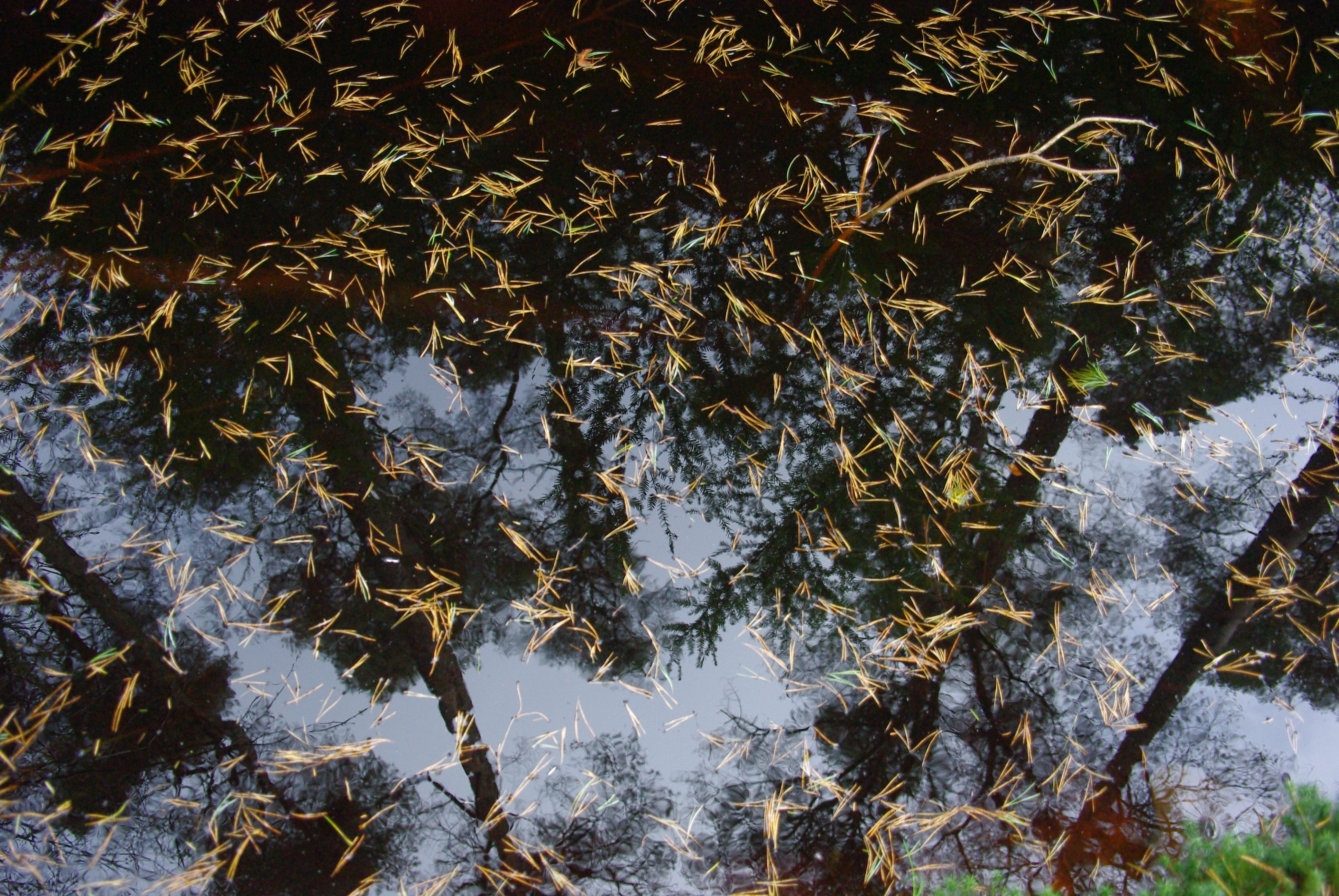
Part of some poetry written for Aoradh’s Pucks Glen meditation walk- another Cowalfest collaboration. If you are local- come along to the Glen next Saturday @ 2.00pm. You can book here.
The sun can only be seen in the light
Of the sun
And everything else is just
Reflection
~
Sometimes our roads lead through dark places
Places of uncertainty
Bridges between here-
And somewhere else
~
But darkness is often penetrated
From above
~
Like this falling silver water
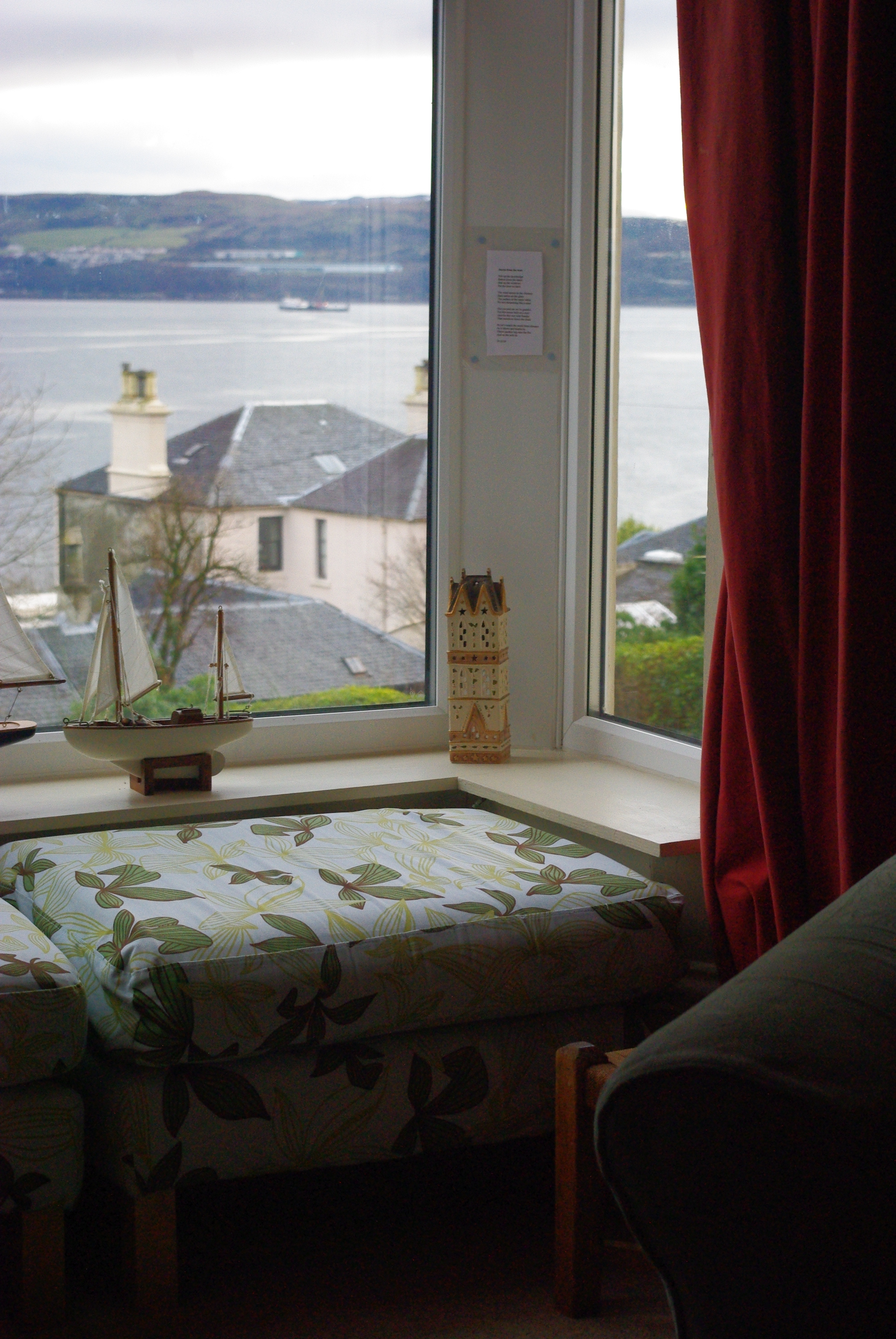
This weekend we had planned to travel down south to attend a baptism service at our old Church near Preston. The people getting baptised are young folk we have known all their lives, and sharing in this service would have been great. However, Michaela has not been well, so we had to call off last night. She is OK- an infection that is on the mend.
So I am sat at home thinking of my friends- missing them, but also feeling strangely grateful for the space, free from long car journeys and weekend busyness.
I love being at home, with no agenda- no pressure, no deadlines. It always feels like such an indulgence because of course there are many things that I could be doing- in fact many things that I should be doing.
But for now, they will wait…
Perhaps I am getting old- but if so, this is fine, at least for today.
Rehearsing old age
.
Today we rehearsed old age
And it was lovely
.
Our bones went soft
And our muscles ceased their strain
.
There is a storm on the old river
And kind grey light makes
Our faces take on
Graceful lines
And shadows
You on the sofa
And me in my chair
.
Today we rehearsed old age
And it was lovely
I discovered this poem recently by W H Auden– Horae Canonicae…
I have not read a lot of Auden- although we have all heard the ‘stop the clocks’ poem used to such brilliant effect in ‘4 weddings and a funeral’-
Even though this poem has had such over exposure, it still reeks with emotion and grief- and manages to put something into words that we all instinctively feel to be ‘true’.
What I did not know was that Auden was a Christian- both his grandfather’s were Anglican ministers, and although he lost his faith as a boy, he found it again in later life, thanks to encountering the writings of Søren Kierkegaard and Reinhold Niebuhr and partly too because of the influence of Charles Williams.
Auden lived a life in interesting times- the clash of great ideologies, and the world war. He was a socialist Englishman who lived in New York, eventually becoming an American citizen. He was gregarious loner and a gay man who longed for the sanctity of marriage.
And he wrote beautiful, sublime poetry, including a collection of poems based around the canonical hours– called ‘Horae Canonicae’.
So here is a slice of it. You can read the whole here.
Anywhere you like, somewhere
on broad-chested life-giving Earth,
anywhere between her thirstlands
and undrinkable Ocean,
the crowd stands perfectly still,
its eyes (which seem one) and its mouths
(which seem infinitely many)
expressionless, perfectly blank.
The crowd does not see (what everyone sees)
a boxing match, a train wreck,
a battleship being launched,
does not wonder (as everyone wonders)
who will win, what flag she will fly,
how many will be burned alive,
is never distracted
(as everyone is always distracted)
by a barking dog, a smell of fish,
a mosquito on a bald head:
the crowd sees only one thing
(which only the crowd can see)
an epiphany of that
which does whatever is done.
Whatever god a person believes in,
in whatever way he believes,
(no two are exactly alike)
as one of the crowd he believes
and only believes in that
in which there is only one way of believing.
Few people accept each other and most
will never do anything properly,
but the crowd rejects no one, joining the crowd
is the only thing all men can do.
Only because of that can we say
all men are our brothers,
superior, because of that,
to the social exoskeletons: When
have they ever ignored their queens,
for one second stopped work
on their provincial cities, to worship
The Prince of this world like us,
at this noon, on this hill,
in the occasion of this dying.
To commemorate the 10th anniversary of the terror attack on the World Trade Centre, I am joining Andrew Jones (aka TallSkinnyKiwi) in blogging a passage from the Koran.
I do this not in any way to disrespect the memory of all those people who died as the towers burned then collapsed but rather to open up a window through which we might seek to understand one another better.
Since 2001, America and her allies (above all, my own government) have unleashed war on whole nations, kidnapped, unlawfully imprisoned, tortured in reaction to the violence of a few Islamic terrorists. In doing so, they have created a culture of fear and revenge. To those who follow an Islamic faith all this seems like another unholy crusade. The end result is a classic feedback loop- one action creates a reaction which in turn creates a reaction and so on.
For many in the west, every Muslim is another potential suicide bomber and the Koran is a ticking roadside IED.
Except most of us have never read the Koran; we certainly have not tested it through scholarly engagement. Perhaps most of us never will, but on the terrible anniversary of the attack on the twin towers, being open to engagement with the hopes, dreams and ambitions of the ‘other’ has never been so important.
I have been doing a little reading of An-Nisa, the 4th chapter of the Koran- dealing with the issue of women- their rights and obligations, outlining the requirements of modesty, including the verse traditionally interpreted to require wearing of the hijab. I encounter these things as a white Christian male with little real insight into the culture or theological issues, or the real experience of women across the Muslim world.
The way some parts of the Islamic world regard women is one of those things that we in the West find most difficult to understand or tolerate. It appears to amount to God-sponsored and state-enforced oppression, particularly when these understandings are allied to fundamentalist interpretations of the text.
(We Christians are familiar with these kind of interpretations of course- we still have our own voices calling for hat wearing seen-but-not-heard child bearers who know their correct place of subservience.)
It might be of interest to remember that according to tradition, Muhammad was married either 11 or 13 times. However, his first marriage lasted 25 years- he married his employer, the 40-year-old merchant Khadijah. It was this marriage that appeared to release Muhammad to follow his calling- it was foundational to the development of an entire faith.
This marriage destroys any idea of submissive, invisible, powerless women. Rather, the very beginning of Muhammad’s ministry was made possible by his allegiance to a wealthy, independent female merchant. In many ways, the writings in the Koran might be understood as a means of protecting and enhancing the freedom and rights of women within the cultural context that they were written. Does this sound familiar to those of us used to trying to grapple with the writings of Paul in the Bible?
Even accepting this, there remains the question of what might constitute freedom in terms of gender relationships NOW. There was all the fuss recently about the (scandalous) decision of the French to ban the wearing of the Hijab in public. I think that ultimately, these are not primarily theological questions, rather they are cultural-political ones.
These verses are my portion from the Koran-
- “Men are the protectors and maintainers of women, because Allah has given the one more (strength) than the other, and because they support them from their means. Therefore the righteous women are devoutly obedient, and guard in (the husband’s) absence what Allah would have them guard. As to those women on whose part ye fear disloyalty and ill-conduct, admonish them (first), (Next), refuse to share their beds, (And last) beat them (lightly) (leave them [3]): ; but if they return to obedience, seek not against them Means (of annoyance): For Allah is Most High, great (above you all).”
These verses are troubling and disturbing to our ears. If we read them with no understanding of the context that is, or the stories of the life of the man who wrote the words.
Holy words are encountered through the lens of faith used to examine them with. Conservative Islamic scholars will clearly have a very different understanding than liberal Muslims, or Feminist Muslims. From a human rights perspective, we might hope that these latter voices are strengthened, but this is a debate that we are on the outside of and ought to be cautious for that.
What we should avoid are black and white conclusions filtered through prejudice. It is easy to condemn all of Islamic teaching based on a cartoon of the Taliban. Just as it is easy to dismiss all Christians as fraudulent tricksters based on Jimmy Swaggart. Stereotypes can not survive encounters with real flesh and blood.
Only then might we seek to protest injustice wherever we encounter it- although perhaps we should always start with our own stuff before leaning into others.
I think I will finish be quoting a poem by and unknown author, relating to freedom. It is a poem which seems to be well known in the Moslem world. I quote it because it seems to me to ask some interesting questions about freedom- because we in the West worship our own version of freedom- or some would say the illusion of freedom. We enshrine it in all our philosophies- our politics, our economics, our gender relations.
‘Freedom’ is something we will kill others for, and send our young soldiers to die for. Our freedom is something we would enslave others to preserve.
What does ‘freedom’ mean?
Does the eagle want to swim in the sea,
Restricted by the sky?
Does the fish want to dance on the wind,
Not enough river to explore?
Yet the sky is freedom for the bird
but death for the fish,
The sea is wide for the fish
but will engulf the bird.
We ask for freedom but freedom to do what?
We can only express our nature as it was created.
The prayer mat of the earth is freedom,
freedom from slavery to other than the One,
Who offers an shoreless ocean of love to swim in
and a horizon that extends to the next life,
Yet we chose the prison and call it freedom.

I listened to this on the way home from Lochgilphead today- wonderful, powerful emotional stuff.
The Killing of Sophie Lancaster is an elegy to the young gap-year student who was attacked in Stubbeylee Park, Bacup, Lancashire. She later died on August 24th 2007. This is an elegy to mark the anniversary of her death, four years later. Aged twenty, Sophie suffered fatal injuries while cradling her boyfriend Rob’s head in an attempt to protect him from a ferocious attack by a group of youths. Rob survived but Sophie went into a coma and never recovered.
The story is told by her mother, and poetry written in ‘Sophie’s voice’ by Simon Armitage.
Poetry enough to make me stop the car to wipe away the tears…
A story of a vibrant young life wasted- because of the way she looked. Listen to it on the i player!
I didn’t do sport.
I didn’t do meat.
Don’t ask me to wear that dress:
I shan’t.
Why ask me to toe the line,
I can’t.
I was slight or small
but never petite,
and nobody’s fool;
no Barbie doll;
no girlie girl.
I was lean and sharp,
not an ounce of fat
on my thoughts or my limbs.
In my difficult teens
I was strange, I was odd,
– aren’t we all –
there was something different down at the core.
Boy bands and pop tarts left me cold,
let’s say
that I marched to the beat
of a different drum,
sang another tune,
wandered at will
through the market stalls
humming protest songs.I wore studded dog leads
around my wrist,
and was pleased as punch
in the pit, at the gig,
to be singled out
by a shooting star
of saliva from Marilyn Manson’s lips.But for all that stuff
in many ways an old fashioned soul,
quite at home
in my own front room,
on my own settee.
I read, I wrote,
I painted, I drew.
Where it came from
no one knows
but it flowed. It flowed.
 this fragile tent