Worship music remix 4- culture…

Worship music is the cultural carrier of faith.

Or perhaps worship music is the carrier of culture into faith.

If either of these statements are true then what we sing together in churches is formational, fundamental. Our songs shape our belief, our worldview and our action in subtle and profound ways. Perhaps it is another one of those times when the medium might become the message.

What comes first, the culture or the song? Instinctively we would have to say the culture, but the idea of culture is one that demands a little more examination. I am using the term not to describe the shared tenants/creeds of the Christian faith but rather to describe something of the shared context, deep assumptions and instinctive reactions that people tend to converge upon in our collectives.

Culture is so powerful a force on how we live and think about ourselves that it can come to be indistinguishable from creed. I think I need to demonstrate this with a couple of examples.


I have spent some time in America, doing some worship music with a Southern Baptist Convention. There was, shall we say, a degree of cultural friction, but it was on the whole a fantastic experience. What was obvious to me as an outsider to this culture was the degree to which expressions of faith became interwoven with a whole set of wider assumptions- political, economic, commercial. These assumptions became totally self perpetuating, as many people seemed to have virtually no contact with people outside this culture. They shopped at ‘Christian’ shops, employed ‘Christian’ tradesman, listened only to ‘Christian’ voices (and only ones from a particular part of the spectrum) and voted always for ‘Christian’ politicians. God, community and country were indistinguishable.

I particularly remember a store with a whole isle selling nothing but Aslans, in all sorts of shapes and sizes. Next to another selling Bible cases decorated with the American flag.

Those who did not conform to a particular way of being were gently corrected, or would find themselves ‘outside’.

The best way of describing this culture I have heard is this one- Moralistic Therapeutic Deism. God exists as a kind of divine therapist, mediating the psychological and financial rewards of society upon those who can conform to a certain moral code. God is a personal saviour, who will guarantee self esteem and success. Those who lack these things need to repent, and get more God so that they get some kind of a chance in the next life if not in this one.

All this has real strengths but it is hard to fully reconcile it all with the story of Jesus. Jesus called us to go, not stay. He seemed intent on overturning tables erected by the religious folk. He gravitated towards the outsiders, the poor, the broken. He started no political parties, nor would be joined to any. And he certainly gave no guarantees for health and wealth.

If I sound critical of the American church, then this is only because these issues were so much more obvious to me as an outsider. We can make equally critical comments about our own religious institutions. Think back towards the days of Empire and the complicity of our own churches even with genocide.

But how is this perspective reflected in our songs of worship?

When you stand back and look at the canon of songs that we have inherited over the last thirty years written both sides of the Atlantic they have some common characteristics;

  • They focus primarily on individual encounters with a personal God. Often it is as if worship is the means by which God ministers to us in some kind of Holy Spirit therapy.
  • They assume that repentance is required to allow us to be acceptable to God, and therefore to receive his blessing. However, repentance is primarily concerned with individual morality- particularly sexuality or dishonesty. We hear next to nothing about injustice, consumerism, over consumption or the workings of international capitalism.
  • There is little call to collective action, apart from parallel individual actions in line with the point above. There is little idea that repentance can be collective, or that change requires sacrifice and joint action.
  • Then there is the theological assumptions of the unassailable centrality of penal substitutionary atonement. The only way to save the world is one soul at a time- and our interest is really only in saving them from hell in the next life.

Does this sound familiar? I am of course not saying that the views above are necessarily wrong, rather that they arise from culture. They are then reinforced and communicated within our songs.  Where then are the songs of protest, of prophetic vision, of renewed or alternative perspectives? The songs of the marginalised now welcomed home, the songs that disturb and challenge? The songs that confront power in the name of the weak? Where are the songs that remember the God who liberates captives not just in the abstract, who breaks actual chains? Where are the songs for the wayside pilgrim campfire, not those that require a graphic equaliser and power amplifier?

As ever, Brian McLaren has some interesting things to say on this issue. If not songs about personal relationships with Jesus, then what? He suggested some of the following in this article which is well worth reading in full;

  1. Biblical vision of God’s future which is pulling us toward itself
  2. Not just evangelism, but mission – participating in the mission of God, the kingdom of God, which is so much bigger and grander than our little schemes of organizational self-aggrandizement) is the key element needed as we move into the postmodern world.
  3.  Re-discover historic Christian spirituality and express it in our lyrics.
  4. Songs that are simply about God … songs giving God the spotlight, so to speak, for God as God, God’s character, God’s glory, God’s beauty, God’s wonder and mystery, not just for the great job God is doing at making me feel good.
  5. Songs of lament. The Bible is full of songs that wail, the blues but even bluer, songs that feel the agonizing distance between what we hope for and what we have, what we could be and what we are, what we believe and what we see and feel. The honesty is disturbing, and the songs of lament don’t always end with a happy Hallmark-Card-Precious-Moments cliché to try to fix the pain. ( Amen Brian!)

By way of another example;

Who remembers the song ‘Heart of Worship’? I’m coming back to the heart of worship, and it’s all about you. If I remember rightly, this came about as a result of a song writer/worship leader coming to the realisation that the music had taken over, so they stopped singing for a while to reflect and rebalance.

Then wrote a song about it.

It is not just the irony of this that should raise an eyebrow, it is the fact that the only cultural response to such a challenge to worship culture is to do the same thing again with a bit more passion.

Perhaps it might be time to do something totally different.

One of the things about the most recent renewal movement to sweep through the church, which I will describe using the words ’emerging/missional consciousness’ has been the LACK of songs, and the lack of singing.

I think this is partly reaction formation against the things mentioned above, but also because other forms of worship have been in the ascendancy. I have taken a similar journey with my own community, Aoradh. We became much more interested in ‘Alternative worship’, borrowing more from the art gallery than the auditorium. Worship became more about encounter within a shared space, with the emphasis being about openness and creativity.

All movement however need a corrective because the pendulum will swing too far and will overbalance the clock.

And all movements also need to communicate their hopes, dreams, ideas and worship. Within the emerging church this has tended to happen over the internet- blogs, podcasts, you tube clips, twitter feeds, even the old archaic websites.

But we still need to sing. We are not just individuals with access to chatrooms, we are also flesh and vocal chord.

Sing me a song of freedom and a song of hope, and I will sing it with you.
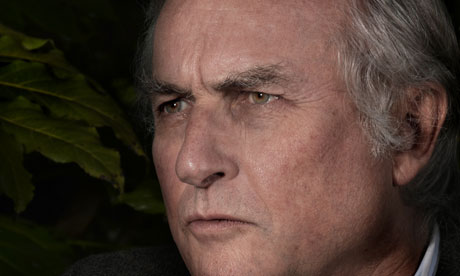
Dawkins and Fraser go at it on the wireless…

Great little exchange on Radio 4 this morning between Richard Dawkins, Athiest missionary, and Giles Fraser. I may be slightly biased but if we were to use a tiddlywinks analogy, Fraser’s winks were more numerous in the pot.

I tried to rise above it all but that line from Fraser where he asks Dawkins to name the full title of ‘The Origin of Species’ (which he couldn’t) made me laugh out loud.

Consider this post a slightly guilty admission that if I turn the other cheek, it is whilst smirking.

You can listen again here.

Psalms for the downshifter…

So, this Sunday morning, we rested.

We ate fried egg sandwiches and drank deep from the tea pot

And we were grateful; for the company, for the sounds of the morning kitchen, for the warmth of the stove. For a day uncommitted and time owed to no-one.

And we talked again of dreams for living better. Living more openly, more lovingly, more sustainably. Not because this is some kind of right that we can demand, but because grace is to be found in most things. Not because life should be easy, but because direction should not be determined by the ruts made by other peoples wheels.

I do not often quote Scripture here, but I came across this- and offer it as a Psalm for all of us who are looking to live more simply;

Psalm 62 (from the Message)

5-6 God, the one and only—
I’ll wait as long as he says.
Everything I hope for comes from him,
so why not?
He’s solid rock under my feet,
breathing room for my soul,
An impregnable castle:
I’m set for life.

7-8 My help and glory are in God
—granite-strength and safe-harbor-God—
So trust him absolutely, people;
lay your lives on the line for him.
God is a safe place to be.

9 Man as such is smoke,
woman as such, a mirage.
Put them together, they’re nothing;
two times nothing is nothing.

10 And a windfall, if it comes—
don’t make too much of it.

11 God said this once and for all;
how many times
Have I heard it repeated?
“Strength comes
Straight from God.”

12 Love to you, Lord God!
You pay a fair wage for a good day’s work!

Worship music remix 3- transcendence…

The first two pieces in this series are here and here.

We are just back from our monthly Aoradh ‘family day’. This is the closest we come to a ‘church service’ that we do regularly within Aoradh. It usually involves filling up one of our houses with people, then one of us will co-ordinate a period during which a selection of folk – kids and adults – will take turns to lead others through a song, a prayer, some meditation, a poem, a clip from you tube. It is simple, messy and lovely.

Then we eat together.

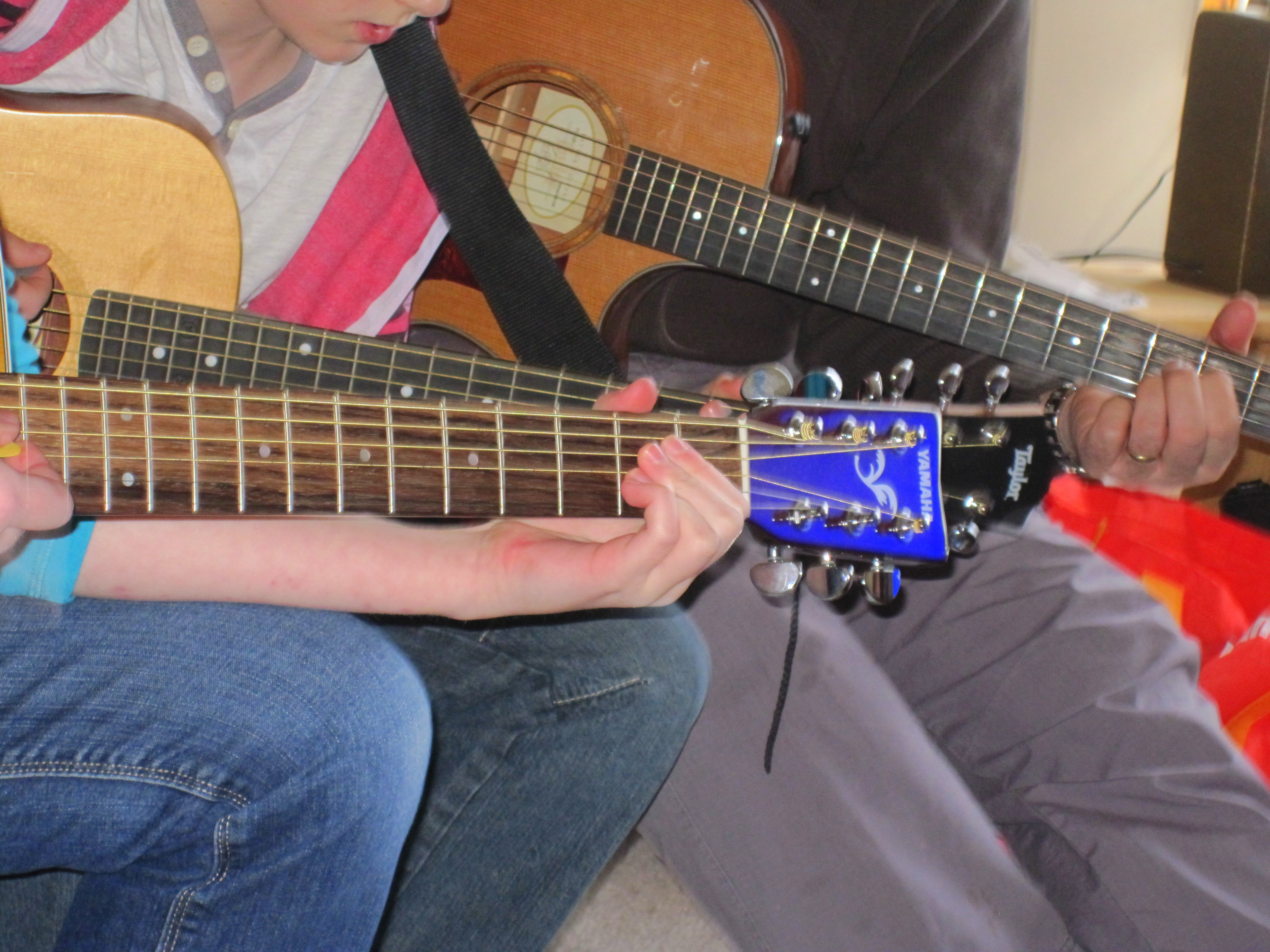
Today I was thinking about the distance I have travelled within the scope of what ‘church’ might mean. I was playing my guitar along with William and Rachel, and really enjoying it, because this is something I do fairly rarely these days.

There was a time when it was my whole life.

I was a ‘worship leader’ – one of those blokes (and they usually are blokes) who stand in front of people and whip up some spiritual fervour by the application of soft rock love songs to Jesus. I lived for those moments when the music took flight, and something kind of opened up. At such times, music was more than just notes. Performance became less about technique, and more about an attitude of humility and receptiveness.

But in the course of my journey from ‘organised’ church, other principles started to dominate the way I thought about worship. Primarily, I was convinced that the culture of ‘church’, with all its big and small liturgies, assumptions and traditions, easily came to be a black hole that swallowed people whole. It left us with no room for the other. It became about us, not about them. They were only important if they were willing to become like us. I was convinced that church should exist to send and to serve, not endlessly feed itself.

Our corporate worship was the same. It was all about music and preaching. Other ways if worshipping were not necessarily wrong (although some were guilty by association) but they were just not our thing. We knew what we liked and this was enough.

As I think about this now it is like a rainbow of only one colour. Still impressive, but monochrome.

It can also be so selfish, so self centred. Worship like this exists to make us feel good. The end we aim for is a spiritual/emotional high for us, dressed up in the clothes of adoration of the God that we make in our own image.

But I overstate my case. A monochrome rainbow can still be beautiful.

The word that came to sum up the change I was finding in my own aspirations in worship was this one;

Transcendence.

By which I mean the experience of God in the ordinary. The incarnation of the maker of the universe within the temporal, messy world in which we live and love.

Transcendent moments fill our lives if we look for them. And the more we attune ourselves to the looking the more we see.

They are everywhere in the natural world; sunsets, new leaves, mushrooms in caves, the lick of new born fur, the light of the moon on still water, the smell of rain on dry earth, the sea that goes on for ever. All these things will happen whether or not we are there as witnesses. But when we look in a certain kind of way a hollow space opens up in the middle of them into which we can meet with something transcendent. Into which we can invite/be invited by the living God.

They are everywhere too where humans also are. In conversations, in touch, in the longing for justice, in the decision to forgive, in the deciding to repay hurt with love, in the listening and in the laughing. Because God is a God of communion. God commands love, and love requires direction. Perhaps above all, the transcendent God is immanent when we come together in community.

They are encountered in art, because art can become a bridge to something beyond our business. Films, books, poems, paintings, sculptures, music.

They can even be encountered in church – for me, especially when we sing, when the chordal voices find the vault of the building and make it vibrate.

I had become so trapped in a view of God that was limited to one colour of the huge spectrum from ultaviolet to infra red and beyond, that I needed to go cold turkey. The guitar needed to go away for a while so I could hear the birds sing.

So I had some time to speak to people, with no agenda other than love.

So I could be creative, and make art in service of the Creator.

How about you? Where might your ordinary space become pregnant with the extraordinary, capricious, magnificent Living God?

Always ‘on’…

If you are an American teenager, you are likely to be ‘connected’ around 7-10 hours per day (according to this article.) By this I mean plugged in/tuned in to the net in some way.

If you are honest- how about you? I might spend a lot of my working day in front of a PC- on an office day, this may be 6 hours. I then will read a few blogs/websites, answer e-mails, then do some bits and pieces of writing into the small hours. On some days, I am up there with the teenagers.

“TV will turn your brain to Jelly” my mother used to say. This was her excuse for restricting our TV watching to only two programmes a week- usually The World About Us and (more bizarrely) Starsky and Hutch. However I have since over compensated for this televisual deprivation, and my brain is not yet jellied. The question is whether our increased addiction to internet based communication might yet mix our brains into some kind of (ahem) blancmange.

I liked the balance of this;

The greatest advantages of wired living are easily enumerated. Plugged into the world’s hive-mind, we have speed, we have range. We can research and reference much of humanity’s gathered knowledge – and gossip and opinion – in minutes. We have godlike capabilities and are increasingly adept at using them.

Unplugged from media’s live wires, however, our originality and rigour can come into play in a different, older sense that’s found in our capacity to make decisions, to act on our own initiative, to think freely, without fear of pre-emption. Much as we hunger for connection, we need to keep some sense of ourselves separate from the constant capacity to broadcast. We need tenses other than the present.

If the issue is about trying to make sure that we have time for both- how do we achieve this, particularly given the strangely compulsive and addictive nature of the connected world?

For some people, the suffusion of the present is increasingly attended by strain and anxiety, and a sense of lost control. For all of its challenges, we live in an era of near-miraculous, unprecedented opportunities.

Above all, though, every effort on our part should begin with the knowledge that without the ability to say no as well as yes to technology – and to understand what exactly it is that we are agreeing to when we do say yes – we risk turning modernity’s miracles into snares.

I would add to this an old discussion on this blog about the nature of on line communication, which I compared to a kind of Autism. On line communication allows for the sharing of lots of informational data, but for the most part lacks the nuanced, multi-layered complexity that characterises human face to face exchanges.

People who have autistic spectrum difficulties can find techniques that might help manage some of the contradictions and complications life brings to them. They might also have real strengths that are revealed in a capacity to perform some non-social tasks extremely well. But within social groups, they will often struggle.

Which is another way of saying that online time is great, but it is limited. For most people it is not enough, and if we ignore the other parts of who we are then they might wither and die, to our collective detriment.

All the more reason then (plug alert!) to build in some periods of electronic silence into your life. And how better to do this than to come on one of our Wilderness Retreats? Allow the noisy silence of wild places to wash over you…

Building things to point at the heavens…

We have been doing it for a long time now.

Remember the story of the Tower of Babel?

According to the biblical account, a united humanity of the generations following the Great Flood, speaking a single language and migrating from the east, came to the land of Shinar, where they resolved to build a city with a tower “with its top in the heavens…lest we be scattered abroad upon the face of the Earth.” God came down to see what they did and said: “They are one people and have one language, and nothing will be withholden from them which they purpose to do.” So God said, “Come, let us go down and confound their speech.” And so God scattered them upon the face of the Earth, and confused their languages, and they left off building the city, which was called Babel “because God there confounded the language of all the Earth.”(Genesis 11:5-8).

This has come to mind because of two stories over the last couple of days. The first one concerned a strange offer from the Brazilian government to build a replica of Rio de Janeiro’s famous Christ the Redeemer statue, on Primrose Hill, overlooking the City of London.

The Guardian reports local councillor-

Primrose Hill Lib Dem councillor Chris Naylor said he wasn’t sure a 20ft statue of Christ with his arms outstretched was quite what the area needed.

Then today there was another story in the papers about a plan to raise a temple to Atheism at the heart of the City of London. As if there were not already plenty of those. De Botton said he chose the country’s financial centre because he believes it is where people have most seriously lost perspective on life’s priorities- presumably he hopes to restore the balance of these priorities by architecture.

The philosopher and writer Alain de Botton is proposing to build a 46-metre (151ft) tower to celebrate a “new atheism” as an antidote to what he describes as Professor Richard Dawkins‘s “aggressive” and “destructive” approach to non-belief.

Rather than attack religion, De Botton said he wants to borrow the idea of awe-inspiring buildings that give people a better sense of perspective on life.

“Normally a temple is to Jesus, Mary or Buddha, but you can build a temple to anything that’s positive and good,” he said. “That could mean a temple to love, friendship, calm or perspective. Because of Richard Dawkins and Christopher Hitchens atheism has become known as a destructive force. But there are lots of people who don’t believe but aren’t aggressive towards religions.”

Dawkins criticised the project on Thursday, indicating the money was being misspent and that a temple of atheism was a contradiction in terms.

They appear to be finding it difficult to find a site in the City of London however-

Discussions with City authorities about a possible site stalled because “they can’t be seen to be connected to anything to do with atheism”, the project’s architect, Tom Greenall, said.

Well there you have it. The Protestant Work Ethic and the Opium of the People all cosied up perhaps?

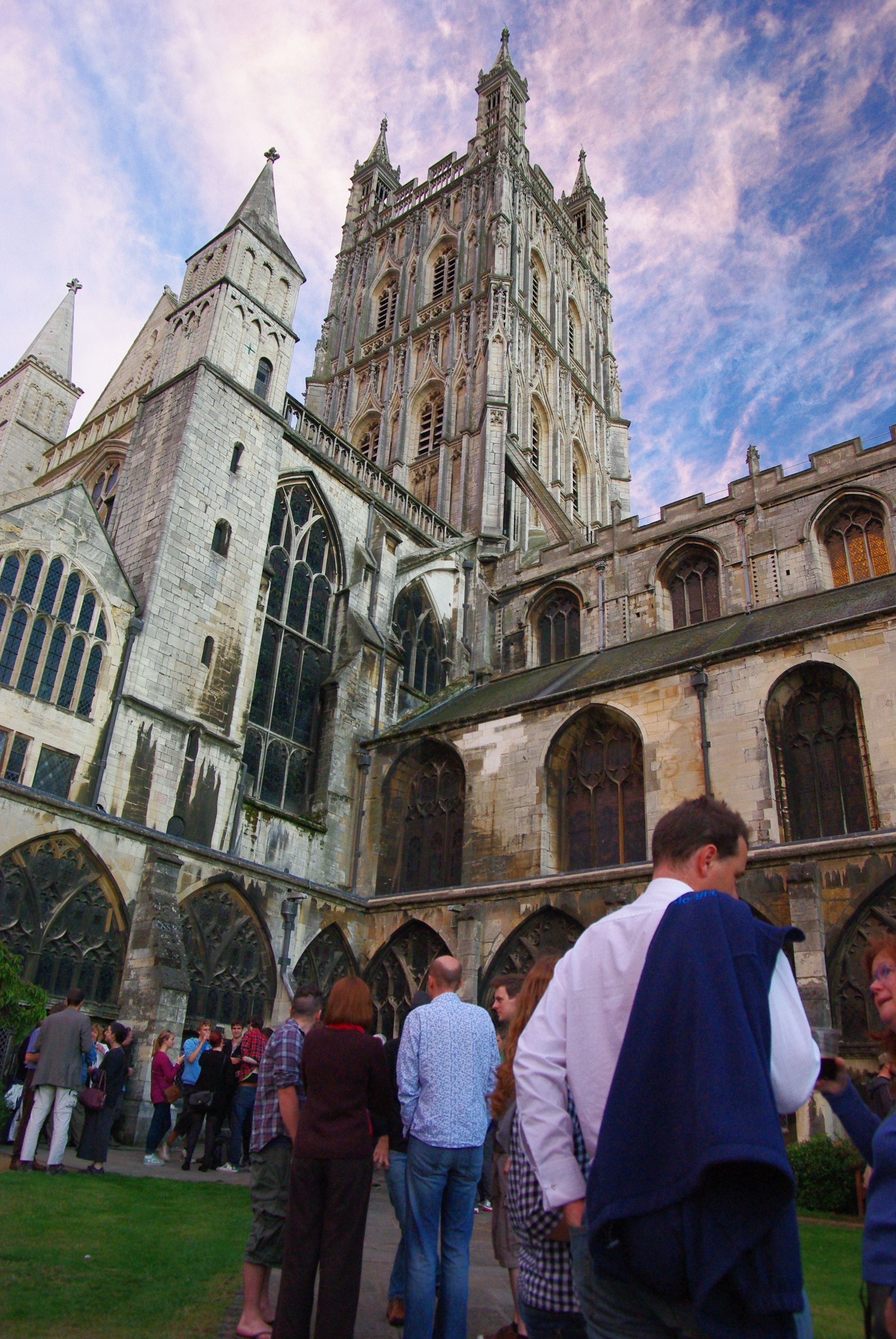
Whatever the merits of these two schemes, which may well never get anywhere near planning permission, there are some interesting issues here. Spending money on buildings in the name of religion or areligion always seems a little like a power statement- particularly in times when people are in need. The great medieval cathedrals were build to inspire awe and trembling and to dominate the skylines.

But they remain. And I love to be inside them. And the can be very useful in our climate.

It is one of those human contradictions that constructed spaces can open up spiritual spaces inside us – or perhaps close them.

What gives buildings this kind of power? Is it simply the curve of arch and the vault of roof? The ambient acoustics? The softening of history or the pride of ownership? I suppose it might be all of these things, but it seems to me to be as hard to dissect and define this power as it might be to do with any human art form.

What of that ancient story of the Tower of Babel? I have heard it used to illustrate all sorts of theories-

  • God was bringing mankind down a peg or two as we were getting too big for our boots
  • God was blessing us with nationhood and nationalist pride
  • It is an illustration of a stage of the journey away from the Garden of Eden. A logical extension of the move from hunter-gatherer, to farmer, to wealth accumulator, to city builder

I tend to associate with the last of these. Cities are wonderful places. I visit them most often as a tourist these days, as we live so far out on the western fringe. I love their energy, their human variety, the layers of creativity and commerce all mingled. Then I love to leave them behind and go home.

Because our experience of the weight of human experience is not really captured by how high, how big or how magnificently we can stack stones is it?

This is about what happens within our small spaces, wherever they are – when we meet and love within them. The Tower of Babel might be seen as a warning of the pointless steeple, unconnected to the land and the life of those upon it.

The blessing of uneasy questions…

After a long week, I kind of need a cave for a while, but this came in today from the Emergent Village minimergent…

May you (and I) be richly blessed in this kind of way.

A Franciscan Blessing 

May God bless you with discomfort at easy answers, half truths, and superficial relationships, so that you may live deep within your heart. Amen.

May God bless you with anger at injustice, oppression, and exploitation of people, so that you may work for justice, freedom and peace. Amen.

May God bless you with tears to shed for those who suffer from pain, rejection, starvation and war, so that you may reach out your hand to comfort them and to turn their pain into joy. Amen.

May God bless you with enough foolishness to believe that you can make a difference in this world, so that you can do what others claim cannot be done.

Amen.

The bowl…

My mate Simon and I went for a pint the other day, which is actually something I do fairly infrequently these days as there is usually something that gets in the way.

The simple act of a pint or two and a table to sit and talk around has been about as close as most of we blokes get to a deep spiritual discussion – although this too seems to be a practice that is dying. Pubs here can not make a living unless they convert to restaurants. As we all know, this is not a sign of people drinking less but is more to do with the availability of cheap booze for consumption in our private spaces.

Anyway, the reason I mention this is because Simon and I were talking about our community (Aoradh) during our trip to the pub. We are thinking about offering a session to Greenbelt Festival in the ‘talks’ category under the strapline of something like ‘Don’t do it like us’.

All of these buzz words that have been applied to communities like ours in the wake of what we used to call ’emerging church’- alternative worship community, missional community, new monastic community. They all feel slightly pretentious and self serving to be honest. It feels like these labels belong to others in an urban context – trendy people who have big glasses, sharp haircuts and jeans with a baggy gusset that hangs to the knee.

Yet Aoradh has now been around for almost 6 years. It has developed and changed, stumbled then got up again, and we continue to experiment with a form of faith community fairly rare (as far as we are able to understand) certainly in the Scottish context.

Something that Simon said the other day in the pub has stuck with me. As we tried to map what we were and what we have become, he said something like this;

“We are an unhealed community.”

Simon was thinking about the people in our group who have serious illnesses, and the fact that our life of faith has to contain the awareness of sickness, brokenness and imperfection.

As I have thought about this, it seemed  important. It is not that our group is characterised by sickness – far from it –  but rather that we all have to live with the idea of a God who is real in the ordinary. A God who is not a magic talisman of success, but rather walks with us through the difficult times too.

There is also within this a challenge for faith- because we are  forced to confront the idea of a God-who-does-not-heal. A God who abides within brokenness, and lives within the uneasy question and the honest doubt.

Or even more challenging- a God-who-heals-sometimes, and some people. But not me.

My Michaela had a long term incurable illness (Ulcerative Collitis) that affected her from the age of 14 until 34, when all symptoms abruptly disappeared.  It is an open question and a grateful acceptance all wrapped up together.

All of which leads me to the Bowl.

In the recent winter storms, an old tree at the bottom of our garden was blown down, unfortunately into our neighbours garden;

A friend of ours was borrowing my chainsaw (through our local ‘timebank‘), as he is a wood turner, and I mentioned some pieces of wood from this tree. Some of it was dried already by age and the effect of the ivy that had dried out and hardened the wood. When he heard this he was excited.

Peter took the wood and promised a bowl for us out of it.

Amazingly, later that same day, he turned up, with this-

It is a lovely thing. A tree from our own garden, grown over who knows how many years, then spelted with sickness and disease before finally being broken by a storm.

Transformed by the craftsman.

Not healed or restored, but shaped and made beautiful.

Carved into the shape of service and hospitality.

As good an image for the hopes of community as anything else I can come up with…

Doubt…

I stood before this edifice of faith

And it was magnificent –

The curve of the certain arch

The immovable pillars

The knowing eye in all this carving

The soaring ceiling shaped by countless songs of praise

~

But there was this penetrating drip of doubt

I could ignore it for a little while

Until the swelling laths shed horse hair plaster

And the stalactites point down from on high

The end of everything

~

Like any fool under falling stone all I could do was move

Out into the sunlight and the gentle rain

Looking backwards to see what might still be standing

Whether it might be anything more than just a

Magnificent ruin

~

But a ruin holds age with pride

Through the open vault light falls dappled into shadow

And the song of birds blows in on the wind

God of the uncool, friend of the socially challenged…

I noticed this on FB the other day (Thanks Ian Emery.)

…when the Gospel story is accompanied by a fog machine and light show, I always get this creeped-out feeling like someone’s trying to sell me something. It’s as though we’re all compensating for the fact that Christianity’s not good enough to stand on its own so we’re adding snacks.

But more importantly, I want to be part of an uncool church because I want to be part of a community that shares the reputation of Jesus. Like it or not, Jesus’ favorite people in the world were not cool. They were mostly sinners, misfits, outcasts, weirdos, poor people, sick people and crazy people.

I liked it because (and I know this might be a surprise to some of you) I am not cool.

I never have been cool, and never will be a trend setter. Thankfully, there comes a point in life when you do not care much about coolness any more. We sink into the stew of middle age and bob like dumplings. In case you needed evidence-

Now don’t get me wrong, I am sure Jesus loves cool people too, but I sometimes wonder if it might be easier for camels to pass through the eyes of needles than it might be for cool people to…. you get my point.

Emerging church became Missional church, and some folks wanted to stay out on the trendy edge, using words like ‘Hipster Christians‘ and ‘Christian pirates’ but it left me rather cold- and I think this is why-

We have one place for the uncool people—our ministries—and another place for the cool people—our church services. When we actually bump into one another, things can get “awkward,” so we try to avoid it.

The truth is we’re all guilty of thinking we’re too cool for the least of these. Our elitism shows up when we forbid others from contributing art and music because we deem it unworthy of glorifying God, or when we scoot our family an extra foot or two down the pew when the guy with Asperger’s sits down. Having helped start a church, I remember hoping our hip guests wouldn’t be turned off by our less-than-hip guests. For a second I forgot that in church, of all places, those distinctions should disappear.

The article is from an American church situation, but this seems rather familiar.

We are all guilty of seeking significance for ourselves, our ministry and our ‘art’. But it is good to be reminded that these are not the measures of fruitfulness used in the New Kingdom. Paul preferred to describe ‘Fruit of the Spirit’, which emphasise things like love, kindness, gentleness, peacefulness, self control.

No mention of coolness.