Aoradh meditations, Psalm 148, Friday…

Praise the LORD from the earth…

wild animals and all cattle, 
small creatures and flying birds…


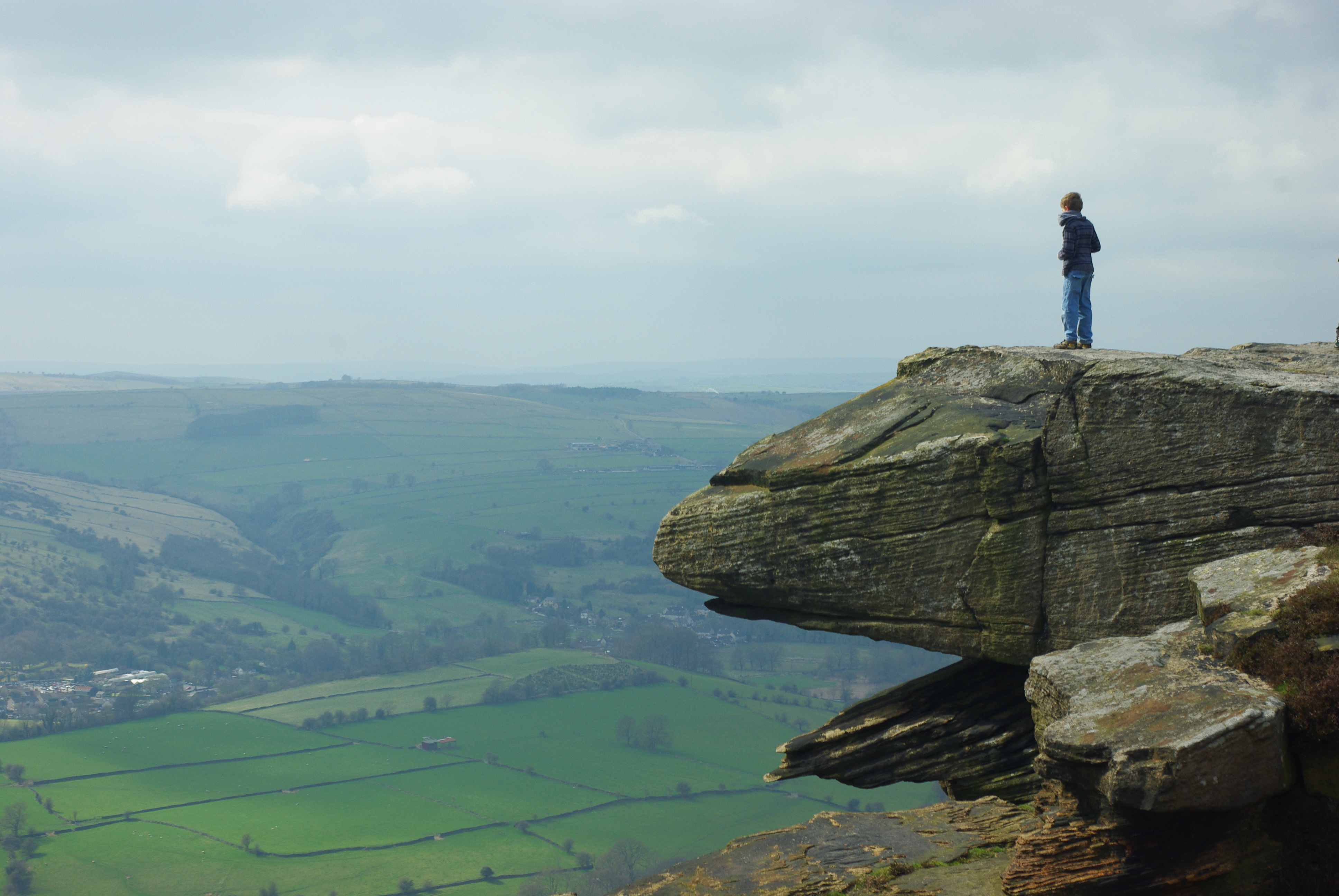
Sometimes I am an eagle

Catching the high cliff thermals

High and wild and free

.

Sometimes I am veal

Factory farmed and tenderised

Machine fed and chemically mutated

.

Sometimes I expand like the empty sky

Other times I burrow deep

Searching for a safe place

.

Wherever I go

You are there

Bible nasties- soft conclusions…

During April, I wrote a series of 5 posts (the first of which is here) chewing on how we might understand some of those difficult passages of the Bible which appear to portray God as a mass murderer, who commands rape, child sacrifice and even cannibalism.

For example, this one. Mass murder, mass rape- but the keeping of a trivial oath- all in the name of the living God.

I began by considering some apologetics- here. There were some glimmers of hope of explanation, but on the whole, I found the business of trying to explain away the contradictions of a violent, murderous loving God (as apparently described in the Bible) impossible.

Next I chewed a little on the way Jesus seemed to deal with the hard judgmental, ‘scriptural’ truth that religious people hit him with. I noted that when he talked about the truth that would set you free, he did not seem to define this truth by a narrow interpretation of the written words that were handed down to him.

Next, I wondered about this word ‘context’- and how we needed to attempt to understand the nature of the cultures and historical times that the Bible stories emerged from- often violent, bloody and dynastic. Inevitably reading the Bible like this is a slippery slope towards liberal re-interpretation (as any good Evangelical will tell you.) I am sliding…

Then I got into a bit of  a philosophical ramble about the nature of truth- which to be honest, did not help much. The basic conclusion that I suppose I might take from all this is that truth is almost always nuanced, subjective, debated and interpreted according to perspective.

Finally, I wondered about hell and listened to Francis Chan suggesting that our understanding of hell may well be a rather recent invention.

I am no theologian- although I have been trying to make sense of this stuff for most of my life, so I suppose this might give me some personal source material, even though I lack the breadth of study. But I think the time has come for me to commit myself to some soft conclusions arising from the above.

Soft- because they will be imperfect, and incomplete. They will need to be reviewed and be open to challenge and modification.

Soft too because it is so easy for conclusions to become self referential, self sustaining, and the bedrock for further and more lasting distortions. Perhaps it is even impossible for this NOT to happen.

But conclude I will, because (as discussed in a previous post about (un)belief) I think it is time to step aside from the deconstruction of faith, and start to build again.

So here are my shallow, portable foundations- you could even say the flat surface for my fragiletent-

The stories in the Bible are open to our interpretation, to our questions even to our doubts. They are open in this way because God is open in this way. God is bigger than our understanding, or the understanding of the ancient writers of the Book.

There are many way to approach a reading of Bible passages- context is important, but Brian McLaren lists 10 other ways here– we have got stuck with a either/or approach- either literalism or myth. Perhaps we need to address this tired polarity by giving other things a try for a while.

This might steal away the mystique and sacred from the Bible for some- but this might be a good thing, as we could  have stumbled into a kind of idolatry, where we venerate a book, rather than who the book is about.

In trying to approach the book with this mindset, there are countless potential beartraps and cellar stairs to fall into. So we need to start with the body of knowledge within the church- both recently and more ancient. But be prepared also to work our understandings out as (Rollins again) “faithful skeptics”. And we should do this in community.

We do not need to have the answers to all of our questions. The questions too can be holy.

We are followers of Jesus- and we need to start with the stories about his life. This can be challenging enough after all! After that, we can then use our understanding of him to work backwards and forwards into history. But let us not try to make everything fit. It sometimes will not! And where it does not seem to fit- this can be a window for the Spirit too.

And speaking of the Spirit- he is present, NOW- not just in the pages of a book, but in all sorts of ways-

friendship

sunsets

dreams and visions

Kindnesses and moments of sublime grace

Music and dancing

Wisdom

Gentle promptings of guilt and remorse, as well as longing for things to be better

In the midst of us, and also in wild places, stirring the waters

Poetry

Silence

And because of this- we are not alone in this search. We are not powerless nor unenlightened. Rather we might expect the unexpected. The God of Surprises.

And finally- back to all that murdering and raping and child sacrificing. Did it happen in the way described? Well, perhaps. The times these things happened were full of such things. But as much of these stories were written down centuries after they happened, and survived through oral tradition, you would expect that there would be a reframing process- a self justification process. A God-on-our-side process.

Even if through the whole thing, there is a God-in-the-middle who still emerges as we read these stories.

Did it happen that way because it was what God commanded- what he demanded to assuage his lust for blood and vengeance?

My soft conclusion to this is-

No.

You might not concur, which is fine- but don’t lynch me please.

Because the other useful fact that has emerged for me came from Helen’s comment on one of the previous posts in this series- regarding the fact that our faith had overemphasised hard belief and doctrine- whereas perhaps more important than this is how we live- how faith sets us on a journey.

Travel on.

Aoradh meditation, Thursday, Psalm 148…

(Praise the LORD from the earth…)
stormy winds that do his bidding,
9 you mountains and all hills,
fruit trees and all cedars…

So I was thinking about wind-

The sort that fills a sail with purpose and

Cracks flags in front of the pavilion

That raises up a litter dervish from the gutter

And streaks hair across pretty faces

It choreographs the sway of the marram grass

And cools the evening rest

.

But there are other winds that scare me

Desert winds that strip the skin from bone

And clawing winds that rip the fruit from the summer trees

Shaking the cedars to their ancient roots

Katabatic acrobatic angry winds

Howling down the holy mountain

.

I am stirred like the sea by a distant storm

With more questions than answers

For this wind blows wherever it pleases

The sound of it is in the branches

But who knows where it comes from

Or where it is going?

.

So it is with every child born of your Spirit

Beckoned into the glorious uncertainty

Of the Kingdom

Aoradh meditation, Psalm 148, Wednesday…

7 Praise the LORD from the earth, 
you great sea creatures and all ocean depths, 

I watch the waves in the distance, hoping for a glimpse of a sea monster

And ponder all that life down deep

All those colours invisible in indigo darkness

Alive in creations overflow

And it is all too big-

Unfathomable

.

Cuttlefish

Alien flashing transparency

Reduced somehow to parrot food

In another world

.

Whale

So big that movement seems tectonic

Impossible

.

And me- eyes watering in a wind whipped in from the arctic

Am a grain of blown sand

Dancing

Aoradh meditations- Psalm 148, Tuesday…

Delayed this time by a power cut! The storm last night has blown trees down on the power lines, leaving Bute and Cowal without power for half of today. A little reminder of how vulnerable we are to a little weather.

At work- no computers, no phones, no mobile telephones (masts down too.) If you are vulnerable, no stair lifts, no e-care, no anti-pressure beds, no hot food, no heating. Scary really, just how dependent we are on something so artificial. Well done Dave and the boys for getting it back on in record time…

But back to the matter in hand- Psalm 148, the wonder of it all…

Look carefully at this picture. At first all black- but when you look again…

5 Let them praise the name of the LORD, 
for at his command they were created,
6 and he established them for ever and ever— 
he issued a decree that will never pass away.


Light waves falling

.

Some blazing hot

The noon we circle round

Some a warm reflection

Smiling in the night sky

Some a tender starlight flicker

Almost unnoticed

.

All of it made-

Not manufactured

Crafted-

Not mass produced

.

Fractals of the infinite

Particles of the Divine

Making a prism of my soul

Bible nasties 6- that thing called hell…

Returning to the series I began in April (If you want to read the others, you can also use the ‘search’ box on the right) trying to chew on all those difficult passages in the Bible. When you start doing this, you are confronted with some fundamental questions- about the nature of doctrine, the authorship of the Bible and the very stuff of belief itself.

Hmmm- perhaps I should not have started this.

It also brings you up against the apparent violence and wrath of God- ultimately stretched out in potential eternal torment in hell.

I liked what Francis Chan has to say here- (HT Robin Parry.)

Chan’s book looks like it is worth a read…

What do you do if you predict the second coming- but get it wrong?

It’s all a bit an anti climax.

No rapture after all.

Might have been nice to rise with a trump and fly…

But what do you do if you are a preacher, famous the world over for your predictions- made with resounding certainty- and you are proved, well- resoundingly wrong?

Perhaps you just pick a different date- certainly, that is what Harold Camping did last time- in September 2004.

What amazes me is the degree to which people who are caught up in the madness of all this seem to keep faith with men like Camping- whose credibility seems to be able to survive such obvious false prophetic utterances. All that ‘infallible word from God‘ nonsense. They used to stone prophets that were proved false in the old days…

Not that Camping is unique- I have written before about my own memories of this kind of stuff from childhood- when Chuck Smith was making his predictions. It did not seem to do him any harm either. There is a list of other predictors in this post.

A quick review of the Christian response (as opposed to others who must just think we are all bonkers) reveals that people fall into two main camps-

The superior dispensationalist camp

There was that recent survey result that suggested that over 5o% of Americans believe that the faithful will be taken up to heaven in a Rapture event, so you can bet that this camp is pretty large. Sixty million of them have read the ‘Left Behind’ Tim la Haye books after all.

We can not predict the time of these events, they would say- Jesus said that you would not know the ‘day nor the hour’ of his return (but I knew a man who claimed to know the month and the week!) So predictions are futile- whereas a general prediction about us being in the ‘end times’ and a rapture being likely within our lifetime- this is more ‘mainstream’ a prediction.

Or they might say more ‘Biblical’ a prediction…

The ‘Book of Revelations as allegory’ camp…

This group understand the writings of the Book of Revelation in a very different way. Rather than seeing it all as a description of wild future events, they would suggest that it was a coded attack on the times and context of the writer- the 1st/2nd C Roman Empire. These people hoped and believed that Jesus was about to return.

They would suggest that those who read now should seek to apply the critique of this powerful but bizarre imagery to our own society- but not as a means of opting out, rather as a means to hope for the Kingdom of God to be revealed here and now.

NT Wright talks about this here. He differentiates between the Apocalyptic language- using cosmic language to invest historical events with their full significance, and; “apocalypticism” which is a means by which people use these ideas to conjure up dire predictions about the end of it all.

Apocolypticism is a way for us to split everything into two again- the in and the out. The good and the bad. The heavenly and the earthly. Or as NT Wright puts it-

“Apocalyptic language exploits the heaven/earth duality in order to draw attention to the heavenly significance of earthly events; apocalypticism exploits apocalyptic language to express a non-biblical dualism in which the heavenly world is good and the earthly bad.”

I will leave you to guess which camp I belong to!

What is left to ask about all this end times stuff is this- ‘What does it say about western society (or American society at least) that men like Camping can still hold such influence?’

Might it mean that (as NT Wright puts it) the dreams cherished by our culture for 200 years or more have let us down?  Capitalism gave us rampant consumerism and boom and bust. Science gave us global warming and nuclear weapons. Democracy gave us stable power hierarchies (we used to call it ‘class’) that are remarkably resilient and difficult to change.

Faced with this crisis in our ability to hope and believe for the future, we people of faith have a choice- along the lines of the camps above.

We can proclaim the end of it all, and offer only the hope of a few of us being sucked away from the stinking rotten corpse that is this world, or we can become hopeful critical collaborators in our culture- salting those things that have good flavour, and shining light where there is darkness that requires illumination.

Interviews with Jesus…

I liked this series of ‘interviews’ with Jesus– a simple and rather old fashioned didactic vehicle, but very well written- direct and controversial whilst full of love and fun- rather like the man himself. Thanks to Chris Howson for pointing them out.

They are recorded in Spanish, but the English transcripts are available.

The producers of these narratives are a brother and sister- María and José Ignacio López Vigil, based in Ecuador and Nicaragua, and clearly come from a perspective influenced strongly by Liberation Theology, and engagement with justice issues in South America.

I am thinking of trying to use some of them here…

Here is one typically challenging example.

RACHEL The microphones of Emisoras Latinas are still here on the Mount of the Beatitudes. Before us we have a panoramic view of the Sea of Galilee, and with us again, in an exclusive interview, is Jesus Christ. In an earlier segment, Jesus, you referred to the second part of the historic discourse you gave on this mountain. What did you speak of in that second part?

JESUS Well, first of all I blessed the poor people and congratulated them.

RACHEL And after that?

JESUS After that I cursed the rich people.

RACHEL You… cursed?

JESUS Yes, I cursed the rich people.

RACHEL Can you repeat your words for us?

JESUS I said it then, and I say it now Woe to you who are rich, who are well-fed, because you will go hungry. Woe to you who laugh and make fun of the poor, because very soon you will weep and cry out when God empties your coffers, when God rips off your clothes and your jewelry and leaves you without bread and without money to buy anything, just as you did with your workers!

RACHEL Those are very hard words.

JESUS Much harder is the heart of stone of people who don’t want to share.

RACHEL Perhaps there are people listening to us now who are wealthy but also generous – people of humble spirit. Would you curse them also?

JESUS Once a rich young man with a good heart wanted to join our band. He wanted to put his hand on the plow of God’s Kingdom.

RACHEL And what did you tell him?

JESUS You have to choose either God or money. If you want to join us, first share out your wealth among the poor.

RACHEL If those were the conditions… I don’t think many rich people would have taken part in your movement.

JESUS A few understood, but the truth is that in those days, as in these, it’s easier for a camel to pass through the eye of a needle than for a rich man to enter the Kingdom of God.

RACHEL Your message doesn’t sound politically correct. Don’t you feel it’s too radical?

JESUS Radical, yes. We took the axe to the root, because the root was rotten.

RACHEL They have always taught me that you were meek and humble of heart, but now I find you a little … how to say it? … a little intolerant.

JESUS God does not tolerate injustice, Rachel. In the end God will not ask us about rites or prayers, God won’t ask us about fasting and temples. We will be examined only regarding our justice, and God will be relentless with those who are unjust.

RACHEL You’re quite stirred up …

JESUS Didn’t you ask me to recall what I said on this mountain?

RACHEL Even so, could we close off our program by restating that your message is really a message of peace?

JESUS God’s message is fire upon the earth, and I can’t wait till it’s blazing! Listen, Rachel, if every morning of your life you don’t earnestly desire for there to be an end to wars, violence, lies, envy, power-mongering, then you’ll never understand my message.

RACHEL Is there anything else you’d like to add?

JESUS Look toward the horizon, Rachel. In these very days in which you’re living, I see signs in the heaven that announce a storm coming. Let those who have eyes to see observe the signs, and let those who have ears to hear listen to what’s going on.

RACHEL We are talking with Jesus Christ in his second coming to our modern world, which is ever more unequal – and therefore ever more violent. The Mount of the Beatitudes, Rachel Perez, Emisoras Latinas.

MUSIC

ANNOUNCER Another God is Possible. Exclusive interviews with Jesus Christ in his second coming to Earth. A production of María and José Ignacio López Vigil, with the support of the Syd Forum and Christian Aid.

Theology for 5 year olds…

Pauline told a lovely story tonight in housegroup…

She was talking to her 5 year old grandson, and the conversation went something like this-

“Nana- you know that place that you go to when you die?”

Pauline thought for a while, and just to test his understanding asked “What place do you mean?”

“Heaven” said he.

“Oh yes” said Pauline- what about it?”

“Well, what about the other place?”

Now we have been talking a lot about the concept of hell- where it all come from, and what we might understand by this. The whole Zoroastrian import into Judaism, filtered through non-dual interpretations of the Bible, and bashed about by Evangelical fundamentalism.  It has left us with a lot of question marks (as discussed in a few recent posts!) but Pauline’s immediate problem was the immanent possibility of having to reproduce all this into some kind of meaningful story for a 5 year old.

She chickened out a little, and asked “What place do you mean?”

“That place where they put the dead bodies” he said.

At this point, Pauline was wondering exactly where he was going . “Do you mean the graveyard?” she asked.

“Yes” said he. “How can you go to heaven if they put soil on top of you?”

A question indeed to conjure with. Pauline’s answer, I think, was rather good. She asked him to think about the bit of him deep inside that looked outside- and suggested that this bit lived for ever, but only the outside bit goes into the ground.

“Oh” he said “So it is just all skin under the ground then?”

He’s got it thought Pauline. “I suppose so.” she said. But then he thought for a little while longer and added-

“And all the bones and things go up to heaven.”

Well it is all a bit of a mystery for all of us really…

Christianity- is it all about ‘belief’, or ‘journey’?

Sarah responded to a my recent blog post about (un)belief with a rather telling point questioning the difference between faith that is all about belief (as in the mental ticking of theological and doctrinal boxes) as opposed to faith that is a spiritual path (as in a journey of discovery.)

Marcus Borg says it pretty well here (also pinched from Sarah’s blog!)-

It is an interesting thought -as I think about it, my faith more and more does not seem to be about holding to a narrow set of beliefs but much more about the journey it releases me on.

We followers of ‘the way’ often spent too long going nowhere because we got too hung up on what we regarded as the essential propagation of correct beliefs.

What might it mean to be free from these things- in oder to really follow Jesus?

Discuss…