The Holy Atheist Church…

atheist-church

I am sure many of you have heard of the Atheist church services put on by comedians Sanderson Jones and Pippa Evans in London. Around 600 non-believers have been gathering in Bethnal Green since January to listen to inspirational talks, sing songs accompanied by a live band, make friends and volunteer for good causes. Meetings are about to move from monthly to fortnightly.

It now seems that they are taking the idea to international heights- there is already a monthly event in New York, with ‘services’  to begin soon in Los Angeles, Chicago and Seattle.

A ‘religious’ service without God, I hear you ask- what is the point? This from here; 

The Sunday Assembly was created after Jones attended a Christmas carol service and enjoyed the sense of community: “There were so many wonderful things about it, but at the centre of it there was something I didn’t believe in. And for me, life is such an absolute gift so why can’t we talk about that?”

He added: “I’d always thought there’d be people in other parts of the world who would like this. It was picked up by the media and more than 750 people around the world have written to us saying they’d like a Sunday Assembly in their town.” At the New York meeting, the congregation sang songs by the Beatles and Queen, and closed with Proud Mary by Creedence Clearwater Revival. Guest speaker was Chris Stedman, a humanist chaplain at Harvard.

It coincided with the city’s Gay Pride march, so the theme was “coming out”. Jones said: “People in the US talk about coming out as atheists. I’d think, what’s an ‘out’ atheist? That’s bonkers.”

Jones visited nine other US cities where people asked for advice on setting up assemblies. In the UK, branches will launch in Bristol this weekend and Exeter and Brighton in September. Jones and Evans kick off a global roadshow on October 20, with 40 assemblies in 60 days. Locations, decided by demand via their website, include Australia, France and Scandinavia.

Evans, a Christian until she was 17, said: “When I stopped believing in God, I didn’t miss God but I did miss church. And that’s the point of the assembly, meeting like-minded people and bolstering each other up.”

Jones added: “Atheists are very good on reason, and science, but that doesn’t get you jumping out of bed in the morning. This is about being alive.”

All of which sounds quite lovely to be honest- anything that celebrates community, encourages people to do good things and to live life in a deeper and fuller way is OK with me.

I suspect that God might agree too.

What does it mean however to call yourself an Atheist? It suggests a little more than just indifference to the idea of a supreme being at the centre of it all.

Perhaps some might describe it as a religion that sets out to describe all other religions as wrong. There are after all a lot of those kind of religions.

As a Christian, I was brought up to see atheists as evil, deluded, the enemy. Agnostics were perhaps redeemable, but atheists were active opponents of God. They were sticking two fingers up at the divine and would have eternity to regret their foolishness. Militant atheists like Dawkins have done nothing to erode the battle lines.

I found this article by Andrew Brown in the Guardian really helpful, in which he describes six kinds of atheism (based on American research);

The largest group (37%) was what I would call “cultural non-believers”, and what they call “academic” or “intellectual atheists”: people who are well-educated, interested in religion, informed about it, but not themselves believers. I call them “cultural” because they are at home in a secular culture which takes as axiomatic that exclusive religious truth claims must be false. Essentially, they are how I imagined the majority readership of Comment is free’s belief section.

They are more than twice as common as the “anti-theists” whose characteristics hardly need spelling out here:

If any subset of our non-belief sample fit the “angry, argumentative, dogmatic” stereotype, it is the anti-theists. This group scored the highest amongst our other typologies on empirical psychometric measures of anger, autonomy, agreeableness, narcissism, and dogmatism while scoring lowest on measures of positive relations with others … the assertive anti-theist both proactively and aggressively asserts their views towards others when appropriate, seeking to educate the theists in the passé nature of belief and theology.

Nonetheless, these people made up only 14% of their sample, and all other research that I know of would place their proportion much lower.

The other two noteworthy groups are those to whom religion is completely and entirely irrelevant, “non-theists”, and what the researchers call “ritual atheists“, who overlap quite a lot with “seeker-agnostics”, both of whom might be targeted under the marketing category known as “spiritual but not religious”. What defines them is the ability to treat religious practices as something like acupuncture or Chinese medicine: something that works even though the explanation is obviously nonsense:

One of the defining characteristics regarding ritual atheists/agnostics is that they may find utility in the teachings of some religious traditions. They see these as more or less philosophical teachings of how to live life and achieve happiness than a path to transcendental liberation. Ritual atheist/agnostics find utility in tradition and ritual.

As the authors observe, this covers a large spectrum of American Jewry.

(One further category, “activist“, is used to label those who hold strong beliefs on ethical and environmental issues. Pretty much what the term means in lay parlance.)

I think the English, or more generally European results, would be different. The typologies are broadly the same, but since Christianity is much less of a marker in European culture wars, and certainly not an active one in the UK, you would expect the distribution of categories to be different, and for people to be very much less self-conscious about unbelief and less likely to regard it as a salient feature of their personalities.

Atheism is an honest response to lack of belief.

However, most of us who continue to try to live with faith in God have to admit to the presence of doubt, and I for one think we should be honest about this.

I liked the perenthetical trickery of  Pete Rollins who talks about (a)theism. Contained in all our ideas about God is also the idea that what we know is always incomplete, imperfect and error-strewn. He would contend that the only honest way to approach God is to start from the point of (a)theism- where our theories about God are confronted with our unknowing.

Gravity gets us all in the end my friends, and may we all fall into the arms of a loving God.
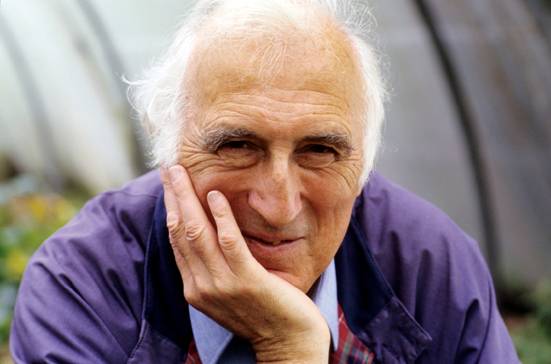
Vanier on community…

jean-vanier

‘Community can be a terrible place because it is a place of relationship; it is the revelation of our wounded emotions and of how painful it can be to live with others, especially with ‘some people.’ It is so much easier to live with books and objects, television, or dogs and cats! It is so much easier to live alone and just do things for others, when one feels like it…. While we are alone, we could believe we loved everyone’.

Jean Vanier ’Community and Growth’
I pinched this quote from my mate Graham’s blog.
.
Because Vanier puts into words what most of us instinctively know to be true. Our relating is mostly driven by self- our need for friendship/entertainment/validation/collaboration.
.
It is this kind of relating that allows us to believe that we live ‘good’ lives, that we are ‘nice’ and that we are ‘Christian’ even.
.
My experience is that community first teaches us that we are none of these things.
.
Most of us recoil at this point- surely there must be something wrong with the people we are communing with? Joe is a pain the arse, Gill is a power hungry despot-in-training, Jim has far too many opinions and should just shut up before I slap him. Better to just go home and watch TV.
.
I confess I have watched a lot of TV.
.
But still, there is community. They have not kicked me out yet…

Wilderness retreat, September, some places left…

The Garvellachs, in the distance

We are planning another wilderness retreat Friday 20th – Sunday 22nd September, for a group of blokes from Garioch Church, Aberdeen. They are particularly interested in finding a way to explore what we might understand to be ‘male spirituality’.

We will be heading out to the Garvellachs again, weather permitting! The last time we tried to get there (in May) the rising swell meant that landing was too big a risk, and so we ended up on Scarba- which was brilliant too.

At present there are 6-7 of us, so room for a few more if anyone wants to join us? Expect costs to be around £50-60, depending on how many actually come (due to fixed costs of boat.)

If you want to come, let me know soon, as there are a few folk interested.

It is a fabulous place to spend time being still…

Jonny and Paul, fire

Accidental beauty…

Table


The small group I am part of – Aoradh– have spent years planning activities and events. Labyrinths, prayer rooms, worship spaces, stations, meditation walks through the forest and along the sea front, etc. At present we are taking something of a rest- there is a lot of pressure and busyness around with members of Aoradh, and so the ‘external’ side of what we do has taken a bit of a back seat. I really miss this- not just for the fact that an important dimension of who we are- the collective ‘mission’ outwards- is missing, but also because I miss the creativity.

Having said that, planning creative events is not always easy. Creative people can easily be caught up in their own ‘thing’, we do not easily listen to the other. My experience is that these planning events work best when visible enthusiasm is combined with patience, love and grace. When these are lacking it can be a tough place to be.

A friend posted something on Facebook the other day called ‘Say Yes‘,  written by an American Pastor called Jenny McDevitt. I really liked this;

A few years ago, on a friend’s recommendation, I read Tina Fey’s book Bossypants. Her writing is equal parts funny, crass, and brilliant (and if you can’t stomach all three, it’s probably best to leave this one on the shelf and ask me for a summary). More than a few pages dramatically changed the way I approach ministry, including her explanation of improvisation.


Improv, she says, depends upon four basic rules. First, say, “yes.” Agree with whatever your partner (or community, or congregation) has created. Second, say, “yes, and.” Agree, and then enter into the creative process yourself and start contributing. Third, make statements. This is a gentler way of saying, don’t be the person that only asks questions. That puts pressure on everyone else to come up with all the answers. Once again, contribute. Help create. And fourth, understand that there are no mistakes, only opportunities. Something didn’t go as planned? Look around and see what unexpected beauty has emerged accidentally. It’s almost always there.


Each one of these is worthy of your consideration. For me, it has been transformative to enter each conversation with a church member assuming I will do everything I can to say yes to whatever idea, scheme, or dream they bring with them. Obviously, I can’t say yes immediately to everything. Sometimes it takes conversation and creativity so we can both say yes to an adapted idea. Sometimes it takes questions to understand the spirit behind the idea, so we can find a different way forward that honors the original intent. (And yes, it’s true: there are times when I have to say no. That’s another post for another day.)


Saying yes has changed the way I approach ministry with others, but also the way I approach daily tasks myself. Shifting the evaluative question from “How could this go wrong?” to “How could we make this work?” invites open, positive dreaming and dialogue. It fosters an expectation of creativity. Frankly, it demands that I be more creative, constantly.


For the community, it communicates that we are all in this together. We’re on the same team, working toward the same goals. Saying yes is not blind acceptance; it is shared initiative and creativity. It honors what people bring to the table, and opens doors to possibilities I would have never imagined on my own.


Theologically, saying yes affirms the ministry of all God’s children and reminds us that creation itself is sacred. In the big picture, saying yes is to look at death, and offer life. It is to look at fear, and offer companionship. It is to look at the dark, and offer light. It is to look at hate, and offer love. In a world that is all too quick to say no, to say yes is to pry open the gates of the kingdom a little bit wider every time.


Reading history through objects…

Last year there was a cracking radio series entitled ‘The history of the world in 100 objects’, which concerned itself with objects chosen from the thousands in the British Museum. It was impossible not to be reminded of this as we walked around the museum last week.

What I loved about the series was the way that the presenter (Neil MacGregor, Director of the British Museum) was able to use each object as a time capsule, or some kind of window into where we came from.

Most people who read the Bible find an extra frisson of fascination around objects that have some connections to Bible history. Two of these objects had me thinking again about the way that we use history not just like a distorted telescope lens, but more like a kaleidoscope. The light we see at such distance is bent by all sorts of assumptions and overlaid constructions- never more so than when the Bible is involved.

The first object (or set of objects to be more accurate) is this one- the Lachish relief.

lachish relief

This relief is from a time of  around 3000 years ago- and this too was a time of war. (It is estimated that there were only around 50 Million people in the world then, but still there was an the urge to fight!) In this instance, the fighting recorded was the great siege of Lachish in Judea, 701 BC by King Senacherib.

Lachish is first mentioned in the Bible as one of the cities taken by force from its existing inhabitants by Joshua. In Joshua 10, it is recorded that the King of Lachish started out as an ally of the Israelites, fighting alongside them, before ‘God gave Lachish to Israel’, who ‘took it in two days and killed everyone’. Despite this, somehow Joshua remains our hero. He was establishing Gods promised holy nation…

Jump forward around 4 centuries or so, to around 1000 BC, the kingdom of Judah had more powerful neighbors in the form of the  Assyrian Empire, stretching Iran to Egypt, and maintained by the all powerful Assyrian war machine.

Good King Hezekiah, who seemed to get all the worship purity stuff right, made some rather bad political decisions and defied the Assyrian King Sennacherib.

In 2 Kings 20 there is a story of one of Sennacheribs men delivering insulting blasphemous words about the lack of power of the Jewish god when faced with the power of the sword. Here Hezekiah cleverly pays off the Assyrians, and eventially God kills first most of their army, then Sennacherib himself gets his comeuppance.

The story from the Assyrian records are rather different;

 “In my third campaign I marched against Hatti. Luli, king of Sidon…fled far overseas and perished…In the continuation of my campaign I besieged Beth-Dagon, Joppa, Banai-Barqa, Azuru, cities belonging to Sidqia who did not bow to my feet quickly (enough); I conquered (them) and carried their spoils away.  The officials, the patricians and the (common) people of Ekron –  who had thrown Padi, their king, into fetters (because he was) loyal to (his) solemn oath (sworn) by the god Ashur, and had handed him over to Hezekiah, the Jew (and ) he (Hezekiah) held him in prison, unlawfully, as if he (Padi) be an enemy-had become agraid and had called (for help) upon the kings of Egypt (and) the bowmen, the chariot(-corps) and the cavalry of the king of Ethiopia, an army beyond counting-and they (actually) had come to their assistance.  In the plain of Eltekeh, their battle lines were drawn up against me and they sharpened their weapons.  Upon a trust (-inspiring) oracle (given) by Ashur, my lord, I fought with them and inflicted a defeat upon them…I assaulted Ekron and killed the officials and patricians who had committed the crime and hung their bodies on poles surrounding the city…I made Padi, their king, come form Jerusalem and set him as their lord on the throne, imposing upon him the tribute (due) to me (as) overlord…As to Hezekiah, the Jew, he did not submit to my yoke, I laid siege to 46 of his strong cities, walled forts and to the countless small villages in their vicinity, and conquered (them) by means of well-stamped (earth-)ramps, and battering-rams brought (thus) near (to the walls) (combined with) the attack by foot soldiers, (using) mines, breeches as well as sapper work.  I drove out (of them) 200,150 people, young and old, male and female, horses, mules, donkeys, camels, big and small cattle beyond counting, and considered (them) booty.  Himself I made a prisoner in Jerusalem, his royal residence, like a bird in a cage.  I surrounded him with earthwork in order to molest those who were leaving his city’s gate.  His towns which I had plundered, I took away from his country and gave them (over) to Mitinti, king of Ashdod, Padi, king of Ekron, and Sillibel, king of Gaza.  Thus I reduced his country, but I still increased the tribute and the Katru-presents (due) to me (as his) overlord which I imposed (later) upon him beyond the former tribute, to be delivered annually.  Hezekiah himself, whom the terror-inspiring splendor of my lordship had overwhelmed  and whose irregular and elite troops which he had brought into Jerusalem, his royal residence, in order to strengthen (it), had deserted him, did send me, later, to Nineveh, my lordly city, together with 30 talents of gold, 800 talents of silver, precious stones, antimony, large cuts of red stone, couches (inlaid) w3ith ivory, nimedu-chairs (inlaid) with ivory, elephant-hides, ebony-wood, box-wood (and) all kinds of valuable treasures, his (own) daughters, concubines, male and female musicians.  In order to deliver the tribute and to do obeisance as a slave he sent his (personal) messenger.”

Ancient Near Eastern Texts – Relating to the Old Testament edited by James B. Pritchard, Princeton University Press, New Jersey 1950, quoted here.

The next scene in the relief is the aftermath of battle- people fleeing burning city. This is seen as the first ever depiction of that all-too-familiar modern phenomenon; mass refugees. Why did the Assyrians want to show this in their propaganda? Was it a warning to all those who would challenge the powers of the great king? Note however that the exiles were not all murdered, they travel with their livestock and belongings. The Assyrians showed a degree of humanity that Joshua seems to have lacked.

The great king Sennacherib was assassinated by one of his sons however as described in the Bible- the cycle of war continued.

Cyrus cylinder

One of the other objects I wound myself staring at was this one- the Cyrus Cylinder.

This is one of several such cylinders that have been found in the walls and buildings of ancient Babylonian cities and palaces- it seems that the builders of these places wanted some kind of record to remain in the foundations of what they made.

The text on the Cylinder praises Cyrus, sets out his genealogy and portrays him as a king from a line of kings. The Babylonian king Nabonidus, who was defeated and deposed by Cyrus, is denounced as an impious oppressor of the people of Babylonia and his low-born origins are implicitly contrasted to Cyrus’s kingly heritage. The victorious Cyrus is portrayed as having been chosen by the chief Babylonian godMarduk to restore peace and order to the Babylonians. The text states that Cyrus was welcomed by the people of Babylon as their new ruler and entered the city in peace. It appeals to Marduk to protect and help Cyrus and his son Cambyses. It extols Cyrus as a benefactor of the citizens of Babylonia who improved their lives, repatriated displaced people and restored temples and cult sanctuaries acrossMesopotamia and elsewhere in the region. It concludes with a description of how Cyrus repaired the city wall of Babylon and found a similar inscription placed there by an earlier king.

Again, readers of the Bible will remember Cyrus-

His treatment of the Jews during their exile in Babylon after Nebuchadnezzar II destroyed Jerusalem is reported in theBible. The Jewish Bible’sKetuvim ends in Second Chronicles with the decree of Cyrus, which returned the exiles to thePromised Land from Babylon along with a commission to rebuild the temple.

‘Thus saith Cyrus, king of Persia: All the kingdoms of the earth hath Yahweh, the God of heaven, given me; and He hath charged me to build Him a house in Jerusalem, which is in Judah. Whosoever there is among you of all His people – may Yahweh, his God, be with him – let him go there.’ (2 Chronicles 36:23)

This edict is also fully reproduced in the Book of Ezra.

In the first year of King Cyrus, Cyrus the king issued a decree: ‘Concerning the house of God at Jerusalem, let the temple, the place where sacrifices are offered, be rebuilt and let its foundations be retained, its height being 60 cubits and its width 60 cubits; with three layers of huge stones and one layer of timbers. And let the cost be paid from the royal treasury. Also let the gold and silver utensils of the house of God, which Nebuchadnezzar took from the temple in Jerusalem and brought to Babylon, be returned and brought to their places in the temple in Jerusalem; and you shall put them in the house of God.’ (Ezra 6:3–5)

As a result of Cyrus’s policies, the Jews honored him as a dignified and righteous king. He is the only Gentile to be designated as Messiah, a divinely appointed leader, in the Tanakh (Isaiah 45:1–6). Isaiah 45:13: “I will raise up Cyrus in my righteousness: I will make all his ways straight. He will rebuild my city and set my exiles free, but not for a price or reward, says Yahweh Almighty.” As the text suggests, Cyrus did ultimately release the nation of Israel from its exile without compensation or tribute. Traditionally, the entire book of Isaiah is believed to pre-date the rule of Cyrus by about 120 years. These particular passages (Isaiah 40–55, often referred to as Deutero-Isaiah) are believed by most modern critical scholars to have been added by another author toward the end of the Babylonian exile (ca. 536 BC).[90] Whereas Isaiah 1–39 (referred to as Proto-Isaiah) saw the destruction of Israel as imminent, and the restoration in the future, Deutero-Isaiah speaks of the destruction in the past (Isa 42:24–25), and the restoration as imminent (Isa 42:1–9). Notice, for example, the change in temporal perspective from (Isa 39:6–7), where the Babylonian Captivity is cast far in the future, to (Isa 43:14), where the Israelites are spoken of as already in Babylon.[91]

Here we have a king from outside the chosen people, appointed by God, showing the kind of tolerance, respect for human rights and concern for peace that had been a scarce commodity.

And this very object remains as a testimony to who he was.

Human history; the rise of power, or the journey towards love?

I am interested in understanding who we are, why we are, what we are becoming- in the light of the fact that we are more than flesh that just becomes dust- we are people who have been travelling for millenia towards a deeper encounter with God, however we understand this.

I look at all this through my own distorted set of lens- but I do so consciously. So rather than co-opting history to glorify our own slice of empire (which was the origin of the British Museum after all) perhaps we can understand history in the light of who Jesus was.

In this way, small thing, small people, voices from the margins- these things become important. Great powers less so- they come and go, empires rising and falling like epidemics.

In-groups are broken- we are set free from narrow religious/geographical/ethnic boundaries. Now we can look for the marks of grace and love wherever we find them.

And we can learn to value above all the fruits of the Spirit- love, joy, peace, patience, justice, compassion.

Even when looking back.

Rohr on the relationship between silence and compassion…

It is raining today (here at least) and so you can’t be in the garden. The cricket and tennis are rained off and there is no point watching replays. So instead, take some time to listen to Richard Rohr speaking about how silence equips us to find the ways of justice.

I went on an 8 day silent retreat at the beginning of the year. I am still working out its impact in my life, but silence remains a hard thing to find in this age of information overload.

Rohr- silence/compassion

Fundamentalism…

annex-gish-lillian-scarlet-letter-the_03

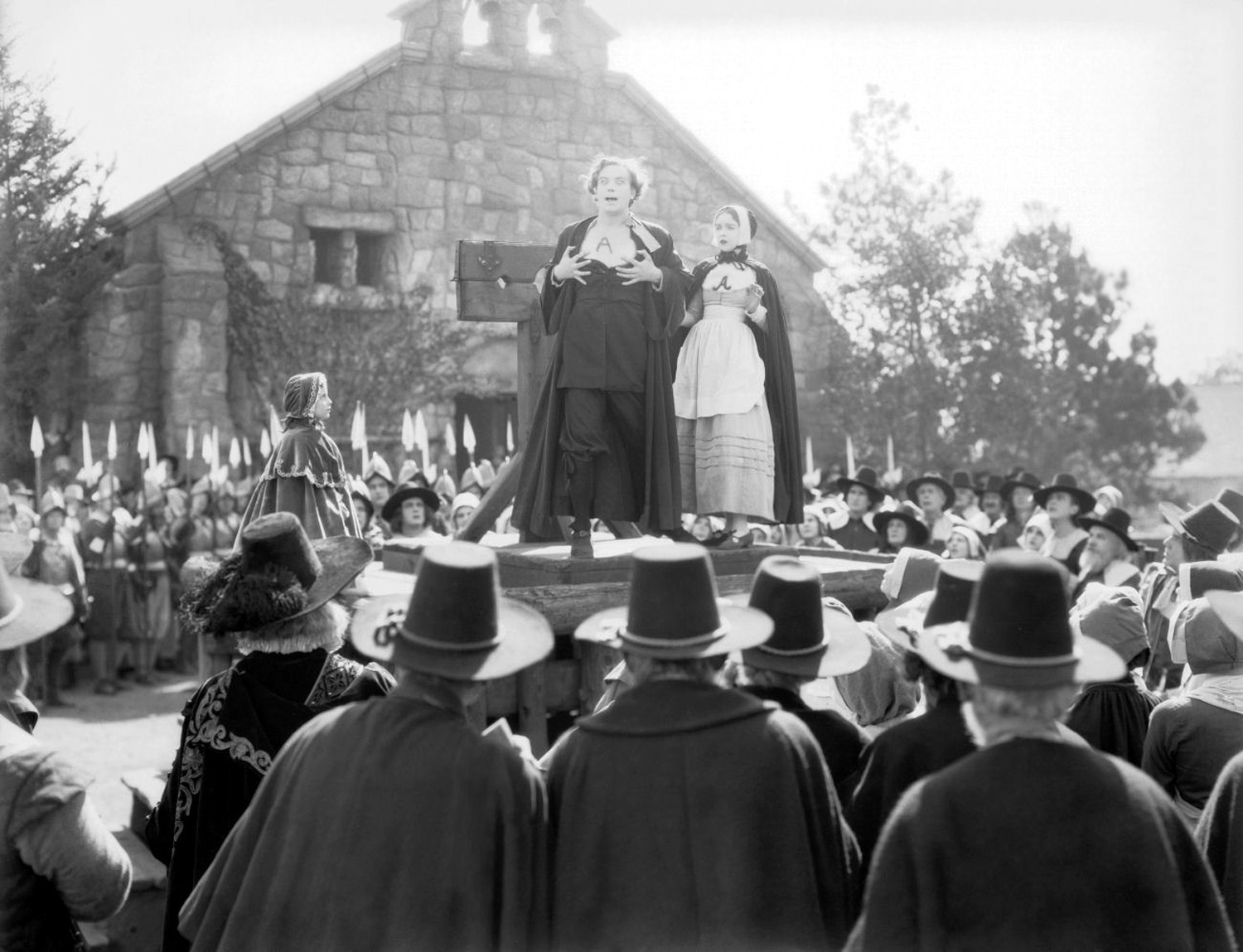
…acceptance of pluralism relativises truth. Once it is allowed that there are different paths to truth, a person’s religious allegiance becomes a matter of choice, and choice is the enemy of absolutism. Fundamentalism is one response to the crisis of faith brought about by awareness of differences…

This from here. (Emphasis mine.)

I read this recently and have been chewing on it for a couple of days. The logical outcome of a faith that lays claim to absolute truth is the fact that everyone else is wrong. If truth is important, life saving even, then we have to try to convince them of their error, at any cost. Even if it costs us (or them) our lives.

This is the story of fundamentalism in all the different traditions- be they Islamic, Jewish, Christian or Hindu.

In my tradition we are emerging from a mess of what happens when the religion named after a man of the poor becomes the religion of empire- first via Constantine, more recently the British Empire, now America, despite its attempt to separate church from state, is making the same mistakes.  We talk as if the power  and privilege we have is a result of the blessing of God on our embracing of moral and theological truth.

Other forms of fundamentalism grows as a direct result of the mess we have made- it is stoked by a sense of deep injustice, by loss, poverty, by an identity forged outside and in the dark shadow of empire. The truth of this kind of fundamentalism is the truth of a people in exile.

For most of us, fundamentalism is mediated, softened by other things- secularism, separation from people who are different, a gap between our cant and our mission, or… a change in our theology. Some despise the latter as weakness, corruption.

But others see it as the kind of truth that sets us free.

The way, the truth and the life by which we come to the Father.

This is not easy journey, but I think it is one that many of us are on.

Love, no matter what…

The Archbishop of Canterbury, speaking in the House of Lords, appears to believe that the new Gay Marriage Bill will undermine family life.

Welby told peers the bill had created confusion, adding: “Marriage is abolished, redefined and recreated – being different and unequal for different categories. The new marriage of the bill is an awkward shape with same gender and different gender categories scrunched into it – neither fitting well.

“The concept of marriage as a normative place for procreation is lost. The idea of marriage as covenant is diminished. The family in its normal sense predating the state and as our base community of society is weakened.

“For these and many other reasons those of us in the churches and faith groups, who are extremely hesitant about the bill in many cases, hold that view because we think that traditional marriage is a cornerstone of society and rather than adding a new and valued institution alongside it for same gender relationships, which I would personally strongly support to strengthen us all, this bill weakens what exists and replaces it with a less good option that is neither equal nor effective.”

Welby said that his concerns did not stem from faith but from what he believes is the best for society. He said: “And so with much regret, but entire conviction, I cannot support the bill as it stands.”

I have never really understood this argument. How does allowing same sex couples to marry undermine or devalue marriage for the rest (the majority) of us? How does it create confusion? Am I less committed to love and to my children because same sex couples also are able to formally cement life long relationships? I say this with respect to the archbishop and to friends of mine who have the same views, but your argument does not make sense to me.

I am forced to conclude that the real issue is not really the ‘sanctity of marriage’ (which is a highly confused concept all on its own) but rather a pervasive discomfort with the morality, theology and physiology of homosexuality itself. People I speak to who take this view, when pushed, often reveal a conviction that being gay is not ‘natural’, and marriage needs protection from some kind of creeping militant homosexual liberalism. I DO understand this argument. Change of what we hold to be right and true is always tough- particularly when deeply held religious beliefs are involved. Our culture has been on a journey of change over the past decades in relation to homosexuality and this kind of change takes time, conversation and mutual exchange on all sides.

I have made my contributions to this debate already on this blog, but as the vote in the House of Lords draws close, I will add this thought- are there higher considerations? Is not the greatest thing that we celebrate as humans love? 

Michaela and I watched this last night- grab a cuppa and watch;


Scooping them up for the Kingdom…

koder-sharing-bread

Lovely chat tonight out at our pub discussion thingy- talking about the Kingdom of God.

It is an old discussion for many of us, but we were chewing again on all those mysterious stories that Jesus told us- those The Kingdom of God is like… stories. Mustard seeds, fields of weedy wheat, women making bread with yeast, corn falling on random ground etc. It is all rather mixed up and mysterious, particularly as the stories from Matthew’s gospel tend to have the odd bit of smiting and burning in torment, all of which does not fit with fluffy-Jesus very well.

We talked too about our understanding of The Gospel- which for most of us used to be the saving sinners from hell when they die thing, and how this version of the Gospel comes mostly from a reading of Paul’s letter to the Romans backwardly applied to the rest of the Bible, when actually the Gospel that Jesus talked about was this one;

Repent, for the Kingdom of God is at hand.

(Or perhaps)

Its time to turn things around, shake things up, take a long hard look at yourself, because there is a deeper, more beautiful way of living that has come to you- the insurgency of God…

Our discussion then turned to what living as an agent/citizen/participant in this Kingdom/Revolutionary movement/Insurgency might mean.

The old understanding of the Gospel made it all simple- saving the lost so that they might go to heaven. Our primary purpose is evangelism. All other tasks are distractions from the Gospel. I find this narrative very difficult on all sorts of levels now, but the mission of the Kingdom is far more challenging, vitalising, engaging- we leave behind the hard in-out legalism and instead have to practice the disciplines of love (Romans 13:10)

This might in the face of it seem rather woolly and directionless, like encouraging one another to go out and be nice. However love is not just a passive thing- it demands action, particularly in the face of desperate need and danger to those who might be regarded as the recipients of our love.

I began to wonder about the old call to ‘save the lost’, usually applied to those who are not like us, so therefore were in danger of roasting in hell.

My friend Pauling put it rather neatly- Love might involve “Scooping a few people up” she said. Some people need scooped. And we might need to do a bit of scoopage.

We laughed- but despite all those old dangers of paternalism/maternalism, sometimes scooping people up- lifting them, holding them, is just what we need to do. The lost and the least, the broken people, the awkward, the lame, the lonely.

We used to call this Salvation, evidenced by conversion. For some this leads to amazing transformation- there is nothing woolly about this kind of love, or this kind of insurgency.

Is it time to reclaim the language of salvation for the Kingdom of God?

We can call it Scoopage if you like.

How they lived…

DSCF6870

It is an old theme- what makes for a good life? What motivates, inspires? For where your treasure is- there is your heart also (Matt 6:21.)

Over the last few days a series of cruise liners have been into the Ocean Terminal in Greenock. I am never sure why they come in here- presumably to pick up fuel, stores and possibly passengers. Last week the Queen Mary came along the Clyde– the fastest and most luxurious liner on the planet.

Greenock- a town splintered by the effect of economic change- the death of industry, the end of empire, famous now for broken people who use drugs and alcohol to make sense of life.

What do the tourists think of us all? There seems to be no shortage of people willing to pay large sums of money to make their fake voyages with everything thrown in. Voyages that are not journeys, but capsules of disconnection that arrive nowhere.

But I should not cast stones- I live in a glass house after all.

Changes are afoot. Politically, economically, environmentally. History tells us that at times of economic downturn some people prosper. They take cruises. Other people are broken. They become the scapegoats.

History also warns us of the rise of hate politics – the lurch to the right, and the polarising embattlement of the left. In England we already see the rise of the UK Independence Party– whose politics seem to have been created by a tabloid reading taxi driver. It is all the fault of the immigrants, the benefits scroungers, the gay marriages- and those bloody Europeans of course.

Except it is not. It is all our fault- and what we (and our children) become will be determined by the choices we make. Do we scrabble for the kind of me-first security of the rich on a sinking ship?

Or do we really seek to live differently? This is really nothing to do with whether we take cruises or not, but rather whether the journeys we make are more than just empty circles back to ourselves.

I pray for journeys that seek connection, openness, understanding. Journeys that are not about me as much as they are about you. Journeys that are not celebrations of what I have, what I can afford, but rather become something called pilgrimage.

And lest I continue to sound too earnest, too smug- we all have the same challenges. Stuff always gets in the way…