Aoradh Pentecost bonfire, 2013…

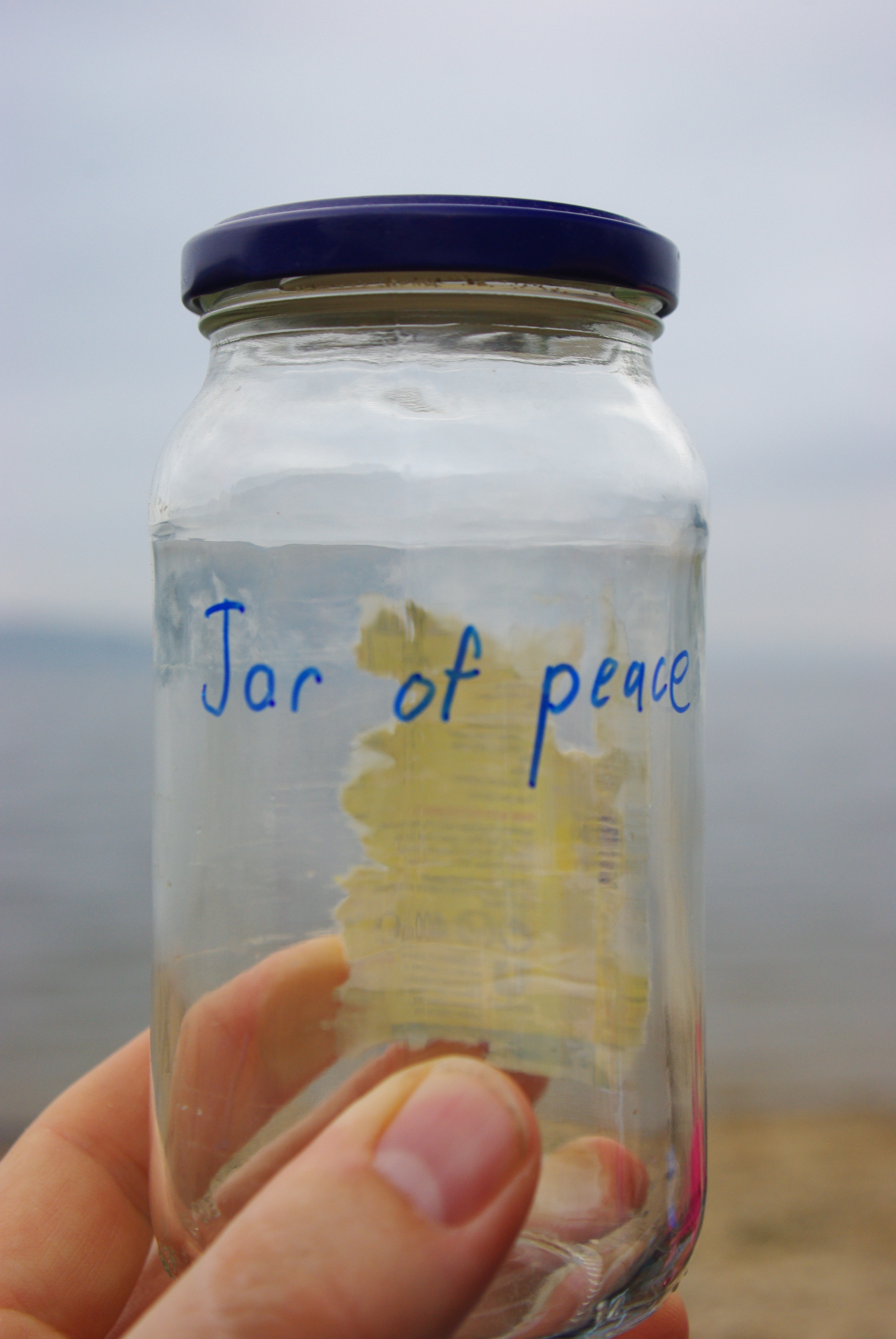
Jar of peace

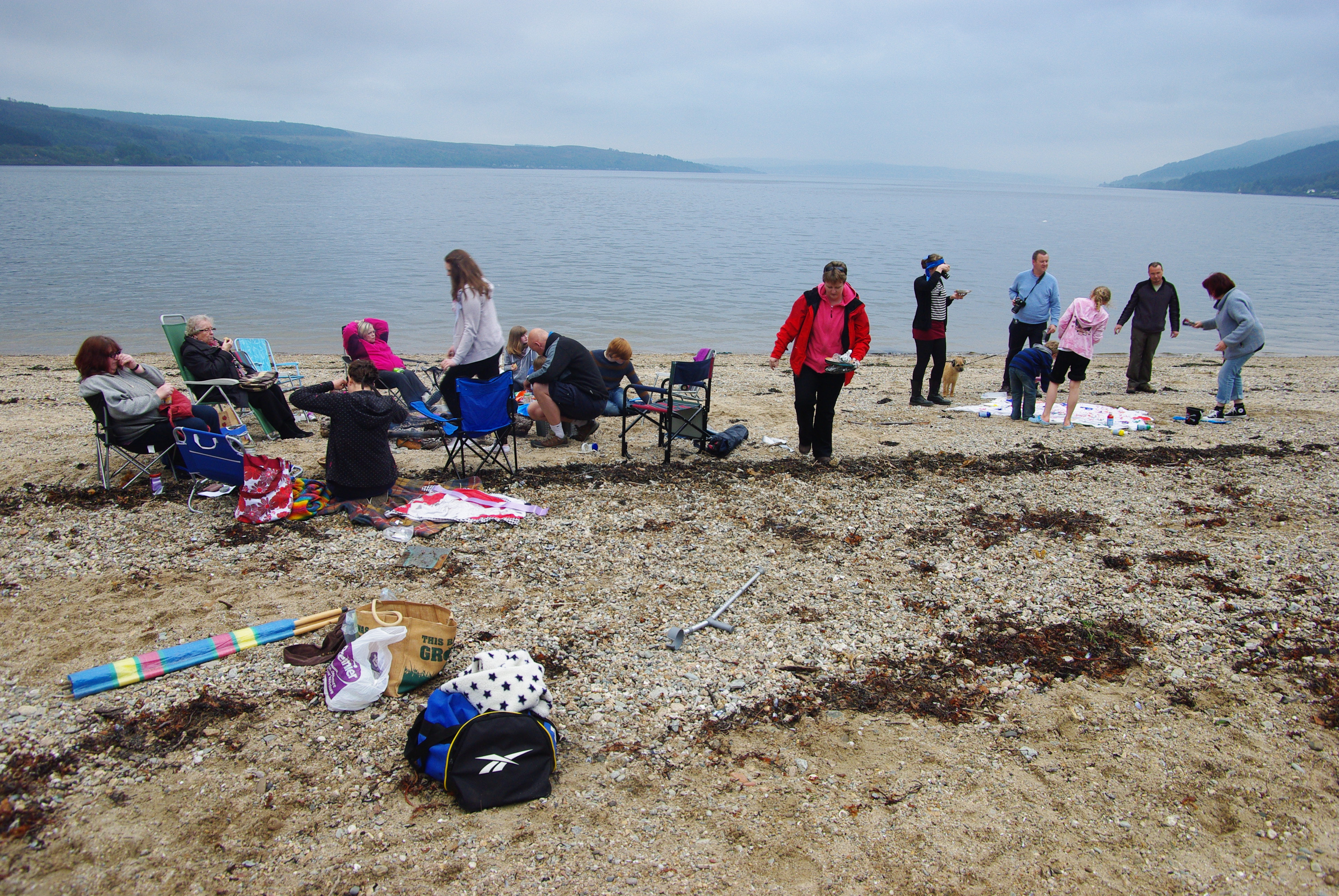
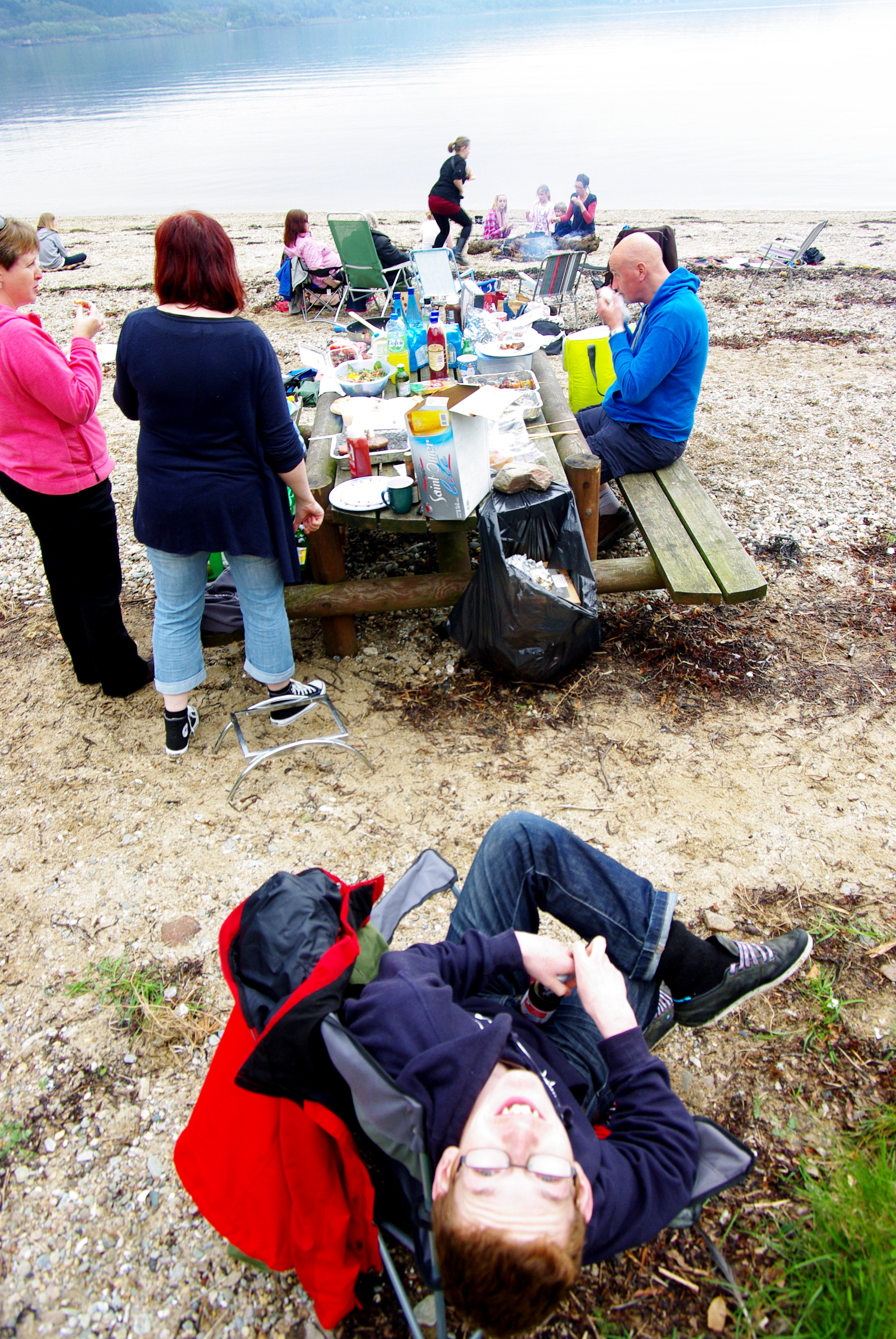
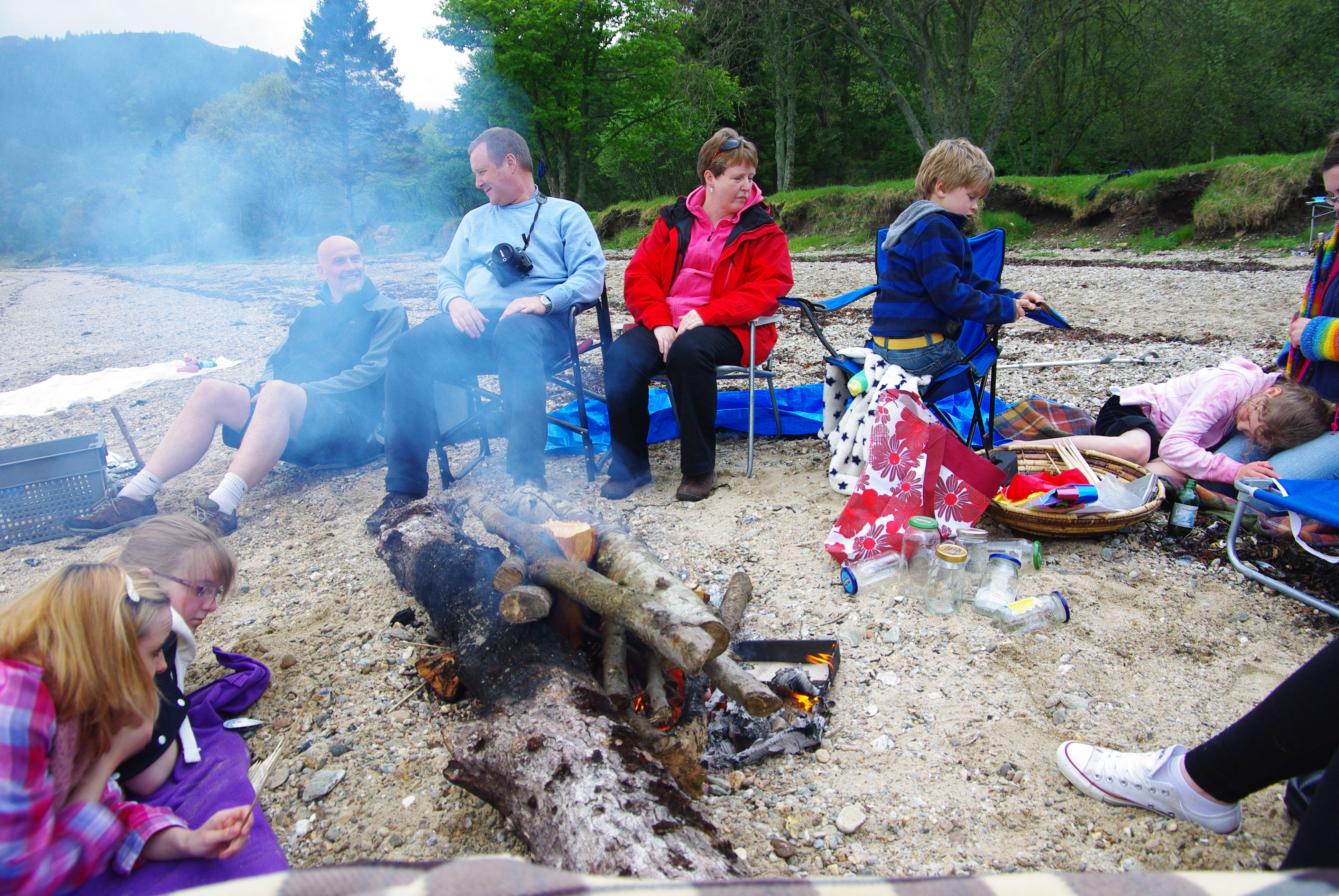
We have just spent a lovely afternoon at our annual Pentecost Bonfire out at Ardentinny beach.

Every year we gather to mark the birthday of church, sharing food then some worship. Today Michaela and Pauline had planned a series of activities around the fruit of the Spirit (Galatians 5.) The Spirit sent as our helper, our guide- a kind of warmth in the middle of us…

For Love, we used footprints, signifying a step towards the other

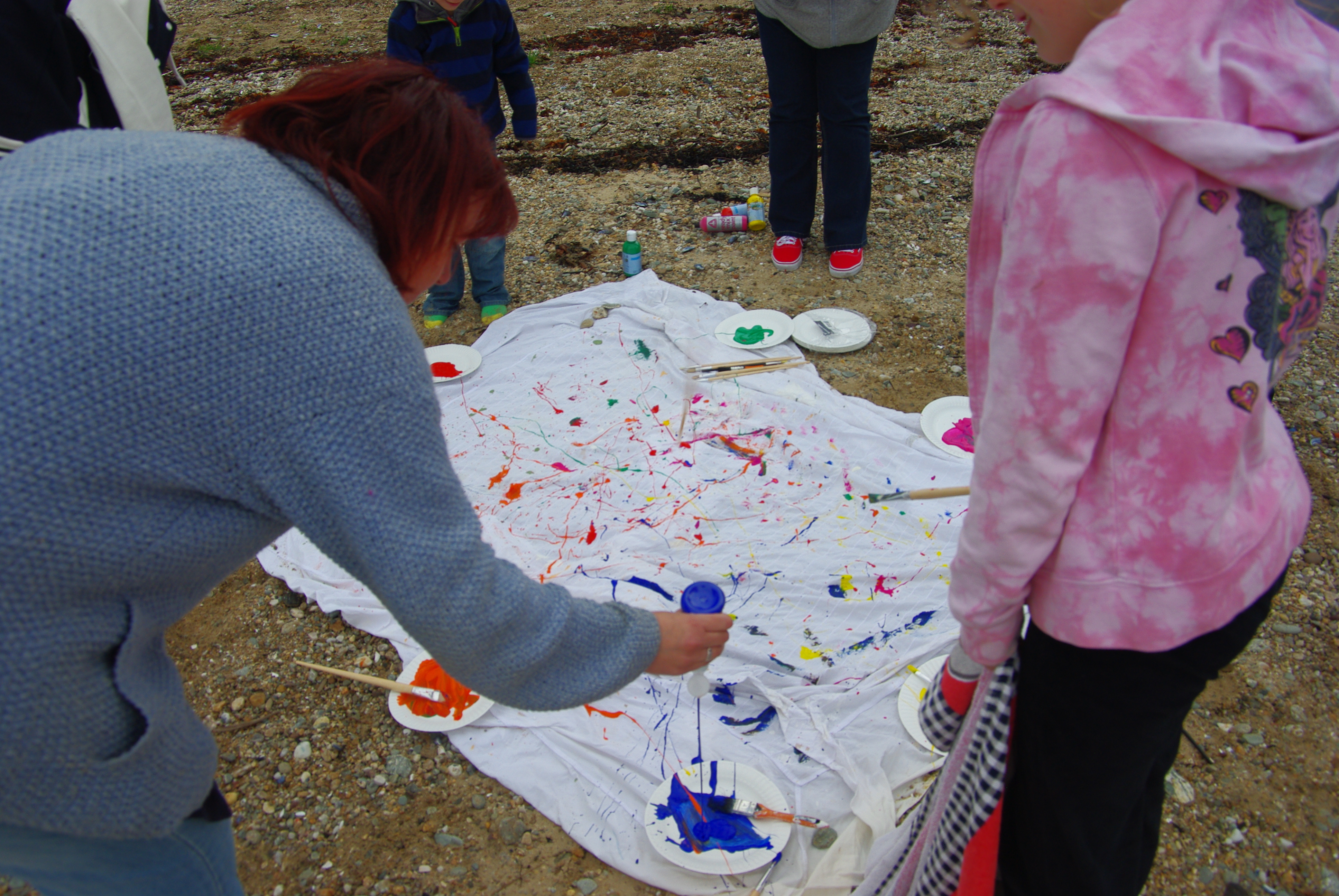
For Joy, we used a canvas splashed with exuberant colours

For Peace, we sat in silence listening to the gentle waves, then opened a jar to scoop it all in, and put the lid on

For Patience, we found ourselves a stick to signify sticking with someone or something

For Kindness, we took a smoothed pebble to signify being smoothed and shaped by one another

For Goodness, we passed round a bag of tasks- things that would help us see the good in others

For Faithfulness, we remembered that we had long term committments to one another, and so we wrote on our pebbles the words from Ruth- “Your God is my God”, and passed the pebbles to another

For Gentleness, we reminded ourselves that we did not need to force our way in life, and spent 5 mins walking alone

For Self control, we reminded ourselves that we needed to direct our energies wisely, and so we wrote on ribb0ns, which we intended to fly from the tail of a kite, but the wind was light so, we just decided to take them home.

It was lovely.

We do not usually use music outdoors – there is so much music in the waves after all – but this time Michaela used her little Mp3 dock to play songs- and the simplicity of music, companionship, the beach and an open fire (even with fickle eye stinging smoke) made for a time of deep peace.

All church services should be like this…

Paint

'Church@ gathers

Andrew upside down

incense/pews


Thoughts on retreats in wild places…

The Garvellachs

I am going here again in a couple of days.

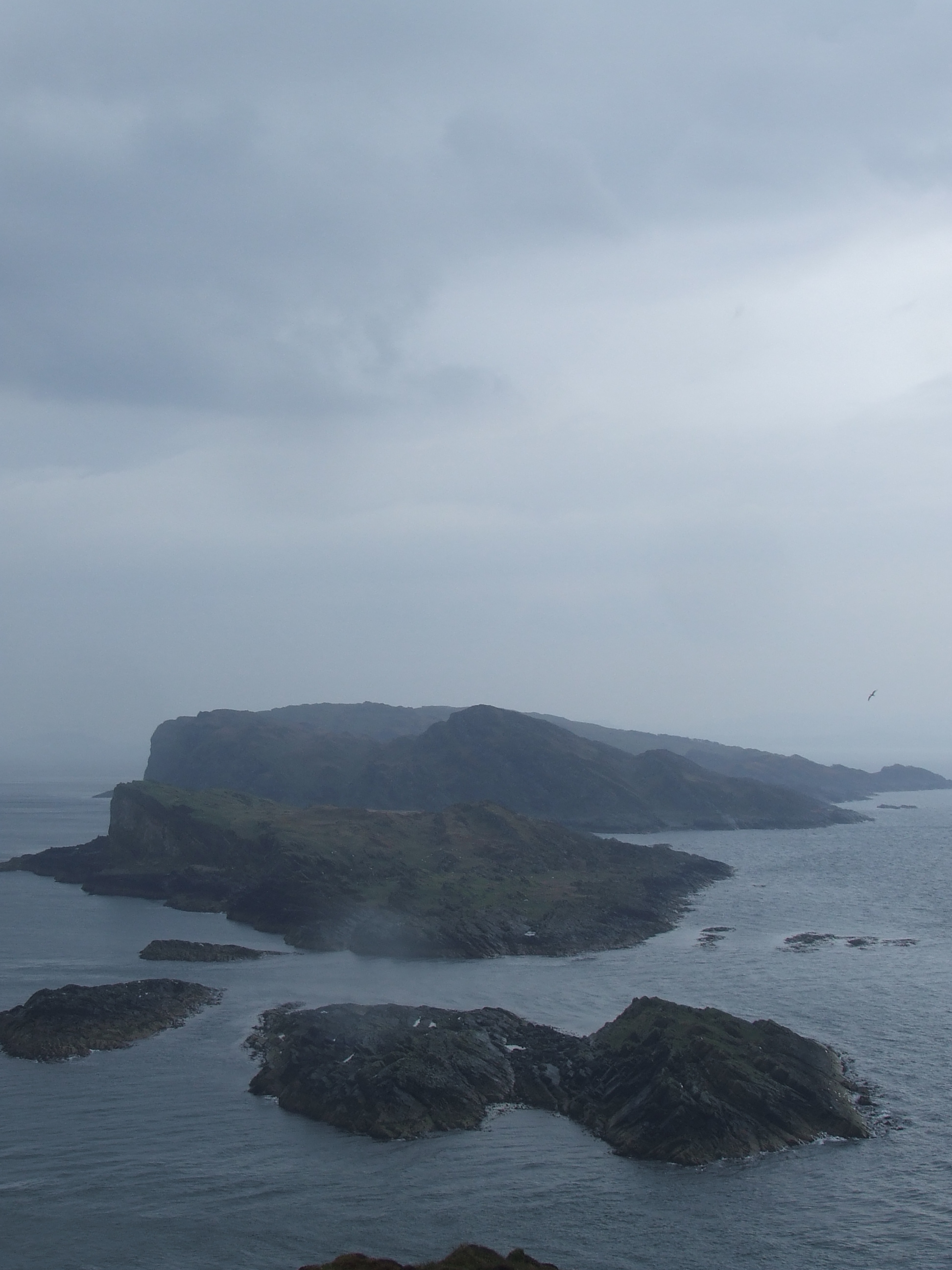
It is time for our annual Aoradh wilderness retreat. Each May bank holiday weekend, usually with old friends and invited guests, we hire a boat to drop us off for a couple of nights camping wild on an uninhabited island. This year we are returning to Eileach an Naoimh, one of the Garvellachs in the Ross of Mull, Inner Hebrides. The photo above was taken looking north at the other islands in the chain a few years ago, in less than ideal weather. The forecast for this weekend is better thankfully.

Eileach an Naoimh, even by west coast of Scotland standards, is a stunning place. It has soaring cliffs full of nesting birds on one side, and a rising green slope the other. It is also the site of an ancient Celtic monastery;

About 542, St. Brendan the Navigator founded a monastery on Eilach, presumed to be the island, possibly because of the combination of its isolation and good grazing. This may make the remains the oldest extant church buildings in Britain, although the earliest written record of its existence dates from the late 9th century. Columba is believed to have visited the island and it is one of the proposed locations of the Columban retreat isle of Hinba. Eileach an Naoimh may be the burial site of Columba’s mother Eithne.[5][6]

Remains of a chapel on Eileach an Naoimh

The monastery was destroyed by – or, at least, may have become excessively vulnerable to – Viking raiders, from about 800. The island has probably seen only intermittent occupation since, which has contributed to the survival of the ruins of many of the monastic buildings, including two chapels, beehive cells, and a graveyard with three crosses and another circular grave. The cells are contained in a pentagonal enclosure overlooking the rocky landing place on the south, which is guarded by various skerries. Beyond the enclosure there is another cell with two rooms. The oldest chapel is rectangular and may date from the 11th or 12th centuries.[7] The monastic ruins are the oldest ecclesiastical buildings in Scotland and the site is in the care of Historic Scotland.[8][9]

One of the lovely things about our retreats has been the chance to share the experience with others- friends and friends of friends – people who sometimes have never camped before, and certainly have never experienced that ‘noisy silence’ that is a Hebridean evening.

In case this sounds a little bit too idylic and romantic- there are many challenges of such journeys. It can be cold, very wet, and uncomfortable. There are no toilets, no tap water, no shelter apart from that which we make for ourselves. If the weather is kind, it is easy, but the weather changes so much even over a couple of days- this is one of the joys of being in such places; you see the weather coming, and you see it go. Sometimes it hits you right between the eyes.

I have been having lots of conversations with my friends about what we do, how we prepare, what we take etc. There are all the practical details- how much kit, what to leave out etc.

Then there have been discussions about what makes this a retreat, rather than a group of daft folk who like to get down with wilderness (which is worth doing in its own right after all.) Our trips evolved from friends being fools to friends trying to be more deliberate in our engagement with the God of wild places. These days we have simplified what we do considerably- we divide time into silent and communal, and gather round a fire in the evening using simple rituals to reflect on the day. This time we intend to use one of the chapel buildings to follow a days monastic pattern.

Finally I have had lots of discussions about how we best use our time, and what to bring that might help. I usually suggest that less is more- the fewer things we have between us and the nakedness of a wilderness experience the better. All sorts of things that in their own right can be good- books, cameras, art stuff etc, can become like static clutter: flotsam that chokes the pristine shore line.

What I always find most powerful is the combination of immersion in beauty alone, and then sharing this with times of companionship, laughter- making our individual experience communal.

One discussion with Sam surrounded what to take to write on. I have always taken notebooks and pens, but despite my conviction that (for me at least) writing is a primary spiritual discipline and practice, I usually write very little- in fact, when I try, what I write tends to feel forced and false- like I am doing it more for someone else rather than for me (or God.) I have felt a little guilty about this in the past- almost as if I am not doing it right- that I am playing at something.

I was reminded about this when listening to one of my favourite poets speak. Norman MacCaig’s work is saturated with wild Scotland- in particular the area called Assynt.  He spent each summer there walking fishing, meeting friends and sharing a dram or two. What he did not do over these summers was to write- this belonged to the darker times- when the wilderness came back to him- sometimes all in a rush- his famous ‘two fag’ poems. MacCaig had no religion- he was a avowed athiest – but his words have a life in them that I love.

Here he is speaking, and I find myself startlingly in agreement with much of what he says about the creative process- my love of free verse, and music, and my love/hate with imagery, which I feel like an addiction. I do not smoke, but my poems also usually drop out in no time at all, as if from nowhere. Or perhaps from seeds sown in the wilderness.

But I am getting technical again- there is time for all this writing later.

After the island.

Freemasonry- benign oddity or the seed of corruption?

freemasonry

A few years ago, some friends and I put together a festival of art and worship in and around our home town. We brought together all sorts of music, visual art, prayer rooms, poetry. The final event was a worship concert led by a worship leader/song writer from England, who shall remain nameless- suffice it to say that he is of a prophetic bent.

The final concert drew a lot of people- the festival had been rather successful in gathering together our rather disparate and sectarian denominational groups. Sadly, not many people stayed to the end. The worship leader was used to lashing up a Holy Ghost storm, and when the response was more -shall we say – West of Scotland Presbyterian, he switched into Spiritual Warfare mode. It became a train wreck, and I am still wincing as I write this.

The rights and wrongs I will not debate fully here, but one of the issues that the worship leader thundered about was Freemasonry. His declaration was that it was the work of the devil, and the reason for all the spiritual oppression that held us all back from worship, and prevented God from working in our area. I always thought this to be wrong in both theory and application, and even years and years later, there are people in my town who regard Aoradh with great suspicion because of this event.

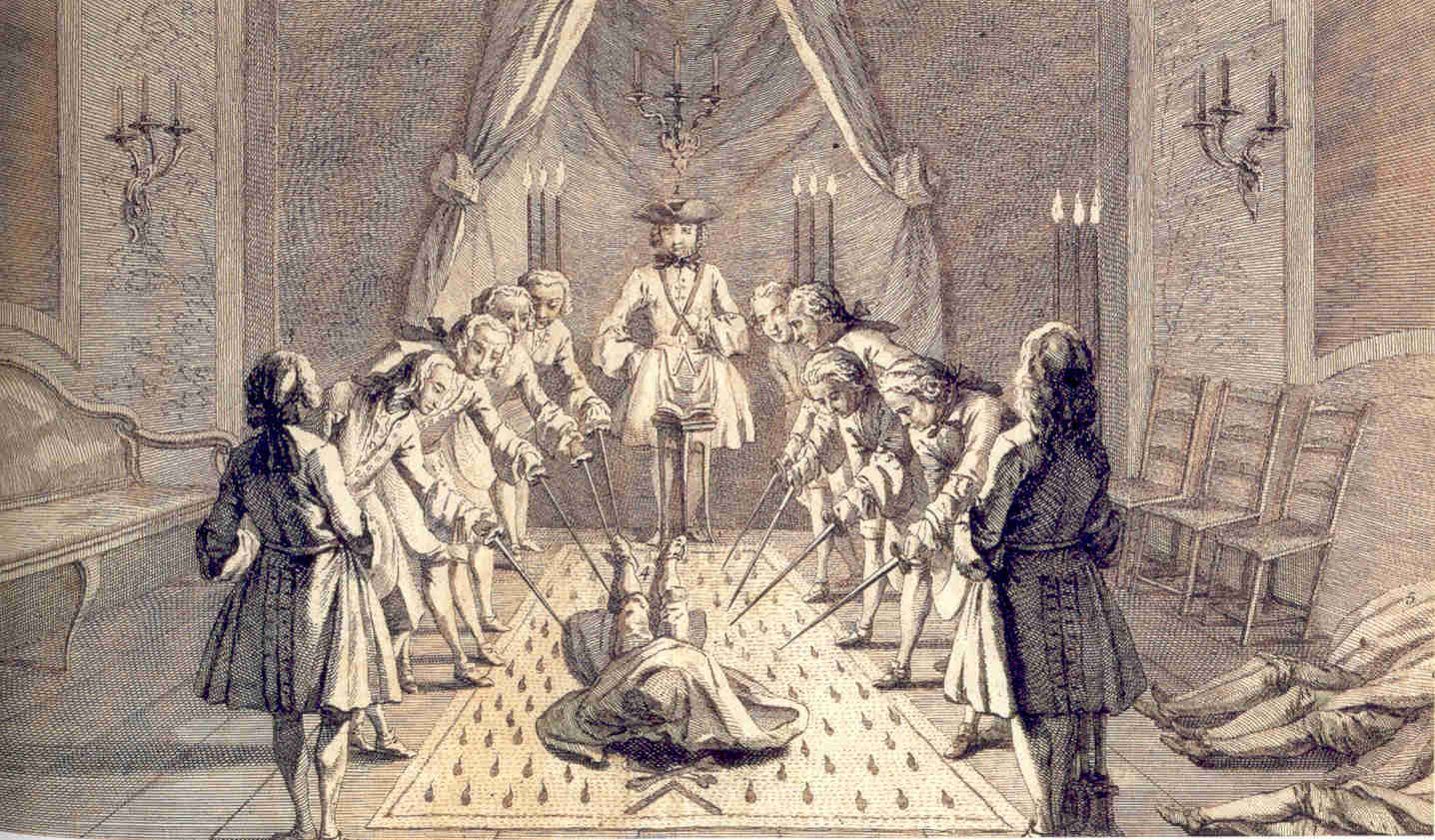
But what of Freemasonry? I was reminded again of the weirdness of it all whilst reading this article. It is an adventure into Co-Masonry, an order that welcomes men and women alike, but points out that all forms of Freemasonry in the UK are in decline, and have an aging membership.

At its postwar peak, membership of a fraternity that began as a sort of union for medieval stonemasons was boosted by returning armed service personnel as well as some of the most powerful men in the land. George VI, who died in 1952, is the last British king to be listed on the official UGLE website, which also includes Winston Churchill, an Archbishop of Canterbury and a surprisingly long list of celebrities from Nat King Cole to Peter Sellers. The royal connection continues today with the Duke of Kent, who is the current grand master of the UGLE.

Freemasons have long denied suggestions that it is a pernicious old boys’ network, arguing that it is a sort of gentleman’s club, concerned with moral and spiritual growth. Although in the UK the sense that freemasons are no longer the force they once were has given rise to jokes about suburban middle managers prone to rolling up their trouser legs and doing funny handshakes, there are signs elsewhere that membership confers preferment. The collapse of Propaganda Due or P2, an order that linked Silvio Berlusconi to the Italian central bank and the heads of all three secret services until it was closed down in the 1980s, did little to end suspicions.

Given this double whammy of conspiracy and mockery, it is no surprise that all parts of the fraternity are looking for a rebrand. Or the fact that Co-Freemasons want to disassociate themselves from the main branch, employ a PR company and launch a “recruitment drive” specifically aimed at attracting younger women.

A quasi-religion in decline? No surprise there- after all most Christian denominations have shrunk considerably over the past few decades in the UK- we have moved into a phase of individualised fluidity, when anchoring ourselves to clubs with Victorian rituals has really gone out of fashion for all but a few weirdos (like me.)

That is without making any mention of the scandals and controversies around Freemasonry. They are at the centre of more conspiracy theories than just about any other group, and quite frankly I am not interested. Neither am I that keen on categorising a whole group of people as ‘evil’ or corrupt just because of the clubs they belong to.

I simply do not know enough about it all to label people like this. I can attest to the fact that two of the nicest blokes I know- people active in their community, people who live and work with integrity and humanity – are also masons.

I do confess however to some prejudice. This from the same article;

There has been a long and often bitter history of mistrust between organised religion and freemasonry. At its most benign it led to a spat between freemasons and the former Archbishop of Canterbury, Rowan Williams, when he suggested their beliefs were incompatible with Christianity. He then got into trouble for appointing a freemason to be bishop, thereby proving many avenues are open to freemasons but still closed to women.

Touche.

The worship leader earlier mentioned was right in one sense- Argyll has long been a stronghold of Freemasonry. Each of our small towns has its own Lodge.

There is also, from local gossip, a strong link between our Council and the local lodges. Argyll has had one of the few ‘independent’ led councils- although the SNP currently lead the coalition.  There was a time when some of the senior council officers and the political leadership supposedly shared a common, yet secret brotherhood.

But of course, this is speculation- how can I know for sure? It is after all a secret organisation. If it is true, then no matter how good, how honest the people involved, then this kind of alliance has no part in a democracy. There is quite enough secret use of power even without a quasi religious overlay. We need greater openness, not a shared secret ritual for the chosen few.

So- the question- benign oddity or corruption? I suppose the answer is that Freemasonry can be both, even at the same time. Charity can go hand in hand with the promotion of mutual interest. This can happen equally in churches, cricket clubs or mosques. The difference is the secrecy – can Freemasonry survive without all the ceremonial mystique?

The spiritual side of all this, unlike the worship leader, I am happy to leave to God.

Gay marriage, and a reason to sing…

Yesterday I was talking about the power of singing. Today I saw this in the Guardian, and it made the hairs on the back of my neck stand up.

Whatever your views on gay marriage (and I have made mine pretty clear on this blog) you can not escape the burst of exuberant joy let loose in the NZ parliament. It was like captives being freed. What was lost had now been found;


New Zealand becomes the first country in the Asia Pacific to legalise same sex marriage. The public gallery in parliament breaks into song following the vote, singing the traditional Maori love song Pokarekare Ana. New Zealand is now the 13th country to legalise gay marriage, after Uruguay passed its law earlier in April

Slow down, go deeper…

flintoff

I am not really one for using sport as analogy for life. It seems to me to over value sport and trivialise life. However, I am now going to do exactly that because for all things there is an exception.

I am a lover of cricket. Many of my friends do not get it. They talk about it as like watching grass grow, or paint dry. I have tried to explain the subtle interplay between intellect and skill, the constant procession of events at each curl of leather, the mind games, the simple absorption of all worries in the single moment- but to be honest I am wasting my breath. We can not be convinced of what we will not see.

But whatever your views on cricket- stick with me for the analogy…

Last night a test series finished between New Zealand and England- three test matches, each lasting 5 days, both sides batted twice. All three matches ended in a draw, and so the series was drawn. 15 days of play, some interupted by bad weather, but at the end of it all- no winners, no loosers- just a draw.

But what a glorious draw.

An unfancied, unfashionable side (NZ) takes on one of the big boys (England) and by strength of will, team spirit, luck and skill, give as good as they get in an ebbing and flowing contest. Finally, England are on the ropes, reliant on players to hang on by the skin of their teeth, fighting against their own instincts as well as everything that the NZers can throw at them. In the end, it came down to Englands last player, the hapless Monty Panessar, against the premier fast bowler giving it one last burst. After the last ball was bowled, opponents collapsed into each others arms- it was magnificent.

But it was not quick, it was not easy, it was not instant. It is hard to sum up in soundbite, or display in the form of shortened highlights.

Which kind of does work as some kind of analogy for life.

It is possible to live as if the only thing that is important is the instant, the mountain top, the victorious advance. However, real life is not lived at the exultant pinnacle. Rather it is a consequence of the long faithful movement in a shared direction.

The older we get, the more we come to understand that speed is less important than depth. This is one of the reasons I love cricket.

And at the end of it all, I will be grateful if I achieve an honourable draw…

Right now, need more sleep.

Paulo Coelho on Jesus…

Paulo Coelho

Great article in The Guardian today- an interview with author Paulo Coelho. Here he is, taking about Jesus;

The Jesus of the gospels was, Coelho argues, similarly contradictory. “Jesus lived a life that was full of joy and contradictions and fights, you know?” says Coelho, his brown eyes sparkling. “If they were to paint a picture of Jesus without contradictions, the gospels would be fake, but the contradictions are a sign of authenticity. So Jesus says: ‘Turn the other face,’ and then he can get a whip and go woosh! The same man who says: ‘Respect your father and mother’ says: ‘Who is my mother?’ So this is what I love – he is a man for all seasons.”

Like Jesus, he’s not expressing a coherent doctrine that can be applied to life like a blueprint? “You can’t have a blueprint for life. This is the problem if you’re religious today. I am Catholic myself, I go to the mass. But I see you can have faith and be a coward. Sometimes people renounce living in the name of a faith which is a killer faith. I like this expression – killer faith.”

Coelho proposes a faith based on joy. “The more in harmony with yourself you are, the more joyful you are, and the more faithful you are. Faith is not to disconnect you from reality, it connects you to reality.”

In this view, he thinks he has Jesus on his side. “They [those who model their sacrifice on Christ’s] remember three days in the life of Jesus when he was crucified. They forget that Jesus was politically incorrect from beginning to end. He was a bon vivant – travelling, drinking, socialising all his life. His first miracle was not to heal a poor blind person. It was changing water into wine and not wine into water.”

Worship thingy…

IMGP4218`

We are starting a new worship thing next Sunday night- a simple, quiet,  mainly music led thing. We have not given it a name as this would imply greater pretension than we have been able to gather.

Regular readers of this blog will know of my ramblings around the use of music in worship- I am a reformed ‘worship leader’ in the auditorium stylee- and thought never to return. However, I still love to play and sing and the question that I have found myself asking continually concerns what role if any singing songs of worship may play in our on going journey away from CCM monoculture.

Following thoughts gathered during a recent silent retreat I decided to set aside angst and just sing.

Andrew, a friend and local Episcopal vicar/priest/canon/ pope (pick suitable title!) had already asked if we could do something like this- something primarily about private worship, made collective in the small sense, and so we decided to go for it.

If this is of interest to anyone local, you are more than welcome to join us- 7.30, Holy Trinity Church, Dunoon.

Half and hour to an hour of music, quietness and contemplation.

If it feels like it has the wind of the Spirit, we might even give it a name…

Revenge…

Mt5.44


I have been thinking about revenge today on my drive around Argyll.

This was stimulated in part by a story that the news is full of over here in the UK about a former Member of Parliament and his ex wife who have both been found guilty of perverting the course of justice. Many years ago he persuaded her to take some speeding points onto her licence by saying she was driving when in fact it had been him. Later on, he had an affair with a work colleague and left his wife for her. His wife, by way of revenge, decided that she would tell the press about the speeding thing, knowing that it would end his political career.

What she did not anticipate was that both of them would end up in court, with the details of their intimate lives being dragged out in front of the media, at the end of which both are now facing a jail sentence.

Revenge, red in tooth and claw, let loose to ravage this way and that, doing damage to all.

I was also thinking about revenge because of another situation we are faced with- involving some people who have acted vindictively towards us, in a way that I will not spell out here. We are sort of in the position to give pay back.

Now I do not claim to be better than most- I am not in any way morally superior. But the words of Matthew 5 above- they gave me a problem.

What do we do when faced with personal injustice? How do we deal with people who slight us, who treat us with disrespect, who see what we are and find it wanting?

I know what my natural reaction is- I lick my wounds, I seek conversations of conspiracy- with people who will speak words of partiality and hostility. I obsessively pick over my rights, my own just cause. I look accross no-mans land and watch for weaknesses in the opposing trench line. In my mind I prepare for war.

But those words of Jesus about turning the other cheek, offering the shirt when they take my coat, walking two miles when forced to march one… they slow me down, discomfort me. Surely he is not wanting some kind of wimpy doormat for others to wipe their feet on?

Well, think about the politician and his wife.

He had it coming-  right?


Cardinals, McLaren and the charge of hypocrisy…

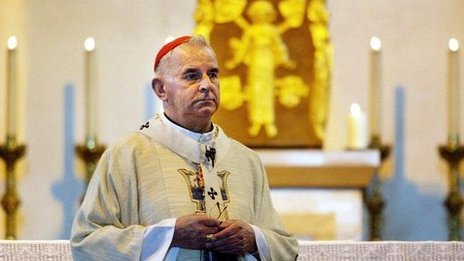
Cardinal O'Brian

No one could have missed the story of Cardinal O’Brian and the scandal engulfing the Catholic Church at the moment, but just in case you have, it goes something like this;

Cardinal O’Brian, the only British Cardinal, starts off (20 years ago) as a moderate within the church, upsetting conservative Catholics with his liberal views on contraception, homosexuality and whether priests should marry. Over time however, as the Vatican became increasingly hard line, he seemed to swing towards the right, becoming a strident and belligerent voice proclaiming the need to Christian morality, family values and for Conservative Catholicism. There was even talk of him being the next Pope.

Last year he made a splash because of his rather bizarre comment comparing Gay Marriage to slavery. I wrote about it at the time, here. 

Then, totally out of the blue, in the wake of the shocking resignation of the Pope, just as Cardinal O’Brian is about to go to Rome to take part in the election of the next Pope, 4 men- three priests and one ex-priest, let it be known that he used his power and authority to impose sexual acts on them whilst they were young men.

He initially denies it. The Church starts to close ranks. Then he admits it and resigns his office.

I have avoided discussing this matter up until now on this blog- partly because I did not want anything I wrote to seem triumphalist. I have ‘come out’ as a Christian who has a very different position on  the (unfortunately) totemic issue of homosexuality to that espoused by the Cardinal (and many other good people, including close friends.)

I was also staggered by the scale of the fall of this man- for whom I feel great sympathy. I know what it is like to be trapped in an unyielding and inflexible hermaneutic- to resort to compartmentalism to cope with the cognitive dissonance. Many people describe O’Brian as a good man, a kind man who has the capacity for so much good. None of us are just one thing, we are all many- and those who attack him should beware throwing the first stone.

Finally, I feel a collective shame for the Church. Scandals like this confirm the worst of prejudice about what the Church has become- it tells the world that we are that most despicable thing- we are hypocrites. This story proves our guilt- and the guilt is collective. As soon as we (the Church) begin to stand on moral high ground, we will always be in danger of the crumbling cliff edge.

That is NOT to say that we should have no moral voice. Our job is to be a people who present a radical alternative. We are to be an irritant  and conscience of those in power, not because we are better than others, but because we are prepared to try this thing called love. All morality is captured by this simple word- love. As soon as love is subordinate to morality, then morality becomes the worst form of religion.

So in this sense, Cardinal O’Brian is both perpetrator and victim of a system of faith that makes individual salvation from private sin the most important issue. It IS an important issue- but we all have logs in our own eyes. And there are other issues…

Which were brought to me again when listening to clip in my previous post.
brian-mclaren

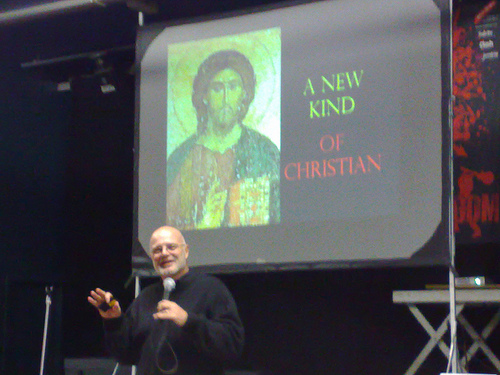
Brian McLaren, speaking in St Paul’s Cathedral mentioned that he had a son who was gay. I have read and listened to a lot of his stuff, but did not know this. It seems that he performed a marriage ceremony for his son and partner last year, which predictably got him in to a lot of trouble. A case in point is this entry on his blog, in response to a man who had publicly ‘broken rank’ with him as a result of his stance on homosexuality, and his decision to participate in his sons marriage ceremony. Some of his response is as follows;

My view on human sexuality has indeed changed over a period of thirty years, and actually, the views of most conservative Christians have also been changing over that period. It wasn’t too long ago that the only conservative position was, “It’s a choice and an abomination.” When that position became untenable due to increasing data, the conservative position evolved to “it’s a changeable disposition, and we know how to change it.” When fewer and fewer people who claimed to have been reoriented were able to sustain the reorientation, the position shifted to “it’s a hard-to-change disposition, but it can be done with great difficulty.” More recently, I hear conservatives say “the disposition may be unchangeable but the behavior is a choice, so people may choose to live a celibate life or a heterosexual life, even against their orientation.” All that’s to say that it would be unfair of me to break fellowship with people who are themselves on a journey, just because they aren’t where I am at this point…

In my case, I inherited a theology that told me exactly what you said: homosexuality is a sin, so although we should not condemn (i.e. stone them), we must tell people to “go and sin no more.” Believe me, for many years as a pastor I tried to faithfully uphold this position, and sadly, I now feel that I unintentionally damaged many people in doing so. Thankfully, I had a long succession of friends who were gay. And then I had a long succession of parishioners come out to me. They endured my pronouncements. They listened and responded patiently as I brought up the famous six or seven Bible passages again and again. They didn’t break ranks with me and in fact showed amazing grace and patience to me when I was showing something much less to them.

Over time, I could not square their stories and experiences with the theology I had inherited. So I re-opened the issue, read a lot of books, re-studied the Scriptures, and eventually came to believe that just as the Western church had been wrong on slavery, wrong on colonialism, wrong on environmental plunder, wrong on subordinating women, wrong on segregation and apartheid (all of which it justified biblically) … we had been wrong on this issue. In this process, I did not reject the Bible. In fact, my love and reverence for the Bible increased when I became more aware of the hermeneutical assumptions on which many now-discredited traditional interpretations were based and defended. I was able to distinguish “what the Bible says” from “what this school of interpretation says the Bible says,” and that helped me in many ways.

So – many years before I learned I had members of my own close family who were gay – my view changed. As you can imagine, when this issue suddenly became a live issue in my own family, I was relieved that I was already in a place where I would not harm them as (I’m ashamed to say this) I had harmed some gay people (other people’s sons and daughters) earlier in my ministry…

This post hints at what must have been great personal pain through all this, but also a great strength- the sort that feels (to me at least) right. McLaren ends his post like this;

I want to add one more brief comment. You ask, if we change our way of interpreting the Bible on this issue (my words, not yours) “- what else will happen next?” Here’s what I hope will happen. After acknowledging the full humanity and human rights of gay people, I hope we will tackle the elephant in the room, so to speak – the big subject of poverty. If homosexuality directly and indirectly affects 6 – 30% of the population, poverty indirectly and directly affects 60 – 100%. What would happen if we acknowledged the full humanity and full human rights of poor people? And then people with physical disabilities and mental illnesses and impairments? And then, what after that? What would happen if we acknowledged the spiritual, theological, moral value – far beyond monetary or corporate value – of the birds of the air, the flowers of the field, of seas and mountains and valleys and ecosystems? To me, Jesus’ proclamation of the reign or commonwealth of God requires us to keep pressing forward, opening blind eyes, setting captives free, proclaiming God’s amazing grace to all creation.

What he is able to do here is lift our eyes from a  grubby obsession with what goes on in people private bedroom space to the call of the Kingdom of God.

This is the greater charge of hypocrisy that I feel myself constantly to be under. How all the distractions and comforts of my life and lifestyle prevent me from living as a full agent of  the commonwealth of God as spelled out above.

In this, as with the Cardinal, I am reliant on Grace, and the hope that I may yet become what I aspire to be…