Coming out as a universalist…

There was a story in Christianity magazine that caught my eye today. It concerned the author of this book

evangelical universalist

The author used a pseudonym, made up of the  names of St Gregory of Nyssa and George MacDonald chosen because of their rather universalist stances. ‘Gregory’ set up a blog to discuss the book here.

Some of you are wondering what on earth all the fuss is about, and even what a ‘universalist’  is in this context. For most of my Christian experience, people who held universalist views were on the slippery slope to damnation, if not already in free fall into hell. Universalists believe that God’s plan of engagement with the salvation of creation includes the aim to save EVERYONE- not just a selection of (most of) those who said the sinners prayer and so escape the fate of the apostate majority.

I know a lot of folk whose position has shifted on this- who have started to believe that the discussion about what the Bible might have to say about this issue is simply not closed (I have not read the ‘Evangelical Universalist’, but can recommend Brian McLaren’s ‘The last word and the word after that‘ as a great introduction to these issues.)

Some of the heat of this debate is that so much of Evangelical zeal is based on the idea that people all around us are lost- and  if we fail in our call to save the lost, then people may go to hell- and it will be our fault. There is a real question as to whether there has ever been a major Christian revival that has not had this kind of engine at the heart of it.

My own position is… rather fluid. But as I have said before, I remain a follower of Jesus. I do not think that all forms of faith are equally valid ways of worshipping the same God.

But I also hope that God is bigger than our narrow categorisation, and that indeed he will find a way to redeem everyone.

But back to Gregory MacDonald.

Recently, Robin Parry revealed that he was the real author.

Robin is (or was) the editorial director of Paternoster, a Christian publishing company. He has now resigned his post, reporting the concern that his stance on universalism might damage the sales of Paternoster products in the USA.

So is this what theological debate is about? The need to use pseudonyms and then lose your job if you think beyond a narrow orthodoxy?

Hmmmm…

Spirituality and photography…

pebble ripples, reflection, loch eck

Another couple of drives around Argyll in the last few days. On Tuesday we drove to Oban to see William sing in the Mod. This is the annual festival of Gaelic language, music and culture. Will was entered in a solo unaccompanied singing competition, and did himself (and me of course) proud, finishing just three points behind the eventual winner.

Yesterday was a bad day for photography- the weather was poor, and I was too nervous to photograph William. Sometimes, it is best just to be in the moment, without the enforced detachment of a lens between you and the action.

But today, I drove to Lochgilphead on a day of Autumn mists and still reflections. I left for an early meeting, and had no time to stop, but on the way home I slowed down.

And took some photographs.

Which set me thinking about why I do it, what the practice of photography brings into my life and how it interacts with the spiritual side of who I am.

I mentally made a list-

  • It allows me to be creative, and in creating, we encounter the Creator
  • It allows me to be appreciative- of the wide vistas, but also of the tiny small things- like the catch of dew on a leaf, or the light falling on yellow sea weed at low tide
  • It makes me look deeper, and that the more I look, the more I see
  • It slows me down and forces me to be more aware of the interplay between sun and scene and settings- the where I am, and the moment I am in
  • It teaches me patience- good photographs rarely happen in a hurry
  • It teaches me discipline- the need to understand how to do something
  • But it also teaches me that despite the acquisition of skill, there is still so much room for spontaneity and the seizure of opportunity
  • And that out of 500 attempts to capture something beautiful, then you might have just one photograph that captures the essence of something…
  • The rules of composition are useful, but are always meant to be played with
  • The capturing of images is a futile pursuit unless shared

Any more suggestions? Sit down a while and think…

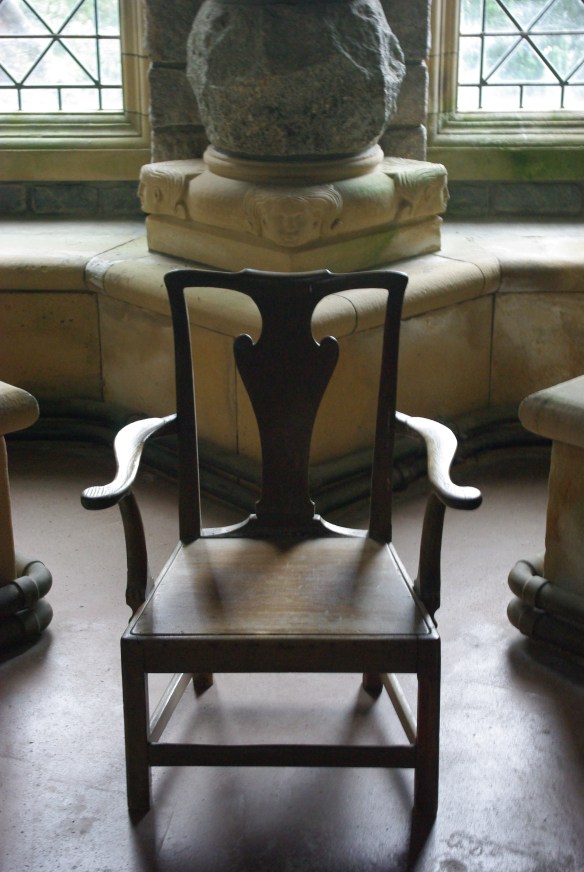
chair, symmetry, St Conan's Kirk, Loch Awe

My Uncle Napoleon, and Iranian culture…

I recently confessed to an attempt to find a deeper understanding of Islamic cultures through reading literature.

The books I read were wonderful, but very much from a western perspective. I needed to adventure a bit further- and given that this was around the edges of bits of leisure time, I needed it to be reasonably digestible.

This evening, I watched two programmes on BBC 4 about Iran. One of them was about this book

my uncle napoleon

This book (and this programme) deals with a different part of Iranian history- that we British people are very ignorant about- that is the occupation and manipulation of Iran as part of the power struggles first with Imperial Russia, and later as a way of ensuring the continued flow of oil to fuel our battleships. 4 separate invasions, and 100 years of political manipulation.

And we wonder why Iran today has no trust of western powers whatsoever?!

The second programme (also available on the i-player, here) follows a BBC foreign correspondent on a journey through his homeland- again Iran. It shows the beauty of the countryside, then richness of the culture, and the vibrant life of the people. It paints a picture of a country a million miles from the dark satanic oppressed place that we may have been led to understand. The film was almost certainly made under reporting restrictions, and does seem just a little too air brushed- almost like a tourist board film- but it is well worth watching.

And it reminded me that it was time I read some more Persian poetry- Rumi, Hafez and Saadi for example. 600 years of distilled beauty, spirituality and culture both alien, and yet so very familiar. The turning of seasons, and the preoccupations of love and and the approach of death…

The church and social economy…

community 1

As part of my job, I am currently leading one of the groups responsible for planning a redesign of mental health services. I am enjoying it so far- I like the creative process of developing new things.

The remit of my group is to look at how we develop mental health services in primary care and also to think about how services might help to prevent mental health problems- and contribute to the mental wellbeing of our society.

It is a huge subject, that requires connections across many parts of society- statutory services, housing providers, voluntary bodies, social networks etc etc. It does not take long to realised that mental wellbeing and mental health are very different issues. It is possible to have a severe mental illness, and yet still have good mental wellbeing, but poor mental wellbeing can easily lead to mental ill health. In fact, good health of any sort is simply not possible without goon mental wellbeing.

It is a subject close to my heart, as it resonates deeply with my faith.

I believe that the followers of Jesus are to be a source of blessing for our communities. Too often, we get into pointless condemnation or narrow defensiveness- the foolish idea that we need to ‘defend the faith’ against rising secularism and Godless sinfulness. But the call of Jesus is to show a better way- a way of love and service that transforms lives and communities, and wherever we see the flowering of these good things in society, then we are to savour them with salt, and illuminate them with light.

Because the alternative is grim.

Here is a quote from one of the documents that I have been re-reading for my group-

Across Scotland, the UK and European Union, stress, anxiety, depression,hopelessness, isolation, fear, insecurity and distrust are increasing. We witness daily the effect of this on the lives of individuals, families and whole communities.

Many people in Scotland find themselves isolated and vulnerable due to their mental health status, poverty, class, ethnicity, age, disability, gender, sexuality, homelessness and many other forms of exclusion. The resulting lowself esteem and feelings of being undervalued have serious effects for them
as individuals, for their families, their colleagues, the wider community andScotland.

The consequences of cycles of social exclusion for how people think and feel are complex:

Some people faced with chronic stress and disadvantage may retreat and stop participating. Their social networks reduce, their vulnerability increases, their incomes and security reduce and many spiral into cycles of anxiety, depression and other more severe mental health problems. This not only impacts on them as individuals but can damage relationships between family members, partners, parents,
children and siblings with a chain of negative results-

  • changes in life situations – having babies, getting old, losing a job, becoming disabled, getting ill or family separation – can result in people becoming isolated, vulnerable and excluded
  • others may get resentful and angry and act on these feelings in their personal and community relationships, through aggressive behaviour, violence, abuse, theft or vandalism
  • hopelessness and low expectations may mean some people do things which might be considered to be ‘risky’

Taken together, such experiences are damaging to wellbeing. People, families, groups and communities of interest do not feel involved, connected,safe, secure, caring, creative or active. These types of experiences also affect how communities function: communities can come to feel more and more
vulnerable and close ranks, displaying exclusive attitudes and behaviour; or become divided and disarmed by fear of ‘the other’; or find it hard to believe that it is possible to break the cycle and create a different future.

From the ‘Small change, big impact’ conference report, 2006.

It is possible to get all doom and gloomy when looking at this picture. The question is what can we do about this? How can we break the negative cycles that are at work on individuals and groups? How do we break down isolation and low confidence and self esteem? How do we do this in a way that supports, encourages and empowers, rather than just further labels people as responsible for their own failures?

The report digs into some community projects that have begun to do this, and identified some of the characteristics that appeared significant-

Even though the projects developed independently they articulated a shared sense of purpose: to bring about connectedness

  • With self – A sense of self and worth internally for the individual,
  • With others – A sense of belonging and worth in relation to family, communities of interest and the community
  • With the bigger picture – Creative engagement between individuals,the family, diverse communities of interest and the community that opens doors for a caring and creative society to flourish
  • Between communities of interest and individuals,
  • Spatially – Knowing it is ‘my place, I belong here’ so that people feel safe, involved and want to invest
  • Institutionally – We delivery agents participate too, it effects us also.

It is OUR agenda, our community, our Scotland. We are community too. We are participants with a specific role to facilitate processes that encourage and enhance social development across services to make it easier to respond effectively and holistically to a community as it develops and grows.

The report goes on to speak of the importance of the arts in this process too…

Does this sound familiar? That list of characteristics of groups that build communality, health and satisfaction- does it not sound like what CHURCH is supposed to be? Is it not possible that this is the role that church USED to fill within society?

No longer however. Perhaps we squandered the opportunity, or perhaps the world left us behind. But the challenge to us all- perhaps particularly those of us in church, is how we might again be a blessing to our communities- not so that they might fill our pews again (at least not as an end in itself,) but rather so that we might be change-agents of the Kingdom of God.

This perhaps requires a different set of skills traditionally valued by church- networking, hospitality, reconciliation, listening, neighbourlyness- providing opportunities for real, deep connections between people.

Perhaps it also demands of us that we become JOINERS with others, rather than just INVITERS to our own safe places.

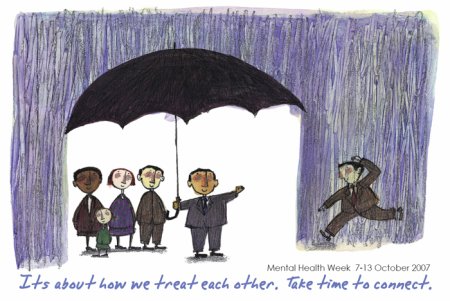
MentalHealthWeek1

Jonathan Miller on life, and psychiatry…

Jonathan Miller said this-

I hold all contemporary psychiatric approaches – all ‘mental health’ methods – as basically flawed because they search for solutions along medical-technical lines. But solutions forwhat? For life! But life is not a problem to be solved. Life is something to be lived, as intelligently, as competently, as well as we can, day in and day out. Life is something we must endure. There is no solution for it.

Miller J [Ed] Ch 15. Objections to Psychiatry: Dialogue with Thomas Szasz States of Mind:
Conversations with Psychological Investigators London: British Broadcasting Corporation 1983, p.290, Quoted in this really good article, ‘The mythical self, we make ourselves up as we speak’- here.

Amen Jonathan. Amen.

Bonhoeffer- was he wrong?

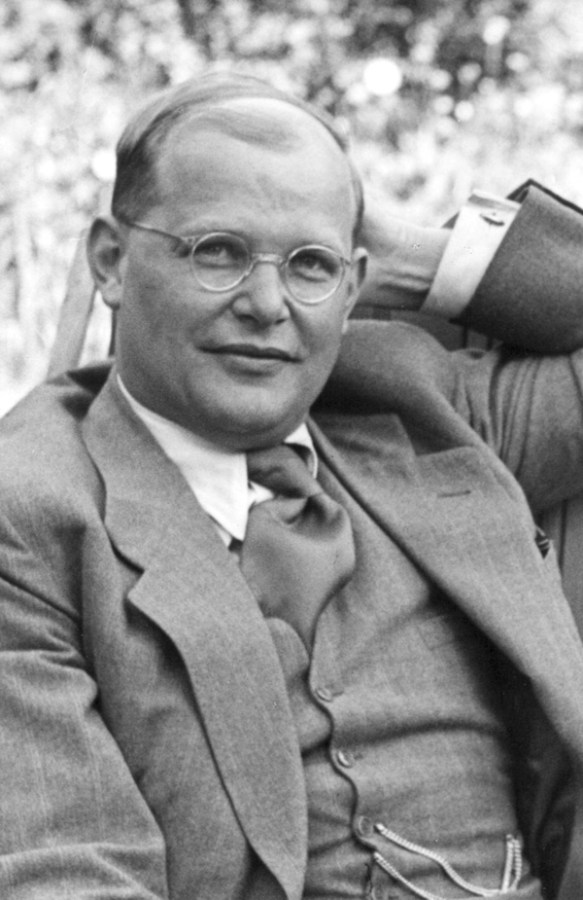
dietrich_bonhoeffer

Bonhoeffer is one of our Evangelical heroes.

The good German- an extraordinary man in extraordinary times. Whose incisive faith saw through the evil that had overcome his people like a cancer, and allowed him to stand alone- a candle in darkness, a voice in the wilderness.

I sort of knew this. But I have read very little of his writings.

Michaela is persevering with ‘Life together‘ although it is not an easy read- this is partly because of the style.

The surprise to most of us is that Bonhoeffer was executed not for passive peaceful resistance of Hitler’s regime, but rather for plotting with Canaris and von Stauffenberg to overcome Hitler with a Coup- which included the assassination of Hitler- the famous bomb plot.

The great pacifist theologian, who had visited Ghandi in the 1930s in order to understand non-violent resistance had turned to violence and political power games. He became a double agent.

Did the potential ends justify the means? It is scarcely possible to conceive of a regime that is more evil within our modern experience. What else could a good man do, but seek to overcome by any means possible? Christians fighting against Hitler have long seen this as a ‘just war‘. I think I might have agreed with them had I been a child of Bonhoeffers age.

But history has a way of allowing us time to consider, and weigh the weight of the matter- and for us, the Spirit of the thing, the theology of the thing- this becomes important.

Other Christians resisted. I visited a prison in Berlin years ago where dozens of pastors were hanged much earlier in the war than Bonhoeffer for criticising Hitler. Leaders like Karl Barth and Martin Niemoller formed the Confessing church in protest against the Nazi appropriation of the  Church as part of the State machinery.

What did Bonhoeffer acheive with his part in the plot against Hitler? Probably very little. The plot failed, and by that time the war had been raging for years, and millions of Jews, Gypsy’s, homosexuals and ‘Untermensch‘ had already died and been processed through industrial ovens in Eastern Europe. History records the plot as too little, too late.

Would peaceful protests have achieved more? It seems that death would have come to him either way.

Bonhoeffers feelings about his chosen path appear to have been mixed. He had no doubt that what he was doing was a moral choice that he may well need to answer for before God. He refused to allow prayers for him by the Confessing church whilst he was in prison, as he suggested prayer should be for Christians imprisoned as martyrs, not through acts of direct resistance such as his.

So- what choices are we followers of Jesus to make in the face of war and violence and oppression? His words seem clear enough. But his followers have always found the reality more complex. Jesus seemed to be more than willing to mix with Roman Soldiers, and Peter carried a sword at least once in his company.

For me, violence is something to be resisted in itself- particularly when it is perpetrated by one state on another. Particularly when Christians appear to support this violence and claim that God is on their side. The American/British appetite for war post 911 is a case in point. But Bonhoeffer- his times were very different.

Perhaps circumstances will always demand of us- choices. Extreme circumstances demand the more black and white ones. For the rest of us, we have theory, and theology. Bonhoeffer had enough of theology that was not anchored to practical activity in the service of the oppressed.

But I still wonder if he got it wrong…

There are a few films out about his life- usually American. Bonhoeffer seems to be able to be appropriated as a Saint by the conservatives and the liberals. There are a few clips of You Tube if you are interested-

Scotland, Prophecy and Jean Darnell…

Jean DarnallIn 1967, American evangelist Jean Darnell, whilst passing through the UK had a ‘prophetic vision’ about the future of faith in these Islands- particularly regarding Scotland. It was such a powerful image that she and her husband stayed in this country for the next 25 years.

I was born in 1967, but had heard of Jean Darnell as I grew up- she had connections to an Anglican community of people in the South of England who were greatly influential as to development of charismatic revival throughout the Anglican church. I always thought of her as a kind and wise person, steeped in the Holy Spirit.

I had not heard about the prophecy however until I moved to Scotland. Here, it is still talked about in hushed and awed tones. She has repeated and clarified her account on several occasions, and various versions can be found using a quick google search- for example this one which is on the Cross rhythms website. However, this is a summary of what she said-

Vision Of Revival In Great Britain

The British Isles were covered in mist (a green haze), and Jean Darnell saw lots of pinpoints of light piercing through. As she looked, they turned out to be fires breaking out all over the nation, from Scotland in the North, to Lands End in the South.

As these God-lit fires were joined together they burned brighter. As she continued to pray, she saw lightning and explosions of fire and then rivers of fire flowing from North to South; from Scotland, Ireland, and Wales into England and some of the streams of fires crossed the channel into Europe, whilst others stopped.

These fires were pockets of people who had been made intensely hungry for the word of God and for New Testament Christianity, those who read the book of Acts and wondered ‘where is this church?’

These people would come together to pray and extra meetings would have to be laid on to accommodate all the people. Groups would be formed, prayer groups, Bible study groups – some would meet in churches, others would be in homes: some converted, others unconverted who were searching and seeking.

Two Moves Of God

Jean Darnall asked the Lord about the vision and had the distinct impression that there would be two moves of God.

1. Renewal In The Church.

The first would be the renewal of Christian faith and fullness of the Holy Spirit within the church.

2. National Awakening And World Vision.

This renewal of life in the church would spread outside resulting in a public awakening. The second part of the vision was the lightning striking around the nation. This move of God would be a national spiritual awakening, which would move into every level of the nation’s life; on the campuses, universities, colleges, schools etc., into the media and in the government.

There would be so many conversions that it would actually change the character of the nation of Britain and determine the future move of God in Europe. Jean continued that there would not be a part of the nation’s life that will not feel the impact of the spiritual awakening when God releases it to the country.

Great Preachers

The Lord told Jean Darnall that He would also raise up highly anointed preachers who would move in signs and wonders. These people would be a gift to Britain.

Communicators Reaching Britain And Europe

The word ‘communicators’ was strongly laid upon Jean’s heart and was a word that was not trendy in those days. [The internet was not be birthed until nearly three decades later in 1994 and Christian television first came to Britain via satellite in October 1995].

Jean explained that as the rivers of fire moved, it would produce powerfully gifted communicators who would address the nation through the media, (Through the arts, journalism, the radio and television). Actors, singers, teachers and powerful communicators (who have an anointing to work through the media) will be the new warriors that the Lord is raising up for His army [the younger generation] to reach the heart of the people on the European Continent. People with a special anointing will be sent out from these islands (of Britain) to other nations.

These communicators will be excellent in all that they do and will go into Europe and meet those of like quality (in training and abilities) and together they will work to release God’s word speedily into Europe. This will result in another wave of a spiritual awakening into Europe. Also, there would be communicators in government and within the educational system and wherever people are speaking [up] for others.

Jean Darnell visited the UK again this year- here is her speaking about Scotland again-

So what are we to make of this? Some of you will not even be interested in asking the question. If you do not have a Christian faith, you may think that all this stuff is just a little mad. Many Christians will agree with you. Many others (like me) have a more complicated relationship with the ideas and hopes contained in this prophecy.

As I mentioned above, I grew up in a church greatly affected by the wonders and wackyness of the Anglican Charismatic revival. I have since spent a lot of time around charismatic churches. I have blogged before about this experience- here for example. As a result of my experiences, I remain (in the words of Pete Rollins) a devout, faithful skeptic. I have seen much that repels me, but also much that was beautiful.

So here are a few thoughts/possibilities that occur to me as I look again at this prophecy…

  1. Jean Darnell was just wrong. Nothing of what she suggests would happen has happened. They used to stone false prophets in the OT days. Far from being a conduit of a massive move of God, the church in the UK is in terminal decline…
  2. Jean Darnell was speaking encouragement into an embryonic move of God. The late 60’s and 70’s did indeed see a charismatic revival- fires did spread through the church, and the ripples go on today. There are communicators, and preachers who still connect with wider Europe…
  3. Jean Darnell was speaking out of a particular context and understanding of evangelism- which longed and hoped for REVIVAL- transformative, all encompassing Holy Spirit saturated revival. No other move of God makes sense, and as such, the prophecy comes from a wish-fulfilling impulse. Revivals like this have happened here before (Wales, Outer Hebrides for example) and continue to happen in other parts of the world (Korea, parts of Africa.) However the outcome and aftermath of these outpourings is often very mixed. I no longer think that attempting to conjour and cajole God into reviving us should be our prime focus. But then again…
  4. Scotland. The central role played by Scotland in Jean’s prophecy seems to imply that what ever is to happen, begins here. I have looked in hope, but see no sign of fires in the North. There are enclaves of fervency and fundamentalism, but there is so much sectarian division and hard heartedness too… I do not see the fires starting inside the churches at the moment, let alone outside.
  5. Because of the decline in church, certain embattled remnants hold on to this prophecy with both hands. We NEED it to be true- because the alternative is an end to all that is held dear. However there is such danger in this- we become people desperate for heavenly Holy Spirit intervention, and forget the call to be Agents of the Kingdom here and now, rather than in the future. The shift in thinking that this requires for the people of faith in Scotland might itself bring about the fires in the north envisioned!
  6. How we understand prophecy seems to be crucial. We tend to think of prophecy as a prediction for the future that will be tested by time. In this instance, the jury is out, and perhaps about to rule against Jean’s prophecy. However, there is another way to understand prophetic utterances- as something that speaks truth into NOW- so many of the OT prophets were encouraging and warning their peers and rulers. Perhaps in this context, Jean was inspiring a generation, and we should not worry about carrying forward this vision like some kind of vision for the future.
  7. Let us just leave it to God.

‘Road to recovery’, and ‘spiritual capital’….

BEWARE- this is quite a long post, but please bear with me dear readers, as I think it deals with rather important stuff… but then I would say that, wouldn’t I?
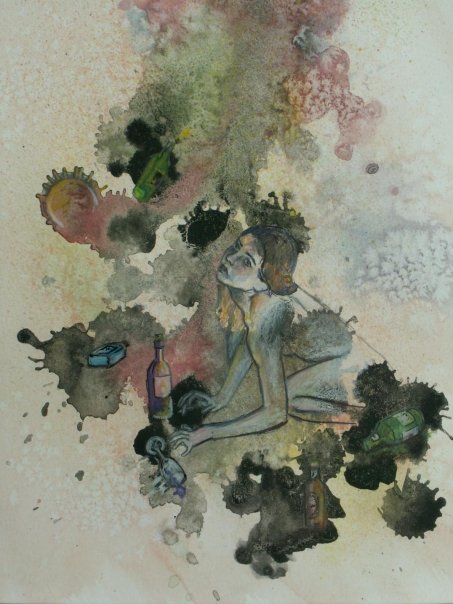
recovery

Powerful image from here.

I love it when you come across something unexpected that reeks of the Kingdom of God…

I spent all day yesterday at a development day and Annual General Meeting for the Cowal Council on Alcohol and Drugs. I am one of the volunteer directors of this company, who provide counselling and support for people with addictions in this area. I am proud to be part of the organisation, which like all such voluntary sector small companies has had some challenging times.

At present, I think it is a good healthy place to work, and brings genuine help to people who suffer from addiction to drugs and alcohol in our area. Our area (the west of Scotland) has seen too many lives cut short and families devastated by addiction. But there are many people who we are not able to help- and the purpose of yesterday was to try to consider how we might set our agenda for next year to do better.

I was part of a discussion yesterday about the concept of ‘recovery’.

Recovery is a word that I am very familiar with from the point of view of mental health services- in this context, it is life giving and hope enhancing. Check out the Rethink website, or the Scottish Recovery Network site. I seriously think that any Christians interested in seeing the words of of Isaiah 61 made real in our time should become familiar with what is happening in the area of Recovery- a lot of the sites are full of personal stories that make you weep. Chains are breaking, and we people of faith ought to celebrate and support as much as we can.

Until recently I was not aware of how much the concepts of recovery are starting to cross over into the the field of addiction.

This is an excerpt from a recent Scottish Government document called ‘The road to recovery‘, which specifically addresses addiction to drugs-

81. What do we mean by recovery? We mean a process through which an individual is enabled to move on from their problem drug use, towards a drug-free life as an active and contributing member of society. Furthermore, it incorporates the principle that recovery is most effective when service users’ needs and aspirations are placed at the centre of their care and treatment. In short, an aspirational, person-centred process.

82. In practice, recovery will mean different things at different times to each individual person with problem drug use. Above all, people aspiring to milestones in recovery must have the confidence that they can achieve their personal goals. For an individual, ‘the road to recovery’ might mean developing the skills to prevent relapse into further illegal drug taking, rebuilding broken relationships or forging new ones, actively engaging in meaningful activities and taking steps to build a home and provide for themselves and their families. Milestones could be as simple as gaining weight, re-establishing relationships with friends, or building self-esteem. What is key is that recovery is sustained.

83. Recovery as an achievable goal is a concept pioneered in recent years with great success in the field of mental health. The Scottish Recovery Network has been raising awareness of the fact that people can and do recover from even the most serious and long-term mental ill-health. 32

84. The strength of the recovery principle is that it can bring about a shift in thinking – a change in attitude both by service providers and by the individual with the drug problem. There is no right or wrong way to recover. Recovery is about helping an individual achieve their full potential – with the ultimate goal being what is important to the individual, rather than the means by which it is achieved.

‘Recovery’ is essentially a collection of grass roots movements growing out dissatisfaction by users of services who are sick of being ‘done to‘ by professionals, and are looking to break free- not only from the specific difficulties affecting their lives, but also from the industry and economy generated by medical, social and political attempt to ‘cure’ them. The fact that recovery is now forming a part of government documents is both a triumph and a threat. It is a threat because there is a real danger that the word becomes just a word. It stops to carry any passion, or any hope…

But back to our discussion yesterday.

One of the things evident to anyone seeking to discuss the possibility of recovery with people who have been forced beyond the edges of society by addiction, mental illness or stigma and discrimination, is that there can be no recovery without mental wellbeing, and there can be no mental wellbeing without real opportunities to build friendships, find meaningful activities and participate in our towns and communities as both recipients and a contributors.

I have blogged several times about the idea of Kanyini, and how the loss of identity, purpose and spirituality amongst Aboriginal people has led to a loss of their very selves. Anyone who has spent any time amongst people with addictions (who have may also have lost everything) will resonate with Kanyini. Bob Randall speaks movingly of how his own people have fallen into addiction, isolation and mental illness…

There was a discussion yesterday about how we might be able to encourage these things in our organisation, and more importantly, our community-

  1. Recovery capital– how do we give power and control back to people who use our services, and provide change opportunities, not ‘slots for treatment’?
  2. Social capital– how do people find meaningful social connections, from a position where trust and opportunities have all but disappeared?
  3. Spiritual capital- this gave some pause for thought, so more on this one below!

What is ‘Spiritual capital’? I suppose this rather depends on your definition of spirituality- but lets not get into that just now. In this context, I think Spiritual capital refers to MEANING. The meaning on life, the meaning of love, the meaning of small stuff, and the biggest stuff.

Most of us do not need to dig into this too much- we have no time, and the scaffolding around our lives- jobs, marriages, mortgages, etc- means that we are insulated from the biggest questions. But people who have none of this scaffolding and have reached the end of all their coping, even the bottom of the bottle- these people have a whole different place to look at spirituality from.

Interestingly, the discussion in one of the other groups seemed to get into RELIGION. There are some Christian organisations involved in addictions work. Some of them use high octane charismatic deliverance kind of stuff- which to be honest, I kind of find slightly disturbing. But then again, if it is meaningful and helpful to people involved, great. My fear is that one addiction is replaced by another on, called GOD- and this can indeed be a dangerous addiction for some…

But I wonder if Spiritual capital can be seen more commonly in encouraging people to consider things relating to the heart of who we are, rather than the material stuff that we surround ourselves with…

And in this, I think people who have suffered addiction, or experienced mental health problems, have much to teach the rest of us…

As for me, it started me thinking about a writing project, and I had a great conversation about the possibility of a ‘recovery cafe’ with my mate Ali…

BBC iPlayer – The Scots: Natural Born Sinners

Just watched this great little film on the i-player- all about the relationship between Calvinism and the Scottish psyche.

It is played for laughs, but had some great theology thrown in there too.

Enjoy it here (for the next few days at least.)

Vodpod videos no longer available.

Measuring the well being of society…

Interesting discussion at the end of the ‘T0day Programme’ on Radio 4 this morning about how we might measure the progress and value added to members of society. You can listen to the clip here.

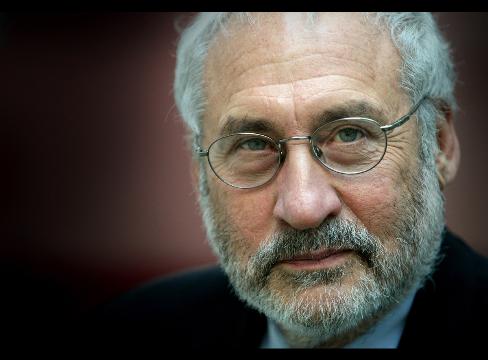
It describes how Nobel prize winning economist Joseph Stiglitz has been asked to report to French President Sarkozy- and has pointed in the direction of sustainability and well being (happiness.)

joseph stiglitz

In the wake of the collapse of economic systems around the world, this is a common theme- old macro economic measures like Gross Domestic Product seem to have let us down. Measuring our prosperity and ability to acquire goods and services does not give us a reliable way to measure the worth of society- or the degree to which those of us within it live satisfied and fulfilled lives.

I think that we people of faith are called to be fully aware that this life we are given is precious, and to celebrate all that is good and beautiful within it. We Christians live as disciples of Jesus, whose had a whole different set of priorities…

We live in a time when something vital about the human experience has been somehow distanced from us by an empire whose culture (and very economic survival) is driven by a chasing after STUFF- ever more and more stuff to fill in the void.

We are none of us immune form the powers of the empire we live within. I just bought a new camera. It is a posh SLR that will take images that are much sharper, much richer. But I have a camera already that takes a lot of the photos on this blog. Cameras are TOOLS, and to have a better tool is no crime. But will it make me happier- or life deeper and more meaningful? Of course not. But the empire- this would try to convince me otherwise- and for a while, I even believe that it will too.

The radio 4 piece makes a point about happiness- which has been a theme on this blog before (See here for example.) My day job as a mental health manager brings me constantly into contact with issues of happiness and mental wellbeing. We are in the middle of planning a redesigned mental health service for Argyll, and one of the key government documents we relate to is this one- ‘Towards a mentally flourishing Scotland.‘ It makes interesting reading from a spiritual point of view- digging into how we might create opportunities for people to find satisfaction and build community as a prescription for health- both mental and physical.

I am just reading this book- Rob Bell’s ‘Jesus wants to save Christians.’

jesus wants to save christians

The book is a journey through the Bible, retelling the story of our human journey. Bell talks about the earliest stories from Genesis- the first family of Adam, Eve and their children Cain and Abel. And of how Cain and Abel argue over land and the acquisition of STUFF- marking the descent of humanity from simple subsistence towards more complex economic systems based around the possession of land, and the means to produce more than what is immediately needed in order to sell and barter for other goods.

You could say that this was the rise of humanity, and also potentially the seed of our destruction.

We moved from dependence and vulnerability- to independence and risk aversion.

We moved from community- to individualism and self reliance.

We moved from the need to follow the seasons and live within the natural environment- to the need for central heating, air conditioning, and ever more energy to sustain it.

We moved from a nomadic existence – to being anchored below the weight of what we own.

We moved from a need for God- to the need to manage God to make him fit the lives we now follow.

Could this be the prescription for fulfillment and happiness?

Dependence.

Community.

Vulnerability.

Connection to the earth that made us.

Living simply as pilgrims.

Living spiritually, in search of God.

What might society be like then?