Reclaiming the spirituality of serving the other…

Another post about kindness…

I have written before about this issue– suggesting that I thought that kindness is a good measure of spiritual maturity. We talked a little around this the other night with my Aoradh chums.

Of course, being kind is not a universal sign of spiritual, or emotional health. The drive to please other people can be a destructive one. However, I still maintain that Christian spirituality that lacks kindness as one of its visible manifestations is likely also to be missing the point.

Which of course- is love.

The kind of love that is patient, kind and does not envy, boast, act proudly or haughtily. The sort of love that is not rude, or self-seeking, is not easily angered, and keeps no record of wrongs. A love that does not delight in seeing evil in others but makes partnerships of truth. A protective, trusting, ever-hopeful kind of love that just does not give up. (1 Corinthians 13.)

The idealism of this kind of love defeats me at times- but it is an idealism that I will not let go.

So, if we Christians are called to be a blessing on the world around us because of the distinctiveness of our loving,  the way that this will be revealed is in this simple thing called kindness– expressed between ourselves in community, but also looking outwards into the places where we live work and play.

Here are links to a couple of resources that dig into this issue.

Firstly- Generous. This is an opportunity for Christians to sign up to acts of generosity- for the sake of the environment, and for the sake of others around us. There are whole categories of suggested actions that you can consider putting time/energy towards.

I came across Off The Map recently- a group trying to encourage us to reimagine evangelism- together they designed an approach to evangelism that “rescued it out of program prison, made it doable for ordinary Christians and restored it back to the spiritual practice Jesus modeled in his interactions with Outsiders.” They called it Doable Evangelism. This led to a book called Evangelism Without Additives and an organization called Doable Evangelism.

Here is some thing that they produced that resonated with me for its simplicity- and it’s kindness.

Vodpod videos no longer available.

more about “The spiritual discipline of serving“, posted with vodpod

Rollins on leadership…

Alistair pointed me at this clip.

A bit more of the familiar Rollins technique of taking a concept and saying it’s only value is in rejecting it.

But in this case, I think I agree with most of what he says.

There are still a lot of BUTS though. The absence of Leadership leaves a vacuum that requires- leadership. (Note the subtle lack of a capital letter!) It is not whether we have leaders that exercises my thoughts at the moment, but rather what kind, and how they lead- particularly in the way of church.

Rainbows and the promise of healing…

IMGP6294

We have had a full on week- lots of great social stuff- Audrey and Alistair’s birthdays, a bonfire night celebration, an Aoradh planning meeting- as well as the usual family/housegroup/work business.

This morning Emily has some kind of lurgy, and so I am waiting for Michaela to bring some work home in order to allow me to go and do mine.

Which gives me time to reflect a little on the week that was, and the week to come.

As ever, I find my mind drawn to the stuff of friendship and relationships, and how this interacts with the life and call of faith.

Aoradh is at an interesting point in our development. We have been going for a while, and have had some real highlights that we are all proud of. Of course in any such communal enterprise, there is a rich combination of friendship, creativity, energy- along with the usual minor frustrations and tensions that erupt from time to time.

We continue to function with no ‘leader’- and at present, this feels slightly less comfortable, as we are in a process of deliberately reforming and rethinking the what?/whom?/why? questions. There has been a little whiff of storming in the forming, and I think there is likely to be more to come.

One of the tensions has been the issue of COMMUNITY. To me, this is central to everything we do as Christians. To others it is something that requires time- and as such is a pleasant addition to the real business and tasks that we engage in. For others, ‘community’ seems too tame, and the words that fit better are more subversive ones- band of gorilla/pirate/counter-cultural Christians. I think we can be all of these things, but we need to learn to respect one another’s different needs, and affirm one another by constantly re-learning the Jesus way of love.

Written like this- it sounds easy doesn’t it? But of course, this is the harder road to travel. It is a discipline that we learn, and practice imperfectly. Some have greater gifting, but for we followers of Jesus, it is not optional- but commanded.

One of the issues that we spoke about the other day is our differing needs for overt communication of respect/affirmation/assurance of value. We all need this at some level of course, but so much of it depends where we start from- our degree of herited vulnerability perhaps.

One of the interesting issues for anyone who spends time amongst artistic folk, is that many of us exhibit a high level of such vulnerability. The resultant introspection and the drive for artistic expression are sometimes related of course.

There is a beautiful promise on life offered by encounters with the Living God. This promise is for the hope of transformation. Those of us who carry wounds- and lets face it, most of us do- our prayer is for them to be taken away- like some kind of cosmic conjuring trick.

But this has never been my experience. Rather than a magic wand being waved, something altogether more hopeful is possible, that I can only describe in this way- the polarity of the thing subtly changes- from negative, to positive.

What was once a burden can become a place of blessing for others.

Kind of like the promise of the the rainbow- that is after all, only rain, mixed up with light to arc above the moment in something transcendent.

In this way, brokenness leading to social vulnerability (mixed up with light) can become deep sensitivity to others, or wonderful artistic expression.

Or obsessional task centredness (mixed up with light) can become a willingness to help others towards structure and organisation.

Or the instincts that set us on the cynical outside looking in (mixed up with light) can become a way of seeing things in unique and insightful ways.

But how is this promise made possible?

My conviction remains that the hope is to be found in community- and the subordination of all things to a higher principle called- LOVE. This is the Jesus blueprint.

“I’ve told you these things for a purpose: that my joy might be your joy, and your joy wholly mature. This is my command: Love one another the way I loved you. This is the very best way to love. Put your life on the line for your friends. You are my friends when you do the things I command you. I’m no longer calling you servants because servants don’t understand what their master is thinking and planning. No, I’ve named you friends because I’ve let you in on everything I’ve heard from the Father.
John 15:10-12

Remembrance Sunday- and our capacity to destroy…

DSCF3751

Today is Remembrance Sunday.

Old men will cry

Women will open up old cupboards of loss and let the sepia light leak out a little

Young kids will be distracted by brass bands for a while then fidget through silence that seems much longer than a minute

Politicians will assume a pose of media-appropriate sombre dignity

Most of us will feel a familiar ambivalence-

War is terrible, but we continue to make war. Peace is a blessing, but we are stirred by stories of gallantry and self sacrifice that only seem possible in the context of brutality and slaughter.

Our inherited memories of the last war are of a nation forged together in terrible adversity in heroic struggle against the rise of pure evil. The fact that we triumphed at terrible cost is for ever something that makes us proud. Those that died so that we might have escaped the fate of so many other countries deserve our deep respect.

But we also know that the story of war is rarely one of good and evil. It is about evil and still more evil.

And evil has a history- it has the big scale history of previous armistice and forced accommodation and compromise. The sort of history that we can read about in books- Empires rising and falling.

But there is also small history that tells the story of how we as humans seem to have such a propensity to breed hate for one another.

How we look at difference and see danger. How we segregate so easily into ‘insiders’ and ‘outsiders’. How we demonise those people whose prominence threatens our own.

Most of us will have little influence on big histories- and my generation have been blessed to see few of ours names on war memorials. But if we are honest, those same engines for hate and war work within is all.

So this Remembrance Day, let us remember those who fought and died.

But let us also stand in examination of our own failures to follow the way of peace.

DSCF3749

A time to hate

There is a time for all things under heaven…

One summer evening I lay on my back as the light leached from the passing day
And watched the stars slowly flicker into the frame of the darkening sky
At first one here, another there
Then all of a sudden the sky was infinite
Full of fragile tender points of ancient light
Some of which started its journey towards us before there was an ‘us’
And I wonder
Is there someone up there
Raising his tentacles to the night sky
And using one of his brains
To wonder about me?

And should this unseen and oddly shaped brother across the huge expanses
Seek contact
What would he make of us?

I heard an astronomer speak once about the possibility of life elsewhere
In this beautiful ever expanding universe
He had come to believe that intelligent life will always
Find ever more ingenious ways
To destroy itself

And I fear the truth of this
That somewhere in the messy beauty of humanity
We nurture an evil seed –
Grow it in an industrial compost of scientific creativity
Water it with greed and avarice
And hot house it in a mad competition for the first fruits
Lest our neighbours get to market first
And once we work up production
There is no going back
No squeezing back the genie into the oil can
There is only the need for bigger, better

And the defending and defeating
And the ranging of rockets
Exploit whoever
Denude wherever
And if anyone should get in the way
Dehumanise
Overcome
Or destroy
Set up barb wire borders
Teach one another
To hate

So for the sake of green men
And Scottish men
May we yet stand before the eternal night
And decide that truth and beauty and grace will be our legacy
In this fragile passing place that God gave us

May we decide that now is not
The time
To hate

From ‘Listing’- here.

The Siege of Münster and the Anabaptists, via Melvin Bragg…

The cages hanging from a church in munster which held the corpses of the anabaptist leaders

Another great programme on Radio 4 the other day- available as a podcast for your listening pleasure here.

This one digs into the story of the Anabaptist attempt to create a New Jerusalem in the city of Munster during troubled times in 1534.

I had not heard about this tragic part of church history before- and am grateful to old Melvin for waving it at me through the ether. It is a case study from the beginnings of the protestant experiment- in the early days of the old reformation. Much of what we children of this reformation have come to accept as the bedrocks of faith can be seen in the various sects and streams of the Anabaptists. They were the pioneers.

Indeed if you will forgive me for being partisan for a moment- they were the radical activists of the ’emerging church’ of their day.

But as this programme points out, they were a disparate bunch, who regarded persecution as signs of God’s election- so justifying some pretty odd wacky ideas too. So alongside adult Baptism, the leading of the Holy Spirit, the authority of Scripture (now widely available of course thanks to the technological revolution of the printing press) there were leaders who claimed to be the Godly ordained successors of David, or Gideon, and to claim Biblical justification for polygamy.

Oh- and the Anababtists of Munster thought that the world was about to end- and in such a context, murder, despotism and all sorts of evil became legitimate means to an end…

As ever, we grasp some things of the Kingdom of God, whilst confusing and even perverting others.

Perhaps above all, this is case study of what happens when Jesus (or at least his most fervent followers) and politics are thrown together in troubled and changing times.

Add in a dose of charisma, a dollop of religious zealotry, and the result is bloodshed and destruction.

I think one of the biggest lessons we children of a new unfolding reformation need to learn is that Christians are called to lay down power in the name of love and service.

Or the funeral fires of Munster will have burned for nothing.

TransFORM- missional community formation…

Look past the impossibly hip language, and plethora of piercings friends, as this stuff could spell the future of church- particularly this side of the Atlantic.

Check out what is all about here.

Vodpod videos no longer available.

more about “TransFORM- missional community format…“, posted with vodpod


Night comes soon…

The dark nights are always a surprise when the clocks change from BST to GMT- it was already dark when I was home from work at 5.15.

Winter feels that step closer.

Darkness is rising.

So on this All Saints Day- may some fractals of light make their home in your soul.

For the winter is long

But also

Beautiful.

the clyde, november, nightime, western ferries, dunoon

Conservapedia and the Religious Right…

american religion

Now I do not want to be offensive to Americans, but for most Christians this side of the Atlantic, the whole mixture of politics and religion over there has long been baffling.

We do not understand how for huge parts of middle America, faith,culture, patriotism and culture have become so inseparable. This is so far removed from the role played by faith in the UK that we might be describing a different planet.

What we do hear about over here are the extremes- and they are usually right wing extremes. Televangelists, and those who use a Bible to beat down anything Black/homosexual/feminist/communist/Arab and perhaps above all, this word Liberal.

For us, you see, the word Liberal is mostly a good word- meaning generous, open and forgiving. If applied to politics, it means a rather irrelevant middle-of-the-road political party that is neither one thing nor the other.

There was an interesting article in the Guardian the other day suggesting that the Christian left wing is on the rise in America. Power to them I say, but it remains to be seen whether the left wingers will produce anything as gloriously mad as their Christian brethren on the right.

I spent some time a few years ago amongst some really lovely folk in Maryland who were Southern Baptists. I had been invited over to lead some worship and do some workshops and went in some trepidation, fearing that we had little in common. However I was made ludicrously welcome, and came to have a lot of respect for Conservative Christianity, despite my totally different perspective and convictions.

What I was most shocked by was how things that I thought of as universally bad and against the Kingdom of God- for example rampant free market economics- could be viewed seen as right and proper, and the only option for a Christian democracy.

I came across Conservapedia today- which aims to be a Conservative religious alternative to Wikipedia. It is well worth checking out for those of us who live this side of the Atlantic and find it difficult to understand the political dimension of American religion, and its influence on the world view of half of the most powerful nation in the world.

Despite the fact that ‘The Free World’ has a black Liberal President, I think we need to be aware of this engine for thought in the US- not necessarily to challenge it and attack, but certainly to understand it better.

For example, I notice that they are touting something called the Conservative Bible Poject which is an attempt to produce a translation of the Bible that avoids ‘liberal bias’ (presumably by ensuring Conservative bias.) They have 10 rule that they are applying to the task-

  1. Framework against Liberal Bias: providing a strong framework that enables a thought-for-thought translation without corruption by liberal bias
  2. Not Emasculated: avoiding unisex, “gender inclusive” language, and other feminist distortions; preserve many references to the unborn child (the NIV deletes these)
  3. Not Dumbed Down: not dumbing down the reading level, or diluting the intellectual force and logic of Christianity; the NIV is written at only the 7th grade level[3]
  4. Utilize Powerful Conservative Terms: using powerful new conservative terms to capture better the original intent;[4] Defective translations use the word “comrade” three times as often as “volunteer”; similarly, updating words that have a change in meaning, such as “word”, “peace”, and “miracle”.
  5. Combat Harmful Addiction: combating addiction[5] by using modern terms for it, such as “gamble” rather than “cast lots”;[6] using modern political terms, such as “register” rather than “enroll” for the census
  6. Accept the Logic of Hell: applying logic with its full force and effect, as in not denying or downplaying the very real existence of Hell or the Devil.
  7. Express Free Market Parables; explaining the numerous economic parables with their full free-market meaning
  8. Exclude Later-Inserted Inauthentic Passages: excluding the interpolated passages that liberals commonly put their own spin on, such as the adulteress story
  9. Credit Open-Mindedness of Disciples: crediting open-mindedness, often found in youngsters like the eyewitnesses Mark and John, the authors of two of the Gospels
  10. Prefer Conciseness over Liberal Wordiness: preferring conciseness to the liberal style of high word-to-substance ratio; avoid compound negatives and unnecessary ambiguities; prefer concise, consistent use of the word “Lord” rather than “Jehovah” or “Yahweh” or “Lord God.”
Check it out- it’s an education…

Bible Sunday…

CSL047

Today is ‘Bible Sunday‘- a celebration co-ordinated by the Bible Society, with the title ‘Living in the certainty of God’s Word’.

We are pointed in the direction of that wonderful passage in Isaiah 55– which begins ‘Come all who are thirsty…

I very much agree that the Bible is something to celebrate, so I have been reading some of the information about Bible Sunday. However, I find myself in a familiar uncomfortable place. I have posted before about some of these issues- here and here for example.

Some of it might relate to the language used in this celebration- the assumptions and presumptions inherent. The very title- ‘Living in the certainty of God’s word’- what this means for many is a closing down of debate, a final understanding of Truth– the Bible says it, I believe it, end of story. We are encouraged to approach the Bible as we would a mathematical formula- to engage with the different elements, order them correctly and so arrive at the only logical reasonable outcome.

But I have become increasingly aware that in doing this, we diminish the words. Indeed, we are in danger of recreating God in our own image.

Another image I have used before is this one
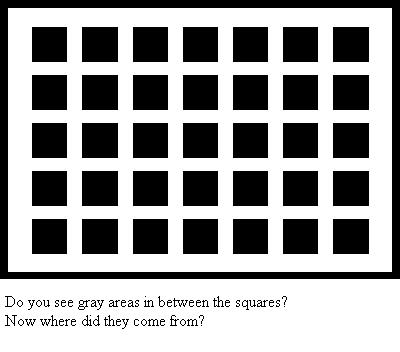
gray areas

The Bible is full of truth, wisdom, poetry, history, prophecy and mystery. We humans are logical orderly creatures, who are made to look for patterns. However, we look through at things through a perspective formed by presumptions- it is much easier that way, and it is very hard (if not impossible) to approach any issue afresh without the influence of time and place and heritage. Most of the time this stands us in very good stead. It allows us to be what we are. It allows us to build logical portable and replicatable blocks of truth. It allows us to find commonality and build Church.

But then there are those elusive dots.

We can try to ignore them, but they keep popping up- like those passages in the Bible that just do not fit very well… Or others who have understood a passage in a different way, and God seems to be blessing them. Or the realisation that what we have regarded as fixed and absolute, is suddenly- shifting…

We can regard them as irrelevant and but then they still irritate. Or we can outlaw them, suggest that they are heretical distractions- but then we find that they are increasingly difficult to ignore.

But my humble experience of the Bible suggests that they will always be there. Because the Word of God can not be contained in a book. Neither can God be reduced to a formula. God will simply not be contained.

Does this diminish the Bible for Christians? Perhaps for some, it does. For these folk, the theological blocks hewn from the huge quarry of Scripture are so rigid, that to suggest a different perspective is to bring the whole edifice crashing down. In this, we are in danger of worshiping an idol of our own construction.

But for many others, the Bible is a cherished gift- one that shines light, but also contains many shadows cast by our lack of understanding, and the assumptions made by previous generations.

So I am going to celebrate Bible Sunday by reading the passage from Isaiah 55, and reminding myself that this wonderful poetry points us not at the words, but at the word giver.

Isaiah 55

1 “Come, all you who are thirsty,
come to the waters;
and you who have no money,
come, buy and eat!
Come, buy wine and milk
without money and without cost.

2 Why spend money on what is not bread,
and your labor on what does not satisfy?
Listen, listen to me, and eat what is good,
and your soul will delight in the richest of fare.

6 Seek the LORD while he may be found;
call on him while he is near.

7 Let the wicked forsake his way
and the evil man his thoughts.
Let him turn to the LORD, and he will have mercy on him,
and to our God, for he will freely pardon.

8 “For my thoughts are not your thoughts,
neither are your ways my ways,”
declares the LORD.

9 “As the heavens are higher than the earth,
so are my ways higher than your ways
and my thoughts than your thoughts.

10 As the rain and the snow
come down from heaven,
and do not return to it
without watering the earth
and making it bud and flourish,
so that it yields seed for the sower and bread for the eater,

11 so is my word that goes out from my mouth:
It will not return to me empty,
but will accomplish what I desire
and achieve the purpose for which I sent it.

12 You will go out in joy
and be led forth in peace;
the mountains and hills
will burst into song before you,
and all the trees of the field
will clap their hands.

13 Instead of the thornbush will grow the pine tree,
and instead of briers the myrtle will grow.
This will be for the LORD’s renown,
for an everlasting sign,
which will not be destroyed.”

Persian poetry 1- Sanai…

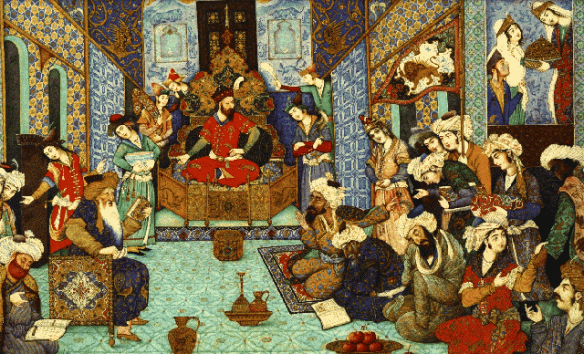
The court of Sultan Mahmud of Ghazna

I have been reading some Persian poetry.

My reason for doing this was simply because I knew nothing about Persian poetry- and in these times when the Western world is increasingly at war with most of the Eastern world, it seemed important to understand a little more the rich cultural subsoil that Middle Eastern Islamic civilisations grew within.

I post these bits and pieces like bit of a beautiful mosaic found in a river bed. I do not understand the whole picture- and never will, but I am starting to appreciate it some of its quality.

Beauty, humanity, truth, humour, a search for meaning and a longing for God.

And to encounter the culture through poetry seems to me right somehow. I suppose this is because I write poetry, but also I think this is because these poems are still alive. They have none of the dust of history.

The first poet I want to quote is Sanai.

We know little about him. He died around 1150, and was a subject of Bahramshah, one of the rulers of the Ghaznavids– whose empire covered much of the middle East- and was centred around Garzna, in what is now Afghanistan. He is thought to have been a court poet, who became dissatisfied with the shallow life of court and left to follow Hajj to Mecca.

So here are three poems of Sanai. Let them rest on you for a while-

Streaming (excerpt)

When the path ignites the soul,

there is no remaining in place

The foot touches the ground,

but not for long

The way where love tells its secret

Stays always in motion

And there is no you there, and no reason

The rider urges his horse to gallop

and so doing, throws himself

under the flying hooves

In love-unity there’s no old or new

Everything is nothing

God alone is

The puzzle

Someone who keeps aloof from suffering

is not a lover. I choose your love

above all else. As for wealth

if that comes, or goes, so be it.

Wealth and love inhabit seperate worlds.

But as long as you live here inside me

I can not say that I am suffering.

The time needed

Years are needed before the sun working on

a Yemini rock can make a bloodstone

Months must pass before cotton seed

can provide a seamless shroud

Days go by before a handful of wool

Becomes a Hater rope

Decades it takes a child

To change into a poet

And civilisations fall and are ploughed under

To grow a garden on the ruins

The true mystic