God’s great big hoover, revisited (with a bit of help from Tom Wright.)

I posted earlier about my memories of growing up as a young Christian in the shadow of apocalyptic theologising about the ‘end times’, and in particular the fearful spectacle of a rapture, which a friend of mine (Janet) likened to God hoovering up his chosen ones in a great spring cleaning exercise. The earlier post is here.

I heard recently that there was a new rapture film, based on the hugely popular Tim la Haye ‘Left behind’ series. I have not seen it, so do not know if it is any good. I wonder if it has terrified a new generation of Christian kids as the earlier films in this genre (mentioned in my earlier post) did me?

This is the new film;

lbtm

The lovely theological term used to describe ones view of the future is eschatology. My friend Ali always cackles that the word is just too much like scatology– perhaps in the case of films like this, he may be very close to the truth!

But what are we heading for?

Here’s a bit of Bishop NT Wright on the same subject;

Religious fundamentalism and the hope of peace…

My friend and former neighour Terry sent me a link to this;

This seems to be a move to bring together different religion around a central universal higher law of compassion. Here is a quote from the Charter for compassion site;

The Charter for Compassion is a collaborative effort to build a peaceful and harmonious global community. Bringing together the voices of people from all religions, the Charter seeks to remind the world that while all faiths are not the same, they all share the core principle of compassion and the Golden Rule. The Charter will change the tenor of the conversation around religion. It will be a clarion call to the world.

The woman who appears to have been the catalyst for this move is called Karen Armstrong. It seems that she is a former Nun, who has become a controversial figure after writing about her own experience of religion, and increasingly becoming a proponent of comparative religion.

I found another clip from a TED speech that Karen Armstrong gave;

I found Karen’s point about religious people ‘preferring to be right rather than compassionate’ to be all too true.

Terry and I are chewing on this a little. Is it good, or bad, or indifferent?

Is fundamentalism always bad? I have seen Christian fundamentalism at close quarters, red in tooth and claw, and can no longer stand close to much of it. The damage that can be done in this context is great but…

I have also seen passion and fervency lead to great compassion, and acts of service and self sacrifice.

And as a follower of Jesus, I do believe him to be the place and person towards whom we are all heading. I am happy to engage with other faiths, but I would always approach them, as much as I am able, through my understanding of who Jesus is.

So what would he think of this charter?

I wonder if he would look at Karen Armstrong, see all that she is and say- ‘well done, good and faithful servant…’

What do you think? I reckon it’s time for another vote…

Three weddings and a flash of the blindingly obvious…

civil-wedding

We have been away in Staffordshire at a wedding this weekend- a friend of ours from student days called Gaynor, and it was great to see her so obviously happy and in love with her now husband, Chris. They became an ‘item’ on a trip up north to visit us, so all the better.

This is our third wedding of the year- all of them lovely, all of them very different. John and Fiona’s wedding in a idyllic highland chapel- a Christian ceremony, full of their own faith and hopes for the future. Then there was my brother-in-law Chris’s wedding to Emma in a Unitarian chapel. It was another lovely family ceremony, led very well by a minister, and a chance for them to make their commitment to one another before God and man (and woman of course.)

Gaynor and Chris’s wedding was an entirely civil affair- held in an old converted barn, presided over by a representative of the hotel, with a registrar in attendance. God was not mentioned, but I think he was as happy as we were to see them committing themselves to one another. There is something good and whole and lovely about two people finding one another and learning to love.

So- three weddings. One Christian, one Unitarian and one civil. May they all be blessed with long and happy lives together.

I found myself asking familiar questions again about the place of faith in the lives of those of us who live in 21st Century Britain.

For some time it seems the Christian church has had its place as a marker of life’s transitions- births deaths and marriages. For some (like John and Fiona) a live faith means that this is a natural decision. For others, the church offers a solemnity and tradition that also has its place.

But many others see this tradition as irrelevant to how they might live their lives. They might seek their own spiritual path outside the traditional Christian Church, like Chris and Emma. Or they might celebrate their life together with friends in a civil ceremony, like Gaynor and Chris- an honest and faithful statement that does not need church, and church has no honest part of the rest of life.

Now none of this is a surprise. For me, the decline in the centrality of the institution of church is not even necessarily a reason for mourning- although it could be argued even by those who have no faith that the loss of church as an anchor and facilitator for society is potentially problematic- as nothing else seems to be taking over. I have mentioned old Durkheim and the concept of ‘anomie’ before (here.)
cimg0216

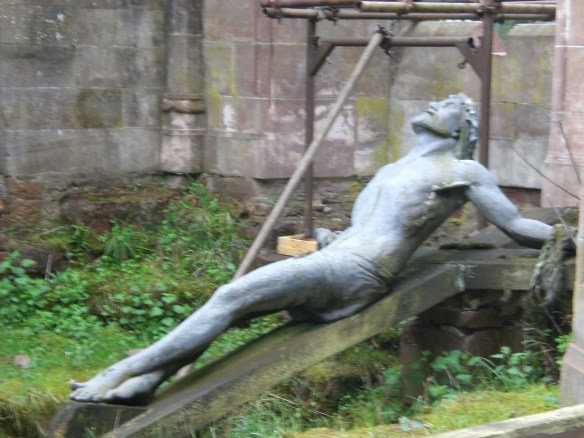
So what about my little eureka moment? Well during the wedding, I think I found myself smacked between the eyes by a bit of an evangelical cliche.

I missed Jesus so much.

Not the Christian wedding ceremony- or church- but simply the person of Jesus.

I took me by surprise, as for some time, I have journeyed into an understanding of the Kingdom of God, and the image of God in people, that made me increasingly aware of how God is present and participating in places that we Christian’s have often regarded as Godless and secular.

But here I found myself again longing to hear the words of Jesus- longing for the words of the sermon on the mount to fall again like manna.

And for my friends to believe again in the possibility of a better way- not because it would make them (or me) better, but rather because if we set our faces to living this way, then the world could indeed be changed forever.

War- those who objected…

shotatdawn

One more post about the Great War…

I have often wondered what would have been my fate if I had been born about 60 years earlier. The Sherwood Foresters Regiment, raised around where I grew up, were decimated in several of the huge battles of the First World War- including the Battle of the Somme, where they were almost wiped out.

Eight of these men and boys were court marshaled and executed for cowardice and desertion (check out this record here, which seems even sadder than the names on war memorials that I grew up with.)

What drove men to walk towards destruction? It is a strange testament to the fragility and contradictory nature of humanity that we regard such a thing as noble, admirable whilst still valuing life (at least our own) above all things.

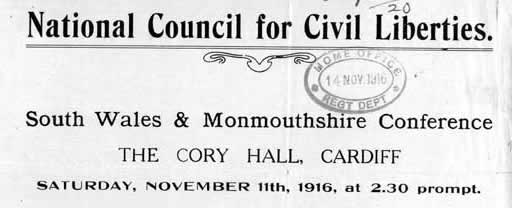
It is interesting to note that even in war-drunk imperial Britain in the middle of the war, there were those who were able to show a different courage, and protest.

civil-liberties-poster

This protest, attended by a future Labour Prime Minister, Ramsey MacDonald, caused a near riot.

Then there were the conscientious objectors- according to the National Archive, about 16,000 of them, who refused to fight. Many spent time in prison- particularly the 1500 ‘absolutists’, who refused to participate in any activities that gave any support whatsoever to the war. Prominent in this group were the Quakers, and other Christian groups who saw the taking of human life as wrong (more info here.)

These people were loathed by the society that they were part of. They were branded as cowards and traitors. Could I have been strong enough to stand with them?

Or would I have joined up in 1915 along with my pals, answering Kitchener’s call to arms? And would my name then have been entered on a monument after the pointless slaughters of 1916?

Historical hindsight is a rather indulgent pastime, but I hope I would have been able to protest.

And I hope too that in this new and very different age, I will also be able to find inspiration in the story of 16,000 people, whose names are on no monument. What would they have made of the current conflicts in Afghanistan and Iraq?

These are not simple issues. I am not sure that there is nothing worth fighting for, but I am sure that there is no such thing as a just war…

In the words of Derek Webb, from the song ‘A man like me’ from the Hummingbird album.

I have come to give you life
And to show you how to live it
I have come to make things right
To heal their ears and show you how to forgive them

’cause i would rather die
I would rather die
I would rather die
Than to take your life
’cause how can I kill the ones I’m supposed to love
My enemies are men like me

So I will protest the sword if it’s not wielded well
’cause my enemies are men like me
Peace by way of war
Is like purity by way of fornication
It’s like telling someone murder is wrong
And then showing them by way of execution

Because my enemy is a man like me

The fruit of the Spirit is kindness

kindness

I was sore
Abraded by the road gravel
And you wrapped me
In a soft bed
Of kindness

I was weary from the world
And like a soothing embrocation
You took these road weary feet
And slippered them
In front of a warm fire

I failed
Again
And stared down low
Until the soft music in your voice
Brought to me possibility
That I too
Could be loved

That I too could love
In return

So may you be showered with blessings
Like blossom petals
Butterflying about you
In this beautiful breeze

kind

God the symmetrical…

symmetry

The other day we Michaela and William were having a discussion about people’s faces- I think they had been drawing faces at school. William was rather astonished that his friend had eyes that were not level- one was higher than the other. His face was not symmetrical.

Michaela suggested to him that everyone’s face was different, and no-one was perfectly symmetrical, and so Will chewed on this for a while and said

“…apart from God’s face. His must be symmetrical.”

Michaela did not know how to respond, and so made a few comments about us being made in the image of God. She later recounted the story to me with a bemused expression on her face.

This kind of left me thinking.

There is something appealing about being able to sketch a predictable, perfect shape out of our knowledge and understandings of God.

For generations people of faith have been trying to do just this. We look at our scriptures and listen to our prophets and from these glimpses of the divine, we fill out a version of God that we cast in concrete and endlessly reproduce.

The image that came into mind when thinking about the concept of a symmetrical God was one of those paper chains that you make by folding paper and cutting it to make a connected chain.

paper-chain

Is it possible that this metaphor works as a way of understanding the process of theological explorations for who God is?

We take the source material- fold it according to our particular perspective, and then make careful symmetrical cuts according to our own understanding- ensuring the inclusion of acceptable texts and that when displayed, all is orderly and connected.

The great age of modernity, with its enlightened gifts of rational systematic analysis, needed a symmetrical God more than most. We needed solid propositional concepts, measured, tested and cross referenced against scripture, which is given unassailable status as Holy, inerrant, the very Words of God.

Increasingly, the modern theological edifices, in all their apparent certainty, are being re-examined by this new generation- in many ways that is what the ’emerging church conversation’ has been all about.

And many of us are no longer interested in Symmetry- at least not as a first priority.

Who says that symmetry is perfect anyway?

The fruit of the Spirit is joy…

image from flickr

Something down deep
Wants out
Spleen and liver shiver
Pressure mounts
Rise up this heavy heart to heaven
And shout

This precious life and loving
In these veins now flowing
Will burst the banks old rivers
had formed
And pour out
On thirsty ground

So you and me-
Let’s find our feet
In freedom
And dance
Let’s live out lives
All open
To circumstance

For joy is a bubble building
In me
And Lord-
How beautiful
Is this world
I see

The fruit of the Spirit is peace…

After the rain squalling
And the bombs falling
After the back stabbing
And the tongue lashing
After love is betrayed
And dreams disarrayed
When the knife cuts and slashes
After sackcloth and ashes
Comes the peace

After the tumours
And cruel vicious rumours
After bodies broken
And evil words spoken
After guns cease their shooting
Troops no longer jack-booting
With the grave trodden down
And the trees now turned brown
Comes peace

Even after the failure
Of life-long labour
And after deadlines missed
After the getting pissed
When the pressure’s done mounting
And it’s all over-even the shouting
When the race has been run
In the setting of sun
Comes the peace

When anger burns out
After faith turns to doubt
When we give up on walking
And wolf packs are stalking
When the money is spent
Safety curtains are rent
At the end of all coping
Even Polyanna’s done hoping

Even then
Will fall
My peace

Blogged with the Flock Browser

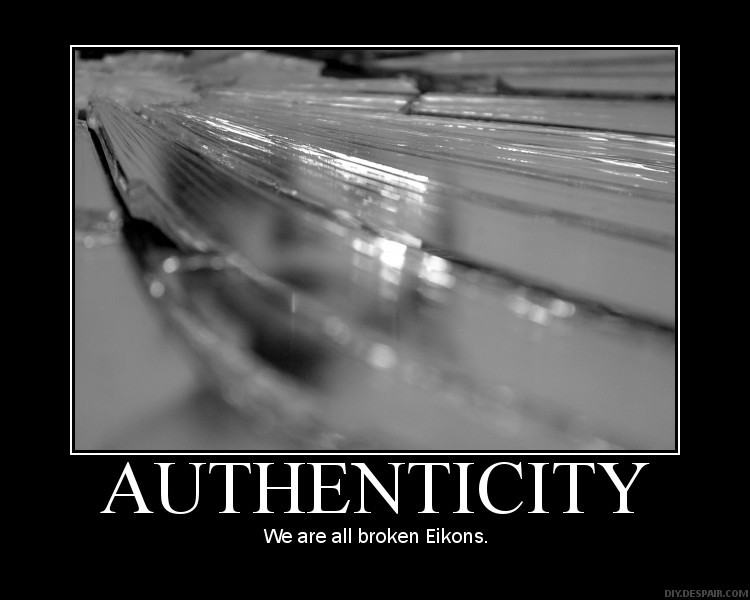
Poster-theology.

Following up from the poster I used in my earlier post- I thought I would borrow a few more of Katiejen (at Emerging Grace)’s images– cos I like them. Thanks Katie!

I like them because they each capture something of a common journey that many of us have found ourselves on- and because they can be as simple or deep as you want to make them.

And there is the old adage about pictures speaking a thousand words- although I do love words…

(By the way- one word used here is EIKON- which is a lovely word, defined here as- ‘Eikon is the Greek for icon and refers to the visible manifestation of the invisible’

I suppose your reaction to them will depend on that usual combination of personality/thinking style/theological position…

Post charismatic Christianity?

I have just started this book, by Rob McAlpine.

I have blogged before about my own Charismatic background- here for example… So the title of this book grabbed me.

I have found myself wanting to re-examine much of my own Charismatic experience again- something I have avoided doing in any detail until recently. I suppose these experiences are full of all sorts of mixed feelings and emotions. They left me with such mixed baggage.

For me, the it began with a yearning for God in my formative years, that met the electric possibility of a God who was present and active and empowering through the Holy Spirit.

But there was always the hope for more, amid the hype and exaggeration, and the plain madness of some people and situations I found myself in. I was often an outsider- not able to experience fully what others were blown away by. And feeling attracted and repelled in equal measure.

As a worship leader, I could always hide behind a guitar… it was possible to be there, and to be seen to participate, but to only have the shape of participation, not the fullness of it.

As a young man- I thought I was alone in my doubts. I thought I lacked faith, and my sin was insulating me from God like a rubber blanket on a live cable.

There were also many times though when I caught glimpses of God. When I was as sure as I can be that he was there amongst us. There are many things that happened that I can not easily explain in any other way.

Here’s a quote from the book that captured some of my own experience;

They are tired of hearing the stories of the good old days, jaded from hearing too many prophecies about the great move of God that seems to be just around the corner, fed up with exaggerated or even fabricated stories of healings and miracles, and disillusioned with a view of spiritual formation that is lived through a weekly crisis moment at the front of the church…

Pg 17.

That is not to say that I want to reject or deny the work of the Spirit. May the Spirit have free reign to do with me as he will.

But I hope that it is possible to find my way to him, and his to me without all the baggage that has become so unhelpful to me.

And from my reading of this book so far- it seems that I am not alone.