At the end of hope we seek death…

I heard about the tragic story of this young rugby player today (more from the BBC here)

Daniel James, talented rugby player, tipped for great things. Until in March 2007 he suffers a compressed fracture of the spine as a scrum collapsed, and the resultant damage left him a paraplegic and in considerable pain.

And 18 months later, after two previous failed suicide attempts, he traveled to a swiss clinic who were prepared to assist him in his wish to die.

His parents described their experience in an e-mail in this way (as reported by the BBC)

“We returned from Switzerland on the 12 September after accompanying our… son who had been left tetraplegic after a rugby accident,” she wrote.

“Dan found his life so unbearable and had tried to commit suicide three times, other than to starve himself to travel to Switzerland was his only option.

“Whilst we were away some ‘well meaning’ person involved with social services took it upon herself to call the police.

“This person had never met Dan before or after his accident and obviously gave no consideration for our younger daughters who had seen their big brother suffer so much, and the day before had to say goodbye to him.

“I hope that one day I will get the chance to speak to this lady and ask if she had a son, daughter, father, mother, who could not walk, had no hand function, was incontinent, and relied upon 24-hour care for every basic need and they had asked her for support, what would she have done?!

“Our son could not have been more loved and had he felt he could live his life this way he would have been loved just the same but this was his right as a human being, nobody but nobody should judge him or anyone else.”

It is a terrible thing to lose someone you love. We can only begin to guess what this family have gone through. Nor what we might do in their situation faced with such pain and suffering.

But this seems to me to be such a terrible waste. A young man full of talent and aspiration looses everything that he thought life was about. And in the middle of all the searing pain and loss, he finds no hope. He sees no possibility of a future that has any meaning.

His family have been with him every step of the way, but 18 months is a short time for you and me in the stride of our life, but a long long time if every minute is full of misery and agony.

So they eventually accede to his wishes, and take him to one of the few places in the world where assisted suicide is permissible, administered in a modern clinic surrounded by his family.

A peaceful medicinal and narcotic end to what is known, and a passage to whatever is to come…

To lose hope is to lose life itself.

Could this young man have found his way back to life given another 18 months/weeks/days/hours?

No-one will ever know for sure. His actions can not be undone. His parents can not afford to ever think like this, or no doubt it will destroy them.

May they find their own hope.

But what of us, facing our own uncertain future? We have a friend who is a supporter of dignity in dying. She is towards the end of a full life, and lost her husband a couple of years ago. She is an atheist, and sees no point in prolonging life beyond the ability to fend fully for oneself.

These are such difficult issues. As with many deeply human ethical questions, what may seem black and white is shadowed with large areas of grey.

The giving and taking of life is God’s business.

But the sustaining and defining of life- this increasingly is a scientific phenomenon- at least for those who can afford it.

I think our response can only be to be those who accompany, and illuminate beauty and grace particularly those who need it most.

May we be bringers of hope to the hopeless

And singers of songs of freedom to those who are captive

May we dream of redemption for the irredeemable

And at the end of it all

May we fall

Into the arms

Of a loving God.
Renovation as a spiritual discipline…

This week I am on annual leave, and am taking the opportunity to do some work on the house.

Our house is old and well lived in so is always in need of renovation and repair. When time, energy and money allows, I will start a project, and work like a slave until it is done. I get stressed as I feel responsible for getting the thing finished.

This time, however, things are different- as I am the understudy to a craftsman.

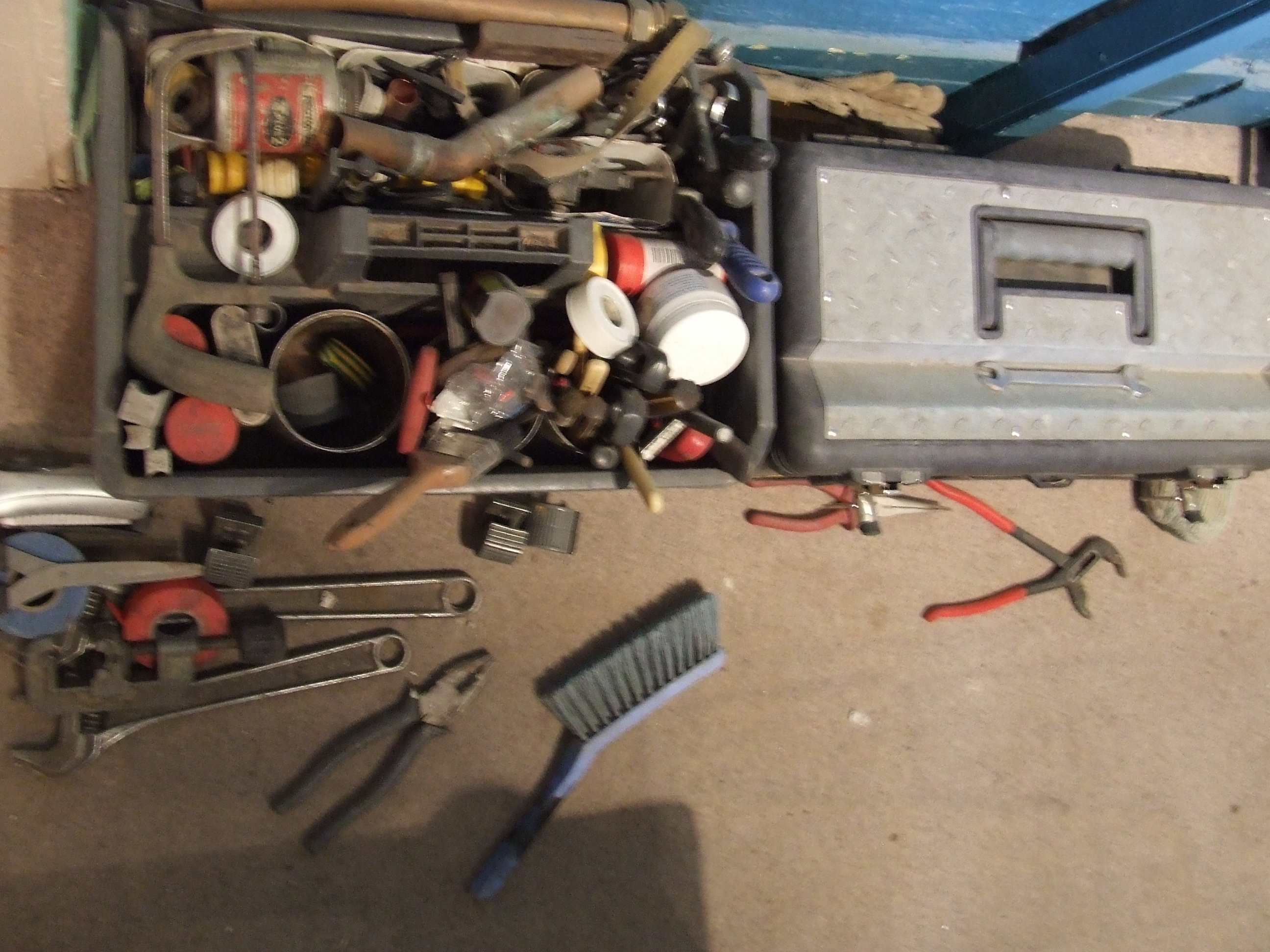
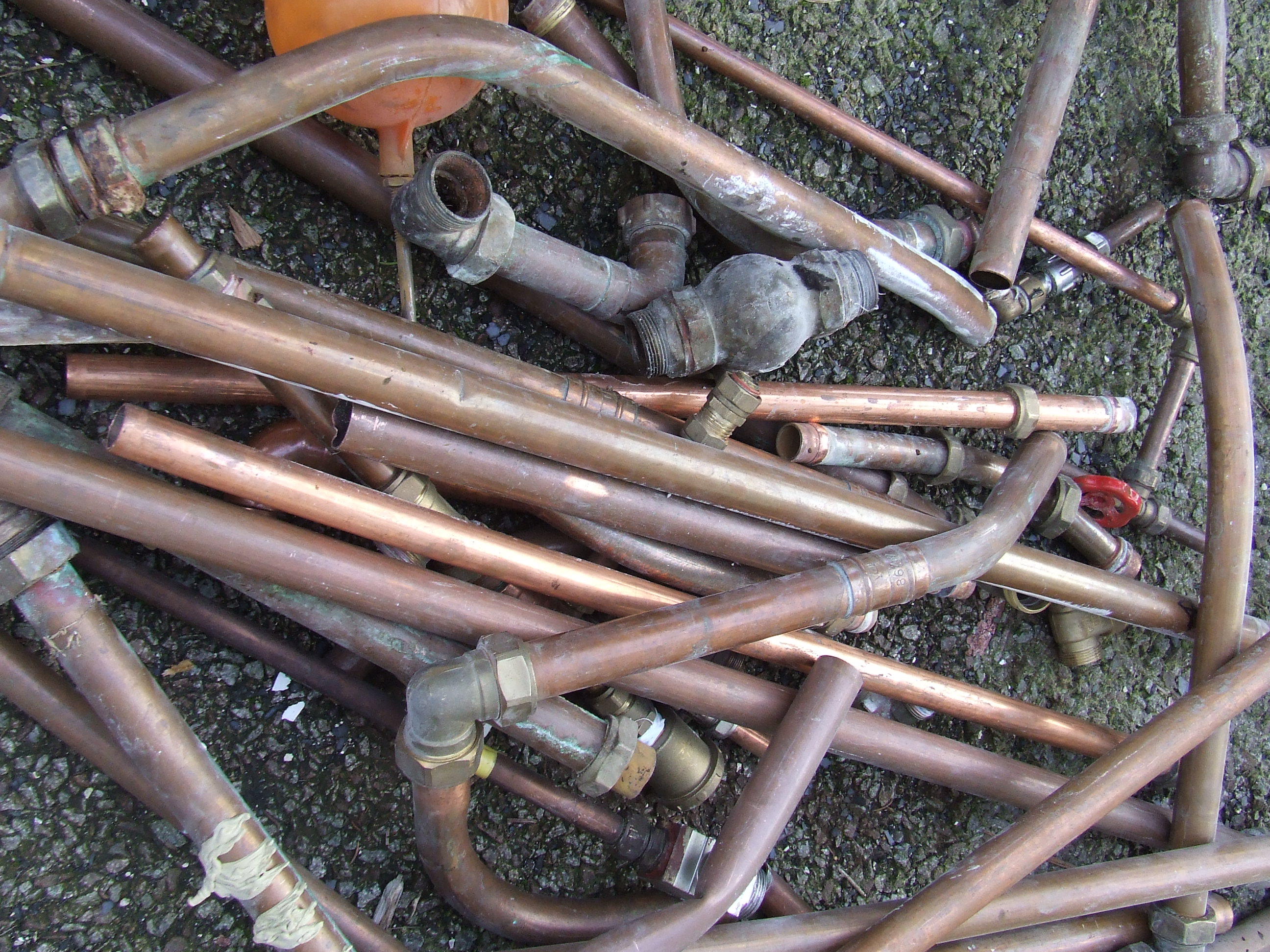
Michaela’s uncle is up here to upgrade the plumbing.  This involves ripping out a massive inefficient old boiler that is asthmatic and rusty, and virtually rebuilding the boiler room around a sleek and compact new model. We will then rip out the old hot water tank, which is surrounded by a network of pipes- many of which are redundant.

What we will be left with is something that still burns the same gas, but quite a bit less of it, and will provide the house with heat and hot water just like the old one- only it will be reliable, and cleaner.

And after a day testing my bad back carrying huge bits of old plumbing, and sawing and drilling, I am tired, but not stressed. I am working with a man who has been a plumber for 40 plus years. There is next to nothing he does not know about pipes and plungers. And he has pride in a job not just done, but well done.

So, this left me thinking…

We, the church, are in need also of constant renovation. Some (perhaps me sometimes) would even wish to demolish and rebuild. Houses are to be lived in, and as we live in them, they become tired and worn. Plumbing leaks and boilers break down.

Technology brings new innovations- new gadgets and household appliances, new ways of using space, and so the building evolves and changes- or it’s value will plummet, and it might find itself only fit for selling on to property developers, or- dereliction and demolition.

But- people still need a roof- a place of warmth and shelter, where family can be nurtured and loved.

So renovation- which is born of hope, nurtured in vision and achieved through hard work, broken finger nails and skinned knuckles.

And as we renovate- how we need to learn under skilled craftsmen- men who need to prove nothing, and take no personal glory from the acts of resurrection they release. Rather the quiet satisfaction of a life lived well.

Capitalism, Durkheim and Rev. Billy.

Laurie Taylor on Radio 4 has set me thinking again, on his programme ‘Thinking allowed’- which looks at social scientific research. You can listen again here.

This time, he took me back to my ‘A’ level sociology days, and to the French 19th C philosopher Emile Durkheim, and his great work ‘Suicide’.

Durkheim wrote about a kind of existential crisis that people could experience in a time of economic crisis- when the norms and structures people have been used to living by break down, and people find themselves in a state that he called ‘anomie’.

Durkeim suggested that people need to be part of something bigger- to be integrated and linked, and when this begins to break down, the end result is anomie, which in turn, leads to a time when the anchors and moorings that hold us together are gone.

Durkheim thought that this was one of the three main reasons why people committed suicide- a breakdown of what made them human, and held them in community.

He suggested that the way to overcome this was through ‘moral education’, or ‘moral regulation’- and these things would be managed through the function of the institutions of society.

So, how does this relate to the current economic crisis?

Taylor made these fascinating comments. He sited a review of 2300 major research papers- looking at business research and training. The study concluded that the focus had been almost exclusively on minor techincal problems to do with the operation of markets, rather than the larger political and ethical considerations. Here is a quote from the researcher;

‘We have failed to teach our students the kind of social conscience and ethics and concern for the world and the environment and the poor that might have had an effect on the selfish exuberance of the finance markets’ Dr Harni.

I have heard a lot of economic ‘experts’ being interviewed giving opinion an comments as the economic crisis unfolds. They are often made to look fools by the events of the next day. It has often occurred to me that these are the same movers and shakers who moved and shook us into the current predicament, now being wise after the event…

But even from them, you hear some talk of ethics, and regulation. REGULATION- in the free market?

Almost like Dr Frankenstein wanting to cage the beast.

So is it too late? Will anomie, or whatever, result in a change to the way that we are? It remains to be seen. But the system we have in not sustainable.

Check this out, it made me smile.

Gods great big hoover. Or the last noo noo.

When I was but a lad, growing up in Nottinghamshire, I watched this film…

We attended a local Anglican church, and things started swinging with a bit of Holy Spirit revival. We sang choruses rather than hymns, I learnt to play the guitar, we had healing services and people ‘spoke in tongues’. All in a C-of-E church in small town Kirkby-in-Ashfield.

And there are memories that I cherish.

And some that I do not. Some still make me twist inside with that old faithful adolescent companion- pervasive raging cringing embarrassment.

Some of the memories that I shelved as just plain dysfunctional I have in recent times reached down, dusted off, and managed to look at through the eyes of the 41 year old man that now I am. And some of it, I can now even laugh at.

One of these things is the aforementioned film.

You see, there was a lot of fuss about the ‘end times’ in the 1970’s and 80’s. I suppose there always is a section of people somewhere in every generation, in some part of the planet, who are proclaiming the imminent return of Jesus, and the time of judgment and tribulation.

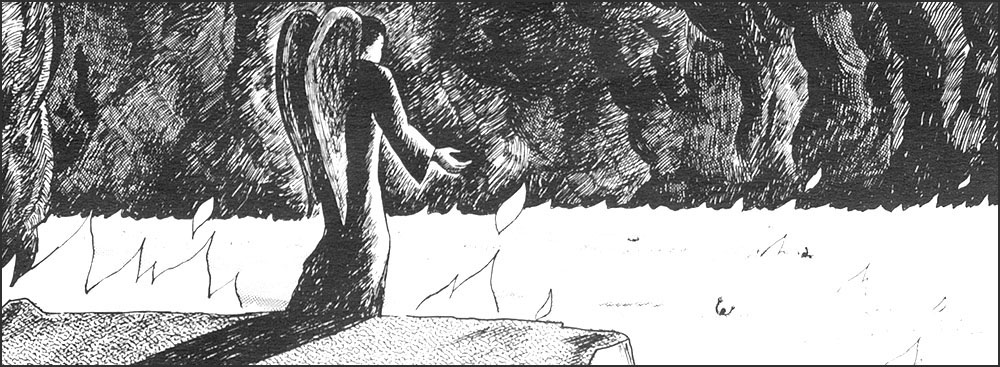
So in our church- the chick cartoons were circulating. If you have never had the pleasure- check them out here– you can still buy them. There was one spelling out the ‘truth’ about the second coming, along with rapture, tribulation, and most memorably, the lake of fire in which sinners (like I surely was- I was a teenage boy after all) would burn for eternity. Here is a sample;

There was also Chuck Smith, who I believe still is a big cheese in Evangelical circles, who told the world that Jesus was coming again in, I think, 1980. Jesus did not, but Chuck seems to have been able to recalibrate. We watched a film that came from Calvary Chapel in those days all about the end times, and the signs of the coming age that could be seen in the world around us- particularly in the re-birth of the Jewish nation. Compelling stuff- most of which was nonsense, and this is not the film that I am talking about.

We were also taken to see a film in a church hall. Where this was, I have no idea- because I remember having to travel in the church mini-bus to get there.

And this too gave me nightmares.

The film began with a song by the late great Larry Norman. Should have got him to sing it…

…and then the terrifying story unfolded. All ‘biblical’ and straight from the pages of the book of Revelation, or so we were told.

A woman wakes up, and her husband has gone. Rapturously raised up to heaven by (as my friend Janet described it) God’s Dyson.

And so came the rise of the beast, and the time of tribulation. All in cheesecloth.

Quite why people thought this was good material for kids, I have no idea.

There are still many who would use versions of this story to frighten people into the pews. Babylon is built anew each time they do, say I.

Graceful people and brokenness…

There are some people whose way of loving and looking after those around them is beautiful. I am privileged to know a few of them. One of them (although she will hate me saying it!) is my wife.

Their way of being is a gift to people around them. It can often be seen in a creative playfulness that seeks always to find ways to bring good things into the lives of those around them. So here is a list of things that I have seen some of my friends (and my wife) do in recent times;

A gift of an MP3 player, full of special music pre-loaded.

A trophy made up with ‘the resilience cup’ engraved on it, as a gift to celebrate the end of someones medical treatment.

Little cards made up with a message/meditation for every day of a trip away or a hospital stay.

Soup for weary workers.

Needs spotted, and quietly filled.

The spiritual gift of remembering anniversaries- birthdays and wedding days, but also days of bereavement or loss.

Card and letter writing.

Refusing to see the bad in people, and hoping for the best.

A travel pack made up for friends who have a long journey to make.

The people I know who do these kinds of things on a daily basis- they are blessed as they bless others. But it occurred to me recently, that they do not necessarily do this from a position of strength.

By this I mean that sensitive, kind, thoughtful people often carry their own scars.

Something put them out on the edge- whether this was childhood trauma, or difficult life experience. For some, this becomes a bitter stain. Others find that their swords are beaten into ploughshares…

I think this is one of the ways that we see the Grace of God in the very fabric of humanity. Bad can be made good. Healing can come as we seek to heal. Sensitivity is born in the sensitised.

I have heard this instinct to serve others described as a need-to-be-needed. Or the application of that horrible phrase ‘people pleaser’. It may well be the case that there are unhealthy limits to this.

But my life, and the lives of many around me, would be so much the less without these ministers of grace.

Christian TV- should we just switch it off?

OK, so it is an easy target.

The TV preacher with his Lear jet, his many mansions and his inevitable fall from grace surrounded by sexual and financial scandals. It is a tired cliche that just seems to constantly replay itself.

Todd Bentley seems to be the latest in a long line.

But is there anything out there actually worth the airtime? Are people healed, are people inspired, is God transmitted or is he betrayed?

I occasionally flick through- I watched a bit of Bentley to see what the fuss was about. I remember a dreadful Christian Body Builders show- smashing bricks on your head for Jesus.

Then there are a lot of African revivalist preachers, a Catholic channel who seem to televise some very boring services, and have a phone in programme hosted by a very untelegenic nun. And there seems to be a lot of silver haired people pontificating from sofas- usually espousing right wing fundamentalist views.

There are music programmes too- soft rock Christian worship, or ‘CCM’ (Contemporary Christian Music) which is huge in the US- with its own charts, and awards ceremonies.

And then there are the money requests- often with promises of blessing in return. These make me feel ill.

But is it all bad? Perhaps not. Do people make commitments to Jesus? Apparently so. Is there ‘good teaching’ that inspires and informs? I am told that there is.

But boy do you have to wade through some rubbish if you wanted to find it. Here is a you tube clip poking some fun, but making the point…

TV is expensive. Money talks, and religion sells.

There seems nothing at all wrong with using the media, but is this the best that we can do?

Global crisis and local Christianity…

We live in an age of perceived crisis.

Not necessarily real ones you understand in the way that our grandparents may have known- in the age of Hitler’s (anf Churchill’s) bombs falling on cities, of concentration camps, and nuclear proliferation.

Instead we have the perceived crises of;

Terrorism– the so called war on ‘global terror’- which we fight using as a weapon, global terror. International policy is formed out of the elevation of fear in a general population- fear of an unknown evil, mixed in with a dose of racism, and religion…

The credit crunch– do you get the impression that there is some kind of hidden hand holding economic strings that we are powerless to influence? Almost as if the burst in the artificial credit bubble was a natural disaster? Meanwhile stock brokers ‘feel the pinch’ and lose the odd sports car, whilst in more marginal places where debt has become a the only option, survival is harder. (Check out this post for more discussion on this issue)

Knife crime- reported as an ‘epidemic’ in the UK, despite at best marginal rises within particular demographic groups in our cities. Anyone would think we did not live in one of the safest societies in one of the safest country in the world!

Energy crisis- oil prices soaring, leading to uncertainty and fear all over the world’s economy. Suddenly oil fields previously politically unacceptable are opened up. And people buy cars with smaller engines, to sit in the same traffic jams…

And so on- house prices, food prices, natural disasters, global warming, etc etc…

I am not a conspiracy theorist. I am always much more prepared to believe in a certain kind of chaos that results in some opportunist winners, and some unfortunate victims.

However, I am more and more convinced that our system of free market capitalism should not stand uncriticised. That far from being the answer to the complex problem of human economic organisation, instead it has become an animal that, once fed, is as likely to bite off the hands of the zoo keeper as it is to pull his cart.

My friend Ali sent me this link today. He tends towards relish of a good conspiracy, but I agree that this critique makes interesting watching…

This is propaganda, but propaganda when used by the powerless can become protest- if not a check on the actions of the powerful, perhaps at least it can lead to a reformulation of their strategy. It reminded me again of Thatcher, the most unpopular British prime minister ever, until the Falklands war. Then she was the unassailable economic saviour of western capitalism…

And also of Moazzim Begg, and his experience at Guantanamo bay.

Which brings me to the point of this post. I am a Christian. I am part of a small local community. What should be the local response to all this stuff that fills the airwaves? Which voices should I listen to that are beautiful and true?

Global communication networks allow us to connect with people thousands of miles away, but there is so much information out there, how would you ever make anything heard, or know that what you hear is good?

The old adage of think globally, act locally often just seems like an empty statement. A bit like ‘global village’. For some the world may have shrunk- but the gap between those who have, and those who have not is larger than ever.

But I think that we Christians do recognise truth when it hits us between the eyes. It comes at us when we see one person who transcends the times, and speaks up for beauty and peace, and love.

I remember reading an open letter that Brian McLaren wrote to George Bush just after the attack on the World Trade Centre. Warning against vengeful and angry responses that will result in more victims, more broken lives and families.

Check this out for more discussion about how we might respond to crisis.

The other way that we encounter truth, is through the words and stories of Jesus.

Blessed are the peacemakers.

And blessed are those for whom crisis (perceived or real) commands compassion, and love.

(link here to beatitudes)

Angels on Dunoon pier…

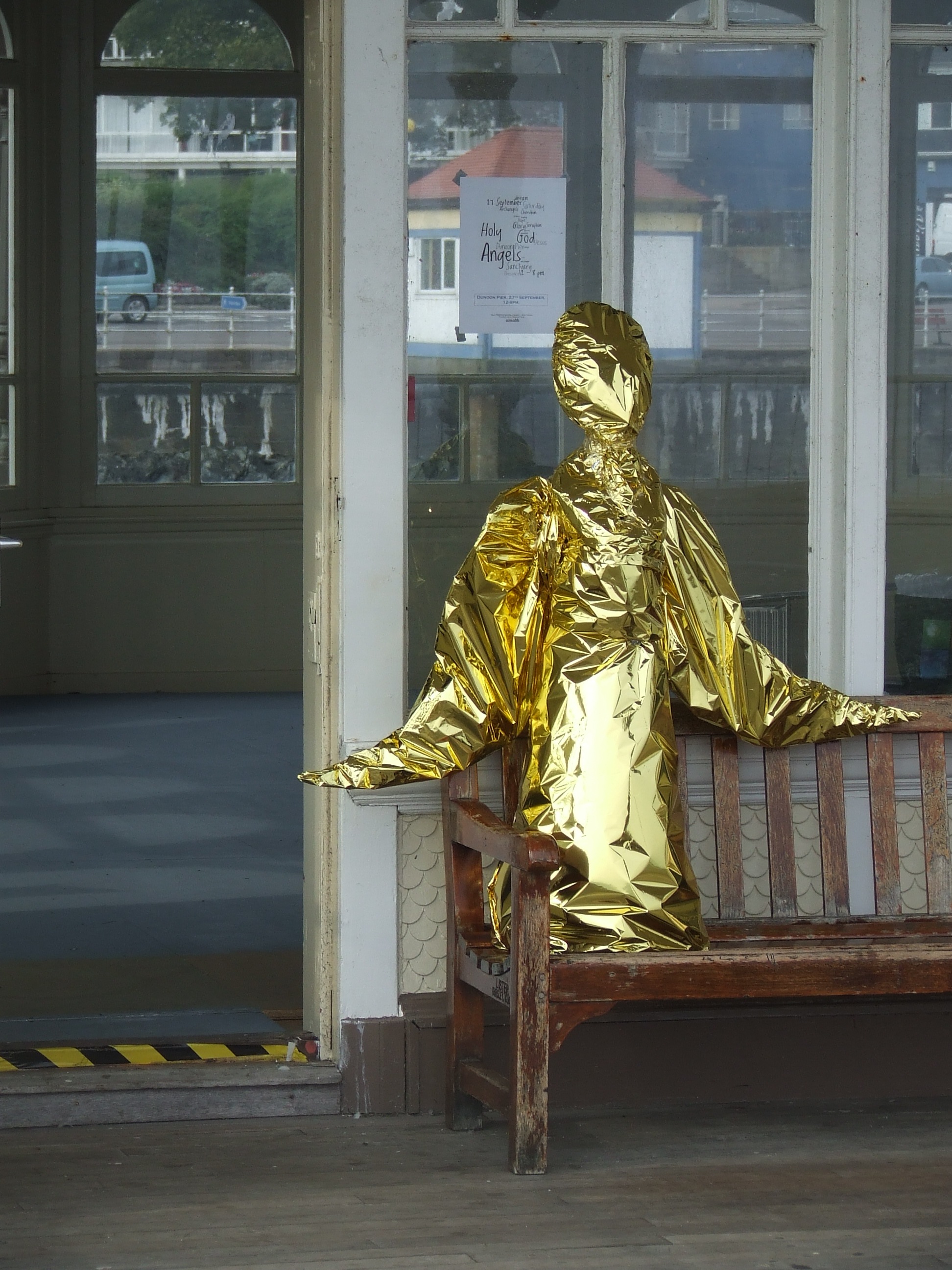
We (aoradh that is) are just home after spending most of the day dismantling a worship/mediation space on Dunoon pier on the theme of Angels, as a celebration of Michaelmas

We used a vacant pavillion building on Dunoon pier- it used to be a bar/disco but has been largely unused for years. We have used it in the past as a 24/7 prayer room, and also as a space for a mediation labyrinth (check this out for more info on the labyrinth- you can get a kit from Proost also…)

It is a lovely liminal space- out above the water, close by the town centre,  with the passing of many feet as the ferries disgorge their passengers. In the daytime, it is bathed in a lovely light, and at night, it becomes a beacon out on the dark waters.

This time we worked with Kimberley Bohan – minister of the local Episcopal church, who brought the idea of Michaelmas to us. As with all of these community things we have done, we wanted to offer a place where people could just come in and encounter God. With no other agendas- no hard sell. Just hospitality and the rest up to the Holy Spirit.

The stations we set up in this space included a community collage, ‘messages’, The story of Raphael, a holy space, and a way of responding using post cards with Angel words.

I hope it was meaningful to people.

Here are some photos;

Emerging church- a review from the blogosphere…

Well, it had to happen.

The emerging church is no longer ‘the new thing’. In fact it might well now be the old thing.

Does that mean that we have now emerged, and so do not need the label or the ‘conversation’ any more?

Here are some links to blogs that wrestle with this issue- if you are interested in this issue, then these guys are well worth reading;

Jason Clark blogging at deep church

tallskinnykiwi

Scott McKnight

I have posted two earlier discussions in this vein too- here and here

So what do you think? Has the term become a liability- something to be defended, but useless as point of definition?

If so, why do I feel a sense of loss?

I think, for me, it has been a useful portal to a whole set of thoughts, challenges and concepts that have turned me upside down, but have been a real blessing in my life, and in people all around me.

It has also been a way that our small and isolated group could reach out to people in the wider world,and find support and common understanding. Does our planned but as yet unrealised) ‘Emerging Scotland Network’ (see here) need a new name even before it begins?

And if the label is dead- what next? The emerged church? The missional church? The new monastics of Dunoon/Watford/Wherever?

I suppose in others, I still wonder if this is a movement towards something, or away from something else? And whilst the journey may be life long, then there are still fellow travelers, and way side inns- otherwise who will survive the journey?

In my self, I just kind of feel that I have lost a lifeboat, and it’s back to swimming again.

So I will use the term for a little longer… how about you?

Melvin and the miracles

I had a trip to Oban this morning to attend a meeting in the hospital there. A good morning to be driving- not just because of the lovely still calm day, with mountains mirrored on lochs, but also because of Melvin Bragg on radio 4.

‘In our time’ is a history/philosophy/faith (or what ever else the polymath Bragg is interested in) discussion programme, in which an issue is chosen, and Bragg quizzes some handpicked experts around a BBC microphone.

I love the programme- even when I have not got a clue what it is being said- which is quite often. I suppose I just like the fact that complex issues like this can find some prime-time air-time. Well done the Beeb…

This morning the discussion was on MIRACLES. You can listen again as a podcast here.

I discovered that the Hebrew word translated as ‘Miracle’ means ‘sign’, or ‘wonder’. Something unexplained that points us to God. The programme dug into these areas;

What are they?

Are the accounts factual, dependable, or mythological?

How have they been understood through history?

What meaning did they have in people’s lives?

What role have they played throughout church history?

The discussion covered stuff from the burning bush to the signs and wonders of Jesus. It also asked some questions about the vast trade in relics, at one point, perhaps the greatest import into England from abroad, and how the reformation initially tried to sweep away all this stuff as superstition, and suggested that the time of miracles was over, replaced by the time of reason and faith.

And of how, with increasing distance from these signs and wonders, people became increasingly dependent on scripture as rational evidence for God. And so the importance and centrality of scripture as central to faith life and belief grew and grew.

But as we know, the Protestants never gave up on miracles. From the very beginning of the Reformation, groups would describe the supernatural intervention of God, both on a personal,local level, and nationally.

And there are even now whole channels of satellite TV full of so-called miracles. And thousands flock to shrines at Lourdes or Walsingham seeking their own miracles…

Within the Charismatic movement that has shaped me and my faith, the power of the Holy Spirit was expected to be revealed in miracles- healing, prophecy, deliverance and direct provision.  Although it seems to me that we often hyped up and overpromised, I still have many stories that I can explain no other way but by using miraculous language.

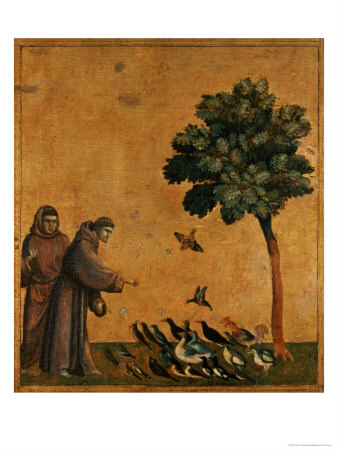
Melvin led an interesting discussion about what Francis of Assisi had to say about miracles. How even then there was a concern to test and discern when this was of God, or of the Devil or some trickery. Little changes it seems! He also quoted St Francis (I think) as saying that the greater miracle was to be seen in the action of a family who meet a perceived need of the other...

Love lived out always did seem miraculous to me- and perhaps even rarer than a former cripple dancing the Highland fling on the God channel!

I kind of think that encountering God will always mean encountering miracles. Signs, wonders. I doubt these will ever be conclusive universal evidence for faith and belief. Even those of Jesus did not seem to offer that.

But the meaning they bring to my friends, in the way they live out their lives towards God- this is real.

So thanks for the mental and spiritual work-out Melvin…