constructing amongst the deconstructors…

There are lots of concepts and key words that have been reference points for those of us who have been following this emerging church ‘conversation’…

Post-Christendom.

Post-Charismatic.

Post-Evangelical.

Post-modernism.

We live in world in flux. The personal angst seen in the popular culture of the sixties and seventies has found its way into the very structure of our society, and into our institutions. Everything is now questionable, everything is old and tired and broken down…

Another word we hear a lot is deconstructionism, a philosophical term first used by Jacques Derrida in the 1960s- who began to form a method of thinking about concepts that allowed him to get behind the assumptions and rationalisations that the modern world operated under. You can check out what wikepedia has to say about this stuff here.

I like this quote from John Caputo;

Whenever deconstruction finds a nutshell — a secure axiom or a pithy maxim — the very idea is to crack it open and disturb this tranquility.

The suggestion for we Christians is that not only are our institutions based on a whole set of modernist assumptions that are being challenged, but that the world we serve is likewise deconstructing itself about us, and we ignore this at our peril…

But here is another quote, culled from a useful article (here) by Alistair MacIndoe, from the Rock Church in Dumbarton.

And how long must it be before we learn that our task as Christians is to be in the front row of
constructing the post‐postmodern world? The individual existential angst of the 1960s has
become the corporate and cultural angst of the 1990s. What is the Christian answer to it? The
Christian answer is the love of God, which goes through death and out the other side. What is
missing from the postmodern equation is, of course, love.’
N.T. Wright 1

We Emerging types have used too many destructive words- perhaps even relished them, and the feelings of superiority this has given us.

But now the real work begins- the purpose that God gave was to go and tell people about Jesus- and (to paraphrase Francis of Asisi) if necessary, use words…

How we do this- how we start to tell again the stories of Jesus, and turn people again towards his beautiful way of living in these our complex times- this is for me to work out, with my community. So we turn to that other buzz-word at the moment-

Missional.

But, I am convinced that God is creative, and seeks to make and remake, not to break down and destroy. And so for we, his servants, it seems clear that we should start the spiritual cement mixers, and fire up the brick kilns. Busy times are ahead.

Lessons from my big sister-

I spoke to my sister today on the phone. It is always so good to speak to her, as she lives away down in Nottinghamshire, so we are not often enough in the same place.

We got into the usual conversation about God-projects that we are involved in. She and I know each other so well, that this one of those God-affirming kind of conversations usually- even when we are not very gracious or graceful in the way we describe particular people or things.

She described a youth Alpha course she is holding at her house- with 20 young people crammed in, all eager and hungry for knowledge…

And she described her own feelings of inadequacy (despite her very obvious gifts), and how she had to feed all these young people despite being flat broke after a whole series of added expenses this month.

But then she said that she had been thinking a lot recently along these lines;

Go with just what you have in your hands.

Nothing else.

You need to be no-one, but you.

You need nothing other than what you have.

The stuff that you think you need, the skills you admire in others- all this is a distraction- a delusion.

So in her case, this involved cooking a huge lasagna from veg grown in the garden, and feeding souls.

Good on you sis.

Lazarus laughs again…

There are many people mentioned in the margins of Bible stories… some by name.

There is the Gentile-convert-to-Judaism-convert-to-Christianity called Nicolas of Antioch, chosen as one of the seven stewards in Acts chapter seven- along with Stephen, the first martyr. Nick from Antioch- what was his story then? Spiritual gypsy perhaps? A bit of a hippy? But considered trustworthy enough to be given a role as a servant of the embryonic church, and mentioned by name for thousands of years to come…

Later recorded though (By Irenaeus- see here) as starting another Gnostic sect and getting his doctrine all Hippy-shaken.

Then there is Simon the Leper. Mentioned a few times, including as providing a feast for Jesus in his house in Bethany (Mark chapter 14)- you may remember this as the time when a woman broke an alabaster jar of expensive perfume and poured it on the head of Jesus- almost as if she had some idea that soon he would be anointed for burial… who was she- and what motivated her towards this act of excess- what had she seen in Jesus- how had he touched her life?

But back to Simon the Leper. How did he get his name? Was it because he was an extremely spotty kid and the cruel nickname stuck?

Or perhaps he really had been a leper?

If so, why was he mingling with people and not away in a leper colony with the other unclean people, outcasts, not party throwing?

Could it be that Jesus healed him? And after he showed himself to the priests, and was declared clean, he returned home, and his story was known far and wide?

We know that Jesus had some other friends in Bethany, whose story is more well known- the wonderful story of Lazarus, perhaps the most hen-pecked of people in the Bible, sandwiched between Mary the starry eyed dreamer, and Martha the houseproud (if grumpy) hostess.

It is the stories behind the stories that are fascinating- the filling out in three dimensions of these half glimpsed characterisations. Mary, who in many traditions was the same woman who broke the jar of perfume, and was known as Magdelene, from whence she had returned to live with her brother, under some kind of shameful cloud.

And after the events of the story- what happened to these people? Did they make the journey to Jerusalem to watch the triumph and tragedy and then glory of what we now know of as the Easter story?

Were they in the upper room when the Spirit came in power?

Was Lazarus the same man who went as a missionary to what is now Cypress, and whose bones still lie in a shrine there? Did his sisters go with him? Did Martha give those Cypriots what for when they trod dirt onto her clean floors?

So here is something I stumbled on that retells some of Lazarus’ story again- enjoy!

Gray theology revisited…

Earlier I posted a discussion about how we form our thoughts (our theology) towards God.

I confessed to being afflicted by a tendency to see the gray areas when others see black and white. Whilst I would not necessary wish my affliction on you, I have come to realise that it brings to me something that can be valuable as a spiritual tool in following after God.

I have come to believe that God reveals himself in the margins, in the cracks and crinkles of life. Perhaps this is because we have relegated him to this place only in our business and modern idolatry.

There are many big noise Christian leaders who appear to suggest that they have a mandate from God to bring him stage centre, and let him treat us to tricks and religious entertainment. The God Channel is full of this stuff. Forgive me if I seem judgmental and harsh- I too have longed for God’s tangible, measurable presence. But I have been around enough of this hot air to understand it for what it often is, and to be repelled by it.

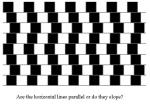
My experience of God is more like the squares above.

The solid blocks are like our theology- fixed and orderly and predictable. Constructed into an organised and seemingly complete brick wall. But God is not contained by the bricks, even though he might be willing to be encountered within them…

So as you look at the bricks, there he is in the corner of your vision. But impossible to pin down, Impossible to define and domesticate…

Here are some more illusions to further illustrate the point, and to have a bit of fun at the expense of your psyche (click to enlarge);

Blogged with the Flock Browser

How do we come to our understandings of God?

I have been thinking a lot about how we come to hold a set of beliefs and understandings towards God.

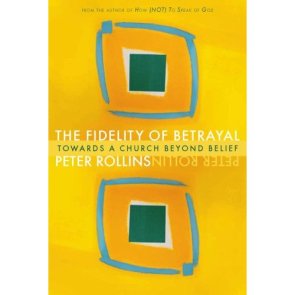
I have found Pete Rollins (part of the Belfast based IKON group) two books really challenging- he has this way of using parenthesis or slashes to convey something of the complexity and essential unknowabilty of our fumblings towards theology. Check these out if your head can cope with this;

One of the problems/blessings (to get all Rollins-esque!) of my particular personality is that I tend to see more gray than black and white. Where others see a simple issue- he is wrong, that is truth, this is what the Bible means by this, this is what is wrong with the world/the organisation/the church- I find myself always saying yes, but…

This is not always helpful. It can result in lack of clarity and prevarication. It can skew me towards a fence sitting position that has lots of questions, but finds no firm ground for to walk forward on. Kind of like some critics would categorise the emerging church do you think?

But how about theology? Is this not all about TRUTH? If we loose sight of the essential propositions that we hold in common, then all is lost, surely? This is how I was brought up. There were some gray areas, but these were overshadowed by the towering edifices of truth that we were given and encouraged to stand on like high stone walls.

So faith converted to theology (our theory and thoughts towards God) in this way;

Except, for me, this never really worked. I spend too much time with people to ever think that simple answers to complex human questions will suffice.

This sometimes leaves me at a place of dissonance with other more concrete but sincerely held theological positions all about me. At times it challenges my faith itself, but I have come to believe far from being a negative thing, this process of engagement, doubting and testing is in fact the very stuff of faith.

And that the ambiguities and difficulties brought to us by our reading of scripture and engagement with the wonders and mysteries of God will always result in a degree of uncertainty and struggle- and it is through honest engagement in this struggle that we encounter the Living God.

Or perhaps this just suits my personality, and so I make my theology accordingly?

This is the question that has been occupying my thoughts recently. Do we always tend to make an Icon out of our own perspective, and seek out others who will agree with us, and therefore make it seem more true, more dependable and therefore give it an illusion of universality?

Perhaps then, we form our theology a little like this;

If this is true, then does it matter?

Perhaps not. Perhaps this is a human trait- the gift of individual perspective.

Where It seems to become problematic is when we think that we are right, and everyone else is therefore wrong. It might be that you have been part of a group or denomination where version one of the theology-receiving model is enforced- leaving no room for any of your own exploration. This can be abusive and damaging.

So can the opposite- let us never be guilty of making God in our own image!

Which of course, unless you agree with me- you are/are not!

Ananias and Sophira- help me with this someone!

So, what it this story all about?

In our little group, we have been doing a study on the Book of Acts, as part of an ongoing attempt to consider the place of Christians in post-Christian, post-modern Britain. (We are using ‘Exilio’, a study on the book ‘Exiles’ by Michael Frost- see here for more information.)

We have just spent some time chewing on this very difficult passage in Acts 6. Here is the story

The early church has begun in a blaze of Holy Spirit fire, and these early followers of Christ came together in beautiful communities, sharing and caring for one another, and giving us a glimpse of heaven.

Then Ananias and his wife Sophira, perhaps to gain influence or status, sell a piece of land, and present the money to the apostles for the communal good, or at least they present some of it- they keep back some for themselves, but pretend that they have given all.

Peter challenges first Ananias, who lies, then drops down dead. Then his wife turns up, and rather than consoling her, Peter asks her the same question, she lies too, and Peter has a few harsh words to say to her, before she too drops down dead.

And everyone was consumed with the fear of the Lord… Well, you would be wouldn’t you…

It is a story that I struggle with. Did God kill these people? If not, what did- an overwhelming sense of guilt? Peter? Was what they did so bad? Have you and I not done worse- and yet lived to feel the guilt, and perhaps seek the promised forgiveness?

The next story is about the squabbling over the handing out of food to the poor- and the need to appoint stewards to keep the hand-outs fair to all concerned. But there is no mention of any of the moaners or unfair dealers being cut down in judgment.

This is (I think) the only story of instant punishment of sinners in the New Testament. It seems like an old testament kind of story…

So why is this story in the Bible? What is God seeking to teach us as we read this? In our discussions we came up with a few possible answers-

  1. The God of the Old Testament is the same as the God of the new. We attempt to understand him as cuddly and predictable at our peril.
  2. The sin was to break the unity of the spirit in a time of when this was a beautiful reality. A sin against the spirit is the only unforgivable one.
  3. Sin cannot exist with such holiness as was known then.
  4. God did not kill them, nor Peter, rather they died from their own overwhelming conviction of sin.
  5. The story is incompatible with the wider story of God as revealed by Jesus, and should be read as allegory, pointing us to broad principles.
  6. The issue is how we read the Bible, and how we understand context…
  7. God is mystery. We will never understand or be able to conceptualise all that he is.
  8. The issue is about money, greed and the idolatry of possessions, and it’s destructive affect on community.

What do you think folks? Any thoughts gratefully accepted…

Blogged with the Flock Browser

Greed, Capitalism and Gordon Gekko…

I had an early start this morning- leaving the house at 7.30 am for a two hour drive. As ever, BBC radio 4 was my faithful companion on the road…

And of course, the morning news was full of the current world financial crisis, brought about by the so-called ‘credit crunch’ and the collapse of an American bank sending shock waves round the world’s stock markets.

We await to see whether the giant insurance firm AIG, responsible for trillions of dollars investments, will topple and fall over also.

We are finding out that when a butterfly flaps in the windows of a wall street office, then not even a post office account in sleepy Argyll is unaffected by the resultant tidal waves of monetary insecurity.

And no-one seems to have any clear idea of what happens next. It is almost as if the animal that we created now has a will of its own, and a malevolent will at that… The radio carried interviews of doom mongers, and other folk seeming to suggest that the worst was over, and we just needed to stop the panic, which was the cause of the whole thing in the first place.

And then there was this other discussion- about the nature of the capitalist system itself, and the greed at the heart of it all.

And we remember again the words uttered by the fictional stock broker Gordon Gekko in the 1987 film ‘Wall Street’ (played brilliantly by Michael Douglas)- Greed is good…

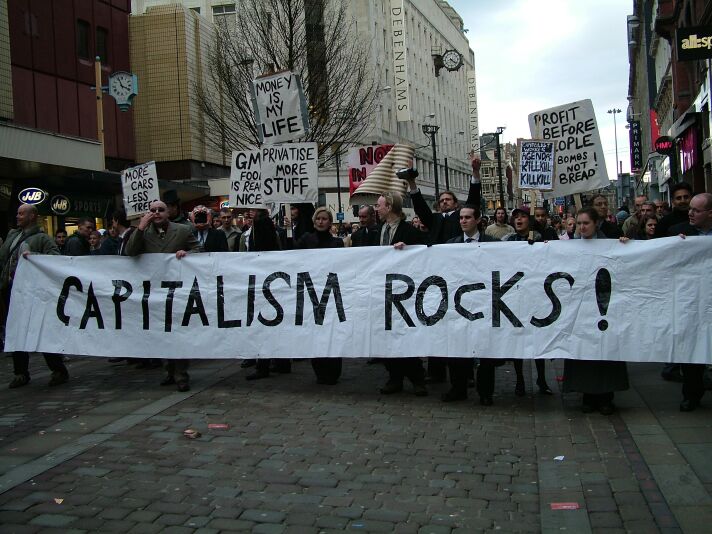
Gekko has become an iconic figure, acting as an archetypal capitalist, but in the process asking questions about the meaning and nature of a culture built on the pursuit of MORE, always MORE. Capitalism, and neo-liberal economics rule the economic roost at the moment, and no-one seems to be able to challenge the ideological truth of ‘trickle-down’ benefits of the creation of wealth, and the release of entrepreneurial aspiration, red in tooth and claw.

This morning, world renowned economists were asked whether they thought that this crisis had been brought about by greed. Both replied that they thought that it had. They thought that some greed was needed- but there had been too much!

They described how a long period (16 years) of economic growth had resulted in complacency and increased risk taking on the part of bankers, stock brokers and financiers. And how ‘rocket scientists’ (a euphemism for people who design ever more complicated financial products in order to seek out profit) have designed complicated financial processed that are not understood by most of the people whose companies are selling them.

Many of the huge profits generated by the banks have been made by selling and buying products with borrowed money. Sometimes, the borrowing ratio to the assets of banks can be 30-40-even 50 to 1. This is fine as long as there is lots of money sloshing around the system, but it only takes a few variables to change- interest rates, commodity and fuel prices, economic slow down, the rise of the Far East, etc etc, and suddenly, apparently impregnable banks are dreadfully exposed and vulnerable.

These are, after all, human institutions, made after our own image.

But we are made in the image of God are we not? And as a Christian, I find myself experiencing dissonance with any system that depends on greed and grasping as the engine of its very survival. Is there really no other way? Do I have to be complicit with this way of living?

I have a mortgage and a car loan from the Bank of Scotland. This bank has lost 40% of it’s share price in the last two days. Who knows what the future is for the BOS, and for my accounts?

But, is this the most pressing economic reality pressing in on our culture? Is Capitalism really working? Or is it serving only the narrow interests of people like me, who experience many of its benefits at the expense of those who do not?

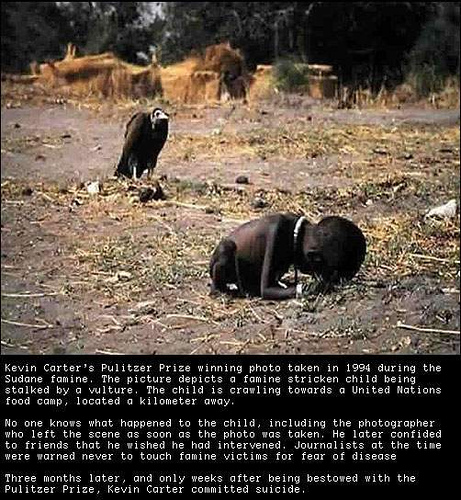
Is the real economic crisis to be found in a world in which things like this are ever present;

So what on earth can be, or should be our response?

I am humbled again. Reminded that my storehouse is not on earth, but in heaven.

And that when I serve the least of these, I serve Jesus.

Angels

So what do we think about Angels then?

We have just embarked on a plan to set up a worship space on Dunoon pier using the premise of Michaelmas- the festival of Michael and all Angels ( 27th of September… 12 noon till 8. You would be welcome!)

This idea was floated by Kimberley, minister at our local Episcopal church, and fellow blogger, and we had a lovely creative round-table planning meeting a couple of evenings ago. For some reason Michaela had sprinkled the table with glitter to bring a little angel-dust sparkle to the proceedings- and as ever with glitter, it is now everywhere, and on everything…

For me, the creation of these happenings is where the real worship of God can happen- a small community who seek to place God at the centre of everything, and celebrate this together.

But, as a confession, I struggled with the idea a little at first. To set up worship spaces like the one seems to demand a theme that allows creative, even playful, engagement- and I struggled with Angels as a theme…

Angels- Christmas cards, and New Age nonsense… this was my starting point.

But, I soon found that a little persistence can be very fruitful.

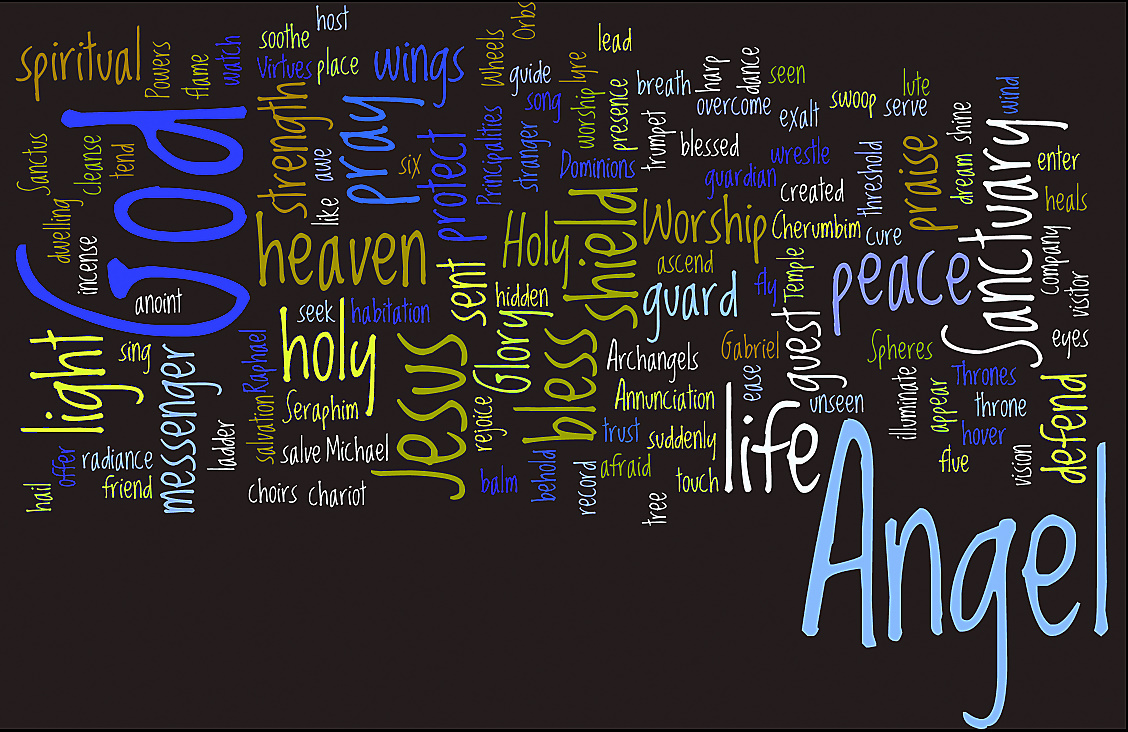
Kimberley had a whole set of words and ideas about Angels, and I soon discovered that Angel literally means ‘gods messenger’. Other folks had paintings, and ideas about how we could use the space, and what ‘stations’ we could prepare, and we were off and running.

One of the ideas was to use postcards to encourage people to send their own messages. I used wordle to generate an image from Kimberley’s words, and ordered some postcards.

Here is the image;

The Bible- and how we read it 2- my answers!

OK- I’m a sucker for a smart-ass challenge, but Jeffrey reckoned I should have answered the questions I asked here

So, I’ll have a go.

But I have to say that these are working notes, not complete answers. If you want complex theology- go elsewhere…

Question 1- ‘Disputable matters’ (From Romans 14) can we agree to disagree, or is truth more important?

Strange beginning I suppose- it is just one small verse in the middle of one of Paul’s longest letters. But this letter is the one in which he repeatedly circles around the issue of reconciling the legalism of the Jewish people (and his own background as a legalist-in-chief) with the New Kingdom, and life amongst the gentile believers. But I had missed this verse until recently, and I it suggests a tolerance and respect for different views and emphases does it not?

So for may answer to this one- narrow understandings of anything should always be subordinate to LOVE.

Question 2- How did people manage in the pre-modern era, when the Bible as we know it either did not exist, or was not available?

Well who knows? They seemed to have their fair share of sects and heretical groups I think? Perhaps too theological power was very centralised- Rome and the rise of Christendom…

But it seems clear that faith was the meaningful centre of lives and communities WITHOUT universal or even widespread access to the Bible. Was faith less real, or less true? I do not think so- it just existed in a different time and place.

That is not to say that reform was unnecessary, or that the medieval world is what we want to get back to!

Question 3- Can you be a Christian and never have read the Bible?

Clearly you can. It does not say in the Bible that you need to read it to be a Christian does it? Even Paul talks about scripture being ‘useful’ for teaching and instruction- not necessary.

But why would you not read and study the Bible if you could, and you had any interest in God?

Question 4- Who decides/rules on interpretation of scripture? Do we look to history, and God’s revelation to Christians before us? Do we allow particular theological experts to make executive decisions in relation to Christian history? Or should the emphasis be on our own engagement with the text- and it’s life in our lives?

I think I kind of implied my answer in the way I framed the question! I feel skewed towards small theologies, worked out in community, according to the leading of the Holy Spirit, and in the respectful shadow of those people of faith who went before us.

Question 5- Is there a FINAL version of biblical truth? Did modernity almost get us there, with perhaps a bit of tinkering required, or is there a need to start again with some basics? Does every generation need to wrestle anew?

Again, I think you could guess where I am going. I do not think that we have any right to claim a final version of truth- any more than Calvin, or Luther could have done- or for that matter, Augustine. How about Paul then? Did he have everything sorted? (Sorry, not meaning to ask yet more questions…)

Question 6- Systematic theology- good or bad?

I am not really qualified to answer this- I am no expert. I suppose it depends on the system, and on the theologian. But most systems are sooner or later tested to destruction, unless they are adaptive and responsive. Does that make the syncretic, and thus heretical? I do not think so- again, if we read the modernist reforming fathers like Calvin and Luther- do we agree with everything they said?

Question 7- Truth- what did Jesus mean by this? Lessons from the Pharisees?

I do not think I can do justice to this one. He clearly had no time for the way the Pharisees did the truth thing- and what they did has always looked a lot like highly elaborate systematic theology to me. But he did say that ‘They shall know the truth and the truth shall set them free’. I can only ask more questions again…

Question 8- Scripture- ‘God breathed’? Does this mean the Bible, or something else, that we have TAKEN to mean just the Bible?

Paul was obviously not speaking about the Bible as we know it today, as this collection of books simply did not exist- it took another 1700 years to sort this out, more or less.

He was clearly talking about the OT- but this too appears to have had a variable canon. He may well have been talking about other books now lost to us, and others soon appeared to regard his letters as Scripture.

The view that God ordained the Canon of Scripture as a complete, harmonious and unified whole, without error or contradiction, sent down from heaven on golden cushions (like the Mormon golden plates) simply has never made sense to me. This is partly because the Bible is shot through with contradiction and mystery- it is this that often makes it so compelling, and what theologian have spent millions of hours trying to resolve.

The Bible also makes no such claims for itself.

Don’t get me wrong- I do not mean to devalue the Bible, just value it honestly and completely, not by creating a mystical distance that leads to placing it in a glass case, not your back pocket.

Question 9- CONTEXT- where you start from- does this affect what you see, even (or particularly) in the Bible? Are there contextual ways of understanding the words- for example in relation to divorce, or women covering their heads, or homosexuality- or is this a slippery slope to heresy?

Oh dear- the danger of Syncretism again…

I think though, I have come to a view that it is impossible not to read the Bible contextually- in both obvious and more subtle ways. The critique made of Christianity arising from modernity and the enlightenment is a powerful one- the suggestion that we needed the Bible to be a blueprint, measurable and dissectable- because this was the only way to contextualise it.

The question that is gaining so much air time is whether or not the new post modern context demands a new reading- a new understanding, or whether this should be resisted and defended against as accommodation to the spirit of the age.

I think we need both new and old readings- and the freedom to pursue both.

Question 10- AUTHORITY- what does this mean in terms of the Bible? Is the authority given to us, to interpret and understand in the light of the Spirit, or to the words themselves?

I am clear that the words have authority only as given to them by the Spirit of God. We revere the words in as much as they bring God closer to our understanding, and ope ourselves to letting him speak to us through them.

Jesus promised that he would send the Holy Spirit- he did not promise to send us a rule book that would be our guide for all things, for all time, did he? Was the promise of the Holy Spirit as a comforter and a guide just a temporary one until the Bible Canon was agreed? (There I go again with the questions….)

Question 11- When the Bible talks about the ‘Word of God’- what does it mean? Jesus, or the written words themselves?

I think it is clear that one of the names given to Jesus in the Bible is ‘Word of God’. The Bible never claims to be that- although some of its words are accredited directly to God. Some are clearly the words of men, in worship of God, or even questioning of God. Much is written in the forms and convention of Hebrew poetry, and the meanings conveyed by these forms, and the imagery intended, has not been passed into our understanding.

Using the term ‘God’s word’ to describe the Bible is a modernist thing. When it is called this thunderously by preachers wishing to imbue their own words with a heavenly authority, I am afraid I find myself wincing.

So- these are may working notes in answer to the questions. If you disagree- then you are right to. I am not suggesting that I have these things sorted out. I am engaged on a journey towards the origin of all things. How could I ever have grasped everything that is to be known about him- or even written about him in the Bible?