
Within what has been termed the ’emerging church conversation’, one of the central debates has concerned the way we understand Biblical truth and authority- I suppose this is kind of stating the blindingly obvious! But if you say this- it will get you in lots of trouble! So I tentatively stick my head above the parapet again…
Because I do not think that anything NEW will emerge unless we can open up these discussions. There are too many entrenched positions, with whole industries set up to defend them.
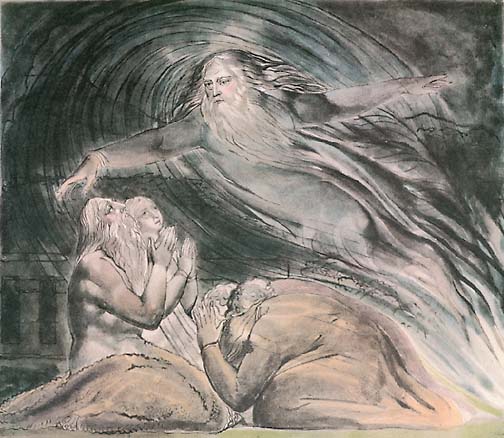
The Bible is an amazing thing- a collection of words spanning thousands of years of history, telling the story of an ancient Hebrew nomadic people, and their engagement with a God who appears in burning bushes, and clouds, and for a while camps with them in an elaborate tent.
And the words of the book are suffused with longing and laughing and yearning… and also with weird and puzzling accounts of a vengeful, spiteful God, who orders mass murder or slays the innocent first born sons of a whole nation. Here we encounter something that we wrestle with, and struggle to reconcile with the beautiful words of Jesus, the ultimate encounter of man with their living breathing God.
And it seems that through the history of the existence of these written words, they have been used as truth tools, even power tools, to propagate particular ways of seeing, ways of being- From the Pharisees to Jerry Falwell, and many others in between.
Some of the questions that I have come to ask again are these;
‘Disputable matters’ (From Romans 14) can we agree to disagree, or is truth more important?
How did people manage in the pre-modern era, when the Bible as we know it either did not exist, or was not available.
Can you be a Christian and never have read the Bible?
Who decides/rules on interpretation of scripture? Do we look to history, and God’s revelation to Christians before us? Do we allow particular theological experts to make executive decisions in relation to Christian history? Or should the emphasis be on our own engagement with the text- and it’s life in our lives?
Is there a FINAL version of biblical truth? Did modernity almost get us there, with perhaps a bit of tinkering required, or is there a need to start again with some basics? Does every generation need to wrestle anew?
Systematic theology- good or bad?
Truth- what did Jesus mean by this? Lessons from the Pharisees?
Scripture- ‘God breathed’? Does this mean the Bible, or something else, that we have TAKEN to mean just the Bible?
CONTEXT- where you start from- does this affect what you see, even (or particularly) in the Bible? Are there contextual ways of understanding the words- for example in relation to divorce, or women covering their heads, or homosexuality- or is this a slippery slope to heresy?
AUTHORITY- what does this mean in terms of the Bible? Is the authority given to us, to interpret and understand in the light of the Spirit, or to the words themselves?
When the Bible talks about the ‘Word of God’- what does it mean? Jesus, or the written words themselves?
It seems to me that there are huge areas within the way we read the Bible that are NOT clear. It depends on where you begin… and what QUALITIES and CHARACTERISTICS of God resonate with your heart. This may be no bad thing- after all, God seems to like variety in his Creation. Our variations of EMPHASIS might always have been in his thinking.
There are however bit of the Bible that appear unequivocal. Do this, do NOT do that. But I wonder if most of these really distinguish us as a people set apart. Do you know any humanists who think that murder is OK, or that materialism is the route to happiness?
It is the less concrete and perhaps more important stuff to do with how we live our daily lives- how we respond to those in need around us, and how we refuse to follow the false idols that are all around us. The Bible is indeed our guide for this, but only if we bring our hearts and minds to it in a humble and gentle way, and pray for the guidance of the Spirit. And perhaps if we refuse to use the words as bullets aimed at others.
But let us be careful that we do not become the worshippers of a book, then spend all out time arguing over what the pages mean, when it is at least possible that, to a lesser or greater degree, all of us are wrong, and both the writer and the Inspirer had a whole different lesson in mind- which involved living a life full of wonder and service…