Good news in the news…

As part of our on-going study ‘Exilio’ we were encouraged to watch the media for stories about Christianity.

The point was to ask what the stories might tell us about the place of Christianity in our culture.

So, of the few examples I came across- here is a selection.

More than 10,000 Christians are living in refugee camps in the eastern Indian state of Orissa after anti-Christian violence in the area, officials say.

Govan Old Parish Church A study has been launched to find a new use for the oldest Christian settlement on the River Clyde.

Govan Old Parish Church in Glasgow will no longer be used for worship after the Church of Scotland decided to merge three local congregations.

The historic site has a burial ground dating back to the 5th Century and 31 early medieval sculptures.

Possible new uses include a museum, a performance venue and a visitor centre linked to local businesses.

Baltic

An art gallery is facing a trial at crown court over claims it displayed an indecent statue of Jesus Christ.

A private prosecution is being brought by Christian group member Emily Mapfuwa, 40, of Essex, on the grounds the statue outraged public decency.

The artwork was part of an exhibition at Gateshead’s Baltic Centre featuring several plaster figures with erections.

Terry Gilliam, Terry Jones, Graham Chapman, Eric Idle, Sue Jones-Davies (centre) , John Cleese and Michael Palin

A mayor’s plan to end her town’s ban on the 1979 Monty Python film Life of Brian are being opposed by the local vicar, who says it pokes fun at Jesus.

Sue Jones-Davies, who played Brian’s girlfriend in the movie, was amazed when she became mayor of Aberystwyth that it was still barred at the cinema.

But Reverend Canon Stuart Bell said Christians he spoke to in Ceredigion were still against it being shown.

The mayor declined to respond, but will still press for the ban to be lifted.

So what can we learn from this little collection of stories, all culled from a simple search of the BBC news pages at one particular time? The plight of the thousands of Indian Christians has made next to no impact. Other stories become ‘human interest’ titbits- included for their oddness, rather than anything of central importance.

Christendom is dead.

Which is not necessarily a bad thing.

The exciting thing is what God will do next…

Beautiful creatures

I have come to think that this beautiful creature that God made ‘…a little lower than the angels, crowned with glory and honour…’ has a special place in this wonderful world.

But we are such a small part of all the good things that he made.

The sweep of land from forest to crags peering through the shroud of mist.

The wild beauty of a summer storm as lightening splits the night.

The cold flickering of the northern lights in the dark winter.

The smell of spring on fresh April mornings, when all things seem possible.

These events will happen whether or not we observe them, whether or not we participate within them. But in experiencing them, perhaps we bear unique witness to the artistry of the Creator. Perhaps we alone can tell at least some of the story, some of the shape and size of what this thing called Earth really is.

Sometimes it seems to me that we overplay our place as the top of nature’s food chain. After all, we are so small, and other life-forms on this planet may yet outlast us.

But then it occurs to me yet again that we beautiful creatures are alone in our ability to understand, to measure, and ultimately to choose to raise our voices in concert with the angels in a unique song of praise…

Liberation theology, Capitalism and Communism.


For years I have heard stories about the Roman Catholic clerics who defied the worst despotic regimes of South America in the 1060’s and 70’s. Bishop Romero gunned down in his Cathedral, Priests and Nuns who chose to live alongside the poor and oppressed, and to try to be the hands and feet of Jesus. Out of this melting pot was born a new way of understanding the words of Jesus, known as ‘Liberation Theology.’

Pope John-Paul spoke out against this movement. He grew up in so-called Communist Poland, and liberation theology sounded too much like communism to him. As a social sciences graduate who was also a Christian, the critique offered to Western Capitalism by socialist writers, and even by old Marx himself always resonated with me. I think it was CS Lewis who called Communism a ‘Christian Heresy’.

The 1980’s and 90’s saw an end to the old ideological divides in Europe- everyone became a free marketeer it seems. The Labour party in Britain stopped talking about ‘poverty’, lest it scare off the middle class (Bourgeois!) vote. Instead we talked about educational attainment, and ‘social exclusion’.

But, as Jesus said, the poor are still with us. A recent WHO report has pointed to the growing health inequalities in the UK, and commentators have raised again the issue of inequality of income as the main causal factor.

And if we look broader than the boundaries of my own country we see global economics are managed by the ‘free market’- but in this system, as in all others, there are winners and losers. The system, say many, is rigged against those who have not, in favour of those who have.

Definitions

Liberation theology is a Christian movement of protest and support for the poor. They would point us to the words of Jesus – yes the poor may always be with us, but our best service to Jesus is to serve the least.

  • The call is to see people. And to see them as the beloved of God.
  • The cause might be varied – but as Mother Theresa put it, “We rob our brothers by all that we own”.
  • The solution is to learn how to love – and to live this out wherever you are – in the slums or in the boardroom.

Here is a definition culled from the good old BBC (from here.)

“Love for the poor must be preferential, but not exclusive.”Ecclesia in America, 1999

Liberation theology was a radical movement that grew up in South America as a response to the poverty and the ill-treatment of ordinary people. The movement was caricatured in the phrase If Jesus Christ were on Earth today, he would be a Marxist revolutionary, but it’s more accurately encapsulated in this paragraph from Leonardo and Clodovis Boff:

“Q: How are we to be Christians in a world of destitution and injustice?

A: There can be only one answer: we can be followers of Jesus and true Christians only by making common cause with the poor and working out the gospel of liberation.”
Leonardo and Clodovis Boff

Liberation theology said the church should derive its legitimacy and theology by growing out of the poor. The Bible should be read and experienced from the perspective of the poor.

The church should be a movement for those who were denied their rights and plunged into such poverty that they were deprived of their full status as human beings. The poor should take the example of Jesus and use it to bring about a just society.

Most controversially, the Liberationists said the church should act to bring about social change, and should ally itself with the working class to do so. Some radical priests became involved in politics and trades unions, others even aligned themselves with violent revolutionary movements.

A common way in which priests and nuns showed their solidarity with the poor was to move from religious houses into poverty stricken areas to share the living conditions of their flock.

I believe that Jesus always had a bias towards the weak and the poor. Any reading of the Sermon on the Mount has to twist theological somersaults to deny this. And I can not subscribe to the idea that International Capitalism, propagated with such enthusiasm by the ruling Christian west, will have much currency in the Kingdom of God.

But neither do I have any faith in a coming Marxist utopian revolution. I would rather hope for Christians who plant hope and beauty in the broken places.

Where the poor people are.

The challenge is for the rest of us to find out what that means for us.

Blogged with the Flock Browser

Ordinary Radicals film

A new film is being released in the USA, trying to get to grips with emerging Christian movements across America, called ‘Ordinary radicals’ check out information and trailer clips here– looks interesting…

Not sure whether it will be released over here, but I think we will be able to download it when it is released.

This is the synopsis;

In the margins of the United States, there lives a revolutionary Christianity. One with a quiet disposition that seeks to do “small things with great love,” and in so doing is breaking 21st Century stereotypes surrounding this 2000 year old faith. “The Ordinary Radicals” is set against thie modern American political and social backdrop of the next Great Awakening. Traveling across the United States on a tour to promote the book “Jesus for President”, Shane Claiborne and a rag-tag group of “ordinary radicals” interpret Biblical history and its correlation with the current state of American politics. Sharing a relevant outlook for people with all faith perspectives, director Jamie Moffett examines this growing movement.

As Shane Claiborne and Chris Haw write in the book, “This is not a set of political suggestions for the world; this is about invoking and embodying the alternative. All of this is an invitation to join a peculiar people- those with no king but God, who practice jubilee economics and make the world new. This is not the old-time religion of going to heaven; this is about bringing heaven to the world.”

Featuring Interviews with: Becky Garrison, Shane Claiborne, Jim Wallis, Brian McLaren, Tony Campolo, Rob Bell, John Perkins, Brooke Sexton, Michael Heneise, St. Margret Mckenna, Logan Laituri, Zack Exley, Aaron Weiss and many more Ordinary Radicals.

Here is a taster…

Acts of the Apostles- whatever happened next?

As I have mentioned previously (here) we have begun a study in our group called ‘Exilio’, which combines a study of a Book called Exiles by Michael Frost with a study of the book of Acts.

The whole thing is intended as a way to consider the nature of the life of faith in this post- modern/Christendom/enlightenment western world that we live in.

One of the exercises given to us has been to read parts of Acts in a public place.  This places the stories of the first followers of Jesus firmly in our own context in a quite powerful way. The stories of these Christian communities forming and storming, living and loving in their own imperfect imitation of the Jesus way…

It set me thinking… what happened next?

We know a little- through surviving fragments of history. We know that the stories of Jesus spread like wildfire through the Empire of the Romans. We know that to be a Christian was often to be considered a dangerous subversive, and to be subject to state censure and persecution. Far from eradicating this plague of proselytisers we know too that the very capital of the Empire became the hub of an underground network.

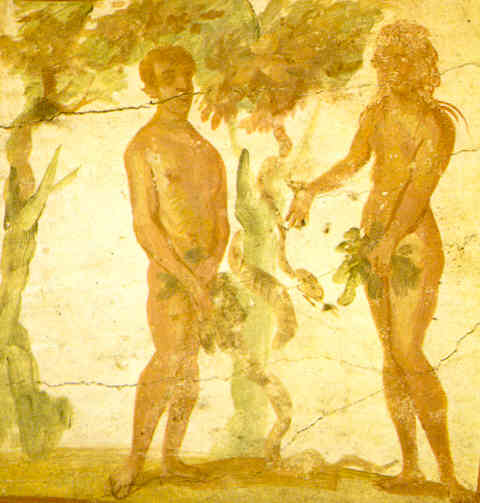
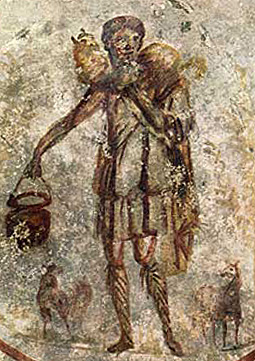
And in some cases, this network was literally underground! Christians from the 2nd Century until the adoption of Christianity as a state religion in 380, made miles of tunnels in the soft Volcanic rock below the city of Rome- where they were thought to meet in secret, and to make shrines to dead martyrs.

Here are some of the symbols left like boy-scout patterns for others to follow;

What was it like to live in those times? What did Jesus mean to these people that he would become the centre of their lives- at risk of everything?

How much of our their world view, their understanding of God, or their doctrine would we recognise today?

But how much could we learn from them?

Here are some more of the marks they left- Adam and Eve, and Jesus, the Good Shepherd.

What marks will our generation of Christians leave behind?

Rejoice and be glad because great is your reward in heaven…

Come with me my loved oneslet_the_earth_rejoice_bmug.jpg

Come into this Kingdom of mine

Shake free your feet

From concrete shoes

And dance

With me

Let me speak some tender words my loved one

For my heart is laid

Wide open

Ventricle and clavicle

Could easily be

Broken

Hear my distant voice

Dancing in the mountains

My music in these flowers

And flowing in the fountains

Come away with me my love

In this hillside let us…

Dally

apple_of_my_eye.jpg

Apple of my

Shining eye

Lily of my valley.

Favourite word 3- ‘indigo’

Indigo.

Another lovely word.

I think it reminds me of something half remembered from primary school- a reading set of books that only the keen readers ever progressed to taking home.

Or an ink pen whose innards bled blue blood all over my fingers.

It describes colour, distance, depth. It contains a promise of space beyond space- like a night sky.

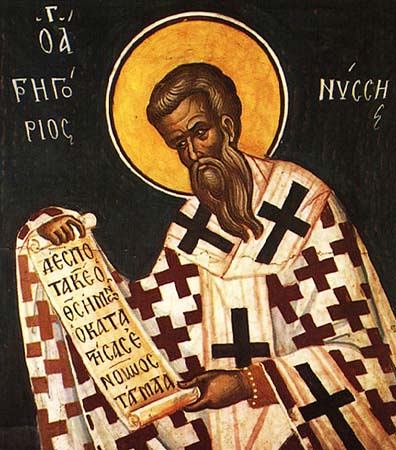
Gregory of Nyssia, a 4th Century mystic, likened the move towards God as to a journey into holy darkness. He suggested that the deeper and further we go, the more darkness we find in the light. For him, God is unknowable- a dark purple mystery, drawing us on- calling us to explore further and further…

Indigo.

In we go.

Blogged with the Flock Browser

Favourite words 2-‘fecund’

I came across this delicious word a few years ago, then tried for ages to find a poem/song I could fit it into. It is one of those words that is a pleasure to roll around the teeth.

It is also another microcosmic sermon…

fe·cun·di·ty (fi-kuhn-di-tee)
1. the quality of being fecund; capacity, esp. in female animals, of producing young in great numbers.
2. fruitfulness or fertility, as of the earth.
3. the capacity of abundant production: fecundity of imagination, ideas.

There have been times in my life when I have experienced what can only be described as the presence of God.

I can not easily describe, or explain these experiences. I only know that at the time, I never wanted to be anywhere else again. The air seemed to crackle with a kind of electricity, and everything, anything was possible.

One word which seems to capture something of this experience is- fecund…

As a response to one of these times, I wrote these words;

Listen to Him, you sons of Eden
As He opens the way for words to fall on you
Like the dew of the morning on the mountains
Gentle showers of rain upon the hillside.

I breathe in the air that smells of heaven
It’s verdant and green like the early springtime
In the leaves of the trees is the voice of Jesus
Pregnant with grace, and bringing new life

Wave after wave after wave after wave
Here is falling

My heart is bursting and
I’m falling down

On my knees,
On my knees.

Greenbelt 08- a Goan review…

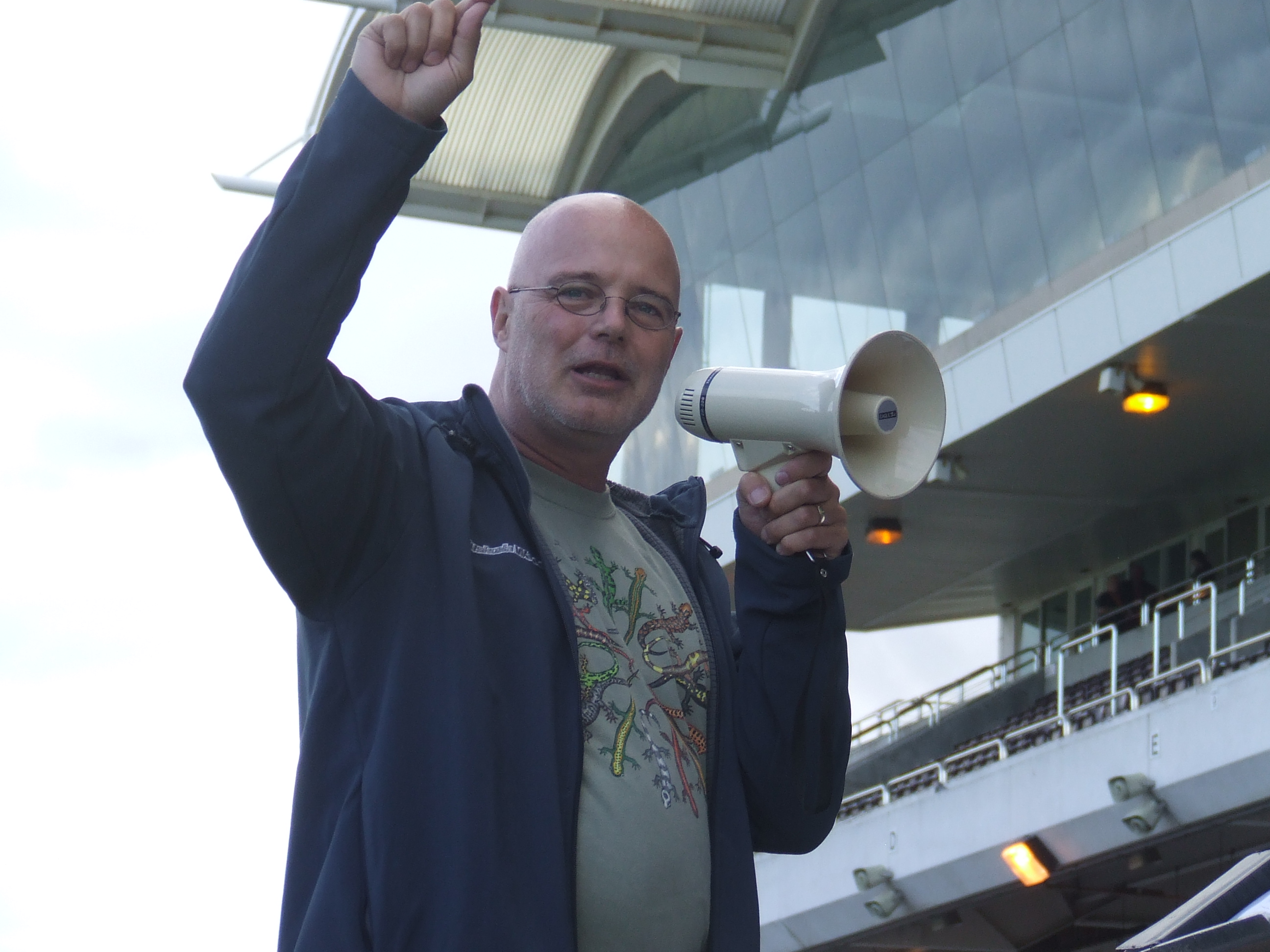
Brian McLaren makes do with a bullhorn after power failure...

Brian McLaren makes do with a bullhorn after power failure...

We are back.

Greenbelt 2008 was great- it was Michaela and the kids’ first time, and I think it was a bit of a culture shock for M at least. Will took it all in his stride, nintendo in pocket for the boring bits, and we only saw Emily every now and again- she had a ball.

M struggled with the crowds, the thousands of tents with guy ropes akimbo, and, of course, the questionable hygiene arrangements. But we all had highlights that we brought away as memories.

For Michaela, I think it was the communion service, visiting a spiritual director, and some of the talks.

For Emily, it was meeting new friends, a hard core screemy-teeny band called Fightstar and having the freedom to be herself in a large setting.

For William, who knows? Bless him, he is so easy with life. He seemed to really enjoy some of the ‘Children’s Greenbelt’ activities- particularly the chance to hold a snake, and to sing some songs. He badly needed some partners in crime- but seemed quite happy to hang out with the adults.

For me- a mixed bag really.

I loved Seth Lakeman’s set on Saturday evening- he made me proud- not sure what of exactly- perhaps that English-ness thing again.

I really enjoyed Brian McLaren, but more in agreement than revelation.

I also enjoyed hearing Philip Yancey- he is a really good speaker, and it was good to put a voice to the books. His combination with the Saltmine theatre company made me cry several times (in a good way!)

I somehow missed loads of stuff I wanted to see- partly because of family things that mean that time is shared in different ways, and partly because you just get overloaded at festivals like GB, and the effect this has on me is to make me wander aimlessly, sticking my head through tent doors and then moving on…

I missed out on a planned beer with Simon Smith because he was mad-busy doing some very impressive art stuff, and likewise Gail Findlay and Stephen Tunnicliffe, who were engaged on other Greenbelt business. I did manage to spend some time with old friends Mark and Denise from the Rhondda Valley, along with John, who is always great company. It was really good to see them again.

Along with fellow Dunoonite and Aoradh member Alistair (who had been volunteering the week before constructing various weird arty things) we performed a short version of 40 at the Proost lounge event on Saturday evening. Not sure how it went down, but it seemed to hold peoples attention, and feedback was good. Mark did us proud by reading the part of Jesus in a lovely rich Welsh accent (He asked if we wanted him to perform as Richard Burton or Uncle Bryn… I think he opted for the former in the end!)

The Proost lounge thing clashed with a discussion about whether there should be a Scottish Greenbelt (Scot belt? Tartan belt? Thistle Belt? You decide!) This was led by Doug Gay, and seems an interesting proposition. Huge amounts of work though- step forward the masochists!

Anyway- attached are a few more photies…

Rowan Williams and the emerging church

The Anglican church in England has taken on a supportive and encourging role for new forms of church that we in in Scotland have yet to see (although the Church of Scotland seems to be making some encouraging moves?)

There is some doubt in my mind that church projects that loosely fit into catch all phrase ‘fresh expressions’ of church may well simply be churches doing what they have always done- play groups and coffee mornings. But I am not meaning to criticise these things- done with purpose, and by people who care, they can be wonderful.

However, if we are to see the birth of something new, something that learns from the old, but is prepared to radically change the way we have done church in the face of the incredible changes in the world around us- then we will need much more than tinkering at the edge of the issue. We will need leadership, supportive networking, and the nurturing of a new generation of radicals prepared to go further than us…

Archbishop WIlliams has gathered himself a mixed reputation. I love the man’s learned grace, and most of the things I hear him say, I find myself more or less in agreement with- at least as long as I am able to stay with his dry academic delivery style. I think he is an important leader, standing at the crossroads of Anglican history.

So to hear him speaking about the EC- this is interesting. Here he is, brought to you via you tube…