Aoradh family day…

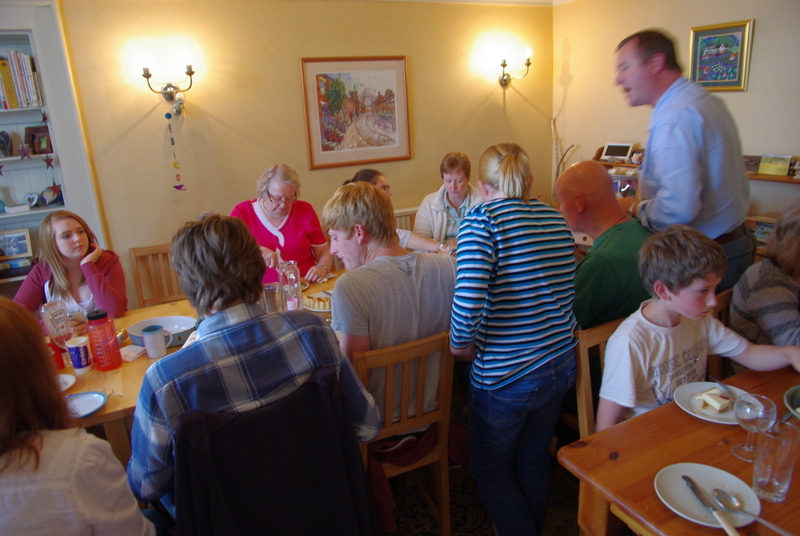
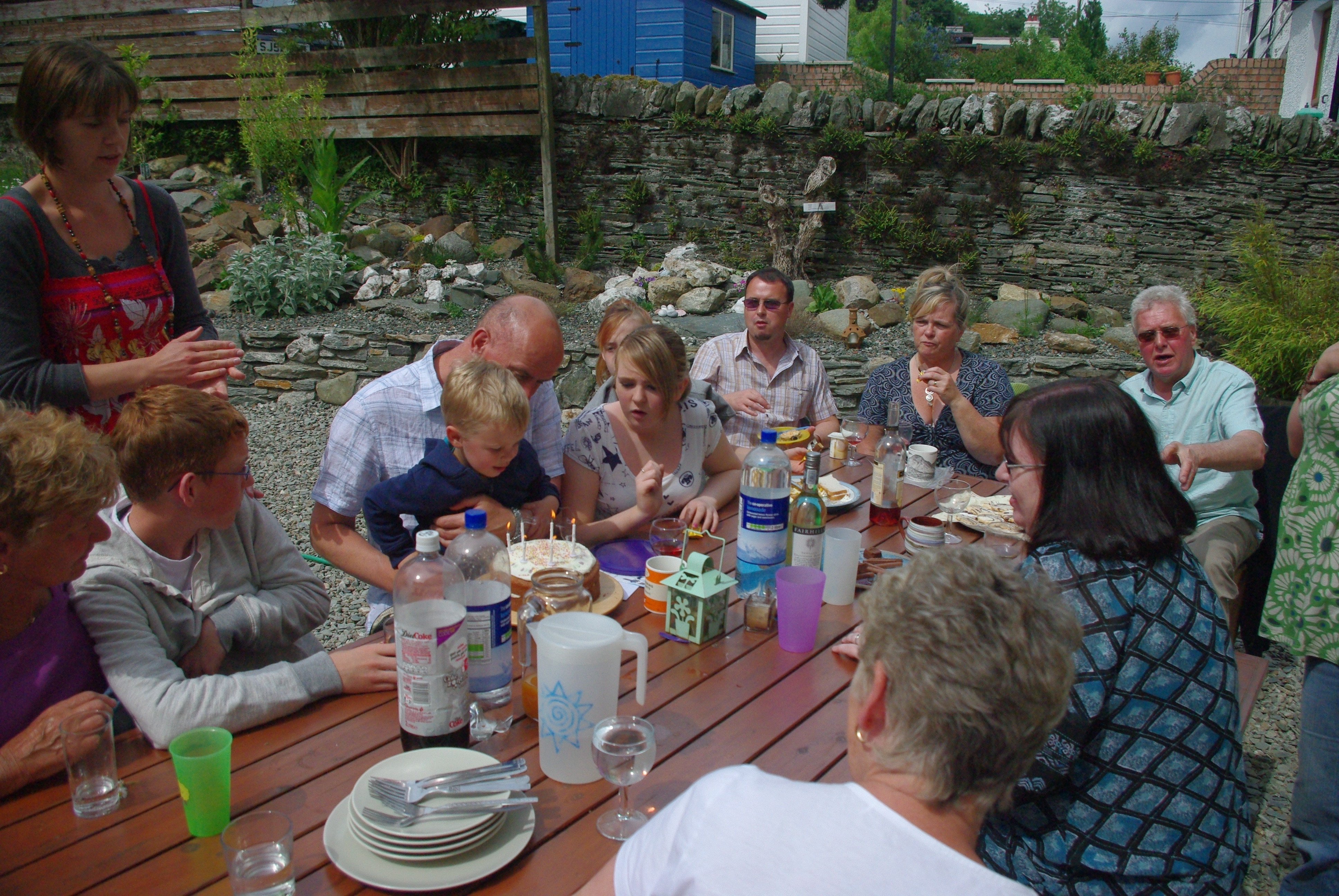
We had a lovely Aoradh gathering today. The kids planned their own worship service, around the theme of food (food in the bible, being grateful, being more fruitful) then- well we ate of course!

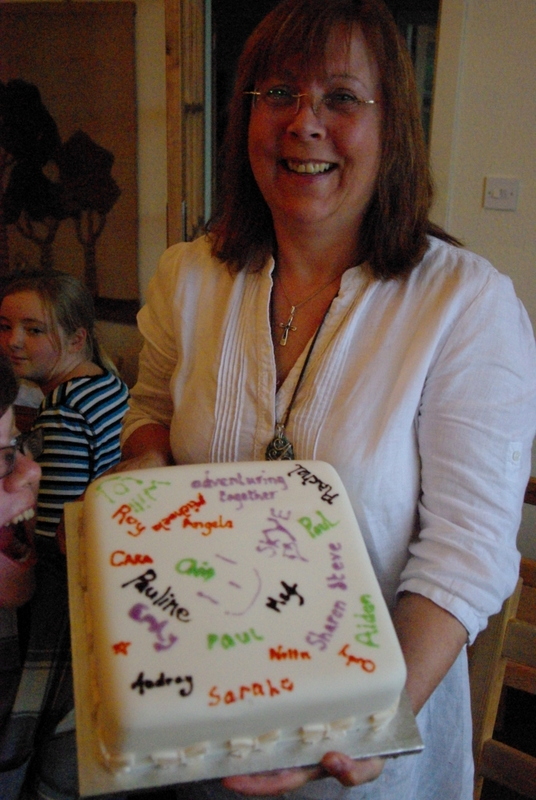
Sharon had made a cake, which we all wrote our names on in icing, then we ate that too.

Lots of our young people are in transition. Two of them away to university, one to college, others to new schools or new exam years. We decided to give them all an envelope full of things each adult had written to each child.

A good cake takes care.

All those lovely ingredients gathered and mixed and moulded.

Bowls licked clean.

Oven warmed and ready to raise and brown.

So it is with you my girl. All the lovely parts of you are in the mix. God is stirring them up, and the oven is warm.

You will feed many with rich lovely things.

You will feed many with love.


Crash course in Churchianity…

I heard a story about Church the other day from one of my close friends that made my eyebrows shoot skywards. More on this later…

I have spent too long deconstructing institutional Church in all its glorious contradiction. Initially I did this as someone who had been chewed up by a negative experience of church – burnt out by it all – and then latterly, more from a respectful removed distance. Eventually however, all this deconstructing has to stop and we need to start constructing again, or we are remain caught in some kind of pointless cynical loop.

All things change. The usual human cycle of any project of human organisation always goes something like this; new thing-expansion-slowing down-dissatisfaction-deconstruction-emergence of new ideas-start of new thing. 

Except in Churches, things sometimes seem to go so slowly. It is almost as if the religiosity of these institutions becomes a gate for the flood of change. If the shape of Church is God-ordained, defined by theology, supported by Scripture and managed by the chosen ones then how could it ever need to change?

My answers to this question, thought over long and hard, are as follows;

  • Change will happen, even if you try to ignore it.
  • The institutions of Church are human constructs, not divine templates floated down on angel cushions.
  • Church arises in a particular time, place and culture- it answers the questions of this place, and everything about it is shaped by these requirements.
  • But then the time place and culture have moved on, and there is a danger of disconnection.

Sure, many will suggest that culture may change but not The Truth, but I am afraid I do not agree with this either. What we once held as absolute gospel truth on all sorts of things has shifted- the divine right of Kings, remarriage after divorce, the place of women (even though this is still a work in progress.)

Back to the story;

My friend grew up in a Church in the north of Scotland and she frequently visits her parents there still. The Church they attend has a room at the back, with a glass partition between it and the main auditorium. The sounds of the main Church building are piped in by speakers on the walls, but otherwise the room is a smaller version of the main Church- plain, unadorned, lacking in any distractions such as toys or books.

It is known as ‘The Training Room’- where young people learn how to behave in Church. When to stand and sit, how to keep silent and when to sing, how to dress and to maintain proper decorum.

Initially I was shocked. How far have we come from the Jesus way of putting the kids first (see Matthew 19.)

But is this so very different from what we all have to go through in entering Church? We learn first of all to conform- to how to behave; to what is correct. Later on we may be able to question some of the edges of what we have become, but the pressure to conform, to belong, is too great.

Perhaps this might serve us well in part. We DO have things to learn, and we learn best in our collectives. However, these collectives also need to be learning, changing institutions and this is not an easy thing to achieve. In the worst case scenario the choice we have is to accommodate or take the nuclear option- and leave.

Leaving is no panacea of course, because as individuals or small groups setting out on our own we will start to form our own Training Rooms.

The open question for all of us is; how do we remain open, questioning, teachable, lovers of the way (not sitters on the pew?)

I have some flickerings of an idea as to how we might do this- and it is about being a sent people, not a gathered people. It is about going with love, not staying with doctrinal truth.

Hmmmm.

Spiritual Capitalism…

(Thanks to today’s Minimergent.)

We’ve all imbibed the culture of unrest so deeply. We just cannot believe that we could be respected or admired or received or loved without some level of performance. We are all performers and overachievers, and we think “when we do that” we will finally be lovable. Once you ride on the performance principle, you don’t even allow yourself to achieve it. Even when you “achieve” a good day of “performing,” it will never be enough, because it is inherently self-advancing and therefore self-defeating. You might call it “spiritual capitalism”.

Richard Rohr

Following the Mystics through the Narrow Gate 

Significance- lessons from Ecclesiastes…

I am 45 years old. My first career is possibly over, my second uncertain. Any hopes I had of making a way for myself through music of some other public magnificence are long gone.

In many ways, particularly for blokes, life is about a search for significance, ascendancy, personal power and the recognition of our peers.

Sooner or later (no matter how much of the above list you manage to manufacture) we all come to the conclusion that this is futile. Success is fleeting and always nuanced, and the pursuit of power extracts a price from our humanity. ( I saw that all toil and all achievement spring from one person’s envy of another. This too is meaningless, a chasing after the wind. Ecclesiastes 4:4)

So in the wreckage, what still stands?

This is the big question of those of us entering the second part of life. It is all too easy to fall into the way of Ecclesiastes chapter 1;

1 The words of the Teacher,[a] son of David, king in Jerusalem:

“Meaningless! Meaningless!”
says the Teacher.
“Utterly meaningless!
Everything is meaningless.”

What do people gain from all their labors
at which they toil under the sun?
Generations come and generations go,
but the earth remains forever.
The sun rises and the sun sets,
and hurries back to where it rises.
The wind blows to the south
and turns to the north;
round and round it goes,
ever returning on its course.
All streams flow into the sea,
yet the sea is never full.
To the place the streams come from,
there they return again.
All things are wearisome,
more than one can say.
The eye never has enough of seeing,
nor the ear its fill of hearing.
What has been will be again,
what has been done will be done again;
there is nothing new under the sun.
10 Is there anything of which one can say,
“Look! This is something new”?
It was here already, long ago;
it was here before our time.
11 No one remembers the former generations,
and even those yet to come
will not be remembered
by those who follow them.

The book of Ecclesiastes plays with these themes constantly- the meaningless futility of life, and the inevitability of death. The success/failure of the wicked, and the success/failure in equal measure of the devout. The limitations of wisdom, and the fickle search for success.

If the words were authored by Solomon (as traditionally held to be the case) they seem all the more poignant. They are the words of a 4th C BC King of excess, who had it all, turning towards the end of his living, confused still about the worth of a life. Not all the monuments or pyramids or songs could convince him that his life was worth anything more than that of any other animal.

Reading this as a young man, I wanted to rebel at the cynical emptiness of it all. Surely God has a great purpose for me- am I not part of his great plan? I am not the great part of his plan?

Now I find myself relaxing into it as truth- although like all of these things, only a partial truth.

Because if the legacy we leave on this earth is not about our youthful appetite for stuff, for power, for significance; if it is not about hard measurable, visible outcomes- a deeper, less quantifiable legacy might still be possible.

The measure of grace that we stain our situation with.

The love that we give and receive.

And for this, I turn from Solomon to Micah, chapter 6;

With what shall I come before the Lord
and bow down before the exalted God?
Shall I come before him with burnt offerings,
with calves a year old?
Will the Lord be pleased with thousands of rams,
with ten thousand rivers of olive oil?
Shall I offer my firstborn for my transgression,
the fruit of my body for the sin of my soul?
He has shown you, O mortal, what is good.
And what does the Lord require of you?
To act justly and to love mercy
and to walk humbly with your God.

Walking humbly with God- this is the journey I now try to make.

Significantly.

Happiness, economics and globalisation…

Great article on the Yes! magazine website (thanks to Brian McLaren for the link.)

The article deals with an old theme here- what makes for a full, satisfied life? How do we live in harmony with our community connections to facilitate this kind of living in those about us? (See here for example.)

There is a narcissism at the heart of our culture that elevates individual ‘success’ and fulfilment above all else. There has always been a terrible contradiction in this for me- in much of our activities, success for one has to mean failure for most. Add to this the effects of globalised inequality, in which overconsumption of the few requires the exploitation of the many and the myth of democratic meritocracy begins to look like what it is; thinly disguised Imperialism.

This way of organising ourselves has become a trap that we are all caught in. We in the West get fat behind our guarded borders, whilst those the other side of the frontier are sold impossible aspirational ideas of Western glamour and our obsession with new gadgets.

There is evidence everywhere that this arrangement is not working. This from the article mentioned above;

Our global economy is effective at many things—moving huge quantities of goods across great distances, for example, or turning mortgages into profits. What it’s not so good at is determining whether these activities are worthwhile when it comes to improving the lives of the people who live and work within the economy (not to mention preserving the natural systems on which the whole shebang depends). In many cases, economic policies that increase trade or production actually decrease well-being for millions, even billions, of people.

That’s the reality that’s leading more people (and, increasingly, governments, from Bhutan and Bolivia toBritain and France) to ask a very simple question: What’s the economy for, anyway? Do the rules and policies we create to govern the flow of money and goods exist to create ever more money and goods, or to improve our lives? And if we decide we’d like to prioritize the latter, how do we rewrite the rules to do that?

The article interviews makers of a documentary film, entitled The Economics of Happiness;

Here is what one of the makers of the film (Helena Norberg-Hodge, the film’s director and the founder of the International Society for Ecology and Culture) had to say;

In countries around the world, in fact, there is an epidemic of depression and suicides and eating disorders. With this film, we’re trying to show that, when you look at the big picture, these social issues—as well as our environmental problems—are linked to an economic system that promotes endless consumerism. Fundamental to that system are trade policies that promote the expansion of giant multinational corporations…

Norberg-Hodge and her colleagues strongly promote the idea of localisation as a solution to some of our social-economic woes;

I’ve spoken with some journalists who ask, “Well, how do we know what happiness is? Who are you to say what it is that constitutes happiness?” It’s true that there are many definitions, but I’m most interested in the abundant research that says that people all around the world, more than anything, need to feel loved, appreciated, seen, and heard—especially as children growing up. They need to be nurtured in order to become nurturing, loving and happy people. That is what localization is all about. That’s why localization is the economics of happiness—because it’s about restoring that human connection and care. In addition to research, consider our spiritual traditions. Virtually all of them have a clear message that love is the path to peace and to happiness.

Because people so need to be seen and heard, respected and cared for by one another, rebuilding community at the local level can dramatically restore human well-being…

…When people reach out to each other to start rebuilding the local economy—for example through the local food movement or local business alliances—we see a reduction in polarization, across political divides as well as across ethnic ones. At the same time, localization helps people reconnect to the natural world around them, something which fulfills another deep human need.

These are the things that really restore human happiness, and they come through localization.

I find myself instinctively responding to these words and ideas. They seem right. Possibly because they offer a means by which our spiritual life, community life, and economic life can come together again after being split apart by consumerism and accommodation with a culture founded on exploitation of others.

And as a follower of Jesus, the primary measure of a good life can never be economic success, acquisition of gadgets or protection of what I have already from those who have less. Living as a Christian in this kind of economic reality is like trying to fit a camel through the eye of a needle.

If there is to be any kind of change in our way of being, starting locally seems to me to be the only way forward. Find some friends and do things differently- it is the Jesus way.

The silence of God…

The silence of God


Here I am God

Speaking again into your vast unknown

Straining for resonance in space you left wide open

Waiting


They say you speak through sunsets

That you voice the throat of sparrows

That I should look for you in the least of these

And that you also speak in silence

They say you are a jealous God

Who calls us from beyond the periphery of our understanding


But I am weary of mixing portents from selective mundanity

I hope for so much more than God-in-abstract

Who is unmoved by weeping


Perhaps the problem is all mine

Some deficiency of listening making holes in my audial spectrum

Perhaps I am too used to snowing my head with white noise

Or maybe my ears are all plugged up with sin-wax


But then again, can this really be a matter of technique?

An accident of genetics gifting some with God-ears?

Do you require some holy smoke-filled sanctuary?

Or a flagellated enlightenment?

Can a loving God be so capricious?


So I decided to stop sending all those wish lists

All the pleadings for success and significance

I will even intercede reluctantly

More out of habitual hope

And a desire to carry the shape of you to others


I mean in this no lack of respect Lord

What rights have I to command your attention?

Neither is this related to my lack of faith

Even when I forget where I planted my mustard seed


It is just honesty

In the face

Of silence


But still I am listening


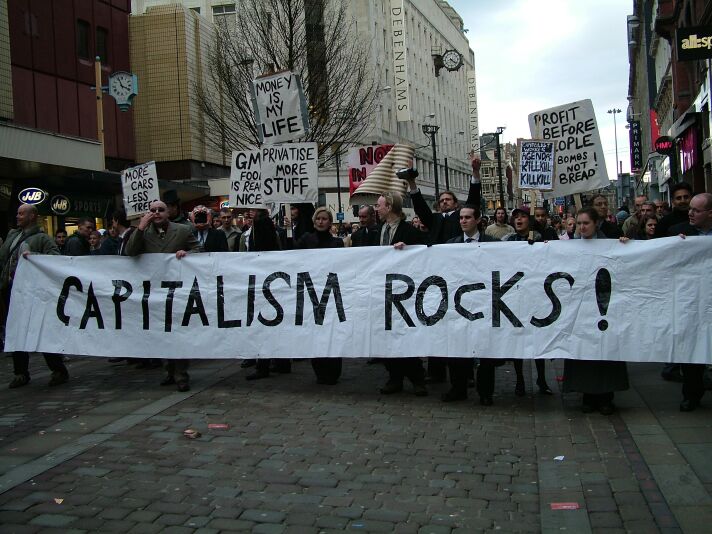
Capitalism; a conspiracy against the common good?

Interesting interview with the current Bish of Durham in the Guardian.

Justin Welby, who is apparently one of the favourites to become the next Archbishop, has an interesting background at the centre of UK establishment- Eton school, Cambridge University, The City of London as an oil executive, along with stints working in the oil fields of Nigeria.

All of which would suggest that his perspective on economic ethics would be rather right of centre. Not so however- this on the Occupy Movement;

“Occupy reflects a deep-seated sense that there is something wrong, and we need to think very hard about what’s wrong.” I press him on this, just to make sure I am hearing him right: “Were Occupy right that something is wrong?” He doesn’t hesitate in any careful, diplomatic Anglican way. “Of course they were right. Absolutely. And everything we are hearing now says that.”

His time as an oil executive in the centre of the City must give him a particular perspective on Capitalism, red in tooth and claw. The interviewer asked him if it all was not just one great, big conspiracy against the common good; profits privatised, losses socialised, to which he had this to say;

“When one group corners a source of human flourishing, it is deeply wicked. It applies to the City, to commodities traders, and to churches who say only this way is right.” This is pretty strong stuff. He continues: “The City is unspeakably powerful. The longer I go on, the more I am aware of the power of finance.”

Talk of the common good is exactly where Bishop Welby is at, ethically. He cites Pope Leo XIII’s 1891 letter Rerum Novarum as the greatest influence over his moral thinking. In this letter, a response to the exploitation of workers in industrial societies, the Pope sets out that the job of the state is to provide for the benefit of all, not least the most dispossessed. Though it rejects socialism, the theology it advocates lays out what later came to be called a preferential option for the poor: “The interests of all, whether high or low, are equal. The members of the working classes are citizens by nature and by the same right as the rich; they are real parts, living the life which makes up, through the family, the body of the commonwealth … therefore the public administration must duly and solicitously provide for the welfare and the comfort of the working classes; otherwise, that law of justice will be violated which ordains that each man shall have his due.”

There is also an interesting discussion about how Christianity is intertwined with capitalism- how the cultural inheritance of Christianity made us who we are, including our greed and excess;

(He quotes a) letter from the economist John Maynard Keynes to Virginia Woolf. The Bishop tries to recite the quote from memory: “We are the lucky generation, we have inherited the benefits of our father’s faith but don’t have the moral obligations. The next generation will be lost in their lust like dogs. We have destroyed Christianity, they will reap the cost of that.” In other words, Welby suggests we are living off and running down the cultural capital of Christianity. I point out to him that Stephen Green (Rev’d Stephen Green, now Lord Green, trade minister and author of Good Value, a book about ethics and finance) ran HSBC when it was laundering Mexican drug money, and Roman Catholic John Varley was CEO of Barclays. Christianity may offer little mitigation against City wrongdoing or morally significant mistakes.

Can Christianity, through the voice of people like Justin Welby, really start to become the faithful, engaged critics of our generation? Can we propose or model a real live alternative? This is my hope, although what this alternative may be is still so hard to visualise, so entwined are we with the culture we have both spawned and feed from.

What might God say to a teenager?

We are helping to set up a prayer room to be used as part of a Scripture Union camp run by some friends next week. I was asked to write a letter to be used as part of the event.

It was not an easy thing to do- there is a gulf of years from by own teen age, which was more than a little dysfunctional.

There are also my own kids- well on the way to becoming whoever they are to become.

How might they come to encounter that part of themselves that is Spirit? This is not in my power to command, although I might hope to be a window through which they can look.

In the end, I wrote this;

Dear……….

I hear you have been looking for me.

I listened to your questions about the meaning of it all; about where this wonderful world came from and where it might be going. I listened too to your hopes and your dreams and they filled me up with joy.

Because inside you are the seeds of my Kingdom.

I understand that all of this may seem mysterious and difficult to understand, but we are not done yet.

I understand too that sometimes you wonder if I am here at all.

Keep looking my child, because those who seek will find. Those who knock on doors will yet see them wide open.

Sometimes I will look at you through the eyes of someone you love. You will hold on to another and have no idea that it is my hand you are holding.

Sometimes I will smile at you through sunsets. I will cry with you in the summer rain and light your dreams with starlight.

You might find me too in old stories and songs written by other people who looked for me.

Some of these stories are about Jesus.

Stories of great things- lives changed, hungry people fed, broken people mended.

Stories of revolution. Stories that turn everything upside down. The small people stand tall, the first become last. The powerful and strong find that their kind of power has no place in my Kingdom.

Because my Kingdom is found in you.

Reflecting on the life of small ‘missional’ groups…

The Christian group that I am part of, Aoradh, is now about 7 years old.

We are due to speak at Greenbelt Festival this year about our experience in a session entitled ‘Don’t do it like us; making community in uncool places’. Despite the faux-humble tone of our title, it still feels very bombastic to be speaking about Aoradh in such declarative fashion.

Planning what we will say does start to focus the mind on what we hold precious however, and also brings to light those rather tender areas of our small group where there are wounds and vulnerabilities. We have had a little reminder of this recently- issues that flare and fester for a while, which can be very painful. They can also be the end of small groups based essentially on friendship and shared passion; there have been several points over the years at which Aoradh could have ended.

Despite the pain of this, I have come to see these tensions as above all- normal, inevitable.

The deep friendships that we value so highly within our community will always mean a suspension of defences, and perhaps a tendency to reveal some of our less attractive personality traits which pop out under pressure.

Then there are all the group processes that you have to work out; leadership, facilitation, communication, agreeing principles, organising your business, looking after those who are on the edge. I confess to avoiding some of the theory of how all of this works- there is of course a whole industry looking at group dynamics. The idiosyncrat in me wants to flee from the regimented check list nature of this kind of thing.

But we can always learn from the experience of others- that is why we are doing the Greenbelt talk/discussion session after all.

A few years ago I read a couple of M Scott Peck’s books, including the surprisingly wonderful ‘A different Drum; community making and peace’.  Surprisingly because I read it reluctantly- I had pegged it as new-age-psychobabble-pop psychology-nonsense. What Peck does though is to give a passionate analysis of the group as the highest form of what we humans are. He describes community building like this;

  • Pseudocommunity: In the first stage, well-intentioned people try to demonstrate their ability to be friendly and sociable, but they do not really delve beneath the surface of each other’s ideas or emotions. They use obvious generalities and mutually-established stereotypes in speech. Instead of conflict resolution, pseudocommunity involves conflict avoidance, which maintains the appearance or facade of true community. It also serves only to maintain positive emotions, instead of creating safe space for honesty and love through bad emotions as well. While they still remain in this phase, members will never really obtain evolution or change, as individuals or as a bunch.
  • Chaos: The first step towards real positivity is, paradoxically, a period of negativity. Once the mutually-sustained facade is shed, negative emotions flood through: Members start to vent their mutual frustrations, annoyances, and differences. It is a chaotic stage but Peck describes it as a “beautiful chaos” because it is a sign of healthy growth. I would add that many groups do not survive this stage, and at least, many people will leave.
  • Emptiness: In order to transcend the stage of “Chaos”, people are forced to communicate. Things that get in the way of communication are forced aside, or at least forced out into the open-  need for power and control, self-superiority, and other similar motives which are only mechanisms of self-validation and/or ego-protection, must yield to empathy, openness to vulnerability, attention, and trust. Hence this stage does not mean people should be “empty” of thoughts, desires, ideas or opinions. Rather, it refers to emptiness of all mental and emotional distortions which reduce one’s ability to really share, listen to, and build on those thoughts, ideas, etc. It is often the hardest step in the four-level process, as it necessitates the release of patterns which people develop over time in a subconscious attempt to maintain self-worth and positive emotion. For Peck, it should be viewed not merely as a “death” but as a rebirth — of one’s true self at the individual level, and at the social level of the genuine and true Community.
  • True community: Having worked through emptiness, the people in the community enter a place of complete empathy with one another. There is a great level of tacit understanding. People are able to relate to each other’s feelings. Discussions, even when heated, never get sour, and motives are not questioned. A deeper and more sustainable level of happiness obtains between the members, which does not have to be forced. Even and perhaps especially when conflicts arise, it is understood that they are part of positive change.

Any of you who are frustrated in organised church (as I have been) will recognise immediately the fact that most churches are pseudocommunities. All that politeness and veneer of respectability. Any conflict is immediately suppressed by the paid leaders, and it is possible to be entirely anonymous and disengaged in these places. To be fair there are many that like it this way, but to me it was a kind of death.

Has Aoradh achieved Pecks kind of true community? Sometimes I would say yes, other times emphatically no. Because I am not sure that the formation of community is actually a LINEAR process like this. Circumstances change, different people join the group then leave. Rather community is something that ebbs and flows, sometimes becoming constrictive and even boring, at other times full of creative energy and passion.

Peck also wrote of list of what he saw as characteristics of true community. These I like more, as they are less mechanistic and more inspirational;

  • Inclusivity, commitment and consensus: Members accept and embrace each other, celebrating their individuality and transcending their differences. They commit themselves to the effort and the people involved. They make decisions and reconcile their differences through consensus.
  • Realism: Members bring together multiple perspectives to better understand the whole context of the situation. Decisions are more well-rounded and humble, rather than one-sided and arrogant.
  • Contemplation: Members examine themselves. They are individually and collectively self-aware of the world outside themselves, the world inside themselves, and the relationship between the two.
  • A safe place: Members allow others to share their vulnerability, heal themselves, and express who they truly are.
  • A laboratory for personal disarmament: Members experientially discover the rules for peacemaking and embrace its virtues. They feel and express compassion and respect for each other as fellow human beings.
  • A group that can fight gracefully: Members resolve conflicts with wisdom and grace. They listen and understand, respect each others’ gifts, accept each others’ limitations, celebrate their differences, bind each others’ wounds, and commit to a struggle together rather than against each other.
  • A group of all leaders: Members harness the “flow of leadership” to make decisions and set a course of action. It is the spirit of community itself that leads and not any single individual.
  • A spirit: The true spirit of community is the spirit of peace, love, wisdom and power. Members may view the source of this spirit as an outgrowth of the collective self or as the manifestation of a Higher Will.

Is this Aoradh? My heart says YES.

My experience says it is the best of what we are, but it is not all that we are.

However, this too is normal. If we are moving towards the light through many dappled shades of darkness, then why would we not expect the same from ourselves in the collective? What Peck remind me of however, is that our groups have the capacity not to be just the sum of the parts within them– they are far more than just a gathering of individuals in one place. Rather they are the place of becoming.

They are not places where conflict is tolerated and excused as somehow ‘developmental’, rather places where conflict is understood and wounds are healed. It is a major distinction.

The writer of the Psalm 133 understood this.

How good and pleasant it is
when God’s people live together in unity!

It is like precious oil poured on the head,
running down on the beard,
running down on Aaron’s beard,
down on the collar of his robe.
It is as if the dew of Hermon
were falling on Mount Zion.
For there the Lord bestows his blessing,
even life forevermore.