Back to school…

Up here in Scotland, the school holidays are over.

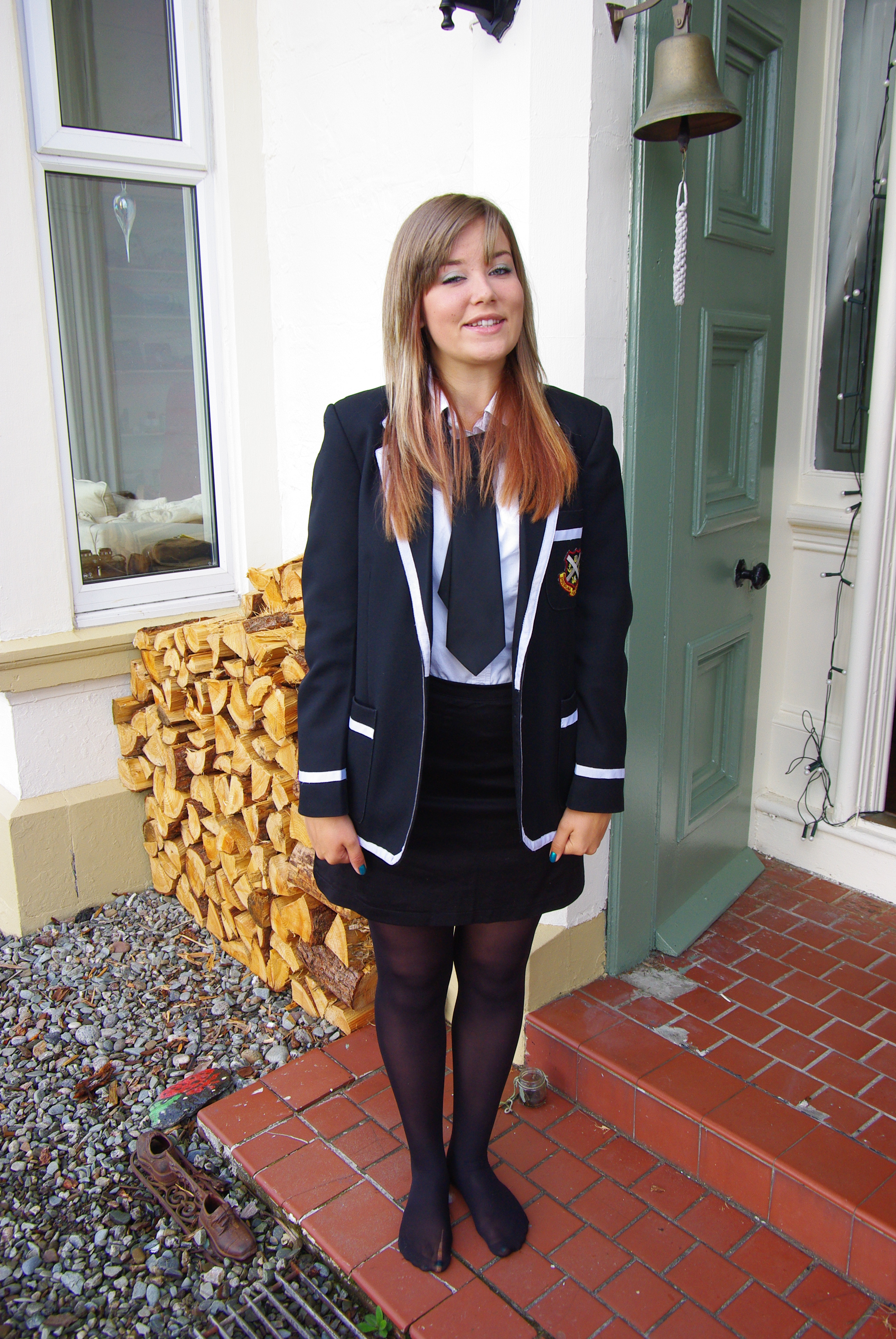
Emily starts her ‘highers’, and William is now in his last year of primary school. Emily is a prefect this year- complete with blazer of office-

I often hear parents longing for the end of school holidays- not me. I love the gentle pace of the long summer days- which like our children’s childhood, still pass by so quickly.

Summer is now on its last legs- staggering onwards to autumn. It has been lovely though…

Starsuckers…

I watched some of this film the other day-

It is impossible to watch this and not think that there is something bonkers- something rather sick- at the root of our media machine (and therefore at the root of our society.)

We hunger for significance

And the primary way we demonstrate this is through the media machine

Which for its part will chase after any train wreck or celebrity breakdown in order to make a splash of attention, which will then convert into a splash of cash

And because train wrecks and celebrity breakdowns are unpredictable, then the machine manufactures them-

And we play the game- even though we understand that it is a game. Even though we know that it is all fake and phoney. Because what else is there?

How else might we aspire to significance?

How else might life be lifted from the humdrum but by the exposure of some soft subcutaneous celebrity flesh? (Apologies for the Dylan Thomas-esque excessive use of sibilance!)

And how, my friends, do we begin to do things differently? Because each one of our areas of expansion- even the Church- falls into similar traps. We elevate our celebrities, feed on them, then watch them fall.

The TFT counter culture anti-tabloid manifesto! 

So, here it is. Time to push back!

Lets be like fat men who walk past Macdonalds- at least some of the time…

  1. Stop buying tabloid newspapers. I know- they are entertaining, and you only buy them for the sport, but the ink is toxic- and it will stain all sorts of things that you are not immediately aware of.
  2. Let’s stop caring what celebrities think. Rather let’s look for other voices- those at the margins. Particularly those who are poor and weak.
  3. Let us focus on the small scale, not the big scale- let us hope to find our place in small communities as we set ourself towards simple missions.
  4. And as for the interweb- useful though it is- it is not democratic. It is not a means of levelling the playing field. That dream is dead. It reflects all the mess of wider society. So let us sometimes deliberately SWITCH OFF (Scary as it might be to those of us addicted to laptops and smart phones) and so something simple, and hospitable. Go for a walk with a friend. Visit someone who is lonely. Write a letter. Go to a pub and buy someone a drink.
  5. Value the small things. Celebrate them in verse and song.
  6. Cultivate individuality, not image.
  7. Create for the joy of it- not for the relationship to what is cool.
  8. And as for Christian celebrities- well lets make a rule that they can only be seen in public wearing clothes from Oxfam- one size too small. Or if that is too cruel, lets just have an open on going discussion about human frailties and how we measure the wisdom and worth of an individual.
  9. Gossip about goodness. Try to tell stories of people’s secret success and hidden kindnesses.
  10. All that is broken in you, all that is beautiful on others- these things are eternal.

Father, son, brother…

Today I had dinner with my father and brother.

It still seems a strange sentence, as it was not able to be said a short time ago. Here we are-

I never knew my father until three years ago, when aged 40, I decided it was time to try to track him down. I discovered in the process a whole new family, including a half brother who lives in Scotland.

There is a long story about how all this fits together, but for now, I will say this- I am grateful.

A little rant about personality testing…

I know, I know- it is here to stay. It will increasingly be used to support appointments to employment, and to put together teams in all sorts of industrial/Managerial situations.

All those carefully developed questionnaires- testable, measurable, repeatable-giving pithy truisms that can then become the means to understand the mess of humanity. As a psychology student I had to understand something of the ‘science’ behind all this- enough to understand the strengths and weaknesses of the approach.

The arguments for such testing are powerful- enabling understanding oneself in a new and clear way- and suggesting the basis of likely conflict with others in the performance of joint tasks, thereby allowing teamwork to be better understood.

But that is not to say I have to like it.

Some of this is because everything in me hates the idea of easy categorisations- as if what we are is reducible to a simple set of generalisations. In the name of individualisation, we strip people of their individuality and replace it with a letter, or a position against two axes.

It has always seemed to me too that some kinds of personalities are pre-disposed to loving personality testing. Ah the irony- those who love to organise, to place everything in order, to control- both themselves and their immediate environment- they will fall upon personality testing in all its different forms like a starving man on a bag of chips.

And it can become a real danger- to both them and to others around them.

Let me give you an example of a typical description from Myers Briggs, one of the most common types of personality test.

ISTP

ISTPs excel at analyzing situations to reach the heart of a problem so that they can swiftly implement a functional repair, making them ideally suited to the field of engineering. Naturally quiet people, they are interested in understanding how systems operate, focusing on efficient operation and structure. They are open to new information and approaches. But contrary to their seemingly detached natures, ISTPs are often capable of humorously insightful observations about the world around them. They can also be closet daredevils who gravitate toward fast-moving or risky hobbies (such as bungee jumping, hang gliding, racing, motorcycling, andparachuting), recreational sports (such as downhill skiing, paintball, ice hockey, and scuba diving), and careers (such as aviation and firefighting).

ISTPs may sometimes seem to act without regard for procedures, directions, protocol, or even their own safety. But while their approach may seem haphazard, it is in fact based on a broad store of knowledge developed over time through action and keen observation. ISTPs enjoy self-sufficiency and take pride in developing their own solutions to problems.

ISTPs are content to let others live according to their own rules, as long as the favor is reciprocated. ISTPs endure reasonable impositions without complaint—but if their “territory” is encroached upon, eroded, or violated, they defend what they view as rightfully theirs.

This category is thought to describe 4-6% of the population of the world.

There are twin dangers here- the first is that, presented with this truism (and these categorisations always read a little like astrological predictions to me) we might actually come to believe that this is who we are– and this effectively becomes a self fulfilling prophecy- it becomes formational in terms of our self image. There is some evidence that we are often too quick to identify personality traits in others, and despite the fact that all the personality types identified in Myers-Briggs are deliberately positive, we tend to reject and condemn those that we see as different to ours.

The likely result here is that those positive attributes of personality we find ourselves labelled with, become enhanced, but the less positive ones we are able to excuse as they are not who we are.

Secondly, it ignores the possibility of development, change, encounter and growth. Sure, I know that some would describe these personality traits as fixed and immovable- stable through our life time, but there is a chorus of psychologists that would entirely disagree with this too. Some of this debate can be seen here.

I would add one more objection however- and I think that this perhaps the greater part of my concern- I believe that personality tests are dangerous in the hands of powerful people- in the same way that machine guns should never be given to despots. They are too often used as means of achieving the opposite of their stated intention. It is a way of manipulating and shaping a workforce to achieve efficiencies, redundancies or restructuring.

There is another area in which these methods are forcing their way- self help methods, and even spiritual practices. People are being encouraged to buy into a method of success and self fulfilment that starts with insights gained from measurement and categorisation. Typical of this approach is the Enneagram. Whilst some people have clearly found these approaches useful- they can also become a kind of cult- like a successful slimming programme or a pyramid sales system. And the whole thing is based on an intuition, with no evidence that any of the nine types of personality actually exist.

So- after my little rant, time for a few soft conclusions…

  1. We a gloriously diverse, yet tend towards convergence- it is the nature of the human condition. Let us together celebrate difference without seeking to categorise and codify.
  2. We are not the sum total of these narrow categorisations- we respond to situations and people in a varied way, dependent on all sorts of other criteria.
  3. They are very blunt instruments- and such course measurement is very dangerous when dealing with individuals.
  4. We need to be open to the possibility of change- not just of our aspirations and success, but also in more subtle ways- the Jesus way is towards love, acceptance, grace, kindness, self control. These soft, imponderable traits are not optional in The Way- no matter what personality trait you might be tagged with.
  5. Let us not take this stuff too seriously. It is not science, it is population management.

Holiday!

AHHHHHhhhhhhhhhhhhhhhhhhhhhhhhhhhhhhhhhh………….

He sighed.

Off for a couple of weeks. We are heading over to the East Coast to do a bit of exploring- a bit of a new thing for us as the other side of Scotland is a bit of a mystery- we have been too addicted to mountains and lochs (and midges.) St Andrews here we come…

See you when we get back.

Freedom…

Good conversation yesterday evening about freedom.

In many ways it was a return to this quote-

 Then you will know the truth, and the truth will set you free.

John 8:32

In a previous post I focused on the ‘truth’ thing- but there is also this word ‘freedom’. What does it mean to be free? What did Jesus mean by freedom?

The traditional evangelical view is that Jesus was meaning freedom from the consequences of our sin. Except that the context of the passage from John’s gospel seems to suggest that rather than trying to solve the ‘problem of sin’ Jesus was trying to solve the ‘problem of the sin police’. Check out the full passage- coming as it does in the wake of how he brilliantly turns aside the traps the Pharisees set for him- and how he focuses instead on the potential collateral damage of their theological/political debate- a woman who was accused of adultery.

So in this discussion, Jesus is interested in freeing people from the hard unyielding unloving religion. Freedom in the context then is- what? No religion? I think there is a strong argument for this- but certainly I think we can say a different kind of religion- one where the outer person is less important than the heart of the matter, and where the weak and poor are always to be preferred to the powerful and rich. A kind of religion that turns the tables on the easy assumptions and compromises made by the movers and shakers of our times.

In housegroup the other night we listened to Aung San Suu Kyi speaking about obtaining freedom (One of the Reith Lectures- you can listen again here.) This was an inspiring account of lives lived in the very face of oppression. For Suu Kyi and many of her colleagues, freedom is not an abstract concept (even though she speaks too about freedom of the Spirit) but is a real place of longing,  seen through Burmese prison bars. She described the courage of those who continue to work for freedom from oppression- how it was not the absence of fear that motivated them, but rather a sufficiency of courage in the presence of fear.

But we in the west, we take this kind of freedom for granted. We often move onto discussions about an extension of this freedom into all sorts of casual consumer choices- the right to a good holiday experience, or the freedom to chose what time our hospital appointment should be.

Which kind of leaves me wondering whether the kind of freedom we need is not physical- but spiritual.

Perhaps freedom is not just about the bringing down of a wall, or the overthrowing of a dictator- even though these events might be ones well worth working and hoping for.

Rather freedom is another one of these things that we discover on the journey- it is not an end in itself, but in seeking to live a life according to the rules of the New Kingdom, we find that the shackles tend to loosen and fall away.

Pikey…

Vodpod videos no longer available.

I hate words that are used as weapons.

Words that spit on people.

Words that are used to smear and to dehumanise.

Some of the words like this have been broken out of use- people have seen them for what they are. Or perhaps power that was withheld has now been taken, and the marginalised will no longer stay silent about the words we have used about them. So we no longer hear words like ‘nigger’ or ‘wog’ or ‘Jim Crow’ used in daily conversation.

Other words however remain. All those words for people from the Middle East, in the wake of another batch of imperialistic wars. Wars ‘against terror’. as if terror could  be fought by out-terrorising other people’s children. We make it OK by stripping the other of their humanity- and this is reflected in out use of language- ‘Towel heads’, ‘Rag Heads’…

One word that I have heard used by people who really should know better is this one- Pikey. It is a word that allows us to dismiss those remarkably resilient outsiders- the travelling folk.

Most words like this do not survive encounters with real people, with real stories. People in three dimensions. I have just watched this lovely film, which makes this point better than any more words of mine.

Fiddling with sheds…

What a lovely weekend.

Yesterday I spent a long day in the garden with my boy William installing a shed in the garden. It was kind of his birthday present- he was desperate for a tree house, but none of our trees are ideal, and I was rather fearful that one of his friends would end up in hospital as a result. So the compromise was a small shed, installed in a corner of garden all his own…

Of course, this involved a load of work- ripping out enough ivy for a hundred Christmases, building a level platform (our garden is rather like the north face of the Eiger, minus the snow) and then the usual hammering and screwing and cursing that accompany any shed erection. (And if you read any rudeness into that last sentence- then it is YOUR mind, not mine!)

Here he is, with freshly installed (purple!) wall to wall carpet. If you should call round you are sure to be invited in- please remember to leave shoes outside…

Today, by way of contrast, I took my lovely daughter Emily to a wedding over the water, where she had been booked to play fiddle (with me as accompanist on guitar.) I was so proud of her, and we had a lovely day out together. The wedding was the daughter of Simon and Helen, our friends from Dunoon, so it was great too to see them all so happy.

Now, back home, well fed, watching the light fade over the Clyde, I am a man blessed. And for a melancholic, it does not get much better than that.

Return to the story of baby Peter…

I keep finding myself returning to this story- as much because the events following the terrible death of this little boy have created huge changes to how we as a society approach the care and protection of our most vulnerable children. Some of this might be a good thing- but I have to tell you also that much of it is not. It is policy pushed by tabloid journalism- and lets face it- the red tops are not exactly flavour of the month at the moment are they?

I return to the story today because I read that the social worker who was the case worker for Peter today won damages from The Sun (Murdoch again- for those outside the UK, this paper is about as bad as you can imagine a ‘news’ paper can get.) Sylvia Henry had tried hard to remove Peter from his mothers care- but was pilloried by The Sun as ‘Showing no remorse’ and having ‘ducked responsibility for his death’.

It may be of interest to readers that the same place I read this story also carried news of a Serious Case Review into the death of another child- Ryan Lovell-Hancox, who died in the care of people paid to look after him in Wolverhampton. The review highlighted familiar issues- 14 failed opportunities to save him by social work, health and police. The sad truth is that the deaths of children at the hands of adult care givers are not rare events.

However, since the death of Peter, referral rates to children’s social care departments in the UK have reached unprecedented rates. There has been no increase in resources, or numbers of social workers to deal with the demands of this difficult and sometimes traumatic work.

Most social workers ask themselves fairly frequently whether we too could make a mistake, or just find ourselves in the middle of a media storm because of a tragic death. Most of us have to conclude that it could happen to any of us, at almost any time. There was an interesting article in BASW’s ‘Professional Social Work’ Magazine today by Colin Mabbut, a senior child care practitioner, asking himself what he would have done, faced with the circumstances that the social worker encountered around the death of baby Peter. I wonder if this might be of interest to people outside social work- as it must be really hard to understand how people even begin to approach the task of monitoring children at risk.

Would I have picked baby Peter up on my last visit, thereby revealing that he had a broken back and other injuries of torture?

Colin points us to the criticism leveled against the fact that this did not happen, and the final chance to save this boy was lost.

What was not widely reported at the time however was that Peter was not an only child- rather he was one of eight resident in the household- of which only three (including Peter) were on a child protection plan. Imagine being in a house like this- all the mess and chaos of it. In this instance, Peter was in his pushchair, with a face smeared with chocolate (covering facial injuries) he was initially asleep, and when he woke he smiled at the social worker, who took the fateful decision not to disturb him by picking him out of his chair so soon after he had woken.

Would I have done differently? Probably not.

Would I have wiped the chocolate from his face to check for injuries?

With hindsight, yes. But in the press of a busy day? Perhaps not.

Would I have been sufficiently suspicious to have discovered that Peter’s mother had a male living in the house that I was unaware of?

How do you sift the mess of human emotions and motivations to always see the bigger picture? Anyone who has a child will know how difficult it is to always know the truth of what you are told- how much more difficult is this when dealing with adults who are setting out to confuse- who may appear compliant, even eager to please, whilst actually being manipulative and evasive.

My social work career (working with adults with mental health problems) has meant that my default position is to accept as truth what I am told. Sure I seek to understand the story behind the story, but I am not often in the position of having to forensically deconstruct the words given to me in order to shake out every evasion, every deceit. My childcare colleagues do this every day- I used to joke with my old child care team leader room mate that she was bad cop to my good cop.

But even with the best of intentions, bad cop has to form a working relationship with parents- otherwise no any protection plan is difficult to achieve. This means that there are times to be assertive and authoritative, and times to work collaboratively and in partnership. Peter’s mother was on the face of things being compliant.

Would I have known that there was another malevolent presence in the house that increased the risk to Peter considerably? Again the answer has to be- probably not.

I would not like to give the idea that this job is impossible- it is not. Children at risk are protected daily- as a matter of routine- from situations every bit as appalling as that faced by Peter.

There is still a debate about OUTCOMES for children in our under resourced system however- this is the real scandal I am afraid…