This made a splash in the blogospere and because I have been chewing on the nationalism thing (see here and here and here) I thought it worth posting!
Apologies to my ranty Scottish friends for exposing them to an equally ranty posh Englishman!

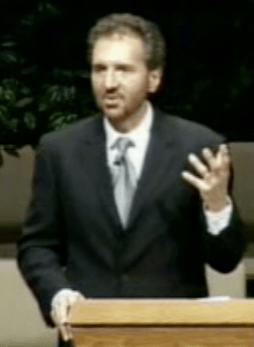
There was an interview/discussion on the radio 4 Today Programme this morning featuring the controversial American psychologist Joseph Nicolosi. You can listen again here.
This man appears to have a lot of exposure in the US- and I started a bit of internet searching to see what I could find out about him. Here is a bit of a trawl through some of the main organisations and players in this issue;
He is one of the brains behind NARTH- the National Association for research and therapy of homosexuality. Check out the many stories on the site by people who appear to have been ‘cured’ of their sexuality.
Conservative religious groups like focus on the family have embraced this viewpoint wholeheartedly. Check out their ‘Love won out’ conference.
The American Psychological Association condemned the findings, and released this primer entitled ‘Just the facts’.
The Royal College of Psychiatrists are quoted as saying this by the BBC here.
The Royal College of Psychiatrists (RCP) said there was no evidence that the treatment worked, and that it was likely to cause considerable distress.
An RCP spokesman said: “There is no sound scientific evidence that sexual orientation can be changed.
“Furthermore, so-called treatments of homosexuality create a setting in which prejudice and discrimination can flourish.”
The Royal College said the American Psychiatric Association had concluded there was no scientific evidence that homosexuality was a disorder and removed it from its diagnostic glossary of mental disorders in 1973.
The World Health Organisation’s International Classification of Diseases followed suit in 1992.
So what is Nicolosi actually saying?
As far as I can see, his theory is based on a rather unsophisticated simplistic view of the acquisition of gender, shaped through parenting style and in particular, interaction with male authority figures. Then there is a lot of quasi-scientific language used to wrap it all up in. Here are some quotes (from here);
By way of contrast- I came across this series of clips from a Gay activist who had been invited to attend the ‘Love won out’ conference. They seemed to be very graceful…
There is no surprise that Nicolosi’s message has been greeted with such enthusiasm by Conservative Christians. It ticks all the right boxes. In fact, it seems to fit rather too well, and we have to ask which came first-the ‘science’ or the ideology?
So, what do I think? I am going to make some general statements, then tell a story.
If Nicolosi is right, then homosexuality is indeed a result of dysfunctional experiences in early life. I am afraid this is rather too simplistic for me. Why do people who have the same experience in childhood (Positive or negative) develop such different sexuality? Most human characteristics develop through the interaction between both nurture AND nature. This means that causality is almost always impossible to be categorical about, even where dysfunction (which is often a social value judgment) is agreed upon- for example where people are mentally ill.
Science that begins with a narrow ideological/theological perspective is likely to be extremely problematic. Morality is not usually very scientific. But then science is never value free either- there are always interests that will introduce bias. I think we have a duty to be as honest as we can be about these however.
It is clear that there are many stories of people who claim to have been ‘cured’ by therapy of their homosexuality. I have no doubt this is true for some- as the variety of human experience is wide and wonderful. I would expect some to people to remain straight (a small group though) most to revert, and many to be damaged and disillusioned.
Gay=dysfunction? This is almost certain to perpetuate prejudice against one group of people. Perhaps this is acceptable, if your reading of the Bible allows you to draw hard lines on this issue. I think we are called to love first however- and to stand with the oppressed, not to pile stones as projectiles.
Statements that equate homosexuality with sexual molestation in childhood are simply not supported by evidence.
Blaming parents? An easy hit. Psycho-dynamic therapists have done similar things for lots of issues. There was this dreadful phrase ‘schizophrenogenic mothers’ who were supposedly the cause of schizophrenia…
Now- the story.
I used to work in a northern English town as a mental health therapist running clinics in GP surgeries. GP’s would refer people to me for assessment after which we might agree a referral elsewhere, or a short run of therapy from myself.
In this context I met lots of wonderful people- most carrying wounds. Some had had very difficult and abusive backgrounds. Many had experienced depression and anxiety. Others were living with grief. Others had secrets that were eating away at them.
I met one man whose story stayed with me. He lived with his wife of 45 years. They had three children, all long grown up and gone. He was desperately unhappy.
Soon after marriage his secret was out. He had been having homosexual affairs.
With all his might he wished that these overwhelming sexual urges that he had experienced as long as he could remember would just go away. And it being the 1960’s, and homosexuality was still illegal, and classified as a mental illness, he sought treatment.
A hospital in Manchester offered behavioural modification through the application of aversion therapy. This involved being exposed to erotic images and at the first signs of sexual arousal, he was subjected to electric shocks.
Over a considerable period of time he yo-yo’ed through life, in out of his family, gay then straight, a member of his society, then a pariah.
Now here he was. Estranged from his children, still caught up with the same confusion and pain. His wife an alcoholic. Life almost over.
Wanting and waiting to die.
Whatever your theory of sexuality- whatever moral stance you adopt- this man life has been blighted by societies response to his sexuality.
So Lord help us. Let us learn the position of love. And have no agendas that we subject others to.
And for my money- Nicolosi, go home.
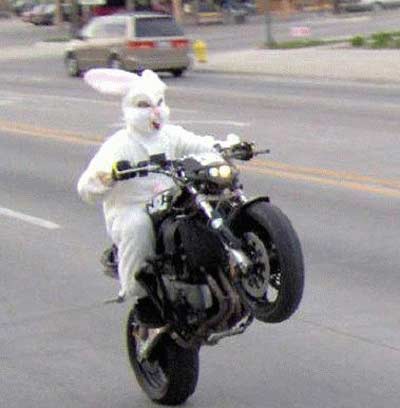
This morning, faced with the prospect of 8 easter eggs, William was like this;
So I spent some time talking to him about this-

I was surprised how little he seemed to know.
Now to church. “Great” he said “There will be an Easter egg hunt for sure!”
Hmmmm…

Followers of this blog may remember earlier posts about the tragic case of Baby P, the Haringey toddler who was murdered despite the continuing involvement of Social Workers, Health Workers and Police.
Earlier posts are here, here and here.
As a social worker, I was concerned with the media feeding frenzy that surrounded this tragic case, and with the certainty that this would obscure the real issues.
Today, after what can only be described as a Witch Hunt against the leader of Children’s Services in Haringey, Sharon Shoesmith, the media gaze finally turned to the Police investigation.
Earlier, the police claimed to have warned social services of the danger, and said these were rejected by the social worker concerned. Story here.
Now a report lists systemic failure on the part of the Metropolitan Police in it’s investigation of the injuries sustained by Baby P 9 months prior to his eventual death. These failures are familiar to anyone working in complex organisations-
Here’s the Guardian newspapers take on the story.
And from the BBC.
Perhaps the truth of the terrible loss of this child will start to emerge. Everyone failed.
Systems always will fail.
So, on this Good Friday, how are you going to remember the death of Jesus?
In the Philippines, there is an extreme ritual that has to be seen to be believed. For those with weak stomachs, I suggest you do not watch the following clip-
There are more photos of these bizarre rituals here.
Inflicting pain on yourself as a spiritual discipline seems to have a long Christian tradition. Often called mortification of the flesh, it has remained a strong Catholic practice. Taking this to the extreme, the Flagellants of the 13th Century became a popular movement- peaking around the time of the Black Death.
What motivates people to do damage to themselves in the name of God? Fervency? Desperation? Group psychosis? I suppose this is one of those things that can only really be commented on from the inside. I notice that the story of an Australian comedian’s participation in one such ceremony this year has made a splash- here.
What of us? Michaela is making hot cross buns. Not mortification, but fortification of the flesh you could say!
You might also like to try Jon Birch’s 12 Stations
Jon is one of the creative forces behind Proost. You can see more of his fantastic stuff on asbojesus


My girl Emily is off sailing in Norfolk with Bitternes afloat. Our friends Nick and Lindsay are skippers on the cruise, which is a yearly event. Em had a great time last year.
In the words of Arthur Ransome;
If NOT DUFFER WILL NOT DROWN, IF DUFFER, BETTER DROWNED…
Watching her disappear for the ferry and airport, I do not concur. She may or not be a duffer, but come home safe Emily…

On the drive round to Inveraray yesterday, I stopped the car and climbed a gate to go and check out the Gypsy ring overlooking a rain and windswept Loch Fyne. I have mentioned this place before- a mythical, and slightly neglected place which is half covered by tarmac from the old road, and is protected by a flimsy wire fence from the substantial herd of Highland Cattle that roam the fields thereabouts.
What this place is all about is lost in folklore. But one person told me that this was the site of Gypsy wedding ceremonies. The place where the Romany people who used to live in some numbers hereabouts would make a commitment to one another.
I have tried to find out more about these traditions, but so far have failed to find much from a Scottish context- and certainly nothing about this Gypsy ring. however, there is a very interesting account of Romany wedding rituals here. Romany culture has been persecuted and battered into the margins of society, perhaps now more than ever in these so called enlightened times. It has flourished still however, and I hope it may long continue to do so. There is room for all in this wonderful humanity of ours…
I have often wondered about the use of this dramatic site- high over the Loch, with panoramic views over towards Kintyre. Exposed as it is to the constantly changing weather. There is a whiff of magic about the place.
It clearly still has meaning to some folk. There are always a few coins scattered onto the circle, seeking some kind of luck or superstitious blessing.
One of the more adventurous young calves is often to be seen inside the fence. I hope he or she has been careful about what intonations they mooed out, lest they found themselves accidentally married…

I am a person who would describe himself as happily blessed through marriage.
For those who are on the outside of such a union, this is definitely not the same thing as living in blissful joyful togetherness all the time- although we have had our moments. But after almost 19 years together, I feel I have given it enough of a road test to be able to make a firm recommendation of the concept.
Marriage has been in the news lately. Check out this report from the BBC last month.
To summarise- the statistics seem to show a decline in numbers of folk marrying, an increase in civil ceremonies as opposed to religious ones (up from 47% in 1990 to 67% in 1997), and people are getting married later in life for the first time.
Paradoxically, and perhaps related to economic concerns, the divorce rate is thought to be at it’s lowest for 26 years (See here.)
Does all this matter? To some, particularly Christian family groups, it is vital. These groups tend to see nuclear families as God-given building blocks, and to seek to defend this idealised way of living at all costs- campaigning against any aspect of government policy, or ‘alternative lifestyle’ that seems to challenge the centrality of marriage. I will not mention any names, but some of these groups scare me, and I feel I have more in common with the Romanies than them at times!
Is the nuclear family a Judeo-Christian thing that can be distilled from the Bible as the way to be? It has always puzzled me to hear people claim this. It seems clear that family structures were very different in the different cultures and contexts that can be inferred from Biblical stories.
Some random thoughts about marriage-
But despite this, I believe in marriage. But then, this is easy for me to say, because I am married to Michaela- so I had an advantage.
The fact remains that study after study shows that kids born into stable loving family environments with strong parental role models have won the whole life lottery, in terms of psychology, emotionality, education, health- just about about every other measure. You can strip these statistics back and dig into what exactly was helpful about these situations, and whether they might be available through other social constructs, but the value of traditional family structures at their best are simply undeniable.
As can be shown from the Romany marriage circle- this model is not restricted to Christian tradition. The nuclear family remains the main social unit in Communist China also.
Perhaps we are going through change. But I have a feeling that marriage is here to stay…

Today is my lovely wife’s birthday. She is 41 years young.
And I love her.

This is one of the few photos of the two of us together- taken in France last year.
Today we took a trip out for lunch in Strachur, then out to Inveraray, where we decided to be tourists for the day, and look around the Duke of Argyll’s Castle.
It was one of those horizontal rain kind of days, but in order to complete the tourist thing, Michaela decided to have an ice cream.
I am sure the hypothermia will pass…


I have this thing about boundaries and borders.
They are such artificial things. They are constructs of history, of politics, of tribalism- both ancient and modern.
They seem to represent to worst of us- the attacking and defending, the in-outing, the asylum seeking and the last refuges of scoundrels.
They seem to me to be the visible manifestation of our o-so human characteristic of constructing walls to hide behind and throw stones from. We do it in the playground, and in our theology. We do it in our politics and over our suburban garden fences.
Safe behind these walls we construct, it is possible to make generalisations about the dwellers on the other side. It is likely that we will be skewed towards constructing a reality that is only partially based on fact, and serves to somehow strengthen the boundaries about us. If your failings are evident, mine submerge. If your history and culture can be caricatured and undermined, then ours will be all the stronger. If you are worth less, then what you have, I can take.

There is a lot of discussion around at the moment about Britishness. Our (Scottish) prime minister has made it a central part of his message- perhaps (he says cynically) as a reaction to the rise of the Scottish National Party in his native land. Check out this programme on Radio 4, complete with interview with the Prime minister.
In this programme, there is a discussion about Scottish Nationalism. As an English/Irishman, living in Scotland, and trying to understand what it means to follow Jesus in this time and place, some of this debate troubles me.
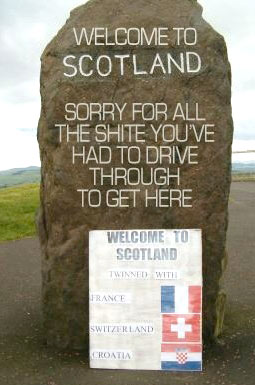
If you have an English accent, you can’t say this stuff- you have no right.
You are from the other side of the fence you see- the oppressive, domineering, 1966-boasting, Redcoat-wearing, clearance making, absentee landlord side…
Except, I am the son of an Irish man, the result of his brief marriage to the daughter of a miner. I grew up in a northern England ravaged by the end of industry- in the middle of a miners strike and about as far removed from the City of London as it was possible to get and still be rained on.
All my life, I have been outside fences- perhaps this is the legacy of a particular kind of childhood, or a particular kind of personality. There are a lot of us though.
Anyway- back to Scottish nationalism. A couple of years ago, I listened to Doug Gay’s talk at Greenbelt entitled ‘Breaking up Britain- how to be a Christian Nationalist’. I really struggled with it at the time, but it was provocative and well presented, and gave me much food for thought.
Doug spoke about the Tower of Babel story- as evidence that God chose to bless us with nationhood and cultures…
And how God chose to engage with one holy nation called Israel…
But I rather thought the point of the Babel story was about mankind getting too big for it’s boots- and the whole Israel thing- well it did not end well did it?
I have a number of difficulties too about nationalism-
- I am really struggling to think of anything positive about a strong nation state- even one positive example from history
- Nationalists rarely make good neighbours
- Nationalism always tends to need to define itself AGAINST the other
- Nationalists tend towards simplified versions of history
- They tend to demonise the other in order to unite masses behind a flag
- If celebration of our shared and separate cultures demands that we denigrate others, then I am not interested
- Jesus seemed to have other priorities
- He seemed to be more interested in transcending boundaries, and working for peace and reconciliation and healing of wounds
So, for those of us who agree with Tom Stoppard’s suggestion that nationhood is perhaps just a ‘conspiracy of cartographers’- perhaps we can hope that there may yet be a new way to celebrate our nationhood…
I love my adopted country of Scotland. But let us seek to tear down borders, not find new ways to erect them.
If you love words, like I do- you will love this.
Check out this anagram making site...
I threw in ‘This fragile tent’ to see what it would give me, and oh what pithy delight!
Here is a delicious selection. You can be the judge as to which ones are most fitting!
Flatteries thing
Heartfelt siting
Integrates filth
Fattest hierling
Latte infighters
Faith resettling
And- perhaps my favourite… Faltering theist


