The mug at the bus stop…

morning drive, minus 3.5

As I was driving back from Lochgilphead the other day, I passed a bus stop.

It was not like an ordinary bus stop, as it was on a stretch of road with no visible signs of occupation for miles around.

Standing on the ground next to the bus stop was a red mug.

Hmmmmm.

The mug stuck in my mind somehow. So much so that it formed part of some writing I was doing elsewhere- some fiction. Here is an extract;

The bus was virtually empty. Tourists in these parts mostly travelled in cars or big white land barge camper vans. The only people who used the heavily subsidised service were school kids (the early morning and mid-afternoon service buses were ordeals best avoided) and a hardened group of locals whose incomes had no headroom for petrol money.

Despite their shared poverty, Millie often felt like a suburban Leylandii amongst pine trees; they had grown where they were planted; whereas she grew up in a plastic pot- artificial but surprisingly robust, despite the rough treatment.

The bus turned a corner and dropped a couple of gears for a steep hill, before lurching forward almost from a stand still past another empty bus stop. There was no visible sign of habitation for miles around and Millie wondered if anyone ever used it, but then noticed a bright red mug placed on the kerb next to the stop sign.

She found herself captivated by the mug in the middle of the wilderness. Who had left it there? Would they ever return? Which kitchen was it filled in? She found herself imaging all sorts of fantastical explanations involving two lovers thrown apart or last cups of tea before emigration to the Americas before settling on the mundane likelihood of a house hidden in some hollow of ground and a slightly eccentric morning routine.

The cup seemed to capture something about the contradictory nature of life in the Highlands; at once both expansive and claustrophobic. A tiny red dot in the middle of wilderness, swallowed up by towering trees and the sweep of the implacable mountains.

Millie smiled to herself at a sudden certainty that one of the other people on the bus would know exactly whose mug it was. She suspected that some would disapprove of the impropriety of such domestic revelation and that the red cup might yet be used as evidence of weakness of character.

Economic lie number 4; inequality is good for the system…

The whole Capitalist system is dependent on aspiration, or so we are told. Our Chancellor of the Exchequer has just heralded his 2013 budget as something for an ‘aspiration nation’- seeking to help those who want to help themselves- those who want to own their own houses.

Without the wealth creators (business entrepreneurs) there can be no long term prosperity. All that you will have is stagnation- look what happened in the old soviet bloc countries.

Without greed we have bad cars, cabbage soup and bureaucrats in stone washed denim.

Except that the rich are getting richer, even WITHIN our western economies. This from The Telegraph;

The world’s rich are getting richer. The Forbes billionaire list was published this morning (there are now 1,426 of them globally in dollar terms, with 210 new entrants in the last year), and collectively they are $800bn richer than they were a year ago. Each billionaire is, on average, $100m richer than in 2011, with an average wealth of $3.7bn.

And the poor poorer; The Institute of Fiscal Studies forecasts that, as a result of UK tax and benefit policies, there will be significant increases in child poverty in the coming years. In Scotland alone forecast trends would suggest between 50,000 and 100,000 more children being pushed into poverty by 2020. (See here.)

And what is more, the argument can be questioned even by people on the inside;

There is the opposite argument too- that the more equal societies are in terms of income, the better its citizens seem to do. This from here;

In The Spirit Level Wilkinson and Pickett base their analysis on data from 23 rich countries as well as data from the 50 American states. They say that in the main this shows that the following problems are much more pronounced in countries with higher levels of income inequality.

Health inequalities: At the end of the 1990s there was an average gap of 7.3 years in mortality between rich and poor people in unequal societies. This can rise to as much as 28 years in some American states. They argue that research shows these differences cannot simply be explained by differences in health behaviours.
Mental illness: They argue that ‘inequality is  causally related to mental illness’; that rates of mental illness are five times higher in the most unequal societies compared to the least unequal.  Illegal drug taking is also higher.
Obesity: Unequal societies are more likely to have higher levels of obesity, with poor people most at risk, partly because of the attractions of ‘comfort eating’.  Indeed the rate of obesity is six times higher in the most unequal, compared to the least unequal, societies.
Divorce rates: There have been larger rises in more unequal societies. This then creates more stress for children.
Teenage pregnancy: This is more prevalent in unequal societies. Indeed in the USA the rate of teenage pregnancy is four times the EU average.
Violence: Wilkinson and Pickett argue that the strongest evidence or the negative effects of inequality is violence figures. The reasons for this are explored below.
Imprisonment: Unequal societies are more punitive. People are five times more likely to be imprisoned in the most unequal societies than the least unequal.
Social mobility: Inequality leads to less social mobility. Inequality ‘solidifies the social structure’ and also depresses educational attainment for the poor.
Women’s position: In general women are less likely to be in higher status jobs in unequal societies and they also have worse health than women in more equal societies.

Wilkinson and Pickett argue that the problem of inequality is not just for poor people: everyone suffers. The life expectancy figures even for rich people is lower in unequal societies than more equal ones. The reason they advance for this is that unequal societies have lower levels of trust than more equal societies. This lack of trust leads to more hostility, fear and lower levels of community participation. In this way everyone suffers.

In the data they present the societies which are most unequal, and have the biggest health inequalities and social problems, are the USA, the UK, Portugal, Australia and New Zealand. The least unequal are the Scandinavian countries and Japan.


Tested to distraction, Myers Briggs and the like…

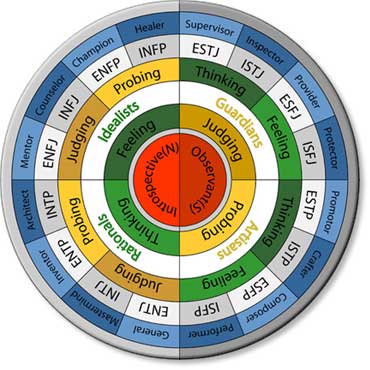
myers-briggs-personality-test

So here is how it goes for most of us.

The company/organisation/bureaucracy that you work for is in trouble. There have been rumours of cuts and financial black holes for months. Anxiety gathers like dust on every workstation. Eventually the inevitable happens- it is announced that there will be a ‘restructuring’ of the workforce.

Because our managers are human too (and soon to be subject to their own version of the same) it is possible that a firm of consultants will be brought in- people with relevant expertise in helping other organisations through the ‘essential modernisation process.’ Their skill set is to bring anonymous quasi-scientific ruthlessness to bear in such a way that changes appear inevitable, inexorable.

They will no doubt set up meetings with individual members of staff, who will be subjected to ‘evaluations’ and ‘reviews of job role’. This process will almost always miss the crucial ingredients for the productivity or otherwise of your team- it will not be able to deal with the bullies or the psychopaths, who will probably find the process entertaining, motivating invigorating.

To add to the feeling of objectivity, the consultants will also employ various forms of psychometric testing to measure our supposed fitness for the job roles we are undertaking.

The most common of all being the Myers-Briggs Type Indicator (MBTI.)

Within a few short months, a handful of people will have succumbed to stress related illnesses or high blood pressure. Strangely, unless they decide to jump ship, their employment will probably be safe- although they are very unlikely to rise any further in their organisation. Rather they will be given a backwater to swim quietly in until the next reorganisation.

A few others will be made redundant. Some of them will have made a positive choice in this direction- it is better to have your fate in your own hands of course.

Many more will be in lower paid jobs. There will be fewer middle managers, and staff will be increasingly called ‘autonomous professionals’.

It is a dirty job, but someone has to do it.

Sorry about that- I felt the cynicism building up in my fingers like lactic acid as I typed away…

But back to the point of this piece, the Myers Briggs Type Indicator and its many imitators.  It was developed by a couple of ladies during world war two who had become fans of the wild and wonderful work of Carl Jung. Jung had this view of personality as being made up of dichotomies- polar opposites that we all find ourselves fixed upon; our ‘type’. This from Wikipedia;

Jung’s typological model regards psychological type as similar to left or right handedness: individuals are either born with, or develop, certain preferred ways of perceiving and deciding. The MBTI sorts some of these psychological differences into four opposite pairs, or dichotomies, with a resulting 16 possible psychological types. None of these types are better or worse; however, Briggs and Myers theorized that individuals naturally prefer one overall combination of type differences.[1]:9 In the same way that writing with the left hand is hard work for a right-hander, so people tend to find using their opposite psychological preferences more difficult, even if they can become more proficient (and therefore behaviorally flexible) with practice and development.

The 16 types are typically referred to by an abbreviation of four letters—the initial letters of each of their four type preferences (except in the case of intuition, which uses the abbreviation N to distinguish it from Introversion). For instance:

  • ESTJ: extraversion (E), sensing (S), thinking (T), judgment (J)
  • INFP: introversion (I), intuition (N), feeling (F), perception (P)

All of this has a real seductive truism to it- it manages to place us all in a pigeon hole that we are all more or less happy with as it all feels very neutral and more or less supportive of some of our good qualities. Where is the harm in that?

Well, as with all these things, it depends on the use we put things to. If we are going to use something like Myers Briggs as a blunt instrument to knock people into jobs like we would a pit prop, then we need to be pretty sure that it is testing something real, something that makes sense on more levels than our employers organisational convenience right?

Because there is a vase array of criticisms of Myers Briggs. It is simply not used by psychologists- even the ones who are prepared to concede the validity and usefulness of individualised psychometric testing.

This from the Guardian

The trouble is, the more you look into the specifics of the MBTI, the more questionable the way it’s widespread use appears to be. There are numerouscomprehensivecritiques about it online, but the most obvious flaw is that the MBTI seems to rely exclusively on binary choices.

For example, in the category of extrovert v introvert, you’re either one or the other; there is no middle ground. People don’t work this way, no normal person is either 100% extrovert or 100% introvert, just as people’s political views aren’t purely “communist” or “fascist”. Many who use the MBTI claim otherwise, despite the fact that Jung himself disagreed with this and statistical analysis reveals even data produced by the test shows a normal distribution rather thanbimodal, refuting the either/or claims of the MBTI. But still this overly-simplified interpretation of human personality endures, even in the Guardian Science section!

Generally, although not completely unscientific, the MBTI gives a ridiculously limited and simplified view of human personality, which is a very complex and tricky concept to pin down and study. The scientific study of personality is indeed a valid discipline, and there are many personality tests that seemingly hold up to scientific scrutiny (thus far). It just appears that MBTI isn’t one of them.

The lure of a quick fix. An easy simplification. MBTI appears to me to be to psychology what astrology is to astronomy- it uses some shared language but that is about it. It has entered our hospitals, our schools, even our churches….

We are not captured in this narrow set of words about who we are. Sometimes we are both and. Sometimes we revert to ‘type’, often re transcend it. Let us escape the bloody tramlines- whatever ways we do it.

And as I write this, I will be accused of over simplifying MBTI, of dismissing its usefulness. No doubt people will say that those of my type always tend to do these things.

My reply will be that when quasi scientific quackery rises so far as to become a force for narrow stereotypical judgements it becomes a force of empire, and the empire should be resisted.

 

Paulo Coelho on Jesus…

Paulo Coelho

Great article in The Guardian today- an interview with author Paulo Coelho. Here he is, taking about Jesus;

The Jesus of the gospels was, Coelho argues, similarly contradictory. “Jesus lived a life that was full of joy and contradictions and fights, you know?” says Coelho, his brown eyes sparkling. “If they were to paint a picture of Jesus without contradictions, the gospels would be fake, but the contradictions are a sign of authenticity. So Jesus says: ‘Turn the other face,’ and then he can get a whip and go woosh! The same man who says: ‘Respect your father and mother’ says: ‘Who is my mother?’ So this is what I love – he is a man for all seasons.”

Like Jesus, he’s not expressing a coherent doctrine that can be applied to life like a blueprint? “You can’t have a blueprint for life. This is the problem if you’re religious today. I am Catholic myself, I go to the mass. But I see you can have faith and be a coward. Sometimes people renounce living in the name of a faith which is a killer faith. I like this expression – killer faith.”

Coelho proposes a faith based on joy. “The more in harmony with yourself you are, the more joyful you are, and the more faithful you are. Faith is not to disconnect you from reality, it connects you to reality.”

In this view, he thinks he has Jesus on his side. “They [those who model their sacrifice on Christ’s] remember three days in the life of Jesus when he was crucified. They forget that Jesus was politically incorrect from beginning to end. He was a bon vivant – travelling, drinking, socialising all his life. His first miracle was not to heal a poor blind person. It was changing water into wine and not wine into water.”

Worship thingy…

IMGP4218`

We are starting a new worship thing next Sunday night- a simple, quiet,  mainly music led thing. We have not given it a name as this would imply greater pretension than we have been able to gather.

Regular readers of this blog will know of my ramblings around the use of music in worship- I am a reformed ‘worship leader’ in the auditorium stylee- and thought never to return. However, I still love to play and sing and the question that I have found myself asking continually concerns what role if any singing songs of worship may play in our on going journey away from CCM monoculture.

Following thoughts gathered during a recent silent retreat I decided to set aside angst and just sing.

Andrew, a friend and local Episcopal vicar/priest/canon/ pope (pick suitable title!) had already asked if we could do something like this- something primarily about private worship, made collective in the small sense, and so we decided to go for it.

If this is of interest to anyone local, you are more than welcome to join us- 7.30, Holy Trinity Church, Dunoon.

Half and hour to an hour of music, quietness and contemplation.

If it feels like it has the wind of the Spirit, we might even give it a name…

Generation self?

Emily poi 1

I read a really depressing piece in the Guardian not long ago. Here is an extract;

Has Britain raised a new “heartless” generation of children of Thatcher – and, arguably, of Tony Blair? Does this mark the slow death of solidarity? Or has the received wisdom on the imagined journey through life, from hot-headed radical to self-satisfied reactionary, never been all that true?

Guardian/ICM poll is only the latest piece of evidence suggesting that the left’s defining value of solidarity is in considerably shorter supply among the young than the old. A rising generation that finds college expensive, work hard to come by and buying a home an impossible dream is responding to its plight, not by imagining any collective fightback, but by plotting individual escape.

The desolate atomisation of what we might dub “generation self” – today’s twentysomethings – poses a profound challenge for the left over the distant horizon. But it is not a challenge that shows up yet in the headline figures for voting intention, where pensioners remain considerably more conservative and everyone else’s propensity to put a cross in the Tory box remains much of a muchness. Rather, the staunch individualism of the young emerges when they are probed about deeper attitudes. This even manifests in areas like thewelfare state, despite young people being far more likely than their older compatriots to be unemployed.

A full 48% of 18- 24-year-olds, and 46% of 25- 34-year-olds disagreed with a statement suggesting that most unemployed people receiving benefits were “for the most part unlucky rather than lazy” – almost twice as many as in the over-65s group, where only 25% disagreed with the statement.

That gulf on welfare between the age gaps is a strong one: even despite the relatively small samples of each age group, the gap was easily big enough to be statistically significant.

Attitudes on a few other issues also showed a split, albeit not quite so stark: 24% of 18- 24-year-olds disagreed that it’s important to get to know your neighbours, versus just 11% of over-65s. Younger people were also more likely to disagree that they were proud to be British, although an overwhelming majority at all age groups express patriotism.

All this taps into a very familiar story- of how we are letting loose a generation who are disconnected, self absorbed, individualised to the point of atomisation and view everything as commodities to be consumed.

Except…

I have a daughter who is 17, and pretty much plugged into the mainstream- so much so that she calls me an aging hipster for my refusal to conform.

Now perhaps the child of a social worker and a community worker was always going to be gifted with an out sized social conscience but Emily is passionate about social justice, she loves nothing better than to celebrate a friends birthday or to arrange a gathering.

I think each generation has a crisis of confidence in the next one. Perhaps this is ours.

That is not to say that each generation does not need to find it’s own soul. Usually it seems to be found in adversity or mobilised by the eruption of a totemic issue. Mine was cast by the destruction of industry and the miners strike- and we had a name for our pain- Margaret Thatcher.  What is there today?

Well, there are people like Emily.

I might call them (but she would not necessarily use the same language) ‘Agents of the Kingdom of God’. A residue of grace in the middle of us.