And then they slept…

Today we planned a picnic to celebrate mothers day, but the blue skies turned black where the wind was from…

squall on the clyde


Soon the snow flurries hid the world from view behind a boiling curtain of giant flakes;

IMGP4197


Some would see this as a challenge to test our mettle. Not my family.

They slept;

IMGP4215


Ecomonomic lie number 3- austerity affects us all…

Austerity

Back to my little mini series about economics. Don’t expect deep learned insights- I did study economics as part of a social science degree 25 years ago, but I was a very poor student. However, there are many approaches to economics- here are a few;

Technical/systematic- clever people who claim to understand the ebb and flow of the complex currents that move in the deep oceans of international finance. They know the difference between M1, M2, and M3. They advise the powerful and hold the fate of millions within their sterile computer generated models. Here, the economy is a desperately complex, ever changing thing, that is not just human in origin, it is supra-human. We are all subject to it, in the same way as the Ancient Greeks lived in the shadow of Mount Olympus. The gods are capricious, mysterious, vengeful and unmoved by ephemera. Our high priest-economists are expected to placate the gods, but they are after all gods and so there is the constant threat of earthquake wind or brimstone…

Political- I contend that most politicians know very little about point 1. They have to pretend they do, like the emperor and his new clothes. They have to pretend to be in control of the gods. They have to present deep ocean complexity in the form of simplistic decisions. All the better if the issue can be polarised, and if their are people/groups to be blamed. So we see two narrative techniques being employed at present-

  1.  The economy is constantly compared to a household spending plan. It has to be about prudence, good management, respectability- the image is a solid middle class family who budget carefully for their two holidays, their new sofa and retirement plan. Except that the economy bears no resemblance to a middle class household budget. Houses can not print their own money for a start. They can not set their own tax rates, they can not invest huge sums in education or health or in nuclear arsenals. And of course not all households are the same. Some are broken, bankrupt.
  2. The other narrative I have already hinted at- it is the narrative of blame. Our lifestyles are under threat from the fecklessness of the poor or the tidal wave of immigrants- the strivers are carrying all these skivers on their backs. We no longer talk about social class because stratification in our society has fragmented- but in case you are in any doubt, check out any mumber of tabloid newspapers- the Express, the Mail, the Sun. They are full of stories of benefits dodgers, single mothers getting posh social housing, dark skinned swarthy outsiders who are clogging up our hospital wards. For a while, the bankers got some mud thrown at them- but mud does not stick to shiny power for long.

The economics of justice- There is another approach to economics of course- one which both politicians and technical economists are aware of, some even motivated by- it is the analysis of the flow of capital from the poor to the rich, and the operation of the machine that makes this happen. It points us to the conquest of poor countries, whose raw materials are used to make the toys of the rich. It also points us to the remarkably persistent and stable gulf between the rich, healthy, educated minority and the rest- both globally and locally.  I make no excuse for this statement; these are the economics of the Kingdom of God.

Two stories sum up this gulf within the UK at the moment. Firstly, this one;

Lamborghini Veneno

The eurozone may still be in recession, but there is little gloom at the Geneva motor show, where Lamborghini, Ferrari, McLaren and Rolls-Royce have launched luxury supercars costing up to £3m each.

While European car sales dropped by 3.3m last year – the equivalent of a car company the size of Fiat failing to sell any cars at all – super-luxury cars are rolling out of the showrooms in ever increasing numbers.

“Most the world is suffering from recession, yet there are clearly people who can buy a Lamborghini at €3m (£2.6m) a pop,” said Paul Newton, auto analyst at IHS Global Insight. “Bentley, McLaren, Rolls are all doing well. There is clearly a market for the most expensive of cars, whereas the mass market manufacturers are nearly all suffering, especially in Europe. It’s the definition of a two-speed economy.”

Philip Harnett, product manager of Rolls-Royce’s latest €245,000 Wraith model, launched at the Geneva show on Tuesday, said that while the global economy was in the doldrums “some people are doing very well and they want to reward themselves”.

He said it was important for staff morale that high-flying company executives continue to buy the most luxurious cars. Executives told him that “the day I turn up for work in a Morris Minor is the day the staff will start to worry”.

(From the Guardian Tuesday 5 March 2013.)

Then, by way of contrast, this story;
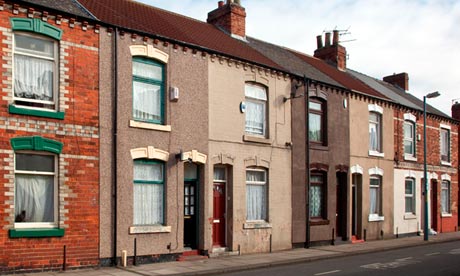
Houses in Middlesbrough

One of the most acute concerns about the government’s so-called “bedroom tax” – which from April will force anyone “underoccupying” social housing to either downsize to a smaller property or face a cut in their housing benefit – is the severe shortage of smaller properties available to move to.

The National Housing Federation suggests there are 180,000 social housing tenants underoccupying two-bedroom homes in England, yet fewer than 70,000 one-bedroom properties are available.

From 1 April, anyone living in social housing who has one unoccupied bedroom will have their housing benefit cut by 14%, rising to 25% for households with two spare bedrooms.

Maureen Hagan, 58, lives in a three-bedroom property in Grangetown, Middlesbrough, with her 18-year-old granddaughter, whom she took in five years ago. She will now see her housing benefit cut by 14%, even though she says she requires the extra bedroom in order to meet standards set by social workers, as she is fighting to bring another young relative out of foster care and into the family home.

She feels that the welfare reform is out of sync with the rate of inflation, and calls for the government to prolong the introduction of the cuts. She spoke of her recent struggles to meet utility payments: “That was before that bedroom tax on top of everything else. What am I going to do then?”

Hagan expects to face a £14 cut to her housing benefit each week – more than half her weekly shopping budget.

“I can’t afford to buy makeup. I’d like to buy it but I can’t. I’d like to buy my own clothes; the charity shop’s my clothes shop, and it has been for a number of years.”

(The Guardian, Friday 8 March 2013)

Both of these extremes are a direct result of the current economic circumstances affecting us all. One part of our society profits- gets richer, amuses themselves with more toys.

The other folk (whilst watching Top Gear on Sunday night) have decisions to make about whether they move house because they are mere grit in the cogs of the system. Their fate is irrelevant to the ultimate prize. If they can not consume, they have no value.

We are not all ‘tightening our belts’, or ‘feeling the pain’. We are not all making the same sacrifice.

There are of course other possibilities. Some are about managing the economy better- taking a Keynesian approach to stimulating our economy again. But this does little to change the game- it just clarifies a few of the rules.

Poverty is not a choice, it is an economic necessity to ensure growth. The alternative is revolution- if not of the Marxist kind, then perhaps the Jesus kind, which takes the emphasis off power, and puts it on love. Against this there is no law.


God is God…

Time for some music.

Here is a song written by Steve Earle for Joan Baez;


I believe in prophecy.
Some folks see things not everybody can see.
And,once in a while,they pass the secret along to you and me.

And I believe in miracles.
Something sacred burning in every bush and tree.
We can all learn to sing the songs the angels sing.

Yeah, I believe in God, and God ain’t me.

I’ve traveled around the world,
Stood on mighty mountains and gazed across the wilderness.
Never seen a line in the sand or a diamond in the dust.

And as our fate unfurls,
Every day that passes I’m sure about a little bit less.
Even my money keeps telling me it’s God I need to trust.

And I believe in God, but God ain’t us.

God,in my little understanding, don’t care what name I call.
Whether or not I believe doesn’t matter at all.

I receive the blessings.
That every day on Earth’s another chance to get it right.
Let this little light of mine shine and rage against the night.

Just another lesson
Maybe someone’s watching and wondering what I got.
Maybe this is why I’m here on Earth, and maybe not.

But I believe in God, and God is God.

Revenge…

Mt5.44


I have been thinking about revenge today on my drive around Argyll.

This was stimulated in part by a story that the news is full of over here in the UK about a former Member of Parliament and his ex wife who have both been found guilty of perverting the course of justice. Many years ago he persuaded her to take some speeding points onto her licence by saying she was driving when in fact it had been him. Later on, he had an affair with a work colleague and left his wife for her. His wife, by way of revenge, decided that she would tell the press about the speeding thing, knowing that it would end his political career.

What she did not anticipate was that both of them would end up in court, with the details of their intimate lives being dragged out in front of the media, at the end of which both are now facing a jail sentence.

Revenge, red in tooth and claw, let loose to ravage this way and that, doing damage to all.

I was also thinking about revenge because of another situation we are faced with- involving some people who have acted vindictively towards us, in a way that I will not spell out here. We are sort of in the position to give pay back.

Now I do not claim to be better than most- I am not in any way morally superior. But the words of Matthew 5 above- they gave me a problem.

What do we do when faced with personal injustice? How do we deal with people who slight us, who treat us with disrespect, who see what we are and find it wanting?

I know what my natural reaction is- I lick my wounds, I seek conversations of conspiracy- with people who will speak words of partiality and hostility. I obsessively pick over my rights, my own just cause. I look accross no-mans land and watch for weaknesses in the opposing trench line. In my mind I prepare for war.

But those words of Jesus about turning the other cheek, offering the shirt when they take my coat, walking two miles when forced to march one… they slow me down, discomfort me. Surely he is not wanting some kind of wimpy doormat for others to wipe their feet on?

Well, think about the politician and his wife.

He had it coming-  right?


Cardinals, McLaren and the charge of hypocrisy…

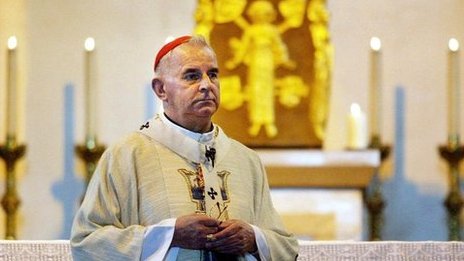
Cardinal O'Brian

No one could have missed the story of Cardinal O’Brian and the scandal engulfing the Catholic Church at the moment, but just in case you have, it goes something like this;

Cardinal O’Brian, the only British Cardinal, starts off (20 years ago) as a moderate within the church, upsetting conservative Catholics with his liberal views on contraception, homosexuality and whether priests should marry. Over time however, as the Vatican became increasingly hard line, he seemed to swing towards the right, becoming a strident and belligerent voice proclaiming the need to Christian morality, family values and for Conservative Catholicism. There was even talk of him being the next Pope.

Last year he made a splash because of his rather bizarre comment comparing Gay Marriage to slavery. I wrote about it at the time, here. 

Then, totally out of the blue, in the wake of the shocking resignation of the Pope, just as Cardinal O’Brian is about to go to Rome to take part in the election of the next Pope, 4 men- three priests and one ex-priest, let it be known that he used his power and authority to impose sexual acts on them whilst they were young men.

He initially denies it. The Church starts to close ranks. Then he admits it and resigns his office.

I have avoided discussing this matter up until now on this blog- partly because I did not want anything I wrote to seem triumphalist. I have ‘come out’ as a Christian who has a very different position on  the (unfortunately) totemic issue of homosexuality to that espoused by the Cardinal (and many other good people, including close friends.)

I was also staggered by the scale of the fall of this man- for whom I feel great sympathy. I know what it is like to be trapped in an unyielding and inflexible hermaneutic- to resort to compartmentalism to cope with the cognitive dissonance. Many people describe O’Brian as a good man, a kind man who has the capacity for so much good. None of us are just one thing, we are all many- and those who attack him should beware throwing the first stone.

Finally, I feel a collective shame for the Church. Scandals like this confirm the worst of prejudice about what the Church has become- it tells the world that we are that most despicable thing- we are hypocrites. This story proves our guilt- and the guilt is collective. As soon as we (the Church) begin to stand on moral high ground, we will always be in danger of the crumbling cliff edge.

That is NOT to say that we should have no moral voice. Our job is to be a people who present a radical alternative. We are to be an irritant  and conscience of those in power, not because we are better than others, but because we are prepared to try this thing called love. All morality is captured by this simple word- love. As soon as love is subordinate to morality, then morality becomes the worst form of religion.

So in this sense, Cardinal O’Brian is both perpetrator and victim of a system of faith that makes individual salvation from private sin the most important issue. It IS an important issue- but we all have logs in our own eyes. And there are other issues…

Which were brought to me again when listening to clip in my previous post.

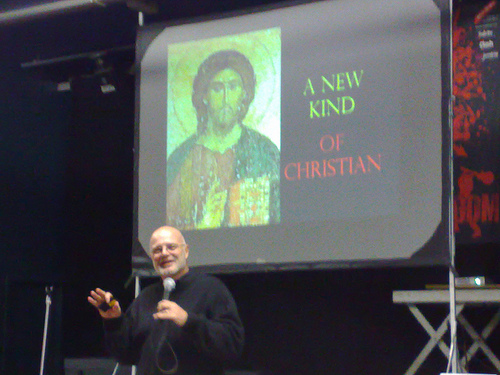
brian-mclaren

Brian McLaren, speaking in St Paul’s Cathedral mentioned that he had a son who was gay. I have read and listened to a lot of his stuff, but did not know this. It seems that he performed a marriage ceremony for his son and partner last year, which predictably got him in to a lot of trouble. A case in point is this entry on his blog, in response to a man who had publicly ‘broken rank’ with him as a result of his stance on homosexuality, and his decision to participate in his sons marriage ceremony. Some of his response is as follows;

My view on human sexuality has indeed changed over a period of thirty years, and actually, the views of most conservative Christians have also been changing over that period. It wasn’t too long ago that the only conservative position was, “It’s a choice and an abomination.” When that position became untenable due to increasing data, the conservative position evolved to “it’s a changeable disposition, and we know how to change it.” When fewer and fewer people who claimed to have been reoriented were able to sustain the reorientation, the position shifted to “it’s a hard-to-change disposition, but it can be done with great difficulty.” More recently, I hear conservatives say “the disposition may be unchangeable but the behavior is a choice, so people may choose to live a celibate life or a heterosexual life, even against their orientation.” All that’s to say that it would be unfair of me to break fellowship with people who are themselves on a journey, just because they aren’t where I am at this point…

In my case, I inherited a theology that told me exactly what you said: homosexuality is a sin, so although we should not condemn (i.e. stone them), we must tell people to “go and sin no more.” Believe me, for many years as a pastor I tried to faithfully uphold this position, and sadly, I now feel that I unintentionally damaged many people in doing so. Thankfully, I had a long succession of friends who were gay. And then I had a long succession of parishioners come out to me. They endured my pronouncements. They listened and responded patiently as I brought up the famous six or seven Bible passages again and again. They didn’t break ranks with me and in fact showed amazing grace and patience to me when I was showing something much less to them.

Over time, I could not square their stories and experiences with the theology I had inherited. So I re-opened the issue, read a lot of books, re-studied the Scriptures, and eventually came to believe that just as the Western church had been wrong on slavery, wrong on colonialism, wrong on environmental plunder, wrong on subordinating women, wrong on segregation and apartheid (all of which it justified biblically) … we had been wrong on this issue. In this process, I did not reject the Bible. In fact, my love and reverence for the Bible increased when I became more aware of the hermeneutical assumptions on which many now-discredited traditional interpretations were based and defended. I was able to distinguish “what the Bible says” from “what this school of interpretation says the Bible says,” and that helped me in many ways.

So – many years before I learned I had members of my own close family who were gay – my view changed. As you can imagine, when this issue suddenly became a live issue in my own family, I was relieved that I was already in a place where I would not harm them as (I’m ashamed to say this) I had harmed some gay people (other people’s sons and daughters) earlier in my ministry…

This post hints at what must have been great personal pain through all this, but also a great strength- the sort that feels (to me at least) right. McLaren ends his post like this;

I want to add one more brief comment. You ask, if we change our way of interpreting the Bible on this issue (my words, not yours) “- what else will happen next?” Here’s what I hope will happen. After acknowledging the full humanity and human rights of gay people, I hope we will tackle the elephant in the room, so to speak – the big subject of poverty. If homosexuality directly and indirectly affects 6 – 30% of the population, poverty indirectly and directly affects 60 – 100%. What would happen if we acknowledged the full humanity and full human rights of poor people? And then people with physical disabilities and mental illnesses and impairments? And then, what after that? What would happen if we acknowledged the spiritual, theological, moral value – far beyond monetary or corporate value – of the birds of the air, the flowers of the field, of seas and mountains and valleys and ecosystems? To me, Jesus’ proclamation of the reign or commonwealth of God requires us to keep pressing forward, opening blind eyes, setting captives free, proclaiming God’s amazing grace to all creation.

What he is able to do here is lift our eyes from a  grubby obsession with what goes on in people private bedroom space to the call of the Kingdom of God.

This is the greater charge of hypocrisy that I feel myself constantly to be under. How all the distractions and comforts of my life and lifestyle prevent me from living as a full agent of  the commonwealth of God as spelled out above.

In this, as with the Cardinal, I am reliant on Grace, and the hope that I may yet become what I aspire to be…

Evangelism revisited…

Keswick3

Michaela and I had a strange encounter the other day whilst walking around Keswick.

We were stopped by three boys- all aged around 12-13, two of them standing slightly to one side and letting the bravest one do all the talking. He stuttered and stumbled his way into asking us if we minded answering a ‘small questionnaire’. We were in no hurry and they seemed like nice lads so we agreed. We assumed it was some kind of school project (although I had this nagging suspicion…)

The lads had no prepared written questions, nor any apparent need to write down our answers- and the conversation went something like this;

“Erm, have you ever, erm, told a lie?”

I replied that I had not- apart from what I had just said- but then realised that irony was pointless so just said that I had indeed told lies.

“What do you call someone who tells lies?” 

We agreed that they were called liars

“Erm, have you ever hated anyone?”

A little bit, I replied, and we settled on the fact that people who hate were called haters.

“Erm, Ok then, right, so have you ever, like, stolen anything? Even like, a tiny little thing?”

I said that I had but Michaela said that she had not- which if you know her is quite believable. The boy however seemed highly skeptical. We then agreed that people who steal things are theives

Then things got rather surreal.

Ok, have you ever looked at a member of the opposite sex with lust?” 

The poor lad flushed up a bit and his two mates shuffled their feet and looked pointedly away. I was tempted to point out that I was stood next to my wife and lust had indeed had a part to play in our relationship, but in the end just said that I would never dream of doing such a thing. By now of course I knew exactly where the conversation was heading, as I am sure you do too.

The lad then brought out his killer line; his closer; his hook; his sales pitch;

“The Bible says that if you do any of these things in your mind then it is like you are doing them for real. If you look at anyone with hate you are murdering them, and if you look at them with lust you are raping them.”

He then wound himself up a little and looked at me- not Michaela.

You have just told me – I have not said it, it came out of your own mouth – that you are a liar, and thief, a murderer and a rapist… what do you think you need to do about that?”

Michaela and I could take no more, and politely pointed out that these were not new issues for us and that we were actually Christians. We wished the lads well and went on our way.

Which was a shame really as both of us wanted to know where the lads were from- what Christian group would send them out into the crowds of a holiday town with that kind of material, and whether they really believed they were doing something good, something right.

Both of us were troubled by our encounter.We shook our heads and raised our eyebrows for about an hour afterwards.

These questions still linger with me;

  • Did the organisers of this group of kids really expect us to be convicted of our sin by this kind of approach; to repent and turn to God on the spot?
  • Does this kind of evangelism ever work? Are we not all innoculated against it now, and if not- how many encounters are required for even a single conversion? How many are required for a single meaningful conversation even?
  • Is it not just a little creepy to set young boys on the task of asking about the lust-fullness of a random middle aged couple? Then to tell us that we are murderers and rapists?
  • If the real issue was shock- training for the boys in holy boldness and firmness of their own faith, then what might they be learning from these encounters? Chronic embarrassment or the power of the gospel let loose on the mean streets?
  • Where is the creativity, the playful engagement with culture, the relevance to the relaxed holidaymakers in a busy market town?
  • Where is the honesty? Sucking people into a conversation like this, only to sting them with what some people might find offensive?

Of course, viewed through the lens of conservative evangelicalism all of these are non-questions. What the boys were doing was to follow the purest expression of the Great Commission. They were giving people the opportunity to save their souls from the eternal torment that is our just punishment for sin. This was what Jesus came into the world for and any other Christian activity is subservient to this task.

The passage that the boys had built their ‘questionnaire’ on is of course Matthew chapter 5- the sermon on the mount. Jesus takes on the surface religiosity of the Pharisees and turns it on its head.

And religiosity always needs to be turned on its head.

I really hope that the faith of these boys will survive their encounter with religion.

The lady of the lakes…

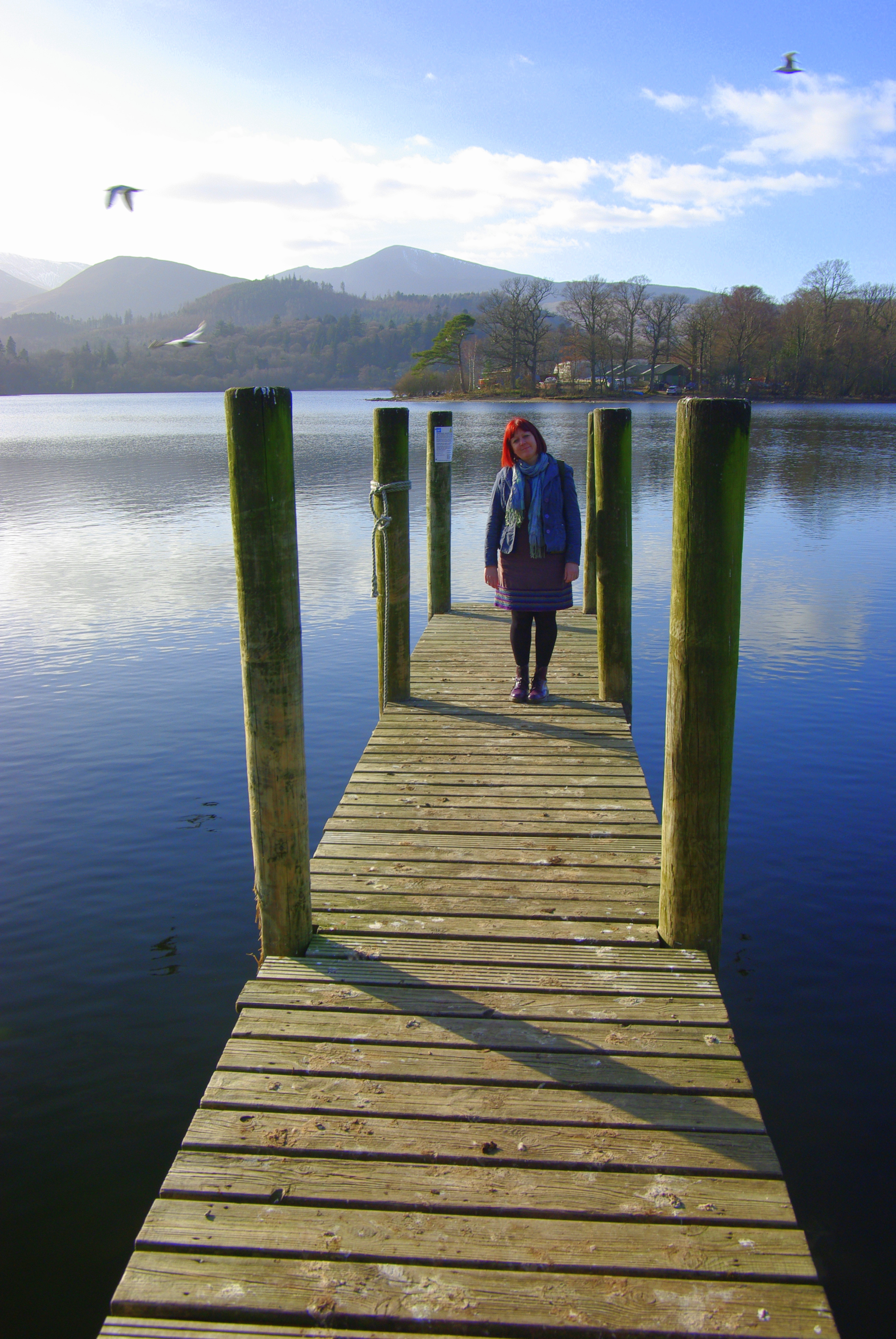
Michaela, Derwent water


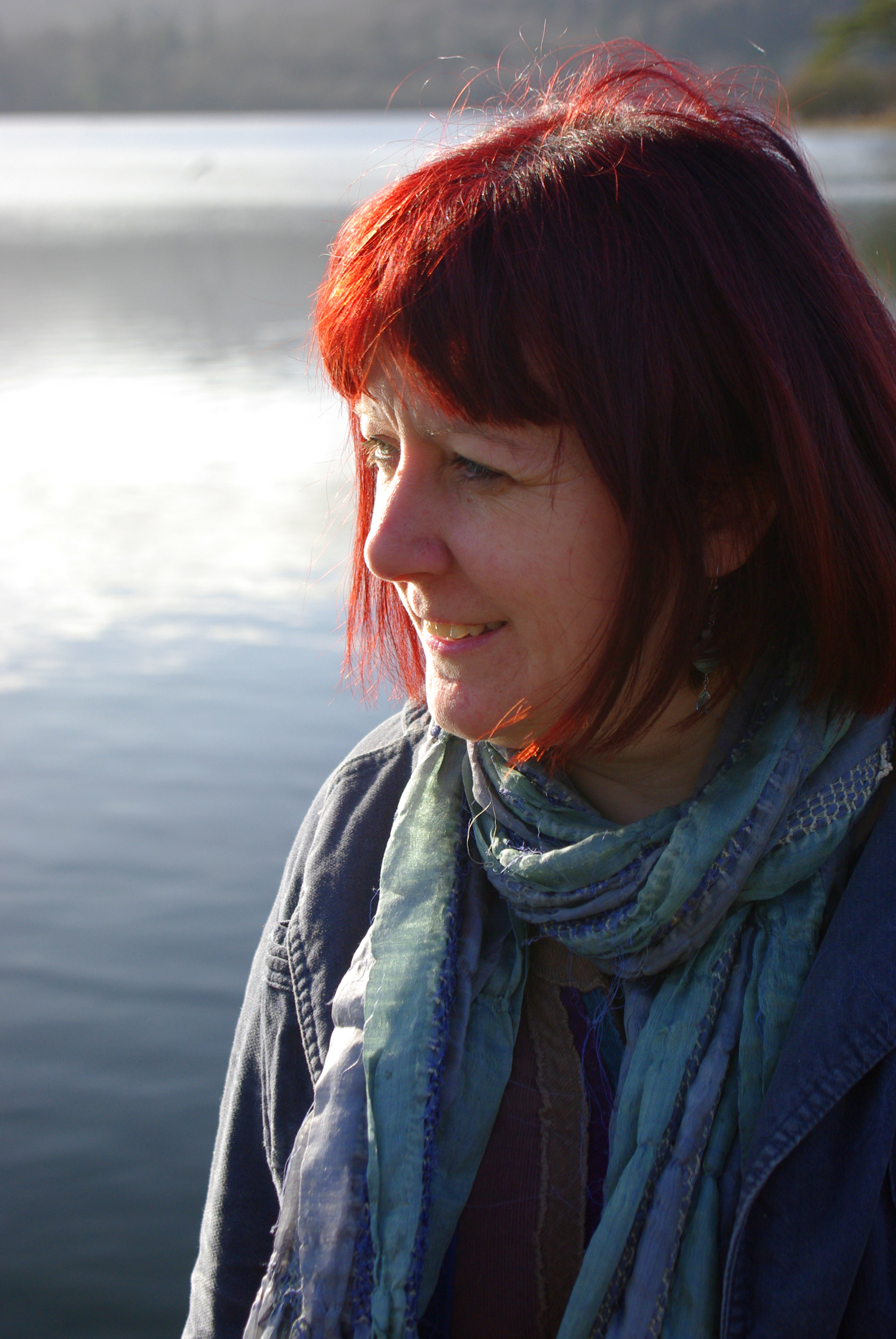
She will not thanks me for this- but here are a few photo’s of my wife. The one above was taken somewhere near where the photo in my previous post was taken.

We had a lovely couple of days- walking around Keswick which was at the beginning of the ‘Words by the Water’ festival, so full of poetry and posh people who read it enough to go to a festival about it.

We went to see Arthur Smith do a couple of hours of comedy, inter spaced with anecdotes and poems.

Then we walked round shops selling stuff that we did not need so did not buy, and sat sipping tea and talking of slow things.

On the next day we climbed Cat Bells with the crowds doing the same and stared at the view out over the lake towards Skiddaw and Blencathra.

All made the more lovely I was with Michaela…

Michaela, winter sun

Michaela, Cat Bells

picnic spot

Off to pastures old…

M and I are down to the lakes for a couple of days- a present from the kids for Christmas- they found a deal in a hotel near Cockermouth.

Poor Michaela is riddled with a cold, so I think we will be tea-shopping, lake-side walking and standing arm in arm looking at views.

And perhaps contemplating how things change. It is not so long ago that the mountains of the lakes were like Eden to me- they pulled at me like a much loved but half remembered memory. So trips up there with Michaela were quite rare as I was often off into the hills alone or with friends. The times we did go together – taking boat trips and carrying our little ones in back packs – were special too however.

But how odd to be going without the kids. It is almost like a rehearsal for the next stage of life, which is upon us, like it or not.

Emily received her first offer from a University this week- she has an unconditional offer from Glasgow Caledonian to go and do Psychology there. Not her first choice, as she wants to combine physiology with psychology, but well done her anyway as we wait for the other responses.

Which all seems a long road from this trip to the lakes;

Michaela with Emily, some time in the late nineties, Keswick.

The false-god of economic growth…

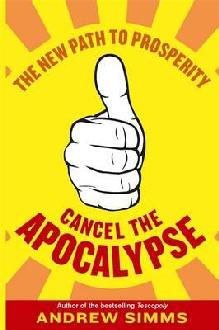
Interesting article in the Guardian today about this book;

GetImage


Interesting title- considering discussions about apocalyptic end times obsessiveness in some parts of the Christian world. A timely reminder of how we can get snarled up in religion at the expense of hope for the future this beautiful planet.

The book opens up again the question about what we can do as a nation to break economic mono culture that we have spent ourselves into. Here is a quote from the article;

Consume less, he says. Be sceptical about new technology. Slow down. And do not fall for the modern political class’s post-Blair belief that history is bunk, and to draw on the past is to be a hopeless throwback: it is only a comparative blink since the second world war found millions of people reshaping their lives in the cause of a common endeavour, and the same thing could yet happen again.

And then there is the fetish of growth, or rather growth-ism. As Simms points out, the idea that economies necessarily have their limits was being voiced when capitalism was still young: in 1848, John Stuart Mill argued that “a stationary condition of capital and population implies no stationary state of human improvement”. A century and a half later, Adair Turner, a former director of the CBI, told Simms that if anyone thinks “the most important objective of public policy is to get growth from 1.9 per cent to 2 per cent and even better 2.1 per cent”, they’re worshipping a “false god”, and “extra growth does not automatically translate into extra human welfare and happiness”.

These are pretty ordinary thoughts, but ones that the dull noise coming from Westminster renders almost exotic – and essential.