Open letter to ‘Pray for Scotland’ in relation to recent prayer call around gay marriage…

gay-marriage1

I received a prayer bulletin from Pray for Scotland today. This is an organisation run by some wonderful people whom it was a great privilege to meet and spend time with a few years ago when Michaela and I first arrived in Scotland, hungry for connection, and to understand what God might be up to north of the border. Pray for Scotland can be characterised as evangelical, charismatic and apostolic in their aims- full of people who believe that prayer can make a difference to the very character of our nation.

It was through PFS that I first heard of people who genuinely believed and hoped for a revival, as prophesied by Jean Darnell- something I have written about before on this blog- here.

However, I had some trepidation as I opened the e-mail as I could guess what the content would be. Both the media and the church are full of talk about gay marriage at the moment, and so I was both saddened by, and not surprised, to read the content of this newsletter. Here are a few extracts;

Dear Praying friends

I’m sending out this extra E-letter regarding the Marriage (Same Sex Couples) Bill 2012-13 . The bill is being read in the House of Commons today 5 February 2013  and we think its important that we all join together to pray for our leaders. I have brought some material together  for prayer and information on the issues.

Let’s storm heaven with our petitions of  ‘ His kingdom come’ in the UK government and  ‘His will to be done’ .

At the very beginning I found myself wondering about our common understanding of the Kingdom of God, and whether we would ever want to ‘storm heaven’.

Dear Friends, Tuesday. 5th Feb. will be the second reading of a bill in Westminster on redefining marriage.
We would appreciate if you would pray at a convenient time during the day.
.
There will be a bill come to the Scottish parliament, however Westminster will influence Scotland particularly in the area of equality bill and protection of people in ministry and public offices eg. registrars, teachers, social workers.
.
On Sunday many people prayed in churches and the following was the suggested corporate prayer—
.
 ‘Heavenly Father, we thank you for the gift of marriage which you established at the dawn of time, to be a blessing throughout the earth, down through the ages. We pray you would fill every marriage with your love and grace, and that every husband and wife would know the joy that comes from sharing and giving. We thank you for establishing marriage to be a secure and stable environment for raising children.
.
We pray for all those who do not enjoy these blessings, remembering you are a father to the orphan and a husband to the widow. We pray, as you have commanded us, for those in positions of civil authority. We pray that our government will act with wisdom and righteousness, upholding marriage as the voluntary union of one man to one woman for life, for the good of all people.
.
We pray for forgiveness for our nation as our government seeks to redefine marriage. We pray for ourselves that we would speak out in support of marriage with gentleness and kindness, also with courage and confidence. in the name of our lord Jesus Christ, amen. –
.
Jean Black(Mrs)
Director Pray for Scotland
I have met Jean, and have the utmost respect for her as a gentle, thoughtful and loving person. However, this prayer troubled me greatly. The newsletter went on to quote CARE, and also the World Prayer Centre, who suggested these points of prayer;
  •  That marriage will not be redefined, and that real marriage will be promoted in society for the good of all.
  • That as many MPs as possible will vote against the Bill to redefine marriage.
  • For David Burrowes, MP and others, as they lead opposition to the Government’s plans in the House of Commons.
  • For the Coalition for Marriage group as it campaigns to defend the true meaning of marriage.
  • For politicians and others in public life to have the courage to stand up for what is right and true.
  • For the news media, that they would report the issue widely, fairly, and accurately.
  • That the true consequences of redefining marriage would be publicly known and properly discussed.
  • That people would not face discrimination, in the workplace or elsewhere, because of their sincere beliefs about marriage.

I decided that I would reply to Pray for Scotland in the form of an open letter. I do so with some trepidation as I do not like conflict, nor am I ever happy to offend anyone. However I have come to believe that this is one of those issues that I can not stay silent on- that unless other people see that there is a real debate going on in the church as to what is the right way to respond to changes in society around homosexual rights then we do a disservice to Jesus and everything that he was.

Here is my reply;

Dear praying friends

Firstly thank you for your faithfulness in continuing to encourage those of us who are seeking to follow Jesus in Scotland to pray. However please forgive me, but I felt that I needed to respond to your latest prayer bulletin. I have made this the subject of an ‘open letter’ via my blog, and am happy for you to re-use these words as you see fit.

The issue of marriage and the underlying (but primary) issue of the Church’s correct stance towards people who are homosexual are ones that have the capacity to polarise and I have little interested in becoming involved in endless circuitous debates. However, your bulletin appears to assume that there is only one perspective on this issue and that all praying Christians will have come to the same view as the organisations you quote about the sanctity of marriage and the inherent sinfulness of a homosexual ‘lifestyle’.

I would respectfully suggest that this is not the case. There are many Christians, like myself, who have come to a different position after years of prayerful engagement with scripture and the traditional teachings of Evangelical churches.  I think many of us were very heartened to read Steve Chalke‘s (Oasis Trust) piece on this issue, which was quoted in Christianity Magazine, and can be read in full here; http://www.oasisuk.org/article.aspx?menuId=31887 I will not seek to rehearse the theology, as Steve has done it far better than I could.

Although I am aware that some will be scandalised by what Steve has to say (and its implications for the way we read the Bible) as Pray for Scotland  seek to unite Christians in prayer for our nation I consider it vital that we bear in mind that this is not a marginal view- rather it is one that an increasingly large part of the Body of Christ in Scotland are beginning to awake to.

I have read and re-read Jean’s suggested prayer, which is full of grace as I know her to be. However, I simply can not join you in many of the prayer points you outline. I am excluded from being able to do this because I believe that the Holy Spirit is leading us on a new path- towards the radical inclusion of the outsider that Jesus modeled for us in everything that he was. I accept that some of you will be convinced of my error in understanding Scripture and my conviction that the new marriage bill poses no danger whatsoever to this nation, nor to the intrinsic value of marriage. Even in our disagreement I would however ask you to consider whether the views you hold allow us to join in a universal prayer for Scotland

In my own prayers, I decided I could join you in prayer in these ways;

  • Thanking God for the gift of marriage- for the blessing it has been in my own life, and the life of others all around me.
  • Praying for those who are married, that their relationships may be characterised by peace, productivity, life long loyalty and blessing. Praying that this kind of relationship will be available to all.
  • Praying particularly for people whose marriages have NOT been like this- for those who have known pain, abuse and brokenness in their marriages. For divorced people, for those alone. Praying for them to find peace, and renewed companionship.
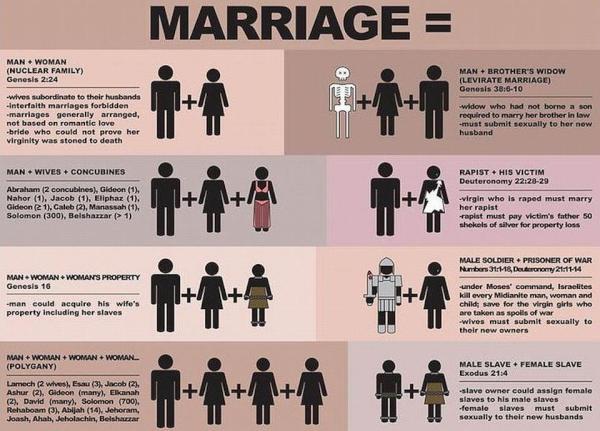
  • Praying in particular for the children born to marriages like the one above. The children born to these marriages will have all sorts of disadvantages and damage, and so I will pray that these might be turned towards healing by grace.
  • I will also say sorry to God that I am part of a society that constantly tends towards selfishness, over consumption, empire building and trivialisation, whilst at the same time undervaluing the principles of love and justice that would lead us always towards the other- particularly those who are marginalised and stigmatised by society.

May you be richly blessed

Chris Goan.

(Comments on this piece are welcome, but will be strictly moderated- let us discuss this issue with love and respect or not at all.)

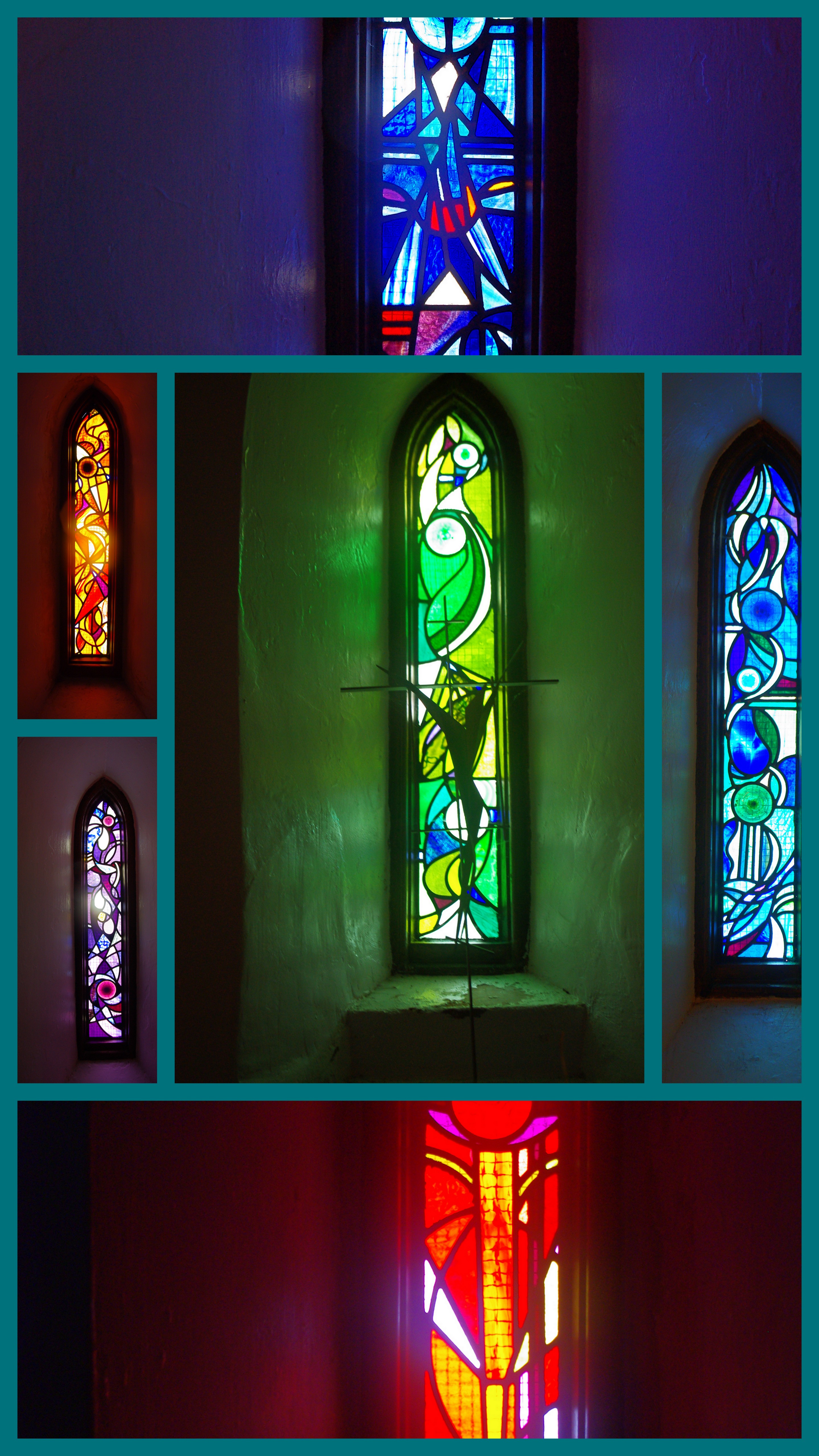
Stained glass…

Here are some photos of the lovely stained glass from the Rock Chapel at St Beuno’s.

The story goes that a retreatant called Claire Mulholland overheard a conversation about a fund raising bid to fit new windows in the chapel, and she offered her services. There is an account of her decisions to use the different colours and shapes to display different moods here.

Winter 20122013


A trip back in time…

IMGP3943

And lovely it was too.

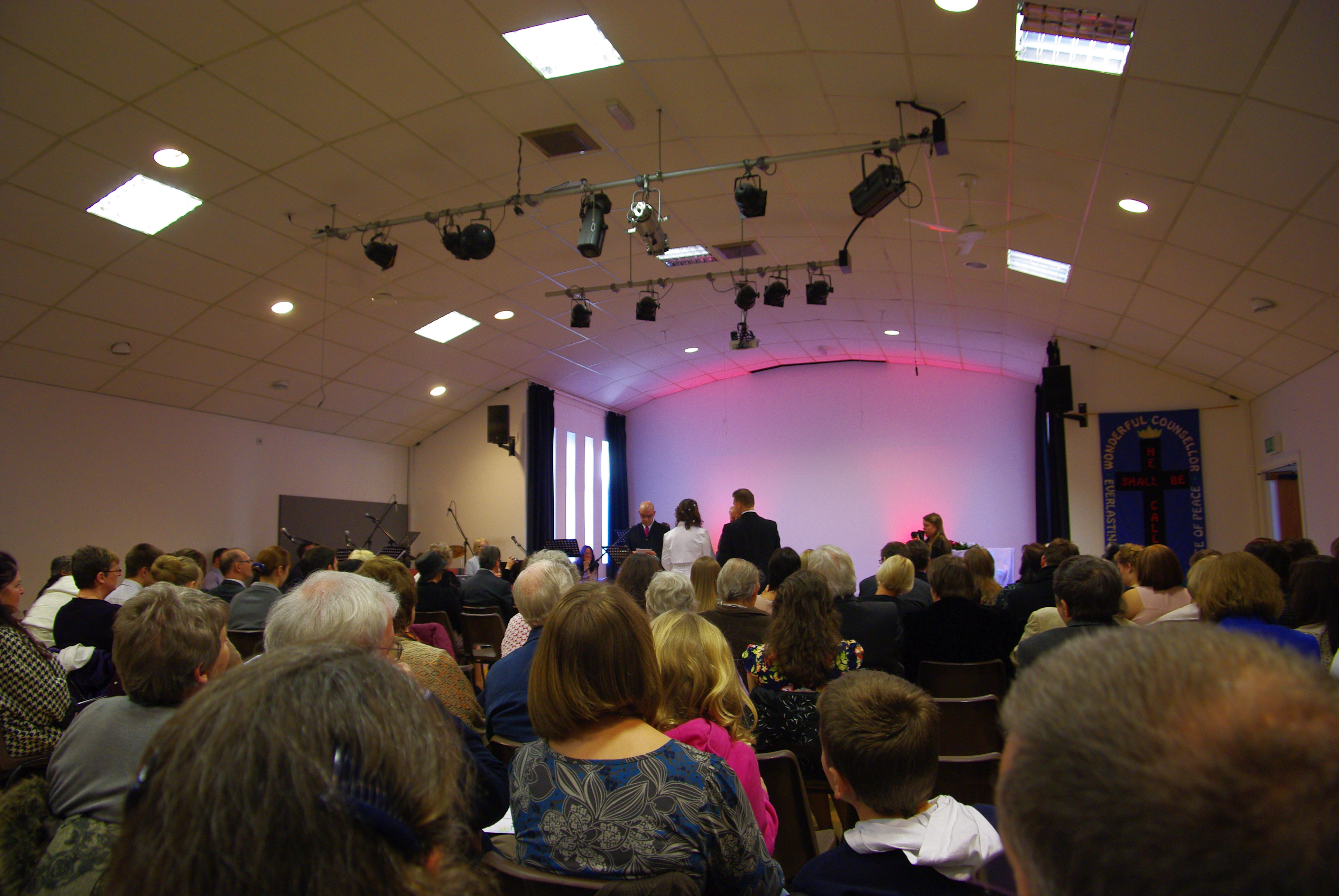
This weekend we have been down to our former church in Preston, to attend the wedding of an old friend- Kev Duffell, who was marrying a lovely German lass called Michaela. The wedding was half in German, and full of delicious miss-communications- although not between bride and groom, whose first kiss after being pronounced Herr und Frau was quite the most passionate thing I have ever witnessed inside a church. I felt like I was intruding…

But it was great to catch up with old friends- particularly some that I had not seen for years and years. Mark and Joy, Graham and Ruth, Andrew and Mary.

It was able too to spend some time with Steve and his wife Ros, who I had not seen for donkeys years. Steve and I used to play worship music together, and initially had our moments of tension but became good friends. He has gone from high flying executive to dog trainer, bike mechanic, pig and chicken farmer- on his own down shifting, living more simply pilgrimage.

Life takes us in all sorts of directions, and hearing the stories of old friends is such a privilege.

As for the happy couple- may they be richly blessed…

IMGP3946

Holy Discommunion…

After Lament

During my recent silent retreat, I found myself writing some odd things.

I was thinking about the nature of the Communion/Eucharist/Mass. This was triggered in part by an encounter with the centrality of the Mass within the Catholic church. Rightly so of course- it is one of the few specific things that Jesus told us to do- when you meet, do this in rememberence of me.

For many of my brothers and sisters the Mass is a place of mystical exchange. It has power that must be mediated through the ministry of Priests- and the exclusion of those outside the boundaries of the church. Having said that, many Catholics bemoan some of the power stuff that has attached itself to the church, and there is a long tradition of openness, generosity that warms my heart.

However, at one of the celebrations of mass that I attended recently, a Priest said something like this- “Each time we take this bread and this wine, it is doing its work of salvation within us.” I found myself in a place of divergence.

And I started to think about that final meal in the upper room- Jesus looking around at his closest friends, holding them in his heart, longing for them to get it. Get that it does not get any better than this- friends who laugh and love and share life together. Friends who take the stuff of their humanity- their bodies, their life blood, and lay it out for one another. And how Jesus knew that he would soon be gone. That a place at the table would be empty. How his heart must have ached.

Then I started to think about all those people who do not get to share a table like this- ever. All those people who life has broken and split off to live a kind of discommunion. Unmass. Nocharist.

And I suddenly felt a grief that our communal remembering of who Jesus was could ever become exclusive.

And I wrote this;

Holy Communion

.

Make me a mass from the broken bread

Of the schizoid on ward C

And for wine there’s a pool of Rogers blood

After suicide number three

.

And mix me some bread from the words he said

To Carrie when she was nine

The secret stains that drip from her

Will do for communion wine

.

Tear me a piece of the angry bread

Of Leroy on ICU

It took three nurses to inject his wine

They’ll need more before he’s through

.

Bake me bread in the boozers head

His clothes they sure do stink

Instead of wine have the turpentine

That was all he could find to drink

.

These are the holy broken ones

Gone soon and not much missed

From the first and the last of the least of these

We make our Eucharist

The last word…

open door, rock chapel

Following on from my previous post, I have been thinking a lot about the grace of God recently. Hardly surprising, as I am frequently in need of huge doses of it, but also because I have been immersed in thoughts about our understandings of hell, redemption and atonement.

As part of this I re-read Brian McLaren’s book “The Last Word, and the Word After that” which adventures into this territory. I read the whole thing in one sleepless night, hungry as I was to try to come to some view of these things myself.

From this, I wrote this;

The last word


I was reading a story from the Gospel of Mark about

Jesus. It was one of the hard passages where he uses

words that bite – words that leave no space for

my failure.

Jesus told his disciples to stand up for him before men and

the angels will sing. However those who disown

him will be lost – sent out in

disgrace.


And then I remembered Peter.

Rock of the Church.

Three time sinner before the crow of the cock.


Then I remembered too the story of the Garden where

God tells Adam (and Eve) that if they eat the fruit of the tree they shall surely die.

Not in abstract; they had no concept of the legacy left by the origin of their sin.

Yet they do not die, and God

cares for them, clothes them, sends them out onto the human race

like an anxious parent.


There is God’s

last word –

and the

word

after

that


which is always

‘grace’.


(with apologies to Brian Mclaren for pinching his book title.)

Steve Chalke raises his head above the parapet on homosexuality…

steve chalke

My mate Simon pointed me to this article, written by Steve Chalke, of the Oasis Trust, and published in this months Christianity Magazine. For those who do not know this publication, it is the voice of Evangelicalism in the UK- read by mostly fundementalist, bible-first, charismatic (with a small c), conservative (also with a small c) Christians. I used to read it myself years ago, but found that it made me too cross.

In this instance however, well done to the magazine for giving air to Steve, who has no doubt summoned down the wrath of many of its readers on his head, but in doing so has opened up an important debate from on the ‘inside’.

Here are some of the things he had to say;

I feel both compelled and afraid to write this article. Compelled because, in my understanding, the principles of justice, reconciliation and inclusion sit at the very heart of Jesus’ message. Afraid because I recognise the Bible is understood by many to teach that the practice of homosexuality, in any circumstance, is ‘a grotesque and sinful subversion’, an ‘objective disorder’ or, perhaps slightly more liberally, ‘less than God’s best’.

Some will think that I have strayed from Scripture – that I am no longer an evangelical. I have formed my view, however, not out of any disregard for the Bible’s authority, but by way of grappling with it and, through prayerful reflection, seeking to take it seriously. My prayer, in writing, is therefore to encourage a gracious and mature conversation around an extremely important pastoral and theological issue that impacts the lives of so many people…

In autumn 2012 I conducted a dedication and blessing service following the Civil Partnership of two wonderful gay Christians. Why? Not to challenge the traditional understanding of marriage – far from it – but to extend to these people what I would do to others – the love and support of our local church. Our service also gave them the opportunity, surrounded by their family and friends, to publicly recognise their dependence on God and their need to be part of a supportive Christ-centred community to strengthen them in fulfilling their promises to one another.

Too often, those who seek to enter an exclusive, same-sex relationship have found themselves stigmatised and excluded by the Church. I have come to believe this is an injustice and out of step with God’s character as seen through Christ. I leave it to others to debate whether a Civil Partnership plus a dedication and blessing should equal a marriage or not. But I do believe that the Church has a God given responsibility to include those who have for so long found themselves excluded…

In my view, although motivated by a laudable concern for inclusion, many of the arguments that have been constructed in the attempt to soften or nullify what is the clear and uncompromising stance of Scripture unintentionally end up clouding the real issue – one of wider hermeneutics rather than simply exegesis.

Through my hermeneutical lens, the Bible is the account of the ancient conversation initiated, inspired and guided by God with and among humanity. It is a conversation where various, sometimes harmonious and sometimes discordant, human voices contribute to the gradually growing picture of the character of Yahweh; fully revealed only in Jesus.  But it is also a conversation that, rather than ending with the finalisation of the canon, continues beyond it involving all of those who give themselves to Christ’s on-going redemptive movement.

Rather than condemn and exclude, can we dare to create an environment for homosexual people where issues of self-esteem and wellbeing can be talked about; where the virtues of loyalty, respect, interdependence and faithfulness can be nurtured, and where exclusive and permanent same-sex relationships can be supported?

Tolerance is not the same as Christ-like love. Christ-like love calls us to go beyond tolerance to want for the other the same respect, freedom, and equality one wants for oneself. We should find ways to formally support and encourage those who are in, or wish to enter into, faithful same-sex partnerships, as well as in their wider role as members of Christ’s body.

I end where I started; in the coming months there will be huge and often heated debate around gay marriage. I am committed to listening and trying to understand the intricacies of the arguments on both sides. But, whatever the outcome and whichever side of the debate we find ourselves on, my hope is that as Christians we face what I think is the central issue – what does real, Christ-like, inclusion look like?

For those who want to engage with the theology of his argument, I recommend reading the article in full.

And in the mean time, I commend you Steve for using your apostolic voice to raise this issue in such a thoughtful and gentle way. I know this is an easy thing to do when someone agrees with your own opinion- it is much harder to feel respect for those on the other side of a debate.

Let us hope that there may yet be a time when the Church can be a place of radical inclusion of out groups- which is after all the Jesus way.


Three jars…

Wine 2

The first miracle that Jesus performed was at a wedding- recorded in John 2 1-11.

Why does John choose to tell us this strange story? What was Jesus doing at a wedding, encouraging people to drink to excess?

The use of wine as an analogy of plenty, of blessing, of the fullness of life, is found everywhere in the Bible. Amos talks of wine running down the mountains in streams, as a sign of the restoration of the land of the Israelites.

It occurred to me, not for the first time, that although we can not command blessing – we can never presume that life is going to be full of plenty, or without challenge – we can still live in ways that become shallow imitations of the life of outrageous grace we see modeled by Jesus. We cease to be people of passion, and become instead bound by cynicism and small boundaries.

So, open up a bottle, raise a jar, uncork the fizzy stuff.

Symbolically speaking of course…

Three Jars


Three jars are waiting by

One of water, one of wine

The other one lies empty


Like Jesus at a wedding feast

These jars are waiting to release

The living waiting for us


The empty jar is hollow life

Like a married man without a wife

Like a cake that’s never eaten


The water jar will fill us up

Then leave us staring in the cup

Wanting something other


But rich red wine will satisfy

Blood will flow, the days will fly

Our passion consummated


Blessed are the birds…

cave, birds


The feathered Eucharist


Happy are these birds above who

never have to go to mass.

Happy fragile feathered things with

light not stained by glass.

Blessed are they beak and claw; their air

Is ever sacred.


Blessed be their treetop temple, each twig

a flying arch.

And sacred is each song that choirs

from sparrows or from larks.

Happy are these crows and cranes

Whose Eucharist is endless.


And may the vaulted holy sky

Be full of wings as birds fly by

On their way to ruffled worship.


(With thanks to Juan Raman Jimenez, ‘The Silversmith and I’.)

osprey takes flight from nest

Imaginative encounters with scripture…

israel-125year-old-man-laughing

There are many ways to read scripture passages; some of you may remember a list I once reproduced here of some of them.

There is also this one- an imaginative reading. In this kind of reading, we immerse ourselves in one of the stories of the Bible- placing ourselves as one of the characters, seeing it from a human perspective, being part of the action. This kind of reading is often applied to stories from the gospels.

It is also a kind of interaction with scripture which appeals to people like me who write.

One of the passages I was given to aid reflection in my silence last year was the story of Blind Bartimaeus, in Mark, chapter 10. It is a lovely story, full of Grace, and here is my imaginative response;

Once-blind Bartimaeus

What a day.

There I was, sitting in the town square tying to sell a few pots, when everyone started to run down towards the road. Naomi and old Jebediah almost knocked each other flying in their haste.

“What is going on?” I shouted “What’s all the excitement about?” But no one would stop to tell me- they were all heading down to the road- even blind Bartemaeus picked up his stick and started to rattle his way out of the square, taking his begging bowl with him. Soon there was just me and old Martha who is so old that she has forgotten what day it is.

Despite myself I followed the whole village down the hill. They were all craning their necks to catch sight of something. “What is going on?” I repeated myself. Finally Naomi answered- “It’s that man Jesus- the Rabbi. The one I told you about. He is coming here! James saw him this morning and ran all the way back to tell us!”

Jesus of Nazareth! Of course I knew something of him- who didn’t? The stories were flying back and forward about what he was up to. Some said he was a new Prophet sent to speak to the people of Israel just like the old times. Others said he was a fraud who was just making trouble, and there had been quite enough of his sort in these parts.

There are even those would say that he is The One– the Messiah- come to fulfil all those old scriptures. Come to release captives, to bring sight to the blind, a declare the year of the Lord’s favour (if I remember my school boy Isaiah properly.)

What did I think of all this? A load of crap I said to all who asked- another loud mouth living off the bread of folk who have little to give in the first place. The country was full of ‘messiahs’ after all- every one with their own set of followers. Naomi is a little more gullible than me, shall we say- this was the third teacher this year that she had got all excited about. “This one is different” she would say, “he is not interested in money, or fame, or power- he just seems to talk about love and this thing that he calls the New Kingdom.” She also told me stories of miracles- but we have heard them before as well. A bit of religious trickery always seems to make people more ready to part with their coin. Naomi might live and breathe this sort of thing but I for one give it no attention.

Just then the crowd started to hush “He’s coming!” someone said. I was standing at the back as people lined the road, so I quietly climbed on the branch of a low tree to get a better view.

There were quite a few people on the road- mostly men, but a few women. I had no idea which one was Jesus- they all looked pretty ragged, but at the same time somehow ‘road fit’- these people clearly knew how to put in the miles. They walked in groups, talking animatedly and gesturing at one another- there was a lot of laughter and one man even turned a cartwheel to please the crowd.

Just then, right in front of me, blind Bartimaeus started to shout. He had no idea exactly how close he was to the travellers so he shouted really loudly;

“Jesus, son of David, have mercy on me! Jesus, son of David, have mercy on me!”

Son of David’ no less- how did this beggar know so much scripture? His father, old Timaeus, used to have a broken down farm over the other side of the village and he had no time for such things when he was alive. This blind man was calling Jesus ‘Son of David’- more or less calling him ‘Messiah’!

The folk of the village did not like it- they turned on him. I think some were just embarrassed- an important, famous Rabbi comes to town and gets shouted at by a beggar- it just does not look good does it? Others thought Bartimeaus was after money (he normally was after all) although if he could see the state of the travellers he would have known that they did not have much in the way of cash. There were also more than a few religious folk in the crowd who were scandalised by the suggestion that somewhere in this ragged bunch was to be found Messiah.

So they hushed Bartimaeus, aimed a few kicks at him- but he would not be quiet. Even louder he shouted;

“Jesus- son of David. Have mercy on me!”

The travellers stopped in the road and turned towards the noise and the crowd went still- apart from Bartimeaus that is who shouted even louder. Then out of the group of travellers, a man started walking towards him.

I do not know why I had not seen him before- certainly he did not look much different, his clothes were just as ragged and his feet covered with the same road dust- but there was no doubt in my mind that this was Jesus of Nazareth. He had this presence, this quiet authority. Not the kind of authority that requires a title or a set of soldiers to enforce- this was something I had not seen before. There was nothing threatening about him at all, and yet I still found myself shrinking back a little.

This man would walk into any crowd and would become its centre. He could walk into a room and it would almost change colour. I at once saw what the fuss was all about- why he had upset people so much, why people were talking about him everywhere.

Bartimaeus was not at the front of the crowd- he was towards the back, quite close to me and I watched as Jesus walked towards him. The crowd parted like the red sea for Moses and I thought it best to climb down from my tree, not wanting to be noticed rubbernecking. I was then more than a little embarrassed to find myself standing almost right next to Blind Batrimaeus, who was still shouting for all that he was worth.

“All right, all right Bart old son” I said urgently “he heard you- and he is coming. Hush now!”

And he did. He sat there in the dust and blinked into the mid day sun, arms outstretched. I looked up and Jesus had stopped about ten feet away from Bartimaeus, and the crowd formed a ring around us like a thick hedge to keep in the goats.

He was close enough now for me to see his face. He was young – younger than me – that much I can tell you but yet I struggle to describe what his features actually looked like. All I know is that his face was so alive. His eyes seemed to be laughing even though his mouth was still.

I wondered then if he had stopped short of actually coming right up to Bartemaeus because he realised has was just a blind beggar- the sort that line all the major roads shouting for mercy. A man of no worth and no consequence. A man who some religious types described as bearing the consequences of sin. An unclean man, an outcast. The only reason that Bartimaeus survived at all was because people in my town remembered his mother, who was a good soul and had a lot to put up with what with her waster of a husband and her only child born blind, so many of us dropped him a coin or a piece of bread (when no one else was looking of course.)

Suddenly Jesus spoke.

“Tell him to stand up and come to me”

I realised with a start that he was talking to me- that he was looking right at me. And in the presence of this ragged stranger, my heart started pounding. I opened my mouth, but words seemed to have got stuck.

“Come on man- introduce your friend to me and tell him to stand up” said Jesus.

My friend? I thought- does he think we are the same? Was he mocking me? Certainly there was laughter in his voice.


Still, I bent over and spoke to Bartimaeus again “Come on Bart old son- he wants to speak to you.” I put my hand on the arm of this unclean wretch and helped him to his feet. “He is right in front of you, waiting.”

Bartimaeus put out his hands- he had left his stick on the ground- and took a step towards Jesus.

Then another, and another, until his hands were actually in contact with this strange compelling man. Jesus did not flinch as the beggars hands even began to explore his face; instead he opened his mouth and roared with laughter.

And his followers laughed too- not an unkind laugh; not the sort of laugh that happens when a man trips over a stray dog or a woman drops her bucket down a well. There was no victim to this laugh, rather it was an inclusive laugh- the sort that sucks you in and holds you in its embrace. It seemed to arise from a kind of emotion that I can only call joy. I found myself laughing too- really laughing. It was as if the trees and the stone walls laughed with us.

Then Jesus leaned forward and spoke again; “What do you want me to do for you?” he said, softly- so softly that I think only a few of us heard him.

That’s done it, I thought- clearly he has no money and there was no way he could take this poor wretch with him, wherever he was going. This is where it gets ugly again.

Bartimaeus did not ask for money though. Instead he dropped his hands, stood an inch taller and said this;

“Rabbi, I want to see.”

The crowd let out a communal gasp. Many had heard the rumours- lepers who had been made clean, mad men who were calmed, even a man called Lazarus over in Bethany who seems to have been raised up out of his own tomb. But talk was cheap and anyway things like that never happened in my town. Not here. Not to some smelly blind beggar who we all stepped over on the street every day of our lives.

But Jesus seemed to have heard only what he expected to hear- he appeared delighted. There was mischief in his voice when he said;

“Go on then- on your way. Your faith has healed you.”

And with that, Jesus turned about and started to walk down the road.

Is that it I said to myself. Is this the work of a Messiah? He throws out a few smart words then is on his way? I felt cheated somehow- despite my cynicism, even I had started to believe that this Jesus was different from all the other would-be Messiahs.

Bartimaeus just stood there- eyes wide open, wriggling his fingers between the sky and his face. I felt sorry for him.

“Well that’s that then Bart.” I said. “Come on up to town with me and let’s get something to eat…”

But before I could finish my sentence, he was shouting again at the top of his voice!

“I can see! I can see! I can bloody well SEE!”

The crowd parted again as he stumbled towards them, dumfounded as he pointed out the branches of the trees against the blue sky, the lichen on the wall next to the field, the marks he had made in the dust with his feet, and the smoke rising from the village chimneys in the distance. We all watched dumbfounded as he ran back to his stick, picked it up, kissed it then hurled it far over the wall shouting;

“Good bye you old bugger, I’ll not be needing you any more!”

Then he stopped in his tracks and spoke more slowly;

Go he told me- on my way. Where on earth would I be going… if it is not with him?”

With that, once-blind Bartimaeus was up and half running, half stumbling down the road, still with a hand held out in front like the blind man he used to be, chasing after Jesus for all that he was worth.

As for me, I stood with the others, watching him go- unable to take it all in. Unable to believe that the most important thing that ever happened to this town- no, the most important thing that ever happened to me– was wrapped up in the rags of this creature running like a drunken goat down the road.

I was wondering what it meant. Wondering what had just changed right before my eyes. Looking for something to anchor myself to, but not able to see it…

But that was all years ago now. Bartimaeus came back a few weeks later. He told us the story of what happened over the next few weeks. He was our eye-witness as to how Jesus rode in to Jerusalem on a borrowed donkey, only to be arrested on trumped-up charges and put on trial. Bartimaeus was there when Jesus was whipped and beaten up. He was there when they paraded him through the streets, and watched as they crucified him and hung him there until he died. He also told of how the curtain in the great temple ripped right down the middle and the sky went dark at mid day.

And Bartimaeus told us how a couple of the women went to take care of his body early in the morning, only to find Jesus not dead but alive– of how he met with his followers, and even let once-blind Bartemaeus touch his face again, and of how they all laughed till they cried.

Bartimaeus is my friend now. He lives with Naomi and I and helps me make pots- all those years of living by touch alone has turned him into the most gifted potter in these parts- people come from miles around to buy what he has made.

Or perhaps they come to hear the stories. Of a man called Jesus, who on some days even I have come to believe was indeed the Messiah.

Lost…

sheep, snow, high contrast


Towards the beginning of my retreat, I wrote this;


Lost sheep

Through trees wearing ice where leaves

once were, I follow the map that

someone kindly laid for me.

Over stile that skates my boots and

into fields wiped clean, skittered

only by claws of creatures who watch

me blunder by from cover.

A hedge a road a bog a bridge a pause to

mop and catch my breath, a buzzard low in

silhouette, too-early lamb almost indivisible from

mother, who all but knits for him a jumper.

I am no-where. At least not where I

ought to be. Not mappable. No surrender to

conspiracies of cartographers.

It came to me that only when we

lose a path can we discover our own.

But these too have all been walked before.

lamb in the snow