Is it possible to earn a living from being creative?

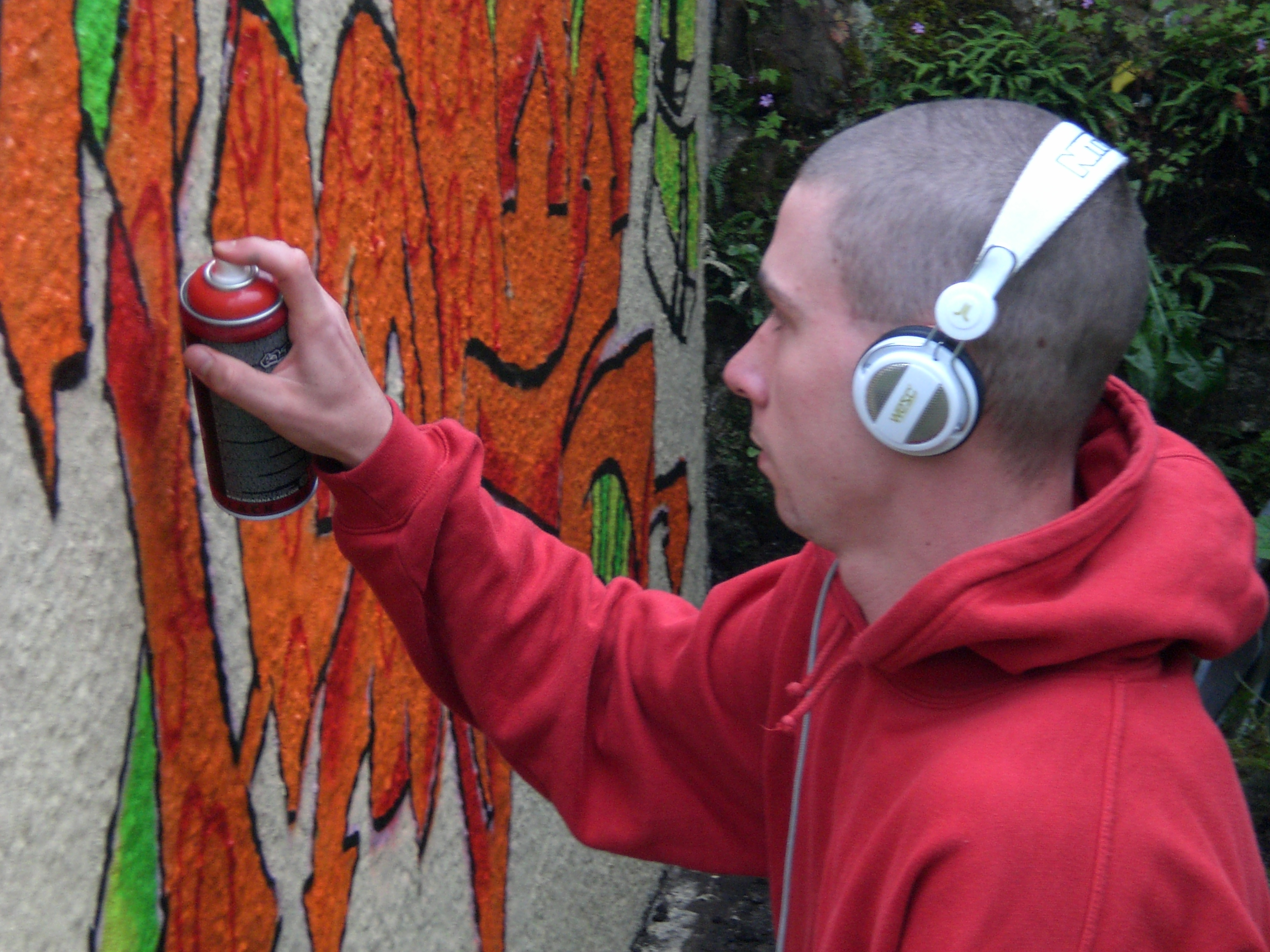
marcel creating

A little while ago I was talking to a friend about the life choices we made as young people, and whether we regret them. I was heading towards social work from an early age- my own rather damaged situation made me want to be a helper and a healer of others, and I was convinced by the call to live a life of service, which seemed to me to be the only life possible for followers of Jesus.

A quarter of a century later, social work chewed me up, and if it has not quite yet spat me out, I am like gum without the spearmint, but even so I am not quite sure whether I would have made a different decision with the benefit of hindsight.

Being sensitised and tenderised by life has the obvious effect of making you more inclined to towards being sensitive and hopefully tender towards the other- hence the social work. Having said that, social work these days seems to give less priority to kindness, and the soft arts of gentle encouragement. The best of us still hang on to these skills, but they are not measurable and so do not fit into any performance management plan I have seen of late. This probably explains my alienation at least in part.

This sensitivity also drives you into yourself, resulting in introspection or a retreat into imagination and the rich inner life of the mind. This second part of who I am has been less developed- certainly as a means of earning a living. There ain’t no money in poetry, that’s what sets the poet free as the song goes. I have wondered often about how people actually make a living through art.

There was an article in the Guardian yesterday entitled 10 things about being an artist that art teachers don’t tell you which made some interesting points about all this. It started with a stereotype about the struggling angst ridden artist starving in a garret;

If popular opinion is anything to go by, the creative sector is a huge gamble, braved only by reckless, or masochistic, individuals. But if you’re an art student, you need to know if this “make or break” view bears any relation to reality.

The author then spelled out the following 10 things that they had discovered as an art student;

Here are 10 honest truths about work, life and leisure in the creative industry.

1. Many artists work freelance. A study by the Arts Council finds that 41% of creative workers are self-employed. Temporary work contracts can make for an interesting and varied career, though periods of unemployment between jobs are a reality for some artists.

2. Freelance artists budget carefully. Being self-employed means you are without pension, holiday pay or maternity benefits. Contingencies such as falling ill or having children require pre-emptive financial planning.

3. Artists self-promote. Many showcase their talents on Facebook, Twitter, Tumblr and Linked in, as well as on their own websites. Having a good online presence shows employers that you are self-motivated and digitally literate.

4. Artists love socialising. Networking events are the art world’s equivalent to job hunting, but with less misery and more booze. Whether you’re searching for commissions or trying to advance your career, networking gives you the chance to meet industry professionals and expose yourself to new opportunities.

5. Many artists form collectives to publicise and exhibit their work. Kate Rowland, an illustrator from the collective After School Club explains: “Being in After School Club is great for motivation. It allows us to utilise each other’s skills, therefore we have more resources to help one another. It’s kind of like a creative support system. And lots of fun.”

6. It’s all about your portfolio. The visual arts are less grade-centric than other disciplines. An art director at a graphic design company once told me he’d think twice about hiring someone with a first-class degree, as he worried they’d have no time for hobbies outside of work. In his words, not mine, “they might be really boring”. This isn’t to say you shouldn’t aim high – another employer might appreciate a first-class candidate. Rather, you should focus on making your portfolio the best you can possibly make it. A good body of work speaks louder than grades.

7. Some artists supplement their income with a second job. Doing so gives them financial security while they exercise their creative passions. Take a look at some of these prolific “double jobbers”.

8. Many artists take on internships to help kick-start their career. Working for a company can prepare you with essential industry skills and improve youremployability. The question of payment is a hot potato – in general, the shorter the internship, the less likely you are to get paid.

9. Job opportunities are growing. There are currently over 1.9 million people working in the creative industries. However, by 2016, the government expects this figure to skyrocket, with an additional 1.3 million new jobs in the private sector alone.

10. The creative sector is characterised by high levels of job satisfaction. As a result, the industry is highly competitive and jobs are sought after. If you have the passion and the motivation to stay ahead of the game, then a creative career can be an exciting and rewarding experience.

There you go- perhaps I should have gone down a different path.

Perhaps I still might get there…

A bit of McCaig…

stock-footage-sick-diabetic-women-in-hospital-room

Thought it was time for Norman McCaig’s poetry…

I often talk to people who tell me that they struggle with poetry. It is as if someone contorted the language it was written in and mixed it into some other dialect- more rarefied, pretentious and elitist. Thinking about it, perhaps this is exactly what was done to it at school…

Perhaps too they have read the wrong poems. Or even never really read any at all. Or (even more significantly) they have never written any.

I too struggle with reading some poetry- this may be because it is never instant. Poems are all about the gift of slow reading- immersing yourself in the opaque ink bath, knowing that some stain will remain. Poetry is about feeling more than understanding. It needs time, and most of us have little patience for time.

Back to Norman McCaig. Here are two of his poems. Think of them as two love poems, at desperately different parts of life.

In which poem was love the strongest?

TRUE WAYS OF KNOWING

Not an ounce excessive, not an inch too little,
Our easy reciprocations. You let me know
The way a boat would feel, if it could feel,
The intimate support of water.

The news you bring me has been news forever,
So that I understand what a stone would say
If only a stone could speak. Is it sad a grassblade
Can’t know how it is lovely?

Is it sad that you can’t know, except by hearsay
(My gossiping failing words) that you are the way
A water is that can clench its palm and crumple
A boat’s confiding timbers?

But that’s excessive, and too little. Knowing
The way a circle would describe its roundness,
We touch two selves and feel, complete and gentle,
The intimate support of being.

The way that flight would feel a bird flying
(If it could feel) is the way a space that’s in
A stone that’s in water would know itself
If it had our way of knowing.

Visiting Hour

The hospital smell
combs my nostrils
as they go bobbing along
green and yellow corridors.

What seems a corpse
is trundled into a lift and vanishes
heavenward.

I will not feel, I will not
feel, until
I have to.

Nurses walk lightly, swiftly,
here and up and down and there,
their slender waists miraculously
carrying their burden
of so much pain, so
many deaths, their eyes
still clear after
so many farewells.

Ward 7. She lies
in a white cave of forgetfulness.
A withered hand
trembles on its stalk. Eyes move
behind eyelids too heavy
to raise. Into an arm wasted
of colour a glass fang is fixed,
not guzzling but giving.
And between her and me
distance shrinks till there is none left
but the distance of pain that neither she nor I
can cross.

She smiles a little at this
black figure in her white cave
who clumsily rises
in the round swimming waves of a bell
and dizzily goes off, growing fainter,
not smaller, leaving behind only
books that will not be read
and fruitless fruits.

Capitalism and democracy- joined at the dollar?

capitalism3

This is not an attack on Democracy by the way- I can think of no better system for the governance of nations. However, there is a real question about the operation of our own democracy and the symbiotic relationship between democratic states and rampant consumer capitalism.

The relationship is so strong that it is not really possible to imagine democratic state that does not organise its fiscal matters according to the rules of international capital. Neither the other way round.  Ah- but what about China, I hear you ask? Here is  from The Guardian, Sunday 17 February;

When, during a recent TV debate in France, the French philosopher and economist Guy Sorman claimed democracy and capitalism necessarily go together, I couldn’t resist asking him the obvious question: “But what about China?” He snapped back: “In China there is no capitalism!” For the fanatically pro-capitalist Sorman, if a country is non-democratic, it is not truly capitalist, in exactly the same way that for a democratic communist, Stalinism was simply not an authentic form of communism.

This is how today’s apologists for the market, in an unheard-of ideological kidnapping, explain the crisis of 2008: it was not the failure of the free market that caused it, but the excessive state regulation; the fact that our market economy was not a true one, but was instead in the clutches of the welfare state. When we dismiss the failures of market capitalism as accidental mishaps, we end up in a naive “progress-ism” that sees the solution as a more “authentic” and pure application of a notion, and thus tries to put out the fire by pouring oil on it.

When you think about it, the co-existence of capitalism and democracy is a strange pairing. Hitler used to say that the logical end result of democracy was communism. Marx suggested the same, from a rather different perspective. Both seem to have been proved entirely wrong. The end result of inequality, globalisation, banking crises, depressions, high unemployment, destruction of the environment is- more capitalism. And we all vote for the party that strong arms our austerity packages that supposedly free up the market to solve our problems for us.

Why do we do this?

I am just reading Tony Benn’s book ‘Letters to my Grandchildren’.

letters


Benn is quite clear that our democracy is not- well, not democratic. It never has been- it allows for endless manipulation by those in power. The rhetoric of democracy is simply that- rhetoric. He lists some methods of control often employed;

  1. Violence
  2. Religion
  3. Via employment- fear of unemployment
  4. Debt
  5. Fear of dangerous enemy- USSR, Terrorism, Hitler, Kaiser etc
  6. Fear of immigration
  7. Fear of crime
  8. Demoralisation- a feeling that only the ruling educated elite have the skills to run things
  9. Cynicism- in all the media- ‘they are all the same’ ‘nothing ever changes’ etc.

There are many more means of control. The strange thing is that I do not even think that these are always deliberately exercised. I am not a conspiracy theorist. Rather I think that we have made a monster that constantly feeds itself- and we sit at it’s feet, hoping to get fat on the scraps- or at very least hoping that it does not notice us and devours someone else.

What to do about it? That is the question…

Scottishness and the search for self…

I read this lovely book recently;

untitled

I will not go into any detail about what it is about, except to say that if you love poetry, landscape and humanity you will love this book. It is a beautifully written travelogue/memoir and obituary of the great poet Norman McCaig.

One of the things that resonated with me was how the book tried to grapple with Scottishness. Up here we are heading towards a referendum on whether Scotland should exist as an entirely separate country to the United Kingdom. The old confused profusion of ideas around history, identity, sense place in landscape, feelings of old injustices to be avenged, or old alliances to be celebrated- it is all there  just below the surface.

Andrew Greig talks with such eloquence about Norman McCaig’s generation- McCaig was a conscientious objector in the second world war and had a deep suspicion of nationalism wherever he saw it. I share this feeling. I have an outsider’s discomfort with borders and in-groups. I struggle to think of anything positive that came out of nationalism- it has so much power to bring out the worst of what we are, but rarely the best. It throws up statues of lots of dead people.

However, there is another kind of Scottish identity in Greig’s book- as he moves from city to mountainside there is a profound sense of place- a love of landscape. A sense of one-ness with the roll and curve of the land. A sense of understanding that others too have been here, and in some sense are here still. I have had plenty of glimpses of this in my own adventures. There is a generosity as well as a cruelty to mountains- they do not care about accent.

There is also this lovely piece of writing that I thought I would reproduce here- which is another image that stuck in my mind. Greig starts to think about his father;

…it began as a yarn about how he and his classmates, in the early years of the last century, would challenge each other to walk for as long as possible carrying a penny gripped between thumb and forefinger, the arm hanging down. It may seem an easy thing to do laddie but  no matter how hard you try sooner or later it will drop. Muscular fatigue, numbness, something like that. And I thought, what a fantastically futile thing to do, and how deep and Scottish a teaching it must have been, yoking together money, endurance and the inevitability of loss.

Then my father went on to say how, still carrying his penny, as a boy he once stopped in a gale under a Scots Pine. He stood against it, thrilled – not a word he had much use for – to feel bark shift against his back. He said he’d imaged the tree a mast, and yearned to be sailing where the wind was blowing…

I love this simple little story- of how we get caught up in futile loops, and imagine them to be significant.

But how there is a wind in the trees, and if we would let it, it has the power both to root us where we are, and also to call us to something far beyond.

How the two are related.

And so it is that we can be Scottish (even I) and still both bigger, and much smaller.

Another year under the belt…

birthday_candles

Thanks for all your good wishes friends! Another year older…

Whisky, flapjack, new music to listen to, new books to read, people I love to spend time with= man blessed.

We are heading over to Glasgow later for a meal out, perhaps the pictures, then staying overnight before hitting a couple of art galleries tomorrow.

RSA animation’s take on the failure of Capitalism…

I may have posted this before, but given my recent posts thought it worth posting again. It crams so many ideas and concepts into such a short video. The bottom line however is that something ain’t working!

It was done in the early days of the ‘credit crunch’ in an attempt to grapple with what went wrong- what caused this current economic crisis.

Chocolate and the New Kingdom…

chocolat-470-75

I offer you this for St Valentine’s day…

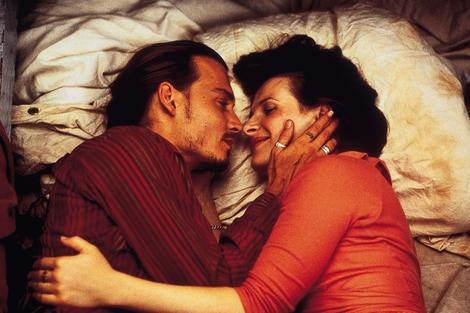
Michaela and I sat and watched the film Chocolat last night. We have both seen it before, but were moved again by its power.

If you have not seen it, it is set in a French village soon after the second world war into which a stranger and her little girl who come to open a chocolate shop. There is magic about the woman and about the chocolate. Her kindness and the glorious excess of her chocolate creations start to change people- to open them up, to make them hope again. And there are those who do not like this- particuluarly the ultra religious mayor, who is able to control the local parish priest. There is a puritanical backlash, against both the woman and against some gypsies who are in the area.

Except, the magic is still in the woman, and in the chocolate, and there is a change. I will say no more, not wanting to spoil the film for  you- but there is plenty still to enjoy in the gentle comedy and the lovely acting (Judy Dench, Johnny Depp, Juliette Binoche.)

There is also some rather profound theology. After the pivoting point of the film, this happens;

It reminded me so much of Babettes Feast– the image of a God of exuberance, who draws us into a dance of joy, of consumation, of love.

So, my friends, may your day be full of Chocolat…

Economic growth; lie number two…

How do we know that we are in recessiondouble dip or triple dip as it may be? What mysterious yardsticks are used in the Bank of England to make them reach for the strings on which we all dangle?

economic_growth_3

Above all, it is this one; Economic Growth.

Economic growth usually refers to the growth in value of GDP (gross domestic product).

The total output of the country – the value of all the food produced, all the pharmaceuticals manufactured, cars assembled and services rendered – forms GDP.

GDP also takes into account the effect of imports and foreign investment.

If GDP is bigger this year than last year, then the UK is experiencing ‘economic growth’.

But inflation will also have driven up prices since last year, and thus GDP. To assess whether the economy is actually growing, the rate of inflation has to be subtracted from the nominal rate of growth to get the real rate of growth.

Lets be clear about this- economic growth happens when the overall value of what have, what we make, what we own, gets bigger. Our system is set up to be always dissatisfied with what we have, with what we are. No growth is regarded as stagnation, shrinking is recession, and recession is to be avoided at all costs- particularly at the cost of those who have the least.

We can only have economic growth if we continue living the kind of lifestyles that we are living now- if we continue spending money on the next gadget, another car, the latest trend in exotic food, the newest cut of skirt and suit. We can only have economic growth if we exhibit enough collective desire for new bathrooms, conservatories, paved driveways.

Increasingly we can only have economic growth if we can persuade other people to be just like us– to want the things that we want, the food that we eat, the mobile phones that we have glued to our ears. And so was born the globalisation of markets; the ubiquitousness of product. The penetration of our ways of being into every far corner of the earth.

Is this a problem?

Well, perhaps we need to distinguish between different periods of economic growth. In the UK we went from being an agrarian economy, whose countryside could only support a certain population number to being a place of canals, coal mines, factories and population explosion- all in the space of around 100 years. During this time our economy was growing exponentially- rather like that of China now. Victorian Britain was a place of huge inequality and the accumulation of vast wealth by the few on the backs of the labour of many. Like China now.

Of course to achieve this continued economic growth, Britain also needed an export market and control of sources of cheap natural resources-  for this we colonised and enslaved half the world.

More recently our economic growth has slowed- we achieve figures of one, two, three percent, and call it success. This ‘success’ is nothing to do with society changing, but everything to do with a desire to stay the same. Our growth is conditional on the pursuit of technological innovation by those who would sell us more product- rendering those we already have as obsolete.

Economists have a word for our willingness to spend- to slap down the cash rather than salting it away- they call it confidence. A healthy economy is full of confident consumers. Or, as Wikipedia put it;

Schumpeterian growth is an economic theory named after the 20th century Austrian economist Joseph Schumpeter. Unlike other economic growth theories, his approach explains growth by innovation as a process of creative destruction, which captures the dual nature of technological progress: in terms of creation, entrepreneurs introduce new products or processes in the hope that they will enjoy temporary monopoly-like profits as they capture markets. In doing so, they make old technologies or products obsolete: this is the destruction[disambiguation needed] referred to by Schumpeter, that could also be referred to as the annulment of previous technologies which makes them obsolete, and “which destroys the rents generated by previous innovations” (Aghion 855).

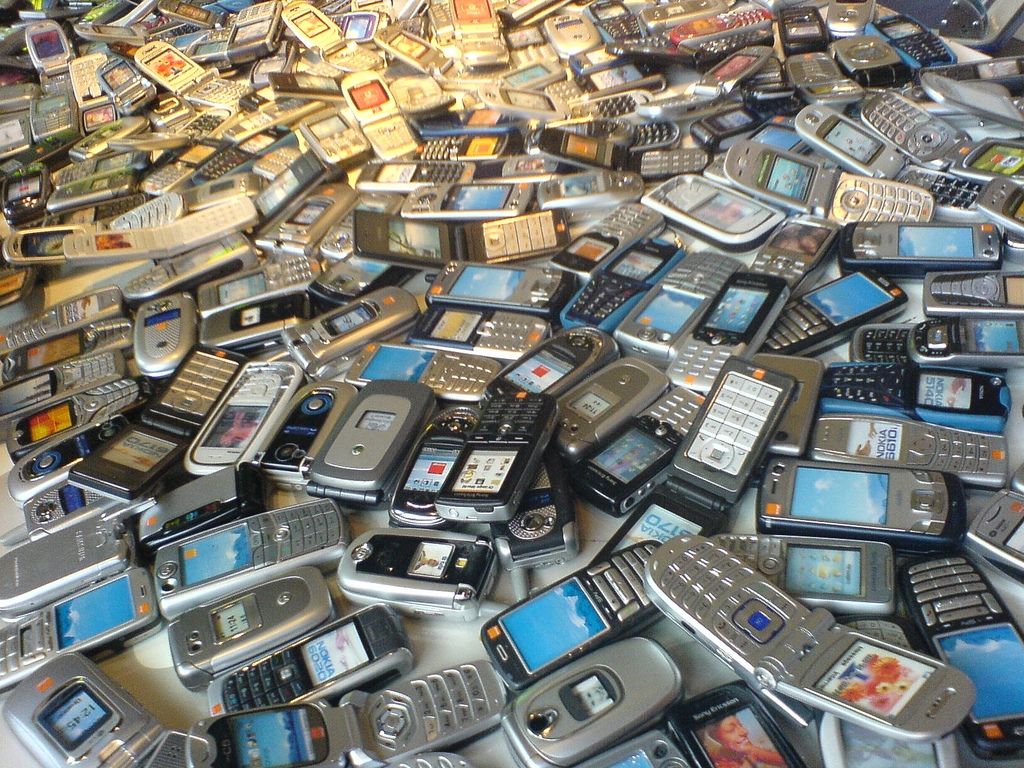
pile-o-cellphones1

Now, back to the LIE that are at the centre of all this. We are told that for our economy, even our society, to survive and prosper, we have to have sustained economic growth. The spectre of the Great Depression hangs over us- lives ruined, people starving in the streets. Economic growth is a holy cow that we have to keep feeding.

Everywhere we hear people asking questions of this cow however;

  • Is it sustainable? Can we really just keep producing more and more? Are we not burning up our resources at an alarming rate? Are we not slowly poisoning our planet with it all?
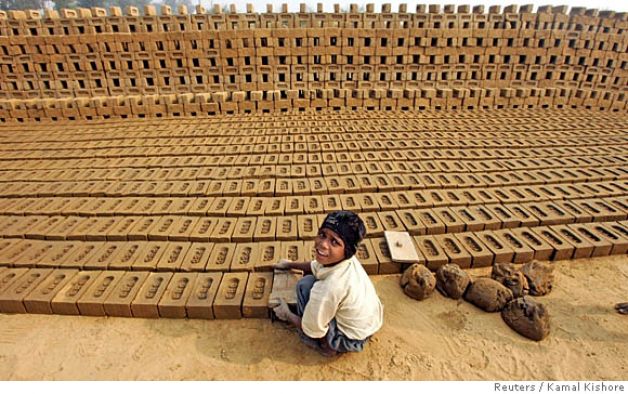
  • Is it fair? Can we really continue to live in a world where our lifestyles are dependent on the raw materials and cheap labour of others who are half way across the world?
  • Is it working? Given the instability in the system, can we really trust it to maintain our lifestyles? Is it not all just coming unraveled anyway?
  • Is it not just terribly wasteful? Do we really need all this stuff? Is there not a simpler way to live?
  • Is it making us happy, fulfilled, complete?

The relationships between economic growth and equality within society is one that has been the cause of much argument- think about the Marxist analysis, or of recent arguments that suggest that stable economic growth always leads to greater equality.

The argument has taken a new turn recently however- this from here;

Labour is drawing on research by the New Democrat Network (NDN) central to the Obama re-election campaign to shape its own election thinking.

The research was described by the Obama campaign as its North Star. It tracked three trends in the US economy between 1992 and 2009, showing how two – higher growth and higher productivity – had not been matched by a rise in living standards for the majority…

Douglas Alexander, the shadow foreign secretary and a close student of US politics, told the Guardian: “Back in 1992 the famous dictum of Bill Clinton’s adviser James Carville was: ‘It’s the economy, stupid.’ It contained the implicit assumption that economic growth ensured rising living standards.

“Today that no longer can be taken for granted, as this important research by NDN and the Resolution Foundation shows. I’ve worked closely with the NDN in recent years and that collaboration confirms to me this is one of the defining challenges for today’s progressives on both sides of the Atlantic.”

Similarly, work in Britain maps how growth before 2008 did not guarantee a rise in living standards, and how the bottom half of society suffered. UK wage stagnation is more recent than in the US – theirs started in the 1970s, the UK’s in the early 2000s.

And that is just within our own society. No mention of this sort of thing;

poverty

So, what is the alternative? Can our society, our economy, really kick our addiction to economic growth as the primary measure of our worth?

What might replace it?

Can commerce ever be based on a fair exchange of skills based on need (although surely there is always room too for celebration, for art, for pleasure.)

Can we learn to live in ways that are sustainable- that only cost the earth what it can afford to give to us?

If the answer to these questions are ‘yes’ (and I deeply hope that they are) then might these not result in negative economic growth?

Because in the Kingdom that Jesus talked about, things often get turned upside down and inside out- the last become first and the least of these become the keys to the Kingdom.

The Kingdom of God is not interested in statistics, in abstract measurement- it is rooted in the here and now- the shit and blood and spit of being ME, and my individual relationship with you. Everything else just gets in the way.

Trickle down economics; economic lie number one…

The first of a little mini series about Capitalism that has been nagging at me for a while…

trickle down economics

There was an article in out local paper last week- Argyll and Bute council, like most of our councils, has to make significant cuts to the budget. Despite our large geographical area, Argyll has a low density of population and services are already stretched tight. The article listed the sordid detail of the cuts- older peoples care, youth rehab, road schemes, outsourcing services to the private sector who will do the support of our most vulnerable more cheaply etc etc.

And what is all this about? Why is money suddenly so tight? Why do we all buy into the collective idea that ‘times are hard’ and so ‘we all have to tighten our belts?’

The fact is that not all of us do tighten our belts. Many people are doing very well out of the crisis. This from the Guardian;

The super-rich – the top 1% of earners – now pocket 10p in every pound of income paid in Britain, while the poorest half of the population take home only 18p of every pound between them, according to a report published this week by the Resolution Foundation thinktank, which reveals the widening gap between those at the very top and the rest of society.

Inequality has grown sharply over the past 15 years, according to Resolution’s analysis: the top 1% of earners have seen their slice of the pie increase from 7% in the mid-1990s to 10% today, while the bottom half have seen their share drop from 19% to 18%.

And then there are those right at the bottom- the Strivers who are forced to become Scyvers, or the Skyvers who have lost hope, or those who never had a fair crack of the whip in the first place. Have you noticed that when the economy takes a dip, they always take a hit? They become the problem– the scapegoats.

So we see all these regressive punative policy decisions being pursued by our current government- lower benefits to fewer people, changes to housing benefit to force people to leave their homes if they have an extra bedroom. All this in the context of reductions in care provision, and less funding for voluntary bodies and charities. Our current government is doing things that even Thatcher at her most strident would have baulked at.

But again- why? Where does all this come from?

What the neo-liberal economists will tell us is that the problem is caused by natural adjustments made by a self regulating economic system. That the job of us all is to get out of the way and let it all sort itself out like some kind of higher intelligent life form. The problem, they would say, is an over inflated public sector, whose interference in the natural order of things by public spending, taxation and welfare provision means that the economy fails to self regulate.

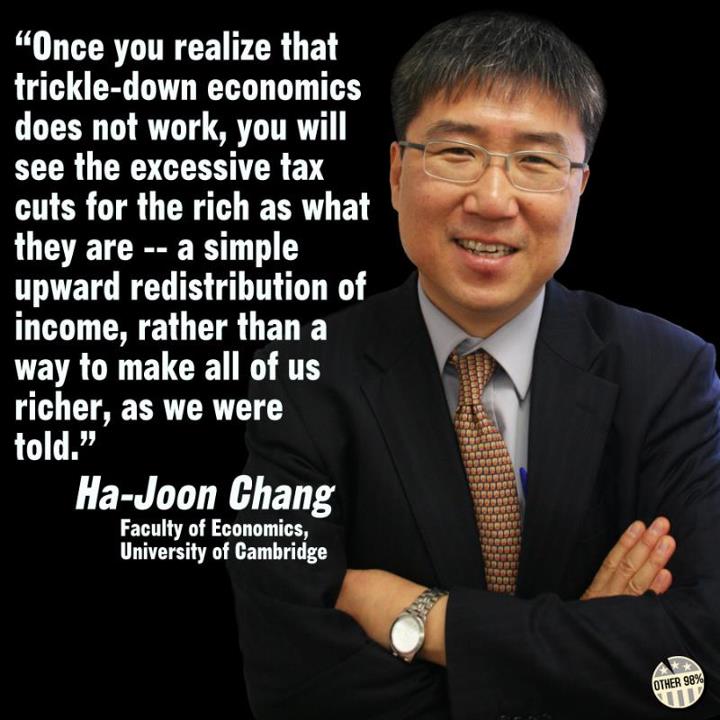
This kind of economic thinking has become so pervasive, so wrapped up in the political system, so much in service of powerful self interests, that we all wriggle on its hook. We are compliant because we have bought in to some of the lies that the system has sold to us- perhaps the biggest one is this one- Trickle down theory.

In a nu­tshell, trickle-down theory is based on the premise that within an economy, giving tax cutsto the top earners makes them more likely to earn more. Top earners invest that extra money in productive economic activities or spend more of their time at the high-paying trade they do best (whether that be creating inventions or performing heart surgeries). Either way, these activities will be productive, reinvigorate economic growth and, in the end, generate more tax revenue from these earners and the people they’ve helped. According to the theory, this boost in growth will ultimately help those in lower income brackets as well.

So, the argument is, if we have lots of rich people, and they are encouraged to become super rich, then our country, and our economy, will benefit- right down to the roots.

This analysis does not regard the wealth of the few as contingent upon the poverty of many- in this country and even more crucially in the poor countries around the world whose raw materials and cheap labour we are entirely dependent upon.

It also does not conform with the facts, as the rich get richer, and the poor get poorer.

As the worlds resources are over consumed by the few and our environment continues to be damaged, perhaps beyond repair.

As austerity plans are still touted as ‘good housekeeping’, as if the UK economy could be compared to a household budget.

So, what is the alternative? Fairer, more progressive tax systems? This might be a start- but I think the problem is the system- and we are all part of the system aren’t we? It is really hard to get out of it- the mortgages, the gadgets, the foreign holidays and the dependency on technology to deliver distraction, entertainment and connection.

Where is the Kingdom of God in all of this? What are we, the agents of this Kingdom , to put our energy towards? I am convinced that we need to be engaged critics of injustice wherever we see it- particularly towards the poor and the marginalised.

And the beginning of how we can do this is to take a look at the system through a different set of lenses…