Ghosts…

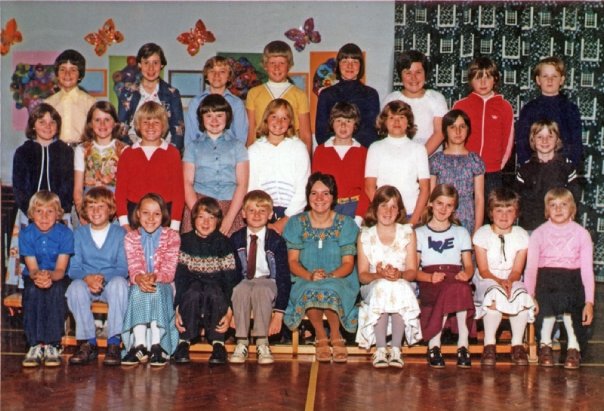
One of my old schoolmates posted this on Facebook recently. I must have been around 8 or 9 when it was taken. I will let you guess which one of this fine group of students is me. Mrs Ellis’s Class, Croft Primary School, circa 1975.

The fact is, I remember very little from my childhood. Through the joys of Facebook, a number of folk have made contact with me, and invited me to join other school pages/groups for secondary school too. They always seem to know far more about my school days than I do.

This might be because I have a poor memory, but also is something to do with poor memories. Mine was not a happy childhood- neither at home nor at school- too much difficulty, awkwardness, bullying and violence in both places. The end result was that childhood for me was all about insecurity and isolation. My lovely big sister had a rather different experience- she was cleverer and far more articulate than me so could hide her insecurities much better. I have spent the last 30 years slowly trying to rediscover me. It is a work in progress, and looking back at these ghosts makes it seem a lot closer.

However, the trip down memory lane, painful and fractured as the memories are, forced me to count blessings too. The secondary school that I attended (not the one above) was a rather experimental ‘Community School’- located in the middle of our small Nottinghamshire town, with ice rinks and sports halls, day centres and adult education all mixed in. The building was open plan and teachers and adult learners mingled with us all on first name terms. The experimental nature of the school did not survive long- scandals over the so called teaching of swear words and loose discipline found the front page of The Sun, and there was a conservative fight back after Thatcher came to power.

But something of this school made me who I am. The fierce sense of social justice, the love of English literature. These are friendly ghosts. They can stay.

Good Shepherd Sunday…

It was today, according to the Lectionary.

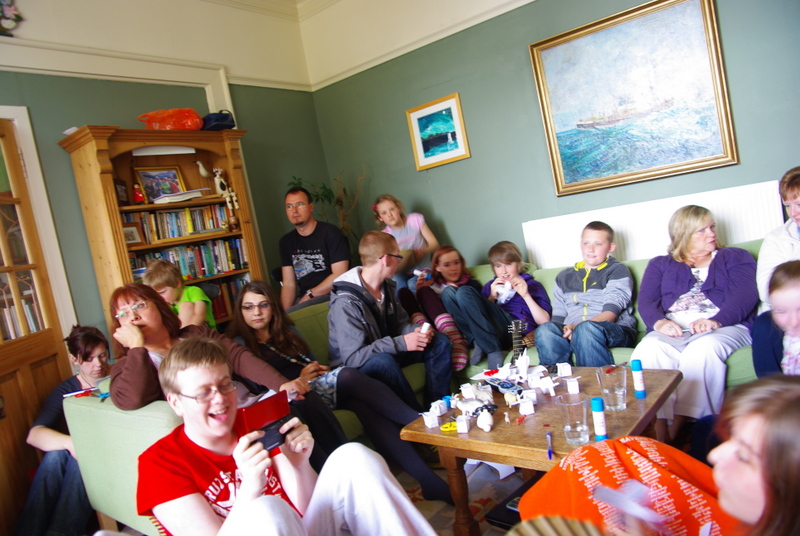
It was also our Aoradh family worship day today, and it was lovely as ever. We used the general theme of Good Shepherd in our worship, then we ate together and sat round a fire in the garden until the spring rain set in.

Today we did a thing with some of Si Smith’s flat pack nativity figures– the shepherd, and lots of sheep. We asked people to write worries on the inside of the sheep, then add them to the flock- first feeling the better for the company, then we added in the shepherd. You get the picture.

Here are some of the flock;

The radical nun’s habit…

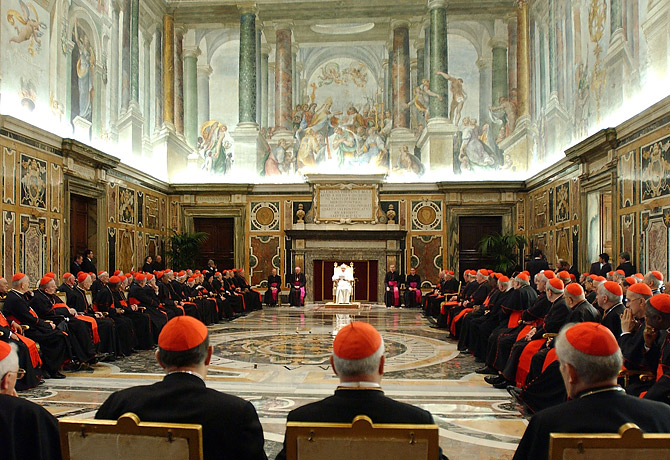
There is a rather astonishing row being played out in the media between the Vatican and a group of Catholic nuns in America, called the Leadership Conference of Women Religious. This is no fringe movement, but rather is the largest organisation of Catholic nuns in the US. The LCWR is a social justice lobby and has been active in promoting civil rights (including Obama’s controversial health care bill.)

The current swing towards conservatism in the Catholic church, which has undoubtedly led to a move towards much greater central control on all sorts of matters of faith and liturgy appears to have found a visible battleground.

What then are the concerns of the Vatican about these dangerous nuns? This from the BBC;

…issues of “crucial importance” to the church, such as abortion and euthanasia, had been ignored.

Vatican officials also castigated the group for making some public statements that “disagree with or challenge positions taken by the bishops”, who are the church’s “authentic teachers of faith and morals.”…

…It says the group is undermining Roman Catholic teaching on homosexuality and is promoting “feminist themes incompatible with the Catholic faith”.

The radical nuns do not concur. Sister Simone Campbell, head of of the Leadership Network has been reported here as making some of the following statements;

“I’ve no idea what they’re talking about,” Sister Simone Campbell, head of Network, a Catholic social justice lobby, told the BBC.

“Our role is to live the gospel with those who live on the margins of society. That’s all we do.”

Sister Campbell suggested a difficult time ahead: “It’s totally a top-down process and I don’t think the bishops have any idea of what they’re in for.”

Who is this radical dangerous firebrand? See for yourself;

I fear for this woman, and for the Catholic church. May they find a path towards a generous, open orthodoxy.

And may this kind of radicalism increase exponentially!

Goodness…

Such a twee, old fashioned word.

Why is that when we are surprised by kindness, or by grace, or by someone refusing to be sucked into the vortex of offence/defence, it breaks us open?

What is it that makes plain old boring goodness so simultaneously stolid and transcendent?

To be good gets bad press. It conjures up image of pious pew polishers and middle England smugness. But goodness in action can frequently reduce me to tears.

It is easy to be ‘good’ in the hallowed cloister of a church, or under the scrutiny of people we might seek to impress. This is not the kind of offering Yahweh ever found acceptable (Amos 5, 21-24.) What is more difficult is to live out a life of love- which in these emotionally restrained islands is better understood as ‘goodness’. Although goodness is something else too… less about a passionate decision towards the other (whatever the motivation behind this passion) more like an instinctive skew towards an active kindness…

Defining goodness is not easy, but we all know it when we encounter it.

It is less important to label it in ourselves. Goodness is perhaps not an attainable goal for the pilgrim (but strangely, love might be.) Rather let us just be diligent in our search for goodness in others. We will always find it I think. Sometimes we will find a lot and then there is reason for song. And in doing this, I hope we may discover goodness by accident.

I have been pondering this (as is my wont) in poetry. I think I prefer this previous attempt, but here is today’s offering;

Goodness

~

Smear of a tear

The diffident shuffle of an approaching shoe

The sound of breathing.

~

Choosing to stay here

In all this shit

Flecking this dark shadow

With morning manna

~

The pulse of your heartbeat

Taps at me like sonar

Where is the new ideology?

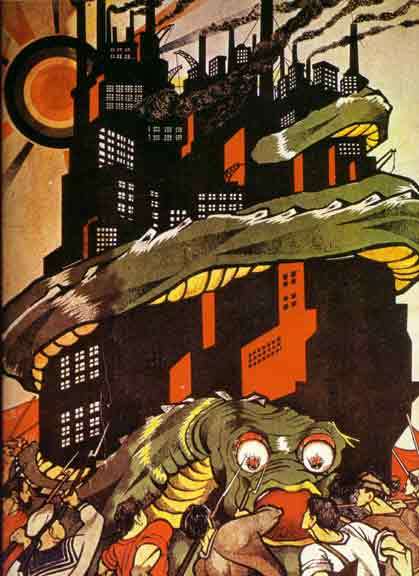
It is an old academic political discussion- the end of Ideology– by which I mean the end of the time of battling grand political/economic theories that inspired and fuelled our attempts to understand and shape our society. Thatcher put an end to all that in the UK- not because she had no ideology, but because she cleared the field of all opposition. Capitalism and ‘The Market’ triumphed and gifted us with the so called free movement of capital, trickle down, neoliberalism and globalisation.

Over the next 20 years, nation after nation fell in line, cajoled by the promise of great wealth or manipulated by powerful organisations who needed scarce resources or a new market.

None of this is a surprise, but what is more noticeable is the lack of viable alternative. Sure there are voices of protest- not least the Occupy Movement- but to demand change is not necessarily the same thing as proposing an alternative (I know that the OM are in discussion about all sorts of issues, but I would suggest that no real coherent alternative ideology has yet emerged.)

There was an interesting article in the Guardian today by Aditya Chakrabortty. Here are a couple of quotes;

When the history of how a good crisis went to waste gets written up, it will surely contain a big chapter on the failure of our academic elites. Because just like the politicians, the taxpayer-funded intellectuals at our universities have missed the historic opportunities gifted to them by the financial collapse. And it will be the rest of us who pay the price…

…So have the non-economists grasped their moment? Have they hell. Look at the academic conferences held over the past few weeks, at which the latest and most promising research in each discipline is presented, and it’s as if Lehman Brothers never fell over…

Chakrabortty did a search of recent sociological and social science conferences and academic papers and concluded that pretty much the disciplines were not interested in challenging the core assumptions of the dominant ideology.

So where is the challenge to come from, if not from the academic elite? And more importantly, where are the alternative ideologies going to emerge from?

I watched the two Che Guevara films recently- a time when ideology believed that revolution was possible and even worth killing for. Revolution meant overcoming the ruling elite, empowering the poor and dispossessed and bringing egalitarian justice to society. Whilst I abhor the violence, most of us will instinctively feel the pull of these ideas.

Most of us too will have heard the spoilers- the voices that suggest that such ideas are unrealistic, unobtainable, work against human instincts and have been proved to serially fail because of the repeated failures of communist regimes throughout the world. Therefore the only option left is to continue as we are- with a few tweaks to satisfy the left field.

I want to raise my own voice in protest at this hopelessness. I want to invite my friends into a journey to find a new kind of ideology. We are not there yet, but I think we have some clues;

Start small. Start local.

Buy less, want less, make more.

Reduce waste, increase sharing and holding things in common.

Increase joint social enterprise.

In all things be aware of the impact on those who have little.

In all things be aware of the impact on the environment.

For me, the other academic/social/political group that has been near silent in the offering of a viable alternative is this one- the Church. Because as I look at the economic list above, it seems to me to be also a SPIRITUAL list. Without the life of the Spirit within us, we are mere animals, scratching and scraping at one another for the meatiest parts of the carcass.

So perhaps it all comes down to the word Love. If Economics are subordinate to love, then what might the theories look like? If political science was shaped by love, how might we organise ourselves differently? Even as I write this I feel the rise of cynicism, but- love remains.

I think this is the ideology of the Kingdom of God, and the viral vitality that we can and should bring to all these debates. And we do not have to wait until the universities write papers and hold conferences- because we can make our own small economy now- here.

Conversations on being a heretic…

There is a great video of a discussion between Brian McLaren and Scot McKnight here;

Conversations of being a heretic

McLaren is always worth listening to even if (like McKnight) you find him to have gone too far down the path of heresy. His intelligence and humanity mingled with a deep faith have been for many of us the means by which faith might live on beyond the religious straight jackets that we have gratefully shed. He has been a pioneer into new and deeper understandings, and these people are always seen by the establishment as heretics. Just read the comments under the video clip.

The monsters of Ardentinny beach…

The last weekend of a week off is always hard. The weight of the week ahead, and the mountain of tasks waiting loom large. It has been a full and lovely weekend though.

Yesterday we dug the garden, mended the canoe, and planted some willow to make  willow tunnel down to one of the sheds. It will take a year or so to be big enough but it is exciting nevertheless. Today we played cricket, dug the garden and planted more willow for an Arbour, and greeted Emily back after a week sailing in Norfolk.

Yesterday we also took a visit to Ardentinny beach to barbecue and celebrate little Aidan’s birthday. No so little I suppose- he was 5.

Whilst we were there we encountered a few monsters!

The Edge of the World…

I have been really busy this week making a bedroom for William out of one of our scruffy box rooms. This always involves far more work than you think- particularly when you want to make the most out of a small space. He is delighted with his new room, and this means that his old room, with amazing views out over the Clyde, can start it’s transformation into a B and B room.

In the middle of all the chaos I sat down with a cup of tea and flicked on the TV, and a film was showing that I had heard about, but never seen- an old Michael Powell  film, made in 1937 called ‘The Edge of the World‘.

The film was Powell’s first feature film and grew out of his fascination with the changes happening out on the edge of the British Isles- the depopulation of St Kilda in 1930 in particular. He wanted to film there but it just was not practical, so he made his film on another wild wonderful island- Foula, 20 miles West of the Shetland Islands. The cast and crew lived there for several months, even having to build their own dwellings.

I think this film, dated as it is, contains fascinating glimpses of a life now gone in our far flung islands. A time before air travel or fast ferries and mobile telephones. A time of the corncrake at the edge of hand harvested fields and hands twisted from hard work.

Anyone who has spent time in any of these isolated wild places will know that they can have the capacity to change you inside. Powell went back to Foula in 1978, thankfully still with a thriving community, and made another film for the BBC. He too had been shaped and changed by the islands.

This is one of the reasons why I take my own pilgrimages out into the Hebrides whenever I can. We will be heading out again in a couple of weeks.

Hmmm- I feel another plug coming on; if anyone wants to join one of our wilderness pilgrimages you may like to check out some of the photo’s and info on our Facebook page.