Eco Warrior…

I need a new project, so have decided to do some little poetry sketches inspired by people I pass in the street, or on trains, or in café’s.   It is a bit of fun but as with all things on this blog it is intended too as a spiritual exercise- a way of looking with hope and love. A way of seeking after blessing and offering prayer.

The first one is a bit of fun, meant kindly, poked in part at a younger version of me that I saw in someone else.

The Apple Mac smacked his side

Like some kind of pouched weapon of

Mass salvation

His right hand permanently Action Man clawed

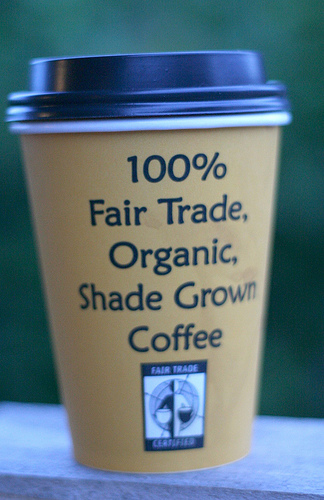
From fairly traded coffee cups.

Battle is joined

In the blogosphere-

It’s a jungle out there.

Friend of furry things everywhere

He just might yet

Save the world

The gift of ambiguity…

Jonny Baker posted a batch of quotes from Walter Brueggermann, mostly from this book (which I promptly ordered.) They lit me up, as they would most people who write poetry. Here they are (thanks Jonny);

The overriding reality of the prophets is that they are characteristically poets. Poets have no advice to give people. They only want people to see differently to re-vision life.

Everything depends on the poem and the poet for our worlds come from our words. Our life is fed and shaped by our metaphors.

The enemies of the poem are the managers of the status quo.

The poets want us to re-experience the present world under a different set of metaphors and they want us to entertain and alternative world not yet visible.

These poets not only discerned the new actions of God that others did not discern but they wrought the new actions of God by the power of their imagination, their tongues, their words. New poetic imagination evoke new realities in the community.

We lose vitality in our ministry when our language of God is domesticated and our relation with God is made narrow and predictable… Predictable language is a measure of a deadened relationship in which address is reduced to slogan and cliché.

It is always a practice of prophetic poetry to break the conventions in which we habituate God.

Every centre of power fears poets because poets never fight fair… only a poem

I was also reading something on the blogosphere about the latest Mars Hill spat – Mark Driscoll throwing his weight around and playing power doctrine games. From the perspective of post post Christendom UK it all seems a but like a Tom and Jerry cartoon.

But this is a kind of muscular, dogmatic, controlling Christianity that exists here too. Some of the abusive manipulative religion mentioned here is sadly very familiar to me.

It is that truth thing again. All the effort put into right belief (as defined by our powerful leader.) I hate it because it is such a destructive, corrosive form of belief that may attract followers, but then tools them up with weapons of mass distraction.

Because it is all so un-Jesus like.

Jesus who taught in parables, so that people would find the kind of truth that sets us free, rather than chains our souls.

Who infuriated the religious leaders of his day because he broke all the rules – but broke them in relation to a higher, more loving way of being. Not rules, but principles. The greatest of all being LOVE.

Who constantly talked to people about some kind of mysterious ‘New Kingdom’.

All of which brings be back to poetry. Poetry as spiritual practice, as prayer, as celebration, as anger, as doubt, as mission, as worship and above all, as question.

At it’s best, poetry opens up, it does not close down. It wraps itself around questions, and rests within them, allowing the possibility of mystery, uncertainty and encounter.

So here are a couple more of Jonny’s quotes;

Poets speak porously. They use the kind of language that is not exhausted at first hearing. They leave many things open, ambiguous, still to be discerned after more reflection.

Very often people who hear poets want an explanation, which means to slot the words into categories already predetermined and controlled. Such an act however is the death of the poem… Good porous language does not permit itself to be so easily dismissed. It intends to violate and shatter the categories in which the listener operates.

Amen.

Worship music remix 3- transcendence…

The first two pieces in this series are here and here.

We are just back from our monthly Aoradh ‘family day’. This is the closest we come to a ‘church service’ that we do regularly within Aoradh. It usually involves filling up one of our houses with people, then one of us will co-ordinate a period during which a selection of folk – kids and adults – will take turns to lead others through a song, a prayer, some meditation, a poem, a clip from you tube. It is simple, messy and lovely.

Then we eat together.

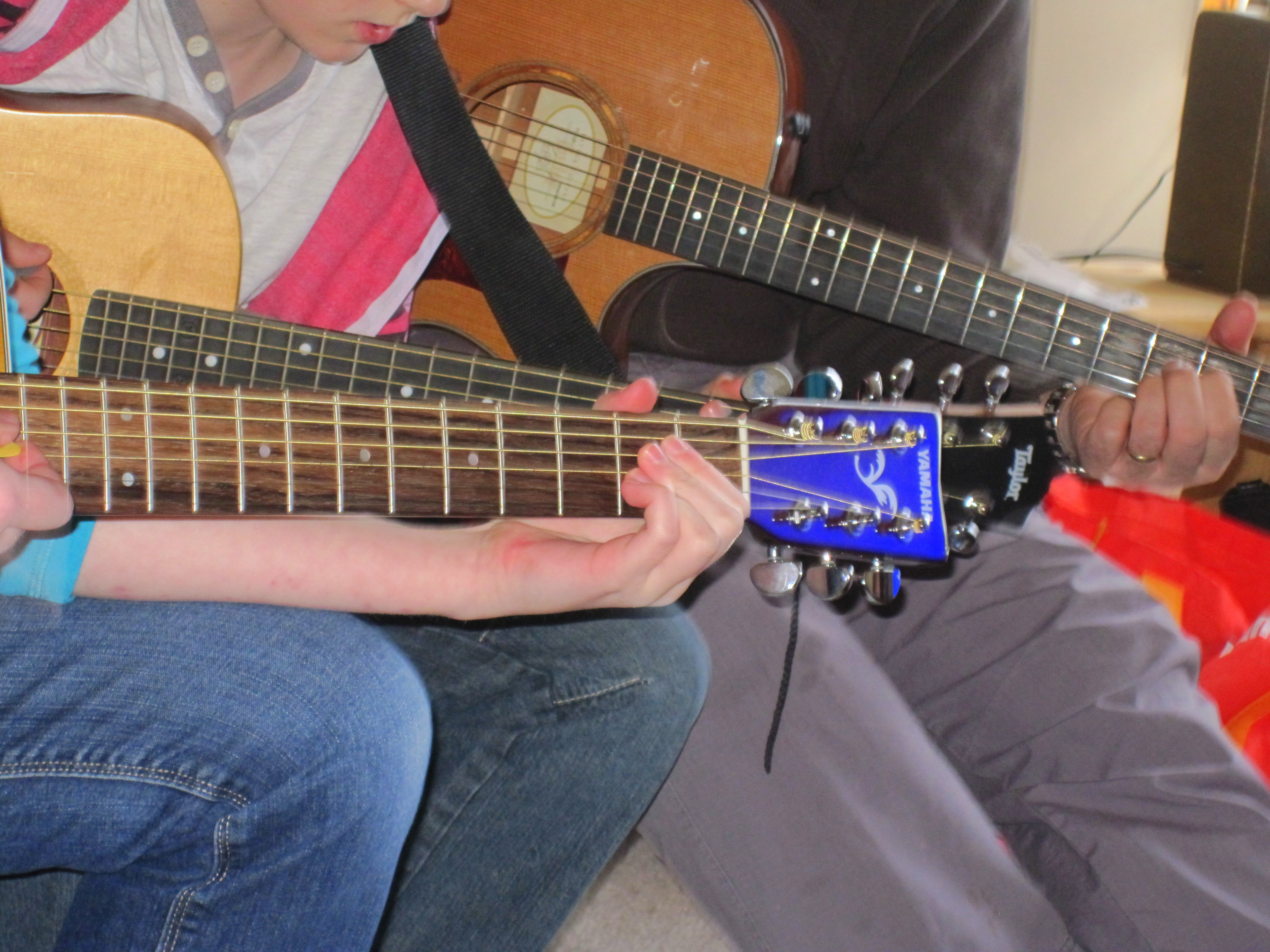
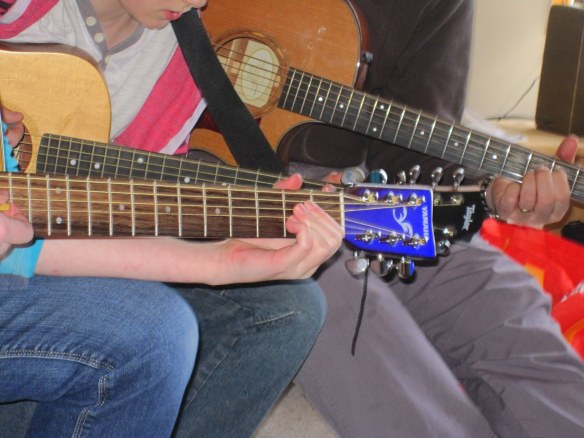
Today I was thinking about the distance I have travelled within the scope of what ‘church’ might mean. I was playing my guitar along with William and Rachel, and really enjoying it, because this is something I do fairly rarely these days.

There was a time when it was my whole life.

I was a ‘worship leader’ – one of those blokes (and they usually are blokes) who stand in front of people and whip up some spiritual fervour by the application of soft rock love songs to Jesus. I lived for those moments when the music took flight, and something kind of opened up. At such times, music was more than just notes. Performance became less about technique, and more about an attitude of humility and receptiveness.

But in the course of my journey from ‘organised’ church, other principles started to dominate the way I thought about worship. Primarily, I was convinced that the culture of ‘church’, with all its big and small liturgies, assumptions and traditions, easily came to be a black hole that swallowed people whole. It left us with no room for the other. It became about us, not about them. They were only important if they were willing to become like us. I was convinced that church should exist to send and to serve, not endlessly feed itself.

Our corporate worship was the same. It was all about music and preaching. Other ways if worshipping were not necessarily wrong (although some were guilty by association) but they were just not our thing. We knew what we liked and this was enough.

As I think about this now it is like a rainbow of only one colour. Still impressive, but monochrome.

It can also be so selfish, so self centred. Worship like this exists to make us feel good. The end we aim for is a spiritual/emotional high for us, dressed up in the clothes of adoration of the God that we make in our own image.

But I overstate my case. A monochrome rainbow can still be beautiful.

The word that came to sum up the change I was finding in my own aspirations in worship was this one;

Transcendence.

By which I mean the experience of God in the ordinary. The incarnation of the maker of the universe within the temporal, messy world in which we live and love.

Transcendent moments fill our lives if we look for them. And the more we attune ourselves to the looking the more we see.

They are everywhere in the natural world; sunsets, new leaves, mushrooms in caves, the lick of new born fur, the light of the moon on still water, the smell of rain on dry earth, the sea that goes on for ever. All these things will happen whether or not we are there as witnesses. But when we look in a certain kind of way a hollow space opens up in the middle of them into which we can meet with something transcendent. Into which we can invite/be invited by the living God.

They are everywhere too where humans also are. In conversations, in touch, in the longing for justice, in the decision to forgive, in the deciding to repay hurt with love, in the listening and in the laughing. Because God is a God of communion. God commands love, and love requires direction. Perhaps above all, the transcendent God is immanent when we come together in community.

They are encountered in art, because art can become a bridge to something beyond our business. Films, books, poems, paintings, sculptures, music.

They can even be encountered in church – for me, especially when we sing, when the chordal voices find the vault of the building and make it vibrate.

I had become so trapped in a view of God that was limited to one colour of the huge spectrum from ultaviolet to infra red and beyond, that I needed to go cold turkey. The guitar needed to go away for a while so I could hear the birds sing.

So I had some time to speak to people, with no agenda other than love.

So I could be creative, and make art in service of the Creator.

How about you? Where might your ordinary space become pregnant with the extraordinary, capricious, magnificent Living God?


A day of possibilities…

They don’t come along often. Sure there are always choices that we can make but most of the time the road leads in one direction. But I am approaching a junction though.

Three ways diverge. One is promotion in my current work, the other demotion. I can choose either of these versions of ‘more of the same’.

The other road is far less certain. Once again, there is a more than even chance of being offered voluntary redundancy. I should be getting a letter by the end of the week asking me to put my cards on the table.

Take the blue pill.

Make the jump into the unknown.

Burn my bridges.

If I take this option there are no guarantees that it will not go badly wrong. We have talked about a variety of other ways of making a living- B and B, art, retreats, writing, crafts and pottery, but these are fairly untested.

The penalty for failure in terms of impact on myself and my family would be catastrophic.

But despite all of this the possibilities of the uncertain road are calling me…


Always ‘on’…

If you are an American teenager, you are likely to be ‘connected’ around 7-10 hours per day (according to this article.) By this I mean plugged in/tuned in to the net in some way.

If you are honest- how about you? I might spend a lot of my working day in front of a PC- on an office day, this may be 6 hours. I then will read a few blogs/websites, answer e-mails, then do some bits and pieces of writing into the small hours. On some days, I am up there with the teenagers.

“TV will turn your brain to Jelly” my mother used to say. This was her excuse for restricting our TV watching to only two programmes a week- usually The World About Us and (more bizarrely) Starsky and Hutch. However I have since over compensated for this televisual deprivation, and my brain is not yet jellied. The question is whether our increased addiction to internet based communication might yet mix our brains into some kind of (ahem) blancmange.

I liked the balance of this;

The greatest advantages of wired living are easily enumerated. Plugged into the world’s hive-mind, we have speed, we have range. We can research and reference much of humanity’s gathered knowledge – and gossip and opinion – in minutes. We have godlike capabilities and are increasingly adept at using them.

Unplugged from media’s live wires, however, our originality and rigour can come into play in a different, older sense that’s found in our capacity to make decisions, to act on our own initiative, to think freely, without fear of pre-emption. Much as we hunger for connection, we need to keep some sense of ourselves separate from the constant capacity to broadcast. We need tenses other than the present.

If the issue is about trying to make sure that we have time for both- how do we achieve this, particularly given the strangely compulsive and addictive nature of the connected world?

For some people, the suffusion of the present is increasingly attended by strain and anxiety, and a sense of lost control. For all of its challenges, we live in an era of near-miraculous, unprecedented opportunities.

Above all, though, every effort on our part should begin with the knowledge that without the ability to say no as well as yes to technology – and to understand what exactly it is that we are agreeing to when we do say yes – we risk turning modernity’s miracles into snares.

I would add to this an old discussion on this blog about the nature of on line communication, which I compared to a kind of Autism. On line communication allows for the sharing of lots of informational data, but for the most part lacks the nuanced, multi-layered complexity that characterises human face to face exchanges.

People who have autistic spectrum difficulties can find techniques that might help manage some of the contradictions and complications life brings to them. They might also have real strengths that are revealed in a capacity to perform some non-social tasks extremely well. But within social groups, they will often struggle.

Which is another way of saying that online time is great, but it is limited. For most people it is not enough, and if we ignore the other parts of who we are then they might wither and die, to our collective detriment.

All the more reason then (plug alert!) to build in some periods of electronic silence into your life. And how better to do this than to come on one of our Wilderness Retreats? Allow the noisy silence of wild places to wash over you…

Canoeing the Congo…

Little mishaps aside, I love canoeing.

Since my accident a couple of years ago, I realise I have been much more cautious, particularly on the sea. Whilst caution might well be understandable, and even (particularly from Michaela’s point of view) a welcome corrective, I do not like it.

I do not like the shrinking of the far horizon, or the idea that adventure should be avoided. I do not like decisions to be dominated by anxiety/fear in relation to things I used to do with an easy smile.

This year, I intend to get out in the canoe a lot more.

Having said all that, I am not sure I am quite ready for this, no matter how much the idea of it excites me;

Here is a quote from here;

At night, in the absence of firm ground, my technique would be to paddle as hard as I could and ram myself into the thickest area of reeds I could find. I’d then try to somehow drag and push my way further through, until I was securely wedged in with little risk of capsizing. I figured that since I was surrounded by tightly packed reeds, I’d have to be pretty unlucky to get a surprise visit from anything big enough to fit my head in its mouth. On more than one occasion I was awoken in the middle of the night by crashing, splashing sounds, but after a while I got used to it. Crashing, splashing sounds are one thing – something horrible ripping your leg off is quite another.

Thankfully, there are no crocodiles in the West of Scotland.

The Midgies have eaten them all.


Building things to point at the heavens…

We have been doing it for a long time now.

Remember the story of the Tower of Babel?

According to the biblical account, a united humanity of the generations following the Great Flood, speaking a single language and migrating from the east, came to the land of Shinar, where they resolved to build a city with a tower “with its top in the heavens…lest we be scattered abroad upon the face of the Earth.” God came down to see what they did and said: “They are one people and have one language, and nothing will be withholden from them which they purpose to do.” So God said, “Come, let us go down and confound their speech.” And so God scattered them upon the face of the Earth, and confused their languages, and they left off building the city, which was called Babel “because God there confounded the language of all the Earth.”(Genesis 11:5-8).

This has come to mind because of two stories over the last couple of days. The first one concerned a strange offer from the Brazilian government to build a replica of Rio de Janeiro’s famous Christ the Redeemer statue, on Primrose Hill, overlooking the City of London.

The Guardian reports local councillor-

Primrose Hill Lib Dem councillor Chris Naylor said he wasn’t sure a 20ft statue of Christ with his arms outstretched was quite what the area needed.

Then today there was another story in the papers about a plan to raise a temple to Atheism at the heart of the City of London. As if there were not already plenty of those. De Botton said he chose the country’s financial centre because he believes it is where people have most seriously lost perspective on life’s priorities- presumably he hopes to restore the balance of these priorities by architecture.

The philosopher and writer Alain de Botton is proposing to build a 46-metre (151ft) tower to celebrate a “new atheism” as an antidote to what he describes as Professor Richard Dawkins‘s “aggressive” and “destructive” approach to non-belief.

Rather than attack religion, De Botton said he wants to borrow the idea of awe-inspiring buildings that give people a better sense of perspective on life.

“Normally a temple is to Jesus, Mary or Buddha, but you can build a temple to anything that’s positive and good,” he said. “That could mean a temple to love, friendship, calm or perspective. Because of Richard Dawkins and Christopher Hitchens atheism has become known as a destructive force. But there are lots of people who don’t believe but aren’t aggressive towards religions.”

Dawkins criticised the project on Thursday, indicating the money was being misspent and that a temple of atheism was a contradiction in terms.

They appear to be finding it difficult to find a site in the City of London however-

Discussions with City authorities about a possible site stalled because “they can’t be seen to be connected to anything to do with atheism”, the project’s architect, Tom Greenall, said.

Well there you have it. The Protestant Work Ethic and the Opium of the People all cosied up perhaps?

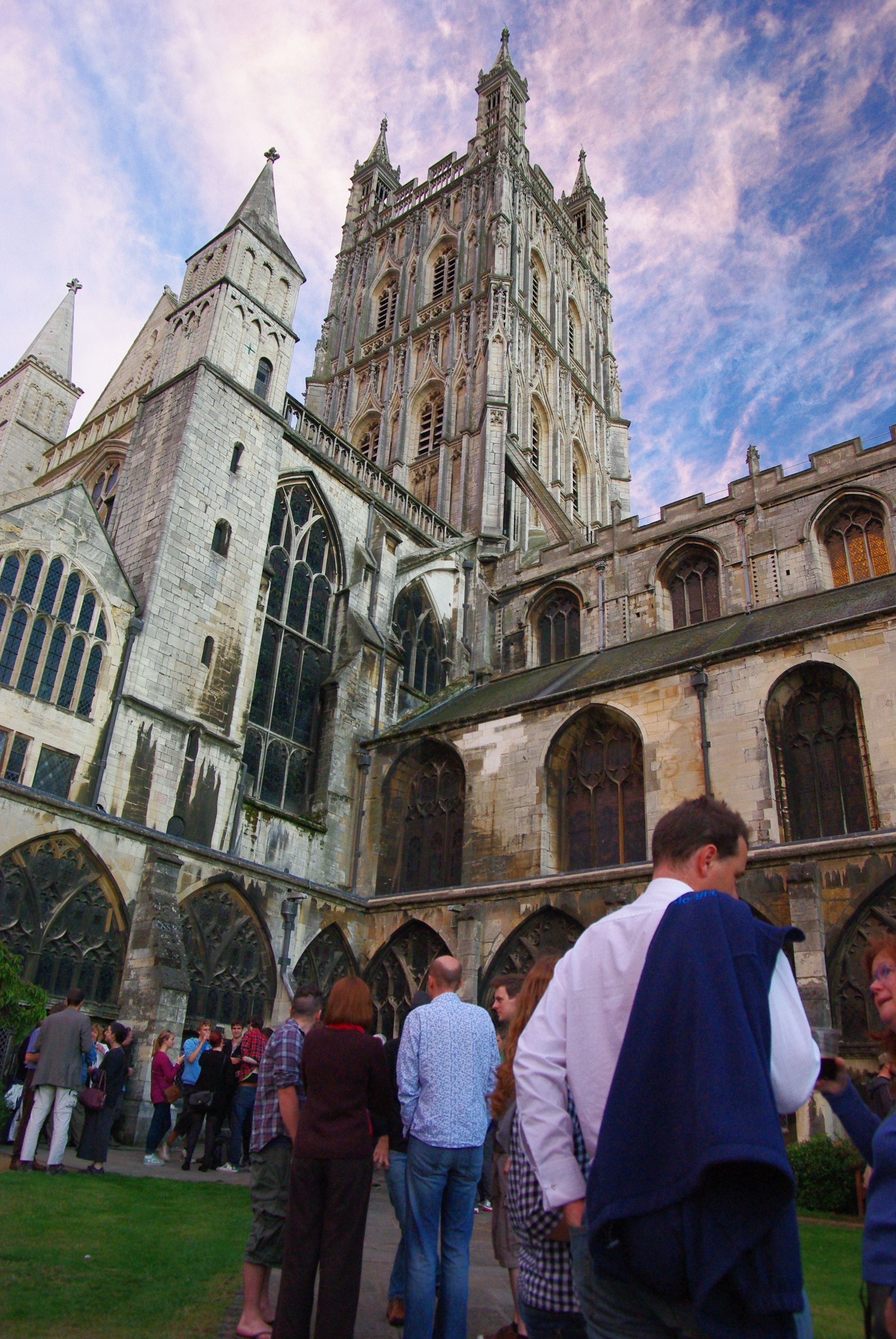
Whatever the merits of these two schemes, which may well never get anywhere near planning permission, there are some interesting issues here. Spending money on buildings in the name of religion or areligion always seems a little like a power statement- particularly in times when people are in need. The great medieval cathedrals were build to inspire awe and trembling and to dominate the skylines.

But they remain. And I love to be inside them. And the can be very useful in our climate.

It is one of those human contradictions that constructed spaces can open up spiritual spaces inside us – or perhaps close them.

What gives buildings this kind of power? Is it simply the curve of arch and the vault of roof? The ambient acoustics? The softening of history or the pride of ownership? I suppose it might be all of these things, but it seems to me to be as hard to dissect and define this power as it might be to do with any human art form.

What of that ancient story of the Tower of Babel? I have heard it used to illustrate all sorts of theories-

  • God was bringing mankind down a peg or two as we were getting too big for our boots
  • God was blessing us with nationhood and nationalist pride
  • It is an illustration of a stage of the journey away from the Garden of Eden. A logical extension of the move from hunter-gatherer, to farmer, to wealth accumulator, to city builder

I tend to associate with the last of these. Cities are wonderful places. I visit them most often as a tourist these days, as we live so far out on the western fringe. I love their energy, their human variety, the layers of creativity and commerce all mingled. Then I love to leave them behind and go home.

Because our experience of the weight of human experience is not really captured by how high, how big or how magnificently we can stack stones is it?

This is about what happens within our small spaces, wherever they are – when we meet and love within them. The Tower of Babel might be seen as a warning of the pointless steeple, unconnected to the land and the life of those upon it.