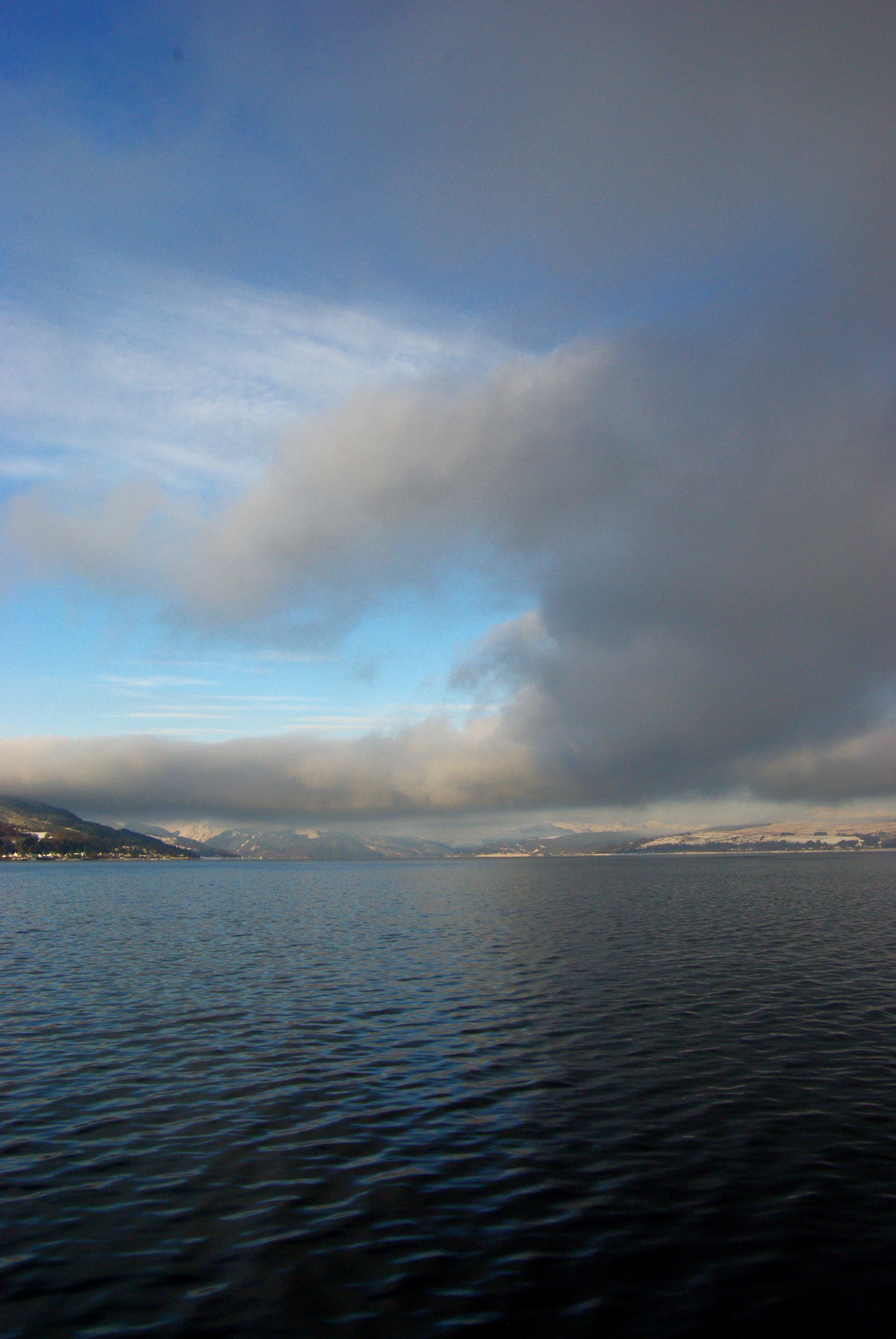
You niverse…

You niverse

.

Roll me on your riverbed

Pebble me in your water

Dance me with your sediment

Then lay me down in strata

.

Wrap me up in last year’s leaves

Crumble me down to loam

Sow your spores and mushroom me

Let worms make me their home

.

Pound me like a high sea cliff

Find my pressure cracks

Hollow me with roaring caves

Shape me into stacks

.

Drumlin me in creaking ice

Make my crevasse a valley

Terminate my last moraine

Make me your U shaped alley

.

Irradiate with your distant rays

Crisp me to a crust

Suck me up with comet tail

Scatter me in stardust

Dunbar’s number and Facebooking…

I was reminded today of Dunbar’s number– the theoretical numerical limit of people that we can maintain meaningful relationship with- relationships in which an individual knows who each person is, and how each person relates to every other person in the group.

The suggestion made is that for groups to be cohesive and integrated beyond this number, then increasingly rules and enforced norms have to be used. Dunbar proposed this number as a result of studying primate groups.

The number has been argued about in anthropological circles, but is somewhere between 100-150.

Strangely this number corresponds to the average number of Facebook friends (I have around 120 I think. Michaela has many more, but then she is a very sociable kind of monkey.) I have written before about how Facebook, useful and clever though it is, can reduce communication to a kind of cyber-autism.

The other figure that is relevant though is the number of people with whom you can sustain intimate, deeper friendship- our close community. This is a much smaller number- usually thought to be between 5 and 10.

Even if these figures are more or less accurate (and we humans form a broad bell curve on just about everything) then so what?

If these numbers are a feature of the limitations of our cerebral cortex as Dunbar suggested, then it would mean that we humans (who are above all things SOCIAL animals) are at our best in small groups.

There are clear evolutionary and anthropological implications for this- but of course, I am interested too in the theological ones. These are the things that seemed important to me-

Jesus called us to live in communities, where we might learn to practice the mysterious and challenging ways of love.

And although this love was never intended to be restricted to our small groups, we simply can not be all things to everyone. Start with were you are, and seek to live graciously and generously. Accepting that you will fail.

And there will be some who we are called towards deeper relationship with- soul friendship.

This kind of relationship requires so much more than informational exchange, status updates and Mafia wars games.

It needs flesh.

RIP Gerry Rafferty…

Gerry Rafferty, Paisley born singer songwriter, has died aged 63.

He was never cool- apart from a brief moment when his song ‘Stuck in the middle with you’ was featured incongruously on the hand picked sound track of Reservoir Dogs by Quentin Tarrantino.

He hated fame and celebrity- and it turned him into a nomad.

But he made some great music. I remember exactly where I was when I first heard ‘City to City’- with its rich smooth laid back sound, and fine songs. I think it is his best album- things went a bit downhill from there, although I have not heard the recent one.

This Christmas, Michaela bought me a picture frame onto which she has written a list of places and events from our past and into which perfectly fitted this album sleeve-

We have a family tradition of singing in the car- particularly on the way to holiday- and often we sing along to Gerry Rafferty.

And the next time we do this, we will have a little pause, in order to be grateful for the legacy he left.

His most famous song, ‘Baker Street’ (the one with the ear-worm sax solo) was ironically the one in which he wrote about his struggles with fame. Here it is-

The King James Bible on radio 4…

Today was the last in a series of programmes celebrating the 400th anniversary of the translation of the Bible commissioned by King James as a means of sorting out some of the theological dynamite that afflicted his life and times. It became one of the most influential books of the reformation in a country (Britain) that was to become the most powerful state in the world.

You can listen to the three programmes for a while at least on the i player, here.

The first programme dealt with the circumstances in which this translation arose, and particular with the man who the translation was named after- James, the Scottish King who took over from childless Elizabeth the first, popular in England (but less so in Scotland- he appears to be have been glad to leave, and only returned once!)

Perhaps this was in no small part due to his difficulties with the Scottish kirk- and the kind of religion espoused by men like John Knox (who had reduced James’ mother to public tears.)

This King ruled during a belief in the divine right and divine appointment of Kings. His kingdom was active in the burning of witches.

There have long been speculations about the nature of King James sexuality- beginning with allegations of homosexual relationships with a mentor as a young King in Scotland, and then throughout his Kingship with other courtiers. This issue is  fearcely debated, but seems to have been a popular insult even during his lifetime- Rex fuit Elizabeth, nunc est regina Jacobus (Elizabeth was King, now James is Queen.)

The translation was born in conflict, and was created by men of mixed motives and transparent humanity. Does any of this matter?

Because the legacy of it’s soaring prose and poetry lives on. Full of phrases that have entered into our language, and given shape to our dreams and hopes.

I should confess to very rarely reading this translation. In my time it has been too readily appropriated by people who would hold it as the ONLY translation that should be used- as if it floated down from heaven on a silver cloud. It has been asscoiated with dogmatic fundementalism.

My eyebrows always rise when I hear people pray using the language of the King James Bible- rich with resounding thees and thous, as if God himself spoke the language of the Court of St James.

But then words- no matter how well spoken and written- are always influenced most by the ears and eyes that they fall upon…


Thanks for our toilet/chicken/fertiliser!

We have had a lovely Christmas. Today we bought the last of our presents.

We twinned our downstairs loo with a latrine in Burundi, courtesy of Cord and Tearfund.

And we bought two other gifts from Oxfam Unwrapped

A chicken (perhaps we can ‘twin’ this with one of ours too…)

And fertiliser (twinned with our compost bin? Or am I getting a bit twin-happy now?)

Before Christmas I wrote here about how we had asked our friends to think about NOT giving us a present this year- and many of them gave us money towards these gifts.

I should say that some still gave us gifts as well- and these were lovely too! Some people are so generous…

But the gifts above- they are a double blessing.

A flush of blessing.

A clucking blessing.

And a whole dung pile of a blessing.

Who knows how these things pan out (sorry- the puns kind of write themselves don’t they?) in places a long way from here. I only hope that there will be a little flicker of grace in a place much in need of some.

Because there is much grace in the giving…

A bit more on Jim Crow Rock…

There has been a little more local agitation in relation to our rather infamous local land mark-

There has been an upsurge in traffic on my previous post- here.

I did a quick google search, and came across this disturbing post on the blog of the Jim Crow Museum at Ferris University– Michigan. They pull no punches. Here is the post in full-

It’s not Loch Ness, but it’s still a monstrosity.

Jim Crow RockThe Jim Crow Museum is familiar and disturbed by this painted rock that dates back to the early 20th century. It rests off the shores just north of the small Scottish seaside town of Dunoon. The local population is somewhat divided over the idea that it is a monument to racism. From the looks of this thing, it is obvious to us that this object isconsistent with the blackface caricaturesthat populate our museum.

The Jim Crow Rock is painted black, with the words “Jim Crow” in boldface white, and a red mouth. It’s blackface in an obsidian form. For us at the Jim Crow Museum, the question remains — why does this rock hold a special place among the local population? Or, are we as educators over-sensitive to the symbolism that Jim Crow artifacts represent?

The Jim Crow Rock has existed for over 100 years. At times it has been painted over and “vandalized,” only to be regenerated by “well-meaning” preservationists. Pro-rock defenders cite the historical footnote that the U.S. Navy had a base in Dunoon for many years without any complaints (on record) from black sailors. Local historians also claim the rock refers to a local builders’ yard once owned by a fellow named Jim Crow. However, the Jim Crow Museum has learned that controversy has enveloped this object for decades and that newspaper accounts debating the fate of the rock have routinely stirred passions among the local population.

The Jim Crow Museum has received reports via email of ongoing racial tensions in Dunoon. Originally, the painted rock may have served as a warning to minorities that they were not welcome and to“stay in their place.” Recently, individuals who find the rock’s symbolism offensive have been publicly discredited and ridiculed. In a newspaper poll taken earlier this year, voters in Dunoon favored keeping the rock intact instead of painting it over by a 5-to-1 margin. Today, we’re left with the popular notion that the only people who have issues with the rock are “incomers” with no connection to Dunoon and that it’s a harmless landmark of local tradition.

Jim Crow Rock

The Jim Crow Museum believes that in order to promote racial tolerance, people must understand the historical and contemporary expressions of intolerance. In Scotland, all myths aside, there are indeed monsters in the water and lessons to be learned.December 2010 response by Ted Halm, Webmaster, Jim Crow Museum of Racist Memorabilia

POSTED BY SANDY GHOLSTON AT 12/02/2010 09:28:00 AM

In a recent reply to a comment on my own previous blog piece, I suggested that if we are to keep this rock, then perhaps the best thing to do is to make it into something that we can be proud of again- a monument that reminds us of the past of this area, and the role of slavery in its prosperity.

What about an interpretive board, with an account of this history, and the role of the minstrel shows?

Perhaps someone from the Jim Crow Museum might be willing to work with us to make this happen.

Over to you local politicians. See if you dare to step into the firing line.

‘The Places In Between’ review…

I have just finished this book- and thought it worth posting a quick review, as it’s subject material is Afghanistan- post 911.

The author Rory Stewart is an ex soldier, some time diplomat- including serving as deputy governor of an area of occupied Iraq. But in 2000 he packed in work and walked for 6000 miles from Turkey to Bangladesh.

And following the invasion of Afghanistan in 2002, Stewart decided to take a winter walk across the middle of the country.

Which was by any measure a rather mad thing to do. The country was shattered by war, traumatised by successive violent and oppressive regimes and the route he chose was thought to be impassible in winter- because of deep high mountain snow and plunging temperatures. Then there was the political situation- the minefields (both literal and figurative) to stumble into.

And of course, the strong chance that he would meet people who might seek to do violence to him.

But the end result was a walk through a varied landscape and a variety of cultural/religious situations that tells us a great deal about the country in which British soldiers are still fighting in our name.

The book is in many ways of a style more akin to travel writing of a previous generation- which suits me fine, as I love Newby, Herrer, Theroux.  It is writing that emerges from perilous encounter and adventure. And it is very well written.

Stewart relied entirely on the kindness and hospitality of Afghan villagers and local leaders for food and shelter. This made me very uncomfortable as I read the book, as some of the people he imposed himself on had very little themselves. At times, he (and the dog he picked up along the way) was clearly an unwelcome burden.

But I think this book is worth reading for these reasons-

  • It is a contemporary window into a country that we only know through the very limited eyes of  journalists ’embedded’ in the occupying forces- living in military compounds and making short forays in armoured troop carriers.
  • It is very strong on the majestic history of the country- of its former empires and mythical cities and leaders- stories that live on through ancient writing and poetry. Stewart is currently living in Kabul and heading up the Turquoise Mountain Foundation, which is investing in the regeneration of the historic commercial centre of Kabul, providing basic services, saving historic buildings and constructing a new bazaar and galleries for traditional craft businesses.
  • The book also introduces us to the great diversity of Afghanistan- with its different people, traditions and religious divisions.
  • It confronts some of the easy stereotypes- the violence, ‘noble savages’, a country suffering from PTSD, as well as Blair’s rather patronising quoting from the Koran. But is avoids siding with any of them- giving an impression of a country that is all of these things, and none.
  • It makes clear the human cost of war, and the long term effects of the power struggles and violence that always follow in it’s wake.
  • It is literary, well informed, sensitive to religion and culture in ways that I can only assume are detailed, well researched and accurate.
  • Finally, it reveals a love of this place- in all of its mess and beauty.

Recommended reading as an essential antidote to the infotainment contained in the dreadful repetitive rolling news of Sky and BBC news 24.

New Year, 2011

The year turns

And so will I Lord…

Happy New Year all- may this one be a great one.

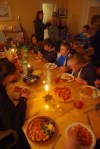
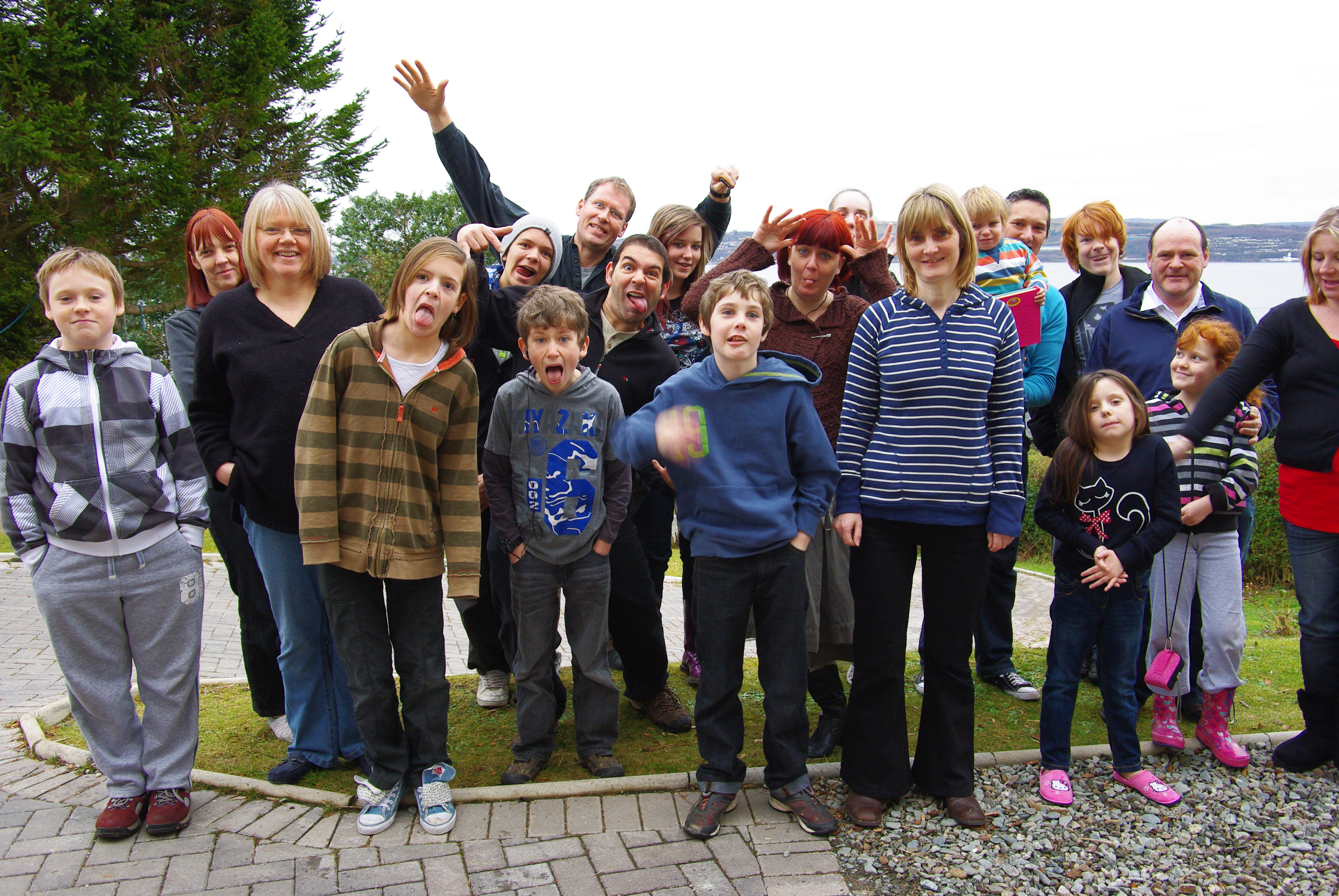
We have had a great few days- a house FULL of people (23 people per meal!) lots of music, food and a nice swim in the Clyde on New Years Day.

The latter being a deliberate attempt to put the events of February firmly behind me… I made the paper again recently as part of their ‘review of the year’- dangling below a helicopter for all to see.

Here are a few pics- click to enlarge…

The State of Emergence, 2011…

Just read this post by Jonathan Brink the Emergent Village website.

I hesitated to repost it here- although this thing called ’emerging church’ continues to be a vital one for me- and the theme of many previous posts. The hesitation was because the blogosphere has been over populated with emerging church obituaries. Some of them have been provocative, others gleefull. Most have been premature, and driven by a particular agenda.

Some too have been a natural consequence of the cooling of pioneer activism, and the breaking apart of fragile allegiances between some of the early adopters in the USA. These relationships were always likely to be tested, given the characteristics of prophetic pioneers.

But having said all that, Emergent Village- and it is always worth remembering that they are not, and have never claimed to be the voice of ’emerging church’- provides an important, if USA centric, perspective on the conversation.

I liked some of what Brink had to say- firstly on community-

If 2010 marked anything, it was the growing awareness that following in the footsteps of Jesus and gathering together in community is hard. People were tired of talking about it and just wanted to do it. Bradley pins the death of the emerging church to this awareness. Rob Bell, arguably one of the more important but undeclared voices in the emerging church recognized that he had become that big Mega-church. What was once cool had now become mainstream. And in losing its luster, the real work of ministry began to emerge.

And finally- on love-

The emerging church isn’t dead. It’s just finally wrestled with the angel and won. It’s shedding it old image, the one that got people so riled up in the first place. The conversations won’t ever go away because in the end, we’re looking for what it means to be human. We’re looking to discover the reality that Jesus was trying to present, one of infinite grace and beauty, stark reality of the kingdom of God in our midst, and a renewed sense of possibility for the restoration of the world.

Here’s to 2011 and a renewed sense of faith, hope and love. Because the greatest of these is love.

When it is all said and done, the labels are meaningless, unless they become a conduit for the Spirit.

For me, this conversation has been just that.

But man can not live on conversation alone- there are also the dishes to be done and the dirty business of learning to live out lives of love…

Magi…

(Image from here.)

A great programme on Radio 4 this evening on the theology and history of the Magi– the Wise Men who, according to Matthew 2, visited the infant Jesus with precious gifts of gold, frankincense and Myrrh.

You can listen again here.

9 After they had heard the king, they went on their way, and the star they had seen when it rose went ahead of them until it stopped over the place where the child was. 10When they saw the star, they were overjoyed. 11 On coming to the house, they saw the child with his mother Mary, and they bowed down and worshiped him. Then they opened their treasures and presented him with gifts of gold, frankincense and myrrh. 12And having been warned in a dream not to go back to Herod, they returned to their country by another route.

I love this story.

The way the coming of Jesus sent ripples out far beyond the edges of the Jewish world. The way his coming was anticipated, hoped for by ancient people searching for signs in the sky.

The way that men of a magical mystical tradition alien to the world of Jerusalem and Bethlehem were so transfixed by the hope brought be a coming king that they were prepared to travel hard long miles to attempt to find him. Some stress the Biblical condemnation of sorcery and astrology in such texts as Deuteronomy 18:10–11, Leviticus 19:26, and Isaiah 47:13–14, but there is no condemnation in the account above.

The sparse account of these men in Matthew has been added to by tradition. Names were added, and somewhere along the way, people started calling them Kings too.

Most accounts believe the Magi to be from Persia- Zoroastrian scholars well versed in astrology, and their own deep spirituality. They had their own belief in a coming Messiah, and a virgin who would conceive.

Many believe that it was from the Zoroastrian tradition that some Jewish sects- the Pharisees in particular- came to believe in an eternal life (more about this here.)

It brings to me again the possibility of a Messiah who came for all- not just a pre-selected few.