Anyone want to buy a used crown of thorns?

I have been continuing to enjoy the radio 4 series ‘A History of the world in 100 objects.’ It is a great idea- using ancient objects as windows into the culture and circumstances that produced them. It almost (but not quite) justifies all of that Victorian relic collecting in the days of Empire (otherwise known as plundering.)

Todays programme concerned itself with an object I had never heard of before- the Holy Thorn Reliquary.

This object was made some time around the 1390’s to be the receptacle for a thorn from what is claimed to be the crown of thorns that Jesus was made to wear when he was crucified.

It is decorated with scenes of the crucifixion, and an imagination of the return of Jesus on the day of judgement. It is a fabulously expensive object- covered in jewels and gold. The thorn itself is displayed behind some polished rock crystal.

The King of France bought the Crown from Constantinople around 1239- after it had been sold to the Venetians to pay off a debt.

At the time, it was probably the most valuable and expensive object in the whole of Christendom. Its owner was able to use it as evidence of his piety and power, and claim it as a blessing on his nation and Kingship.

In many ways, this object might be seen to objectify a pre modern medieval world view that the coming of the modern enlightenment and the Reformation swept away. All the bad stuff of bloody crusades and rich sinners buying indulgences to atone for terrible crimes.

And of course, in the brisk trade in religious relics- from the bones of minor saints, right through to the Holy Grail, or fragments of the true cross of Jesus.

But perhaps the most venerated object of all is the Crown of Thorns- kept as it is in the centre of the most famous Cathedral in the middle of Paris- Notre Dame. Stained with the blood of Jesus. Forced onto the head of God, come to earth.

Now I know what you are thinking- surely no one really thinks that these objects are genuine?

It certainly seems that people did- from as long ago as 409 AD there are records of people venerating these objects, and the King of France was prepared to shell out a huge sum of money- 5 times the cost of building a cathedral- to get hold of the Crown of Thorns.

What interests me, as ever, is what these objects might have meant to the faith of individuals- indeed, what they might STILL mean to the faith of individuals. Where they just power statements of a faith-gone-wrong, or was there something about them that might have carried the sacred into people’s minds and hearts?

Like all faith, we can only understand from our own perspective. Meaning is always filtered by context and experience.

We POST moderns seem to have a fascination with the pre-modern world. It represents a mystical perspective that we lost for a few hundred years- replaced by hard logic and rational discourse.

And these relics offer a window into other forms of Christian faith…

Rehearsing for old age…

The kids are away for a week on holiday with some friends. Gulp.

They will have a lovely time, but it is strange for M and me. We have not spent so much time alone for 14 years.

Today a storm blew along the Clyde and interrupted our industry. A blessing in wind and rain, gifting us with a slow Sunday morning reading, listening to music and snuggling on the sofa.

These days are rare indeed.

And how blessed I am that I get to share mine with M…


Today we rehearsed old age

And it was lovely

.

Our bones went soft

And our muscles ceased their strain

.

There is a storm on the old river

And kind grey light makes

Our faces take on

Graceful lines

And shadows

.

You on the sofa

And me in my chair

.

Today we rehearsed old age

And it was lovely

Reflecting on the losing of humanity…

Thank the good Lord for Friday. It has been another long hard week.

Regular readers and friends will know that I earn a living by working as a mental health social worker- for around 20 years now. Or to be honest, these days I do not do a lot of social work (although I still practice as a Mental Health Officer)- I do this other thing called ‘management’.  Some days I am not sure how much longer I can do it.

What has allowed me to survive so long working within a large bureaucratic institution has been two things- firstly the need to provide for my family, and secondly the hope that I might be able to genuinely make a difference to the lives of the people I work with. In management, it is possible to fulfil the first, but the second- well the evidence is not as strong.

Being in contact with people in the extremes of distress and crisis on a daily basis does something to you. It is impossible to stay as emotionally engaged as we do when we first begin these encounters. The best of my colleagues hold on to their compassion however- we nurture it by making it shape our language, our small talk and the way we treat everyone we come across. We have learnt that kindness in the small things, despite terrible external circumstances, can indeed make a difference.

And sometimes that is the only thing we have to offer.

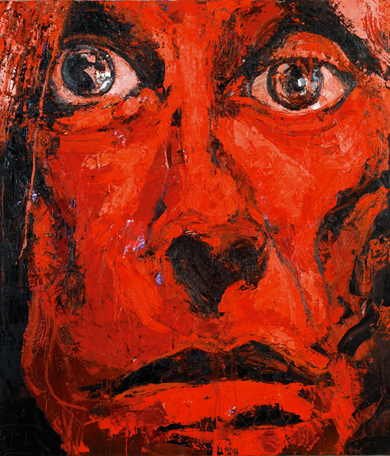
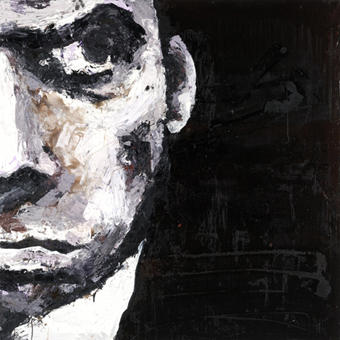
Images by Fred Kleinberg

In the course of my work, I come across people who have done terrible things. People who others would say have lost all sense of humanity.

People who have harmed children, or killed and dismembered people.

Others who have locked themselves away (or been locked away) and have lost or forgotten almost all basic skills of human interaction.

Perhaps most striking is watching people slowly destroyed by addiction. To see them in the later stages of this- near to death- and wonder what incredible life force keeps a person alive when skin is bright jaundice-yellow and all organs are playing discords.

Sometimes it seems that almost all that makes us human is gone.

Almost- but not all.

Because in all of these people, despite their brokenness, what is left- what is most visible, is… their humanity.

Unhidden, undefended, right on the surface like an open flesh wound.

And should we lose sight of this, the danger is that it is not their humanity that will be at risk- but rather our own.

I wrote this in response to a recent event…

Deep in the soup and the stew of him

In the ooze and glisten of his grey matter

Some synapses spark and flicker

Sending out electro-chemical dots and dashes

.

And he- wired almost to breaking point

Is all strung out

Senses dulled

But deadly receptive

.

So bone becomes knuckle

Muscles turn to gristle

And poisoned sinew moves like a snake

Ready to strike

.

Later some said he was evil

That some dark thing was in him

Others called him mad

A flesh machine gone wrong

.

Still others bayed for his blood

-as if enough had not been spilt already

They want eyes put out for the eyes he closed

And every broken tooth smashed in return

.

Me, I stand over a stain in an old carpet

Through which something human has fallen

And feel a little of myself

Drain away

Hope for recovery…

I spent an afternoon meeting with some people who came together to discuss the establishment of a Recovery Network for people who have experienced mental ill health in Argyll.

The Recovery movement is one of the most exciting things to happen within the mental health world for years. It is a grass roots movement, turning the power relationships in psychiatry upside down. It’s persuasive idea is that we need to stop doing what we are doing, because it is not working- rather we need to equip, empower and inspire people towards control of their own choices and decisions towards building real and meaningful lives.

I was reminded again yesterday of the word HOPE.

Because recovery does not depend on the presence or absence of illness- for most people mental health ebbs and flows. For some of us, this ebbing and flowing can be more severe.

But recovery very much depends on the presence or absence of HOPE.

And where hope is being raised, it makes visible to me a kind of humanity that make clear that we are beautiful creatures, made a little lower than the angels.

But let us make no mistake- hope is a dangerous and scary word. It contains all possibilities, but also the danger of disaster and failure. It is something that we need to hold on to firmly but tenderly, like a bottle of nitro-glycerine.

And we need to acknowledge that for many, there is a recovery journey that begins first in daring to use the word again…

Here is a little more Foy Vance-

If theres one thing that I know
It is the 2 shades of hope
One the enlightening soul
And the other is more like a hangman’s rope
Well it’s true you may reap what you sow
But not that despair is the all time low
Baby, hope deals the hardest blows

There was once someone I loved
Whose heart overflowed his cup
And his shoes got covered in blood
Oh but he never knew cos he only looked up
Well he was in trouble and so
Had known pain more than most I know
Yet it was hope that dealt the hardest blows

And the girl that holds the hand
Of her somewhat distant man
Though she did everything she can
Still his heart set sail for distant lands
And she wonders sometimes if he knows
How she feels like a trampled rose
Baby, hope deals the hardest blows

Well some people think their sin
Caused the cancer thats eating into them
And the only way that they can win
Is by the healing of somebody’s hands on their skin and praying
But when the cancer does not go
Baby, hope dealt the hardest blows

And now all these truths are so
With foundations below them
They were dug out in a winter’s cold
When the world stole our young and preyed on the old, well
Hope deals in the hardest blows
Yet I cannot help myself but hope

I guess that’s why love hurts
And heartache stings
And despair is never worse
Than the despair that death brings
But hope deals the hardest blows, dear
The hardest
Hope deals the hardest blows

Greenbelt 2010- ‘Here comes everybody’

I spent a few hours yesterday making a start on constructing something for Aoradh’s worship collaboration at Greenbelt festival.

We are working with Safespace and Sanctus 1 to plan a day long worship event around the general theme of community- the people we journey with- with the title of ‘Here comes everybody’ after a Clay Shirky book title.

Part of this involves setting up a big loom in the middle of the room, and getting people to weave their communities into a tapestry- writing names on strips of cloth. Something like this I hope-

The horizontal lines will represent the presence of the Spirit of God- the attributes and fruit of the Spirit. The horizontal ones represent the communities and individuals that make up our lives.

I have been using saplings that I cut last year-

Cleaning and notching them-

And starting to construct two large frames that I will set up like a big artists easel.

It is a lovely thing to do- to take some bits of tree and construct something lovely and functional- with a view to allowing others to worship.

I’ll let you know how things go…

Scotland- top of the cocaine league…

A story on the news this morning described a recent UN drug report which placed Scotland in the premier league (you could say the world cup) of drug using.

The study found 3.7% of Scots aged 16 to 64 use the drug each year, and that we have a thriving criminal network supporting its sale.

Which raises the question- why here? Why now?

What is it about our society that sustains and encourages drug use to this level?

And what might stop us wanting to escape reality in this way, and be more fully alive to this beautiful place, full of beautiful people?

Answers on a postcard to Alex Salmond…

Solas festival…

We had a lovely day at Solas festival yesterday. Well- mostly lovely anyway.

Solas is a brand new festival held at Wiston Lodge, near Biggar. It is inspired by Greenbelt festival. A few of us from Aoradh went down, and we did ’40’ again, and set a few worship/poetry things. The festival was fairly small- a few hundred attendees. It felt a bit like it was looking for itself a little- not quite sure where it was coming from, but definitely heading somewhere…

’40’ was a bit of a disaster. The organisers had allowed no set up time, and inevitably we had technical problems, which meant that the soundscapes did not work. Also the room was really noisy as the rock band playing outside the window drowned us out. The end result was that we got all hot and sweaty and nervous- with me running around trying to get the sound to work whilst also reading one of the parts!

I have since been in to hospital to have my buttocks surgically unclenched because of the severity of the embarrassment.

But the festival was good. Lots of great music, and interesting discussion. And it was really lovely to be with my friends in a new context- meeting some folk that we new, but also lots of others for the first time. This is the real value of festivals for me- the chance to meet people and allow new things to grow.

I enjoyed Yvonne Lyon as ever- and loved Juliet Turner too.

As for the talking- I enjoyed listening to Richard Holloway, retired bishop and author. He spoke really well about his appreciation of the wide wobbly spectrum of faith- from hard religion, through softer forms right through to militant atheism. Holloway himself appears to be wavering around a faith that does not require God- but remains grateful for the inherited traditions.

He also told a story about his early love of Mysticism, particularly the work of Thomas Merton. This love took him on a retreat where he sought to deepen his understanding of the search for God through contemplation and mystical experience. However it seems that things did not go well- and Richard Holloway remembers the Roman Catholic priest who was his spiritual director saying something like this- “Don’t be bloody stupid, you are never going to be a mystic- you are a writer. You need to worship with a pencil in your hand.” That made me smile ruefully!

I also listened to Labour MP Douglas Alexander, former Secretary of State for International Development. He was slick, but impressive- a future leader of the Party perhaps? Another son of the Manse who is destined for great things.

Michaela was impressed by Alistair McIntosh– unfortunately I missed most of his talk.

Here’s hoping that the festival survives in these rather challenging economic times. Lord knows, Scotland needs the opportunity to celebrate a different kind of religion…

One of the Aoradh crew uses crutches- she has Lupus, and like most people of faith who have long term illnesses, she has had a long journey in dealing with the God who heals, but has not healed her. Helen is a lovely optimistic person, who now sees each day as a gift from God, and does many things despite the pain that she gets when she moves, and the potential long recovery time afterwards. She arrived at the festival field, and within minutes a man came up to her and asked to ‘pray with her for healing’. She politely refused, explaining that this was something that she had kind of thought to do for herself over the years. We later laughed- but it was not funny really.

It was an insensitive thing to do, but what surprised me was that this kind of way of faith is present within a festival like Solas. It is a kind of faith that many of us have experienced in the past, but have been grateful to leave behind.

It is not fair to sum up a whole festival by this one encounter- after all, we are all capable of doing some daft stuff in the name of Jesus- and this man is probably a nice and well meaning bloke. However, I do think that is kind of sums up where we are in terms of developing new kinds of church in Scotland. New developments like Solas are small, fragile, and tend to be an amalgam of people with quite disparate views- who are forced together by expediency because ANY new Christian thing is worth being part of.

There is a danger that the ticking time bomb of doctrinal warfare is always about to explode.

I am sure that the organisers of Solas this year have had a rocky road.

Pray for them- and it.

Reviewing the back catalogue…

I am doing some work on a new collection of poetry.

I have been writing poetry for many years- with spikes and troughs of productivity. I wanted to do something with some of the things I had written. It is hard work though- I find looking at things that I wrote a few years ago quite hard. The emotional meaning that they bring to me is muted by the passage of time, and for me poetry is perhaps above all an emotional thing.

Others may focus on the technical and cerebral aspects of poetry, but I think I am a bit too lazy for all that stuff… although I tinker a bit on the edges.

So rather than doing what I should be doing and organising and editing, I am writing new things.

I did come across this the other day though-

Meaning

.

At the end of it all,

When history finally catches up with its vanishing point

What elements of you and me will still carry meaning?

Are we really no more than a knot along an evolutionary string?

Perhaps near the end

But then again, what a conceit that is-

Maybe we are nearer the beginning

.

Will all things pass,

Or are we elemental

Like the carbon molecules that mould us?

.

What might survive?

Truth
Beauty
Grace
Poetry singing in the soul
The flicker of a rising sun
In an old man’s eyes
The heart stings of hope
And the passing of glances
From father
To son
.
For what value have frescoes?
Icons?
But the truth they speak
Is in the filter
Of the eyes
They fall on
.

I am brought back to the Bible

Like a phantom itch in a missing limb.
.
To the cynical meanderings of the writer of Ecclesiastes.
And the beginning of it all in Genesis.
.
The end described in the wild narcotics of the Apocalypse of John.
.
And I stand still on the promise of a new kingdom
Here on the earth

But interconnected with a mysterious elsewhere

.
And the soft uncertain space

.
Within