Osama, how the other half see him…

My friend Ali turned up this evening- he had been house sitting for his sister while she had been on holiday so I had not seen him for a few days.

Ali is a singular kind of guy, who has a taste for the kitsch… and his sister found something in the souks of Marrakesh that she knew she would have to take home for her brother. More of this later…

There is a phantom shadow on our age, cast by the missing outline of the twin towers of Manhattan. This shadow has unleashed a new kind of warfare that has global impact- the ‘war against terror.’ On the one side we have the big battalions bent on imposing rough justice in the name of democracy, and on the other, those who have come to see the west as representing everything wrong with this world of ours.

Many things define the difference found between the supporters of the different sides. One side is mostly rich, the other, mostly poor. But perhaps above all, the defining difference is that of religion. One side is predominantly white, Protestant Christian, the other, Muslim.

It is important I think, to understand the other– to walk a while in his shoes and mark the blisters on his heel.

Otherwise, we may fall to that familiar base human default of dehumanising those who are different, and even demonising those who disturb our understanding of normality.

It seems clear that the Muslim world has a different way of seeing this ‘war on terror’ than predominates even in my liberal, left-of-centre world view. For them, this war is a manufactured, imperialist, brutal assault on a whole way of life- a whole faith group. It is the logical outcome of a long line of injustice perpetrated by or supported by the west (and the USA in particular.) Israel, Kosovo, Somalia, Iran, the Kurds, Chechnya, Israel again, and again…

In this way of seeing the world, the ‘war on terror’ is all smoke and mirrors, behind which is OIL. And religion.

That is not to say that people necessarily condone terrorist violence, but they may understand it, and its root causes in a way that we are not able (or willing) to. Many may resent the further trouble Bin Laden has brought down upon the heads of the Muslim world when he attacked the ‘great Satan’ on September the 11th. But his motivation is clear, and his continued defiance of the whole might of the USA continues to give almost univeral satisfaction.

Back to Ali’s present.

With great ceremony, he began to set up some cheap plastic track on our coffee table. He then placed on the track a tank, driven by a bad representation of George W Bush, and in font of this, Osama Bin Laden, on a skateboard. The tank was battery powered, but the skateboard had a magnet whose polarity opposed a magnet on the tank, so as the tank whirred round the track, the skateboard was propelled in front of it, always out of reach.

Here is a phototof the two protagonists, for your viewing pleasure, and education…

Missionality?

To continue the Aussie theme began in my last post- we are just about to begin a study called Exilio in our house group. Thanks to Johnny Laird(http://johnnylaird.blogspot.com/) for the info about this wonderful (but very demanding) resource.

This is a resource produced by Aussie globe trotter Michael Frost and others. It is based on Frost’s book ‘Exiles’, and a study on the book of acts, and the whole point is to help us think about living Missional lives. Its available on this link http://www.forge.org.au/index.php/20070322143/FORGE/Forge-Australia-Info/Forge-Resources.html

This word missional seems to be on the up. Some folk in our group were a bit irritated by it. I suppose it is an attempt to recapture the centrality of mission in the life of Christians.

But for a much better definition- check out Tall Skinny Kiwi (Andrew Jones);

http://tallskinnykiwi.typepad.com/tallskinnykiwi/2008/06/missional-synch.html

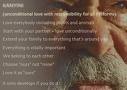
Kanyini

Thanks to the heads up from Craig in Australia, I have been doing some research and thinking about the concept of Kanyini. Craig was kind enough to send this to me in connection to some ‘wilderness meditations’ we are working on- finding locations to provide cues and context for drawing close to God (some of this stuff can be found here; www.aoradh.org/index.php?option=com_content&task=category&sectionid=24&id=80&Itemid=62)

The concept of kanyini has been brought to us by a beautiful man called Bob Randall who grew up as an aboriginal boy on the outskirts of a cattle station in central Australia. His father was a farmer of Scottish extraction, but appears to have had no concern for him at all. Like 50,000 other black kids of mixed race (between 1910 and 1970) he was forcibly removed from his family, and sent to school hundreds of miles from home. He was forced to learn the rules of white culture- the clothes, the way of life, the religion. He learnt to appreciate the contradictions between the words of Jesus, and the actions of these, his followers. Since then, he has been a welfare worker, a songwriter, and author, and now, works with Australia’s black community.

To be a native Australian in these times is to be part of a community with huge problems- health, crime, substance misuse, soaring suicide rates. It is a community living in the shadows of the sky scrapers of new Australia, but also in the shadow of what amount to a genocide, in which everything about what has been described as the oldest culture in the world has been all but destroyed.

But it is also the story of a Diaspora of westerners (particularly Celts from Ireland and Scotland) often still under the shadow of their own experience of oppression and injustice, who become in turn the oppressors, murderers and rapists of a whole culture.

It is their story, but it is also ours. It is the story of what happens when we become disconnected from who we are.

Because to hear Bob Randall speak(check out the links below) is to feel the pull of something wonderful. He describes a culture where people are connected to land. Birds, trees, all living things- they are family. The proof of this connection is that we are… alive! And because everything is connected, everything is OURS, not MINE. Everything is already created in a perfect state and our job is to become part of it.

Bob describes his memory of life as a kid like this;

These were beautiful people, because they lived in a beautiful way.

Bob’s concept of Kanyini feels right. It has simple truth- and seems to encapsulate the idea of community as I understand it should be. It has 4 components

  • belief system
  • spirituality
  • land
  • family

I very much recommend checking out the film about Bob from the schools site below, or there are other links to the Kanyini film on the second link.

www.teachers.tv/video/22396


www.wyldheart.co.uk/kanyini.html


William

My son Will is off to Yorkhill childrens hospital for an operation today. It is only a small, fairly routine thing, and he seems remarkably unconcerned. he has memories of the hospital from previous visits, and to him, it is something of a wonderland of play equipment and friendly staff. He knows that kids are transfered to the operating theatre in electric cars- that they drive themselves!

But sending your lad off to be under the knife- this is hard.

He left with Michaela and his granddad whilst I went off to work..

I walk away

I walk away
And a backwards glance
Sees my son watching me
Watching me leave
Suddenly so vulnerable
So small in his clothes
Shrinking into the folds of his shirt

And my heart stops for a moment
A flashbulb vision hits my minds eye
Of him riding a bicycle
Down a street full of hidden dangers
Out of earshot
But not yet out of sight
Undefended
Needing me
But not knowing it

Like the flicker of a fragile vein
In soft translucent skin
His humanity seems
Improbable
Incredible

And needing the application
Of an armoured shell
To keep out
Shooting stars
Or the odd stray arrow

With a shudder the moment passes
And I offer up a prayer
To keep the wolves
Far from our door
While I head out to slay my days supply of dragons
At work.

17.8.07

Theology, encapsulated?

I was thinking the other day about how incredibly difficult it is to have theological discussion with people outside your particular circle. The language that we use to describe our experience and understanding of God can be so prescriptive.

It is almost as our liturgy and our doctrines become mutually incompatible if they vary from each other by more than, say 3-4%.

Having said that, it may be easier to find common grounds for discussion if there is greater variance! We might be talking at cross purposes, but we are less likely to shout “Heretic!”

My friend and former neighbour Terry sent me this recently, which kind of makes the point nicely.

Its just for a laugh- enjoy!

Several centuries ago, the Pope decreed that all the Jews had to convert to Catholicism or leave Italy. There was a huge outcry from the Jewish community, so the Pope offered a deal. He would have a religious debate with the leader of the Jewish community. If the Jews won, they could stay in Italy ; if the Pope won, they would have to convert or leave.

The Jewish people met and picked an aged and wise Rabbi to represent them in the debate. However, as the Rabbi spoke no Italian, and the Pope spoke no Yiddish, they agreed that it would be a ‘silent’ debate.

On the chosen day the Pope and Rabbi sat opposite each other.

The Pope raised his hand and showed three fingers.

The Rabbi looked back and raised one finger.

Next, the Pope waved his finger around his head.

The Rabbi pointed to the ground where he sat.

The Pope brought out a communion wafer and a chalice of wine.

The Rabbi pulled out an apple.

With that the Pope stood up and declared that he was beaten, and that the Rabbi was too clever. The Jews could stay in Italy .

Later the Cardinals met with the Pope and asked him what had happened?

The Pope said, ‘First I held up three fingers to represent the Trinity. He responded by holding up one finger to remind me there is still only one God common to both our beliefs. Then, I waved my finger around my head to show him that God was all around us. He responded by pointing to the ground to show that God was also right here with us. I pulled out the wine and wafer, to show that God absolves us of all our sins. He pulled out an apple to remind me of the original sin. He had beaten me at every move and I could not continue.

Meanwhile, the Jewish community gathered to ask the Rabbi how he had won.

‘I haven’t a clue’ said the Rabbi. First he said to me that we had three days to get out of Italy, so I gave him the finger. Then he tells me that the whole country would be cleared of Jews and I said to him that we were staying right here.

‘And then what?’ asked a woman.

‘Who knows?’ said the Rabbi. ‘He took out his lunch so I took out mine.’

Peregrinatio

Around the coastline of my adopted county of Argyll are places rich in the folklore of the Celtic sailor-saints. For them, voyaging was about mission. It was the very stuff of faith and life. It was the living embodiment of trusting in the living God.

Tides ebbed and flowed to His ordinance.

Storms came to test and to admonish.

The journey was blessed only by His provision

But arrival was never certain.

One of the accepted practices of these monks seems to have been Peregrinatio, or ‘Holy voyaging’, which in practice meant to get in a boat, and simply to set sail. No destination planned, simply trusting to tide, wind and God. The destination of such a voyage was not geographical, but rather spiritual. The goal was to arrive at ones ‘place of resurrection.’ Arriving at journey’s end inevitably meant an actual physical place also however- and it is these places that still hold the memory of these voyages in Argyll- in the place names, the folk lore, and also in the marks and mounds in the earth out on exposed headlands, or on tiny islands.

Just around the corner from me is Holy Loch (the site in more recent years of an American nuclear submarine base!) At the head of the Loch is the village of St Mun, named after the saint for whom this place was his resurrection.

St Brendan

Lord stain me with salt

Brine me with the badge of the deep sea sailor

I have spent too long

On concrete ground.

If hope raises up these tattered sails

Will you send for me

A fair and steady wind?

For Neil

You would have liked this
I was listening to Bert Jansch
Picking out an opening riff
Beautiful and bell-like
And it made me think of you
My wounded friend
It was not a surprise
To find you with me
The shape of you
Is never far away

You would have loved this music
It would have rolled on you
Like poured oil
For a while
But then it would have drained
Into those corrugations
That life harrowed into your soul

And the simple beauty
Would have become something else
Something external
Something examined
Something measured
And as a consequence
Lost

It would have contributed
To the old
Reverse confidence trick
And leave you grasping for ownership
For evidence of your own
Worth
And creativity

Bert Jansch leaves me yearning too
For the simplicity of acoustic poetry
But like you
It has gone

And I feel your absence
Like the numbness
Of frostbite

Moazzam Begg- ‘Enemy combatant’


One of the books I read on holiday was by this man- Moazzam Begg. I could not put it down.

Begg, from a fairly affluent secular Muslim background, became something of an adventurer, traveling to Pakistan and Afghanistan as a young man, making sense of his growing faith. He set up a bookshop in Birmingham, and then became active as a supporter of education and water projects in Afghanistan. He appears to have had contacts with people who were radical activists.

As I read the book, I was struck by a similarity between him, and people who may have become involved in Christian radical missionary work. Some of the camps he visited had a para military edge to them, but according to his own account, this was not his world, nor his belief system. I may not share his doctrine or his faith, but many of the principles he appears to hold dear were ones that I honour also…

By what appears to be a combination of his contacts, the places he visited, and a whole set of assumptions, the CIA and perhaps MI5 became convinced he was a terrorist mastermind. So they had him picked up, dragged away from his family, and locked up in various torturous environment, including the infamous Guantanamo Bay in Cuba. He was manipulated into a spurious confession, but was never charged or convicted of any crime, despite being held in dreadful circumstances for 4 years.

The question that we have to ask, is whether this could ever have happened to a white, middle class Christian male in 21st Century America, or Britain?

There are despotic regimes all over the world- and human rights are perhaps of low priority, but this book asks important questions about the operation about our society, and the misuse of power at this point of our history.

Begg’s style of writing is sometimes difficult to stomach- but the bare facts of his experience, told at a time when there is such political focus on the British governments attempt to extend the length of time that they can hold suspected terror suspects without trial, are compelling.

Christians in the UK have been swift to raise voices of protest against the building of Mosques, or the apparent infringement of our own rights to religious freedom of expression. But perhaps it would be of greater service to Jesus if we would raise our voices to protest injustice and inhumanity against others, rather than ourselves.

Today I read of a planned trial of a 22 year old man, Omar Kadir (a Canadian subject) who has also spent years in Guantanamo. He is charged with war crimes, and the murder of a US soldier during a raid on a suspected al-Quaida camp. Kadir had been sent there by his radical Palestinian father, and was 15 when he was seriously injured and captured. A  video of one of his hundreds of interrogations has been released, in which he can be seen sobbing for his mother. He has now spent one quarter of his life in captivity.

International law states that those captured in armed conflict under the age of 18 deserve protection. Child soldiers are weapons that despots have employed often enough. Moazzam Begg in his book makes reference to the incredible vulnerability of this boy.

What should our response be?

Perhaps it might be to understand a little better- perhaps give this book a try.

Blogged with the Flock Browser

A holiday list…

We are back from a wonderful holiday, camping in Brittany. By way of summary- here is a list…

Miles driven, 2000.

Books read ( by me) 5.

Camera’s lost, 2

Camera’s found (by some miracle, and thanks to the Gendarmarie) 2

Coats lost, 1

Visits to hospitals 2, Chemist, 1, optician 1.

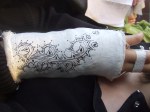
Bones broken 1 (Emily- see photo’s)

croissant’s consumed- many.

Towns visited-numerous.

Days spent at peace- lots.

But it is good to be home.