Advent 16: Shopping…

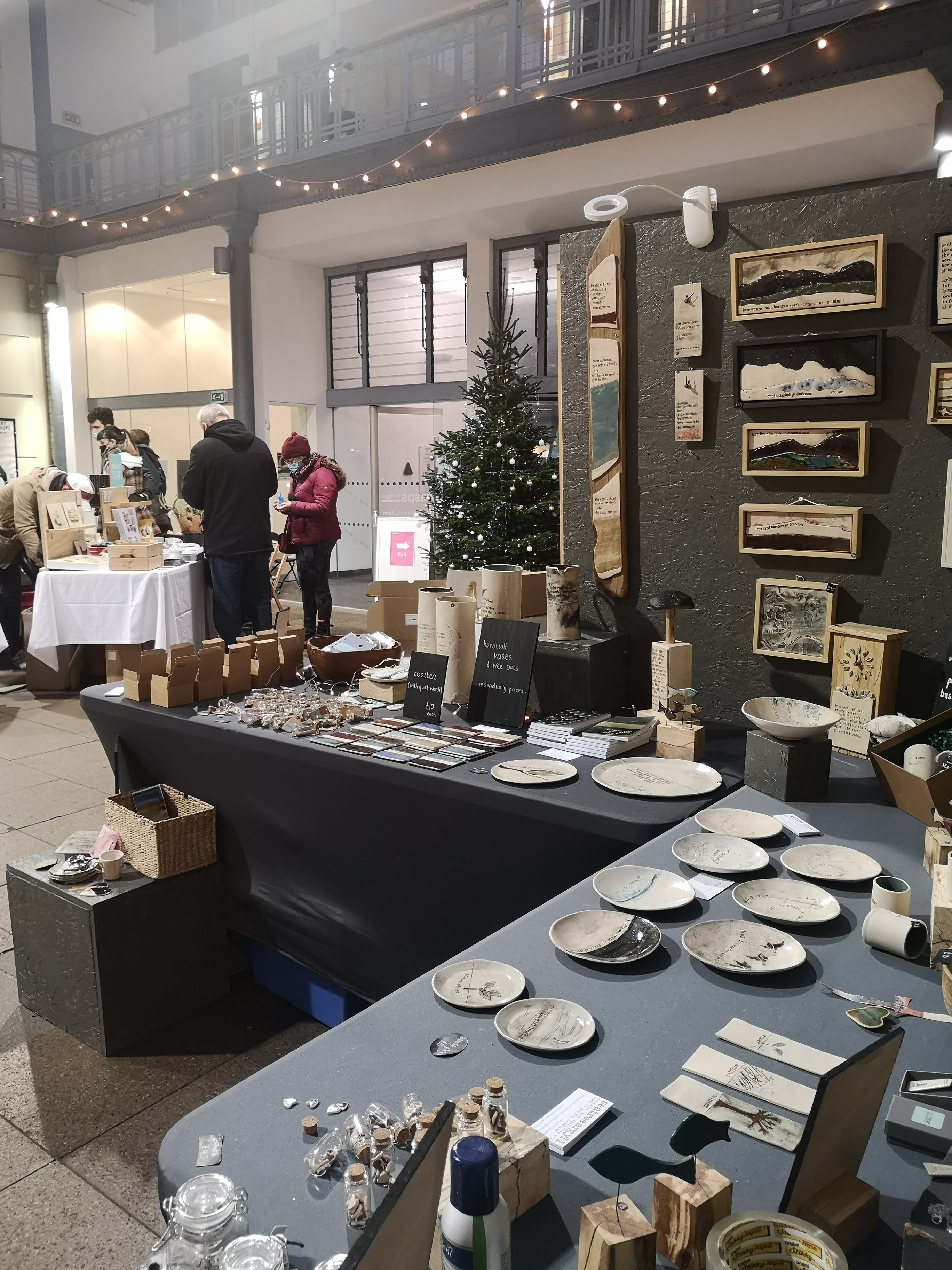
Over the weekend, Michaela and I did a version of our dayjobs. These days we make most of our living selling ceramics. We do this through galleries and shops but we also attend a few ceramics fairs and craft events ,so on Saturday and Sunday we were in the Briggait, an old drafty drippy fish market in Glasgow.

Selling stuff.

It is Christmas, after all.

We had a lovely weekend. We sold a lot of ceramics, had lots of great conversations and won a a free place at the next WASPS artists fair because ours was judged the best looking stall. In the evening, we ate out at a lovely vegan eatery and went to see James Bond strut his stuff before retiring to our Budget Ibis hotel.

It felt like we had stepped out of our rural backwater in to the mainstream.
There is the rub.

We are amongst that wide slice of the UK whose income is reliant on commerce, and in particular, that kind of commerce that might be given a boost around Christmas time, when people splash the cash on friends and family.

Frankly, we have struggled a bit with this. How can it be right that we, who seek a simpler more sustainable life, unplugged as much as possible from mainstream consumerism, need others to buy OUR stuff so this life is possible?

Is all shopping part of the problem?

Well, no. Of course not.

Trade – as in the fair exchange of goods and services – is a human good. It is how we are able to mange our varied skills in community to benefit from the fact that not everyone is the same, and some can do things that others cannot.

At best these exchanges are face-to-face, and based around a local economy.

If you are interested in the difference between this kind of trading and the more globalised, multi-national, corporation owned, kind, you might be interested in what has become known as the Preston Model- the town where I used to live;

But leaving all that aside, back to our little stall in Glasgow. Thankyou to all of those who came and bought things; bowls, plates, vases, poetry books, pictures etc.. (And while I am at it- thanks to those who have bought things from our webstore or from galleries!)

We hope that we are able to provide a service, in terms of an object that carries meaning, that is a fair exchange (in terms of the work we do to make this object) for the money we ask in exchange.

In return, we try to use this money well, to buy services and goods from other people. Our income is small, and deliberately so, but what we have, we try to buy from local suppliers, or from free trade, sustainable sources. This is simply not always possible but we think it is important to do this not as a charitable excercise, but as a social good, and for the sake of our planet.

You may see this as tokenism. I do not agree though, for two reasons;

Firstly, if we try to follow a life of the spirt, we know already that we seek to find the meaning below the surface. The way we trade is a fundamental part of our lives, so how can we not see this as part of our spiritual journey? As we seek to change the way we trade towards greater justice and social/economic/environmental responsibility we are do this as a spiritual discipline as well as a financial one.

Also, one person doing this is a drop in the ocean, but that is not a reason not to do it. Rather, we seek to create chains of influence, which is actually the very thing that trade IS – a chain of influence that is lubricated and liquified by money. What we are seeking is to turn our small actions in to a mass movement and these always start small.

Let me make this clear. This is NOT an advertisement for our business- you will see I have not included any links in this piece. You can find many other small, local people who are just like us.

A couple more stories from our weekend.

Because we make things that deliberately carry meaning – or become a vehicle for the meaning that others ascribe to them – our stall is often a place where emotions run high. It is a regular thing to see tears or to suddenly find ourselves in deep conversation with strangers. It is a very deep honour to be trusted like this.

Over the course of the weekend, I spoke to people who were retiring and looking for something that marked the change, a woman whose mother had just died, someone who was seeking to find ways to make work oportunities for their learning disabled son and his friends. These were not small conversations.

Then there was this conversation;

We sold a small clock like this one, but with words on which read ‘Let’s whisper dreams of things to come’;

It was bought by someone whose best friend’s husband died two weeks ago of cancer, as a gift for her in her pain and loss. The more I think about it, the more lovely this seems.

Let’s whisper dreams of things to come.

Advent 15: A story with which to live…

I used to rail against consumerism each year as Christmas approached. I made all sorts of token efforts to make personal changes- some years we only shopped in charity shops, or only from locally made produce, or with a limited budget. Always there was the obvious back story of ‘the true meaning of Christmas’, whatever that might be.

There is a version of this (which we consume through a thousand screens) that seems to be about being nice, being generous, and enjoying friendship and family. These are good things. Presents are good things I- I like getting presents and I like giving them too.

But this story of Christmas is not going to save the planet. It seems to be a story that has failed us, like an old scientific theory, superceded by experience and hard won knowledge.

Neither am I sure that this is in fact the ‘true meaning of Christmas’, even in our commercially oriented times. But what is then?

I suppose first and foremost, the true meaning of Christmas is that it was the start of a new story…

…a story about an ancient prophet who claimed to be God, which upset people so much that they killed him…

…or a story about the start of a new kingdom and a new way of living that was simpler, more connected and subjugated to something called love…

…or a story of how people took the example of the life and death of a man and formed it in to a religion, albeit one that often seemed to miss the point entirely…

…or a story in which we find ourselves. A story that challenges us and draws us towards an active hope that things could and should be better…

But there are many many other versions of this story. It became maleable and has been adapted and adopted by all sorts of divergent causes. It was worn by those in power like a badge to justify their power and has been employed by slaves to remind them that they were more than just slaves. So the story might become diluted and distorted from over use and under examination. It is a story that might then lose its power entirely because there is nothing more disposable than a meaningless story.

But how we need a new story at the moment; a better story than the one we have been living with. Here is Monbiot on politics for example;

The interesting question though is whether this story will be a new one after all, or rather a rediscovery/re telling of one that we had mostly forgotten.

The story that began at Christmas is celebrated in a burst of consumerism. But what if we remembered that Jesus told his followers that they did not need two shirts on their backs and modelled a way of sharing everything? The same Jesus who told us that the rich would struggle to enter the Kingdom of God that he was proclaiming, which would bring blessing to the weak, the poor and the broken? How might this story affect the way we live? How might it shape our politics, our economics, our theological understandings of the world?

What light will fall on our darkness?

Photo by James Wheeler on Pexels.com

Open the sky

.

Open the sky and let some light in

Let this night be night no longer

Let stars shine down in shafts of love

Illuminating ordinary things

All down with dirt and common use

Let donkeys laugh out loud

For now the basest things

Are silvered up with grace

Lubricated in kindness

He is coming

.

Not to penthouses, to plump up cushions of comfort

Not to stroke the fragile ego of celebrity

Not to strengthen the hands of the powerful

Or expand their empty empires

Not to shape new cathedrals from seductive certainty

Or even to doctor our old doctrines

.

He comes not to the exclusive few

But to you;

The mess of you

All your brokenness

All your failures

He comes in the certain knowledge that

You will fail again

.

So, open the sky and

let some light in

Advent 14: Donkey…

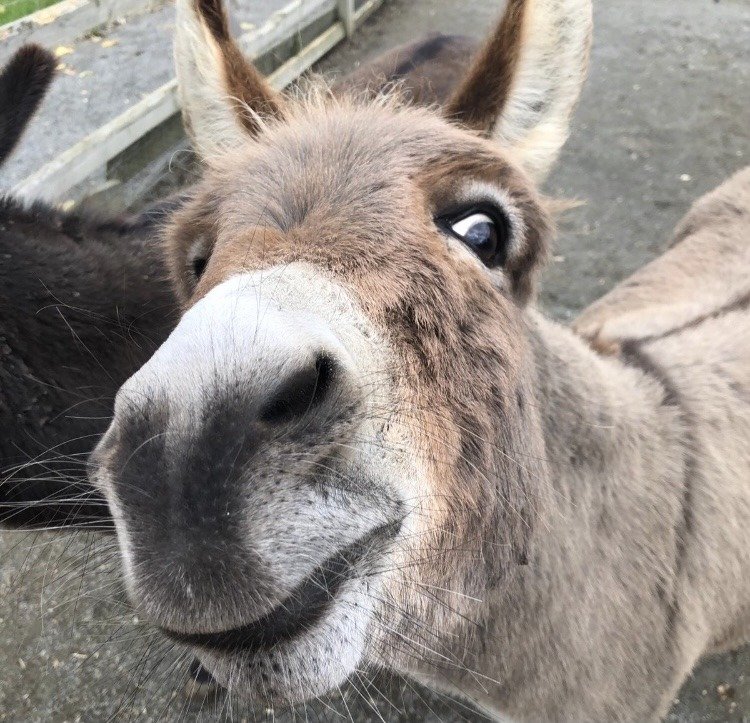
There ain’t much that is more ‘advent’ than a donkey, right?

Time for some complex donkey theology.

The poem below centres around a very strange story from the ancient scriptures in which a donkey mocks a poet called Balaam in plain speech. Balaam then flogs the donkey until God intervenes and gives him a right talking to. You can read it in all its wierdness here.

A donkey-flogging poet who is so caught up in his own pomposity and pontification that he fails to see an Angel standing in front of him? Now why would I take this one so personally?

Perhaps what we learn here is that what we think we know, particularly about things of the spirit, we know at best in part. We might be totally wrong. We probably are. Sometimes it takes a donkey to point out the blindingly obvious.

There is truth in this that is important I think. Doubt is a holy discipline as much as faith ever was, otherwise however can our understandings change and evolve? (I wrote this piece ten years ago during a period of doubt trying to describe this same kind of thinking.)

Anyway, back to the donkey;

.

Baalam’s Ass

Numbers 22:21-38

.

“Look! It’s there!

Can’t you see it?

Wings like thunderclouds

Eyes like searchlights

Robes spun from the last rays of the summer sun

It is either a fairy pumped up on steroids

Or a feckin’ Angel –

Not an allegorical one either.”

.

So it was that the living God

Sent a mighty Angel

To play hide and seek with a Donkey

So that a pagan sorcerer

Could speak out holy words

To confound all Israel.

And a whole sky-choir

Of heavenly creatures

Chuckled

Advent 13: The Mercy…

The word ‘mercy’ has meaning for me.

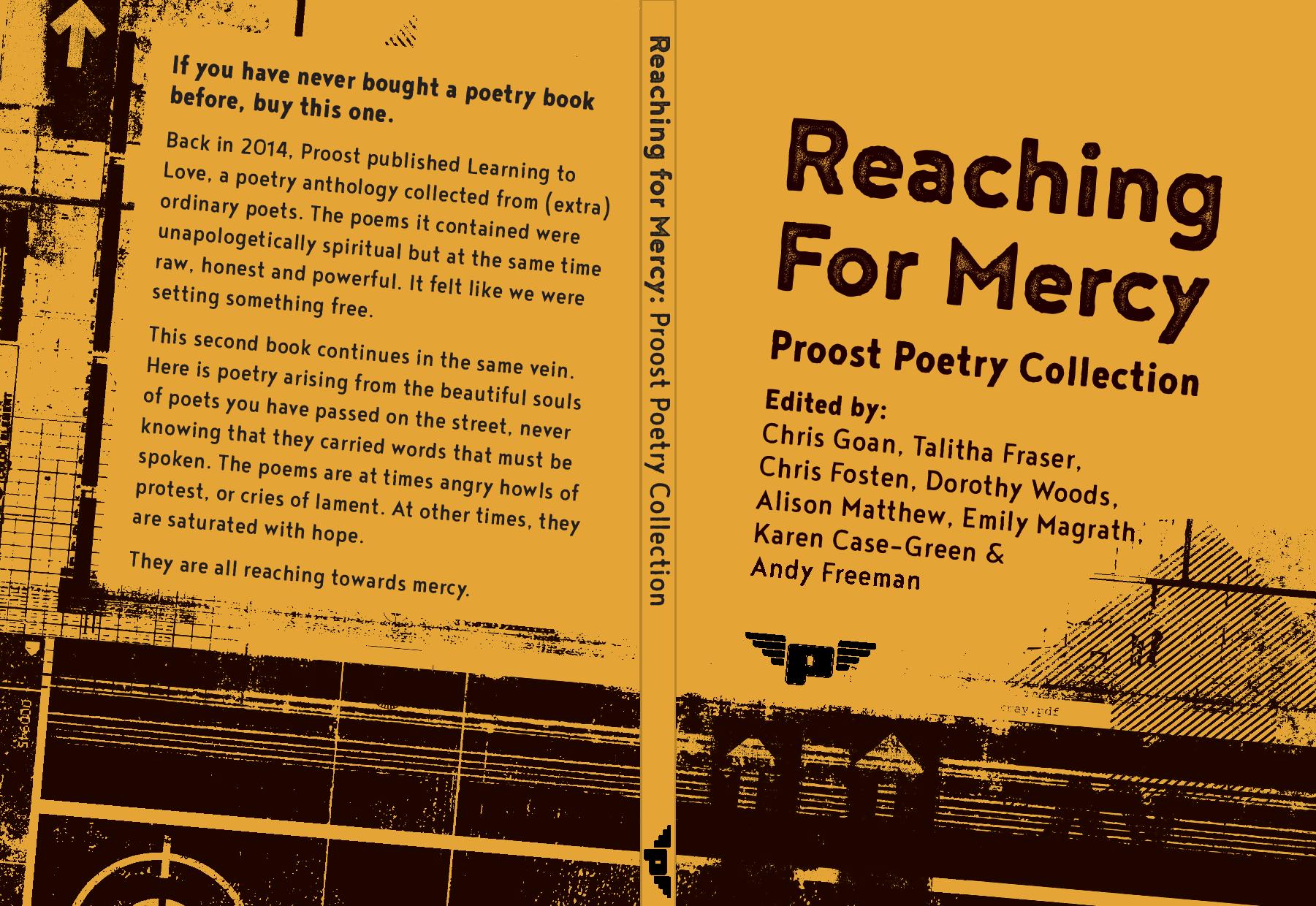
A few years ago, I curated a collection of poetry, gathering together a team of editors, towards whom I pitched the title ‘reaching for mercy’. Initially the reaction was not positive. ‘Mercy’, they thought, sounded too… religious. I was surprised, because to someone like me, who had become disconnected from organised religion, mercy meant something else. I think I first hatched the idea from this song;

It was around the ascent of Trump, when it felt deeply moving to be reminded of this kind of America- that of broken humanity in search of redemption, of non-conformity and tentative (but determinded) hopefulness.

I did win the argument. Mercy, recast as a post-religious word, might be understood as a tender word of hopefulness used like embrocation on our own wounds, even the self-inflicted ones.

Skip forward a few years and my understanding of mercy has expanded somewhat towards something that I will call ‘The Mercy’.

Here is Cynthia Bourgeault on the same subject;

The term I will use to describe this embodying fullness is “the Mercy.” It is the water in which we swim. Mercy is the length and breadth and height and depth of what we know of God—and the light by which we know it. You might even think of it as the Being of God insofar as we can possibly penetrate into it in this life, so that it is impossible to encounter God apart from the dimension of mercy. . . .

The mercy of God . . . is unconditional—always there, underlying everything. It is literally the force that holds everything in existence, the gravitational field in which we live and move and have our being. . . . Mercy is God’s innermost being turned outward to sustain the visible and created world in unbreakable love. . . . 

This is from here.

Suddenly, the mercy is everything.

It is not longer just confined to acts of kind humanity, instead it is a magnetic force of love that holds everything together.

I could, and probably should, say a lot more about what I mean by this, but perhaps you are way ahead of me anyway. Instead, I will offer this poem, which was my way of reaching towards the same conclusion.

.

I am

.

I am bird, I am wind

I am scaled, I am skinned

I am soil, I am stone

I am flesh, I am bone

I am ebb, I am flow

I am stream, I am snow

I am all of these things

And I am nothing

.

I am love, I am light

I am morning, I am night

I am atom, I am star

I am close, I am far

I am start, I am end

I am stranger, I am friend

I am all of these things

And I am nothing

.

I am silence, I am song

I am right, I am wrong

I am sea, I am shore

I am less, I am more

I am young, I am old

I am iron, I am gold

I am all of these things

And I am nothing

Advent 12: Holy waiting…

Photo by Shane Aldendorff on Pexels.com

This advent, we remember again the fact that much of our spiritual life is lived in limbo because this season is about waiting.

We know this, but perhaps it might be usefuly once again to think about it again. Our waiting is perhaps too coloured by what we know to be coming- we think of advent as merely a countdown to Christmas, not as a season in itself.

We forget about the business of holy waiting.

What do I mean by this?

Well, we know about waiting. Here in Britain, we pride ourselves in being good waiters – we stand in orderly queues, patiently waiting for whatever we feel to be worth it and lots that is not.

.

Behind suburban fences

Middle England retires

Many minor offences

Fuel artificial fires

We grind teeth (and gears)

Wait for lights to go green

We wait out our years

Wondering what it all means

We seek petty distraction

Wait for ships to come in

He waits for her

And she waits for him

.

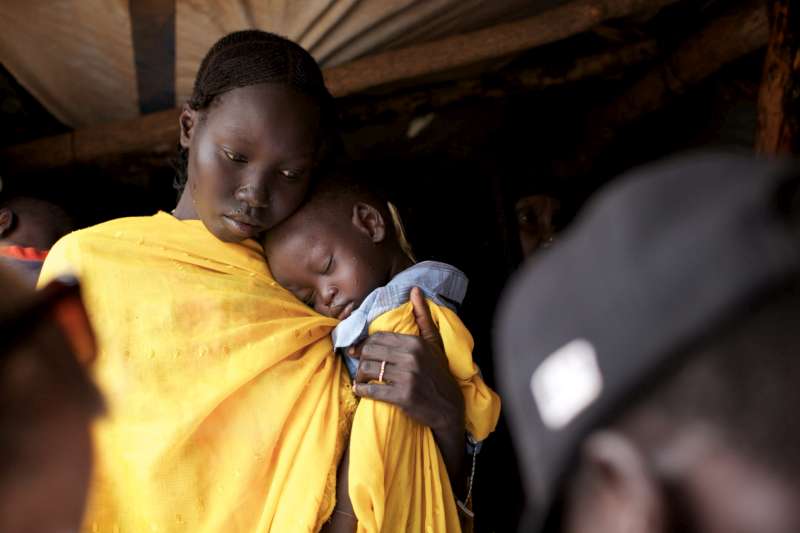
Meanwhile, in places not so far away, other kinds of waiting are taking place;

.

They wait at the border

Wait for the war

Wait for the sirens

For the shells to fall

In towns without rooftops

They wait behind walls

For men dressed in khaki

To kick down their doors

They raise up our faces

To the bright morning sky

Some slip cold embraces

Some people will die

.

I say this not so we count our good fortunes – I assmume that we do this already – but rather to help us remember that life is fleeting and fragile, and so our waiting should be used sparingly, lest our waiting is wasted.

This kind of holy waiting has no certainty, no guarantee, rather it serves as a spiritual practice, for the only waiting worth the time is that which has at the centre of it a hope of life, like pregnancy.

.

But from the curve of a woman

From the eye of a child

From where no-one expected

Things could be reconciled

That in ordinary spaces

What was far now lies close

And hope falls on places

Where people wait most

So smooth out the mountain

Make crooked roads straight

Let love pour like fountains

On we who still wait

Advent 11: Piercing the darkness

Todays post comes from Graham Peacock. He writes a blog entitled wearily hopeful, which seems as good a title for this advent as any. GP has been a minister, a housing worker, a pantomime dame, a compulsive twitterer, a promoter of live music, a mental health chaplain and a cricketer whose enthusiam is totally out of proportion to his ability. I am also proud to call him my friend. We met on the internet, then (much to my kids consternation) in a coffee shop. He did not murder me though.

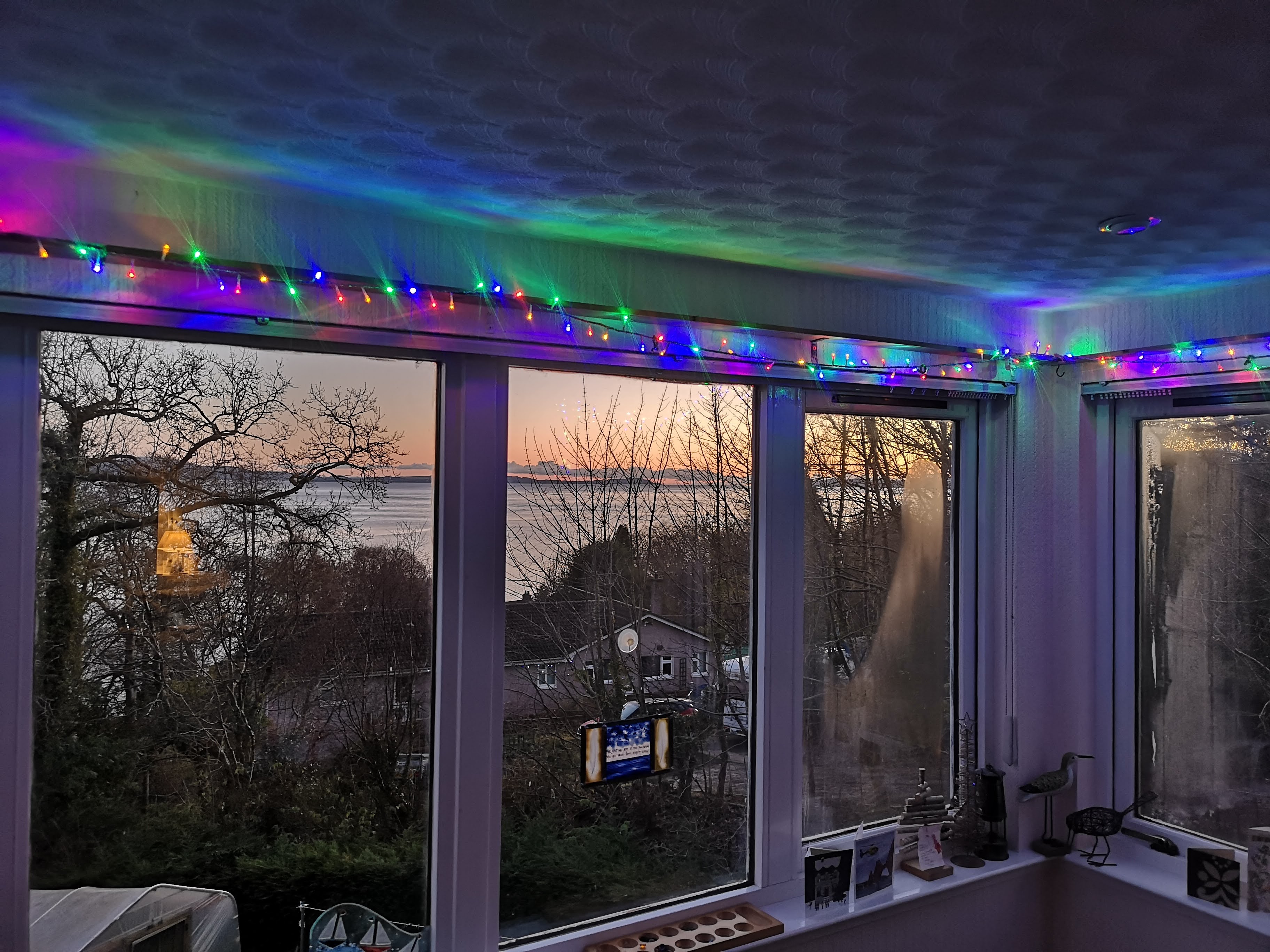
It was this time last Advent that I began to notice and welcome the lights in the darkness.

Prior to that I’d been a bit sniffy about what I saw as vulgar commercialism and garishness, but in 2020’s covid winter when all seemed without hope, the lights got through to me. It seemed that more and more people were putting up Christmas illuminations that winter. My village put on two advent windows every night for 24 nights. Some seemed thoughtful, some seemed tacky, but it didn’t matter to me- there was light and there was hope.

That sniffiness has not returned and so I wrote this; mainly to my snarky self of two or more years ago who just wanted to be different for the sake of it:-

Blessed are you who light sparkly lights and project strobe effects and moving snowflakes.

Blessed are you who teeter on unsuitable stepladders and fix wonky reindeers that cling unsteadily to the sides of your houses.

Blessed are you who put up the ‘Xmas’ signs and the improbably shaped illuminated Santas.

Blessed are you who interlace your hedges with flashing lights and with cheap, primary coloured elves.

Blessed are you who try and push back darkness with bargains from the middle aisle of Aldi that will end up in landfill by mid January, for you still make your street bright and make those who pass by smile.

————————————————————-

But woe to you who sneer on twitter at the crassness of it all but do not respond in good grace.

Woe to you who post about your many & justified concerns but shed no actual light.

Woe to you whose hearts are full of anger that you call ‘righteous’, but have no sparkle.

Woe to you whose houses are ordered, tasteful & with instagram friendly decorations, but dark to the rainy streets.

Woe to you whose concerned frowns and desire for informed critique with like minded souls far outweighs your ability to take a risk and shine brightly.

Last year I bucked the habit of a lifetime and joined in; my contribution was very modest: a string of cheap white fairy lights that twinkled across the porch. Being part of this community of light at times made me at times very emotional.

These ‘Blessed’/ ‘woe’ sayings, are meant to be playful, to throw up questions and to make the reader think; they are not the ‘either/or’ of my evangelical beginnings where something was either ‘right’ or ‘wrong’ . Yes, the multitude of plastic lights and improbable Santas may seem excessive sometimes, but they speak of the desire for light, playfulness and hope in ways that my apparent earnest concern rarely seems to do.

I’ve hung those lights again this week. I don’t think I’ll ever go as far as having a 3 metre high Santa festooned with lights on the side of where we live, but having some light up is something I’ll continue: sometimes you just have to join in and pierce the darkness.

Advent 10: We are not only this…

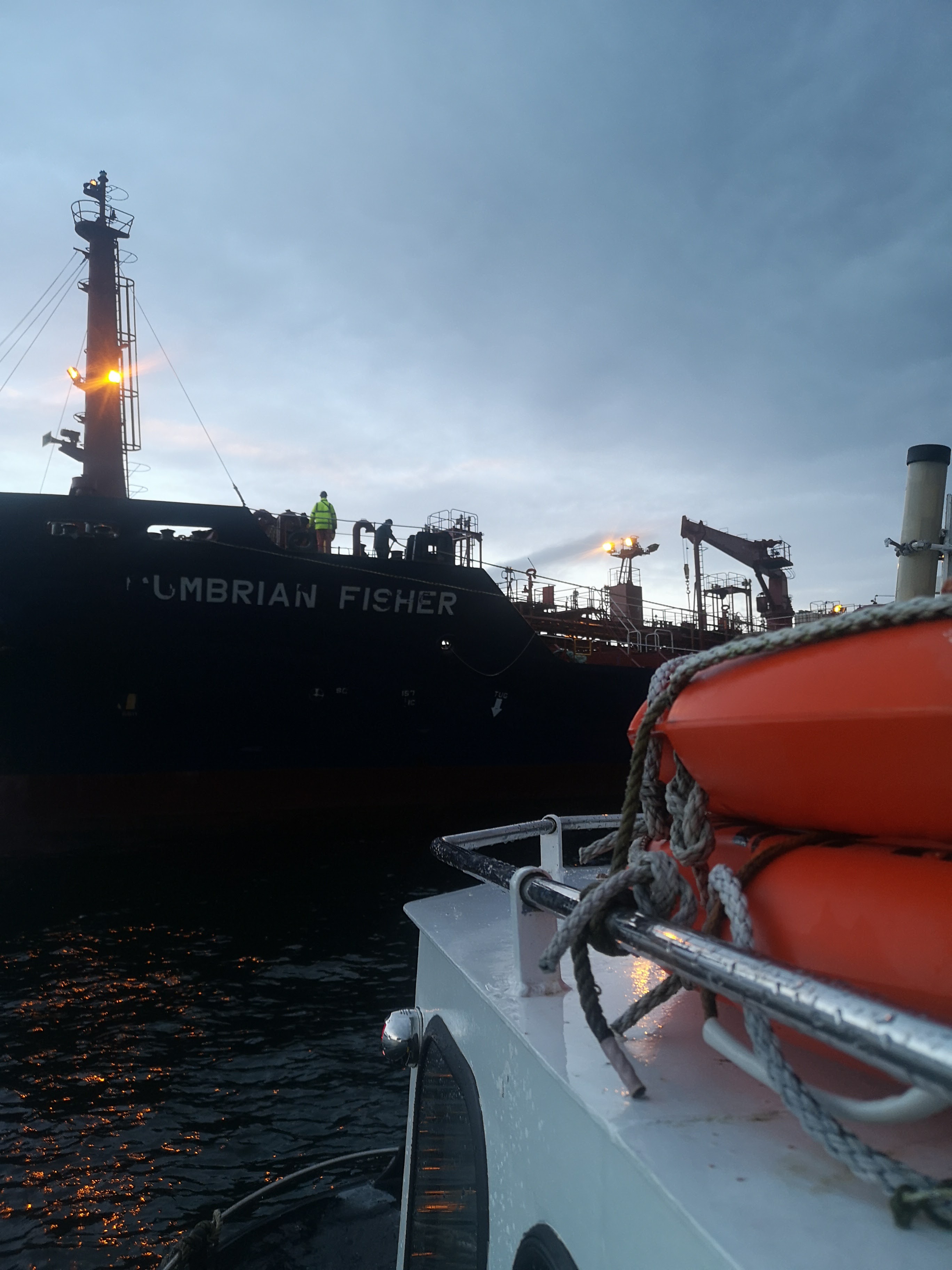
The photographs on this post are ones snapped early this morning in the course of one of my other jobs – helping to moor ships at a nearby NATO fuel storage depot. In many ways it is a strange job for me- dealing with military and quasi-military oil guzzlers, not to mention the fact that I have worked in offices for most of my life, so this kind of work is a real departure. I do it because my friend and neighbour, whose working boat I help to crew, asked me to, and also because I love being outdoors, even at all hours and in all weathers. I also love being so close to these marine steel monsters.

In this photograph, we have just taken lines from the ship to small platforms known as ‘dolphins’ (for reasons unknown to me) and now the winches on the tanker are taking in tension. It is a moment of transition, in which the ships normal habitat – the open sea – is replaced by a half-way place, tethered to the shore.

It is a tenuous link, but I was reminded once again this morning, of the nature of liminality.

Liminality is a state of transition between one stage and the next, especially between major stages in one’s life or during a rite of passage.

The concept of liminality was first developed and is used most often in the science of anthropology (the study of human origins, behavior, and culture). In a general sense, liminality is an in-between period, typically marked by uncertainty.

Liminal spaces remind us of our impermanence and the proximity of a close state of ‘otherness’. That is why many of us feel the spiritual urgency of cliff edges, of shorelines, of boundaries of all kinds. Authentic spirituality is often concerned not with the peaceful here and now as we might have hoped and expected it to, but rather with the process of change, which happens constantly, whether we like it or not.

I would go further than this and suggest that we also mistakenly equate spirituality with self-improvement or self-actualisation, and as such the change we hope and expect is centred on our own achievments or ego strengths. Whilst these might well be a useful by-product, I do not think that they should ever be our primary goal- certainly not for the Jesus kind of Spirituality, which calls us towards the other, particularly the weak and the broken. Consider the ‘gifts of the Spirit’ which Paul talks about in Corinthians, which are all about relationality. Or the ‘fruit of the Spirit’ in the letter to Galatians, which are again prmarily understood in the way we connect with the other…

But back to this liminality thing and hopefully how it might to connect to the hopefulness of Advent.

I mentioned in an earlier post my mothers health. She is now in a nursing home recieving palliative care in the last period of her life. You could say that she is in the most liminal state possible to imagine. We talk about this, she and I. I ask her if she is frightened, and mostly she is not. We talk about the firm belief she has that death is about transition, not termination. She is ill and weary and ready for the next, most of the time. At other times, she feels drawn back and held in the place by all those lines tied to her own ‘dolphins’.

We are not only this.

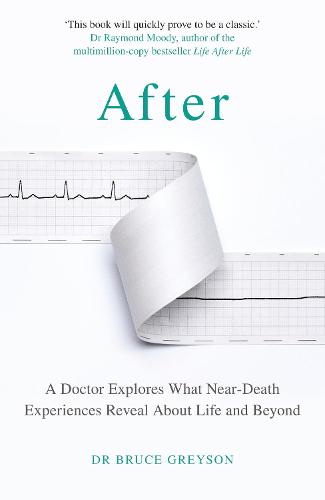
We have no proof of this, of course. Those who have tried to objectively prove God or the Great Beyond have always failed. However, perhaps we do have some clues that pose intriguing questions that are not easy to dismiss. A few months ago, I listened to this. Subsequently I read this book;

I don’t want to say too much about what I encountered in listening to the podcast/reading the book, except to say that it has changed something in me. Perhaps I am particularly receptive given my mothers situation, not to mention the recent death of my sister, but I challenge you to listen to the podcast yourself.

One thing is certain, in this season of waiting, change will unfold all around us. Eventually we too will face our own ultimate transition.

Between here and there, may you know peace.

Advent 9: Waiting (for a delivery)…

Today’s post is from the brilliant Steve Broadway, a friend I have never ‘met’ – in person anyway. We have history however, in that we have previously collaborated on another advent project, via the curation of Si Smith and also involving meditations by Ian Adams. You can download our efforts here.

Steve is a prodigious talent. He has been an architect, but left all this behind to make art. His sketches, often done ‘live’ in outdoor settings are alternated with photographs on his blog, which I highly recommend. It is like alchemy to me.

Today, Steve offers us this;

Here is what he had to say about the inspiration;

A TIME OF EXPECTANT WAITING AND ANTICIPATION…

We’ve recently moved and so this will be the first Christmas in our new home. We’ve down-sized to a third-floor apartment and share a core staircase with nine other apartments. We also now have Bristol cathedral as our new next-door neighbour (literally!).

Over the past week or so, I’ve become increasingly aware that Advent – that time of expectant waiting and anticipation – has taken on a double significance. The cathedral has posted lots of Christmas notices inviting people to join in its Advent and Christmas services and the bell-ringers have been very busy showing off their skills…

At the same time, the number of online packages being delivered to our ‘staircase neighbours’ has sky-rocketed (and left at the bottom of the stairs in significant numbers!) – a time of expectant waiting and anticipation for that online Christmas delivery?

Advent 8: held by music…

The one ‘social’ event I have attended fairly regularly in these Covid times is a music session in our local pub. We sit around tables and play folk music. The quality of the musicianship is… irelevant. I drag myself down there sometimes, but always come home the better for it.

Music is a big part of our advent. The arrival of the Christmas muzak. The promise of carols, just a short while down the road. For us too, there is another kind of Christmas music that makes and appearance; the sort that cuts through to the heart.

Over the Rhine’s Christmas albums for example;

Or Low, or Tracey Thorn, or our dear friend Yvonne;

At some point, Covid allowing, we will gather to sing together. I will play the piano as if wearing boxing gloves, Michaela will play her trumpet, in which we will hear whisps of that Salvation Army band on a busy shopping street… Emily and William will weave some sounds on Fiddle and guitar that will make me weep.

Music carries us. It allows us to feel. It becomes a place marker to give pause in the press of life.

(Musicians need our support more than ever… consider buying some actual albums this year.)

Here is a poem I wrote a year or so ago trying to make sense of the complexity of feelings that overwhelm me at Christmas and how music comes closer.

.

Peace be with us

.

In the quiet space between snowflakes

We listen to sad songs, and

Feel the prickle of tears, pushed

By beautiful broken things

Less than half-perceived

But never forgotten

.

In the warm space you made for me

I hide, guilty for those we left outside

Wishing our table was bigger

That every mouth was filled

Every refugee was home

Like we are. Hoping that

.

In the dark space between all those twinkling lights

Peace is waiting

Like scented water

Fingered by frost and ready to fall –

Ready to anoint our dirty old ground

Like Emmanuel

Advent 7: Bleak midwinter…

This morning, Michaela and Emily are off to do a pottery workshop for a medical practice over on the other side of Cowal, the lovely place in which were are privileged to live. It was booked as an alternative to a Christmas party, and Emily went off singing carols, declaring herself ‘feeling all Christmassy’.

I promised that this advent journey would be primarily about hope and I intend to stick with this promise. But hope is born in the most unlikely places. How about Britain, in 2021? The Britain of coronavirus, Brexit, unholy hostility fostered by people in power towards the weak and broken? Where do we even start to look for hope, when our news outlets and social media bombards us with ever more extreme versions of the negativity we have already been consuming?

It is everywhere, when we choose to look for it…

…but much like it was two thousand years ago, it is a very different kind of Messiah that we will encounter from the one that was expected. He will not come as a superhero, or a movie star, or a charasmatic game changing politician. He will have no fanfare, no three-point sermons or fancy image managed by a team of consultants.

He will be where the weak and broken are. He will be listening to their conversations, taking a sip from a circulated can of special brew and the odd drag from the stubs gathered from the gutter. He will weep with those who are weeping and laugh out loud with those who have also noticed the absurdities of modern life. He will see each small acts of kindness and quietly flush with pride.

I wrote a new version of my favourite carol last Christmas. A few days later I overheard my son singing it and it broke me open. Here it is, full of humanity. Full of hope.

.

Bleak midwinter

.

What can I give him, wealthy as I am?

Does he need an i-phone, or a well-aged Parma ham?

Should I bring him trainers, a pair of brand-new jeans?

Or Halo for the X-box (whatever the hell that means)

.

In a tower block in Camden, a woman breaks her heart

Her credit score is hopeless, her marriage fell apart

Her cupboards all lie empty, her clothes are wafer thin

Her kids can thank the food bank for turkey from a tin

.

If I were a kind man, I would bring good cheer

I would house the homeless, if for only once a year

I’d buy my cards from Oxfam, for virtue is no sin

I’d send some Christmas pudding to poor old Tiny Tim

.

In the bleak midwinter, frosty winds still moan

And Mr Wilson’s waited ages to get the council on the phone

He’s worried cos his boiler has given up the ghost

And since Mabel got dementia, she feels cold more than most

.

If I were a wise man, I would do my part

I’d sell that gold and incense and invest it for a start

In gilt-edged annuities and solid pension schemes

For without good fiscal planning, what can ever be redeemed?

.

In a lock-up by the roadside a bastard-child is born

To another teenage mother whose future looks forlorn

A host of heavenly angels up high in star-strewn sky

Sing blue-scale hallelujahs as lorries thunder by