New pod is out! This time, a lovely conversation between two good friends about the poetry of the much-loved writer Mary Oliver.
If you are not familliar with her work this pod will be a great introduction, but even for those of you (like me) who know many of her poems, this chat will open much more to you.
The chat is hosted by Proost’s own Ali Matthew, speaking to her friend Liz Hoare.
Liz recently retired from teaching spiritual formation at Wycliffe Hall, Oxford where she was also Dean of women students.
Ordained in the Anglican Church, her parish ministry has been in the rural Church in the north of England. She now works part-time at St Bede’s Pastoral Centre in York as a member of the ecumenical spirituality team with a focus on spiritual direction. A life-long reader of poetry and novels, she loves being outside in the garden or walking the family dog. Liz is married with a young adult son.
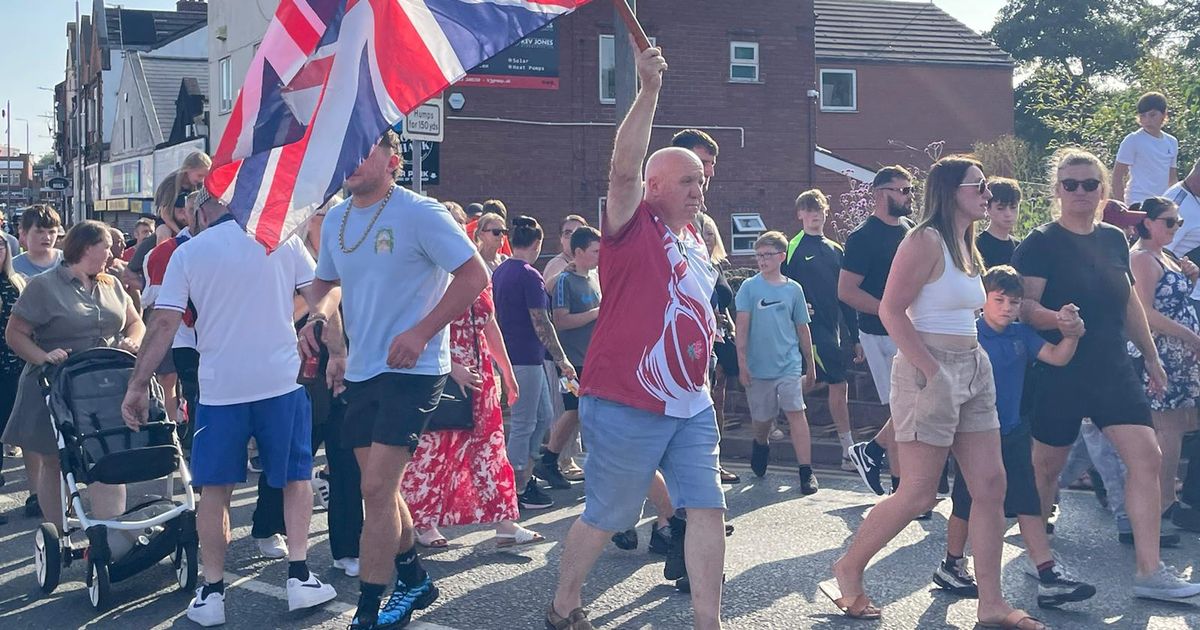
Over the weekend, over 300 people marched through my home town of Sutton-in-Ashfield in a protest against… well that is not quite clear. Immigration? Sexual assault of a minor? A hotel that might/might not be taking in asylum seekers? A loss of white male identity?
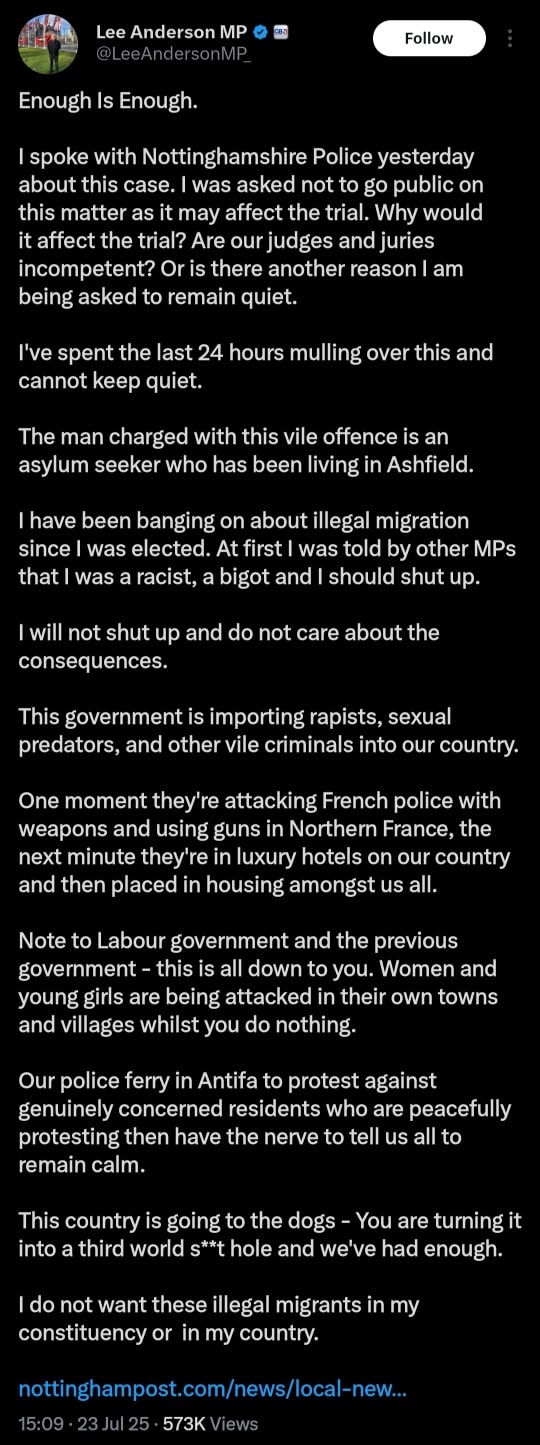
What we do know is that it all started with this post from the local MP, Lee Anderson.
There is so much about this post that is misinformation, intended to fuel a particular narrative. It worked.
There is a real question of whether Anderson broke the law in revealing this information – if indeed it is true. Truth Against Hate (an organisation that seeks to work against racist amd hate) puts it this way;
…the individual in question has been charged, which means the case is now active under UK law. That means public statements which risk prejudicing the trial could be in breach of the Contempt of Court Act 1981.
Anderson also links the case to immigration and asylum policy, which some legal experts say could inflame tensions or risk stirring up hostility. We are not accusing anyone of a crime, this post simply asks whether his actions are appropriate or lawful.
If you believe this should be looked into, you can report it to your local police or via the national service:
This story has not been picked up (as far as I can see) by national news outlets – apart from a story in the Mail and the Express who have chosen to focus on the fact that a woman wearing a union jack dress was denied entry to a Wetherspoons pub in the middle of the town as police were trying to reduce tensions and alcohol intake. Of course, the right-wing red tops chose to depict this in a rather different kind of way.
As I watched the march unfolding via facebook, and messages from Michaela’s relatives who still live there, one thing that seemed obvious is that most of the people on the march – apart from a few drunk thugs – thought they were doing a good thing. They have been fed so many lies and half truths by Anderson and countless news and social medial outlets – often funded by shady ultra right wing sources – that they feel themselves to be the good guys in the face of some kind of liberal conspiracy. One sign being waved on the march read ‘Not far right, just concerned’.
The idea that the ‘hoards’ of young men ‘flooding’ into the country via the small boats constitute an existential threat to our country, particularly to our young women, has been pushed relentlessly via outlets such as GB news. This exchange is rather instructive;
The thing is, this is not new.
A certain kind of politics has ALWAYS sought to portray ‘the other’ as ‘the problem’. We know this of course, but yet it works anyway. The question I find myself asking is WHY does it work? How are we so easily taken in?
The answer is partly to do with fear. Firstly the fear of the black and brown outsider, secondly the great fear of those who already feel left behind and excluded of someone else replacing them, getting hold of those things that are scarce and almost out of reach. Housing, the NHS, benefits, jobs, education- exactly the themes that much of the narrative on GB news cycles through over and over again. They know that if people who feel already disadvantaged are presented with information that others are getting what they can not have for free, this will create a reaction – whether or not it is true.
I will not link to any of the news articles or videos, but you do not have to look hard to find articles and social media videos with titles like ‘Immigration is obliterating our communities’. It is all the same fear mongering, targetted at people who already feel excluded and worried about their futures. It is like spraying petrol at a hundred candles. Most commentators feel that this will inevitably lead to violence.
There is more though – for this to be believable, Anderson, Farage and their chums on GB news need ‘experts’ who can back up their outrageous claims with ‘research’ and apparently informed opinion. Much of this is filtered through so called ‘think tanks’ of the Tupton street variety.
The point of this piece though was to connect this post with the one I wrote yesterday. Ther report in The Guardian revealing the work to understand the links to racism and slavery at Edinburgh University.
Today, another article concerned itself with information released about the use by the far right of long ago discredited pseudo-science such as Phrenology and Eugenics.
The advent of modern genetics and human population data has shattered the idea that there are biologically distinct groups, or that humans that can be neatly categorised based on skin colour or external appearance. Genetic variation between populations is continuous and does not align with social, historical and cultural constructs of race. Race, as a genetic concept, does not exist.
Yet, says Angela Saini, author of a book on the return of race science, “people don’t stop believing falsehoods just because the evidence suggests they are wrong”. As IQ testing became the metric of choice for those seeking to draw conclusions about racial differences – often based on biased or fraudulent datasets – old, discredited arguments resurfaced.
In other words, the ways our Empire ancestors justified conquest and colonisation are still being used to justify the ‘othering’ and dehumanising of black and brown people – this time to gain political advantage.
With the recent rise in ethnic nationalism and the far right globally, a resurgence of interest is under way into theories of racial exceptionalism. Last year, the Guardian revealed that an international network of “race science” activists, backed by secret funding from a US tech entrepreneur, had been seeking to influence public debate. Discredited ideas on race, genetics and IQ have become staple topics of far-right online discourse.
“The ideas have absolutely not changed at all,” says Prof Rebecca Sear, an anthropologist at Brunel University of London and president of the European Human Behaviour and Evolution Association. “If you can provide a measurement – IQ, skull size – that helps give racism a respectable gloss.”
I had a conversation with a dear friend recently about how we might approach information or facts on some of this material. I suggested to her that the word ‘hermaneutic’ is important. (There is more about the word here.)
We look at everything through a set of goggles – most of the time ones we don’t even know what we are wearing. This means that how we read things is distorted in ways that we are often only partially aware of.
It also means that information that we (and others) give out – including this blog – is shaped by the hermaneutic of the person or organisation that provided it. In this case, it then becomes important to try to understand this as a means of understanding what is being sold. Facts are dangerous things, easy to use in ways demanded by a particular hermaneutic. If we can understand the nature of that hermaneutic, then perhaps this might enable some compensational caution when these facts become too convenient for a partucular narrative- particularly when this create victims out of victims and suits the ends of people who already have too much power.
This is Castle House, the large holiday home built by James Ewing, Lord Provost of Glasgow, as a holiday home in 1822. It put Dunoon on the map, literally, and became the start of a move to Cowal peninsula (where I now live) by many of Glasgow’s great and good, who built their versions of the Castle all along the shorelines in every direction.
A few months ago, Michaela and I went to a talk given in Castle house – which is now a museum – by Dr Stephen Mullen, on the subject ot the aforementioned James Ewing. In this talk, Ewing was revealed as a particularly unpleasant figure, whose power and influence was built on vast wealth built from slavery in Jamaica. More than this, through his political activities, clubs and networks, he was able to delay the abolition of slavery for decades, as well as being part of the negotiaton that led to compensation being paid by the government to slave owners.
His ancestors still own plantations in Jamaica to this day.
This is a version of some of the chat from Stephen Mullen- he is a very engaging speaker.
In the wake of this inglorious wealth building, Ewing then turned to philanthropy. He became the benefactor to many good causes, including Glasgow University, who have been through a very painful process in 2018 (assisted by Mullen) of attempting to divest and compensate enslaved people for the wealth that it still owned from their brutal enslavement.
It has taken Edinburgh University longer- today, the role of leading figures in promoting racist and zenophobic ‘science’. This from today’s Guardian;
The University of Edinburgh, one of the UK’s oldest and most prestigious educational institutions, played an “outsized” role in the creation of racist scientific theories and greatly profited from transatlantic slavery, a landmark inquiry into its history has found.
The university raised the equivalent of at least £30m from former students and donors who had links to the enslavement of African peoples, the plantation economy and exploitative wealth-gathering throughout the British empire, according to the findings of an official investigation seen by the Guardian.
The inquiry found that Edinburgh became a “haven” for professors who developed theories of white supremacism in the 18th and 19th centuries, and who played a pivotal role in the creation of discredited “racial pseudo-sciences” that placed Africans at the bottom of a racial hierarchy.
It reveals the ancient university – which was established in the 16th century – still had bequests worth £9.4m that came directly from donors linked to enslavement, colonial conquests and those pseudo-sciences, and which funded lectures, medals and fellowships that continue today.
Does any of this matter? Is it not just ancient history, from different, less ‘woke’ times? Of course, there are many voices – historical, political, journalistic – that would loudly proclaim processes of revisionism such as those undertaken by the two universities above as political correctness gone mad.
Some of this argument has polarised around the renaming of streets, or the removal of statues. The issue has become totemic in the culture war that is raging in our politics – a convenient way to create outrage, and to appeal to a kind of empire nostalgia for Great Britain and her glorious history.
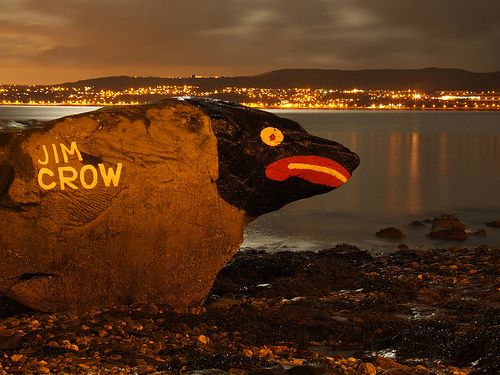
Dunoon had its own battle, over this racist Victorian grafiti which survived until only a few years ago. Some here will still insist it was harmless fun (including local historians!)
Presently it feels as though the anti-woke warriors might be winning the culture wars. Views that might once have been politically radioactive are now seen as vote winners. Trump and all his imitators compete to say ever more outrageous things, and point to any attempt to understand the darkness that we unleashed on the world through the Empire as ‘the problem’ not the solution.
I am weary of culture wars. I wish we can just agree that some things are good (compassion, justice, peace) and some things are bad (conquest, slavery, exploitation.) Once we do this we also have to acknowledge that the privileges we enjoy in this country- despite the perception of decline – were built on the bad things more than the good.
What we do with this conclusion marks us for generations.
Imagine stepping away from the digital world and immersing yourself in the raw beauty of a tiny Hebridean island. What if you went there with a purpose, and deliberately called it a ‘pilgrimage’? What if you split your time there between laughing with friends and times of deep silence? What impact would such a time make in your life? Would it just be a nice interlude, or might it start to shape you in more profound ways? How might relationships that you formed there impact survive back in the real world, both in terms of the divine and profane?
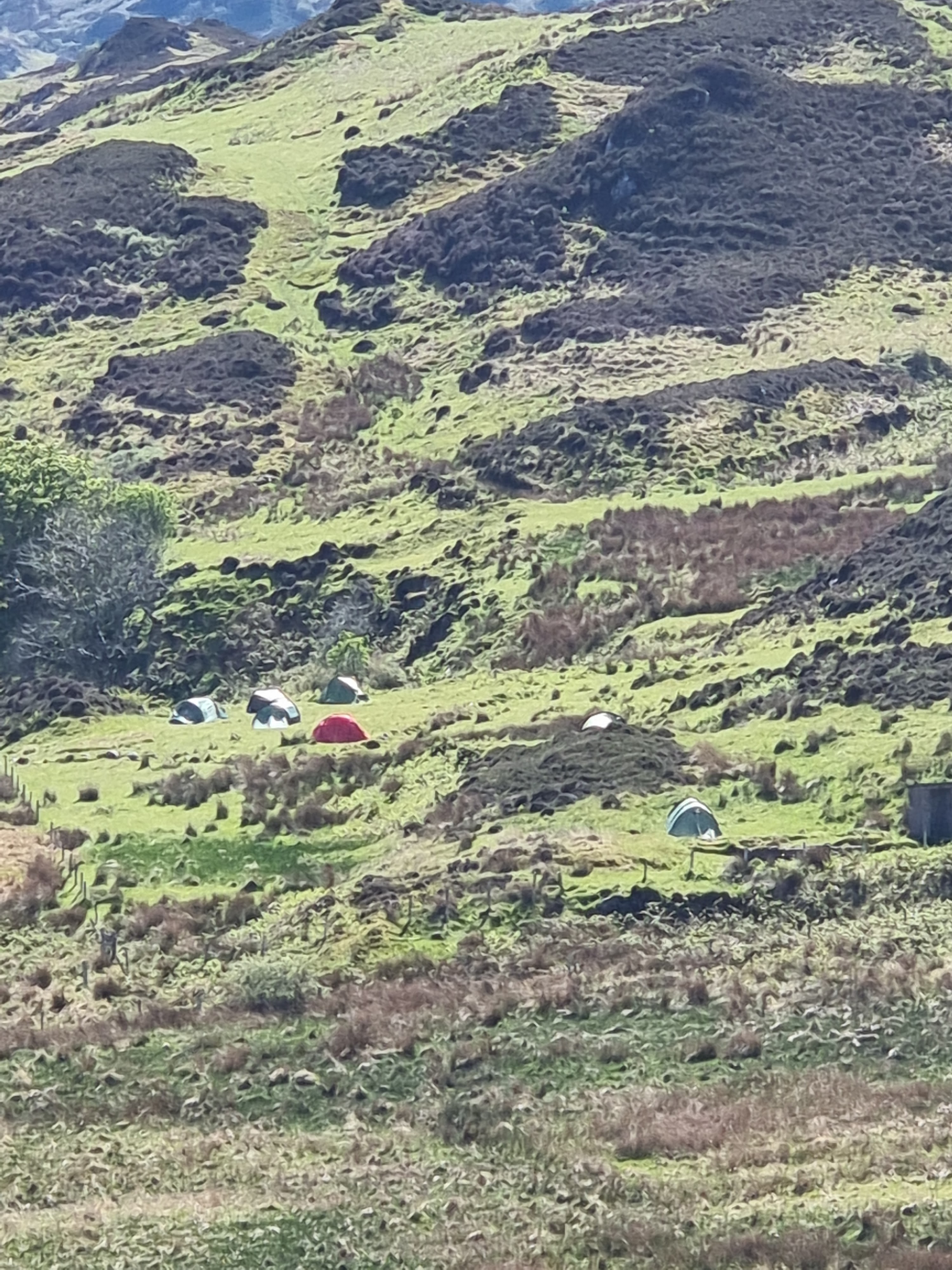
On our most recent retreat, back in May, I took the opportunity to ask some of my friends these questions. We went to the island of Lunga, part of the Inner Hebrides, just the other side of the ‘Grey dogs’ tidal race from its more famous neighbour, Jura. This remote location, with its sense of wild beauty, provided the perfect backdrop for our trip, and this time, the sun was shining throughout. As we explored the island, we were reminded of the rich Celtic heritage and the spiritual significance of these islands – and how they connect us with an older spiriuality that was always connected to earth in ways that we have largely forgotten.
The retreat was more than just a getaway; it was a gathering of friends, old and new. We shared stories, laughter, and deep conversations, creating a temporary community that felt like home. I have often reflected on how these people, some of whom I see only once or twice a year, have become for me a kind of Anam Cara- deep soul-friends of the kind that ‘know’ me in ways that it is impossible to fully describe. Some of this is fostered by the island – the exposure and shared need for each other it places in us but also by the raw uncouth toilet humour that has two superpowers – it is very funny, but also strips out all pretense.
These video’s were recorded in a hurry, right at the end of our trip, as I it felt like an imposition, an indulgence. I am very grateful that some of my friends were gracious enough to take part.
Regular readers of this blog may remember previous articles and even podcast interviews with Dr. Katy Cross, who has been undertaking research trying to understand paths taken by people who leave church- the meaning they make and find, the connections they still seek and so on.
Katy is now towards the end of her research, and is entering a ‘creative response’ stage. There are a few ways you can be involved, but the first meeting on-line is Tuesday the 29th at 6PM. If you are on your own journey beyond church, but feel like understanding this better in community then this might be just the place for you.
There are two ways folk can take part:
By attending online workshops to discuss prompts and reflect together. You can sign up here to join in.
By writing up your own reflections in your own time, and emailing these to Katie here.
As above, the first group is meeting on Tuesday 29th July at 6pm on MS Teams.
We hope that Katie will be able to join us on the Proost podcast soon to collect together some thoughts and conclusions about this very important research.
Why do I think this chat is so important? As with this post, there is lots of chat just now about what is emerging in terms of organised religion in the UK. After a long decline, some say (on currently very limited evidence) that there is a ‘quiet revival’ taking place here, with young people, and young men in particular, flocking back into Churches. If this is true – if we are seeing a reversal of the decades-long social trend away from organised religion – then it seems important to understand this and the social forces that might be at work.
On the other hand (and at present I remain in this camp) if this research turns out to be flawed, we also need to understand why so many people within the Church have siezed on it with such uncritical enthusiasm.
Meanwhile there is another conversation that is taking place – for example in Katy’s research – with those who have been activists, leaders and pioneers within the church, but no longer feel able to be part of formal religious structures. What happened ot these people? Where are they finding meaning? How might they shape and influence what happens next?
Even as I write this, I think too of dear friends who continue to work WITHIN the Church, to carry forward acts of grace and mercy, to serve an aging population with critical needs, to run food banks and toddler groups, to set up refugee support groups and to make simple beautiful acts of worship that enable people to deepen their spiritual experience. I think how exhausted some of them are, and how abandoned the conversation above makes them feel…
Things are changing, shifting, shinking and unfolding at the same time. This has always been the case, but it does feel like we are standing on anther threshold. Whilst we mourn what is lost, we can also be excited about what will come.
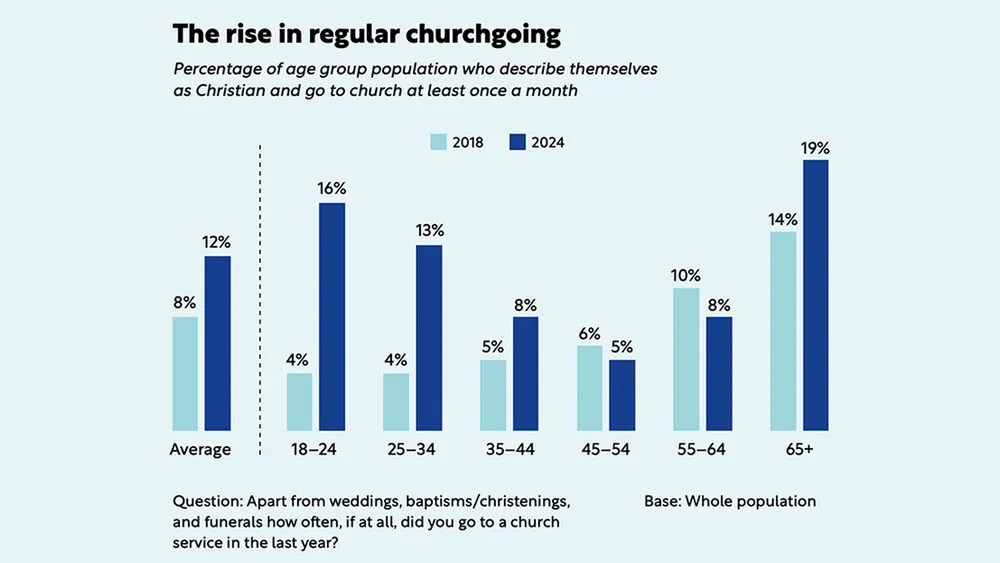
The Bible Society commissioned a survey from Yougov – a legitimate and credible polling organisation – which they claim ‘busts the myth of church decline’.
Here are the headline claims, using the somewhat bombastic language from the Bible Society itself.
Key findings from The Quiet Revival
Co-author of The Quiet Revival Dr Rhiannon McAleer says the report shows that what people believe about Church decline is no longer true. ‘These are striking findings that completely reverse the widely held assumption that the Church in England and Wales is in terminal decline,’ she said.
‘While some traditional denominations continue to face challenges, we’ve seen significant, broad-based growth among most expressions of Church – particularly in Roman Catholicism and Pentecostalism. There are now over 2 million more people attending church than there were six years ago.’
More men than women go to church
The Quiet Revival shows that men (13 per cent) are more likely to attend church than women (10 per cent). And as well church decline being reversed, the Church is also becoming more ethnically diverse, with one in five people (19 per cent) coming from an ethnic minority. Close to half of young Black people aged 18–34 (47 per cent) are now attending church at least monthly, according to The Quiet Revival.
It’s also great to see that Bible reading and confidence in the Bible have increased as well as church growth. Some 67 per cent of churchgoing Christians read the Bible at least weekly outside church.
This is the key statistic. It would seem to point to a massic uplift in church going, particularly in the 18-24 range. Young men now seem four times more likely to go to church than pre pandemic – at least according to this survey.
This rather startling survey has been greeted by some with incredulity. It seems to be describing a trend that has reversed a decades long decline in church attendance in the UK. Many have greeted it with rejoicing. Could this really be true?
There have already been webinars and conferences that are using the term ‘quiet revival’ to describe what people are claiming as a ‘move of God.’ The lesson, it is claimed, is that this is the beginning of an awakening of spiritual seeking in younger generations, and evidence of the fact that yound men in particular are searching for meaning.
This all sounds like a good thing, right?
We might not have noticed it, but are we seeing an actual revival?
So why do I feel a deep sense of scepticism? Is this just my post-church cynicism? I am on record as having very mixed feelings about the word ‘revival’ (this from 11 years ago for example) after being previously part of expressions of religion that saw this as the only valid aim of Christian activity.
I think it is much more than that, however. A long time ago I was a social science graduate, and if we had come accross a piece of research or a survey that had suggested a social phenomenon that was different to all other sources of data, we would have immediately placed it on the ‘need more examination’ pile. We would have to look at other sources of evidence and test any conclusions that might be made by exposing them to wider scrutiny and comparison. One survey is never enough to declare a brand new social trend…
…particularly when other sources of information seem to directly contradict this survey.
For example, the British Social Attitudes Survey – the largest and most authorative survey of social trends in the UK – found no evidence of an increase of religious attendence, noting instead a continual decline.
It seems I am not alone in my sceptism. More or Less, the BBC radio 4 programme that explains – and sometimes debunks – numbers and statistics used in public life spent some time examing this issue today- it is well worth a listen.
Here is how the Church Mouse frames the problem some of us have with this survey;
The most extraordinary claim is that, in the past six years (i.e., since just before the pandemic), the Church in England and Wales, across all denominations, has grown by more than half, from a total of 3.7 million regular worshippers to 5.8 million. The report says that it is largely the young who are driving this, in contradiction to our previous assumption that every generation is less religious than their parents.
The evidence for these claims comes from a large survey undertaken by a highly respected polling organisation, YouGov, that whether they had attended a church in the past month, among other questions. The same question set and methodology six years previously reveals a 56% increase in attendance.
And none of us noticed.
The Church Mouse goes on to say this.
Some of the churches where the Bible Society reported significant growth actually count the number of people who walk through their doors, and the numbers don’t match.
The most robust data set by a UK denomination is from the Church of England. Each church counts the number of worshippers during the same period each year, and the numbers are compiled to create a robust, consistent data set. The data shows that over the past six years, the Church has shrunk by between 10-20%, depending on how you count it…
…The same methodology can be applied to the data for the Catholic Church, the next largest denomination. The report said that it has grown from 23% of attendees in 2018 to 31% in 2024, meaning it would have grown from around 850,000 regular attendees in 2018 to 1.8 million in 2024, spectacular growth of almost a million regular worshippers.
The Catholic Church in England and Wales reported regular mass attendance down around 20% from pre-pandemic levels, to 555,000 in 2023 from 702,000 in 2019.
Between them, these two denominations have reportedly grown their regular attendance by almost 1.5m people, out of the total reported growth (According to the Bible society survey) of 2.1m, or over 70% of the total growth. But Church attendance data simply does not back that up.
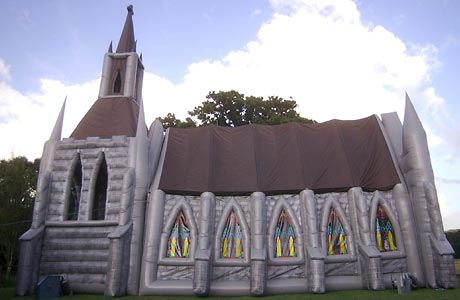
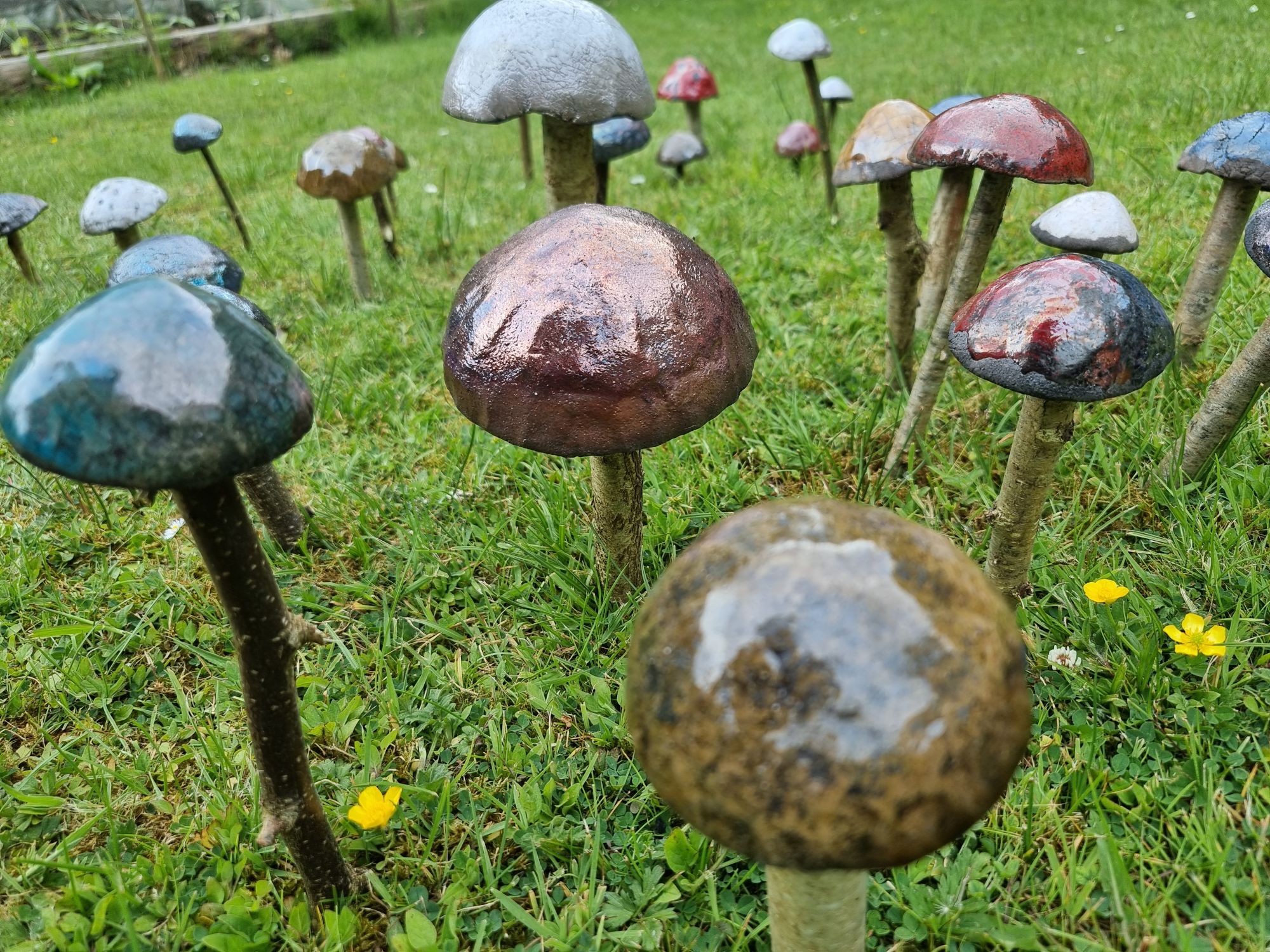
Is this all hot air intended to inflate church ego? (Sorry, could not resist in relation to the photo above.)
The simple answer is that we do not know.
But either way we need to explain why this survey is so different. Here are the possible reasons for this as I see them just now.
Data collection problems/survey bias
Yougov knows its business, but rougue findings from one-off polls and surveys are certainly possible.
Many have pointed out that saying you go to church is not actually the same thing as going to church, and people do seem to exagerate their church attendence. Might the fact that apparently more people have exagerated their attendence in itself be an indication of church being a more desirable option?
Or perhaps there was an error in earlier surveys, and in pew numbers collected by churches? All of them? Over decades?
Timescale
Has the survey picked up sometihng interesting that has happened in the last year? has the decline flattened out? Is there a new trend? The comparison figure of actual numbers collected by churches are all earlier. This seem implausable but…
What does ‘church attendance’ actually mean?
Must we include the many on-line expressions of faith – apps, streaming, etc etc? If so, perhaps people are now exposed to wider digital forms of church and so are including these in their answer?
What about Churches that don’t collect or publish stats?
Perhaps the increase is all in the non conformist, independent churches? There is other evidence that some of these are indeed growing, particularly independent and evangelical churches. The trouble is, this is from a lower base, and the Bible Society survey asked people to list their religious affiliation- leading to the claim of growth in mainline churches that simply is not evidenced by other sources.
Young men?
I have a slight discomfort about this, in that there appear to be other trends happening in that age group. There’s a growing divide between young men and women, with men increasingly drawn to conservative, traditionalist or right-wing political movements (while women tend to lean more liberal.) This trend, linked ot the influence of ‘Celebrity Christians’ such as Jordan Peterson is not one that I find comfort in. Might this be the reason for young men apparently seeing Church in a more positive light? The attraction here might then be narrow moral certainty rather than the teachings of Jesus.
This survey is interesting, but we need to treat it with a great degree of caution. There are major difficulties with drawing any conclusions based on this one survey, and the Bible Society itself has used language and great fanfare that I find highly questionable.
Whatever is going on is not revival.
It might hint at a change to come, but only time will tell.
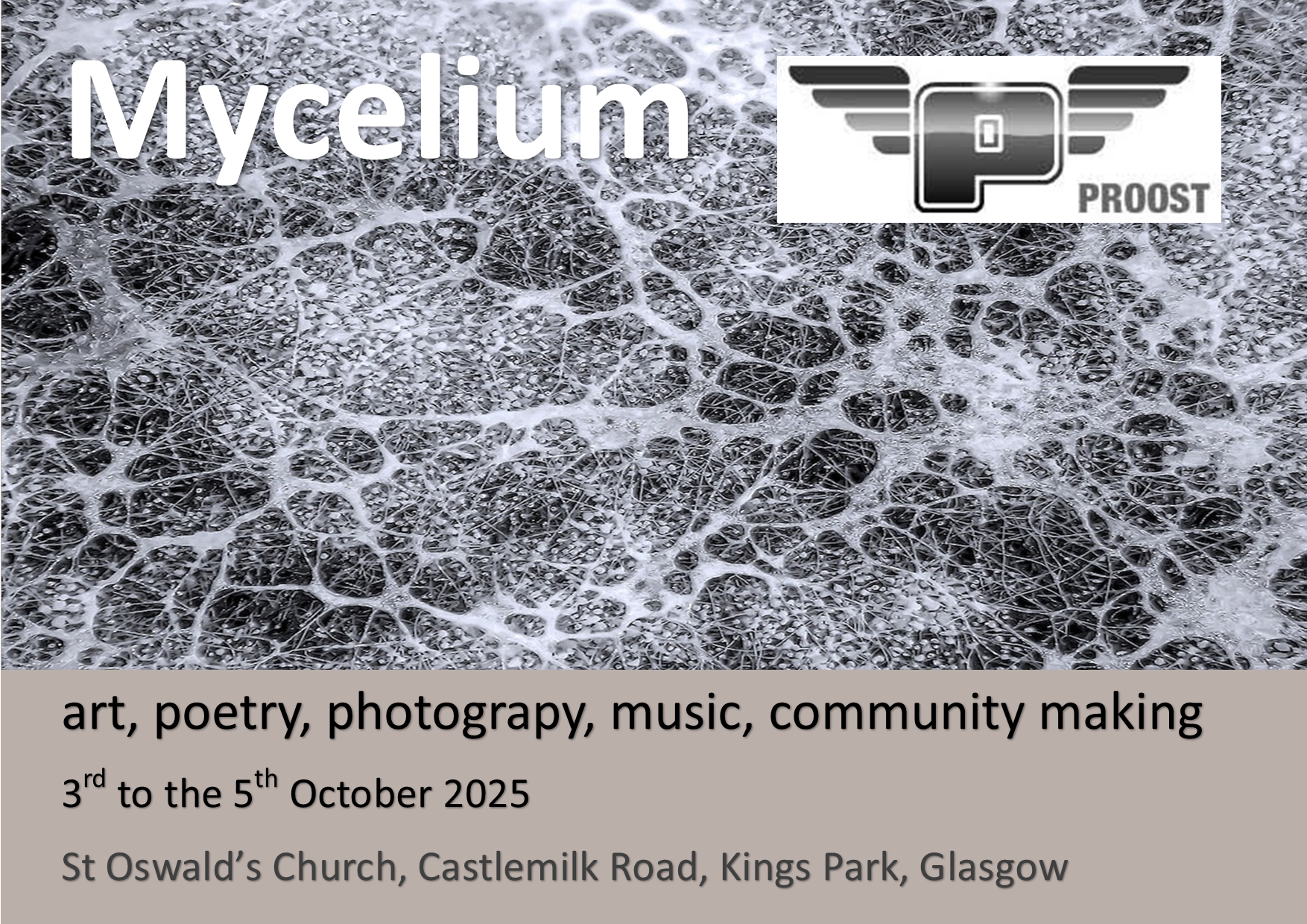
Here is a quick update on the Proost meet up for artists in Glasgow. First, the key details;
PROOST MEET UP, 2025
Date: 3rd October 2025 (6:00 PM) to 5th October 2025 (4:00 PM) Location:St Oswald’s Episcopal Church, King’s Park, 260 Castlemilk Rd, Glasgow G44 4LB
Hosted by: Proost, in partnership with local Episcopal and Church of Scotland Churches Cost: The gathering is free, with the aim of making this gathering as accessible as possible for all. Accommodation: Informal hosting options are available for those who need them, and we’re happy to provide guidance on nearby accommodation options to help you make your stay as comfortable as possible. Let us know how we can assist you!
WHAT IS IT ALL ABOUT?
Many of you will remember Proost as it used to be- a publishing platform established on the edge of what we used to call ’emerging church’ or ‘missional groups’ or ‘alt worship’. It gathered a community of creatives who made poetry, art, video, music, liturgy and much more. For many of us, it gave a sense of belonging and connection – and ways to collaborate with other artists in both gathered and dispersed events. We live in different times now, but if anything, creatives need these connections more than ever.
We need art that engages, that challenges, that allows us to go deeper.
We need to hear from people who are otherwise marginalised.
We need to speak of justice and peace, so challenge where appropriate.
We need to take allow our art to connect with the deep spirituality of the earth.
The landscape of faith and culture has changed a lot in the decades since Proost first came on to the scene. Communication technology has made publishing easier, yet at the same time so much harder because of the sheer volume of content being produced. Funding streams and generating income is a massive challenge. Against all this, we have a powerful tool called community.
This is our dream for a new Proost- the means by which we combine our voices, our creativity and our resources to transcend the limitiations imposed by our context in service of justice. We think this is a holy pursuit, made ever more urgent by the crises gathering around us- wars, climate breakdown, inequality and political/economic impotence.
Much of this discussion has been taking place via two podcasts…
… and we have made a start with some collaborations around Advent and Lent.
But we feel that community also needs to make physical connections. We need to come together in one place, to share stories, to make plans and art together.
WHAT WILL WE DO?
The idea is simple- choose a theme and then invite people to respond to it using their art – music, poetry, painting, dance, pottery, photography, animation, video – or anything else.
We will make space for as many contributions and expressions of creativity as we can comb together in the form of installation or performance. The only limitation is that you need to bring those contributions in person!
We are so grateful to St Oswald’s Episcopal Church (King’s Park, 260 Castlemilk Rd, Glasgow G44 4LB) in partnership with local Episcopal and Church of Scotland Churches for generously hosting this weekend.
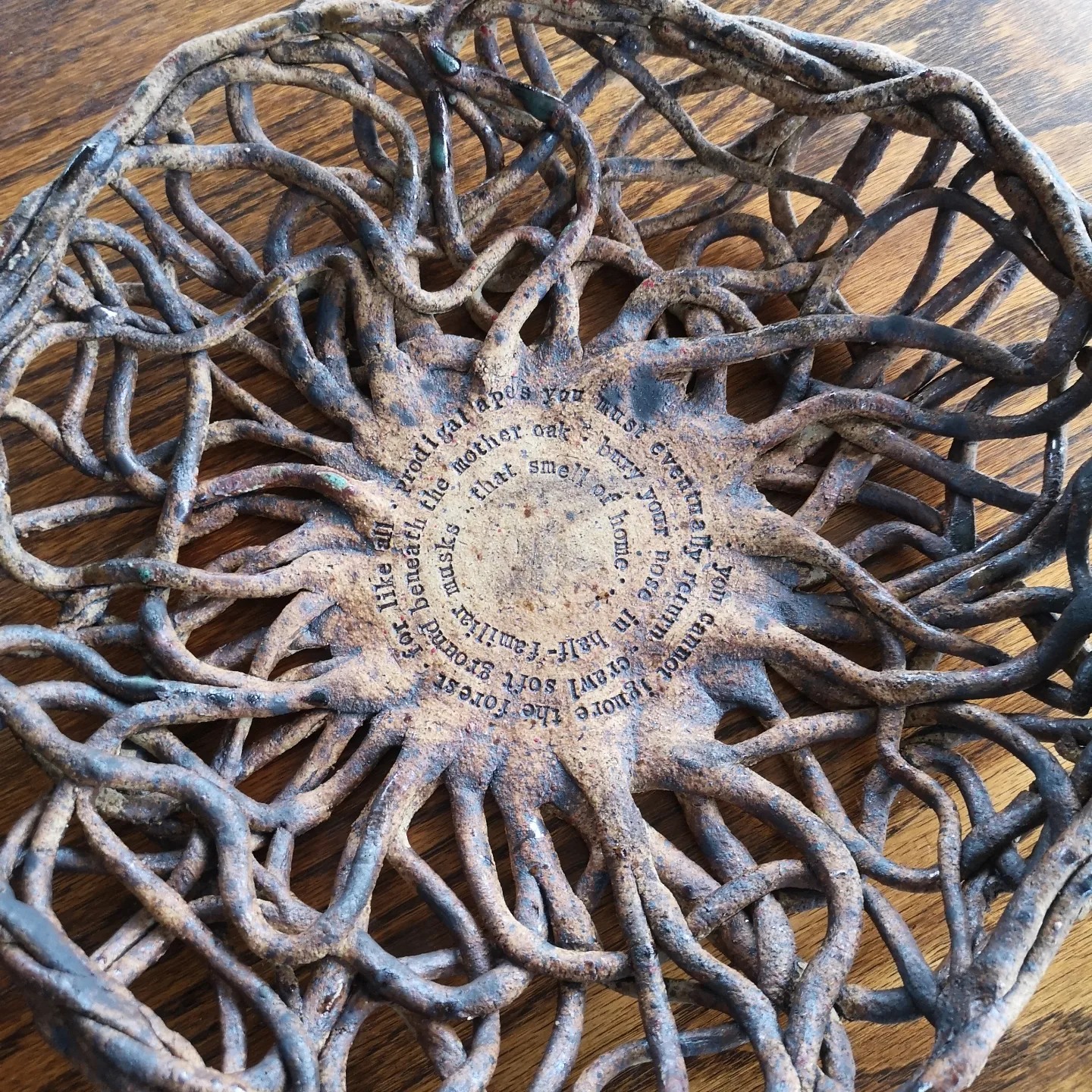
Installation space will be in and around the St Oswalds. (This will include a large mushroom-related ceramic offering!)
Performance opportunities will be via 1. A great big Ceilidh on Saturday night – dancing, hopefully interspersed with all sorts of other poems, songs and stories. 2. Sunday afternoon event. Both will be open to local people.
We want to keep Saturday day-time for discussion and chat amongst Proostians – working out together what seems important, and how this project might progress. There will be themed discussions led by different members of the team.
WHY MYCELLIUM?
This is the theme we have chosen for our meet up. Some of the reasons for this will already be in your heads, but here are some ponderings that might help unleash your own creative responses.
Soil science is advancing rapidly – we now need to stop thinking of soil as just inert dirt. It might be more accurate to regard it as a living entity all on its own – but if that is a little fanciful surely we need to understand that it is a complex ecosystem- one which almost all other land based life on the planet depends upon. Without soil, we die. Crucially, the role of mycelial networks in connecting, communicating and making communalities is increasingly being understood to be so much more important than previously thought.
Mycelium is the way that trees ‘talk’ to one another. Think about that- one life form relies upon another lifeform in order to share nutrients, warn of disease and so much more.
We modern humans tend to think about the natural world as being characterised by competition, the elimination of weakness and ‘survival of the fittest’. We have taken Darwinian ideas, misunderstood them and used them to justify our economics, our politics – even our spiritualities. The more we understand about mycelium, the more we need to think again.
Perhaps the ‘survival of the fittest’ might better be understood to mean that we survive best when we seek to fit with our context – when we seek connection and community.
What are we connecting with? Does mycelium only represent a way to understand human interrelatedness – with both each other and with the wider natural world? I would argue however that we might consider this connection to be much deeper than that.
These ideas have always been at the heart of the Christian story, not least the mystical traditions and the Celtic wisdom traditions, both of which have long emphasised that it is through God that all things live and have their being. In the Celtic understanding, God is to be found at the centre of everything, even us. We encounter him by going deeper.
Richard Rohr, in his magnificent book ‘The Universal Christ’ show us a different window into this way of understanding, in which the Christ is ‘another name for everything’ – the cosmic consciousness through which the universe expanded and came into being. We are all held in this commonality and invited to participate according to the deep truth of love.
As followers of Jesus, there seem to me to be so many other resonances here.
Unity and Oneness:
Jesus called for a unified community, where individuals, despite their differences, are “perfectly joined together” in their minds and judgments.
Body Analogy:
He used the image of a body with many parts, each playing a vital role, to illustrate the interconnectedness and interdependence of his followers.
Love for Neighbour:
Jesus emphasized the importance of loving one’s neighbour as oneself, which encourages cooperation and mutual support within a community. Compassion and love are a natural law that we need to be drawn towards.
Serving Others:
He demonstrated the importance of serving others, highlighting the value of helping those in need and working together for a common good.
Collaboration and Partnership:
Jesus encouraged his followers to work together, emphasizing the importance of partnership in living as agents of the Kingdom of God.
HOW TO GET INVOLVED?
We need ideas, songs, poems, film, images, dance, liturgies. We will ‘curate’ these in advance and include as many as we can. HOWEVER- this is about community, so we need you to bring your ideas, not just to send them. We will make the event together.
We have some very limited funding, and the offer of some accommodation. We don’t want money to be an obstacle for anyone.
This is the start of a new thing. Come and help shape it. On saturday we want to explore ideas together- to talk of Poesis and dream of how art and spirituality move togther and miight lead us forward.
This will not commit you to anything- we will keep you informed, that is all.
If you have ideas you want to talk through,or want to know more, or have questions, we would love to hear from you- you can get in touch via the website, or drop me a message via the comments below, or send me an e-mail at thisfragiletent@com
I have just listened to the latest Proost poetry podcast, this time, a conversation between Proost’s Talitha Fraser and the poet/dancer/coreographer/community psychologist/film maker Justina Grayman. It is one of those conversations that you just have to let wash over you- full of deep insight and beautiful poetry.
As well as her poetry, Justina makes art like this;
You should check out Justina’s website for other poems, dance films and perhaps the best – most creative – profile I have ever read.
Feeling powerless in the face of such egregious injustice can result in a loss of trust or faith, not just in governments and institutions but also in the moral order of the world, and its ability to protect children. I wonder what the impact of this will be: will it, as certain politicians no doubt hope, result in a numbness that presents as indifference? Traumatic events can result in a lack of affect – millions more people should be marching and raising their voice – but they can also be channelled into righteous anger.
I certainly feel a profound loss of faith. Something I felt to be true about humanity – that people are fundamentally good, that we owe it to children to protect them – has shifted because of this conflict. I walk around with a feeling of heaviness that I cannot seem to shake. Thousands of miles from Gaza, I am changed by the past 18 months. I have learned that, for some people, compassion for children has political limits. What does one do with that terrible knowledge once it sits inside you like a leaden stone? I don’t seem be able to find an answer.
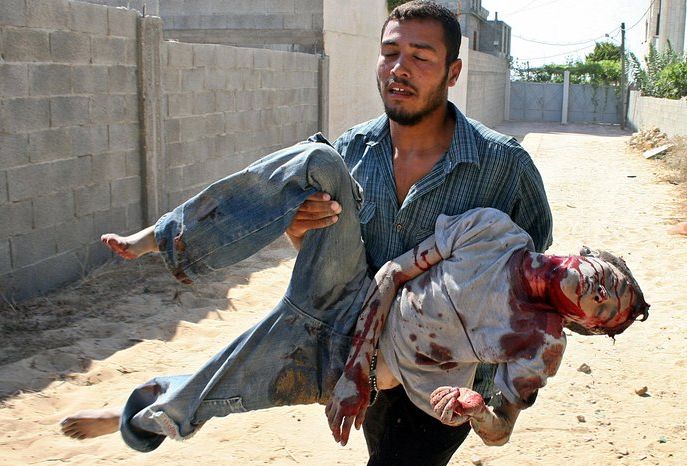
Whilst, I refuse to join her on her loss of faith in the goodness at the heart of humanity, It is impossible not to agree with the seeming numbness we feel towards the on going horror unfolding in Gaza. Like the photo above, we look from distance – worse than this, we look only through the goggles we are given.
A channel 4 news report yesterday made the rather sobering point that the images of dead and starving children in Gaza are NOT SHOWN in Israeli media at all.
This is shocking, right? Can it really be true that in this so-called bastion of democratic liberal western civilisation, media outlets are so compliant as to generally not show the consequences of Netanyahu’s vengeful war crimes?
But what about the rest of us? How is it possible to see reports like this and ignore the human suffering – to demote it to something less important than OTHER human suffering, or even worse, render it as necessary for the pursuit political or economic expediencies?
Or even worse than that – obscure it behind religious doctrines, like Zionism?
We are all living in the shadows cast for us by algorithms made from our search histories, our viewing habits, our social media connections. To pretend any of us are free from influence or constructed sectarianism is foolish indeed. However, what is happening just now is more than just the consequences of our media bubbles. In the face of such horror, we have switched off.
Some of us have stopped looking, others never looked at things like this in the first place.
Let me tell you a story. I must be careful how I tell it, because I do not want to create more hurt and division. It is a story in which I am certainly not the hero – in fact it is one that ends in defeat. Perhaps I should have titled this piece ‘How not to speak to Zionists.’
In the early days of the current Israeli invasion of Gaza, I posted this on a forum I was hosting. It was a discussion about using art, spirituality in the service of social justice, and I was interested in the fact that a church in London had hosted this gathering.
I then found myself in an extended discussion via message and e-mail with a friend who saw things very differently than I did. Their concern was firstly about Roger Waters, who they felt was a proven antisemitie.
As the discussion went on, it became clear that my friend also believed strongly that the protests against the war in Gaza within the progressive Christian circles we had both moved in were also antisemitic, and that the use of words like ‘apartheid’ and ‘genocide’ in relation to Israel’s necessary war – triggered as it was by the horror of October the 7th – placed Jews all over the world at risk.
Our discussion was always polite, but we were never able to find much common ground, despite having so much else in common. My friend shared how, when the October the 7th events were unfolding, they had felt a huge collective wave of fear, related to the past persecution and present uprise in antisemitic attacks all over the world. The very present need for a modern state of Israel as a home for Jews was a holy, Godly pursuit in this context. It was Shiloh.
In return, I tried to talk about the generations of injustice and increasing oppression of the Palestinian people, and how Zionism has had terrible consequences for indigenous residents of the Holy Lands. I raised the issue of the West Bank settlements and abandonment of the rule of law. The shooting of children throwing stones. The forcing of people from their homes and ancestral lands. The unequal health and educational outcomes and so on.
I tried to talk about those cases in which war crimes by the IDF had been investigated – for example the terrible case of Hind Rajab, the 6 year old killed beside her family whilst on the phone to the emergency services – and the ambulance staff killed trying to reach her. My friend became quite irritated, saying that ‘we can all find terrible stories’ and anyway, ‘the IDF is the most humane army in the world’.
In the end, all we could do was agree to differ, and to go our seperate ways as the terrible war continued to get worse and worse. As thousands more children died under the rubble.
I often found myself thinking about our conversation though. I even wrote this poem in an attempt to process it all in my head;
.
Victims
.
My victims are more victimised than yours
She said, pointing to the blown-out bus
And the young bodies under blankets
Swimming in pools of broken glass
.
My genocide is more genocidal than yours
She said, pointing to a pile of scuffed shoes
To empty wooden huts behind rusted wires
And a yellow star on a stained jacket
.
The prejudice we experience is more prejudicial than yours
She said, pointing out the broken synagogue windows
The graffiti and the students protesting peacefully
In a public park
.
She must not know about Ahmed’s beautiful little sister
There was a time when it seemed like the war in Gaza might be over. A very unequal ceasefire was negotiated and prisoners were being exchanged for hostages. Bodies were being pulled out from beneath the rubble of hospitals, schools and mosques. People were making the long walk home, or at least to the pile of rubble that had once been their homes.
Meanwhile I was still wondering about my friend and feeling uncomfortable with how our discussion had ended. I was also wondering if they had changed their position at all, so I reached out again and asked if they wanted to talk. This time it would be face-to-face, via Zoom. My friend graciously said they would like to do this, and suggested that we start by watching this video;
I watched this video twice. I have a background within the social sciences, so have spent a long time thinking about prejudice, racism and scapegoating. Antisemitism seems to me to come from the very worst of what we are and can be as humans, and I have no argument with almost all of what Sachs has to say in this video. We need to understand how people from a Jewish background feel in the face of rising antisemitism across Europe.
This fear seems to be a big part of my friend’s desire for people like me to stop using pejoritive terms like ‘genocide’ in relation to Gaza. As far as they are concered, this produces direct results in the form of antisemitic attacks.
But there is more we have to talk about in relation to this ugly phenomenon. Firstly, it is not just antisemitic attacks that are increasing, but also anti-islamic violence, which has grown three times more, according to this report by Hope Not Hate.
Tell MAMA, the leading agency on monitoring anti-Muslim hate, has recorded a 335% spike in hate crimes from 7th October 2023 to 7th February 2024 compared to the same time period the previous year, a record high since the charity began in 2011.
British Jews have also faced similar consequences, as events in Israel and Palestine frequently drive increased antisemitism in the UK. The Community Security Trust (CST) recorded reports of 4,103 anti-Jewish hate incidents in 2023, a rise of 147% compared to 2022. Two-thirds of incidents happened on or after 7th October, a 589% increase in reports from the same time period in 2022.
It seems to me that we are now in a strange new world in which the far right – previously the political engine for so much antisemitism – are confused by the fact that Netanyahu’s governement is also on the far right. A lot of that hatred has been redirected towards Muslims, but a lot still remains. Add to that the way that the concept of antisemitism has arguably become a political weapon to silence dissent – used with no sense of irony by right wing newspapers such as the Daily Mail (despite its own shameful record of antisemitism.) There are also the murky waters of Labour party politics, in which the labour left has been silenced in the face of its apparent antisemitism. What we are left with is a new landscape in which hate is rising and old politics are being destablised and undermined. VIolence is always likely in these circumstances.
Where does this take us in relation to Zionism and the war in Gaza, which has now entered a new phase in which ethnic cleansing is being openly talked about as a military aim? In which starvation is talked about by Israeli ministers as a legitimate tactic to drive Gazans out of their land? This was all yet to kick off again when I was talking to my friend, so instead I tried to ask what might be the common ground we could find. I also wondered whether their position had shifted at all – if their views had changed in the face of such overwhelming slaughter and destruction.
It seemed clear that there had been no change at all in the views of my friend. I was genuinely perplexed at this, as I felt them to be a good person, full of spiritual depth and insight. How could the scale of death and destruction not have evoked some kind of empathetic response, critical of the actions of the perpetrators of such slaughter?
The first problem was how to agree on the nature of this death and destruction when you can not agree on the validity of sources of information. My friend made it clear that he no longer consumed any media sources apart from The Times of Israel, because all other sources of information – including the BBC – were biased. This newspaper does seem to be fairly centrist in its approach, but a centre media bias rating does not necessarily mean a source is totally unbiased, neutral, perfectly reasonable, or credible, just as Left and Right don’t necessarily mean extreme, wrong, unreasonable, or not credible.
The only defense against limiting our perspectives is surely to do our best to read outlets across the political spectrum. This is a hard lesson for us all, as we tend to look for articles that confirm our bias or become ways to point out the ‘wrongness’ of the other but without this effort, it is perhaps no surprise that my friend had made no journey of discovery.
The next problem was a religious one, in which my friend said something like this;
Here’s a thought. I wonder if my perspective is a big picture one, yours a close focus. Both of which are important, both of which can learn from the other?
Your perspective is particularly focussed on the misbehaviour of the state of Israel, tiny but in comparison with its close neighbours strong. So the reactions of the IDF in Gaza loom large.
Mine is a big picture, long-term view, shaped by the Shoah and centuries of antisemitism, seeing the current conflict as just the latest example of ongoing concerted attempts to kill Jews and to destroy their place(s) of safety. We are in a struggle for existence.
Was it about the fear we mentioned earlier, leading to a kind of bunker mentality in which survival seems to justify such punitive violence, even for good people like my friend? I can only speculate as pretty soon, our conversation ground to a halt. In the face of the comment above, I found myself writing this rather harsh, angry reply;
I honestly find the idea of it incredulous. I cant go with the big picture/close picture split, no matter how neatly this might enable us to place things.
The ‘big picture’ you describe is entirely one sided. It does not engage with the complex history of the Palestinian people, or the history of violence, displacement, breaking of international laws that have stemmed from that.
My exasperated and rather unkind response- via e-mail too, rather than face to face – was the end of the discussion.
I wish we have been able to talk about a different kind of common ground- after all, we are both followers of Jesus, and yet we spent no time at all seeking to place the teachings of Jesus into this dreadful context. I think I felt like this would have been to use Jesus as a stick to beat my friend with – Jesus as a dialectical debate weapon – which did not feel apprporiate, but in hindsight, I still find myself wondering why this was not our common ground.
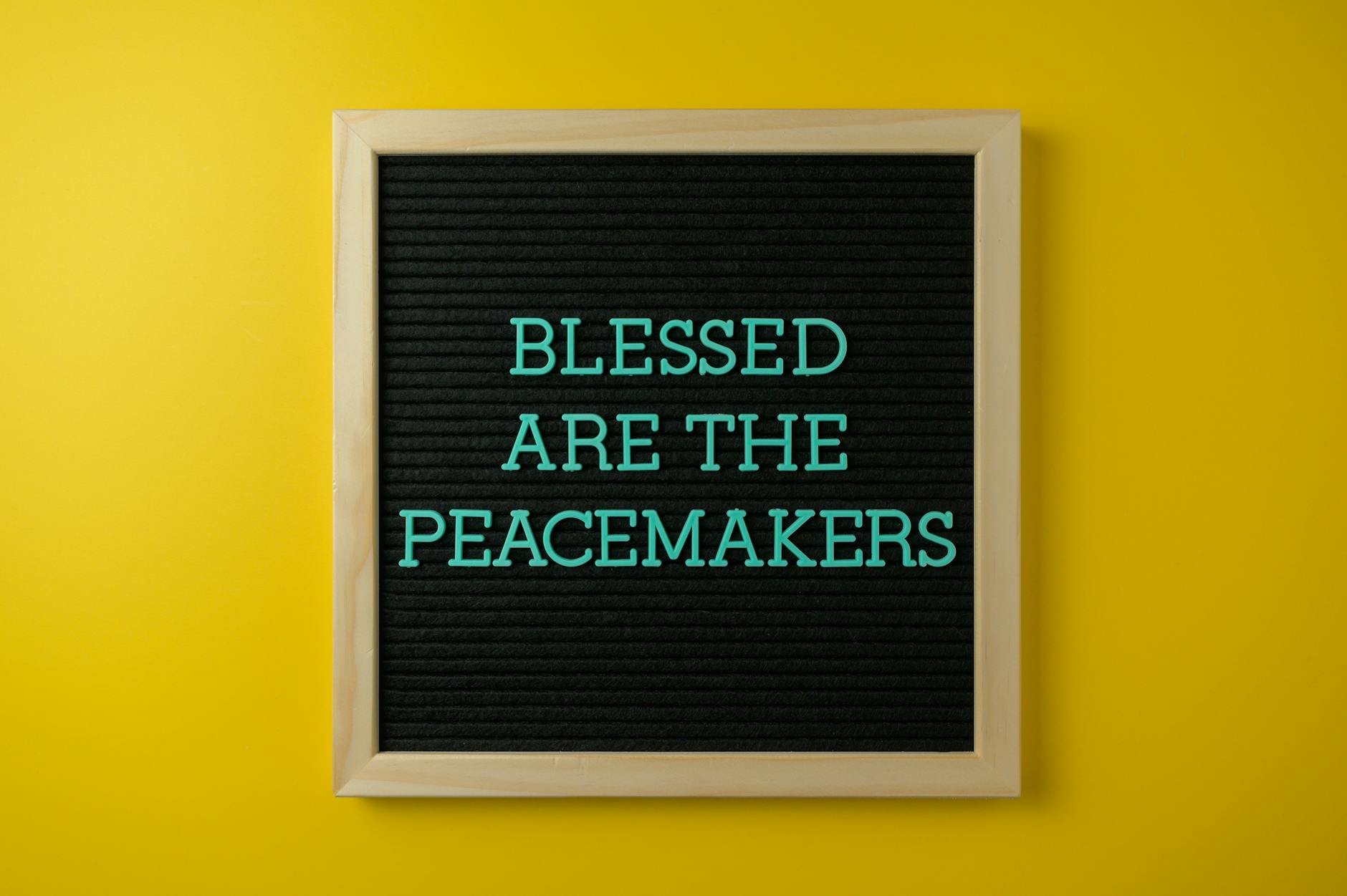
Might talking about Jesus have made us think about what loving our enemies or seeking to be peace makers in this context might have looked like? We will never know I suppose. We missed out on this particular blessing.
Clearly I am not the person to answer this question, but talk to them we must.
We have to understand each other, to humanise and seek compassion, particularly with those with whom we have a disagreement. Particularly in a world in which violence is increasingly seen as a legitimate response to political, religious or geographical difference.
Perhaps we have to start too by understanding the way fear works, particularly the legacy of such global hate as the Holocaust. How it is weaponised by people like Netanyahu and his media machine. How it is fostered and monetised by the algorythm.
But we must go beyond fear, back towards compassion. We must name those who are victims on both sides, not just the Israelis. Not just the Gazans.
We must call out the war makers for what they are – on both sides…
…and we must grieve for the children, who grow in this polluted, toxic rubble we have made for them.







 this fragile tent