What lies dark…

All is changing here, and change is good- although a lot of work. We are packing up our house pending a move in a couple of weeks to a much smaller place. All those clichés about not knowing how much stuff you have until you move are true.

At the same time we are hard at work continuing to produce items for our Christmas sales through seatree, often involving Michaela incorporating my poetry into ceramics. We will both be without workshop space until we can erect a garden building at our next house, and given that this is a major part of our income at present we have to build up some stock.

Here is one of a series of really simple tiles she did, as little ceramic sketches. A statement of hope despite the darkness.

imgp9348

The heroic narrative of extreme wealth…

greenoffice-danchung-blog

I have used the word ‘neoliberalism’ quite often on this blog. It is not an east concept to nail, because the norms that it brings to our thinking have become so dominant that we accept them in the way we might the pull of gravity or the wetness of water. Stick with me though, because as we grapple with how on earth Trump could possibly have become president, then it is worth stepping back and taking a bit of a look at the underpinnings of neoliberalism in the light of the enthronement of all that Trump stands for at the head of the most powerful nation on earth.

There were two articles in the Guardian this week that brought this back to me. The first was by Naomi Klein, in which she suggested that Trump arose as a howl of protest against the inevitable disenfranchisement of the white working man caused by the political class being caught up in a neoliberal agenda;

That worldview – fully embodied by Hillary Clinton and her machine – is no match for Trump-style extremism. The decision to run one against the other is what sealed our fate. If we learn nothing else, can we please learn from that mistake?

Here is what we need to understand: a hell of a lot of people are in pain. Under neoliberal policies of deregulation, privatisation, austerity and corporate trade, their living standards have declined precipitously. They have lost jobs. They have lost pensions. They have lost much of the safety net that used to make these losses less frightening. They see a future for their kids even worse than their precarious present.

At the same time, they have witnessed the rise of the Davos class, a hyper-connected network of banking and tech billionaires, elected leaders who are awfully cosy with those interests, and Hollywood celebrities who make the whole thing seem unbearably glamorous. Success is a party to which they were not invited, and they know in their hearts that this rising wealth and power is somehow directly connected to their growing debts and powerlessness.

For the people who saw security and status as their birthright – and that means white men most of all – these losses are unbearable.

Is Klein right? It is pretty obvious that in a time of austerity, extremism grows in a toxic mix of anger and power mongering. In the UK, we know these forces well- but the unbearable loss that Klein describes somehow did NOT result in anger towards the Davos class, but instead is easily refocused on convenient victims; benefits claimants, immigrants, Johnny Foreigner and his accursed European Union. The narrative has been reformed. By accident or by design? You decide.

The second article was by George Monbiot, who begins by defining the beginnings of neoliberal philosophy. I will quote liberally from this article as I think it is really important. He describes Margaret Thatcher’s embracement of a book by Frederick Hayek as defining the values of her Conservative government in the 80’s and 90’s;

The book was The Constitution of Liberty by Frederick Hayek. Its publication, in 1960, marked the transition from an honest, if extreme, philosophy to an outright racket. The philosophy was called neoliberalism. It saw competition as the defining characteristic of human relations. The market would discover a natural hierarchy of winners and losers, creating a more efficient system than could ever be devised through planning or by design. Anything that impeded this process, such as significant tax, regulation, trade union activity or state provision, was counter-productive. Unrestricted entrepreneurs would create the wealth that would trickle down to everyone.

This, at any rate, is how it was originally conceived. But by the time Hayek came to write The Constitution of Liberty, the network of lobbyists and thinkers he had founded was being lavishly funded by multimillionaires who saw the doctrine as a means of defending themselves against democracy. Not every aspect of the neoliberal programme advanced their interests. Hayek, it seems, set out to close the gap.

He begins the book by advancing the narrowest possible conception of liberty: an absence of coercion. He rejects such notions as political freedom, universal rights, human equality and the distribution of wealth, all of which, by restricting the behaviour of the wealthy and powerful, intrude on the absolute freedom from coercion he demands.

Democracy, by contrast, “is not an ultimate or absolute value”. In fact, liberty depends on preventing the majority from exercising choice over the direction that politics and society might take.

It all sounds instinctively familiar right? This philosophy defined not only Thatcher’s government, but also Blair’s- in fact it became the globalised status quo.

Monbiot goes on to describe another logical development of this adoption of neoliberalism by the ruling elite. Back in 1960, Hayek framed concentrated wealth as not only necessary but also a social benefit;

He justifies this position by creating a heroic narrative of extreme wealth. He conflates the economic elite, spending their money in new ways, with philosophical and scientific pioneers. Just as the political philosopher should be free to think the unthinkable, so the very rich should be free to do the undoable, without constraint by public interest or public opinion.

The ultra rich are “scouts”, “experimenting with new styles of living”, who blaze the trails that the rest of society will follow. The progress of society depends on the liberty of these “independents” to gain as much money as they want and spend it how they wish. All that is good and useful, therefore, arises from inequality. There should be no connection between merit and reward, no distinction made between earned and unearned income, and no limit to the rents they can charge.

Inherited wealth is more socially useful than earned wealth: “the idle rich”, who don’t have to work for their money, can devote themselves to influencing “fields of thought and opinion, of tastes and beliefs.” Even when they seem to be spending money on nothing but “aimless display”, they are in fact acting as society’s vanguard.

Viewed through this set of lens, the world as we know it is revealed in great clarity. It did not stop there however, as once an idea has ascendancy, it gives traction to a wider agenda- the rolling back of the old evils;

Hayek softened his opposition to monopolies and hardened his opposition to trade unions. He lambasted progressive taxation and attempts by the state to raise the general welfare of citizens. He insisted that there is “an overwhelming case against a free health service for all” and dismissed the conservation of natural resources.It should come as no surprise to those who follow such matters that he was awarded the Nobel prize for economics.

By the time Mrs Thatcher slammed his book on the table, a lively network of thinktanks, lobbyists and academics promoting Hayek’s doctrines had been established on both sides of the Atlantic, abundantly financed by some of the world’s richest people and businesses, including DuPont, General Electric, the Coors brewing company, Charles Koch, Richard Mellon Scaife, Lawrence Fertig, the William Volker Fund and the Earhart Foundation. Using psychology and linguistics to brilliant effect, the thinkers these people sponsored found the words and arguments required to turn Hayek’s anthem to the elite into a plausible political programme.

So, for those of us who have always puzzled over the Conservative (particularly the American version) opposition to universal health care, look no further than Hayek and his ascendant twisted logic.

But back to this concept of heroic wealth. Monbiot makes the point brilliantly;

The paradoxical result is that the backlash against neoliberalism’s crushing of political choice has elevated just the kind of man that Hayek worshipped. Trump, who has no coherent politics, is not a classic neoliberal. But he is the perfect representation of Hayek’s “independent”; the beneficiary of inherited wealth, unconstrained by common morality, whose gross predilections strike a new path that others may follow. The neoliberal thinktankers are now swarming round this hollow man, this empty vessel waiting to be filled by those who know what they want. The likely result is the demolition of our remaining decencies, beginning with the agreement to limit global warming.

The question for those of us who do not concur is what our response to this should be? If not neoliberalism, what philosophy should we follow? What stories do we tell that are more beautiful? Here is Monbiot again;

A few of us have been working on this, and can discern what may be the beginning of a story. It’s too early to say much yet, but at its core is the recognition that – as modern psychology and neuroscience make abundantly clear – human beings, by comparison with any other animals, are both remarkably social and remarkably unselfish. The atomisation and self-interested behaviour neoliberalism promotes run counter to much of what comprises human nature.

Hayek told us who we are, and he was wrong. Our first step is to reclaim our humanity.

I simply could not agree more. It sounds a lot like this to me;

“Blessed are the poor in spirit,
    for theirs is the kingdom of heaven.
Blessed are those who mourn,
    for they will be comforted.
Blessed are the meek,
    for they will inherit the earth.
Blessed are those who hunger and thirst for righteousness,
    for they will be filled.
Blessed are the merciful,
    for they will be shown mercy.
Blessed are the pure in heart,
    for they will see God.
Blessed are the peacemakers,
    for they will be called children of God.
10 Blessed are those who are persecuted because of righteousness,
    for theirs is the kingdom of heaven.

 

The arc of history

trumpie

This morning we awake to the news of a new President; one who has triumphed through embracing a message of fear, hate and division. My FB feed this morning is full of howls of disbelief; a kind of cyber-doom hangs over everything. Whatever you think of his politics (I abhor everything the man stands for) it is hard to escape the facts that Trump’s win has little to do with policy, or character, or passionate belief. It signals a new direction in democracy. The arc of history has a new direction.

What does it mean for the likes of us? Is this the end of a liberal welfare based direction in western civilisation? Do the neo cons/neo fascists now hold all the strings of power? Is this a return to the 1930s when economic crisis led to the rise of despots and demagogues?

What does this mean for democracy? If the will of the people is shaped and shagged into support of a racist, sexist, narcissistic, liar then what value has the process?

Overall there is a feeling amongst my friends that something is wrong, something is rotten in the middle of our culture. Others paint this as a kind of anti-politics, which requires something like a Trump wrecking ball to swing in an ‘make American great again’ and ‘drain the swamp’. My feeling is that the solution is not anti-political, but has to be about two things;

  1. A renewal of the politics of kindness and the dignity, and people who are willing to hold to account those in power who would denigrate this
  2. A focus on the small politics of community. Let us create the world we want to live in locally. This means breaking out from behind our screens as this kind of community can not just be on-line (like this blog).

Always at the back of my mind is the conviction that something more significant has to change- the way we live now is not sustainable after all. We can not continue to over consume the world at the expense of the environment and the larger part of the earths population. In this sense, perhaps Trump in all his neon spray tan dreadfulness is actually part of the death of what has been- a last throw of the dice for the empire that has been.

People of faith have a vital role to play here too- Trump won because the American religious right were able to twist their fundamentalist Bible-first theology to embrace him as the lesser evil. Bigotry was preferable to abortion and homosexuality. Guns, God and the Flag, woven together into a toxic heresy all in the name of Jesus. How do we engage with this religion in a way that might suggest a bigger more hopeful world. I read this yesterday from Richard Rohr;

The incarnation of God did not only happen in Bethlehem two thousand years ago. That is just when some of us started taking it seriously. The incarnation actually happened approximately 13.8 billion years ago with a moment that we now call “The Big Bang” or the First Manifestation. At the birth of our universe, God materialized and revealed who God is. Ilia Delio writes: “Human life must be traced back to the time when life was deeply one, a Singularity, whereby the intensity of mass-energy exploded into consciousness.” This Singularity provides a solid basis for inherent reverence, universal sacrality, and a spiritual ecology that transcends groups and religions…

…Christians must realize what a muddle we have gotten ourselves into by not taking incarnation and the body of God seriously. As Sally McFague, a Christian theologian, says so powerfully, “Salvation is the direction of all of creation, and creation is the very place of salvation.” [4] All is God’s place, which is our place, which is the only and every place.
Our very suffering now, our crowded presence in this nest that we have largely fouled, will soon be the one thing that we finally share in common. It might be the one thing that will bring us together politically and religiously. The earth and its life systems, on which we all entirely depend, might soon become the very thing that will convert us to a simple lifestyle, to a necessary community, and to an inherent and natural sense of the Holy. We all breathe the same air and drink the same water. There are no Native, Hindu, Jewish, Christian, or Muslim versions of the universal elements. They are exactly the same for each of us.

There is more at stake here than Trump and his great erections. The arc of history is not in the his hands, no matter how pumped up his ego might become.


Treasure the fading light…


imgp9317

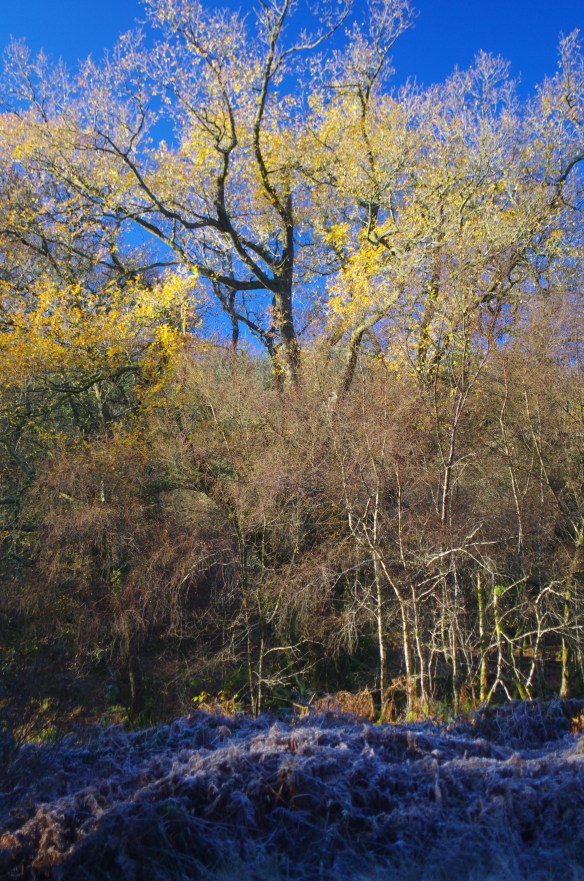
The world is changing. For change to happen, some things have to fall. We can rage against it, or we can treasure the moment, seek to inhabit it and note the tender beauty it contains.

Will and I took the canoe up Loch Eck on bonfire night, paddling into a sepia landscape of amber reflections and gold light holding the high hills. Just me and my son, heading for a stand of trees for shelter. We watched the stars come up, then appreciated the incongruous impromptu firework display set off by some revellers on the far side of the loch, each explosion rolling around the valley like ancient thunder.

The year is closing. Soon things will lie fallow for how else can we pause in order to consider anew our becoming? How else will new things rise?

Treasure the fading light as it closes softly onto the things that have been. New light is surely coming.

Music as a vehicle for grace…

We were down south over the weekend. Firstly we attended Sarah and Chaoyi’s wedding. It was a lovely thing, simple, full of friendship and creativity- particularly music. I made a small contribution as I lead the music in the ceremony. Afterwards the reception was full of yet more music, including lovely songs by Sarah herself with her friend Meg, sang out to Chaoyi and into the shadows left by her father’s absence. It was a wedding that contained much grace and seemed to me to do more than create a union, but also to contribute to a kind of healing in some of us that attended. May their life be full of blessings…

At the same time, I had a chance to meet some dear friends.Music connects many of us, either because we used to make music together, or because the soundtrack of our companionship is so precious to me. What a pleasure it was to play with Ruth again, whose keyboard skills ornamented the wedding so beautifully, and to laugh with Graham, Simon, Andy, Ruth, Clare, and so many others.

We then went on to stay with Steve and Ros- and the music connection was there again, as I played in bands with Steve for years and years, before life threw us in different directions. What a deep pleasure it was to remake friendship; to sit and talk about things that matter and lace it all together with memories.

After such a lovely and emotional weekend, we drove back up north into the autumn sunshine- the four of us. Emily became our DJ and chose an album that I did not know (this one) by one of my favourite bands, Over the Rhine. Perhaps it was the emotion of the weekend, or the rawness of being at a pivot point in my life. Perhaps too it was the deep pleasure of being in a warm car surrounded by my family, talking about deep stuff. All I know is that everything was carried and held by this sublime music. I found myself in tears. In a good way.

I thought I would offer some music here (from a different OTR album) as a piece of grace for all those friends I met over the weekend. For Sarah and Chaoyi in particular as they make new life together.

Let the autumn leaves fall…

Another chapter or two…

work

I left my day job last week. It was no small thing to do, but it still feels like the right decision. I spent the last two years working as a Service Manager for an integrated community mental health service. It was a privilege to be able to lead such a great bunch of people, and to work together on things that really matter. So why the change?

Firstly, these kinds of jobs are exhausting. Managing complex services, huge budgets and high risk, high stakes situations demands so much that at the end of the working day there is very little left. I also know myself well enough to understand my own strengths and weaknesses, and to know that the developments I hope we set in motion now would benefit from someone else to come in and complete. Partly this is because I tend to be more focused on ‘big picture’ thinking but find the messy complexities of implementing change at micro level much more challenging. I also possibly lack the toughness to manage well the political infighting and sometimes downright poor behaviour of people who really should know better. Change always turbocharges these kinds of interactions. I am not sure it always brings out the best in me either.

I also decided to step away for other reasons. I was determined to ensure that work did not become a deepening rut that became harder and harder to step out from. It is so easy to get used to the routine and the salary, such that fear prevents any kind of alternative possibility, even when at times we have lost all passion for our task. I have other things I want to do, and these were not possible in the exhausted margins of high level management work.

What next then?

I feel great excitement in that I have been gifted with the opportunity to spend some time doing some creative things;

  • My own writing. I am determined to finish a novel, which has been nagging at me for a few years now
  • Curation of a new poetry collection, along the lines of ‘Learning to Love’
  • Some interactive collaborations with other artists/musicians
  • Consideration and development of a poetry network around social justice themes
  • Working with Michaela to further develop Seatree as an income stream

Change has to also embrace uncertainty. This is not always comfortable but for now at least it feels good, exciting, hopeful.

blogging1


I have also decided to continue to use this blog as a semi-transparent journal of some of my journey. This was not a straightforward decision; my writing has in recent times get me into trouble. Also blogging is in many ways rather an out dated concept. However, I reminded myself again of the reasons why I started this rather self obsessed narcissistic activity by looking back at this post.

A couple of new chapters yet to come then…

The distant relatives…

c3e6972d-f5c3-48e7-abe5-0792b771e673_cx0_cy3_cw0_w987_r1_s_r1

I listened to a discussion on the radio this morning in which Adam Rutherford made a rather startling statement. It went something like this;

We each have two parents, four grandparents, 8 great parents, 16 great great grand parents and so on… so it is that the genetic ties that bind us backwards towards our ancestors reach outwards into ever greater numbers.

At a certain point however, the mighty family tree that roots us all collapses in on itself. It can not stretch into ever greater diversity because the numbers of humans are finite- the more so as we go back into history. Mathematics dictates that at some level, all of our family trees must entangle.

The startling point made by Adam Rutherford was that this shared family connection is not a feature of some distant pre-history, when we all shared a cave, or were cast out from a garden. The tangling actually takes place around 600 years ago.

At that point, if you draw a line through all European family trees they will intersect. It is not that we do not all carry slightly different strands of genomes from all over the place, just that the individual mixture is far less significant than the shared whole.

Quite literally, we are all part of one family.

What is it that forces us towards exclusivity? Perhaps this is mathematics also- that we simply can not hold in our minds the countless twists and turns in our inherited DNA.

It is like trying to count the grains of sand on a beach

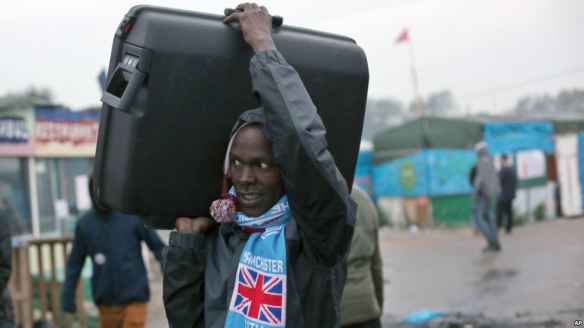
Or giving name to each and every one of the migrants who mass at our borders.

Who wash up on Mediterranean shores.

Whose hope filled hovels we clear in the name of sanitisation and order.

The distant relatives are coming to visit. How inconvenient. But no matter how much we pretend them to be something ‘other’, it remains a fact encoded into our very DNA that they are not.

They are we.

Breaking the spell of loneliness…

emgm_btspol_frt_lo

I am not a natural socialite. Close friends will scoff at the very idea. It is not that I do not love people, their stories and their humanity, it is just that as I get older I appreciate more and more my own interior space, made safe by the love of my family.

This is at odds however with a deeper more universal truth about who we are as humans; we are above all things a social animal, made to live together, not apart. Accepting that we are all variations on a bell curve, it is a matter of common observation that our society is increasingly individualistic and isolating. We interact via screens, and our interaction is filtered, constructed, lacking flesh and authenticity.

Does this matter? I have written before about the relationship between loneliness and all sorts of health outcomes;

  • Measurable genetic and immunological benefits to good social contact
  • Biological changes as a result of physical contact- hugs for example.
  • Increased incidence of cardiovascular problems in people with lower amounts of social connections.
  • Lower general morbidity associated with higher amounts of social contact.
  • A study finding lower incidences of strokes on women
  • Lower blood pressure in men, and a faster return to normal blood pressure after stress.
  • Measured differences in the narrowing of arteries.
  • The unexpected fact that if you have contact with more people, you are LESS likely to have colds.
  • Memory loss in old age declines at twice the rate in those poorly integrated.
  • General links between enhanced cognitive performance and social interaction.
  • A reduction in mortality for those who attend regular religious services! (But not just to ‘warm the pew’.)

There is also a rather important connection between loneliness and materialism/capitalism which I talk about more in this post. The accumulation of stuff, and the exultation of buying power over just about all else is a recipe for unhappiness and disconnection.

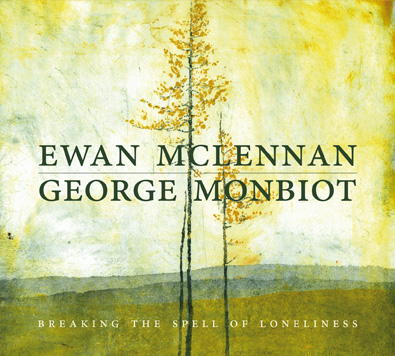
I received a CD in the post today- I think this is perhaps the first time I have ever ‘pre-ordered’ an album but the combination of talent and timeliness was too much to ignore. The album is a collaboration between George Monbiot and Ewan McLennan, and here is the blurb from George;

It is our natural destiny to be apart, to fear and fight each other: this is a claim that has gathered momentum ever since Thomas Hobbes published Leviathan. It is a claim with no foundation. We evolved in a state of mutual reliance. Defenceless alone, we survived  only through cooperation.

But the mythic destiny appears, in the 21st Century, to be approaching fulfilment. Our time is distinguished from all other eras by its degree of atomisation: the rupturing of social bonds, the collapse of shared ambitions and civic life.

An epidemic of loneliness is sweeping the world. The results are devastating: depression, paranoia, anxiety, dementia, alcoholism, accidents and suicide all appear to become more prevalent when connections are cut. To stand back from the state into which we have fallen is to marvel at this misery. It is to witness seven billion people walking past each other.

A new ideology of detachment celebrates social collapse with a romantic lexicon of lone rangers, sole traders, self-made men and women. Corporate lobby groups and thinktanks argue that the defining characteristic of human relationships is competition. They insist that our primary aim is to maximise our wealth and power at the expense of others, to engage in a Hobbesian fight of all against all.

But the levels of altruism and empathy human beings display are unique among animals. While other species might go to great lengths to help close relatives, humans assist people with whom they have no familial connection, sometimes at great cost or risk to themselves: I think, for example, of the Jewish boy my Dutch mother-in-law’s family hid in their attic during the German occupation.

The claim that we are inherently selfish suits those who wish to hold us apart, the better to control and dominate. It persuades them that their ruthlessness and greed are merely a fulfilment of their biological destiny.

So how do we respond to this trend towards social breakdown? An article I wrote about it for the Guardian went viral, and several publishers asked me to write books on the topic. I could think of nothing more depressing than sitting in my room for three years, studying loneliness.

I wanted instead to do something engaging, that might not only document the problem, but help to address it. And what has more potential to unite and delight than music? So I went to a musician whose work I greatly admire, and proposed a collaboration. We would write a concept album, a mixture of ballads and anthems, some sad, some stirring, whose aim was to try to break the spell which appears to have been cast upon us; the spell of separation.

I suggested that I would sketch out the stories and a first draft of the lyrics, and Ewan would turn them into music. It has worked out better than I could have imagined: I hope you will agree that something quite special has emerged from this collaboration.

Our aim is that it should not stop here, that we should use our performances to help bring people together, to overcome our stifling collective shyness and make friends among the strangers in our midst. “Only connect”: a century on, E.M. Forster’s maxim remains the key to happiness.

On first listen, this is music with something important to say. It is also beautiful. Buy it.

Or don’t bother- phone a friend and suggest a trip to share a beer.

Go for a long walk through the woods and speak of unimportant things.

Laugh a lot.

Fart and express faux-disgust.

Let the space between you shrink a little.

So that when you part, you do so with soul enlarged

(Should that friend be me, I am busy  blogging/pontificating about loneliness I am afraid.

Tomorrow maybe, or the day after that.

But should I stew too long

In the self dug pit of my own presence

Throw me a rope my friends

Let down some tolerant tresses

So I my rise towards you.)

Education policy in an age of Neoliberalism…

beer_goggles3

What you see depends on the way that you look. The way you look depends on the set of goggles that you look through. The lens in those goggles will always be full of distortions. These distortions become our  truth.

I was reminded of these simplistic truisms again when listening with increasing frustration to the current debate in the UK about reintroducing grammar schools into our education system. I listened aghast to politicians describing how this is a good thing as Grammar school contribute to social mobility and allow talent to be be nurtured. They went on to describe with apparent passion how selected individuals who have now reached prominence came up through grammar schools, and how selecting the best and the brightest pupils aged 11 to give them the very best chance of success is simply good sound common sense.

It is as if the 1950s never happened…

It is as if all the learning from the failures of the tripartite education system has been forgotten…

It is as if the evidence describing the negative impact of selective education on disadvantaged groups has been ignored…


In case you are new the this debate, perhaps a little education policy history might be of use…

school-assembly

What is a state education system for? Essentially it is an exercise in social engineering. We educate according to the needs, priorities and prejudices of those in power.

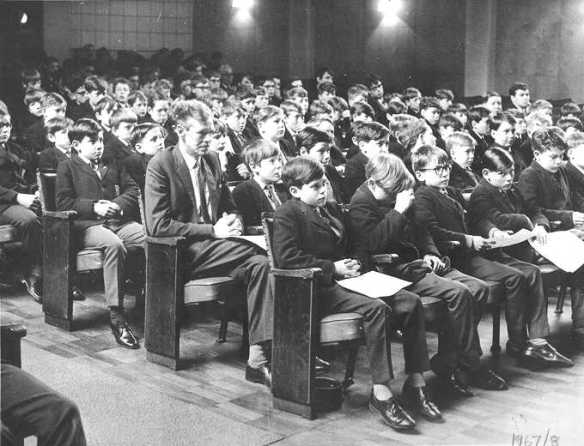
After the 2nd world war, building on research by Sir Cyril Burt (of which there are serious questions around the validity) we established a tripartite education system in the UK. This was based on the idea that it was possible to test the intelligence level of children at a young age and so predict their likely educational potential. Having done this, pupils could be allocated to one of the three different kind of schools in order to make best use of this potential; Grammar schools (for the most able), Technical Schools (and under developed set of schools intended to provided mechanical/technical expertise for industry) and Secondary Modern (for the rest.)

I remember the well the tyranny of the approach of the 11th plus examination when I was in primary school. I was convinced I was going to fail. Imagine then my relief when it was cancelled in my area of the UK and replaced by comprehensive education. In fact, by the time I went into secondary schools, my home town (Sutton in Ashfield) had a brand new experimental ‘community school’, a kind of super-comprehensive, intended to place the school at the centre of the town.

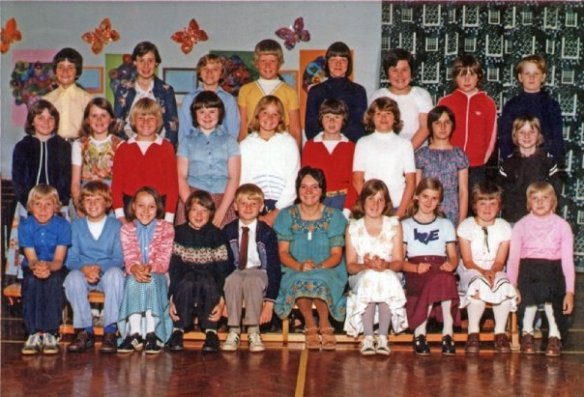
school photo

Croft Primary school. I am in yellow on the back row. 

What had happened to change things? Quite simply, inequality became a political priority. Comprehensive education was an attempt to address the fact that selective systems of education tend to enshrine disadvantage. It is a complex pattern however, which can be understood from this American paper that reviews a lot of the relevant research about the British schooling system. How middle class kids achieve better results is complex, but it seems clear that selective education enhances this advantage.

At present, inequality has no real political capital. Corbyn’s troubled Labour may be seeking to change this, but no one that matters is listening. Britain is becoming more unequal, including our education system.

Some sobering news for education systems in Scotland, via the Joseph Rowntree Foundation;

  • The gap between children from low-income and high-income households starts early. By age 5, it is 10–13 months. Lower attainment in literacy and numeracy is linked to deprivation throughout primary school. By age 12–14 (S2), pupils from better-off areas are more than twice as likely as those from the most deprived areas to do well in numeracy. Attainment at 16 (the end of S4) has risen overall, but a significant and persistent gap remains between groups.
  • Parental socio-economic background has more influence on this result than the school attended.
  • Children from deprived households leave school earlier. Low attainment is strongly linked to destinations after school, with long-term effects on job prospects.

And the UK governments answer to this?

Bring back grammar schools.

Back to those goggles again…

If you look at this issue through a set of lens that are distorted by Neo Liberal ideology, grammar schools begin to make perfect sense.

Here it is described brilliantly by George Monbiot in The Guardian;

Neoliberalism sees competition as the defining characteristic of human relations. It redefines citizens as consumers, whose democratic choices are best exercised by buying and selling, a process that rewards merit and punishes inefficiency. It maintains that “the market” delivers benefits that could never be achieved by planning.

Attempts to limit competition are treated as inimical to liberty. Tax and regulation should be minimised, public services should be privatised. The organisation of labour and collective bargaining by trade unions are portrayed as market distortions that impede the formation of a natural hierarchy of winners and losers. Inequality is recast as virtuous: a reward for utility and a generator of wealth, which trickles down to enrich everyone. Efforts to create a more equal society are both counterproductive and morally corrosive. The market ensures that everyone gets what they deserve.

We internalise and reproduce its creeds. The rich persuade themselves that they acquired their wealth through merit, ignoring the advantages – such as education, inheritance and class – that may have helped to secure it. The poor begin to blame themselves for their failures, even when they can do little to change their circumstances.


Do not fear…


dangerloop2-plus-1024x1024

This is the command most commonly used in the Bible. Interesting huh? Out of all the commands that we might have inherited from thousands of years of history covered by the writings in the canon of Christian scripture, this is the one that resonates most frequently. Why? It is almost as if fear has a toxicity in terms of human relations that we should no under estimate.

I was reminded again of these words when listening to More or Less on radio 4 t’other day. The programme is all about numbers – not my natural medium – but in this instance the numbers were concerned with deaths by terrorist acts in the West.

Death  by unknown random malevolence has become the fear most reflected in media output and our political rhetoric. Is is strange then to note that many more people died in a previous epoch of terror in the 1970s.

There are a number of problems with this kind of fear;

  1. The point of terrorism is to induce fear and panic out of all proportion at a population wide level. If we allow the fear to dominate our thoughts and action then the men and women of violence win
  2. Death is inevitable and everywhere. Risks of untimely deaths through road travel for example are vastly higher to each and every one of us. Yet we do not fear this kind of death- it is an acceptable risk, incorporated into daily life
  3. Fear of terrorism justifies huge acts of violence, oppression and human rights abuses carried out by our own governments
  4. This kind of fear obscures other evils in our communities that might matter more; growing inequalities of wealth, health and opportunity, scapegoating of outsiders, spiritual poverty

Did anything good ever come from fear?

Of course, fear can keep us safe. At some level, healthy fear and respect of danger is an essential part of human evolution. We need to fear tigers, fire and the precipice. Translate this fear into the complexities of a post industrial society however and things become more more complex.

It could be argued that there is an epidemic of fear sweeping though western civilisation. Despite living in a time when we are living longer than any time in history, when crime levels are falling, when most of us live safe, prosperous lives, the levels of clinical anxiety appear to be rising everywhere. The Mental Health Foundation released a study suggesting that nearly half of people in the UK feel more anxious than they used to, and one in five feel anxious all the time.

Chronic clinical anxiety is a terrible thing to experience and let us not pretend that it is in any way easy to overcome, no matter the growth industry of Cognitive Behavioural Therapy and Lilly-the-pink calming tablets. My point here is to wonder how the underlying circumstances that lead to a population wide increase in anxiety came in to being. Is it because we have allowed a certain kind of fear to be endlessly celebrated, recycled and displayed?

My suggestion is that nothing good comes from this kind of fear. It drives wedges between us and our neighbours. It prevents us from embracing experience and passion. It denudes human experience.

It celebrates protectionism and revenge over openness and reconciliation.

It is incompatible with the way of love.

25 “Therefore I tell you, do not worry about your life, what you will eat or drink; or about your body, what you will wear. Is not life more than food, and the body more than clothes? 26 Look at the birds of the air; they do not sow or reap or store away in barns, and yet your heavenly Father feeds them. Are you not much more valuable than they? 27 Can any one of you by worrying add a single hour to your life[e]?

28 “And why do you worry about clothes? See how the flowers of the field grow. They do not labor or spin. 29 Yet I tell you that not even Solomon in all his splendor was dressed like one of these. 30 If that is how God clothes the grass of the field, which is here today and tomorrow is thrown into the fire, will he not much more clothe you—you of little faith? 31 So do not worry, saying, ‘What shall we eat?’ or ‘What shall we drink?’ or ‘What shall we wear?’ 32 For the pagans run after all these things, and your heavenly Father knows that you need them. 33 But seek first his kingdom and his righteousness, and all these things will be given to you as well. 34 Therefore do not worry about tomorrow, for tomorrow will worry about itself. Each day has enough trouble of its own.

Matthew 6

Chiff chaff