Gay, suicidal, pop starring, drug taking, promiscuous, vicar…

richard coles

And quite wonderful for all of it.

Finally got round to watching Fern Britton Meets Richard Coles on the i player, telling his story. You can catch it for a little while longer here.

Coles, along with the majestic Jimmy Sommerville were the founding members of The Communards, who provided part of the sound track to my student days. Although I could never dance, as I was even then far too awkward and self conscious.

In many ways, for people of faith, his story charts one of the totemic issues of our age. He survived hedonism of stardom in the 80’s, alongside the homophobic hysteria and traumatic loss of the AIDS epidemic and in the mess of it all, encountered Jesus.

Despite all the complex rejection and hostility towards homosexual people that was around then in the Church (even in the manifest presence of gay people within the walls of the establishment) God seemed to have no problem reaching for Richard.

Coles is now a CofE vicar, and lives in a celebate relationship with his partner David (also a vicar). So he remains a faithful witness to both the faith that found him and the person he was born to be.

Watch the programme if you can, it is beautiful and life affirming.

Comparing the ‘War on Drugs’ with the ‘War on Terror’…

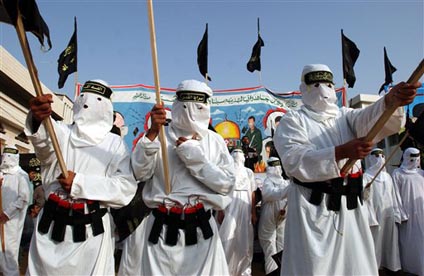
ARABIA_SAUDITA_-_terrorismo_islamico

Stay with me a little on this one…

What do we know about the so called ‘War on Terror’? Here are some of the facts as I think we can generally accept them;

  • The back story to terror is long and winding; having roots in old Colonial power struggles
  • Poverty and broken societies in which people lose hope and connection also tend to breed terrorism
  • Behind the scenes are many vested interests who tend to prosper in spite of the miseries experienced by those directly affected
  • Terrorist/freedom fighter? It depends on your perspective and whose narrative frames the context
  • Fighting insurgency and terror using invasive conventional forces tends to create the very conditions for the violence to increase
  • Simplistic ideas of good and evil entrench the situation into a bloody stalemate and tend to make things worse

The evidence for these statements (which I accept are value laden and open to debate) is fairly widespread, but as a case study, consider the rise of ISIS, which according to its own leadership only exists because of the invasion of Iraq, and the imprisonment of key activists in brutal military prisons, which effectively became academies for the religious and political movement which led to the very formation of ISIS.

But that has been said before- the point of this piece is a rather interesting comparison with the ‘War on Drugs’- by which I mean the on going effort to address addiction to substances within the western world- and my own situation in the UK in particular. In case it is not obvious why I am blogging about this, I am concerned on this blog to engage with things that might bring freedom to the captives, and proclaim the hope of jubilee to those who have lost hope. Addicts need this more than most.

heroin1

By any measure, we are not really winning this war any more than we are winning the one against terror. Those on the front line are suffering dreadfully, many are dying young after blighted half-lives. You can check out the stats in relation to UK drug use here. Whilst the longer term trend of hard drug use have been down (although this figure might be masked by a trend towards new patterns of poly-drug use). In 2013 to 2014, 3.1% of adults aged 16 to 59 were defined as frequent drug users (having taken any illicit drug more than once a month on average in the last year), a slightly higher proportion than in 2012 to 2013 (2.8%) but similar to the 2011 to 2012 proportion (3.2%).Young adults were more likely to be frequent drug users than older people. The proportion of young adults aged 16 to 24 classed as frequent drug users (6.6%) was more than twice as high as the proportion of all adults aged 16 to 59 (3.1%) in 2013 to 2014 and represented a statistically significant increase compared with 2012 to 2013 (5.1%).

For those who are addicted, the story is complex; The majority of those in treatment in the UK are heroin and crack cocaine users; many have been using for a long time and as they get older are experiencing chronic health problems. Recovery for these people can be incredibly hard, however many have made remarkable recovery journeys and now lead full and accomplished lives. Services have gradually come to realise that recovery is rarely the consequence of moral choices enforced by criminality, nor by seeing people as ‘sick’ and needing treatment (these being the two main framing narratives for institutional response to addicts.

One of the best articles I have read about addiction recently was concerned with an interview with disgraced former Independent columnist Johann Hari (collaborator with Russel Brand) who has written a book about drugs, full of his and other’s experiences. I will throw in a few quotes from the article as I return to the comparison with the War on Terror. Mirroring the points above;

  • Fighting a War on Drugs has a long history, full of Colonial vested interests too. In this war, the victims may be further victimised in order to achieve socio-political security for the moral majority.

I had no idea that the war on drugs was single-handedly invented by a racist ex-prohibition agent, who needed to find a new problem big enough to protect his departmental budget. One of the first victims of his ambition was Billie Holiday, whose heroin addiction enraged him to the point where he hounded her to death. After he’d had the singer jailed for drugs, she was stripped of her performing licence, and as she unravelled into destitution and despair, his agents continued to harass her, even summoning a grand jury to indict her as she lay dying under police guard in a hospital bed.

  • People living in poor deprived areas are twice as likely to be addicted. Addiction is then related to social justice

The book is populated by a compelling cast of meth users, junkies and crack addicts. Other than addiction, what they have in common is heartbreaking early trauma and abuse. Childhood violence and prostitution, abandonment and homelessness, all led their victims to the same remedy: a narcotic anaesthetic for pain and loneliness. “Human beings have an innate need to bond. Healthy, happy people bond with other humans. But if you can’t do that because you’re so traumatised by your childhood that you can’t trust people, you may well bond with a drug instead.” The scientific evidence of the correlation is so overwhelming, Hari writes, that “child abuse is as likely to cause drug addiction as obesity is to cause heart disease”.

  • The drug treatment industry is vast. Prisons are full of persistent offenders because severe addiction almost always drives people into criminality of some kind. Then then there is the medical side, ranging from the desire to find some kind of addictive gene, or to produce drugs to stop people taking drugs, etc etc.
  • Some drugs are more evil than others. We modern humans are driven to alter our consciousness in all sorts of maladaptive and dependent ways, in many ways that could be regarded as damaging. Most of these addictive patterns of behaviour are not only legal, but they are actively encouraged; eating, drinking, gambling, shopping, computer gaming, etc. The drugs field has been further complicated by the emergence of a complex and changeable set of what are known as ‘legal highs’. Fighting a war against drugs is a socio-political decision dependent on a historical context.
  • The traditional armies engaged in the War against Drugs very much remind me of the beleaguered armies of occupation in Iraq and Afghanistan. Contrast these two approaches;

Hari goes to Portugal, where all drug possession was decriminalised 13 years ago, and where even the police chief of the Lisbon drug squad now admits, “The things we were afraid of didn’t happen.” He also visits Tent City, a prison in the Arizona desert where the inmates live in tents in temperatures of 44C, wear T-shirts proclaiming I AM BREAKING THE NEED FOR WEED or I WAS A DRUG ADDICT, and are shackled into a chain gang every day and marched in public while reciting chants of repentance. “What I learned is that the opposite of addiction is not sobriety,” Hari says….“The opposite of addiction is human connection. And I think that has massive implications for the war on drugs. The treatment of drug addicts almost everywhere in the world is much closer to Tent City than it is to anything in Portugal. Our laws are built around the belief that drug addicts need to be punished to stop them. But if pain and trauma and isolation cause addiction, then inflicting more pain and trauma and isolation is not going to solve that addiction. It’s actually going to deepen it.”

  • Drug addicts are even spoken about by alcoholics as ‘Junkie scum’. As if they should be discarded as sub-humans. Our general societal approach is to simplify addiction to them/us, despite the fact that they are us.

…we’ve fundamentally misunderstood what addiction is. It isn’t a moral failing. It isn’t a disease. Addiction is an adaptation to your environment. It’s not you; it’s the cage you live in.”

There has been a shift in thinking in service land, as I mentioned earlier, towards ‘Psychosocial’ approaches, in which serious weight is given to context, adequate housing, wellbeing etc. However, as long as the war is being fought, at huge cost in resources and lives, then the focus can not really change.

Time to call for peace.

And sorry, this has to mean changing the law to decriminalise.

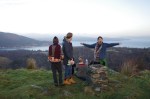
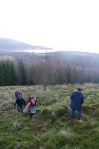
Before the storms came in, we went outside…

Winter Skies

It came, now it is memory. Our house was once again full of good friends, helping us celebrate the turn of the year.

My digestive tract is tender from the feasting.

My fingers are sore from playing instruments.

But my heart is warm from all the good things it has shared in.

Now the big old house seems empty and quiet. But this is good too; that is the beauty of festival and feasts- they punctuate the ordinary with the extraordinary. They bring us together to celebrate in excess; excess of food, of drink, of friendship, of loving, of laughing. But they can not last for ever, for what feast ever can?

The weather has been stormy and wet. On one day we ventured in the pitch dark and heavy rain up into Pucks Glen with torches to watch the cascading waterfalls foam white in the darkness.

But here are a few photos from another walk. I share them in gratefulness for my friends, family and the beautiful walk we make together…

New Years Resolution; STOP it!

Happy New Year to you all…

I offer this to those of us (lets be honest, ALL of us) who struggle with persistent habits and compulsions that life seems to lock us into. Some of you may be tempted to try to address these through the application of NY resolutions.

Stop it.

Just stop it.

TFT Christmas card 2014…

So, another year… This will be my 8th ‘Christmas card’ I think. Happy Christmas to you all!

May you all know the blessing of simple things.

May you be drawn close to those who love you, and may you love in return.

This year I offer you a picture from here, and one of my poems, from here.

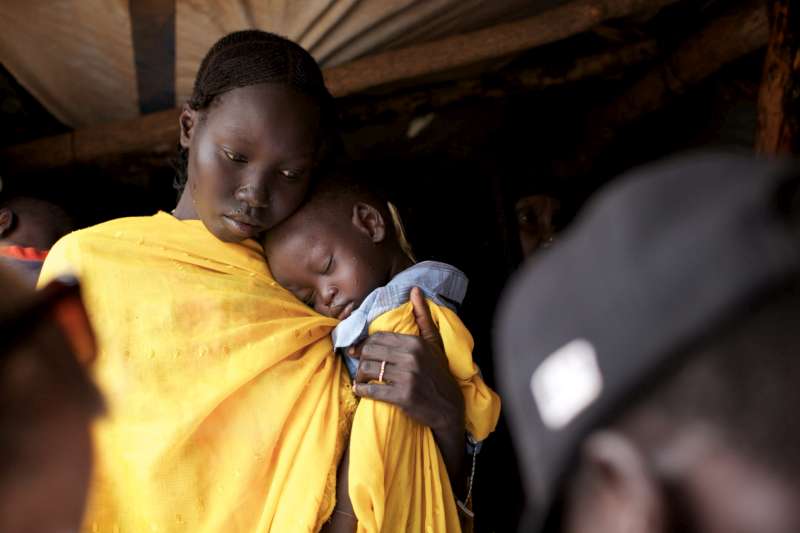
Soon, Jesus, Mary and Joseph would become refugees…

51a6191e6

The stable, BC


Hold me close, my gentle love

The night is cold and hollow

Make me a cave

Within your arms

And deep within I’ll

Burrow


See that floor all trodden down?

Let it be our carpet

Make me finest silk

Like buttermilk

From this feed-sack

Blanket


Let’s whisper dreams of things to come

When we are done with caring

When what we have

Will be enough

With a little spare for

Sharing


The light from stars is far away

It takes a long time falling

So just for now

It is enough

To hear your gentle

Snoring


A few moments in the life of community…

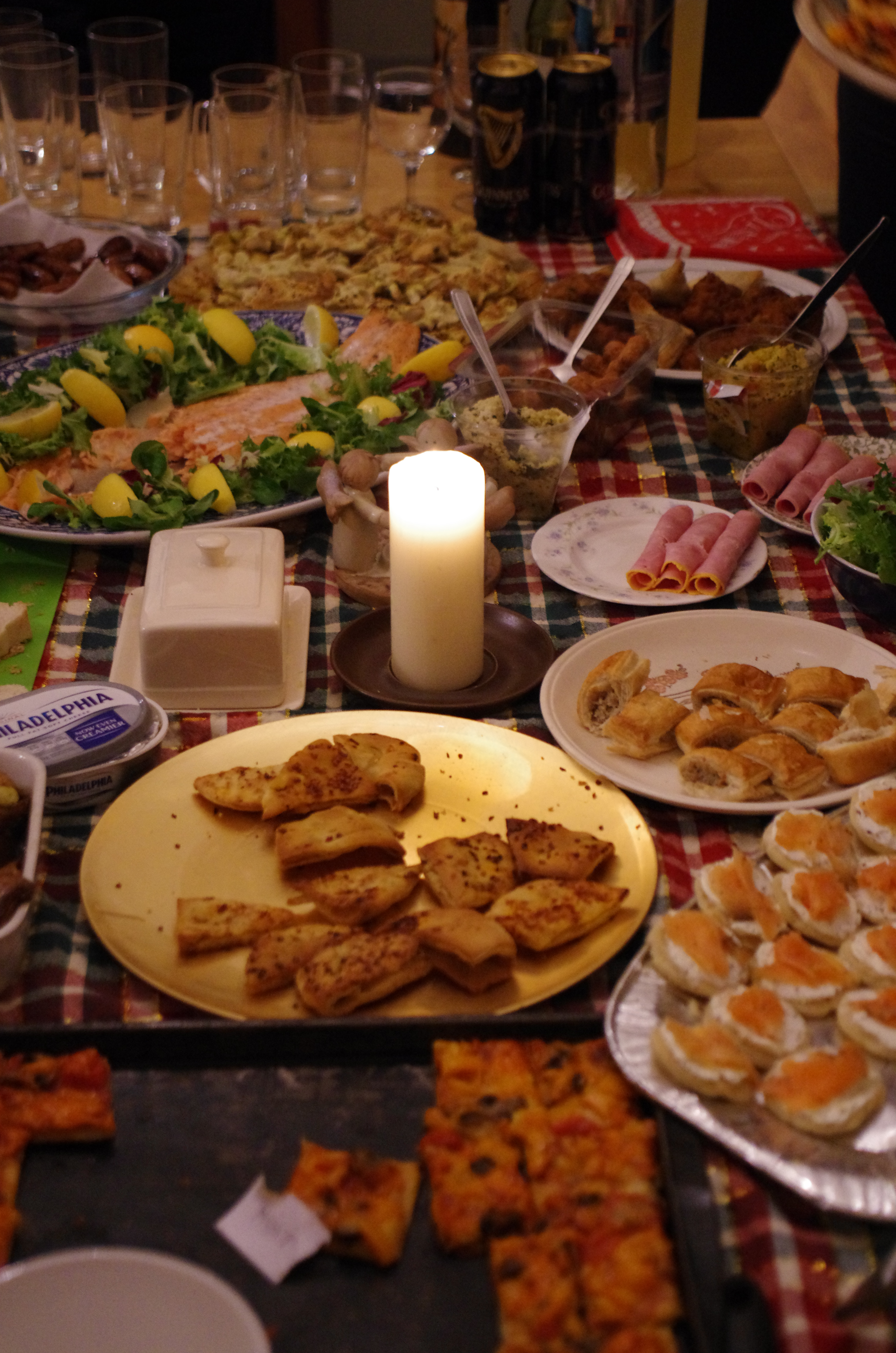
A loaded Aoradh table

I have been rather post-light on this blog of late- partly because of a new job with long hours and partly because I have been investing some writing energies into a long term project that I have shelved for too long.

I thought I would post a few photos that I gathered from my camera card today. A couple of birthdays (Simon’s 50th, Emily’s 19th) and some Aoradh eventing.

Last weekend we went on our annual trip carol singing round some of the nursing homes. It is always a special time for me- sharing Christmas music with people at the end of life, often suffering from dementia, is a rare privilege that I have come to feel deeply.

After this, we gathered with almost all the Aoradh crowd to have a meal together and then to share our Christmas gifts, ‘secret santa’ style.

It made me grateful again for my little community. Despite all the busyness and the mammoth cleaning session required post even (we met at our house this year) it was quite lovely.

Hannukkah…

hannukah

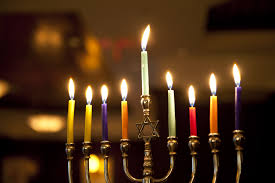
So, we are in the middle of the Jewish festival of Hannukkah, a minor Jewish festival that has perhaps gained prominence because of proximity to Christmas, allowing a festival alternative to Jews living in the West.

Hannukkah, also known as the Festival of Lights, Feast of Dedication, is an eight-day Jewish holiday commemorating the re dedication of the Holy Temple (the Second Temple) in Jerusalem at the time of the Maccabean Revolt against the Seleucid Empire of the 2nd century BCE.

The story of the Maccabees is the sort to stir up a certain kind of soul.

The Syrians ruled Judea after the death of Alexander the Great but in 165 B.C., after a three-year struggle led by Yosef Matityahu and his sons, especially Judah Maccabee (Yehudah Hahmaccabee in Hebrew), the Jews in what is now Israel defeated the Syrian tyrant Antiochus IV (“Epiphanes”), who had insisted on the institution of state-sponsored paganism, forced Jews to bow down to idols, and desecrated the temple (Beyt Hamikdash in Hebrew) in Jerusalem. Antiochus dedicated a pagan altar in the temple, and had sacrifices made to an idol.

After hard fighting, the Maccabees liberated Jerusalem and entered the temple that was the center of Jewish religious and national life, symbolizing national liberation. They removed the idol that had been set there for pagan worship, cleansed the temple of pagan sacrifice and rededicated it. The date of Hanukkah, the 25th day of Kislev, was chosen because it was the anniversary of the dedication of the pagan alter.

According to tradition, when the Jews cleaned the temple, they found only one small container of oil with which to light their holy lamps. Miraculously, the container provided enough oil for eight days, until new new oil could be made and purified.

As ever, we project the meaning we need onto our festivals. This from here;

It is a holiday of freedom, celebrating the victory of the Maccabees over the Syrians. It reaffirms the centrality of Israel and of Jerusalem in Jewish cultural life Without love of Israel and Jewish national existence, Hanukkah has no real meaning. Hanukah was was suppressed by the successors of the Maccabee dynasty, who were unfavorable to them, and remained a minor holiday for many years. Hanukkah, a celebration of national liberation and a military victory, did not fit well with the passive Diaspora culture of ultra-orthodox Jews. However, the holiday continued to be celebrated throughout the centuries and kept alive the embers of Jewish national feeling. With the rise of nationalism in the 19th century, and the rise of Zionism, Hanukkah assumed a new significance.

It is easy to see how the story of the Maccabees resonates with a particular kind of militant Zionism, intent on purifying modern Israel.

To celebrate a different kind of Hannukkah, I offer you a poem by the great Israeli poet Yehuda Amachai;

Wildpeace

Not the peace of a cease-fire,
not even the vision of the wolf and the lamb,
but rather
as in the heart when the excitement is over
and you can talk only about a great weariness.
I know that I know how to kill,
that makes me an adult.
And my son plays with a toy gun that knows
how to open and close its eyes and say Mama.
A peace
without the big noise of beating swords into ploughshares,
without words, without
the thud of the heavy rubber stamp: let it be
light, floating, like lazy white foam.
A little rest for the wounds—
who speaks of healing?
(And the howl of the orphans is passed from one generation
to the next, as in a relay race:
the baton never falls.)

Let it come
like wildflowers,
suddenly, because the field
must have it: wildpeace.

We Who Still Wait book now available…

We who still wait cover

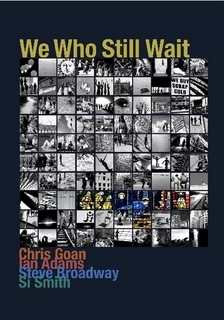
We Who Still Wait is now available in hard copy via the Proost website or from Lulu here. Cover looks lovely! It would make a fine topical Christmas present, if I say so myself… not too late to order a couple.

This is a project that Si Smith brought together, involving photography by Steve Broadway, meditations by Ian Adams and some poetry by yours truly.

If you are more into accessing these things as downloads then use the Proost website- you can download a bonus version with Steve’s lovely photos available for use separately…

Here is another one of the poems;

If Jesus had been born in Nazareth

If Jesus had been born in Nazareth
They’d prepare the way of the Lord
The in-laws would gather, take over the manor
Young Joseph would just be ignored

If Jesus had been born in Nazareth
The paths would have all been made straight
The midwife would chide, send the kids off outside
A whole village would stand by and wait

If Jesus had been born in Nazareth
He’d have a fine bed for his head
But while men smoked cigars and blew smoke to the stars
He was born in a stable instead

Jesus was not born in Nazareth
This king never needed a throne
The first thing he saw was dirty old straw
Our Lord was a long way from home

Snow…

trees, snow

No, not yet; just the name of a song.

I found an old CDR in the car on which I had put some music from the Paste Holiday Sampler a few years ago. It is a mixed bag, but this song captured my attention. Just the right combination of pathos, humanity and beauty…

Chickens, no more…

si smith, chicken

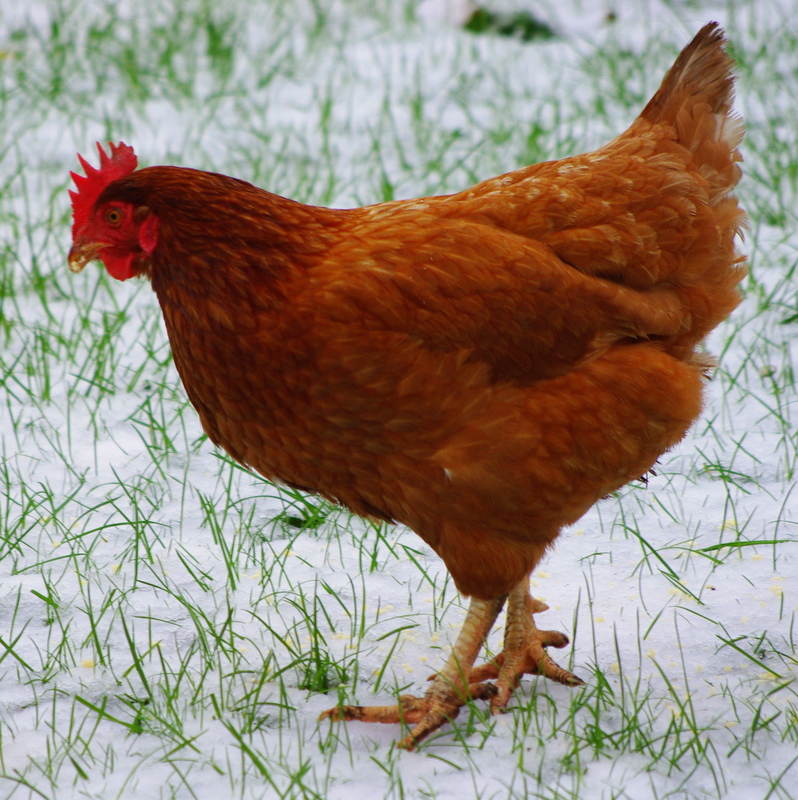
A couple of days ago something visited our backyard chickens and tore off their heads. Who knows what killed them; fox, pine marten, dog?

Will made the discovery on the way to school. Wet feathers in the grass. Blood. Death for no apparent reason. We humans invest so much in the animals we share spaces with. We give them human characteristics, personalities. And when they die, we rehearse a very human kind of grieving. Our chickens lived just outside the kitchen door (sometimes inside the kitchen door) and I keep finding myself looking for them.

But they were just chickens… we are sad for a brief moment and then move on. Still it leaves me wondering again about the world we are part of.

We promote ourselves to the centre of things, as if we humans broke this world and so each and every ripple in the smooth surface of celestial peace is down to the eating of that bloody fruit in the garden. Perhaps we did.

But perhaps too bad things just happen; sometimes for no reason. The world is light and shade. Grace and mindless violence. Chicken, and stoat. One can not really exist apart from the counterpoint provided by the other.

Meanwhile, after all the poultry inspired pontificating, I will be found in the supermarket, buying eggs.

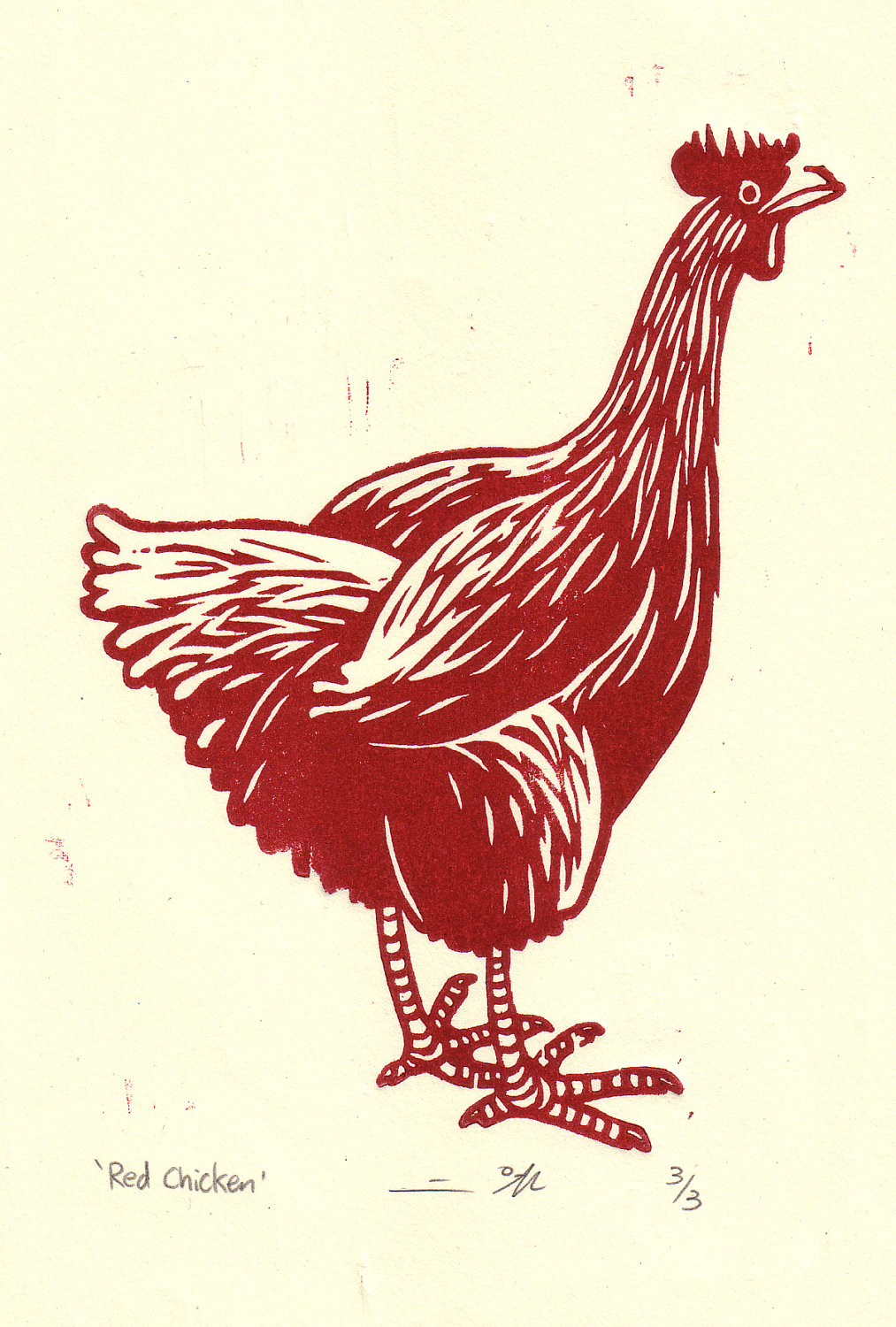
By the way, the lovely image above was done by Si Smith of one of the said creatures in the flush of health…

Nellie the hen, snow