I am running a poetry workshop as above. Anyone fancy coming along?
I do not really promise to teach you how to ‘write poems’- but we will spend the day immersed in words…
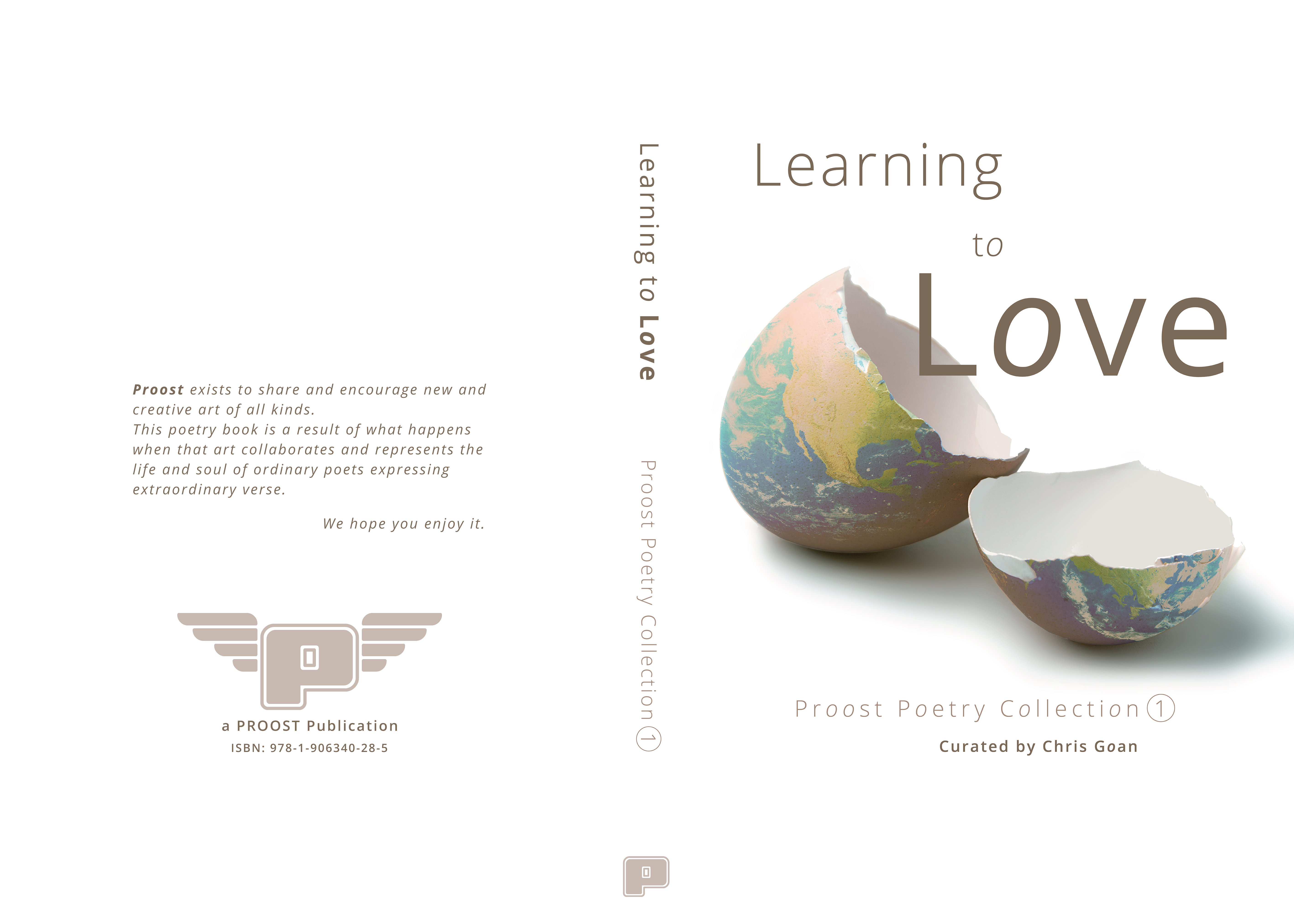
The book is now out!
You can get your copy (download or paper) here.
This from the blurb put out by Proost;
“We think this book typifies the reasons why Proost exists. It’s promoting people’s art and creativity. It’s giving people a voice and it’s sharing those voices with a wider audience. It’s almost an incredible good and very moving collection of poems. For those reasons we think it’s a fantastic resource and hope you’ll visit the site and pick up a copy.”


Here’s a poem to give you a flavour by Sheena Bradley
Being true
Before, I was not
And now, I am
In this place and at this time.
Rain, hail or shine I will hold up my head And bloom…And not just so that I might be seen, That I might be admired
No, I do not need your praise.Celebrated or unnoticed Until I’m trampled or I fade, For fade I will
I’ll bloom…
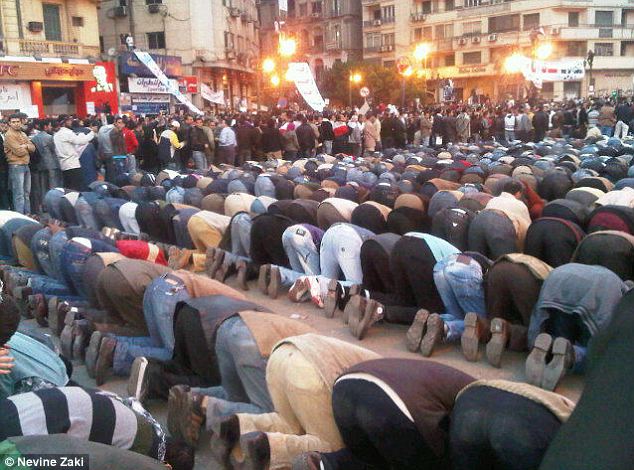
I have been thinking about our (often hysterical) response to the growth of Islamic extremism/militancy/activism/fundamentalism. Religion (particularly the religion of the other) as always portrayed as a force for bad, a force for evil even. It is impossible to envisage a militant Islam that sweeps into an area an brings good things. I am afraid I can not comment in any detail about the degree to which this might or might not be true now, but I do think we would do well to consider our own history…
A good place to start might be to look back towards Wat Tyler and in particular, John Ball, key figures both in what came to be known as The Peasants Revolt. There is a great programme by Melvin Bragg dealing with this period available on the I player.
The Key thing about the Peasants Revolt all the way back in 1381 is that the ideology that brought about a mass consciousness towards change was simply this- Christianity. It ended in dreadful persecution, mass hangings and a re-assertion of the power of Kings and Bishops and Lords, but it also changed the political landscape for ever.
What we know about John Ball is mostly told from the perspective of those Kings, Bishops and Lords that survived the Peasants revolt, but there is no doubt that for him, Christianity had only one logical outcome- something that we might recognise as an egalitarian state of equality re-envisioned by Marx. Rather than the opium of the people, religion was like gun cotton. This was the cry of ordinary people; When Adam delved and Eve span, who was then the gentleman?
Here is an excerpt from one of John Ball’s sermons, used to convict him of sedition;
‘Ah, ye good people, the matters goeth not well to pass in England, nor shall not do till everything be common, and that there be no villains nor gentlemen, but that we may be all united together, and that the lords be no greater masters than we be. What have we deserved, or why should we be kept thus in servage? We be all come from one father and one mother, Adam and Eve: whereby can they say or shew that they be greater lords than we be, saving by that they cause us to win and labour for that they dispend? They are clothed in velvet and camlet furred with grise, and we be vestured with poor cloth: they have their wines, spices and good bread, and we have the drawing out of the chaff and drink water: they dwell in fair houses, and we have the pain and travail, rain and wind in the fields; and by that that cometh of our labours they keep and maintain their estates: we be called their bondmen, and without we do readily them service, we be beaten; and we have no sovereign to whom we may complain, nor that will hear us nor do us right.’
John Ball, in J Froissart, Froissart’s Chronicles (1385) translated by GC Macaulay (1895)
Ideas are dangerous- religious ideas are perhaps more dangerous than most. But when faced with such manifest injustice and inequality, how we need dangerous ideas. How we need troublesome priests and prophets who will challenge us to take another look at ourselves.
There is a famous song about John Ball, written by English songwriter Sydney Carter, who also wrote other Christian standards such as ‘The Lord of the dance’, ‘When I needed a neighbour’ and ‘One more step along the world I go’. Here is one of my favourite (and avowedly atheist) musicians singing it;
Or by way of poignant contrast;
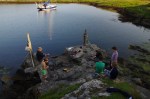
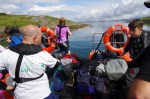
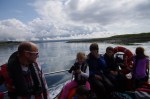
We are just back from a trip out to the MacCormaig Islands with a group of friends along with their kids. The idea for the trip arose from discussions about taking young people out to experience wild places, away from electricity, screens, amenities.
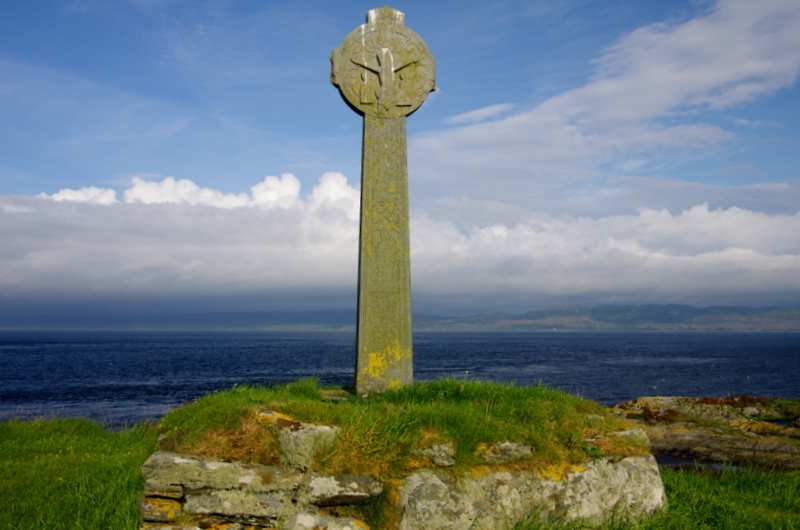
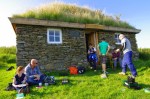
The island we chose was one that offered some protection from the elements (and as it happens, the midges) as it had a well maintained bothy. It is also a little less wild than some- having generally less severe terrain. It is not without interest though- having an ancient chapel, a hermits cave and a beautiful cove ideal for swimming. We were accompanied by a pair of otters, seals and countless sea birds.
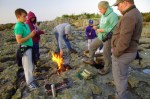
It worked. All out kids, ranging in age from 6 to 14 seemed captivated by the place, despite the challenges of weather, wet boots and of course the midges.
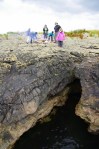
I will reflect on this some more in the future, but for now, here are some photos;
Will and I are off on a lads trip. I have been so busy over the last weeks that it feels like such a desperate need to get away from things for a while.
We are going to play cricket away down in Carradale, near Campbeltown, on Sunday, weather permitting. We are then camping out somewhere before meeting a group of friends of mixed ages and heading off by boat to a deserted island for two nights.
This is a bit of an experiment really- in taking our kids out into the wilderness, away for the possibility of any kind of screen based infotainment. To be fair, Will is really looking forward to it, but it is likely to be a shock to some. The island we are going to is the same one on which we have led ‘wilderness retreats’- this one in fact.
I saw this today and it seemed apt;
Below the broken houses
Under these shattered streets
The earth lies like litmus;
Bright red
Made toxic by all the anger
All the layers of pain
Fresh young blood
Worms its way
Into each holy strata
A general declares for war
“Until we have located and destroyed each tunnel”
As if it might be possible to rid the earth
Of moles
Or earthworms
But both are fed by what falls from above
Death makes fertile soil
For tunnellers
You have probably all already seen this- but I had not.
This was what the singer said here;
Hozier himself describes it as “a bit of a losing your religion song”. Written in the wake of a breakup with his first girlfriend, it is a love song, certainly, but also a contemplation of the idea of sin, drawing influence from Christopher Hitchens and a Fulke Greville poem, Chorus Sacerdotum, that speaks of mankind being “created sick, commanded to be sound”.
He has been startled by the lack of controversy the song has stirred, particularly at home. “That it got on Irish radio, the fact of that was amazing,” he says. “But there is very little loyalty left for the organisation of the church at home. The damage done is obscene. And the lack of action to make reparations, and the lack of political will to make changes. It’s very, very frustrating.”
The core of Take Me to Church is “about how organisations like the Catholic Church undermine what it is to be human and loving somebody else”, and the “offensive, backward, barbaric” notion that every newborn child is born into sin and must be forgiven by God. He has, he says, “a lot of strong opinions about the church”. His parents were raised Catholic – his father educated at a Christian Brothers school, and his mother at a school run by nuns. “And I think they made a very conscious decision not to raise their kids the same way. And I don’t blame them.”
Yesterday, on Venice Beach, a man was struck by lightning
Honed bronzed flesh was sparked to mere crackling
Many more were shocked.
I do not mean to be flippant at the death of fellow man
No matter how Biblical his ending
The rumble it raises in me is this question;
How did this become world news?
Who decided that one death among a million
Should be at the top of every news cast?
Meanwhile another dozen die in Gaza, nameless and barely noticed
A four year old AIDs orphan coughs his final cough in Mozambique
Fifteen people are killed in a crash outside Kandahar
Scores are killed on the streets of Benghazi as Libya slides into civil war
In Gineau 24 were crushed by rap music.
I should not be surprised –
We celebrate inequality in life
So why not also in death?
One soul does not weigh the same as another
White photogenic flesh is neon
Skin that is darker, dirtier
Is worn like camouflage
Even to the grave
Sometimes when you stare at the sea
You hear a distant pulse of an engine
But see no ship
It is close
Like a fast heartbeat
And sometimes the hackle of the gulls
Masked as it is by the sigh of the sea
Can sound just like the cry
Of a child
In distress
The roll of a wake
Is a whales back
Which emigrants
Are riding
Back home
I read this book recently;
It tells the story of Helen Percy, a Church of Scotland Minister and survivor of childhood sexual abuse, who was raped by an elder of her Church, before being ripped apart by a combination of the patriarchal Church archaic infrastructure and the national press.
Helen Percy writes beautifully, but I was left feeling that she is a soul still caught in the harsh headlights of trauma and I long for her to come home, wherever that home might be. Sadly it is unlikely to be the Church.
Read it if you want to understand something more of the life long effects of abuse in childhood. Read it too if you want to see the male institution of Church through the eyes of a young woman who found no mercy, just hard inflexible self serving judgementalism masquerading as justice.
It will break your heart.