Save the world, become a vegetarian…

DSCF4898

I have been a vegetarian for about 26 years. I would like to pretend that this is for the highest moral purposes, fueled by compassion for the suffering of creation, but this would not be truthful. The fact is, when I was a student, desperate to find some kind of place of belonging in a world in which I was a rather dysfunctional outsider, I found myself surrounded by people who did not eat meat. Most of them were more confident, better looking and certainly more socially gifted than I was. One of them subsequently became my wife- and she was a passionate anti-vivisectionist who regarded eating animals as a kind of murder. Given that she still loves me after all these years might suggest that I made the right choice- one that we have both continued with even though this is more through developed habit than passion.

Our vegetarianism is not really about health benefits- despite all the concerns about red meat and larded-clogged arteries. After all, chips, chocolate, crusty bread and butter with deep red cheese and sugar loaded pickle are still every bit as challenging to my waistline.

If asked about the reason for my choice to eschew the burger and the lamb chop I could not have honestly claimed to be angered by the death of little furry creatures for our glutinous pleasure. As we look out there, we see a vast ecosystem of flesh clawing at flesh. Killing to eat is not something that I can find any real philosophical, theological or moral objection to- even though I have never killed anything on purpose then eaten it.

This is part of the problem- I became increasingly convinced that if I could not see the chain of meat production managed in a caring, responsible way, including the killing and the butchering, then how could I take my responsibility as a steward of the earth seriously?
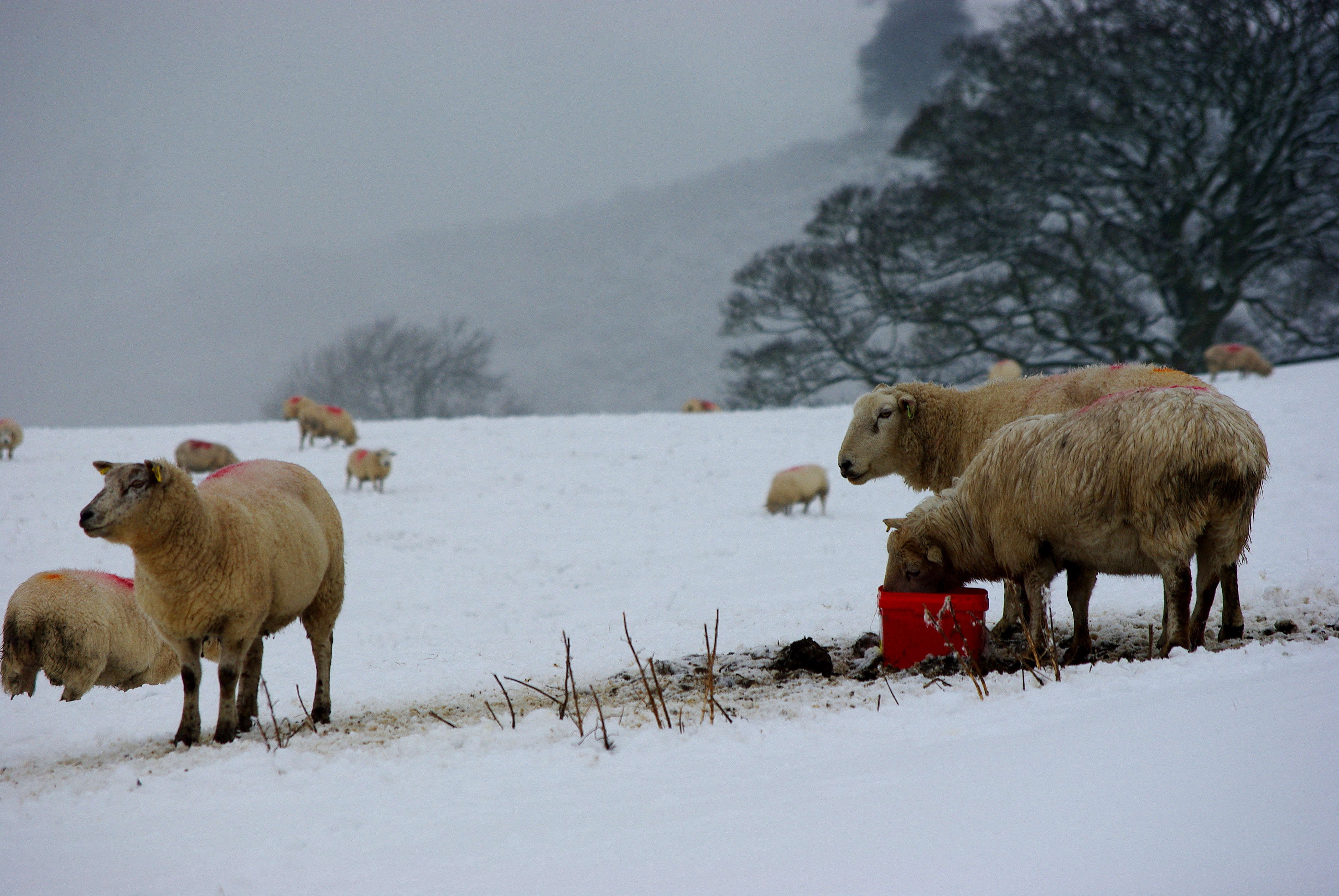
sheep, snow, hills

Since then there have been many reasons to be concerned about the weird world of meat production. Foot and Mouth disease, horse meat in beef burgers, the use of rotten ‘reconstituted’ chicken in hospital food, etc etc. All these scandals seem to be what happens when the messy business of killing is conveniently out of sight and enslaved to profit margins and the demands of the big supermarkets.

However, back in my student days, with pomposity and self righteousness that I blush about now, I would also mention another fact that influenced my lentil-love. I would point to the fact that land usage in some of the poorest parts of the world was being dominated by pastureland to produce beef for our burgers. In fact, rain forest was being cleared at alarming rates just for this purpose too. In those days I could probably even quote you numbers- read in the magazine New Internationalist. At the time McDonalds were forced to announce a change to their meat sourcing, insisting that beef came from local sources.

My musical hero also encouraged this view- remember the song ‘If a tree falls’ from Bruce Cockburn?

Cut and move on
Cut and move on
Take out trees
Take out wildlife at a rate of species every single day
Take out people who’ve lived with this for 100,000 years
Inject a billion burgers worth of beef
Grain eaters, methane dispensers.

Through thinning ozone,
Waves fall on wrinkled earth
Gravity, light, ancient refuse of stars,
Speak of a drowning
But this, this is something other.
Busy monster eats dark holes in the spirit world
Where wild things have to go
To disappear
Forever

The argument then was that our meat machine was wasteful, took productive land out of crop production, depended on stupidly high energy use and it was all for markets thousands of miles away from where the animals were raised. The alternative was to encourage local sustainable food production, local markets producing what local populations needed. Damn it, we might even be able to do this in the UK if we really wanted to- let alone in South America.

This all came back to me again when reading an article in The Guardian by Ian Jack.

An academic paper in the new issue of Nature magazine’s Climate Change journal warns of the consequences of eating red meat, not in terms of cholesterol levels and heart attacks but for its contribution to greenhouse gas emissions. Domesticated ruminants are the largest source of anthropogenic methane and account for 11.6% of greenhouse gases that can be attributed to human activity. In 2011, they numbered approximately 1.4bn cattle, 1.1bn sheep. 0.9bn goats and 0.2bn buffalo, an animal population that was growing at the rate of roughly 2m a month. Their grazing and feeding takes up a greater area than any other land use: 26% of the world’s land surface is devoted to grazing, while feed crops command a third of the total arable land – land that might more usefully grow cereals, pulses and vegetables for human consumption or biomass for energy production.

The paper’s authors argue that, with more than 800m people chronically hungry: “The use of highly productive croplands to produce animal feed is questionable on moral grounds because this contributes to exhausting the world’s food supply.” Other well-known consequences include tropical deforestation and the erosion of biodiversity, but unless governments intervene (the paper calls for “increased awareness among public and policy makers”) it seems unlikely that the demand for animal flesh can be curbed. But which popularly elected government will ration meat or deliberately price it as a luxury? More and more people, especially among the newly prosperous in India and China, have the taste for it. Animal meat production stood at a global figure of 229m tonnes in 2000 and at present rates of increase will have more than doubled to 465m tonnes by 2050.

The Japanese appetite for whale meat has disgusting results, as does the Chinese fascination for ivory trinkets; but elephant and whale slaughter is surely no more than a peccadillo in the context of the great, ever-expanding, overheating slaughterhouse that the world feeds from. Animals with single stomachs such as pigs and chickens produce negligible amounts of methane; perhaps – setting aside the cruelty question – we should rear and eat more of those.

The arguments are stacking up. If you want to save the planet, start by changing your own patterns of consumption. A vegetarian diet is no panacea, but it starts to make a lot of sense when you take a long look at it.

Others are starting to reduce their meat consumption, or pay-more-buy-local- finding out where the meat comes from, how it was looked after etc. Some are even doing that admirable thing- producing their own. We have chickens and a veg patch, but some of my friends keep pigs and sheep too.

People often ask me if I miss meat. I can honestly say that I do not. The smell of bacon in the morning is still a pleasant smell however, even though I doubt I could actually eat it. Burgers always look disgusting these days, cooked or uncooked. I have never enjoyed fish even before becoming vegetarian, although Michaela sometimes eats it. There are of course as many problems with over fishing and farming as with land meat production.

Pass me a carot will you?

DSCF5250

2014- could this be the year we start to reclaim Christianity from Capitalism?

rainbow church, Dunoon

I am not into making new year’s resolutions- I tend not to keep them. However this time of year is the time to take stock, to dream of what might be ahead.

As well as the personal stuff it is a great time to wave some spiritual litmus paper in the stew of culture that we swirl around in. What is there that we can celebrate? What should we protest? How does the life of Jesus within us open us up to new ways of living in this new year?

A year or so ago, I wrote a post reflecting on the relationship between Capitalism and Christianity. This seems even more relevant now as austerity measures hit the poorest and weakest in our economy. Something is wrong– not just at an economic level, but rather in our very ways of being.

There are some encouraging signs that the Church is starting to realise this however- and that we need to be the voice of instability, not conformity. Sometimes it seems that our religion is like smoke blown into a hive while the honey is stolen. The Pope appears to understand this, as does Archbishop Welby.

The problem, it seems to me, is that church often claims to be separate from society (the old sacred/secular duality) at the same time as being indistinguishable from it perhaps in the following ways (as listed in my earlier post but with a few refinements and additions.)

  1. By emphasising personal, individual salvation above all else. The only useful purpose of mission is to save people from hell after they die. This means that active engagement in any other activities (particularly ‘social issues’) is downgraded, or even downright suspicious. For many these activities are only really acceptable if used as a trojan horse to smuggle in the gospel message.
  2. By embracing success culture. We use the same corporate structures, we reward our religious successes as we would our CEO’s, we value hard measurable outcomes, we construct programmes about personal empowerment and success.
  3. We make mission a kind of hostile take over. Business success involves out-performing the opposition, and rejoicing in their bankruptcy. We need to sell more, penetrate all markets, dominate the marketplace, crush to opposition.
  4. Christianity became a lifestyle choice that required no change to the way we live our economic lives. Yes, I know there is the old ‘tithing’ argument around Evangelical churches, but we drive the same cars, live in the same houses, take the same holidays, fill our lives with the same gadgets- or (and here is the sting) even if we do not have these things, we aspire to them. St Jobs is venerated in many a trendy Christian Church every time people meet.
  5. We bought into lives characterised by individualism above the collective. The model given to us by the life of Jesus and the early church was all about learning to live in loving community- how we live for one another, how we hold things in common, how we find ways of including the poor, the weak. Can we still hold these things as defining characteristics of church?
  6. We failed to demonstrate any kind of radical alternative. The best that we have been able to offer is how to live as better Capitalists- more sensible, more responsible, with greater probity. The Protestant Work Ethic lives on- in each one of us who finds comfort in our pews as much as our pension fund (even if both are more sparsely populated than previously.)
  7. We did not see injustice, inequality, poverty, unfair taxation, usury, over-consumption, environmental destruction, as any of our business. Which relates to point 1.
  8. Even where there was visible discomfort with Capitalism, we lacked any coherance, we lacked leadership, we did not become a critical movement. Rather we splintered and focused on totemic side shows live homosexuality and women bishops- all of which destroyed our credibility to speak prophetically into our culture anyway.
  9. Our mission to the poor was conditional on redeeming them to become like us. Difficult one this, but stay with me. There are lots of examples of Christian engagement with the poor, from the good old Salvation Army right through to the new food banks. However, these activities might be seen as cleaning up the edges of Capitalism– but also justifying the dominant ethos. It encourages us to lift people back into becoming productive consumers – just like us. This fails to engage with any idea that we need to become more like them; that the problem is caused by people just like us.
  10. We forgot that the Church exists not to give us a better life, but to serve the lost and the least. If we are serving the lost and the least, how can we have convinced ourselves that our unsustainable greedy lifestyles are God-given rewards for our moral superiority- which we Brits built an Empire on, and then passed the baton to the USA?
  11. We failed to form partnerships with other grass movements for change. Because anything outside of the walls of our particular church is suspicious, we are reluctant to engage with all those good ‘holy’ groups whose members are seeking to redeem and restore- the environmentalists, those working for social justice etc.

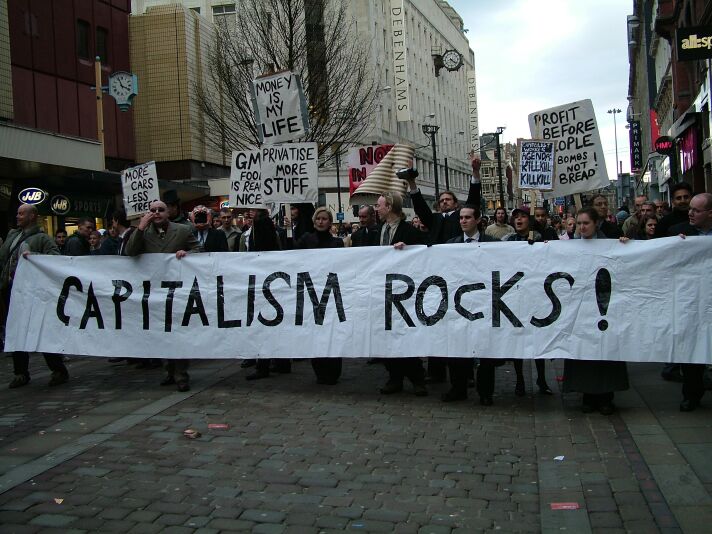
Occupy London Stock Exchange protest

I am not happy to leave this list just as a set of negatives, so here are my hopes/prayers for the Church in 2014;

  1. May our evangelical zeal be set free from the tramlines of heaven/hell. May our concept of salvation be much more gracious and generous, and may our evangelists be empowered to be agents of the Kingdom of God.
  2. May we see success for what it always is- a distraction from our call towards personal weakness, humility and love.
  3. May we stop competing.
  4. May we be among the first who chose to live differently- more simply, less driven by crazy consumerism. May we be a new kind of Amish people- not rejecting of technology, but neither enslaved by it.
  5. May our living draw us together, rather than forcing us apart.
  6. May our way of living be genuinely different- may we be consumers of less, wasters of less, sharers of more. May we party hard, love greatly, laugh a lot and weep when the time is right for weeping. May we be the first to demand products that last, that are updateable, that do not denude the environment or depend on the slavery of others and the raw materials dug out of some other part of the world for our own benefit.
  7. May we be angered by injustice, by poverty, by destruction of the beauty all around us, and may we express this anger in protest, in art, in full engagement.
  8. Rise up people who would show the way- give them a prophetic voice. Lead us out of our concrete wildernesses.
  9. May we see first the value in the other, not the rightness in ourselves.
  10. May we see our privilege for what it is; the inverse of the poverty of others.
  11. May we look for beauty and shine light on it. May we seek out flavour to savour with our salt. May we find out where Jesus is and try to join him there. May we seek partnership and friendship with other groups.

Let this be the year of a different kind of revolution…

capitalismrocks

Life glimpsed through winter trees…

_IGP4236

A few shots from a lovely walk up through the woods to the ‘Chinese ponds’ round past Toward.

We took a picnic.

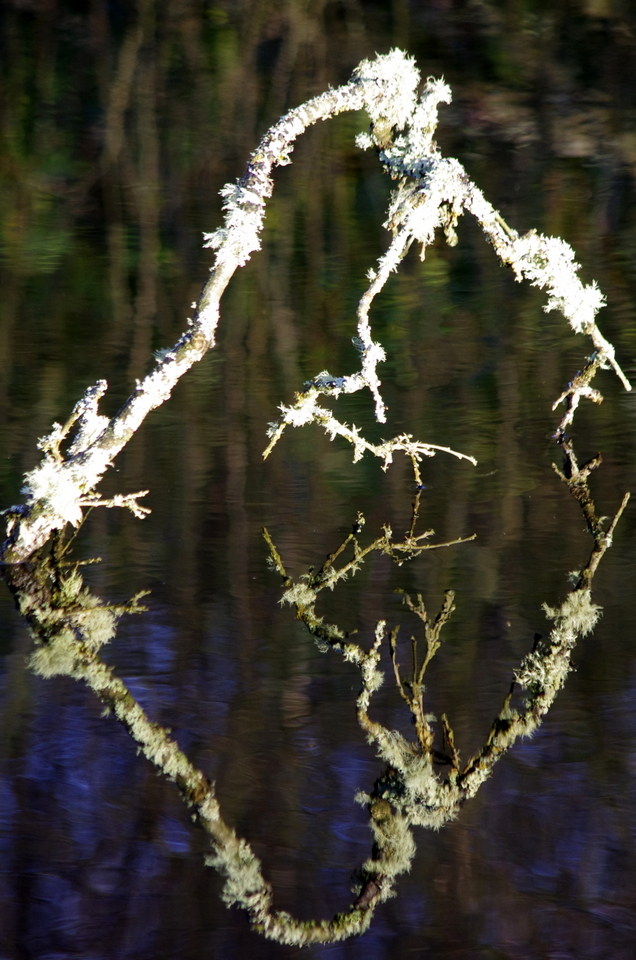
The trees always still you. They have this way of telling you that life is not for the burning, but rather is what happens as we pass by. Each bare branch wears its lichen colonies well, as birds flit through on some afternoon mission or other, unnoticed.

_IGP4226


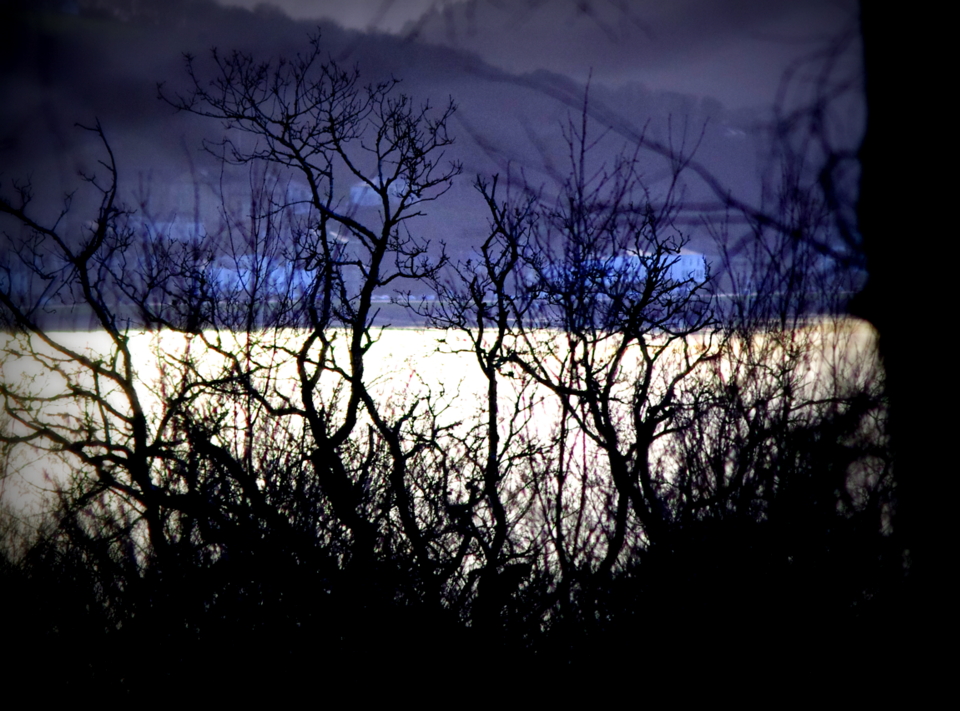
Meanwhile out beyond the branches, through forks and crooked boughs, the real world looks so angular, so predictable. I would stay in the woods. At least for a while.

_IGP4233


Happy New Year…

music montage


It is the morning after the night before.

We had a night full of music and friendship- this morning my fingers are very sore as playing for hours is a rarity for me these days. Head is OK though as I was restrained in the drinking.

Blessings to you all this new year.

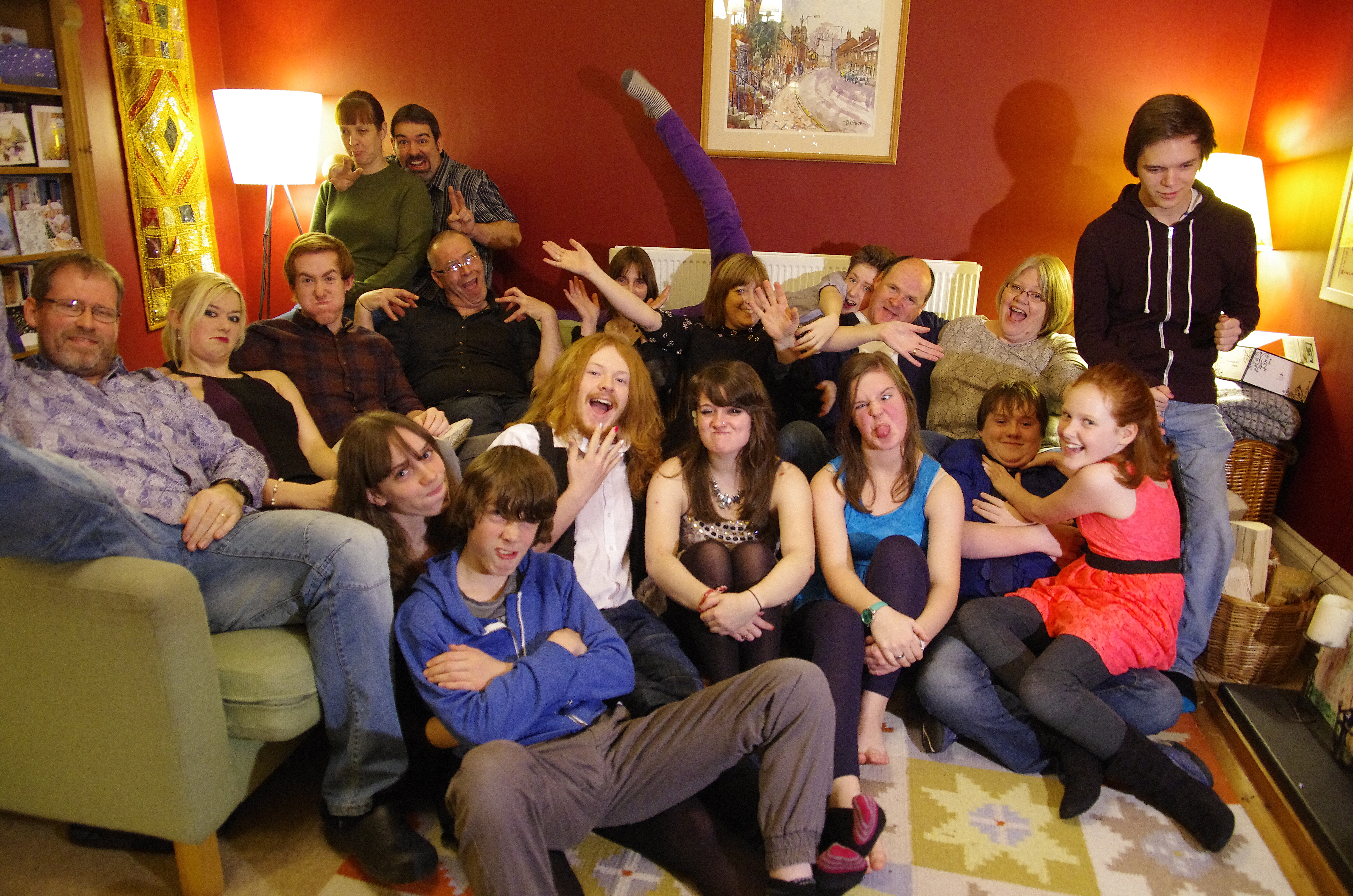
This is our group photo of those actually sleeping at the house;

_IGP5498

Temperate rainforest…

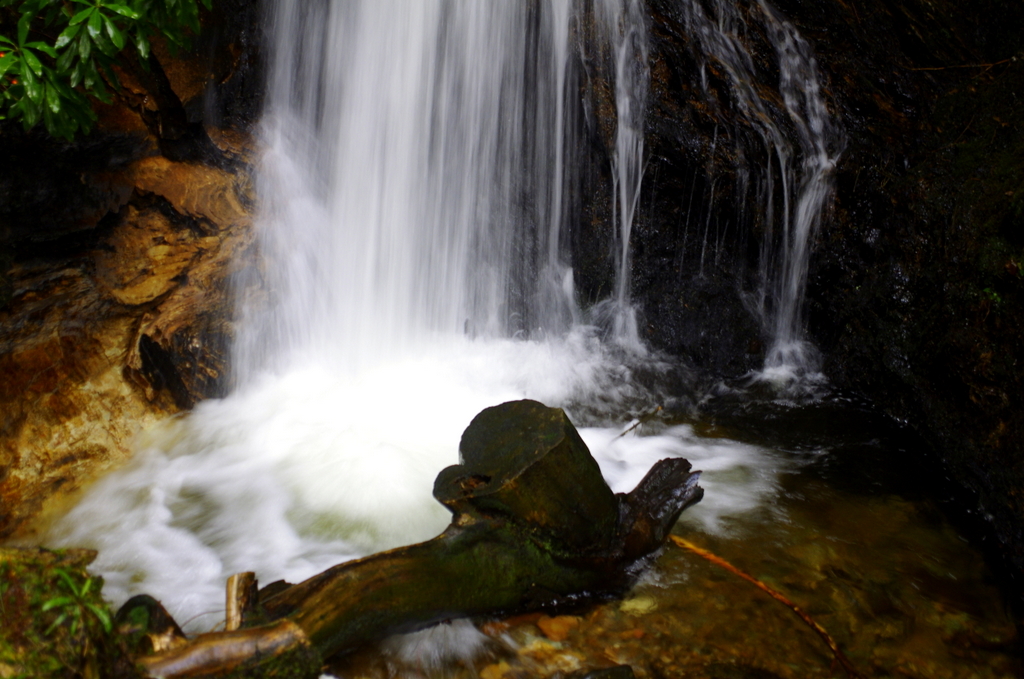
water falling, pucks glen

It stopped raining so we went off into the forest, getting some air before the arrival of guests who will be with us for New Year.

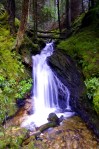
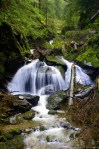
It is only a slight exageration to suggest that the forests of Argyll are part of the fragments of temperate rainforest left in northern Europe. Huge old trees in a sponge of moss and leaf mulch, well watered by the western Scottish climate.

As ever, my camera came along. I think I have a million photos of some of these places- searching for the play of light and the movement of water. I never quite manage it but some come close.


3 again…

toy train


3 again


Christmas came, then went

Leaving me overstuffed with sweet things


My son has ridden out

On his new bicycle

Tweeted it on last years tablet

Gangled his long limbs into new jumpers

Rolled his old-fashioned eyes at jokes

Smiled his easy way through slow days

Stretched on the sofa

Unlike me, oblivious to the time

Swiftly passing


Today he found a box of old toys

Spent two hours slotting wooden rails into pleasing curves

Marshalling brightly painted carriages

Careless of the dead battery in Thomas the Tank’s engine


Between Christmas and the turning year

There should always be a window

Where we can be three again


Brett Lee V. Piers Morgan…

A wee late Christmas present to myself this…

There is a cricket series going on down in Australia at the moment between England and Australia. These two sides have history, and encounters between them are always to be savoured. In my case this means ridiculously late nights, although at present England are being hammered into the ground.

William and I (who both play as much cricket as weather and family allow) often discuss what it must be like to face up to one of the fast bowlers, tearing in and trying (literally) to knock your head off. Anyone who thinks of cricket as a sedate gentlemanly sport should think again- even at club cricket level there are many bowlers far too fast for me and I have the bruises to prove it.

Fast bowling is about intimidation. Facing up to someone who has the ability to put the ball either at your feet or bouncing into your ribs at real pace is a test for anyone. Good batsmen always seem to have much more time- no idea where they get it from of course, as the ball will take about half a second to get to you from leaving the bowlers hand.

Abrasive motor-gob Piers Morgan, fresh from his spell as a news anchor on CNN (taking on the American gun lobby) fancies himself as something of a batsman. In fact, he has been slanging off the ‘pathetic’ England team for their apparent cowardice in the face of the Aussie quicks, suggesting that they should just ‘grow a pair’. He reckoned that he could manage just fine, so challenged the very quick former Australian fast bowler Brett Lee to send down a few at him.

Here he was on twitter beforehand;

I’ve only got a few teeth to lose, you’ve got a whole reputation that’s going to be shattered.

It did not go well;

He tweeted: “Full injury list post @BrettLee_58 showdown – cracked wrist, bruised rib, and massive egg on back of head from…the throw-down guy.”

He added: “For the record, I didn’t actually see a single one of @BrettLee_58 ‘s deliveries. But I felt 4 of them crashing into my flesh.”

Lee replied: “@piersmorgan that’s what happens when you talk it up.”

On reflection, perhaps I will leave facing fast bowling to my son.

Potting on boxing day…

glaze

We have had a lovely Christmas day. Just the 4 of us and a slow day listening to music, laughing a lot, eating too much and watching cheesy films. I had some lovely gifts (thanks everyone!) and enjoyed helping Will put together his new bike. Emily has been in great form too, making us all laugh like drains- mostly with her, occasionally at her.

There is only one potter in our family- and this is Michaela. However, she lets me play around with clay from time to time. Usually she gets a bit fidgety whilst looking over my shoulder but that is fine with me.

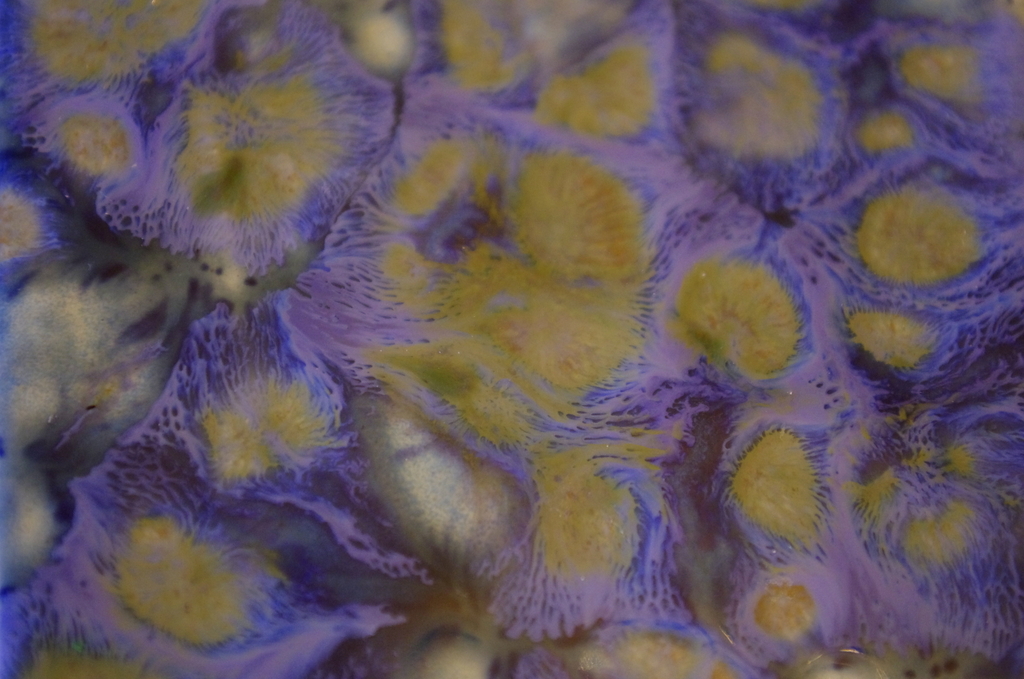
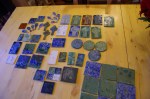
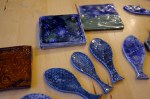
I enjoy mixing up ceramics with metal and wood to make things that speak of the sea. The glazes we use are mostly sea colours- you never quite know what magic will happen in the kiln though. I have also been using some shapes to impress into the wet clay to make celtic crosses and the like. What better way to spend Boxing day?

Here are a few of the things I have been making;