
Vilifying the ‘other’- benefits and dehumanisation…

A-Jobcentre-office-007

A few days ago I was having a conversation with some friends about my experience of claiming unemployment benefit last year. In the room where a couple of doctors, two ministers of religion and a buyer for a large company- all of us with loads of education, years of contribution to our society, each with families and houses. Most had been in receipt of benefits at some time.

I found myself doing two things, both of which now feel like some kind of betrayal.

Firstly I felt the need to justify claiming benefits- out of a sense of shame. I talked about it (unwittingly) as some kind of sociological experiment. I added in a little bombast about all the years I had paid national insurance contributions and that claiming in my time of need was an act of civil justice that I felt myself entitled to. I don’t know if I convinced my friends, but the words certainly felt hollow in my ears.

The second thing that I heard myself doing was to describe my relationship with the staff at the job centre- how many of them knew me as a social work manager, and responded differently too me- in a confused way perhaps- unable to look me in the eye. I also told the story of how I saw a claimant ( a man I knew from my previous work) treated really badly.

What I was doing of course was distancing myself from the role of ‘claimant’. I was casting myself as an agent of class consciousness, humbling myself like Jesus, but really being ‘different’.

I listened to the stories of the other people in the room as they described their time claiming unemployment benefit- after redundancy for example – and it occurred to me that I was not alone in my ability to find ways of seeing myself as different- not like the others.

In my case this goes deep. I grew up as the child of a single mother, entirely reliant on benefits. We had clothing grants, free school meals, even vitamin enriched orange juice to try to ensure health. As I grew older, I enjoyed a free education, right up to degree level. I am a child of the Welfare State. In some senses I have spent my whole career trying to pay it all back- believing that the only job worth doing was one in service of the poor, the weak the broken. But when I look back at my childhood, the primary emotion I remember was shame, embarrassment, the feeling of being less-than, outside-of. Factually I know that these feelings are not fully rational- how could I help the position I was born into? However, they remain strong even now, and I did not realise how much until recently.

These emotions are pervasive and damaging to those of us who spend any time on benefits. It is hard not to lose our selves, hard to keep rising and creating new things, new ideas, new projections of ourselves. Friends of mine who are on disability benefits are both reminders of this (because I know how hard it is for them) but also transcend this daily. They are able to live fully and deeply in ways that I still find hard. I celebrate them as heroes.

But currently things are being made much harder for people who are on benefits. This from here;

Decades of findings in sociology and psychology tell us that as soon as a group can be defined as separate, as an “outgroup”, people will start to view them differently. We’re all familiar with the negative characteristics people seem to identify with benefit claimants. They’re lazy, dishonest, stupid, “scroungers”, and so on. But there are also deeper, largely unconscious beliefs that likely have even more profound and insidious effects. These have to do with whether benefit claimants are even felt to be truly, properly human in the same way that “we” are.

This idea comes from a relatively new body of work in psychology on something called “infrahumanisation“. The infra just stands for “below”, as in below or less than fully human. The term was coined by a researcher at the University of Louvain called Jacque-Philippe Leyens to distinguish this milder form of everyday dehumanisation from more extreme kind associated with genocide.

This is a fascinating (and quite scary) process whereby certain groups are not felt to have the same range of emotional experiences as everybody else. Specifically, while people are fine imagining them feeling basic emotions like anger, pleasure or sadness, they have trouble picturing them experiencing more complex feelings like awe, hope, mournfulness or admiration. The subtle sentiments that make us uniquely human.

Not all low status groups are in this invidious position. Some – for example disabled people and the elderly – tend to be disrespected, but are also felt to be warm and unthreatening. There are only a few groups that have the dubious honour of being considered to be both threatening and incompetent. These include poor people, homeless people, drug addicts and (you’ve guessed it) welfare claimants. It is these most stigmatised groups that people have the most trouble imagining having the same uniquely human qualities as the rest of us.

You can try it for yourself. Imagine the most stereotypical “chav” you can. Imagine their clothes, their surroundings, their posture, their attitude. Now imagine them feeling surprise, anger, or fear. Easy right? Well now imagine them experiencing reverence, melancholy, or fascination. If you found that just as easy, congratulations. But I’d bet for a few of you it was just that bit harder. I’m ashamed to admit it was for me.

The reason this is scary is that it takes the “infrahumanised” group out of the warm circle of our moral community. If we don’t think of them as experiencing the same rich inner life that we do; don’t imagine them feeling things in the same way that we do, then we lose some measure of our empathy for them, and consequently our sense of ethical obligation. This would explain why people are so tolerant of the cuts – on an unconscious level, the people being hurt aren’t real, full people. If this is true then fighting the cuts is going to be much, much harder than just fighting myths and misapprehensions.

The most shocking thing about this kind of dehumanisation is that it is found most present where the respectable folk gather- in our churches, in out prosperous neighbourhoods, around the coffee machines in posh coffee bars. It is how good people justify privilege and inequality- be that material/financial or the blessing of emotional/psychological resources that allow us to gain a position of security that others fail to reach.

But let us remember that shit happens. Each one of us is only an unpredictable event away from needing to claim benefits. If this happens, we will start out with a conviction that we are different, but perhaps we are not.

There are many reasons for followers of Jesus to stand against prejudice and dehumanisation. The hope of a better society, the call to include the outsiders, the call to bring justice to the oppressed. Perhaps too we can just remember that if we allow the current nasty victimisation heard in the press and the politicians mouths to go unchallenged, we all lose.
Watch this; “the enclosure act mark 2″…

In the Name of Greatness is Dorothy Allen-Pickard’s winning film in the documentary category of the Intergenerational Foundation young filmmakers’ short film competition in association with the Guardian and the National Union of Students. It is written and performed by Nicki Williams.

It combines a powerful poem with moving images to address questions of debt, greed, consumerism and the need for community.

And it is a new poetry of protest…

Aoradh wilderness retreat, 2013…

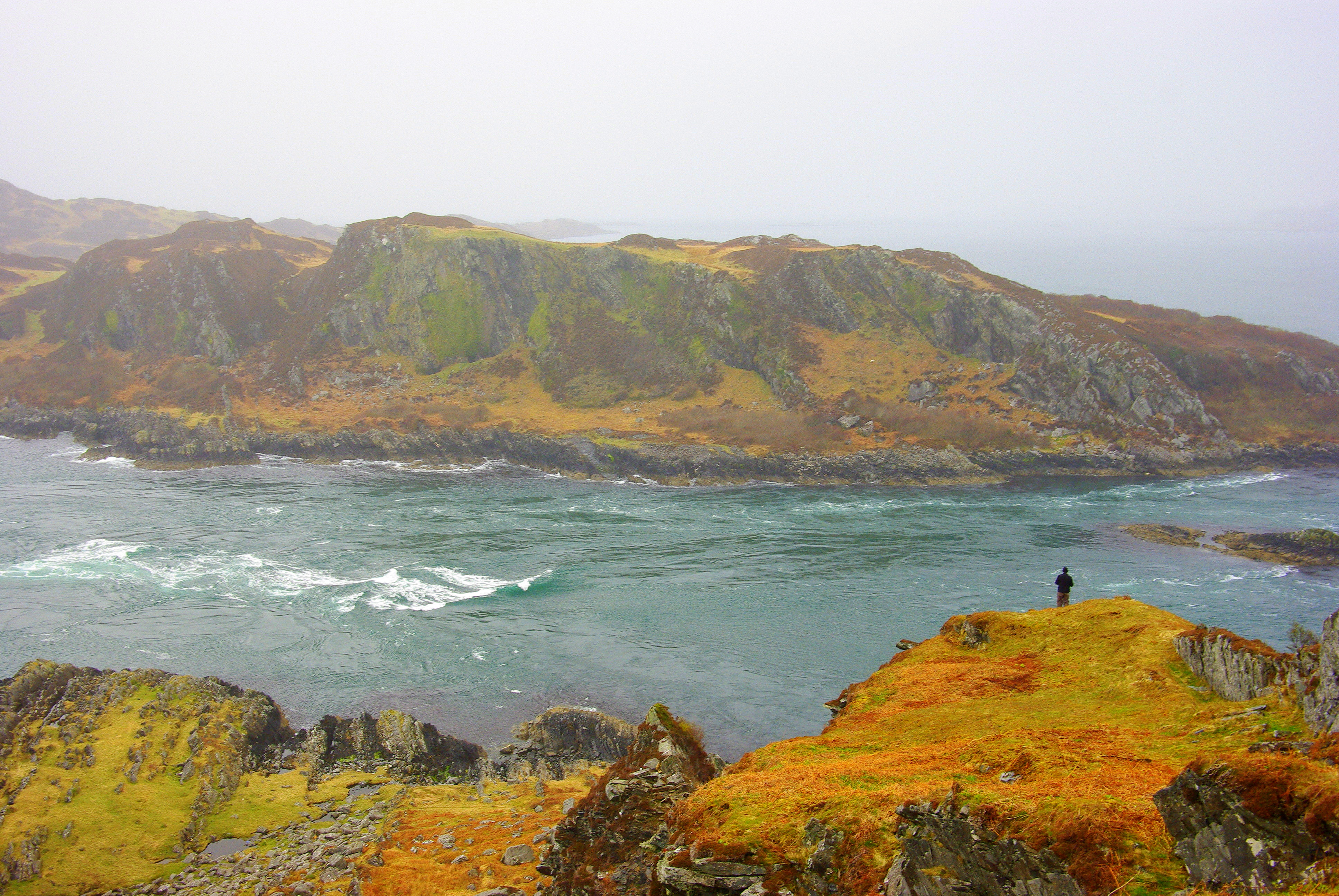
Andy in contemplation above the Grey Dogs tidal race

I am back!

Sadly, we did not manage to get on to Eileach an Naoimh, our planned retreat venue this year- the weather made a landing (via small inflatable from larger boat) rather dicey. Lindsay, the skipper of Sea Leopard II (highly recommended if you are in the need of a boat charter in these parts) had a good try,  from a couple of different points, but a storm was approaching, leaving only one sensible choice.

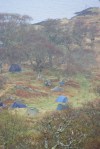
We had the choice of loads of other venues in the area, but opted for the northern end of Scarba- offering shelter from the approaching south west storm in the old birch trees in the hollow of big hills.

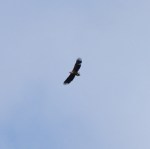
It was stunning, despite the weather being a challenge- made all the more special by two sea eagles who were our constant companions- huge birds, with 9 foot wingspans riding the winds over the raging tides of the Grey Dogs.

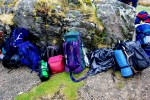
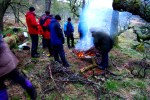
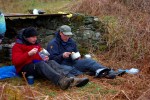
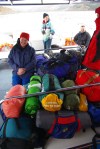
This year there were 11 of us who traveled in the end- a really great bunch of blokes from all parts of the country and many different walks of life. We had lots and lots of laughter, times of deep silence, prayer, fireside conversations and experienced the close camaraderie of sheltering in a rudimentary shelter rigged expertly by Sam and Neil.

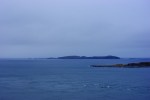
There is so much I could say (and probably will) about our days together, but for now here are a few photos;

Thoughts on retreats in wild places…

The Garvellachs

I am going here again in a couple of days.

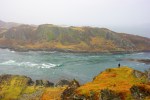
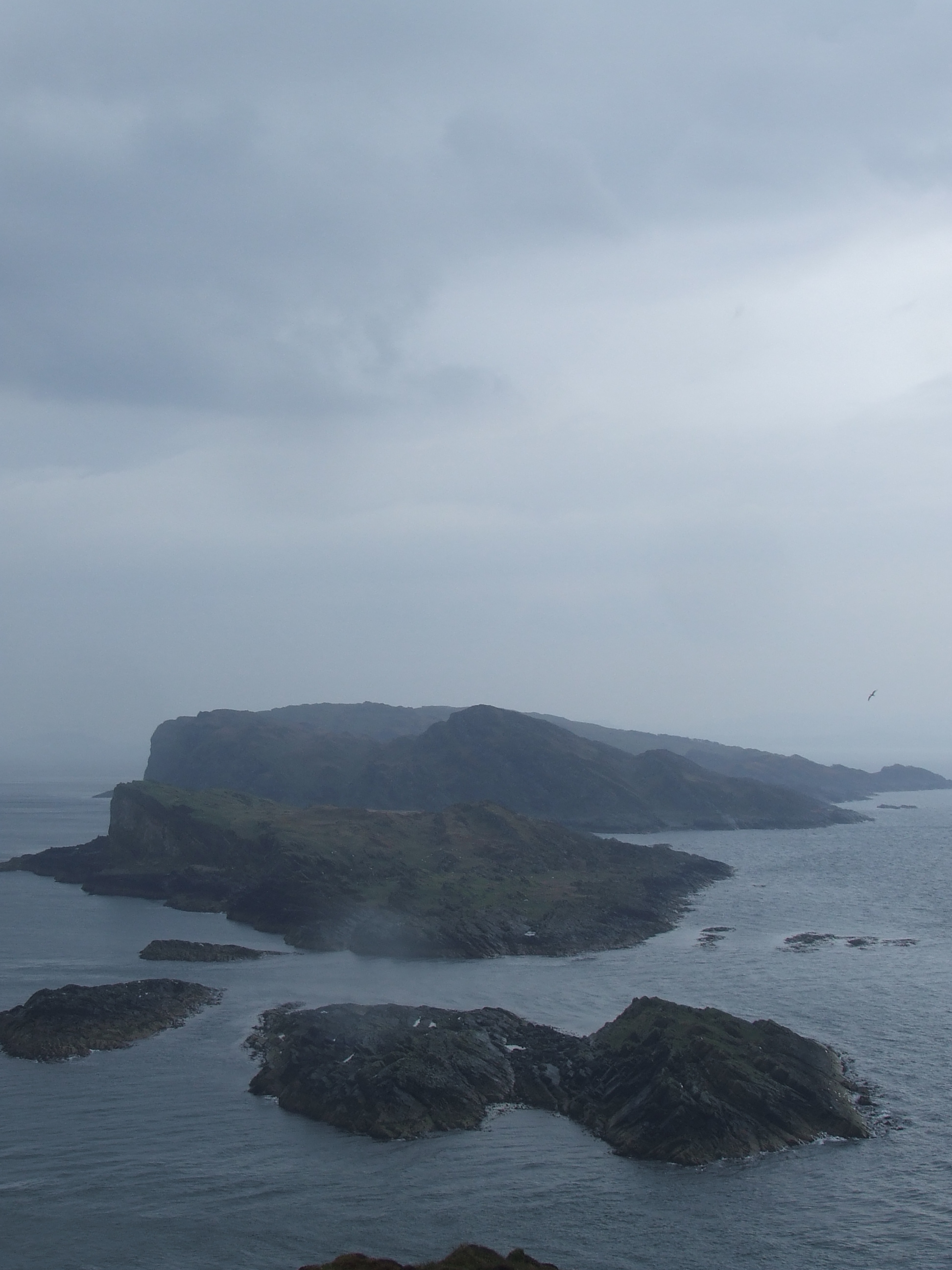
It is time for our annual Aoradh wilderness retreat. Each May bank holiday weekend, usually with old friends and invited guests, we hire a boat to drop us off for a couple of nights camping wild on an uninhabited island. This year we are returning to Eileach an Naoimh, one of the Garvellachs in the Ross of Mull, Inner Hebrides. The photo above was taken looking north at the other islands in the chain a few years ago, in less than ideal weather. The forecast for this weekend is better thankfully.

Eileach an Naoimh, even by west coast of Scotland standards, is a stunning place. It has soaring cliffs full of nesting birds on one side, and a rising green slope the other. It is also the site of an ancient Celtic monastery;

About 542, St. Brendan the Navigator founded a monastery on Eilach, presumed to be the island, possibly because of the combination of its isolation and good grazing. This may make the remains the oldest extant church buildings in Britain, although the earliest written record of its existence dates from the late 9th century. Columba is believed to have visited the island and it is one of the proposed locations of the Columban retreat isle of Hinba. Eileach an Naoimh may be the burial site of Columba’s mother Eithne.[5][6]

Remains of a chapel on Eileach an Naoimh

The monastery was destroyed by – or, at least, may have become excessively vulnerable to – Viking raiders, from about 800. The island has probably seen only intermittent occupation since, which has contributed to the survival of the ruins of many of the monastic buildings, including two chapels, beehive cells, and a graveyard with three crosses and another circular grave. The cells are contained in a pentagonal enclosure overlooking the rocky landing place on the south, which is guarded by various skerries. Beyond the enclosure there is another cell with two rooms. The oldest chapel is rectangular and may date from the 11th or 12th centuries.[7] The monastic ruins are the oldest ecclesiastical buildings in Scotland and the site is in the care of Historic Scotland.[8][9]

One of the lovely things about our retreats has been the chance to share the experience with others- friends and friends of friends – people who sometimes have never camped before, and certainly have never experienced that ‘noisy silence’ that is a Hebridean evening.

In case this sounds a little bit too idylic and romantic- there are many challenges of such journeys. It can be cold, very wet, and uncomfortable. There are no toilets, no tap water, no shelter apart from that which we make for ourselves. If the weather is kind, it is easy, but the weather changes so much even over a couple of days- this is one of the joys of being in such places; you see the weather coming, and you see it go. Sometimes it hits you right between the eyes.

I have been having lots of conversations with my friends about what we do, how we prepare, what we take etc. There are all the practical details- how much kit, what to leave out etc.

Then there have been discussions about what makes this a retreat, rather than a group of daft folk who like to get down with wilderness (which is worth doing in its own right after all.) Our trips evolved from friends being fools to friends trying to be more deliberate in our engagement with the God of wild places. These days we have simplified what we do considerably- we divide time into silent and communal, and gather round a fire in the evening using simple rituals to reflect on the day. This time we intend to use one of the chapel buildings to follow a days monastic pattern.

Finally I have had lots of discussions about how we best use our time, and what to bring that might help. I usually suggest that less is more- the fewer things we have between us and the nakedness of a wilderness experience the better. All sorts of things that in their own right can be good- books, cameras, art stuff etc, can become like static clutter: flotsam that chokes the pristine shore line.

What I always find most powerful is the combination of immersion in beauty alone, and then sharing this with times of companionship, laughter- making our individual experience communal.

One discussion with Sam surrounded what to take to write on. I have always taken notebooks and pens, but despite my conviction that (for me at least) writing is a primary spiritual discipline and practice, I usually write very little- in fact, when I try, what I write tends to feel forced and false- like I am doing it more for someone else rather than for me (or God.) I have felt a little guilty about this in the past- almost as if I am not doing it right- that I am playing at something.

I was reminded about this when listening to one of my favourite poets speak. Norman MacCaig’s work is saturated with wild Scotland- in particular the area called Assynt.  He spent each summer there walking fishing, meeting friends and sharing a dram or two. What he did not do over these summers was to write- this belonged to the darker times- when the wilderness came back to him- sometimes all in a rush- his famous ‘two fag’ poems. MacCaig had no religion- he was a avowed athiest – but his words have a life in them that I love.

Here he is speaking, and I find myself startlingly in agreement with much of what he says about the creative process- my love of free verse, and music, and my love/hate with imagery, which I feel like an addiction. I do not smoke, but my poems also usually drop out in no time at all, as if from nowhere. Or perhaps from seeds sown in the wilderness.

But I am getting technical again- there is time for all this writing later.

After the island.

Freemasonry- benign oddity or the seed of corruption?

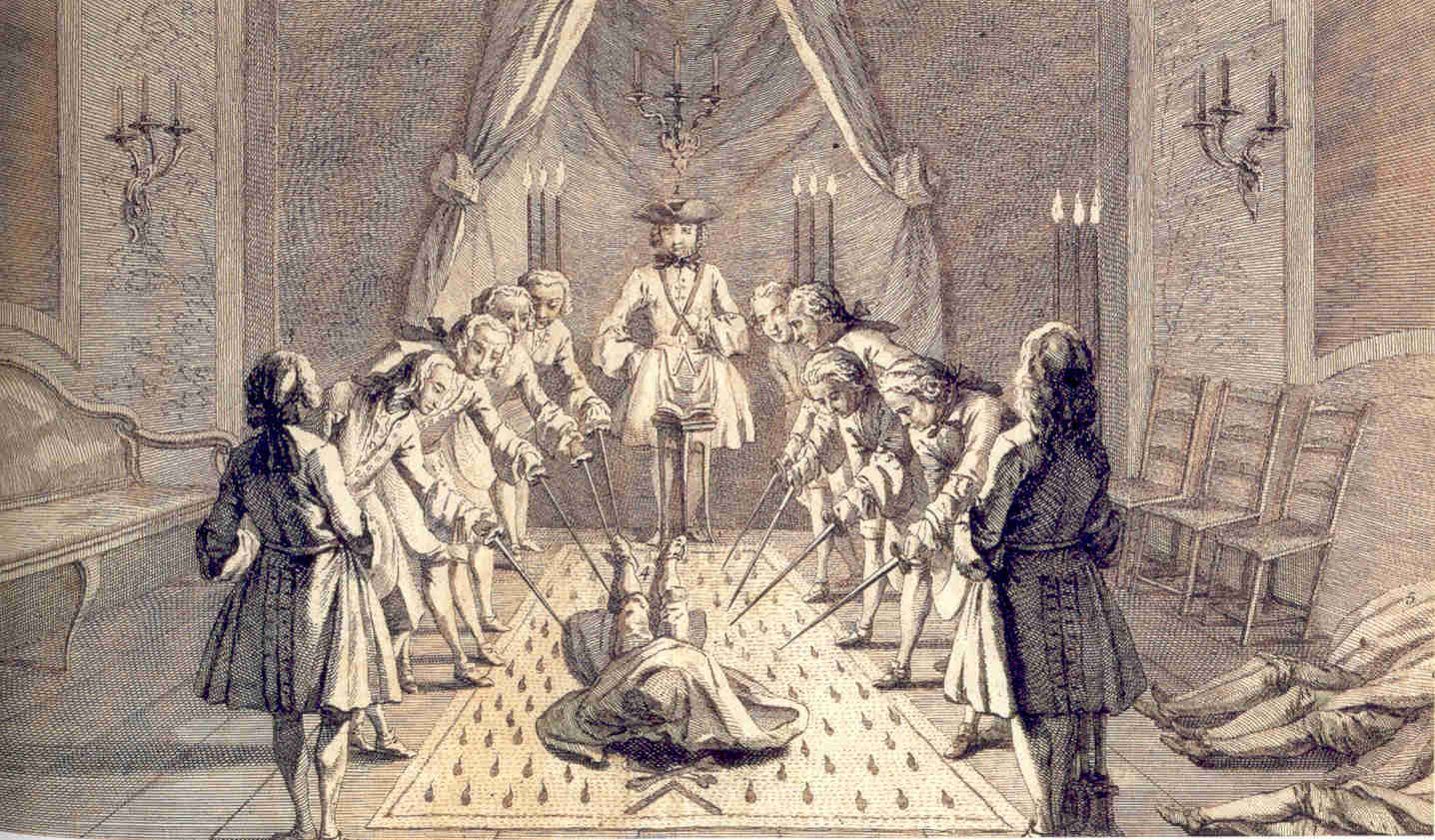
freemasonry

A few years ago, some friends and I put together a festival of art and worship in and around our home town. We brought together all sorts of music, visual art, prayer rooms, poetry. The final event was a worship concert led by a worship leader/song writer from England, who shall remain nameless- suffice it to say that he is of a prophetic bent.

The final concert drew a lot of people- the festival had been rather successful in gathering together our rather disparate and sectarian denominational groups. Sadly, not many people stayed to the end. The worship leader was used to lashing up a Holy Ghost storm, and when the response was more -shall we say – West of Scotland Presbyterian, he switched into Spiritual Warfare mode. It became a train wreck, and I am still wincing as I write this.

The rights and wrongs I will not debate fully here, but one of the issues that the worship leader thundered about was Freemasonry. His declaration was that it was the work of the devil, and the reason for all the spiritual oppression that held us all back from worship, and prevented God from working in our area. I always thought this to be wrong in both theory and application, and even years and years later, there are people in my town who regard Aoradh with great suspicion because of this event.

But what of Freemasonry? I was reminded again of the weirdness of it all whilst reading this article. It is an adventure into Co-Masonry, an order that welcomes men and women alike, but points out that all forms of Freemasonry in the UK are in decline, and have an aging membership.

At its postwar peak, membership of a fraternity that began as a sort of union for medieval stonemasons was boosted by returning armed service personnel as well as some of the most powerful men in the land. George VI, who died in 1952, is the last British king to be listed on the official UGLE website, which also includes Winston Churchill, an Archbishop of Canterbury and a surprisingly long list of celebrities from Nat King Cole to Peter Sellers. The royal connection continues today with the Duke of Kent, who is the current grand master of the UGLE.

Freemasons have long denied suggestions that it is a pernicious old boys’ network, arguing that it is a sort of gentleman’s club, concerned with moral and spiritual growth. Although in the UK the sense that freemasons are no longer the force they once were has given rise to jokes about suburban middle managers prone to rolling up their trouser legs and doing funny handshakes, there are signs elsewhere that membership confers preferment. The collapse of Propaganda Due or P2, an order that linked Silvio Berlusconi to the Italian central bank and the heads of all three secret services until it was closed down in the 1980s, did little to end suspicions.

Given this double whammy of conspiracy and mockery, it is no surprise that all parts of the fraternity are looking for a rebrand. Or the fact that Co-Freemasons want to disassociate themselves from the main branch, employ a PR company and launch a “recruitment drive” specifically aimed at attracting younger women.

A quasi-religion in decline? No surprise there- after all most Christian denominations have shrunk considerably over the past few decades in the UK- we have moved into a phase of individualised fluidity, when anchoring ourselves to clubs with Victorian rituals has really gone out of fashion for all but a few weirdos (like me.)

That is without making any mention of the scandals and controversies around Freemasonry. They are at the centre of more conspiracy theories than just about any other group, and quite frankly I am not interested. Neither am I that keen on categorising a whole group of people as ‘evil’ or corrupt just because of the clubs they belong to.

I simply do not know enough about it all to label people like this. I can attest to the fact that two of the nicest blokes I know- people active in their community, people who live and work with integrity and humanity – are also masons.

I do confess however to some prejudice. This from the same article;

There has been a long and often bitter history of mistrust between organised religion and freemasonry. At its most benign it led to a spat between freemasons and the former Archbishop of Canterbury, Rowan Williams, when he suggested their beliefs were incompatible with Christianity. He then got into trouble for appointing a freemason to be bishop, thereby proving many avenues are open to freemasons but still closed to women.

Touche.

The worship leader earlier mentioned was right in one sense- Argyll has long been a stronghold of Freemasonry. Each of our small towns has its own Lodge.

There is also, from local gossip, a strong link between our Council and the local lodges. Argyll has had one of the few ‘independent’ led councils- although the SNP currently lead the coalition.  There was a time when some of the senior council officers and the political leadership supposedly shared a common, yet secret brotherhood.

But of course, this is speculation- how can I know for sure? It is after all a secret organisation. If it is true, then no matter how good, how honest the people involved, then this kind of alliance has no part in a democracy. There is quite enough secret use of power even without a quasi religious overlay. We need greater openness, not a shared secret ritual for the chosen few.

So- the question- benign oddity or corruption? I suppose the answer is that Freemasonry can be both, even at the same time. Charity can go hand in hand with the promotion of mutual interest. This can happen equally in churches, cricket clubs or mosques. The difference is the secrecy – can Freemasonry survive without all the ceremonial mystique?

The spiritual side of all this, unlike the worship leader, I am happy to leave to God.

Seal…

IMGP4479

Bent like a banana

On her favourite rock

Skin still slick from the sea

Bulging like some old school cook

In an over-stuffed apron

But soon the surf will return like a cast spell

And the fat old girl is an athlete again

The reeds and the wracks wave her by, and she

Sometimes a shadow

Sometimes silvered with the spherical light

Becames a sharp toothed, brown eyed assassin

Three stars!

B&B 3 STAR


And here they are!

Yesterday we had a ‘secret visitor’ in our B and B- from visit Scotland. We knew that we would get a visit at some point, and we had our suspicions about this particular guest (which made for some nervous moments!)

As it happens, she said lots of lovely things about our service, the rooms and the general feel of our B and B, and more crucially, awarded us three stars!

Three stars signifies a B and B of ‘a very good standard’. Realistically, we will not meet the criteria for 4 stars because of our location, the lack of lighting on the driveway and the fact that our rooms are within a family home. Overall, we are delighted with the three stars, particularly so early into our trading.

So if you would like to have a stay within our three star B and B, taking in the wonderful views, and perhaps trying out some pottery as part of your stay- take a look at our website!

family room