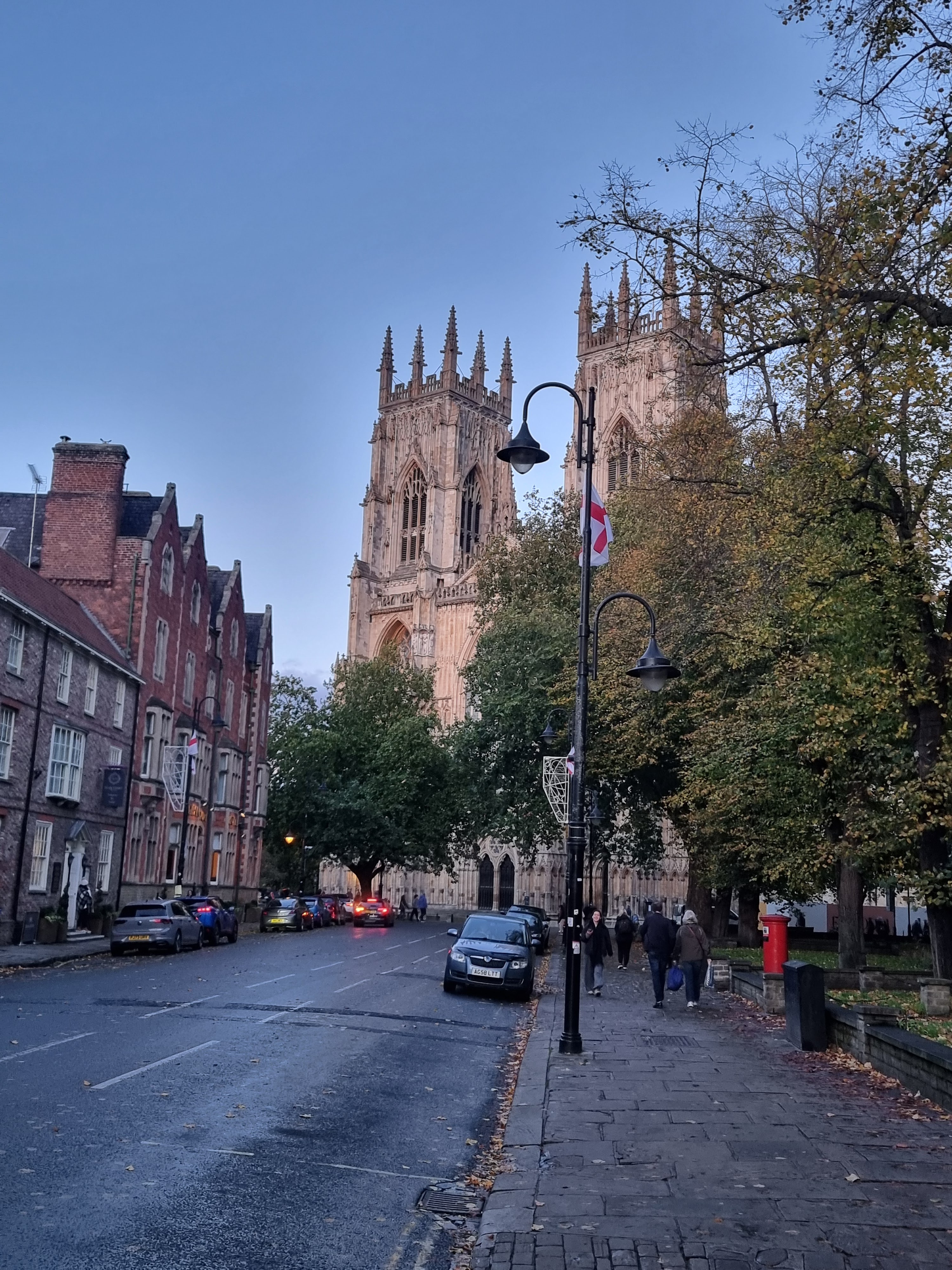
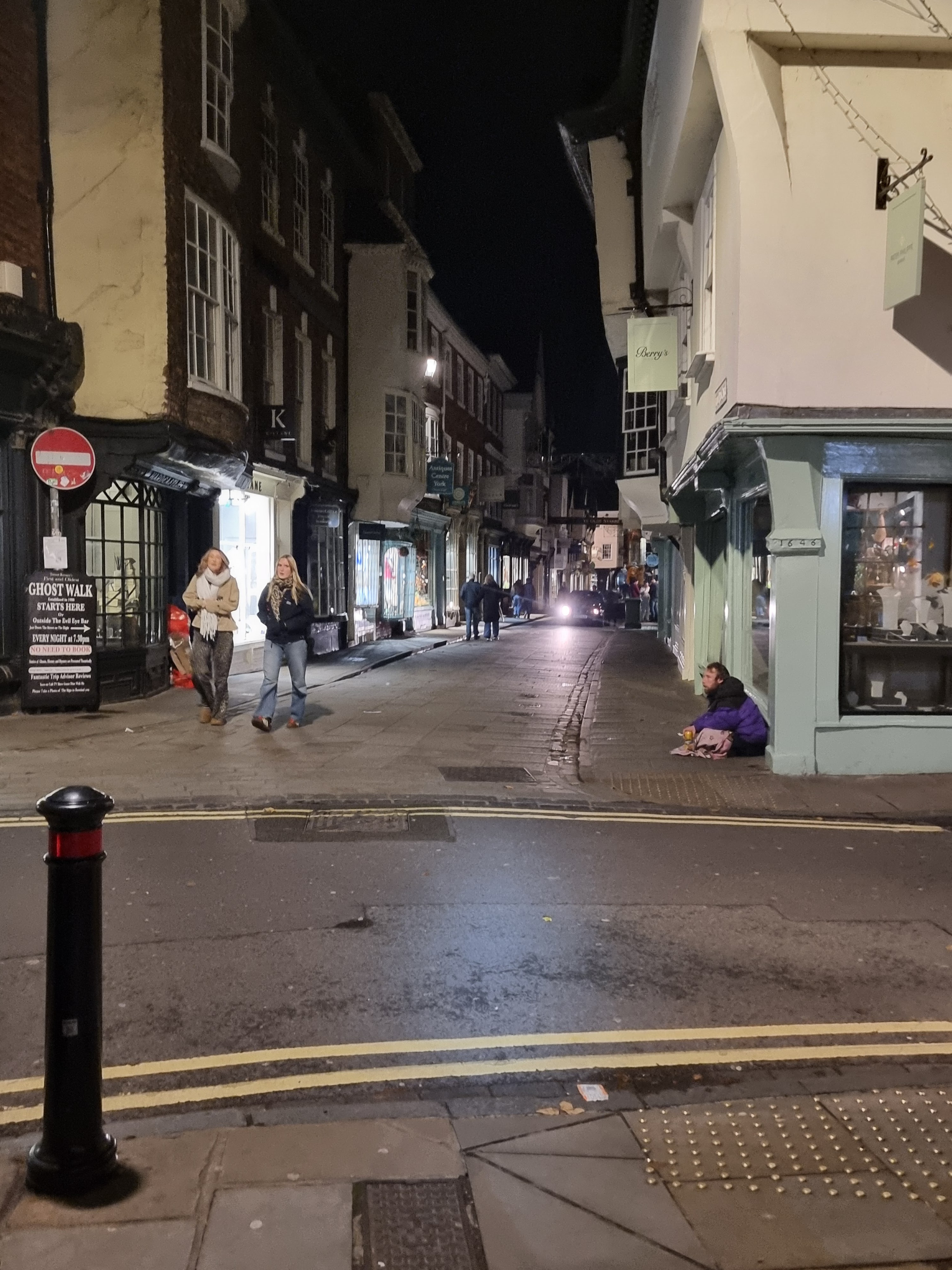
I am just back from York, where I was attending an Iona Community event. I have started the two year discernment process towards becoming a full member of the community, and this event had two parts- firstly time spent with other new members examining one of the four ‘rules’ that form the basis for membership-
Working for justice and peace, wholeness and reconciliation in our localities, society and the whole creation.
(By the way, if you are interested in the work of the Iona Community, let’s have a chat.)
After this came a day with around 80-90 of the existing full members as we heard from Paul Parker, Recording Clark of the Quakers in Britain. The Quakers don’t have a ‘leader’ – rather Paul’s role is to seek to create good processes for the 450 worshipping groups of friends. He spoke powerfully about quiet diplomacy and the Quaker colective process of testing concern together to develop collective courage. He contrasted the ‘prophet’ role (calling out injustice) from the ‘reconciler’ (seeking to listen and love) role- how they sometimes need to be employed in different ways and in different circumstances. In other words- the two hands of non-violence, in which one is the hand held aloft to say STOP, and the other is open to say ‘I love you, can we talk?’
This discussion inevitably makes me think about the divided and splintered shape of our society just now. How do we engage – as either prophets or reconcilers? Where are the spaces in which either of these things are possible?
And even if we find these places, how will I find the courage?
Meanwhile, there is another fear project going on at full tilt. Fear as a political instrument to create division through hatred and scapegoating of the outsider.
As you might expect, I have been trying to explore some of this through poetry. Here is what I am working on…
Be not afraid
I know you are afraid love - Who can blame you? This broken world Wobbles so hard it might Shake us all off. And all those purple-faced men Looking for someone else to blame - If they run out of brown people They might wave their flags at us.
We should beware my love For there are those for whom your fear spells opportunity. They nurture it in toxic tubes, so To spore the very air they feed us, and None of us are immune because Even those of us with those lumps in our throats Must still breathe.
So, forgive my riding high on this highest horse Because I need to tell you this; If we always fear of what you do not know It will rob our future of hope It will tuck us up in defended spaces Seeking only safety Watching the world through narrow arrow slits Flexing that persistent itch in our trigger fingers But if we always fear the stranger How will we ever make new friends?
I know you better my beloved - Your heart beats beauty on your sleeve. I know you would mend the broken if you could With that clever glue called kindness. I know you would never eat alone When someone close was starving. I know you were never made for hatred When the core of you is love; When the heart of you is love; When at the bones of you is love; When in the mess of you; Is love.
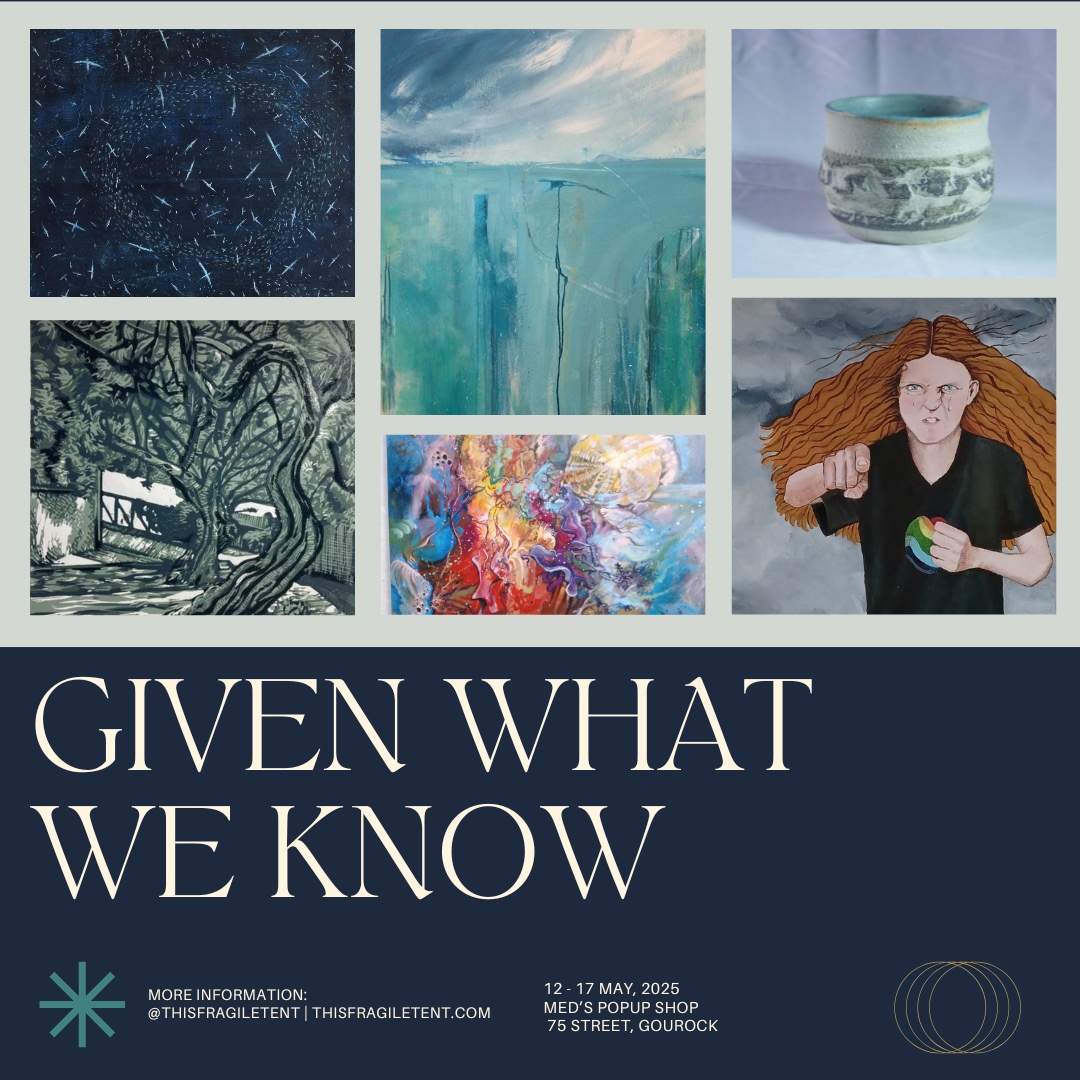
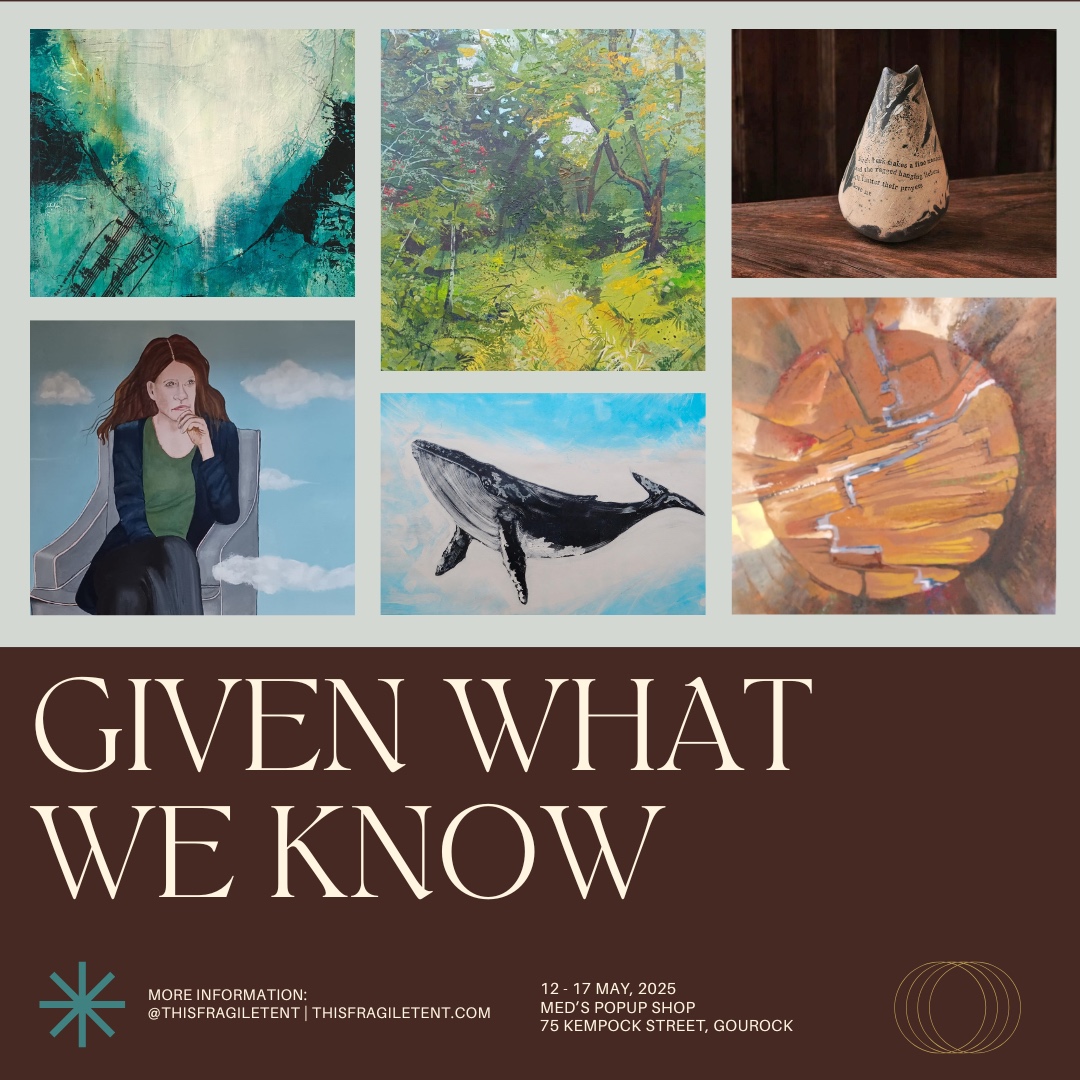
The art world here in the UK has a bit of a new trend, in the form of pop up art exhibition spaces, typically in old shops. Accross the Clyde from where we live there are two such spaces. They tend to get booked very quickly, so we booked some slots. Then we began to wonder…
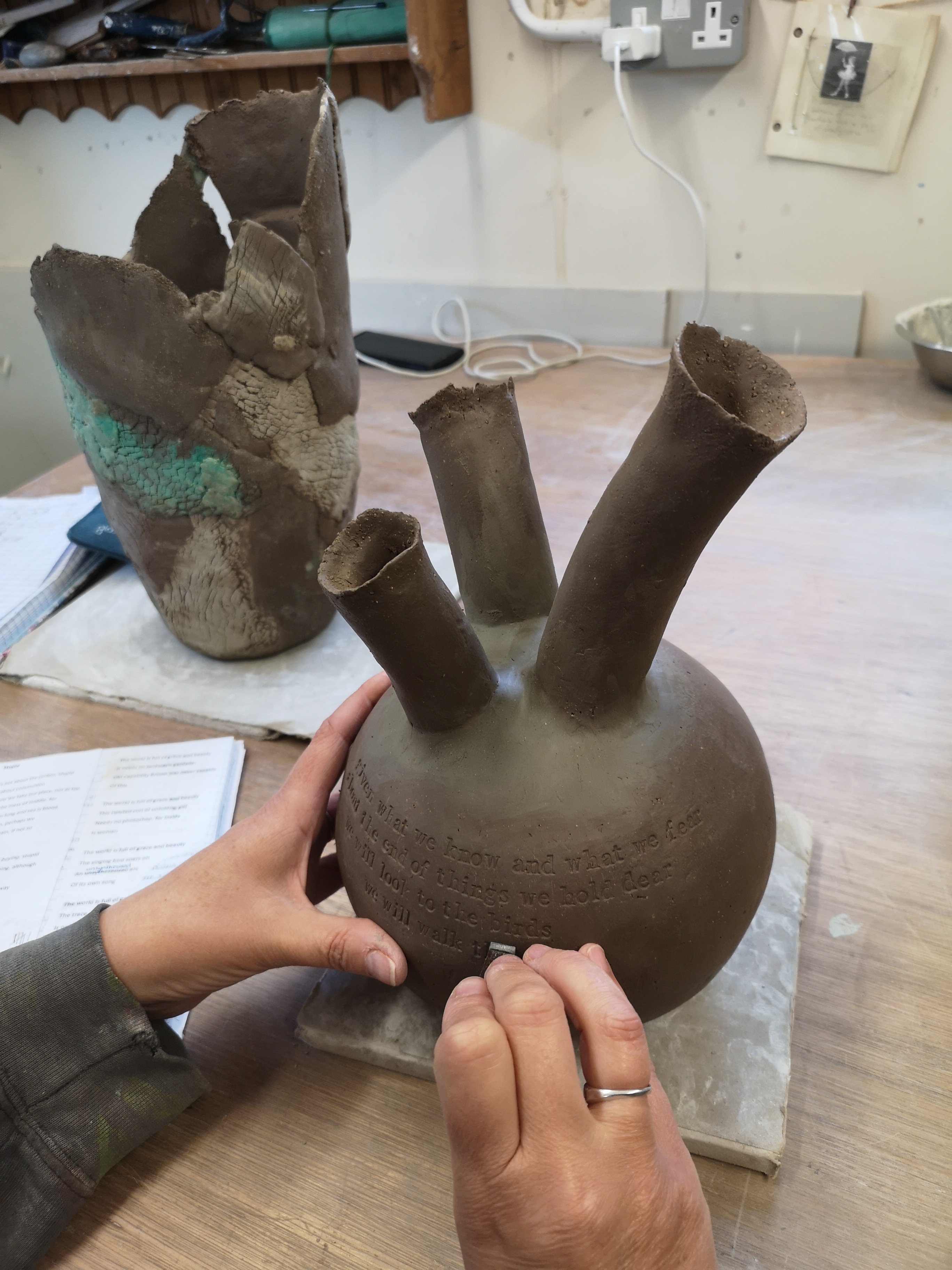
Our son-in-law James makes ceramics ‘inspired’ by trauma following spending years as an oceanographer, watching the arctic icesheets melt. Meanwhile, our art and my poetry was constantly trying to explore themes of brokenness and earth connectedness. We started to wonder about a joint exhibition…
…but then we started to think bigger and invited some others to join us.
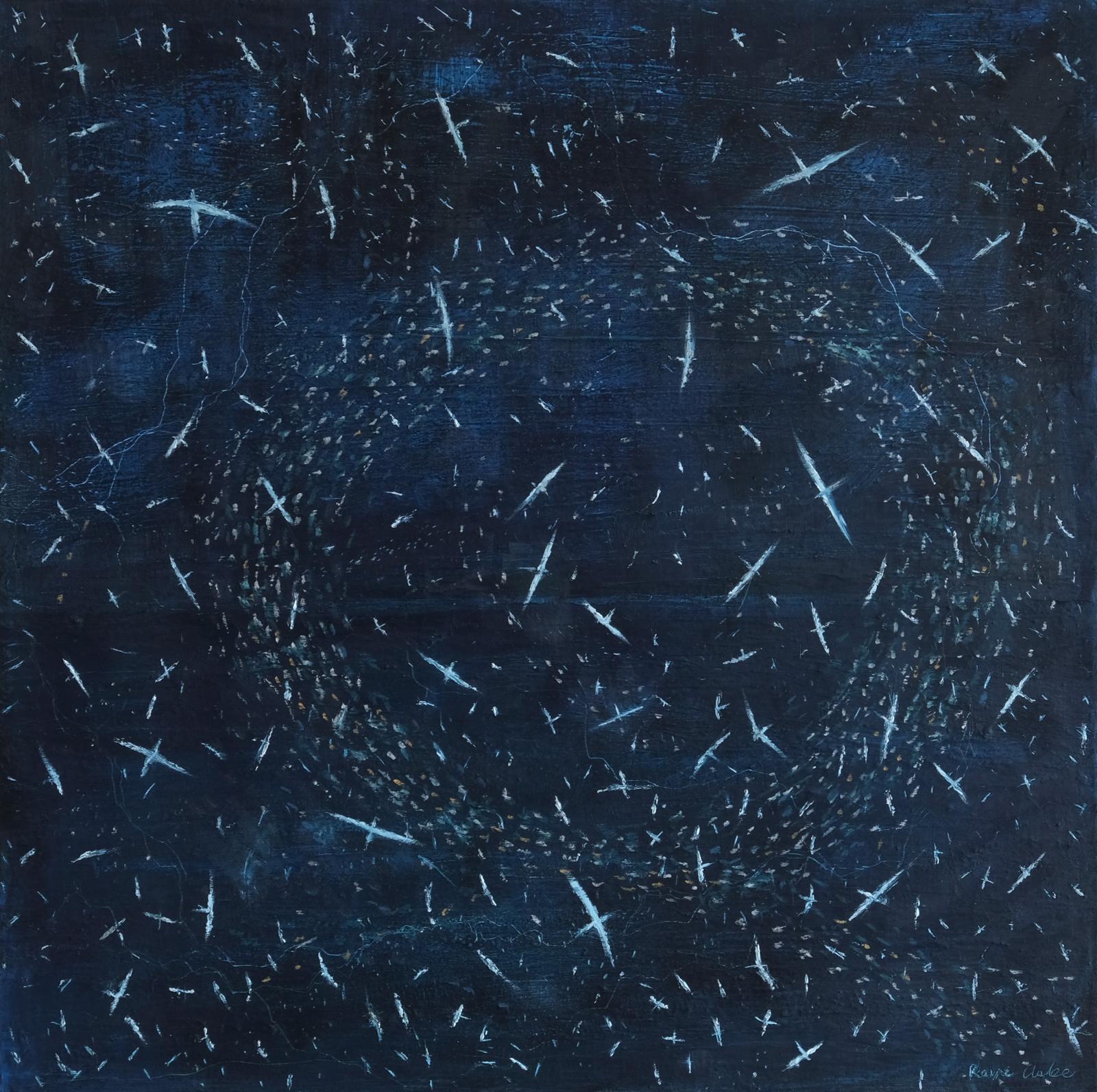
Raine Clarke with her printmaking and general creative magnificence.
Paul Knight with his creative explosion of ceramics, sculpture and ink drawings
Yvonne Lyon who is not content with being a singer-songwriter, so also makes stunning abstract art.
Here is the brief for the exhibition, based around a poem that some might recognise.
“Given what we know and what we fear about the end of things we hold dear, we will look to the birds. We will walk the woods that remain, and we will sing”
How do we respond to a world in omni-crisis in which our politics, our economics, our spirituality – even our protest movements – all seem broken?
In a world polarised and splintered by algorithms, what does goodness look like? We know there are no easy answers to these questions.
Perhaps, like us, you are experiencing hope as a rare and hard to reach commodity.
In this context, we need our artists and our poets more than ever…
Raine Clarke
Launch evening
On Monday the 12th of May, we will be having a launch evening in the exhibition space. There will be live music and Poetry, not to mention the odd tipple. Watch social media for more details!
It has been a while since I have posted any new poetry here. This is not because I am not still writing, rather because the way that poetry allows me to explore ideas (which this blog is primarily about) fluctuates.
Today however, I am going to share a brand new poem, which makes some rather profound theological statements – ones that I know many of my friends will find troubling.
I’m not going to explore them here – at least, not yet. I am not even sure that I agree with them all just now.
This is one of the gifts of poetry – it can become it’s own voice, its own person. As well as a way of exploring then externalising, poetry can go further than this, and be part of a dialogue even with its author.
The dialogue does not even need to find agreement. It might be possible to hold more than one perspective – as if our theological constructs are just different poems.
It is in this space that this poem sits just now. In committing the words to keyboard and screen, I am able to stand back and consider them as if they were not mine.
Except they are mine. In writing them, I was consciously breaking through some barriers into places that feel new.
A few months ago, I started a conversation with some people about indiginous spirituality. I had this itch that I wanted to scratch to do with how the Celtic tradition that I had found so deeply compelling might have some things in common with other indigenous spiritualities, so I reached out, looking for others who had connections and knowledge that I lacked.
Celtic idigenous traditions
My quest faced lots of problems. Firstly, reaching a definitive understanding of my own tradition is far from easy. The indigenous religion of the Celts stretches back thousands of years into myth and legend so it is hard enough to say much that is certain, and even harder to understand meanings that belong to a former culture and time. What little is known about the pre-Christian Celts mostly comes to us through highly questionable records of an occupying Roman Empire. Christianity came to these islands and first assimilated, then colonised the tradition, burying it under layers of ‘progress’. Some have tried to tell the Celtic story anew in order to make it meaningful – to me and others – but it can be hard to tease apart the facts from the fancy.
Perhaps this is part of the appeal to spiritual nomads and outsiders to institution like me. What we know as ‘the Celtic wisdom traditoin’ has a malleability that allows us to make it fit into whatever we want it to fit. It has subjective utility, but might be seen to lack authentic objectivity. In acknowledging this reality, it is then for each of us to decide whether the benefits outweigh the disadvantages.
For me, they most certainly do. Perhaps this is because I am a poet, more driven by spirituality of the mystical kind. Travelling in this tradition connects me with something visceral deep inside. It is a ‘feeling’ as much as an intellectual acceptance. I quite understand why friends of mine, more driven by systematic interpretation of scriptures might take a more cautious view.
Like all religious technologies, we must travel with a certain caution, looking around for other perspectives- paying particular attention to those that Empire has marginalised.
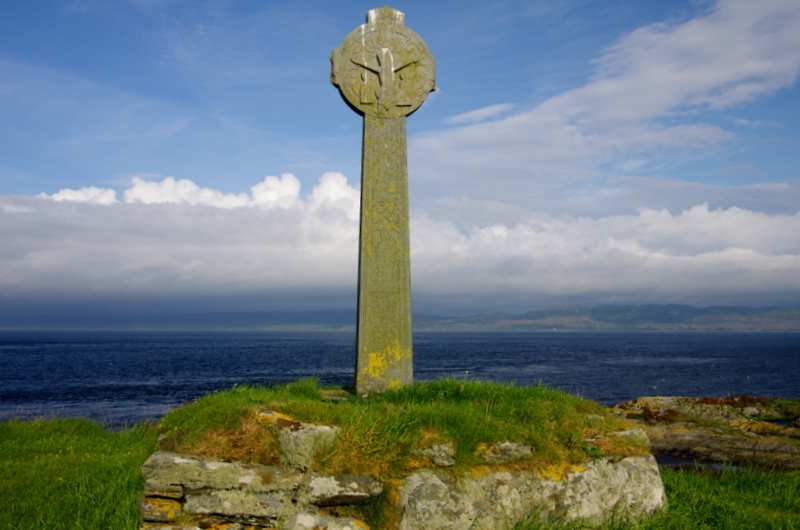
Celtic cross, Inner Hebrides, West Scotland
What do we mean when we talk about the ‘Celtic wisdom tradition’ then?
We have some tantalising clues in the form of stories and legends. Mostly these are survival traditions out on the fringes of the Celtic world- which like all cultures colonised by empire, retreated to the distant edge of its former hearlands – Atlantic coasts and islands or to rural Ireland and Wales.
We can also have some clues about the nature of this tradition from what is absent and outcast from mainstream religion. By this, I mean things that have been suppressed and persecuted that once belonged to ordinary believers. I have said more of this before, here for example. Many others have described and lamented what happened when indigenous, authentic and local spiritualities become subject to the priorities of institution and Empire.
Finally we know it as a deep ‘yes’ that we feel in our souls when we hear about ideas like ‘original goodness’ and hear how all things are connected and held together.
Colonialism and Christianity
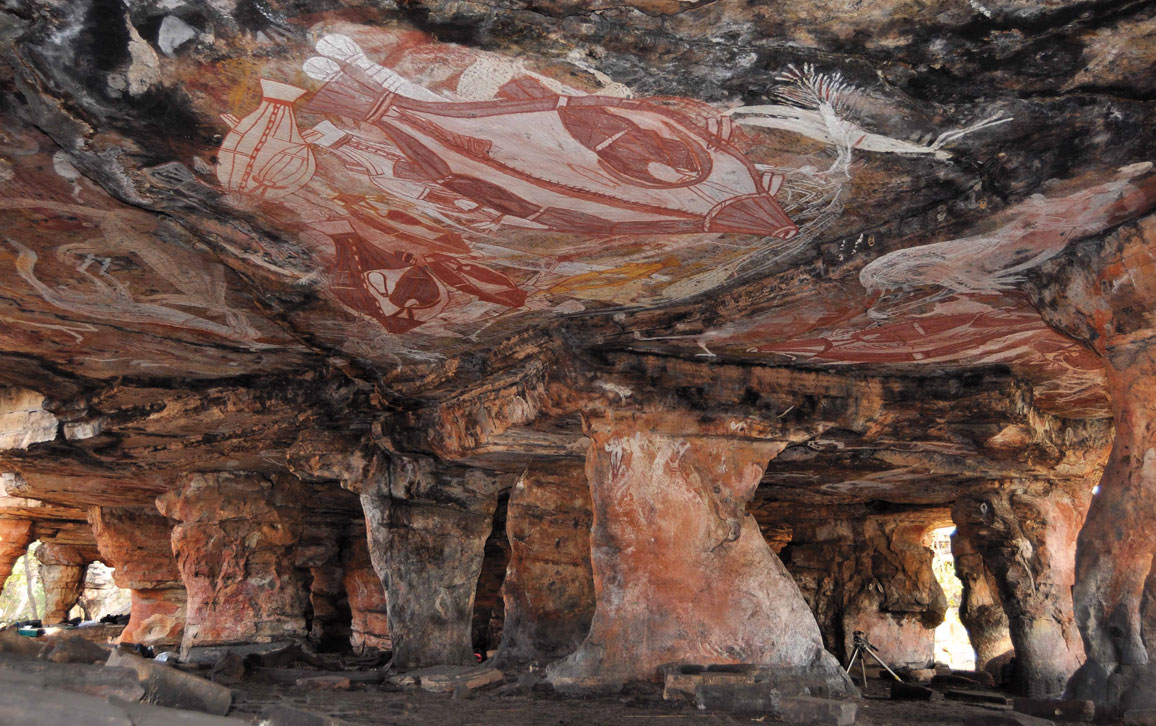
Across the world, almost all indigenous cultures have been subjected to our colonial expansion – from St Kilda to Sarawak, through Australia and the Americas and so on. The Celtic experience might have begun earlier, but in many ways it was the same. Religion was an essential part of the ‘civilision’ of ‘native’ cultures – a conquest of the spirit alongside economic or geographical.
There is a problem here for followers of Jesus, in that Christianity has often been the religion of the worst and most oppressive forms of colonialism. I think however that the Celtic experience might heip us to decolonise Jesus from the religion that was made in his name. If we are right to describe Celtic Christianity as an assimilation of a the teachings of Jesus with pre-existing ideas, in such a way as to deepen and give further shape to the connections to earth and spirit, then we might conclude that this version of Christianity did not have at least some of the oppressive overtones that came later. Perhaps colonialism was done to Christianity as much as facilitated by it.
This does not get Chrsitianity off the hook. It remains a religion of the middle east, defined and propogated by the West, that grew and expanded because of the pursuit of Empire and profit.
Perhaps we should burn it all down and start again… but where do we start? How far back do we need to go? Whose teachings and example might be most helpful? Is there really a purer, less compromised, older and more true indigenous spirituality that we can still encounter?
This is still my quest, and it led to me reaching out towards some other people who were trying to make sense of the spirituality they were encountering via indigenous people in their parts of the world- two very different parts of Australis, Canada and Middle England. It has been an interesting journey so far… five white people, trying to make sense of black, brown and red religion.
Can we make connections with other indigenous cultures?
Part of my motivation fot this journey has been a desire to remake/rediscover a religious story that was more earth-connected, more able to provide us with a mass movement away from the damage we are doing to eco-systems. It was this ‘earth connectedness’ I felt in my Celtic roots that seemed to find echoes in other indigenous traditions – connections to land and place, to animals and holy mountains, to the spirit in other things. At least, this is what I had heard glimmerings of in films and books.
Perhaps there was more than this. I started to wonder if all the condemnation of ‘primative’ religion I had grown up with – which was characterised as animistic, or pagan, or pantheistic – had lost some things that really mattered. We were told of the foolishness of a belief that trees or rocks or lizards have spirits. How backwards to worship simple totems or forest spirits. After all, we have the wisdom of the Bible. Look where that got us.
I remembered well the simple goodness of Bob Randall’s Kanyini;
I first encountered Bob as a commentator on cultural breakdown, whilst I was working as a social worker amongst men and women in mental health services, within broken communities in the UK, not Australia. Back then, any implications for religion seemed secondary. Now they seem inseperable.
But in the face of so much variety, so much diversity, is it really possible to make any general statements about indigenous spirituality? Can we claim that it is more ‘earth connected’ or more authentically human? Is it ‘better’ than what we have have experienced in our religious institutions?
This is the conversation I have been having with my four friends from far away – more of this to come.
I will leave you with a quote from the First Nations Version New Testament. This is a book written in English by a first nations pastor in America, working first with prisoners, later with others trying to reconcile the words of the Bible with their own culture and it’s colonial history. Here are the beatitudes, through first nations eyes.
It is the same, but also very different.
BLESSINGS OF THE GOOD ROAD Matthew chapter 5
3“Creator’s blessing rests on the poor, the ones with broken spirits. The good road from above is theirs to walk.
4“Creator’s blessing rests on the ones who walk a trail of tears, for he will wipe the tears from their eyes and comfort them.
5“Creator’s blessing rests on the ones who walk softly and in a humble manner. The earth, land, and sky will welcome them and always be their home.
6“Creator’s blessing rests on the ones who hunger and thirst for wrongs to be made right again. They will eat and drink until they are full.
7“Creator’s blessing rests on the ones who are merciful and kind to others. Their kindness will find its way back to them—full circle.
8“Creator’s blessing rests on the pure of heart. They are the ones who will see the Great Spirit.
9“Creator’s blessing rests on the ones who make peace. It will be said of them, ‘They are the children of the Great Spirit!’
10“Creator’s blessing rests on the ones who are hunted down and mistreated for doing what is right, for they are walking the good road from above.
11“Others will lie about you, speak against you, and look down on you with scorn and contempt, all because you walk the road with me. This is a sign that Creator’s blessing is resting on you. 12So let your hearts be glad and jump for joy, for you will be honored in the spirit-world above. You are like the prophets of old, who were treated in the same way by your ancestors.
SALT AND LIGHT
13“As you walk the good road with me, you are the salt of the earth, bringing cleansing and healingto all. Salt is a good thing, but if it loses its saltiness, how will it get its flavor back? That kind of salt has no worth and is thrown out.
14“As you walk the road with me, you are a light shining in this dark world. A village built on a hill cannot be hidden. 15No one hides a torch under a basket. Instead it is lifted up high on a pole, so all who are in the house can see it. 16In the same way, let your light shine by doing what is good and right. When others see, they will give honor to your Father—the One Above Us All.
FULFILLING THE SACRED TEACHINGS
17“When you hear my words, you may think I have come to undo the Law given by Drawn from the Water (Moses) and the words of the prophets. But I have come to honor them and show everyone their true meaning. 18I speak from my heart, as long as there is a sky above and an earth below, not even the smallest thing they have said will fade away, until everything they have said has found its full meaning and purpose.
Over the past few years I have been grappling with a new craft. Even though we have run a business making pottery for about a decade, Michaela was the potter really whilst just worked around the edges, helping out with some of the donkey work. My areas of creativity were outside the use of actual clay. Then it all changed.
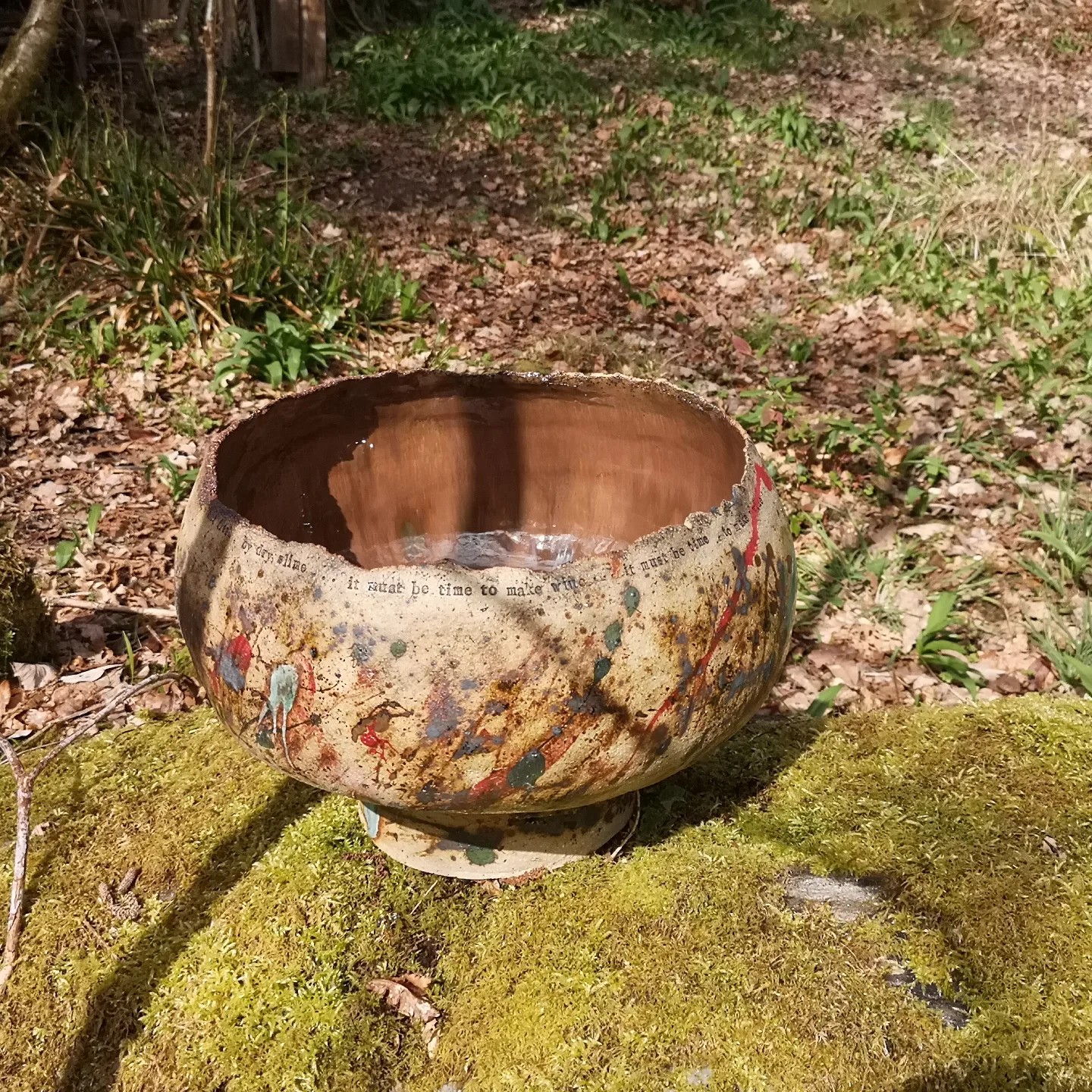
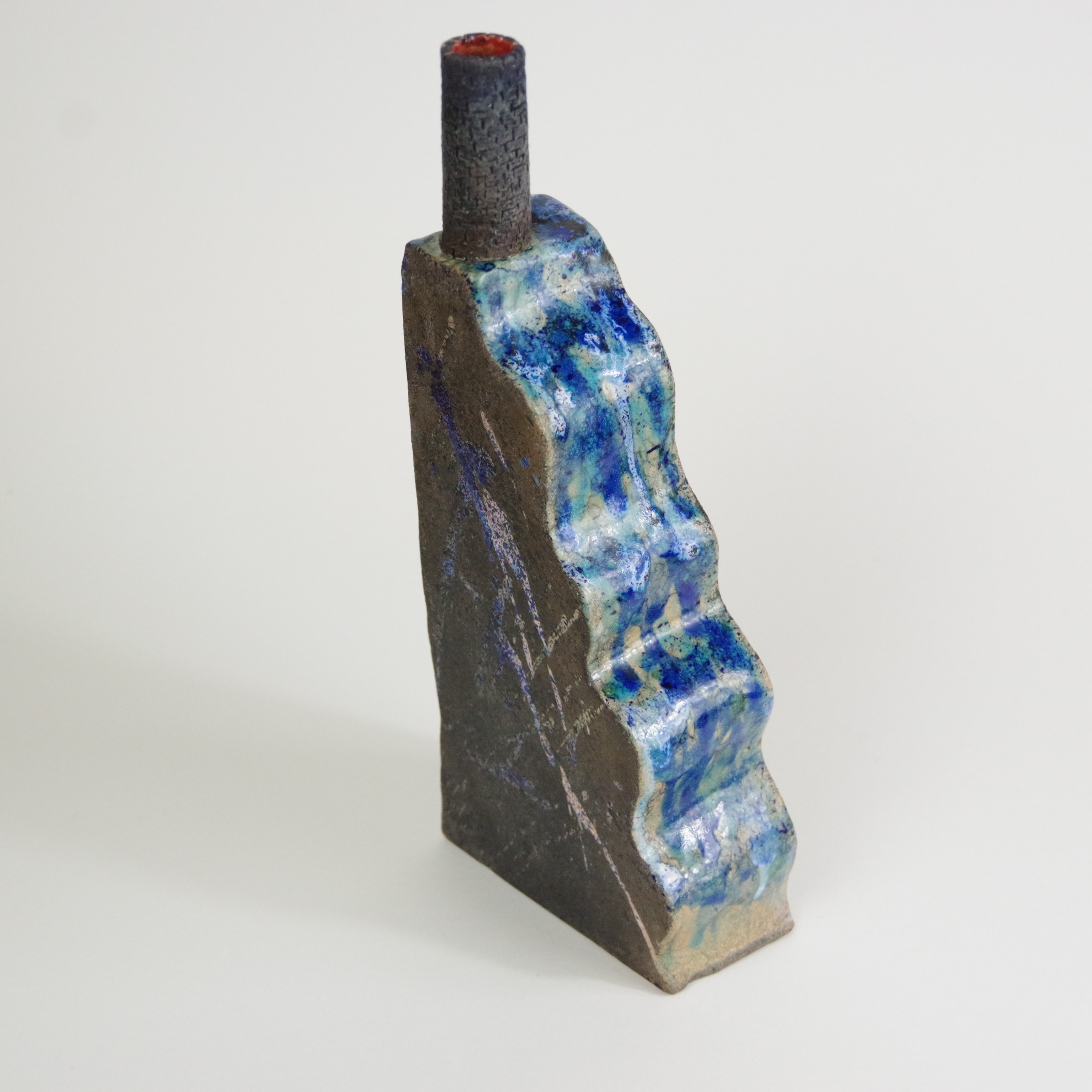
First, I began working with a different clay body- with much more ‘grog’ mixed in (ground down fired clay.) This was much more forgiving than the white stoneware clay that Michaela loves so much, more plastic and willing to hold shape – or at least I think so. Michaela might protest. These qualities of the grogged clay mean that building bigger vessels is that bit easier, but also this kind of clay also has the capacity to cope with so much more thermal shock, meaning that alternative firing methods are possible… so I started making big old pots and trying to fire them in pits dug in the garden, with mixed success!
Then I discovered raku.
Time for a short introduction to clay firing.
Most pottery is fired in kilns, either electic, gas or more rarely, wood fired. All three methods introduce variations to the process and to how the glazes in particular react, due to the conditions created, for example the degree of oxygen present during the firing.
Using a purpose build kilns allows careful control of thetemperature, which in the case of our electric kiln will step up around 100 degrees per hour, then cool down over a long period of time. This means that failures in the form of cracking (or even exploding) pots are minimised and colours from glazes are reliable and predictable.
There are other methods however, most of which require specialist clays. These include pit firing/barrel firing, saggar firing and most drramatic of all, raku firing.
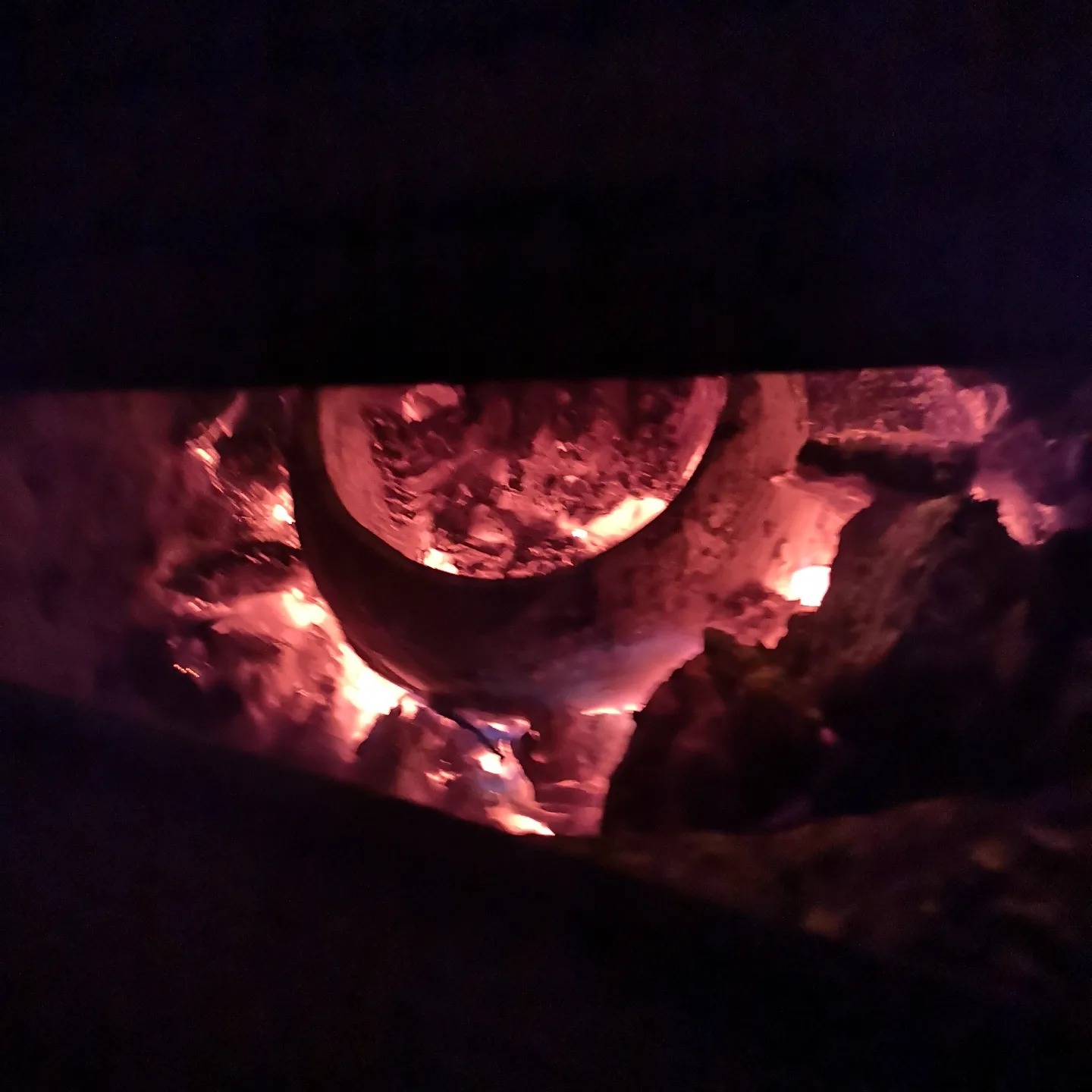
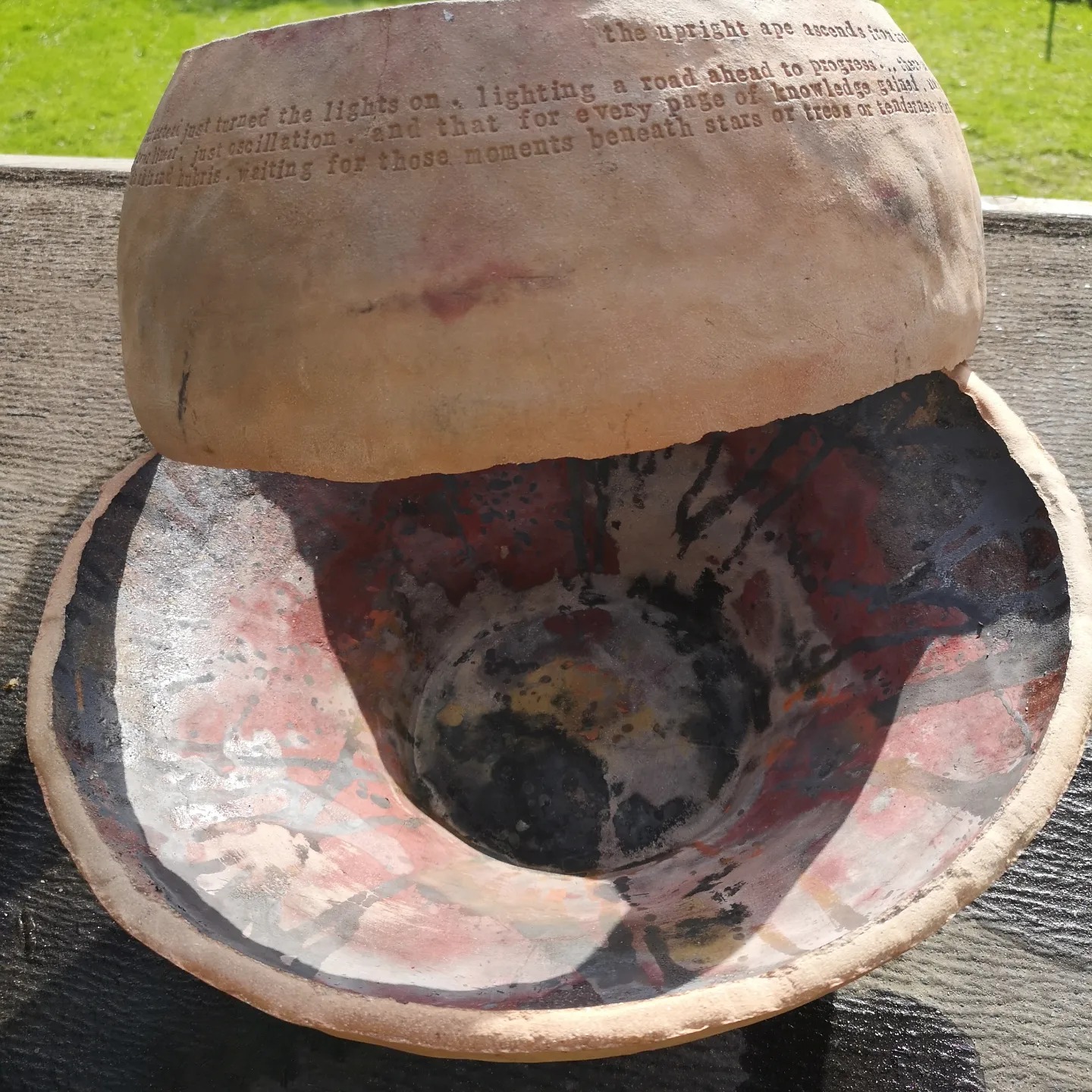
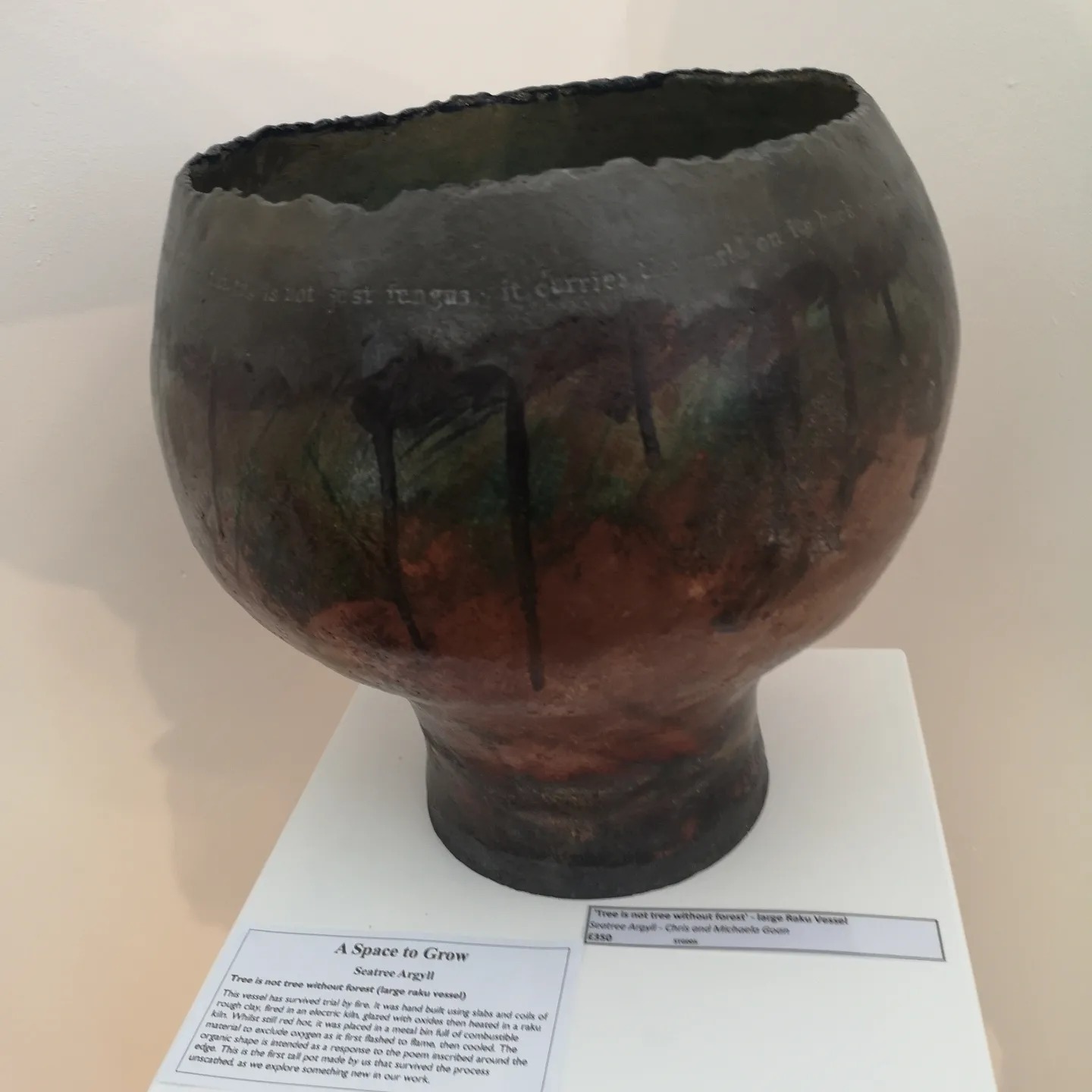
Raku, meaning ‘easy” in Japanese, involves heating up a previously fired pot to 1000 degrees in an insulated container- typically a barrel or a dustbin – using a gas burner. The pot is then removed and placed in a sealed contained along with combustable materials. The oxides and glazes applied to the pot will then react in the oxygen depleted conditions to form bright colours, crackles and textures.
The thing is about this kind of pottery, it is always shifting, changing – it never quite arrives at a destination. It is art by experiementation and evolution. Perhaps all art is like this, but let me explain what I mean.
Functional pottery might be understood as the means to perfect a process in order to create a usable shape. As such, potters are developing their shapes and glazes to make their versions of archetypal forms. There is art and beauty in this that is beyond my skills. I look in wonder at many of the things that people are able to make. I hold their mugs in my hands as if they were grails. This is not what I am trying to do.
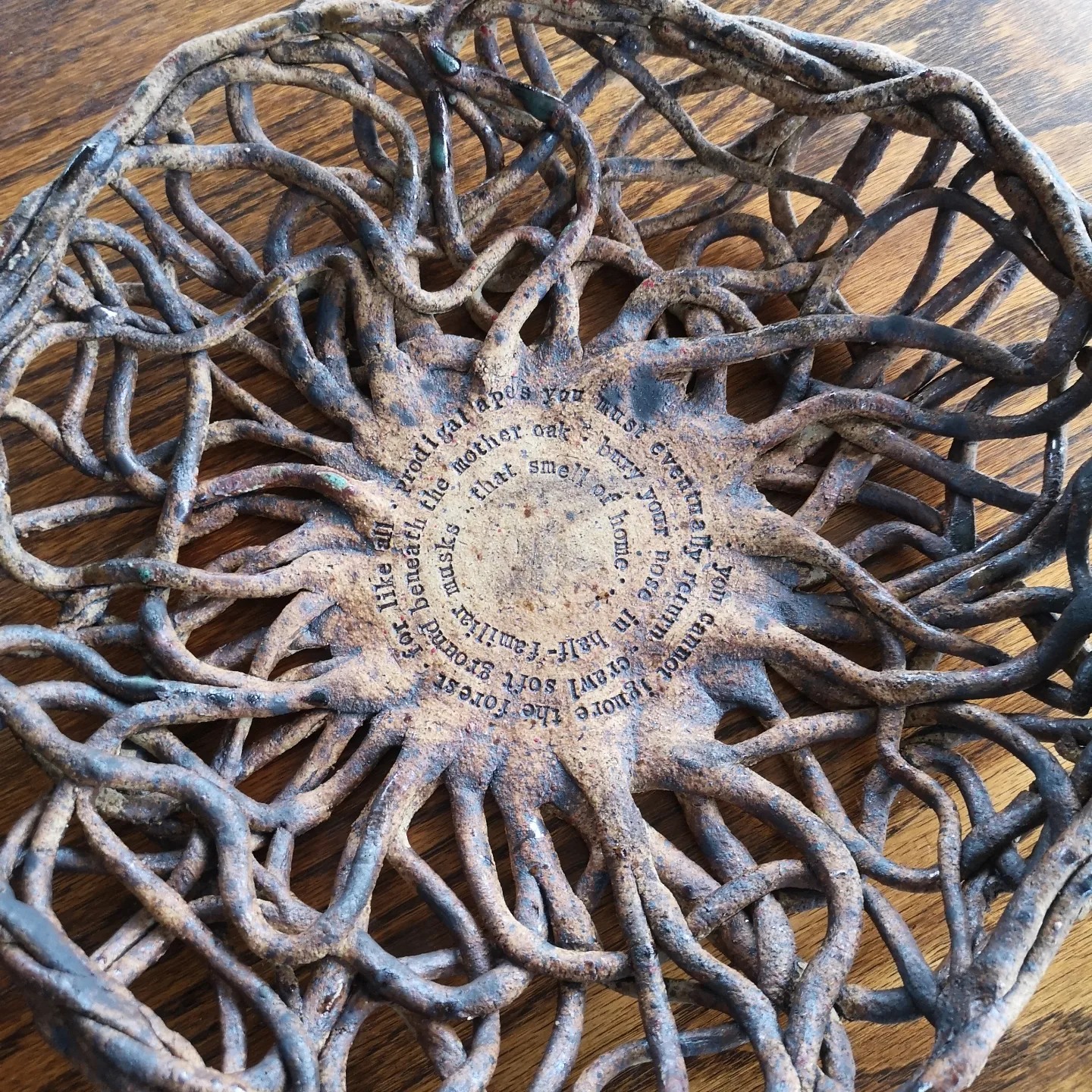
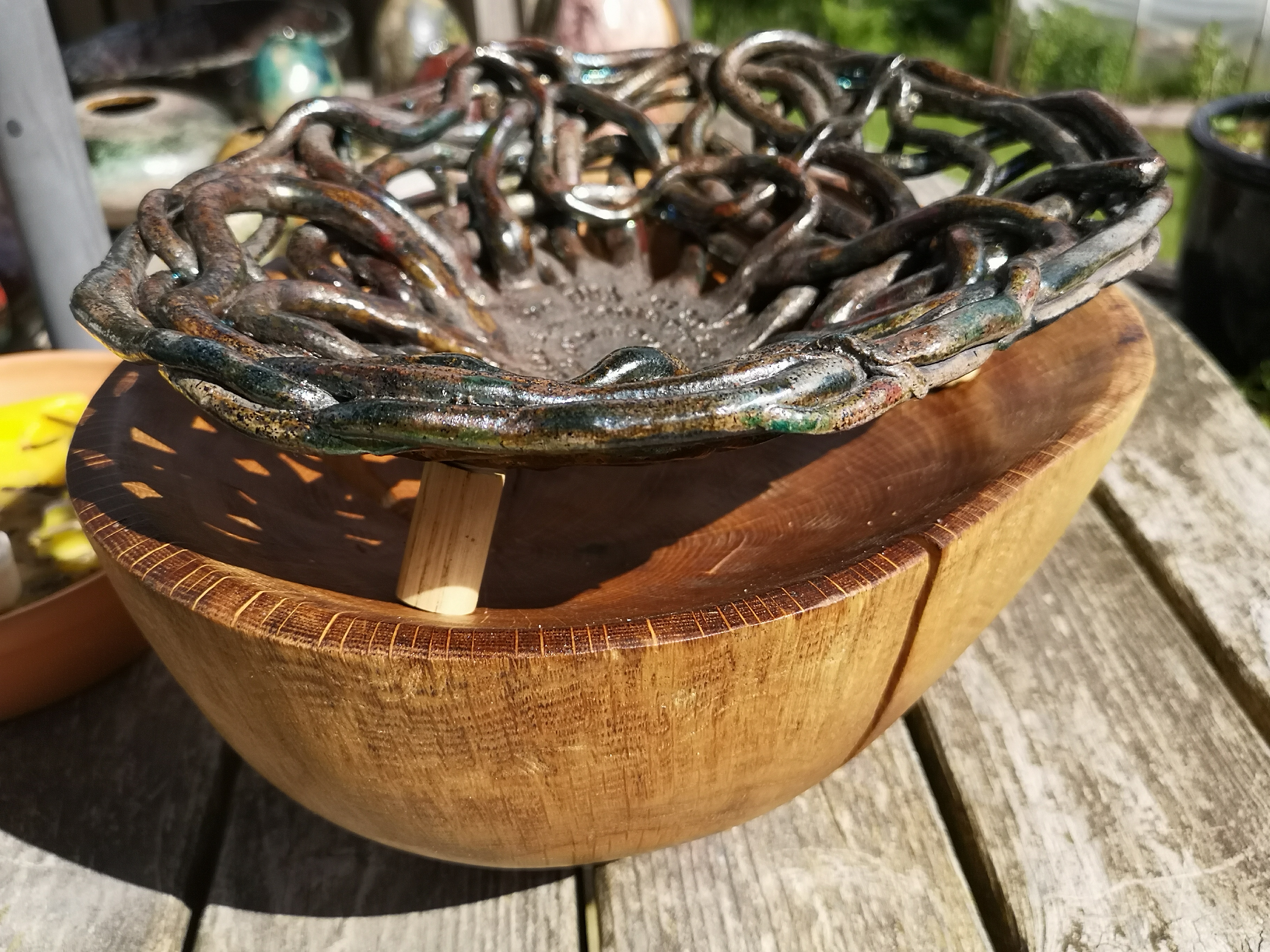
The pottery I am making is not really in puruit of shape or colour (even though both are essential elements) rather they are chasing after meaning. So when I make a pot, I am not asking if it is a ‘good’ pot, I am asking if it carrys any meaning for me. Has it told a story? Has it opened up a space or framed something that asks questions that I find important?
Let me tell you, this kind of art can drive you mad.
It is rarely sarisfied and never completed. There are no real reference points for comparison, other than whether someone is prepared to pay money for it.
The evolution thing I mentioned before suggests an ascendancy, in which we get ‘better’ and certainly I have learned through lots of mistakes and failures, so that I at least make different mistakes now rather than the same ones. I am also slightly more able to steer the chaos, but as I look back on some of the things I made previously, I wonder if I have gone in the wrong direction since. Perhaps I should have made more of the same?
But who am I kidding… this is not an option. The quest I am on is always after meaning, and so I have to search for these in new shapes, new ideas.
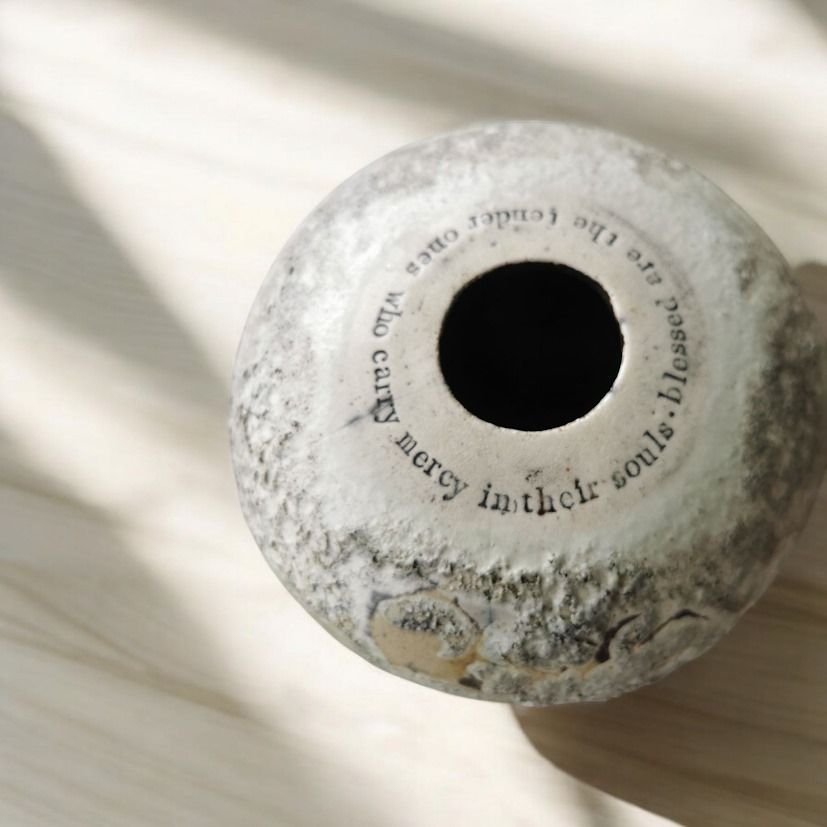
I have a secret weapon however, in that our pots use poetry. This alows me to set up an interplay between words, form and colour in such a way as to gather meaning more directly. In other words, I can cheat.
One last thing about this evolutionary quest- it is entirely addictive.
There may come a time when I am done with it – music was like this for me once – but for now, if a couple of days goes by without me spending significant amounts of time in pursuit of my clay meanings, I am anxious for a fix.
In the spirit of charity, it is possible you may be interested in helping out this addict in his continuing quest.
Much of our larger work is simply too big for us to make available through an on-line shop – It is not really ‘postable’ after all – these are more likely to be things we take to ceramics shows or place in galleries (and we work with some fantastic galleries!)
Perhaps the best way though might be to come and visit us. Drop us a line first and see what we have in our storage shed. There may well be a bargain or two to be had!
This is a continuation of a series of posts in which I have been grappling with the religion I have inherited but often find myself deeply at odds with. I have this idea that what is happening to Christianity in the western world is not an end, but a transition. Lord knows, we need our holy stories more than ever to lead us towards better, to inspire the next generation and make leaders out of the old one. In these posts, I have been trying to describe what I think the shape of this transition might look like, sometimes through observation and discussion with others and sometimes by striving to get beyond my cynical frustration and letting loose hopeful imagination.
You can find the old posts by using the search box above- try ‘remaking religion’ as your search criteria…
…or if you are not in the reading mood then we have discussed some of the issues on a podcast, here.
Hermaneutic
I have spoken about this word on this blog over the years. I have usually tried to define it this way; the set of googles/telescope through which you view the world.
The optical distortions within these goggles- acknoledged or not – affect what we see and how we understand what we see.
I think this word is central to how we approach any renewal efforts towards religious story making.
I will start with a confession – I have developed a bit of a youtube habit. I would like to pretend that this arises from my deep interest in ideas- philisophy, economics, history, sociology, religion etc., but the algorithm does not lie. It knows me better than I know myself. Each twitch of the finger over the remote control is recorded as if as my unguarded conscience. So it is that alongside some material that does relate to high minded pretentiousness, there is a whole lot about car renovation, cricket, metal detecting, oppositional American politics, sailing and all sorts of other nonsense which allows me to switch off and not think. However, the algorithm sometimes serves up pure gold and the other day this came in the form of a video from the Centre for Action and Contemplation, of Richard Rohr talking about how Jesus used and quoted scripture.
Now perhaps you would have skipped along the feed towards something less cerebral – I almost did but I gave it a try, as much to save it for later. Instead I watched the whole thing, all one hour and eight minutes, despite all the other things I should have been doing.
It turns out that Richard Rohr – who I believe offers a vital prophetic, apastolic perspective to our generation – had things to say that were of great importance to my quest for a renewal of religion. He does this with a playful gentle kindness that always makes me listen all the harder. Here is the video in question;
There is so much about what RR has to say here that I find myself saying a soul-deep YES to… but towards the beginning he says something like this;
You must define and clarify tour hermeneutic- your science of interpretation. If you don’t have a consistent hermeneutic, you can make scripture say whatever you want. If we don’t make clear at the beginning how we approach scripture and the way we give it authority, then we are really not worth listening to because it will just end up being ‘opinion’. You will then just find texts that affirm your opinon.
Richard Rohr
Even the most faithful of my critics – with much justification – might point to this Remaking Religion series and accuse me of doing exactly what RR warns us against. I am expressing opinions then, if I seek to anchor this in scripture at all, then I do so only in ways that justify my opinions.
Some might chucle and suggest that my hereneutic is youtube!
Perhaps my critical friends might go even further than this, and point out that my failure to base most of my arguments on scripture is indicative of my wearyness, my cynicism towards the scripture itself and there would be truth in this criticism. I feel as though I have escaped from what I now view as a a prison in which the iron bars were made out of scripture. No wonder then that I, and others like me, are less interested in ‘proving’ or ‘evidencing’ truth based on narrow versions of scripture because the whole idea of ‘biblical authority’ feels like a prison gate. Having said that, any cursory read of this blog will notice that I am certainly not done with the bible, neither do I in any way reject the treasure and wisdom it contains.
What RR does in this video – and many others have done alongside him – is hold a mirror up to the religious traditions we were parented by in our faith and in doing so, pointing out that they too had substantial unconscious bias arising from their hermaneutics. They too then backwards interpreted scripture in such a way as to confirm these biases.
Worse than this, the bigger and more ‘successful’ these hermeneutics became, the more invisible they were, the more unasailable, the more they were given the authority of ‘truth’. The more they were seen as coming directly from God himself, as if on a velvet cushion from the sky. (Strange then, that this truth often seemed to fit well with a set of priorities that confirmed the power structure of the empires they grew within and continued to support.)
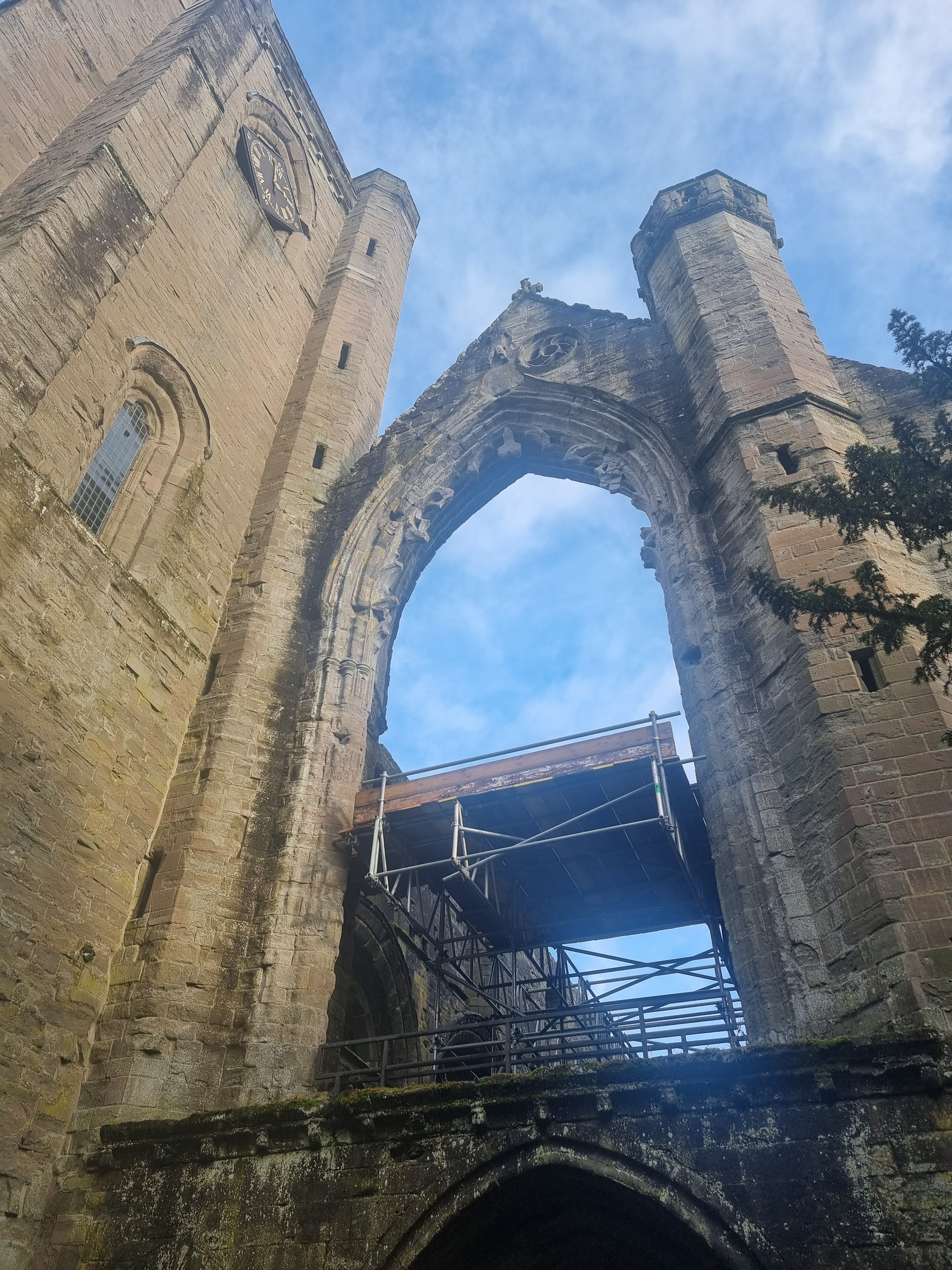
The continuing attempt to preserve the crumbling remains of the 13thC Dunkeld Cathedral
What do we do with this insight?
What might it mean as we try to remake our religion in our shifting changing context?
I think we have to refuse to get back in theological prison, and instead start to use scripture in a very different way, which involves reading it through a deliberately different hermeneutic – one that remains faithful to tradition, but free from it also.
JESUS
RR does a brilliant job in trying to describe how Jesus approached scripture, and how this seems radically different to the way we have read it. Selective quoting from just 4 OT books are recorded in the gospels- sometimes miss-quotes! Actively disagreeing/wrestling with scripture
HIERARCHY OF TRUTH
As Pope Francis puts it, not all truth is equal. Some comes first. Not every sentence in scripture can or should be given equal merit as if it were heavenly law.
INCLUSION
Jesus always includes. Critique the in-group, make the outsider the hero.
MERCY
Always Jesus started with love, continued with love and ended with love
PEOPLE OVER DOCTRINE
I loved the way that RR described the difference it makes when we engage with theology though connection to people as opposed to approaching people through theology.
PRINCIPLE OVER FINE PRINT
Back to that hierarchy of truth thing- if we can ‘prove’ something using ancient scriptural texts then we must also subject that text to the bigger principles that the text contains. We know this as Christians because that is what Jesus did.
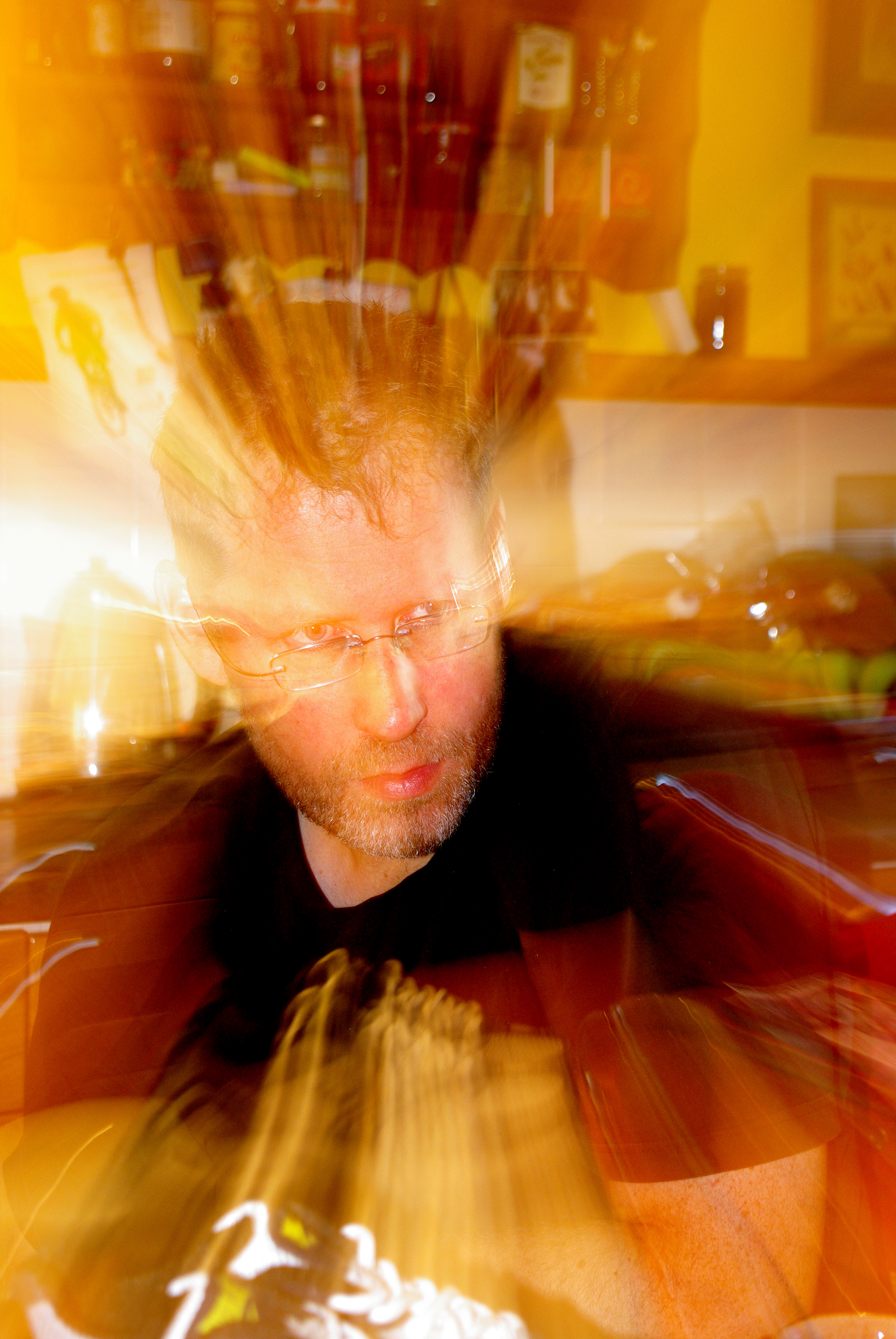
This is Emily’s arty shot of me- looking appropriately messed up.
I have had a week of being ill- a rattling cough that keeps me awake all night- not helped by the fact that I am half way through fitting a bathroom so am living in dust.
I am just at the end of three nights with hardly any sleep. In fact last night, I went outside to watch the dawn around 6AM after a long night of wakefulness.


 this fragile tent