Wilderness retreat trips, 2012…

Now that the New Year is with us, lots of us are looking forward into all sorts of busyness. It could be also that you are seeking to plan in some periods of retreat, and if so, you might like to consider this…

We are planning a new venture for this year- along with three of my friends from Aoradh, we are organising a series of ‘Wilderness Retreats’. These retreats form part of several micro enterprises that have grown out of what we do – a way of integrating faith with life which I am finding very exciting and hopeful. The ideas and activities have emerged from yearly retreats that we have been doing as a community for many years now – usually with invited ‘guests’ – and also from other forms of worship using wild locations that we have been experimenting with.

The retreats have been special experiences for us, for some of the following reasons-

  • The amazing locations- tiny Hebridean islands, part of a rich Celtic tradition of retreat
  • The ‘noisy’ silence- away from mobile signals, e mails, facebook
  • The wildlife- otters, eagles, seals, a thousand sea birds
  • The company- the lovely experience of sitting around a fire side and dreaming dreams together
  • And perhaps most of all the chance to find inner stillness

If the possibility of being part of something like this excites you, then please get in touch!

It might be possible to make this trip part of a bigger trip up to Scotland, or even part of a trip to the UK! If you want some advice as to options- again feel free to get in touch.

These retreats are not intended for hard core outdoor fitness types. You do not need to be ultra fit or prepared for the north face of the Eiger. If you can hop around rocks, and can cope with the possibility of being cold and wet with stoicism, then this is enough.
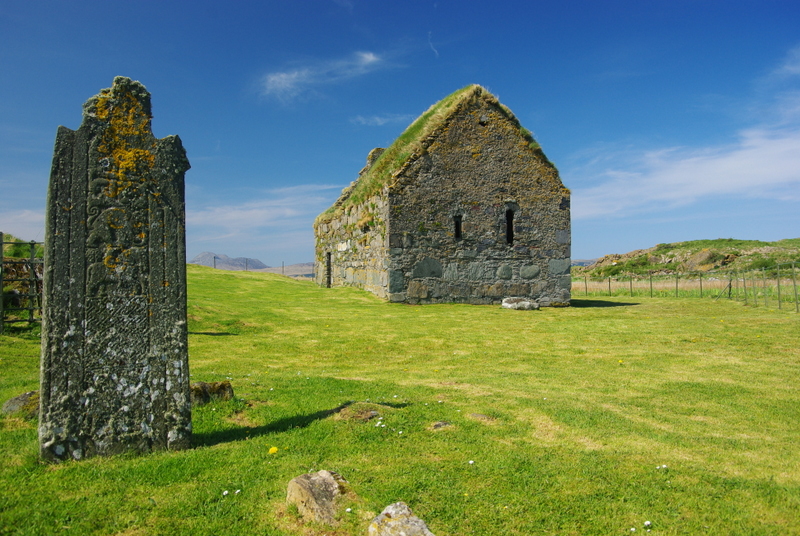
Here is some information from our publicity shot-

Do you love wild places?

Are you looking to find time to rest and reflect?

Are you hungry to make a deeper spiritual connection?

If so, we would like to invite you to come and be part of one of our wilderness retreats…

Wild places do something to the soul…

Here in Dunoon we are on the fringes of some of the most amazing wild places; lochs, mountains, forest, seascapes and small uninhabited islands. Opportunities for being immersed in wilderness – with all the glory and all the vulnerabilities of this – are everywhere.

Following an old Celtic tradition, we have been looking for ways to allow the shape of the landscape to become the means by which we might approach the divine; caves, rivers, mountain tops, small islands.

There is no better place to do this than here – the west coast of Scotland, and the small Argyll islands in particular, are marked everywhere by the passage of other pilgrims, for example the many monastic sites from the time of the missionary Celtic saints.

We invite you to journey with us into this generous tradition. All are welcome – from all faith backgrounds, or none.

There is information about some of our previous trips here-Jura, Eileach an Naoimh, Scarba, The McCormaig isles.

How does it work?

Our retreats typically take place over a long weekend – Saturday to Monday.  

They involve creating a small temporary community on one of the small uninhabited islands of the Inner Hebrides. These are stunningly beautiful places, rich in history, wildlife and the kind of peace that has to be experienced to be believed. All of our locations are well off the beaten track – they can only be reached by boat charter.

They are WILD places- exposed to the elements, with no amenities or comforts. Participants on these trips need to be prepared for this!  Please have a look at the kit list and general comments.

We will do the organisation, put together a programme and itinerary, charter a boat and provide spiritual exercises and activities to use together and alone. Each retreat will have at least two retreat leaders.

We will then lead you through the retreat, using a combination of times of sharing, times of silence and led meditations. Activities can be tailored to the needs and interests of the group- including varying degrees of challenge.

Retreat dates and costs

For the year ahead, we have two weekends fixed for retreats-

  • June the 22nd-25th  The Garvellachs. Cost £180 per person.
  • August the 17th-20th   The McCormaig Islands. Cost £150 per person.

(Deposit of £50 payable on booking. Full cost will be required if participant cancels later than four weeks prior to the event.)

If you are part of a group who are interested in another weekend, it may be possible to arrange a trip for you.

It is also possible to set up ‘mini expeditions’ for small groups/families. These would be typically for a day, or an evening. Contact us for details.

The Zeitgeist Movement…

A little while ago, in response to my blog piece on the camp at St Paul’s, an old school friend sent me a link to something by The Zeitgeist Movement.

Specifically, Carol suggested I watch the clip below. It is quite long, but makes for rather interesting watching.

I had not heard of this movement before, so spent some time researching what I could about what they are about, their core beliefs and campaigning aims. At first I was pretty suspicious to be honest- there is something about their website that made me instantly uncomfortable- it is a little too slick, too shiny.

TZM is another one of these internet generation organisations that grows not along the lines of corporations that are led and controlled from the centre, but rather grows virally by a network of connections, and a set of common evolving principles. It has vague, fuzzy edges, and slightly non specific goals. Rather than ‘leaders’ who are appointed and recognised, there appear to be some key voices, but the structure is deliberately local.

This is a familiar organisational structure to me- as it reminds me very much of the ‘Emerging church’ movement. Such organisations are always difficult to get your head around from the outside- as they appear to lack structure and substance. There is more about these kinds of organisations here.

But back to the specifics of what BenMcLeish had to say above-

I liked much of what he had to say- particularly his analysis/critique of the state of our current economic/political/environmental situation, which I find myself largely in agreement with. I might also echo some of his concerns about religion- although unlike him,  I remain a believer.

I think the importance of a strong critical voice against the excess and over consumption of our wider culture is vital. I have been wondering for a while where this will come from, and where we might see examples of people living lives that are different- people that break from the flock and show a better way to live. I have been excited by these possibilities all my life, and so wherever I see these things being talked about, I am interested.

Unlike what Ben had to say above however, I have seen most of this kind of thing within faith based organisations. Sure, there are a lot of people within our churches and mosques and synagogues who are as sheep like as the rest of society, but there are also many whose beliefs lead them to aspire to something more. Within my own faith, I would point to the  New Monastic movement, towards which my own little community makes a slight nod.

CS Lewis used to talk about Communism being a ‘Christian heresy’- in the sense that the impulse towards good things was in many ways Jesus-like. I think you could perhaps say the same about TZM. I have described previously my belief that the job of Christians is to watch out for wherever there is truth and beauty, then to seek to shine light on it, and to salt it to bring out the flavours. On this basis alone, I intend to keep an eye on TZM.

Which makes what is happening in front of St Paul’s Cathedral all the more interesting. The grand old Church of England have got themselves in a bit of a cafuddle- they want to be ‘nice’ to the young activists, but can’t quite deal with the mess of it all.

Having said all that- TZM seems to espouse some macro economic and political solutions to our current woes- these I find myself less inspired or convinced by. A futurist perspective like this, with grand predictions of the fragmentation of the current mechanisms of state and society, seems to me to be highly speculative. The grand idea of a money-less society, with resources allocated according to need (and administrated by think tank and committee) just seems to be rather fanciful on a national scale.

But not necessarily so on a local small community scale. This is where my interests lie. Ben speaks at the end about what individuals and families might do to look at their own patterns of consumption and life choices- a list of things that are very familiar to the aspirations of my faith community.

Does this organisation offer a real alternatives to our Capitalist consumer economy? Not yet. What it does do however, is to push back– to offer a visible critical analysis of what we are.

Alleluia.

Poverty in small towns…

A few years ago I found myself in the middle of one of those internet ‘spats’- you know the sort- a discussion forum kind of thing that becomes increasingly acrimonious and strangely hurtful.

It was a surprise for several reasons- firstly the discussion ranged across several different Christian sites, and a FB group which I had set up in an attempt to make connections around ‘emerging church’ types of issues. You would have thought that Christians would know better than argue about doctrine and practice wouldn’t you?

Secondly I was surprised how difficult I found the discussion. Insulated by cyber-space and in discussion with people I did not really know, I was still vulnerable. I think this was because I was so hungry for connection at the time, and the end result was the opposite of this. It felt like such an opportunity lost.

And finally because I felt something that I carried as a strength (my commitment to social justice) came under direct attack.

The issue raised was the ‘Emerging Church is middle class’ one. The evidence for this was that it tended to attract white, male, professional Christian malcontents, who lived in the suburbs.

Mixed in with this was a bit of a issue of funding- it was suggested at the time that the resources released to and by these groups tended to go no-where near the disenfranchised and marginalised parts of our society.

One of the protagonists was part of a church planting movement, whom I will not name, but clearly was fired with a passion for urban outreach, which for him meant moving out of the suburbs to live and witness in the city amongst the people in the greatest poverty and the greatest need. I admired and was challenged by his zeal, but pointed out that this was not the only way that the emerging church communities might engage with their context. I listed some of the ways that my own community tried to do this-

1. Many of us worked within caring professions- social work, community work, youth work.

2. Several of us where unable to work for health reasons, but still volunteered in LINK clubs, charity shops, community action.

3. Our group itself was made up of a fairly broad spectrum of people- several with acute MH problems, others in later years, and our activities were certainly not heavy on resources- everything we did was on a shoestring.

4. And we looked for partnerships with other community groups all the time- locating what we did in the middle of our town, not out in the comfortable outskirts (if indeed there are any!)

I also talked about the nature of living and working in rural/small town Scotland- the hidden poverty and stigmatising that can be part of such places- and how suggesting that poverty only existed in cities was rather silly.

None of this cut any ice. From his point of view, I think that social work was part of the problem, certainly not the solution, and all the rest was justification for not doing what Jesus wants us to do- which was to move to the city and work with the poor.

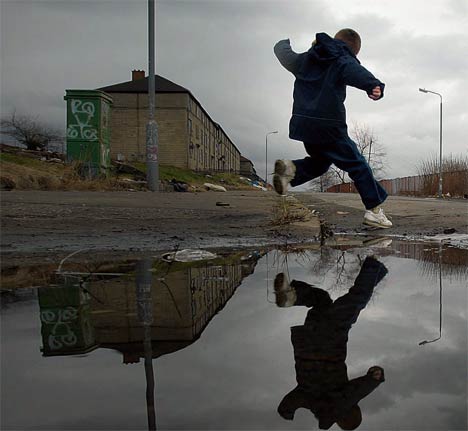
I think in some ways, I kind of agree with him. The comfortable life we live in Dunoon is a far cry from inner city streets. The question of how this integrates with a trying to live as followers of Jesus has exercised my thoughts constantly.

And no-one is a harsher critic of Social Work than I am- even though to blame my profession for poverty makes as much sense as blaming the police for crime, or ambulance drivers for car accidents.

But the fact is, I am here. My kids are here. My friends and my community are here. The measure of the life we live is how we might seek to live out lives full of Grace wherever we find ourselves.

And we should be careful about imposing our own passions and our calling on others. I wonder how things have gone for my friend. I genuinely hope that they have gone well, and that  good has been done in situations of real need. But my experience has been that wisdom comes with miles travelled- and a few failures/successes along the way.

The discussion is ancient history now but the reason I am raking it up again is because of a newspaper report I read today about my little town. Mortality and poverty rates are the third worst for any area across the whole of the Scottish Highland area. Only the Merkinch area of Inverness and Alness, south Wick have poorer measures. I sort of knew this instinctively, but it is still a surprise to see it confirmed by wider measures.

The picture of the whole county is similarly challenging- 18000 of the 60,000 people of Argyll and Bute live in poverty, and our take home pay is 9% less than the national average.

In the mix are high levels of alcohol abuse. Reports from the courts in our local paper are almost all alcohol related.

All this means that inequalities in health have worsened- those in poverty are likely to suffer poorer health than 10 years ago- and these people are also more vulnerable in the current economic climate, as public services are squeezed, and low paid jobs become more competitive.

How do you do anything about this? What combination of micro and macro interventions might begin to change it all? Whole reports have been written about all this (remember the Black report?)

It is never easy- but for sure, one important component is the heart and strength of the communities we are part of. The wellbeing we experience through connection and shared purpose and meaning. The learning of tolerance and respect despite all the usually opponents to these things.

We do not have all the answers- I am no Messiah, but this sounds to me like a calling. A Jesus kind of calling…

V and A post modernism exhibition…

Interesting discussion about the old P word on R4’s ‘Start the week’ this morning- relating to a new Victoria and Albert Museum exhibition of all things post modern (defined as between 1970 and 1990.)

Post modernism is a term that has rattled around the edges of so many ’emerging church’ conversations and so if it was not quite so far away I would go. Emily is going soon though with school…

Here is the blurb on the beeb-

Once described as “the Swiss Army knife of critical concepts”, Postmodernism is one of the most slippery, fragmentary and contradictory of movements. At the Victoria & Albert Museum’s new exhibition, an angular Grace Jones vies for attention with a pink granite skyscraper and David Byrne’s over-sized suit. Forged as a challenge to the orthodoxy of modernism, its style revolution came to the fore in the 1970s and 80s. The co-curator, Jane Pavitt, argues that although postmodernism is now dead, its irony, exuberance and subversion have left a lasting legacy in the world of design.

I enjoyed the discussion this morning- a few things stood out-firstly the curator, Jane Pavit was describing the early architectural movement as being almost obsessed with ruined buildings, broken things and post industrial industrial degradation. Almost as if in chewing on the END of modernism, it had to be endlessly picked over.

‘Like we have done to all things church’ I thought to myself.

The next thing that stood out was a critical voice asking a familiar questions as to whether post modernism was ever really any different from modernism- just a reformulation of the same old same old.

‘Like the whole emerging church idea is in danger of becoming’ I thought to myself.

Finally, the question was asked concerning what next? Post post modernism? The view expressed on the programme was that now all bets are off, all things are possible, and there are no uniform categories possible.

‘What does this mean for church?’ I thought to myself.

Hmmmmm.

‘Save me’- religious reality TV…

Saw this the other day- still not sure if it is a hoax.

Volunteers might have just missed the deadline, but you never know- drop him a line…

The bloke behind all this is Jim Henderson (no not that puppet bloke- his name was Henson.) I liked what he claims as his ‘mission’- 

The Three Practices of Otherlyness (the Way of Jesus.)

• Be unusually interested in others

• Stay in the room with difference

• Refuse to compare my best with your worst

Quite how this will work out on TV remains to be seen. Not sure it will ever air on British TV anyway- if it comes to a screen over there- let me know!

Which does bring to me again the question of the Great Commission for we followers of Jesus. Most of the Christians I know have given up on selling religious product- in fact, perhaps we have gone in the opposite direction entirely. Refreshing then, to read this via Jim Henderson’s blog- 

The old paradigm of presenting a case and demanding a verdict just isn’t working anymore (and nobody is doing it anyway). So what DOES work? And how can we get more people engaged with the process of spreading the Gospel?
Here’s what I’m banking on these days: Listening. Hearing their story. Finding out what God has been up to in their life and (gently) calling their attention to it. Becoming a safe person for others to share their doubts, fears, anger and distress with regarding life. And then, in that kind of context, being asked to share YOUR story (which is simply what Christ has done in your life), and in that context HIS story (as simply as you can). An invitation to follow Jesus may or may not fit that initial conversation. But we should be ready for it just in case, I think.
So, I am suggesting we give up the obsession with making converts and start getting serious about calling others to join us as disciples (students) of Christ. That process is messy, hard to “count”, and unpredictable. But I think it’s more like what Jesus was asking us to do in the “Great Commission”. So the short answer to your question is, “Quit doing that. Make disciples, not just converts.”
Yes, I think I can go along with that!

Emerging church- as ‘movement’…

I liked this post (via TSK), which had some interesting things to say about the old EC words…

I rarely hear the words ’emerging church’ used any more. I had just about got used to using them myself without cringing a little (it always felt slightly pompous to describe my association using this kind of label) and then it seemed to be out of fashion. And despite myself, I do miss it slightly. It is always good to think of yourself as part of something hip and happening- on the pioneering edge of something new.

Over the last few years there has been a lot of discussion (some of it here, or here for example) about the end of EC as a movement. I never agreed with these obituaries- it always depended what you looked for and how you asked the questions. However, it did seem that a lot of the radicalism that went under the banner was cooling, and perhaps being ‘tamed’ by institutional connection.

What was refreshing about the article mentioned above was the generous description of the breadth of the ‘movement’ defined as follows-

A movement has a center without boundaries.  The center is a set of common interests and ideals.  People who make up the movement are more or less committed to those ideals, but all share the interests.  When a movement develops boundaries it is no longer a movement but an organization…

…Movements are notoriously difficult to pin down and describe–except by their common interests, ideals and commitments (although it must be remembered that within any movement, insofar as it is truly a movement and not an organization, levels of commitment to the ideals varies.)  That’s what makes them so interesting and what gives rise to so much discussion and debate about them.

Roger E. Olson (what is it about those initials that always makes it clear that Roger comes from the USA?) who wrote the article compares the EC with the Charismatic movement in the early to mid 1960’s-

Throughout the 1960s and 1970s people debated the nature of the charismatic movement and its boundaries.  Much of that discussion was misguided and misleading because there never was a headquarters or magisterium or universal spokesperson or group for the whole movement.  But a cottage industry arose around attempts to define it and describe it and gain influence over it.  Some organizations tried hard to harness the movement’s energy and control it for their own purposes.  During the 1970s and 1980s Oral Roberts tried desperately to do that with little success.  Eventually the movement died out as charismatics stopped networking with each other and settled into competing organizations.  The charismatic ethos (it’s center) gradually blended into the religious mainstream as demonstrated in, for example, “praise and worship” chorus singing during Sunday morning worship services (something virtually unheard of before the charismatic movement).

Every movement takes up the old in a new way and adds to it as well as subtracts from it.  Every movement includes some diversity and is dynamic–flexible and changing.  Every movement has its founders and its “Johnny-come-latelies” and its exploiters.  And every movement has its would-be popes, its prophets and its critics (both internal and external).  AND, every movement has its adherents who refuse to be identified with it.

Olson goes on to try to define what he thinks are some of the unifying features of the movement. I think this part is a little weaker- most dry lists like this tend to feel rather artificial- particularly when one of the defining characteristics of the movements seem to have been a resistance to restrictive definitions!

Perhaps too the UK perspective is rather different. In many ways the UK EC movement was fostered within the mainstream- particularly by Anglican and Methodist leadership. Sure there were radicals who flared bright and largely burned out, but on the whole the movement here has often been an adventure from and within establishment. Perhaps there was also the ‘desperation factor’ in the UK- churches declined to such a remnant that something had to be done- we needed a new gig.

I found myself wondering about Olson’s description of the end of the Charismatic movement however. The end of networking and the settling into competing organisations. This sounds sad- but is inevitable I think.

The issue is, however, the degree to which a movement ‘moves’ things- how much things change. I think that the EC has brought about significant changes, both subtle and obvious, to the Christian landscape of the UK. I would mention specifically some of these-

  • A change from attractional to missional forms of engagement with the wider world
  • A focus on local, community based ways of living out faith
  • An embrace of older religious traditions, alongside new technologies
  • A more generous and open dogma- you could even say liberalisation of previous Evangelical core beliefs
EC has not played out some things particularly well- whilst there has been a justice and peace focus, it was still largely a white, middle class movement. The EC words seem to have been urban, but not inner-city.
For a while there was far too much theology, and not enough praxis.
I am aware that I am speaking in the past tense about EC- but perhaps the ‘movement’ is over. Now for the organisations and the boundary making?
Hmmmmm.


Bible nasties- soft conclusions…

During April, I wrote a series of 5 posts (the first of which is here) chewing on how we might understand some of those difficult passages of the Bible which appear to portray God as a mass murderer, who commands rape, child sacrifice and even cannibalism.

For example, this one. Mass murder, mass rape- but the keeping of a trivial oath- all in the name of the living God.

I began by considering some apologetics- here. There were some glimmers of hope of explanation, but on the whole, I found the business of trying to explain away the contradictions of a violent, murderous loving God (as apparently described in the Bible) impossible.

Next I chewed a little on the way Jesus seemed to deal with the hard judgmental, ‘scriptural’ truth that religious people hit him with. I noted that when he talked about the truth that would set you free, he did not seem to define this truth by a narrow interpretation of the written words that were handed down to him.

Next, I wondered about this word ‘context’- and how we needed to attempt to understand the nature of the cultures and historical times that the Bible stories emerged from- often violent, bloody and dynastic. Inevitably reading the Bible like this is a slippery slope towards liberal re-interpretation (as any good Evangelical will tell you.) I am sliding…

Then I got into a bit of  a philosophical ramble about the nature of truth- which to be honest, did not help much. The basic conclusion that I suppose I might take from all this is that truth is almost always nuanced, subjective, debated and interpreted according to perspective.

Finally, I wondered about hell and listened to Francis Chan suggesting that our understanding of hell may well be a rather recent invention.

I am no theologian- although I have been trying to make sense of this stuff for most of my life, so I suppose this might give me some personal source material, even though I lack the breadth of study. But I think the time has come for me to commit myself to some soft conclusions arising from the above.

Soft- because they will be imperfect, and incomplete. They will need to be reviewed and be open to challenge and modification.

Soft too because it is so easy for conclusions to become self referential, self sustaining, and the bedrock for further and more lasting distortions. Perhaps it is even impossible for this NOT to happen.

But conclude I will, because (as discussed in a previous post about (un)belief) I think it is time to step aside from the deconstruction of faith, and start to build again.

So here are my shallow, portable foundations- you could even say the flat surface for my fragiletent-

The stories in the Bible are open to our interpretation, to our questions even to our doubts. They are open in this way because God is open in this way. God is bigger than our understanding, or the understanding of the ancient writers of the Book.

There are many way to approach a reading of Bible passages- context is important, but Brian McLaren lists 10 other ways here– we have got stuck with a either/or approach- either literalism or myth. Perhaps we need to address this tired polarity by giving other things a try for a while.

This might steal away the mystique and sacred from the Bible for some- but this might be a good thing, as we could  have stumbled into a kind of idolatry, where we venerate a book, rather than who the book is about.

In trying to approach the book with this mindset, there are countless potential beartraps and cellar stairs to fall into. So we need to start with the body of knowledge within the church- both recently and more ancient. But be prepared also to work our understandings out as (Rollins again) “faithful skeptics”. And we should do this in community.

We do not need to have the answers to all of our questions. The questions too can be holy.

We are followers of Jesus- and we need to start with the stories about his life. This can be challenging enough after all! After that, we can then use our understanding of him to work backwards and forwards into history. But let us not try to make everything fit. It sometimes will not! And where it does not seem to fit- this can be a window for the Spirit too.

And speaking of the Spirit- he is present, NOW- not just in the pages of a book, but in all sorts of ways-

friendship

sunsets

dreams and visions

Kindnesses and moments of sublime grace

Music and dancing

Wisdom

Gentle promptings of guilt and remorse, as well as longing for things to be better

In the midst of us, and also in wild places, stirring the waters

Poetry

Silence

And because of this- we are not alone in this search. We are not powerless nor unenlightened. Rather we might expect the unexpected. The God of Surprises.

And finally- back to all that murdering and raping and child sacrificing. Did it happen in the way described? Well, perhaps. The times these things happened were full of such things. But as much of these stories were written down centuries after they happened, and survived through oral tradition, you would expect that there would be a reframing process- a self justification process. A God-on-our-side process.

Even if through the whole thing, there is a God-in-the-middle who still emerges as we read these stories.

Did it happen that way because it was what God commanded- what he demanded to assuage his lust for blood and vengeance?

My soft conclusion to this is-

No.

You might not concur, which is fine- but don’t lynch me please.

Because the other useful fact that has emerged for me came from Helen’s comment on one of the previous posts in this series- regarding the fact that our faith had overemphasised hard belief and doctrine- whereas perhaps more important than this is how we live- how faith sets us on a journey.

Travel on.

Bible nasties 3- truth and scripture…

(This is a continuation of a series of posts (here and here) asking questions about the dark passages of the Bible. Forgive me if this is all old news to you theological types- I began writing this as a review of where my own thinking is up to….)

So, we come to that truth word. I am tempted to try to deal with this as a philosophical concept- but for now, lets stick to Jesus-

 Then you will know the truth, and the truth will set you free.

John 8:32

What did Jesus mean?

When you read the full passage, the whole thing gets even more complicated- Jesus is in the middle of one of his regular arguments with the religious hard liners- the Pharisees. Firstly they try to catch him out by bringing him a woman caught in adultery- who by law (Biblical, scriptural law that is) should be stoned to death. (Check out Deuteronomy 22:22 for example.)

Leaving aside the fact that only the woman was brought to be stoned, not the man who was the other half of the coupling, what Jesus did here was to take an absolute unequivocal law- an absolute scriptural truth- and turn it upside down and inside out. The way he did this infuriated the religious folk, and thrills us as we read the story.

Next, Jesus claims to be the Light of the World, and the Pharisees try to challenge him using logic and truth- asking him to bring forth witnesses. Then there is a lot of isicussion about the nature of sin- all of it aimed at the very people who seemed to have got it all together in terms of scripture.

So- what sort of truth is it that will set us free when we get to know it?

The church tradition (Protestant Evangelical, slightly Charismatic, left leaning) that I grew up in would have suggested that the issue was that the Pharisees did not get the real truth- they were caught up in surface deep ‘goodness’- all of which may be the case. But this tradition has made a sport of ‘truth wars’ for generations- ever since the reformation there has been a constant schism followed by splinter followed by subdivision- each grouping claiming that their truth was truer than the last one.

And each one of these schisms has used the Bible (or rather their enlightened interpretation of the Bible) as evidence for their claims to truth. Which is just what the Pharisees did. Is this really the kind of freedom that Jesus had in mind?

Is this the kind of truth that he had in mind?

Because in this passage, and in all others, Jesus seemed to apply the truth with a distinct bias towards the poor and weak. It is one of the reasons that I am still captivated by him. The freedom he seemed to promise was from the tyranny of the law- the application of hard, rigid, unyielding truth- particularly when wielded by the powerful. This kind of truth he always (and I mean ALWAYS) seems to have turned upside down and inside out.

Which kind of brings us back to the issue of how we might read, understand and apply the words of the Bible- particularly those troubling aforementioned passages in the Old Testament.

It is probably worth remembering that what we know as ‘The Bible’ is a relatively modern creation- in terms at least of the canon of scripture that is gathered together in the way we understand it now. There is more about this here if you are interested, or check out this summary of the Biblical Canon from Wikipedia. In the pre modern area, Scriptural truth emerged from debates between learned monks, or was ruled upon by the hierarchy of the Church.

Interestingly enough, I was reading something about the early Ionan writings- from the time of St Columba. One of the books that has survived is the Collectio Canonum Hibernensisa collection of biblical Christian teaching and law making, written on Iona some time in the late 7th Century. What is striking about this book is that it often quotes contradictory sources- the was no concern to decide what should be the absolute final truth- rather the writer appears to expect people to look at the evidence, and work it out for themselves.

Does that mean that there is no truth, just debate leading to a thousand personal opinions that shift according to influence and fashion?

Well- some might suggest that this is the logical outcome of post-modernity as applied to religion. The pendulum swing may yet need to correct itself lest we deconstruct everything to it’s eventual destruction (if you will forgive the mixed metaphor!)

Interestingly enough- what I believe is happening in the emerging church conversation at the moment is that the deconstruction phase is over- we are starting to build again. People are starting to be more comfortable in stating what they have come to believe (rather than just questioning what they had once believed.) We see this creating some conflict- as in Rob Bell’s new book. Of course, such concrete statements (even id tentatively phrased) become targets for the  truth mongers. ‘Oh’ they say ‘I knew all along this man was a heretic/a universalist/un biblical.

I think that is why I started to write this series of blog pieces. I feel it is time to take my own stand on some of these issues- you could say, to find my own bit of truth.

But it needs to be the sort of truth that sets me free.

And if it is to be this, then it needs to be a Jesus kind of truth-

Humble

Biased towards the poor and weak

Driven by love and grace, not existing independently of these

Destablising and challenging- not always obvious

Encountered in stories, relationships and mistake making- not just(or even) in written lists of laws

Applied deeply, not just on the surface

Applied first to oneself, but softly to others- apart from those who wield power

Hmmmm….

The Good Book- AC Grayling…

A C Grayling, secular humanist/atheist has taken it upon himself to re-write the Bible- as a secular, moral document. It seems his motivation was to make available the ‘good’ stuff whilst editing out the ‘God’ stuff.

Fair play to the bloke, people have accused me of the same. The whole emerging church conversation has often been accused of sanitising the unpleasant judgmental side of the Bible in favour of a more accessible and cuddly message.

I do not agree with either Grayling, or the assessment of EC critics of course…

Because the God we encounter in the stories of the Bible is capricious, glorious, confusing, challenging, forgiving, condemning, war making, peace bringing. Because of this, no matter how hard we try, systematising and defusing our ideas of God always fail.

It might be possible to read the Bible as a book of moral fables, of quaint historical interest, but also vaguely character building in indefinable ways. You will have to ignore whole bits of the Bible to do this of course, and along the way may come to wonder whether the Bible can be regarded as ‘moral’ at all.

What makes the Bible vital, engaging and alive is the spine tingling possibility of- God. What transforms the reading of the Bible is the fact that we use it to approach- God.

Without God- there would seem very little point in reading this miscellany of stories of ancient people.

So sorry AC- I will not be reading your ‘Good book’, I will stick to my not so good one, in all its messy challenge.

But then you did not expect me to do anything else did you?


Changing the world by relationship…

I read this today via the Emergent Village ‘Minimergent’ bulletin…

Despite current ads and slogans, the world doesn’t change one person at a time. It changes as networks of relationships form among people who discover they share a common cause and vision of what’s possible. This is good news for those of us intent on changing the world and creating a positive future. Rather than worry about critical mass, our work is to foster critical connections. We don’t need to convince large numbers of people to change; instead, we need to connect with kindred spirits. Through these relationships, we will develop the new knowledge, practices, courage, and commitment that lead to broad-based change.

Read entire article at Faith Collaboratory by clicking the names below.

Margaret Wheatley & Deborah Frieze

The article make interesting reading as it was written a few years ago (2006) when the language of ’emergence’ was still fresh and exciting. We are part of a different time now. The article suggested an emerging process that goes something like this-

Berkana has developed a four stage model that catalyzes connections as the means to achieve global level change: Name, Connect, Nourish, Illuminate (see Appendix). We focus on discovering pioneering efforts and naming them as such. We then connect these efforts to other similar work globally. We nourish this network in many ways, but most essentially through creating opportunities for learning and sharing experiences and shifting into communities of practice. We also illuminate these pioneering efforts so that many more people will learn from them.

The article then suggested that the next stage would for communities of practice to develop an proliferate.

Is this what is happening?

Well- I think so…