How do we come to our understandings of God?

I have been thinking a lot about how we come to hold a set of beliefs and understandings towards God.

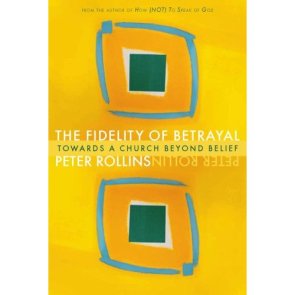
I have found Pete Rollins (part of the Belfast based IKON group) two books really challenging- he has this way of using parenthesis or slashes to convey something of the complexity and essential unknowabilty of our fumblings towards theology. Check these out if your head can cope with this;

One of the problems/blessings (to get all Rollins-esque!) of my particular personality is that I tend to see more gray than black and white. Where others see a simple issue- he is wrong, that is truth, this is what the Bible means by this, this is what is wrong with the world/the organisation/the church- I find myself always saying yes, but…

This is not always helpful. It can result in lack of clarity and prevarication. It can skew me towards a fence sitting position that has lots of questions, but finds no firm ground for to walk forward on. Kind of like some critics would categorise the emerging church do you think?

But how about theology? Is this not all about TRUTH? If we loose sight of the essential propositions that we hold in common, then all is lost, surely? This is how I was brought up. There were some gray areas, but these were overshadowed by the towering edifices of truth that we were given and encouraged to stand on like high stone walls.

So faith converted to theology (our theory and thoughts towards God) in this way;

Except, for me, this never really worked. I spend too much time with people to ever think that simple answers to complex human questions will suffice.

This sometimes leaves me at a place of dissonance with other more concrete but sincerely held theological positions all about me. At times it challenges my faith itself, but I have come to believe far from being a negative thing, this process of engagement, doubting and testing is in fact the very stuff of faith.

And that the ambiguities and difficulties brought to us by our reading of scripture and engagement with the wonders and mysteries of God will always result in a degree of uncertainty and struggle- and it is through honest engagement in this struggle that we encounter the Living God.

Or perhaps this just suits my personality, and so I make my theology accordingly?

This is the question that has been occupying my thoughts recently. Do we always tend to make an Icon out of our own perspective, and seek out others who will agree with us, and therefore make it seem more true, more dependable and therefore give it an illusion of universality?

Perhaps then, we form our theology a little like this;

If this is true, then does it matter?

Perhaps not. Perhaps this is a human trait- the gift of individual perspective.

Where It seems to become problematic is when we think that we are right, and everyone else is therefore wrong. It might be that you have been part of a group or denomination where version one of the theology-receiving model is enforced- leaving no room for any of your own exploration. This can be abusive and damaging.

So can the opposite- let us never be guilty of making God in our own image!

Which of course, unless you agree with me- you are/are not!

The Bible- and how we read it 2- my answers!

OK- I’m a sucker for a smart-ass challenge, but Jeffrey reckoned I should have answered the questions I asked here

So, I’ll have a go.

But I have to say that these are working notes, not complete answers. If you want complex theology- go elsewhere…

Question 1- ‘Disputable matters’ (From Romans 14) can we agree to disagree, or is truth more important?

Strange beginning I suppose- it is just one small verse in the middle of one of Paul’s longest letters. But this letter is the one in which he repeatedly circles around the issue of reconciling the legalism of the Jewish people (and his own background as a legalist-in-chief) with the New Kingdom, and life amongst the gentile believers. But I had missed this verse until recently, and I it suggests a tolerance and respect for different views and emphases does it not?

So for may answer to this one- narrow understandings of anything should always be subordinate to LOVE.

Question 2- How did people manage in the pre-modern era, when the Bible as we know it either did not exist, or was not available?

Well who knows? They seemed to have their fair share of sects and heretical groups I think? Perhaps too theological power was very centralised- Rome and the rise of Christendom…

But it seems clear that faith was the meaningful centre of lives and communities WITHOUT universal or even widespread access to the Bible. Was faith less real, or less true? I do not think so- it just existed in a different time and place.

That is not to say that reform was unnecessary, or that the medieval world is what we want to get back to!

Question 3- Can you be a Christian and never have read the Bible?

Clearly you can. It does not say in the Bible that you need to read it to be a Christian does it? Even Paul talks about scripture being ‘useful’ for teaching and instruction- not necessary.

But why would you not read and study the Bible if you could, and you had any interest in God?

Question 4- Who decides/rules on interpretation of scripture? Do we look to history, and God’s revelation to Christians before us? Do we allow particular theological experts to make executive decisions in relation to Christian history? Or should the emphasis be on our own engagement with the text- and it’s life in our lives?

I think I kind of implied my answer in the way I framed the question! I feel skewed towards small theologies, worked out in community, according to the leading of the Holy Spirit, and in the respectful shadow of those people of faith who went before us.

Question 5- Is there a FINAL version of biblical truth? Did modernity almost get us there, with perhaps a bit of tinkering required, or is there a need to start again with some basics? Does every generation need to wrestle anew?

Again, I think you could guess where I am going. I do not think that we have any right to claim a final version of truth- any more than Calvin, or Luther could have done- or for that matter, Augustine. How about Paul then? Did he have everything sorted? (Sorry, not meaning to ask yet more questions…)

Question 6- Systematic theology- good or bad?

I am not really qualified to answer this- I am no expert. I suppose it depends on the system, and on the theologian. But most systems are sooner or later tested to destruction, unless they are adaptive and responsive. Does that make the syncretic, and thus heretical? I do not think so- again, if we read the modernist reforming fathers like Calvin and Luther- do we agree with everything they said?

Question 7- Truth- what did Jesus mean by this? Lessons from the Pharisees?

I do not think I can do justice to this one. He clearly had no time for the way the Pharisees did the truth thing- and what they did has always looked a lot like highly elaborate systematic theology to me. But he did say that ‘They shall know the truth and the truth shall set them free’. I can only ask more questions again…

Question 8- Scripture- ‘God breathed’? Does this mean the Bible, or something else, that we have TAKEN to mean just the Bible?

Paul was obviously not speaking about the Bible as we know it today, as this collection of books simply did not exist- it took another 1700 years to sort this out, more or less.

He was clearly talking about the OT- but this too appears to have had a variable canon. He may well have been talking about other books now lost to us, and others soon appeared to regard his letters as Scripture.

The view that God ordained the Canon of Scripture as a complete, harmonious and unified whole, without error or contradiction, sent down from heaven on golden cushions (like the Mormon golden plates) simply has never made sense to me. This is partly because the Bible is shot through with contradiction and mystery- it is this that often makes it so compelling, and what theologian have spent millions of hours trying to resolve.

The Bible also makes no such claims for itself.

Don’t get me wrong- I do not mean to devalue the Bible, just value it honestly and completely, not by creating a mystical distance that leads to placing it in a glass case, not your back pocket.

Question 9- CONTEXT- where you start from- does this affect what you see, even (or particularly) in the Bible? Are there contextual ways of understanding the words- for example in relation to divorce, or women covering their heads, or homosexuality- or is this a slippery slope to heresy?

Oh dear- the danger of Syncretism again…

I think though, I have come to a view that it is impossible not to read the Bible contextually- in both obvious and more subtle ways. The critique made of Christianity arising from modernity and the enlightenment is a powerful one- the suggestion that we needed the Bible to be a blueprint, measurable and dissectable- because this was the only way to contextualise it.

The question that is gaining so much air time is whether or not the new post modern context demands a new reading- a new understanding, or whether this should be resisted and defended against as accommodation to the spirit of the age.

I think we need both new and old readings- and the freedom to pursue both.

Question 10- AUTHORITY- what does this mean in terms of the Bible? Is the authority given to us, to interpret and understand in the light of the Spirit, or to the words themselves?

I am clear that the words have authority only as given to them by the Spirit of God. We revere the words in as much as they bring God closer to our understanding, and ope ourselves to letting him speak to us through them.

Jesus promised that he would send the Holy Spirit- he did not promise to send us a rule book that would be our guide for all things, for all time, did he? Was the promise of the Holy Spirit as a comforter and a guide just a temporary one until the Bible Canon was agreed? (There I go again with the questions….)

Question 11- When the Bible talks about the ‘Word of God’- what does it mean? Jesus, or the written words themselves?

I think it is clear that one of the names given to Jesus in the Bible is ‘Word of God’. The Bible never claims to be that- although some of its words are accredited directly to God. Some are clearly the words of men, in worship of God, or even questioning of God. Much is written in the forms and convention of Hebrew poetry, and the meanings conveyed by these forms, and the imagery intended, has not been passed into our understanding.

Using the term ‘God’s word’ to describe the Bible is a modernist thing. When it is called this thunderously by preachers wishing to imbue their own words with a heavenly authority, I am afraid I find myself wincing.

So- these are may working notes in answer to the questions. If you disagree- then you are right to. I am not suggesting that I have these things sorted out. I am engaged on a journey towards the origin of all things. How could I ever have grasped everything that is to be known about him- or even written about him in the Bible?

The Bible- and how we read it…

Within what has been termed the ’emerging church conversation’, one of the central debates has concerned the way we understand Biblical truth and authority- I suppose this is kind of stating the blindingly obvious! But if you say this- it will get you in lots of trouble! So I tentatively stick my head above the parapet again…

Because I do not think that anything NEW will emerge unless we can open up these discussions. There are too many entrenched positions, with whole industries set up to defend them.

The Bible is an amazing thing- a collection of words spanning thousands of years of history, telling the story of an ancient Hebrew nomadic people, and their engagement with a God who appears in burning bushes, and clouds, and for a while camps with them in an elaborate tent.

And the words of the book are suffused with longing and laughing and yearning… and also with weird and puzzling accounts of a vengeful, spiteful God, who orders mass murder or slays the innocent first born sons of a whole nation. Here we encounter something that we wrestle with, and struggle to reconcile with the beautiful words of Jesus, the ultimate encounter of man with their living breathing God.

And it seems that through the history of the existence of these written words, they have been used as truth tools, even power tools, to propagate particular ways of seeing, ways of being- From the Pharisees to Jerry Falwell, and many others in between.

Some of the questions that I have come to ask again are these;

‘Disputable matters’ (From Romans 14) can we agree to disagree, or is truth more important?

How did people manage in the pre-modern era, when the Bible as we know it either did not exist, or was not available.

Can you be a Christian and never have read the Bible?

Who decides/rules on interpretation of scripture? Do we look to history, and God’s revelation to Christians before us? Do we allow particular theological experts to make executive decisions in relation to Christian history? Or should the emphasis be on our own engagement with the text- and it’s life in our lives?

Is there a FINAL version of biblical truth? Did modernity almost get us there, with perhaps a bit of tinkering required, or is there a need to start again with some basics? Does every generation need to wrestle anew?

Systematic theology- good or bad?

Truth- what did Jesus mean by this? Lessons from the Pharisees?

Scripture- ‘God breathed’? Does this mean the Bible, or something else, that we have TAKEN to mean just the Bible?

CONTEXT- where you start from- does this affect what you see, even (or particularly) in the Bible? Are there contextual ways of understanding the words- for example in relation to divorce, or women covering their heads, or homosexuality- or is this a slippery slope to heresy?

AUTHORITY- what does this mean in terms of the Bible? Is the authority given to us, to interpret and understand in the light of the Spirit, or to the words themselves?

When the Bible talks about the ‘Word of God’- what does it mean? Jesus, or the written words themselves?

It seems to me that there are huge areas within the way we read the Bible that are NOT clear. It depends on where you begin… and what QUALITIES and CHARACTERISTICS of God resonate with your heart. This may be no bad thing- after all, God seems to like variety in his Creation. Our variations of EMPHASIS might always have been in his thinking.

There are however bit of the Bible that appear unequivocal. Do this, do NOT do that. But I wonder if most of these really distinguish us as a people set apart. Do you know any humanists who think that murder is OK, or that materialism is the route to happiness?

It is the less concrete and perhaps more important stuff to do with how we live our daily lives- how we respond to those in need around us, and how we refuse to follow the false idols that are all around us. The Bible is indeed our guide for this, but only if we bring our hearts and minds to it in a humble and gentle way, and pray for the guidance of the Spirit. And perhaps if we refuse to use the words as bullets aimed at others.

But let us be careful that we do not become the worshippers of a book, then spend all out time arguing over what the pages mean, when it is at least possible that, to a lesser or greater degree, all of us are wrong, and both the writer and the Inspirer had a whole different lesson in mind- which involved living a life full of wonder and service…

Unitarianism and the emerging church?

Blogs are good places for controversy- I think.

But not controversy just for the sake of controversy. So forgive me if I open up the issue that appears to be the nightmare of any fundamentalist (and many liberal) Christian- the spectre of Univeralist belief systems.

I have a reason for doing this. The idea of univeralism has crossed my path a few times recently. There was Fred Hammond’s response to this blog post. Fred is a Unitarian Minister in the America’s deep south- and has an interesting blog here.

I am also back from my brother-in-laws wedding. He and Emma chose to get married in a Unitarian Chapel in their home town of Belper in Derbyshire. It was a wonderful wedding, created by Chris and Emma as a highly individual celebration of their decision to live and love together. I picked up some leaflets about the chapel, first established in 1680, and about Unitarianism itself, which left me thinking…

Then there is our local hymn-writing hero, George Matheson, the Blind Preacher of Innellan, Argyll. He is perhaps most famous for writing the wonderful hymn ‘O love that wilt not let me go’, but in his time, thousands flocked to hear his oratory power. I came across one of his other hymns recently when attending a lecture at his former church in Innellan. It gives a whole different perspective on the theological melting pot that was Victorian religion in Britain.

Gather us in, Thou Love that fillest all;
Gather our rival faiths within Thy fold;
Rend each man’s temple veil, and bid it fall,
That we may know that Thou hast been of old.

Gather us in—we worship only Thee;
In varied names we stretch a common hand;
In diverse forms a common soul we see;
In many ships we seek one spirit land.

Each sees one color of Thy rainbow light,
Each looks upon one tint and calls it heaven;
Thou art the fullness of our partial sight;
We are not perfect till we find the seven.

Thine is the mystic life great India craves;
Thine is the Parsee’s sin-destroying beam;
Thine is the Buddhist’s rest from tossing waves;
Thine is the empire of vast China’s dream.

Thine is the Roman’s strength without his pride;
Thine is the Greek’s glad world without its graves;
Thine is Judea’s law with love beside,
The truth that censures and the grace that saves.

Some seek a Father in the heav’ns above;
Some ask a human image to adore;
Some crave a spirit vast as life and love;
Within Thy mansions we have all and more.

So- Unitarianism. What do they believe? The good old BBC has a summary (see here for more.) A couple of lines stood out…

everyone has the right to seek truth and meaning for themselves, using: their intellect; their conscience and their own experience of life

the best setting for finding religious truth and meaning is a community that welcomes each individual for themselves, complete with their beliefs, doubts and questions.

It occurs to me that many of the critics of the ’emerging church’ (whatever this is, or whatever we call it now!) categorise it’s followers as essentially liberal, and sliding towards a universalist position on faith and truth. That is to say, the suggestion is that we have bought into a post-modern way of thinking that sees everything as relative to your own individual perspective- and truth itself as multi-faceted and undefinable.

And, if I am honest, there seems to be much of the Unitarian tradition that I feel in sympathy with- the point above for example.

But I remain a follower of Jesus, and things that he said and is doing through us, his faulty followers. I have reminded myself that I am not universalist in my beliefs. I may be uninterested in labeling anyone else a heretic, but when it comes down to it, I do not believe that all routes lead to God, nor that all faiths bring equal but complimentary truth.

There may yet be a point at which the Emerging Church has emerged, into something with its own unifying doctrinal statements. I hope the two above will be there, more or less complete…

Church abuse 3

I have posted previously about abusive situations in churches (see Church abuse and church abuse 2.)

I felt justified in focusing on such negative aspects of the people of faith as I keep coming across people who used to go to church. When I ask them to tell me their stories, my heart breaks. I have had two conversations in the last week that trod the same path.

But lest it seem as though I just want to bash church- here is something that I hope will redress the balance…

Another film from America, called ‘Lord save us from your followers’ explores the image that Christians portray to the wider US nation and finds evidence that Jesus is at work…

For more info, and a download for the film- check out this link.

Here is another short trailer…

Ordinary Radicals film

A new film is being released in the USA, trying to get to grips with emerging Christian movements across America, called ‘Ordinary radicals’ check out information and trailer clips here– looks interesting…

Not sure whether it will be released over here, but I think we will be able to download it when it is released.

This is the synopsis;

In the margins of the United States, there lives a revolutionary Christianity. One with a quiet disposition that seeks to do “small things with great love,” and in so doing is breaking 21st Century stereotypes surrounding this 2000 year old faith. “The Ordinary Radicals” is set against thie modern American political and social backdrop of the next Great Awakening. Traveling across the United States on a tour to promote the book “Jesus for President”, Shane Claiborne and a rag-tag group of “ordinary radicals” interpret Biblical history and its correlation with the current state of American politics. Sharing a relevant outlook for people with all faith perspectives, director Jamie Moffett examines this growing movement.

As Shane Claiborne and Chris Haw write in the book, “This is not a set of political suggestions for the world; this is about invoking and embodying the alternative. All of this is an invitation to join a peculiar people- those with no king but God, who practice jubilee economics and make the world new. This is not the old-time religion of going to heaven; this is about bringing heaven to the world.”

Featuring Interviews with: Becky Garrison, Shane Claiborne, Jim Wallis, Brian McLaren, Tony Campolo, Rob Bell, John Perkins, Brooke Sexton, Michael Heneise, St. Margret Mckenna, Logan Laituri, Zack Exley, Aaron Weiss and many more Ordinary Radicals.

Here is a taster…

Rowan Williams and the emerging church

The Anglican church in England has taken on a supportive and encourging role for new forms of church that we in in Scotland have yet to see (although the Church of Scotland seems to be making some encouraging moves?)

There is some doubt in my mind that church projects that loosely fit into catch all phrase ‘fresh expressions’ of church may well simply be churches doing what they have always done- play groups and coffee mornings. But I am not meaning to criticise these things- done with purpose, and by people who care, they can be wonderful.

However, if we are to see the birth of something new, something that learns from the old, but is prepared to radically change the way we have done church in the face of the incredible changes in the world around us- then we will need much more than tinkering at the edge of the issue. We will need leadership, supportive networking, and the nurturing of a new generation of radicals prepared to go further than us…

Archbishop WIlliams has gathered himself a mixed reputation. I love the man’s learned grace, and most of the things I hear him say, I find myself more or less in agreement with- at least as long as I am able to stay with his dry academic delivery style. I think he is an important leader, standing at the crossroads of Anglican history.

So to hear him speaking about the EC- this is interesting. Here he is, brought to you via you tube…

A bit more Dave Walker

My Emerging Church credentials » The Cartoon Blog by Dave Walker

This emerging church stuff- it has a whiff of pretentiousness don’t you think? Sub groups who get all arty and creative in the privacy of their borrowed crypts- then blog about it. Perhaps we are in danger of disappearing up our own bums.

What we need then, is someone to prick our bombastic bubbles.

Step forward Dave Walker, cartoonist and fighter for a free internet.

But for the record- I do not own a Apple Mac.

Perhaps I too am an interloper.

Let me in…

Please!

Blogged with the Flock Browser

Tags:

Emerging church- a useful label?

In our small group in Dunoon, Scotland, we have only fairly recently started using the term ’emerging church’ in a way that is not wrigglingly self conscious.

This was in part because although our group has many of the characteristics of what the EC supposedly represents, we have never agreed that this is the label or yardstick that we would use. It is only as other Christians have attacked us for being ’emerging’ that some of us have had a look at this label again, and thought- yes, that kind of fits.

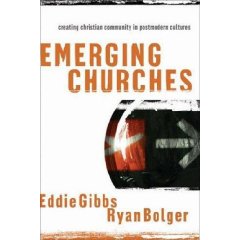
But it is not as if the label is well defined anyway. The 2006 Gibbs and Bolger book ‘Emerging Churches took a well researched swing at this, and I found it really helpful- but to be honest, I also had this feeling that if you look at a diverse movement of Christian activists and malcontents, and search for common strands- you then become responsible for creating a movement as much as defining one.

I wonder if there is also a kind of intellectual snobbery about not wanting to be defined. Many of us have escaped from solidity and predictability in the way we practice our collective faith, and the last thing we want to rush towards is another denomination.

Perhaps others felt the same way- the Methodists, or the Anabaptists- do you think in the beginning, with all the excitement and promise of something new, that they enjoyed the fluidity and freedom of lack of form and structure- and they enjoyed the lack of definition too?

I see that Andrew Jones, AKA http://tallskinnykiwi.typepad.com has started a survey asking whether we should ditch the label altogether. He is suggesting ‘Emerging missional church’ as a possible alternative- although this seems likely to raise lots of issues too. Andrew does a great job of putting some structure to these concepts here though. I am looking forward to hearing him speaking at Greenbelt festival in a couple of weeks…

Other so called EC leaders have already dropped the label too, like Rob Bell. Brian McLaren also appears to wish there was a better term. Someone put together some clips on youtube that gathered some of these thoughts.

This clip hints at some of the battle lines that are revealed when the EC label is invoked. I suspect that some of this heat alone might make leaders under fire want to find a better label.

I suppose ultimately, we will no longer be emerging- but emerged. And then we will submerge, to be replaced by another generation who emerge all over again. And God bless them as they challenge all of our cherished and no doubt concreted and inflexible doctrines and practices!

But as for me, I am not ready to get rid of the label yet. Apart from anything else- it gives us somewhere to navigate from.

And it might help us find fellow travelers of like hearts and minds to support and encourage, because Lord knows, we certainly need this.

Here in Scotland, some of us are in the early stages of trying to network more effectively- if you want to know more about this, then check out this earlier post