Church is in crisis?

This post was originally posted on the Aoradh website.

In Britain, all Church denominations are seeing decline in attendance figures. All are asking questions about what it is that we are doing, and what needs to change. Words like Postmodern and Post evangelical are used, and usually there is a suggestion that the new social context requires new expressions and practices from Church.

There is a feeling that Church is in crisis. This is not necessarily a bad thing, as we usually need crisis to create change. Crisis can be very creative. It can also be very scary and threatening, however, leading to the erection of defensive positions, and even to an Alamo mentality in some.

There is an interesting discussion in one of Brian McLarens books (The secret message of Jesus) where he talks about the crisis facing the Jewish leaders at the time of Jesus birth and early life. Jewish culture and history had been overwhelmed by an invading force. The Roman Empire had annexed Israel, and set up its headquarters in Jerusalem, the city of God. All good Jews awaited the coming of Messiah, who would overcome this evil empire and establish a new Kingdom.

But Messiah seemed to be taking his time, and in the waiting the different stratifications and sects within Judean society adopted fixed positions, partially in response to the crisis. Here are some of them

Essenes. The Essenes all but gave up on Jewish society. It was too sinful, too decadent. They withdrew to the desert, where they sought to establish new communities based on austerity, religious observance and piety. The trappings of Jewish society were spurned, and the Essenes focused their effort and attention on the study of scripture, and the coming Kingdom of Heaven.

What their response to Jesus was, it is not clear. They may have been scandalized by his engagement with ordinary life and ordinary people. They may have been appalled by his apparent party-going, feasting and drinking with unclean and debauched individuals. They may have struggled to understand what he meant by statements like The Kingdom of God is here.

Pharisees. The Pharisees were the evangelicals of their day. They espoused the strict observance of rigid religious codes and laws. They evolved complex legal systems to give shape to every situation, built from the raw material of the Laws given to Moses. Ritual purification through sacrifice and attendance at synagogue and temple was expected of all Pharisees. They also eagerly awaited Messiah, who they saw as heralding a new pure and glorious Jewish Kingdom.

For these Pharisees, the reason that Messiah did not come was because of the sinful state of the nation. Every where there was impurity. Sexual immorality, political compromise and accommodation with the enemy, unclean and unworthy people. So they set out on a mission to clean up society.

Jesus seemed to have no time for the Pharisees at all nor they for him. He seemed to be prepared to hangout with these impure and unworthy individuals, and to break all sorts of religious laws. He taught a perversion of correct doctrinal law, and kept going on about love and forgiveness.

Jesus suggested a radically different path. A radically different New Kingdom.

Herodians. The Kings Herod (there were quite a few different ones) were puppet rulers of a Roman province. Their power came from compromise and political maneuvering. They also had a dreadful reputation for debauchery, incestuous relationships, and murder. Their followers were largely the Jewish ruling class. They were pragmatic realists who may not have liked the situation that the nation found itself in, but recognized the futility of struggle, and the need for peace and stability.
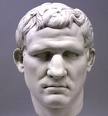
Jesus threatened this stability, because people said he was Messiah. But confusingly, he did not seem to be setting himself against the Romans. He told people to continue to pay taxes, and even HEALED family members of Roman soldiers.

But there was all this talk about the NEW KINGDOM.

Zealots. The Zealots wanted the nation to rise against the oppressor. They lived with the stories of David and Jonathan, who fought in the power of God. If but a few would rise up, surely this would herald the coming of Messiah? After all, was this not the PURPOSE of Messiah?
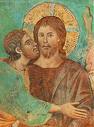
Jesus invited a Zealot into his inner circle. A man called Judas Iscariot. He seemed to have many of the attributes of a revolutionary. But his message of peace and the loving of enemies found no allies within the ranks of the Zealots.

If there was a New Kingdom, then where was the King, and where were his armies?

Does this have any relevance to the crisis facing Church today? I think it does.

As Christians, our response to the crisis in our age may follow similar paths

  • We might seek to remove ourselves from sinful culture entirely, giving up on this world, and look to the next (like the Essenes.)
  • Or we might seek to hold back the tides of immorality and impure doctrine, to defend the faith (like the Pharisees.)
  • Or perhaps we should just realize that Church has to accommodate and compromise with the changing world about us (like the Herodians.)
  • Finally, perhaps we could fight a Guerrilla warfare against the opposition. We could start to see the enemy as less than human, and that all is fair in the holy game of war.

Our understanding of the Kingdom of God, and the PURPOSE of Church as the collective of this Kingdoms AGENTS, is also challenged by this analogy.

  • Is the Kingdom in the next world- Heaven, when we die? Or is it here, right now?
  • Is the Kingdom based on rules and purity of behaviour and doctrine? Or is it based on sinners?
  • Is the Kingdom to be forwarded by political activity and compromise? Or does it transcend earthy powers and authorities?
  • Is the Kingdom to by promoted by violence and aggression against those who do not recognize it? ( I would include aggressive marketing techniques and media attacks on other denominations, other faiths.) Or does LOVE come first in all things?
  • Is the Kingdom bigger than Church? If so, where should the agents of the Kingdom be? Where is our King?

These are questions, not answers, but I am excited. New things are happening. He is making all things new.

Church is in crisis.

Hooray.

Blogged with the Flock Browser

Change 2


We people of faith seem to have an interesting relationship to change.

  • We celebrate a God who makes all things new.
  • In him, we become new creations- we are born again.
  • We believe in the continual transformative power of the Spirit in our lives.
  • But God is unchanging.
  • And we regard our understanding of TRUTH to be absolute, and therefore unchanging.

We also organise our faith into religious institutions- and institutions are usually extremely change resistant. There seems to be something about the experience of faith that is threatened by the prospect of change. It is almost as if our faith, so deeply felt and yet so fragile, is protected by a scaffolding of external certainty that can not easily cope with any suggestion that individual elements may need to be re-thought, or re-examined.

However, change is a difficult process for most of us as individuals too. I can clearly remember the times of transition in my own life, and none of them were easy. Some where forced- by those life transitions that we all face. Some were made as a result of choices- either positive ones, towards something new and exciting, and/or negative ones, away from things that I have rejected.

One of those pivot point in my own life came about as I began a scary and painful exploration of the tennets of my faith. There was a negative imperative within this- my experience of faith in may new Scottish context had been fraught with difficulties. A church on self destruct mode, an encounter with American fundementalism, and a conviction that something just was not working. There was also a longing for renewal, and a faint hope that new things were possible. But the more questions I seemed to be asking, the more may own scaffolding seemed to be falling away. At one point, I did not know if my faith could survive this.

But it more than survived- I found that it exploded into something wonderful and new.

There is an interesting discussion about change in the introduction to Brian McLaren’s book ‘A new kind of Christian’ . This book has been transformative to many who have encountered it- and caused huge controversy. McLaren is a prophet to some, a demon to many. I devoured his writing like a starving man at a feast.

McLaren described a process of change that begins with disatisfaction and pain. We feel oppressed and captured by our experience- unable to move on.

This becomes funnelled into a narrow space where we begin to look forward, but have no clear idea of what might be to come.

Then the shape of possibility allows us to come out of a funnel. This can be exciting and highly motivating. We might also be very rejecting of the past.

As the new thing takes shape, it opens out into normality, and perhaps the whole thing begins again.

The Church in the west is caught somewhere in this process. Looking for hope, but resisting the unknown. How we need the Holy Spirit. And how we need pioneers who are prepared to head off into the unknown!

Scottish religion?

As an incomer to this, my adopted land, it is impossible not to compare and contrast things ‘tartan’ from what I have known elsewhere. As a follower of Jesus, the greatest focus of this introspective examination has been how we do religion up here.

There is a great discussion about these issues on Brodie McGregor’s blog- which is on this link; http://viewfromthebasement.typepad.com/my_weblog/2007/04/emerging_or_sub.html
Brodie wrote a paper on Emerging stuff in Scotland, that I found really helpful- it is broken into digestible segments in his blog…

But what forms the character a place? Is there a convergence in the nature of the people? Perhaps we learn more than accents, taking on our style of communicating- of relating and of loving- from our environment. Are we also formed by landscape, by the mountains or the flat lands, or our closeness to the sea? Or is it the economy- those that have and have not, those in poverty or plenty?  Perhaps it is also about history, and ancestry, and our place in the story of ages?

Back to the spiritual dimension- of faith and belief, and how we express these things. Does our chosen expression of faith emerge from our own cultural heritage, or does it shape the way we are? I wonder if the way religion is understood and celebrated within any given culture becomes as influential to the formation of our towns and streets and institutions as DNA within our blood streams? Certainly, sometimes it seems that a bit of John Knox, along with a slice of Calvin and a hint of Iain Paisley can be found in every squared away, sensible building and every official institution.

As you travel up the west coast things change again…

But a few years ago, before we lived up here, I was walking through the lovely little town of Gairloch, in Wester Ross. I came across two little churches- so close, they were almost (but not quite) touching. They were separated by a few inches of clear air, but I imagined these inches to be stuffed full of inpenetrateable doctrinal difference.

I do not know the history of these churches, and certainly do not mean to criticise what I have no knowledge of. There may be very good reasons for having two such buildings- each one may be full on Sundays, and they may exist in harmonious fellowship.

But for me- this photograph has come to symbolise something of our Scottish religion.

I have said enough- here is the photograph, it can speak for itself.

Blogged with the Flock Browser

Tags: , , ,

Church?

Over the past few years I have had repeated conversations about Church. The themes of these discussions are as follows;

What is it?
Not a building? (But they are useful- particularly in our climate!) Not an institution? (But we easily organise and concrete ourselves into one.) Is it a movement? (And if so- where is the movement?)

What does it look like?
Not a club that exists for the members interests? (But what energy is left for others because of the demands made to service the club?) Do we all have to look the same? (And if not, why do we?) Not a Lecture hall/concert hall? (Where we gather mainly to receive pieces of knowledge, or to worship from afar?)

What should it look like?
Family? Community? Revolutionary cell? Monastery? Soup Kitchen? Therapy centre? Light on a hill? Circus act?

What is it for?
To defend the faith, and nurture the faithful? Or to does it exist solely to bless and serve those who are not members? Is it to make disciples of Jesus and set them loose on the winds of the Spirit- or is it to control and make safe the flock so doctrine and practice remain pure and unsullied by error or heresy?

What should be it’s priorities?
Preaching and teaching of truth- and the moral yardstick for culture? Social justice and looking after the poor and needy?
The Kingdom of God, in all its glory and majesty- in the future tense, but also NOW?

Mixed in with this talk are a load of sub themes- the death of Christendom, and the winding down of the modern age to be replaced with something fluid and undefined called ‘post-modernity‘, and the desperate need to find both old and new ways to bring refreshment to our communities of faith, so that we might be a blessing to others.

Any of you who loosely wear the ’emergent’ label will be well familiar with these debates- in fact you may be heartily sick of them!

I have spent hours deconstructing Church as I have known it. Through circumstances- geography, theology, difficulty and (I hope) following after God, I now find myself outside institutional church. This position is a gift and a burden all at the same time.

The gift is freedom. Freedom FROM a lot of the things that I have come to reject within churches, and freedom to choose new ways, in small community, looking to the the Holy Spirit for guidance.

The burden is isolation. A need to find new disciplines because the structure given by a wider organisation is no longer there. What about the kids?

I am also aware that at times I have been too keen to reject and harshly criticise what I have found freedom from. There is such a danger of arrogance and pride. As if they were wrong, and I am right- which is clearly nonsense.

So-any conclusions? Perhaps none- but a few working hypotheses…

Church happens when people follow Jesus. It dies when we follow institutions.

Church is seen in the visible marks made by the imperfect agents of the Kingdom of God.

Church is fluid and moving, like water. Place it in a pond and it stagnates- no matter how much is spent on artificial aeration projects.

Church is not me, it is us. It is never mine, always ours. Always HIS.

Blogged with the Flock Browser

Scottish emerging church network?

Last weekend I was in Glasgow, where Michaela and I met up with Thomas, Iain and Stewart in Starbucks. This was our first ‘meeting’ growing out of a facebook group we set up called EMERGING SCOTLAND. I suppose we began to dream of new things, and new possibilities…

A few others had tried to get along, but life got in the way- you were missed, but there will be other times!

Those of us that were there had this common idea that those of us engaged in fragile new ‘church’ stuff need to find common support and encouragement, and we need to get smarter in the way that we do this! Because no-one else seems to be doing it that we can find, we thought we would have a go.

As a way of gathering other thoughts and feelings- here are some questions that we would love comment on.

If you have friends and contacts who are not facebookers, and you want to circulate the questions for a wider discussion, or even other networks you can tap into, then feel free to get the word out there…

Here goes…

1. Would you value/have time to participate in/be interested to know more about/ a more developed support network in Scotland?

2. If so, what would you need from such a thing in your context?

3. What might it look like?- Do we meet, do we offer to come and support one another in practical ways, or is the on-line stuff, with all its possibilities and limitations enough?

4. Can you/we cope with doctrinal variation? How much?

If you are interested in getting involved, and have thoughts as above- we would love to hear from you!