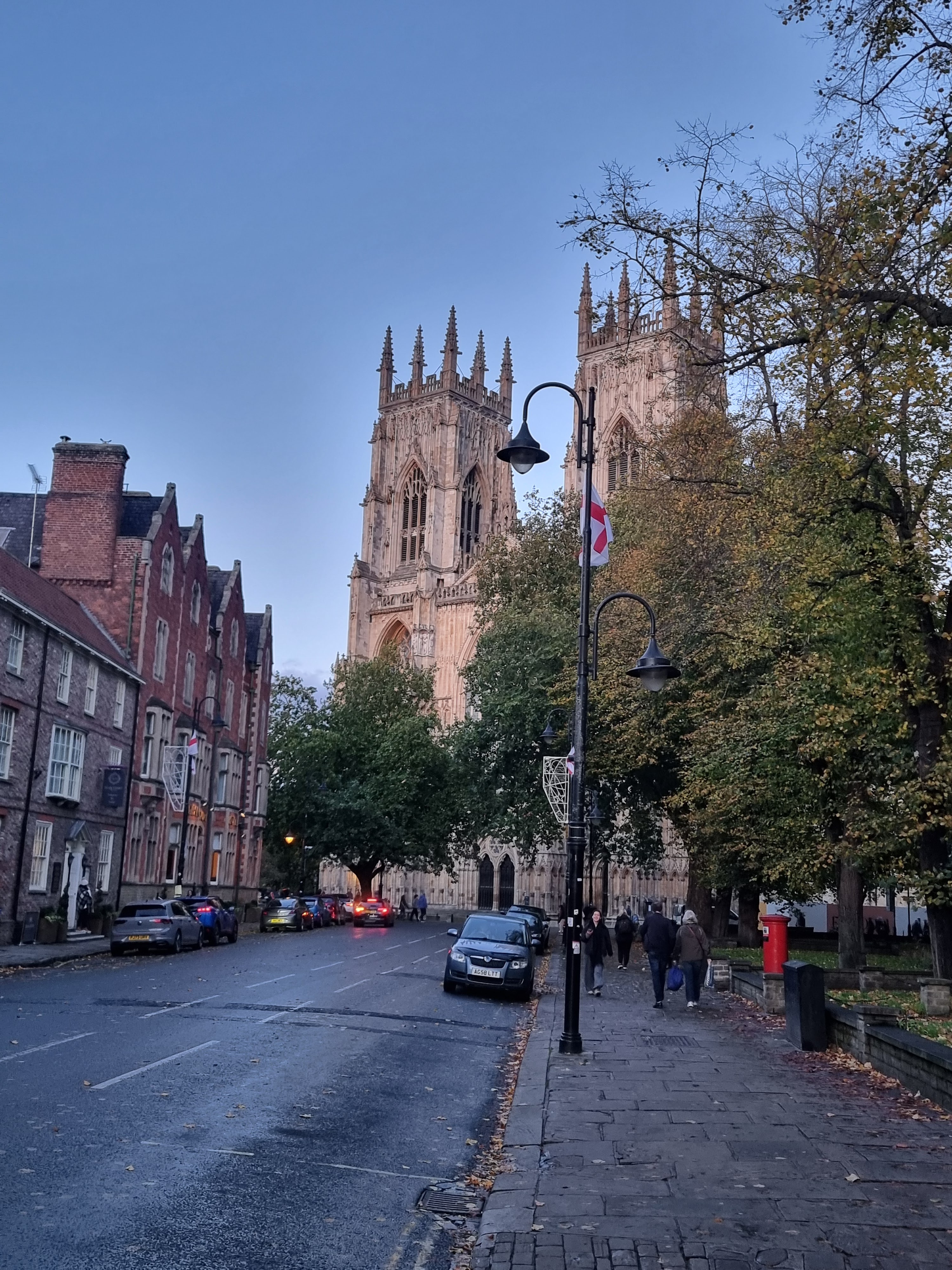
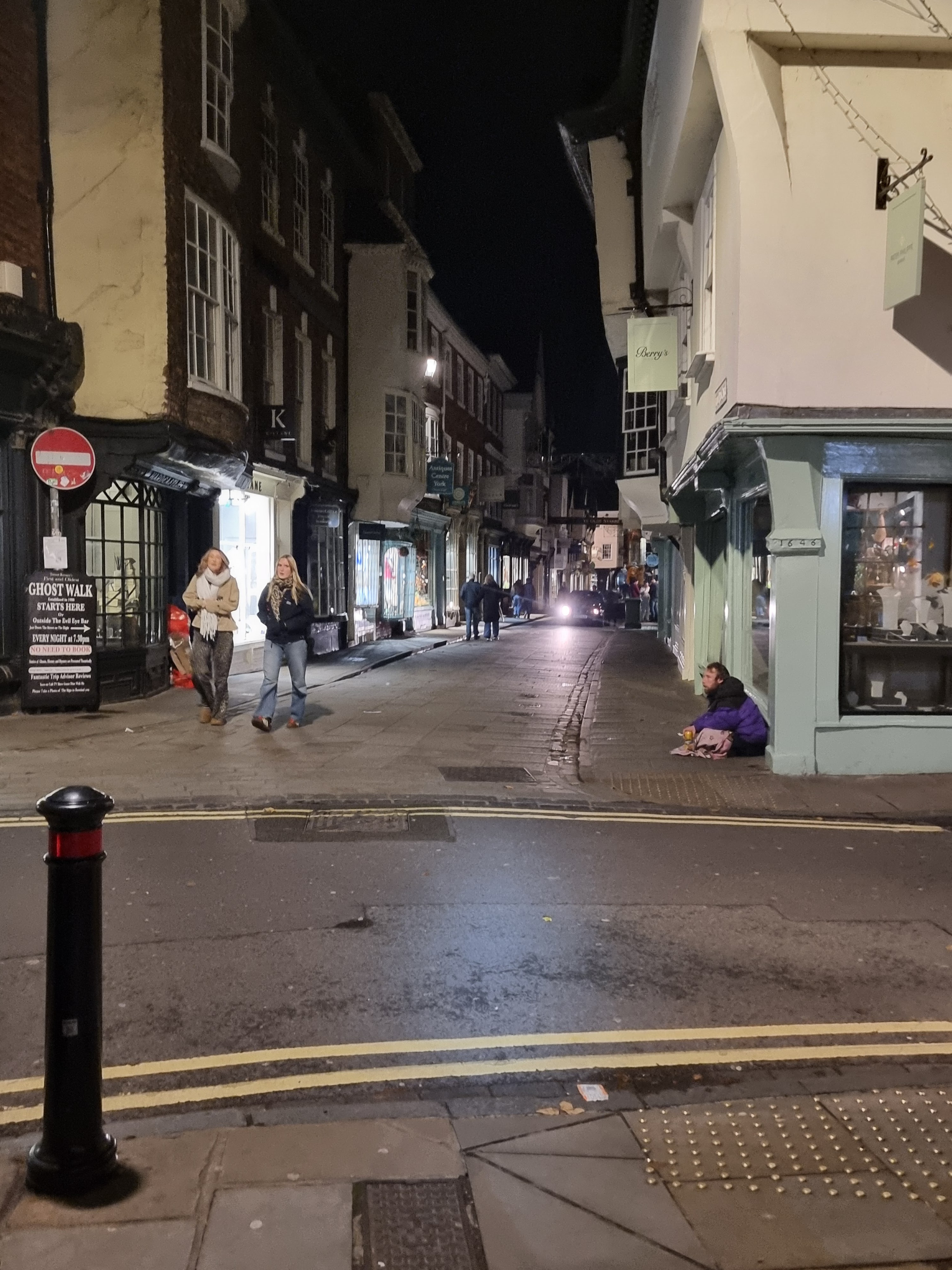
I am just back from York, where I was attending an Iona Community event. I have started the two year discernment process towards becoming a full member of the community, and this event had two parts- firstly time spent with other new members examining one of the four ‘rules’ that form the basis for membership-
Working for justice and peace, wholeness and reconciliation in our localities, society and the whole creation.
(By the way, if you are interested in the work of the Iona Community, let’s have a chat.)
After this came a day with around 80-90 of the existing full members as we heard from Paul Parker, Recording Clark of the Quakers in Britain. The Quakers don’t have a ‘leader’ – rather Paul’s role is to seek to create good processes for the 450 worshipping groups of friends. He spoke powerfully about quiet diplomacy and the Quaker colective process of testing concern together to develop collective courage. He contrasted the ‘prophet’ role (calling out injustice) from the ‘reconciler’ (seeking to listen and love) role- how they sometimes need to be employed in different ways and in different circumstances. In other words- the two hands of non-violence, in which one is the hand held aloft to say STOP, and the other is open to say ‘I love you, can we talk?’
This discussion inevitably makes me think about the divided and splintered shape of our society just now. How do we engage – as either prophets or reconcilers? Where are the spaces in which either of these things are possible?
And even if we find these places, how will I find the courage?
Meanwhile, there is another fear project going on at full tilt. Fear as a political instrument to create division through hatred and scapegoating of the outsider.
As you might expect, I have been trying to explore some of this through poetry. Here is what I am working on…
Be not afraid
I know you are afraid love - Who can blame you? This broken world Wobbles so hard it might Shake us all off. And all those purple-faced men Looking for someone else to blame - If they run out of brown people They might wave their flags at us.
We should beware my love For there are those for whom your fear spells opportunity. They nurture it in toxic tubes, so To spore the very air they feed us, and None of us are immune because Even those of us with those lumps in our throats Must still breathe.
So, forgive my riding high on this highest horse Because I need to tell you this; If we always fear of what you do not know It will rob our future of hope It will tuck us up in defended spaces Seeking only safety Watching the world through narrow arrow slits Flexing that persistent itch in our trigger fingers But if we always fear the stranger How will we ever make new friends?
I know you better my beloved - Your heart beats beauty on your sleeve. I know you would mend the broken if you could With that clever glue called kindness. I know you would never eat alone When someone close was starving. I know you were never made for hatred When the core of you is love; When the heart of you is love; When at the bones of you is love; When in the mess of you; Is love.
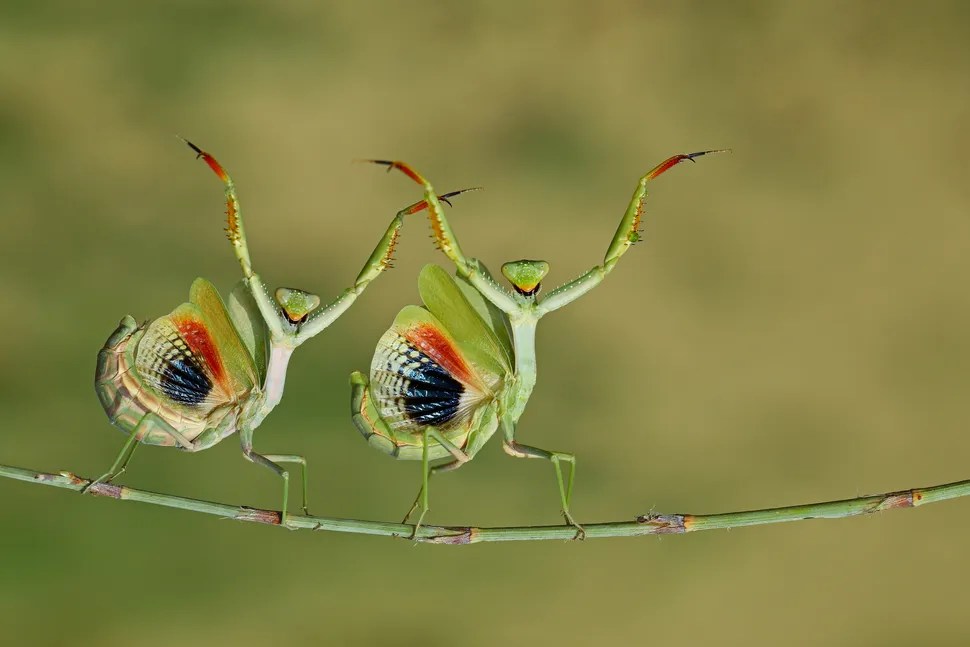
Hasan Baglar’s ‘Danlock’ has been crowned the grand prize winner of this year’s Cewe Photo Award (Image credit: Hasan Baglar)
I have been thinking a lot about prayer recently. I am starting a 2 year discernment process towards a decision of becoming a full member of the Iona Community. I will be committing myself to doing my best to keep the ‘rule’ of the community- which includes the following;
Daily prayer, worship with others and regular engagement with the Bible and other material which nourishes us.
Prayer is something I have never been ‘good’ at, even in the days when I tried hard to be good at it. In more recent times, I have moved to a point where I mostly do not pray – at least not in the way I used to understand what it was and what it was for.
I grew up with an understanding of prayer as a means to persuade God to aid our cause. The degree to which God was willing to accede to our entreaties and lists of requests was always something of a problem. It was very tempting to over-claim – or to build castles of consequence on shaky coincidences. Those times, for instance, when God miraculously granted us a free parking space, or a friend to talk to just when we needed them.
My wife Michaela was prayed for by good people for years because of her experience of chronic illness which left her ill and unable to participate in many things others took for granted. Some even suggested her lack of healing was due to unconfessed sin, or lack of faith.
Then her illness got better, overnight. It confounded medical people and confused us…
…particularly as my theological journey has taken me to a place where I no longer believe in an interventionist God. My current way of trying to resolve all of these contraditictions is through process theology – or sometimes open relational theology.
But this is all very ‘head first’ stuff.
For any theology to be real, it has to sing in our souls. The complexity of open relational ways to try to describe the way that a divine being might interact with our broken humanity is beyond more of us, particularly during the inevitable struggles and challenges of our lives.
What part has prayer to play in these struggles?
How might I/we concieve of a spiritual practice of prayer that is meaningful, relational, dynamic and useful?
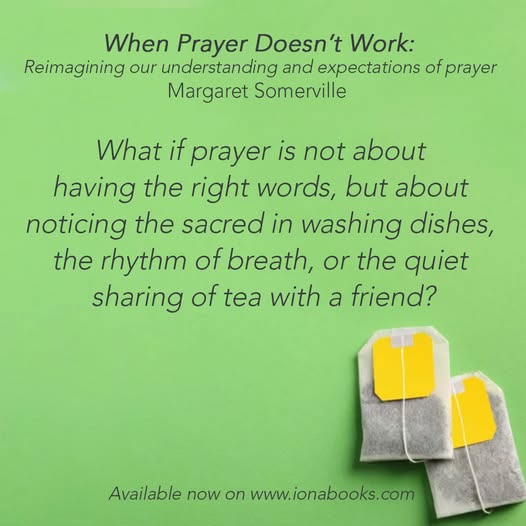
I saw this quote from a new book the other day;
On the strength of this quote alone, and in the shadow of my own struggles with prayer, I ordered the book.
But these are not new questions for me, so I have some other provisional answers about what I think of as prayer now. They have broadened out to include this list (which is not in any kind of order)
Breathing
Seeking connection in forest
Singing
Caring and hoping for friends
Dancing
Looking for resonance in art
Hoping
listening to bird song
Deep talk around a fireside
Making art
Seeking goodness
Listening to people who are hurting
Pilgrimage
You may well think that this list is a good list, but not a prayerful one…
Above all, my current thinking is that I need to pray with a pen in my hand (or more commonly a keyboard under my fingers.) For me, my poetry is above all, prayer.
So I finish with this poem, which I wrote this morning;
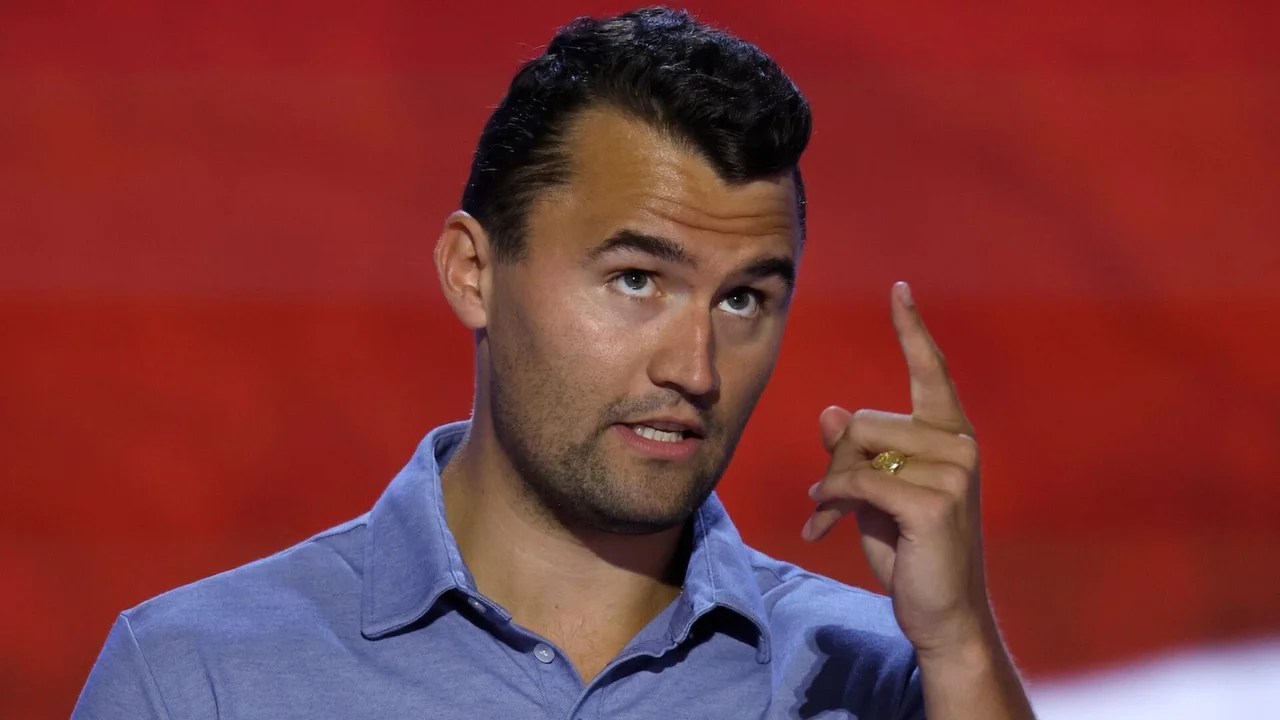
Even from here in rural Scotland, the death of a 31 year old hard right Christian gun advocate has been inescapable. Perhaps it was the horrific irony of the moment of his death- shot during a discussion about gun violence, or the controversial nature of many of his views, most of which where framed in Christian language as if from some kind of MAGA prophet.
For many on one side of the political divide, he is a martyr for his faith, achieving the Protestant equivalent of sainthood. His ’cause’ is a like a flag to be picked up on the battlefield against rising hoards of athiest islamic left-wing nut-jobs massing at the border seeking to replace the great American theocracy with trans-gender abortion and lesbian weddings.
Meanwhile, over in the other camp, people are actively celebrating Kirk’s death. A young father, aged 31, cut down in his prime is an evil that has been greeted with glee. There have been righteous protestations of condemnation of violence, but always these have been posed alongside discriptions of the outrageous things that Kirk said and represented. The message is clear- he brought this down on himself.
What might this moment represent to us with the hindsight of history? Might it be the moment when we realised that the politics of polarisation an only ever lead towards violencehat – that this kind of language, when used quite deliberately as a political strategy to breakthrough democratic deadlock, might destroy our fragile peace?
Or will it instead mark the point when that destruction entered a new phase towards the end game that was to come? Only future-us can know the answer…
Two important issues stand out to me. The first is this one;
Hyper-polarisation
Perhaps this article from back in 2016 – which already feels like an age ago – is a good place to start in understanding this phenomenon.
Bringing all of this together in Why Washington Won’t Work, Marc Hetherington and Thomas Rudolph paint a picture of a nation overwhelmed by dislike and distrust of the other side and, consequently, a political process incapable of compromise and mired in gridlock. It is easy to see how this sort of distrust and dysfunction manifests itself in assumptions about the motivations (malice, greed, bigotry, moral bankruptcy, or most charitably, naiveté) of those on the other partisan team. Those on the other side no longer just disagree about the issues, they are bad people with dangerous ideas. This paves the way for efforts to delegitimize electoral outcomes and the leaders they produce by way of conspiracy theories and claims of fraud and rigging. Perhaps most dangerously, it also can be used to justify nearly any effort to thwart the opposition.
Let’s be clear- this phenomenon is not going away. In some senses this is because it is a deliberate political strategy- create division using simplistic fear-based stories then exploit this opening by offering a ‘solution’. This is pretty much the whole strategy of The Reform party in the UK, but you can find plenty of examples on the left too. The Cambridge Analytica saga should have been the moment of awakening on the danger to our democracy of this kind of politics, but this seems to have been largely forgotten. Rather than choosing to find ways of regulating and reforming, we moved on.
Polarisation is also an emergent property of our increased reliance on social meda, both in terms of the way that algorythms feed us ever more extreme versions of what it feels will engage our interest, and also because of how we increasingly export a part of our ‘selves’ in the form of on-line avotars that then become places of disembodyment and almost ritualistic tribal defence and offence cycles.
Polarisation perhaps also emerges from our own fragile bruised humanity. This from here;
central theoretical assumption is that ideological extremism is rooted in a psychological quest for personal significance: A desire to be respected and to matter in the eyes of oneself or important others (Kruglanski et al., 2014; see also Webber et al., 2018). People can acquire such a sense of personal significance through the combination of many sources, such as family, work, and the pursuit of meaningful goals. Sometimes people may experience a loss of significance, however, when they encounter grievances such as humiliation, injustice, or insecurities. Such grievances prompt a sense of meaninglessness, and therefore stimulate a desire to restore a sense of personal significance through a worldview in which perceivers are focally committed to specific ideological goals. Put differently, extreme ideologies help perceivers to restore a sense of significance through a worldview in which they appear to be supporting a meaningful cause.
Some studies have pointed out the way that this ritualistic process might be compared to religion, in the way that it becomes a set of goggles – or a hermaneutic – through which all facts or opinions become mediated, and this takes us to the second of the issues that occupy my thoughts in relaiton to this dreadful shooting.
Christianity and extreme ideology
Kirk’s avowed and much proclaimed Christian faith has been a central part of both his political activities and the subsequent narrative around his death. As someone with many friendships and social media contacts with people across the spectrum of the Christian faith, I was still a little shocked when I read a post this morning that said something along these lines;
So touched by his life and story. At his heart was communicating deeply held truth and wisdom in many matters, in spite of the flack, and the risk. He might have been outspoken but to me he clearly had a heart to teach, demonstrate and guide a generation of whom so many are lost. When society is chaotic and unstructured people suffer, when we accept God’s ways for life there is joy, peace, security. Above all of his debating he said faith and finding Jesus is most important. Tonight I’m praying people once again find their identity in Christ, who is a firm foundation to build our lives on. Praying Christians can speak the truth in love to a world that needs to hear it.
My first response to this was through the lens of my own place on the polarised spectrum. Had this person not seen all the lies, the misogyny and racism? Had they no concerns about the rise of American Christian nationalism? Surely they must recognise the disconnect between the way of Jesus and the politics Kirk espoused?
Then I stopped and started to think about how extreme narratives are pulling at us all, particularly in the religious sphere. We, above all, have to find ways of building bridges, not barracades. It seems that – sadly – we religious people are very much part of the problem. This from here.
Conservative and liberal Christians, like all liberals and conservatives, are inclined to denigrate those on the other side of the political spectrum; and each side is convinced that the other side is treated more leniently than their own side in the media, and by other third parties that try to give an objective account of matters under dispute (36–39). However, how have Christians on the two sides of the political divide dealt with discrepancies between their own political positions and the apparent dictates of their faith? Some, no doubt, have felt pressure to moderate their positions to achieve greater congruency with traditional Christian teachings. Others may have narrowed their reference group and, for those whose faith is highly central to their personal identity, engaged in attempts at persuasion and proselytism. However, we argue and attempt to demonstrate empirically, contemporary American Christians also have adjusted their perceptions of Christianity itself. More specifically, they have adjusted their perceptions of the political positions that Jesus of the New Testament would hold if he were alive today.
A provocative series of studies by Epley and colleagues showed that the egocentric tendency to believe that others share one’s beliefs is more pronounced when individuals are asked about God than when they are asked about the average American or various prominent individuals (40). The present research is distinct from those studies insofar as its focus is more specifically on such “projection” in the views and also the priorities that liberal and conservative Christians attribute to Jesus Christ. Our specific hypotheses are very much in the dissonance tradition (26). The dissonance researchers reversed conventional formulations by focusing not on the effects of attitudes on behavior but on the effects of behavior on subsequent attitudes. We essentially reverse conventional formulations by focusing not on the effects of religion on political views but the effects of political views on the content of religious beliefs.
What can we do about it?
There is the question.
The egotistical polariser in me wants to call out the lies and wrong doing of the other. The peace maker in me wants to draw us all back towards compassion and the way of love as a precurser to all things. I want the latter to win, in me as well as the world…
… and so I choose to tread carefully. I try not to do battle, particularly one line. When I do so, I try to make sure that I react in service of justice for others, not myself.
Regular readers of this blog may remember previous articles and even podcast interviews with Dr. Katy Cross, who has been undertaking research trying to understand paths taken by people who leave church- the meaning they make and find, the connections they still seek and so on.
Katy is now towards the end of her research, and is entering a ‘creative response’ stage. There are a few ways you can be involved, but the first meeting on-line is Tuesday the 29th at 6PM. If you are on your own journey beyond church, but feel like understanding this better in community then this might be just the place for you.
There are two ways folk can take part:
By attending online workshops to discuss prompts and reflect together. You can sign up here to join in.
By writing up your own reflections in your own time, and emailing these to Katie here.
As above, the first group is meeting on Tuesday 29th July at 6pm on MS Teams.
We hope that Katie will be able to join us on the Proost podcast soon to collect together some thoughts and conclusions about this very important research.
Why do I think this chat is so important? As with this post, there is lots of chat just now about what is emerging in terms of organised religion in the UK. After a long decline, some say (on currently very limited evidence) that there is a ‘quiet revival’ taking place here, with young people, and young men in particular, flocking back into Churches. If this is true – if we are seeing a reversal of the decades-long social trend away from organised religion – then it seems important to understand this and the social forces that might be at work.
On the other hand (and at present I remain in this camp) if this research turns out to be flawed, we also need to understand why so many people within the Church have siezed on it with such uncritical enthusiasm.
Meanwhile there is another conversation that is taking place – for example in Katy’s research – with those who have been activists, leaders and pioneers within the church, but no longer feel able to be part of formal religious structures. What happened ot these people? Where are they finding meaning? How might they shape and influence what happens next?
Even as I write this, I think too of dear friends who continue to work WITHIN the Church, to carry forward acts of grace and mercy, to serve an aging population with critical needs, to run food banks and toddler groups, to set up refugee support groups and to make simple beautiful acts of worship that enable people to deepen their spiritual experience. I think how exhausted some of them are, and how abandoned the conversation above makes them feel…
Things are changing, shifting, shinking and unfolding at the same time. This has always been the case, but it does feel like we are standing on anther threshold. Whilst we mourn what is lost, we can also be excited about what will come.
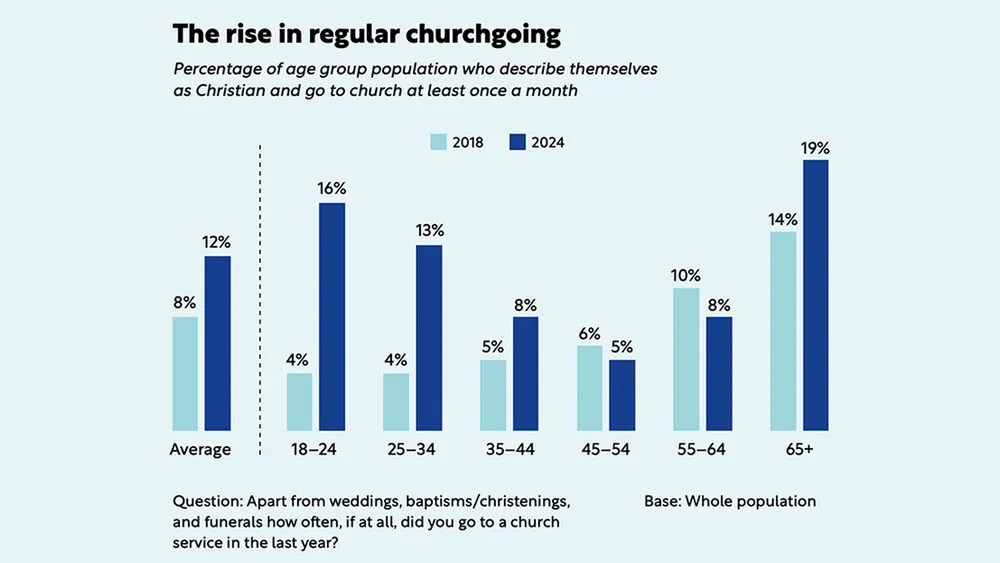
The Bible Society commissioned a survey from Yougov – a legitimate and credible polling organisation – which they claim ‘busts the myth of church decline’.
Here are the headline claims, using the somewhat bombastic language from the Bible Society itself.
Key findings from The Quiet Revival
Co-author of The Quiet Revival Dr Rhiannon McAleer says the report shows that what people believe about Church decline is no longer true. ‘These are striking findings that completely reverse the widely held assumption that the Church in England and Wales is in terminal decline,’ she said.
‘While some traditional denominations continue to face challenges, we’ve seen significant, broad-based growth among most expressions of Church – particularly in Roman Catholicism and Pentecostalism. There are now over 2 million more people attending church than there were six years ago.’
More men than women go to church
The Quiet Revival shows that men (13 per cent) are more likely to attend church than women (10 per cent). And as well church decline being reversed, the Church is also becoming more ethnically diverse, with one in five people (19 per cent) coming from an ethnic minority. Close to half of young Black people aged 18–34 (47 per cent) are now attending church at least monthly, according to The Quiet Revival.
It’s also great to see that Bible reading and confidence in the Bible have increased as well as church growth. Some 67 per cent of churchgoing Christians read the Bible at least weekly outside church.
This is the key statistic. It would seem to point to a massic uplift in church going, particularly in the 18-24 range. Young men now seem four times more likely to go to church than pre pandemic – at least according to this survey.
This rather startling survey has been greeted by some with incredulity. It seems to be describing a trend that has reversed a decades long decline in church attendance in the UK. Many have greeted it with rejoicing. Could this really be true?
There have already been webinars and conferences that are using the term ‘quiet revival’ to describe what people are claiming as a ‘move of God.’ The lesson, it is claimed, is that this is the beginning of an awakening of spiritual seeking in younger generations, and evidence of the fact that yound men in particular are searching for meaning.
This all sounds like a good thing, right?
We might not have noticed it, but are we seeing an actual revival?
So why do I feel a deep sense of scepticism? Is this just my post-church cynicism? I am on record as having very mixed feelings about the word ‘revival’ (this from 11 years ago for example) after being previously part of expressions of religion that saw this as the only valid aim of Christian activity.
I think it is much more than that, however. A long time ago I was a social science graduate, and if we had come accross a piece of research or a survey that had suggested a social phenomenon that was different to all other sources of data, we would have immediately placed it on the ‘need more examination’ pile. We would have to look at other sources of evidence and test any conclusions that might be made by exposing them to wider scrutiny and comparison. One survey is never enough to declare a brand new social trend…
…particularly when other sources of information seem to directly contradict this survey.
For example, the British Social Attitudes Survey – the largest and most authorative survey of social trends in the UK – found no evidence of an increase of religious attendence, noting instead a continual decline.
It seems I am not alone in my sceptism. More or Less, the BBC radio 4 programme that explains – and sometimes debunks – numbers and statistics used in public life spent some time examing this issue today- it is well worth a listen.
Here is how the Church Mouse frames the problem some of us have with this survey;
The most extraordinary claim is that, in the past six years (i.e., since just before the pandemic), the Church in England and Wales, across all denominations, has grown by more than half, from a total of 3.7 million regular worshippers to 5.8 million. The report says that it is largely the young who are driving this, in contradiction to our previous assumption that every generation is less religious than their parents.
The evidence for these claims comes from a large survey undertaken by a highly respected polling organisation, YouGov, that whether they had attended a church in the past month, among other questions. The same question set and methodology six years previously reveals a 56% increase in attendance.
And none of us noticed.
The Church Mouse goes on to say this.
Some of the churches where the Bible Society reported significant growth actually count the number of people who walk through their doors, and the numbers don’t match.
The most robust data set by a UK denomination is from the Church of England. Each church counts the number of worshippers during the same period each year, and the numbers are compiled to create a robust, consistent data set. The data shows that over the past six years, the Church has shrunk by between 10-20%, depending on how you count it…
…The same methodology can be applied to the data for the Catholic Church, the next largest denomination. The report said that it has grown from 23% of attendees in 2018 to 31% in 2024, meaning it would have grown from around 850,000 regular attendees in 2018 to 1.8 million in 2024, spectacular growth of almost a million regular worshippers.
The Catholic Church in England and Wales reported regular mass attendance down around 20% from pre-pandemic levels, to 555,000 in 2023 from 702,000 in 2019.
Between them, these two denominations have reportedly grown their regular attendance by almost 1.5m people, out of the total reported growth (According to the Bible society survey) of 2.1m, or over 70% of the total growth. But Church attendance data simply does not back that up.
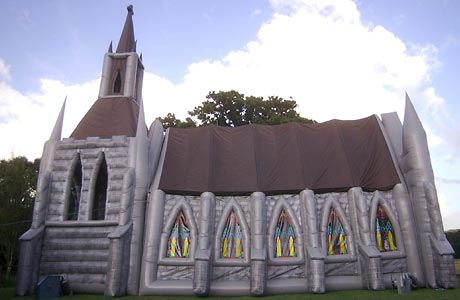
Is this all hot air intended to inflate church ego? (Sorry, could not resist in relation to the photo above.)
The simple answer is that we do not know.
But either way we need to explain why this survey is so different. Here are the possible reasons for this as I see them just now.
Data collection problems/survey bias
Yougov knows its business, but rougue findings from one-off polls and surveys are certainly possible.
Many have pointed out that saying you go to church is not actually the same thing as going to church, and people do seem to exagerate their church attendence. Might the fact that apparently more people have exagerated their attendence in itself be an indication of church being a more desirable option?
Or perhaps there was an error in earlier surveys, and in pew numbers collected by churches? All of them? Over decades?
Timescale
Has the survey picked up sometihng interesting that has happened in the last year? has the decline flattened out? Is there a new trend? The comparison figure of actual numbers collected by churches are all earlier. This seem implausable but…
What does ‘church attendance’ actually mean?
Must we include the many on-line expressions of faith – apps, streaming, etc etc? If so, perhaps people are now exposed to wider digital forms of church and so are including these in their answer?
What about Churches that don’t collect or publish stats?
Perhaps the increase is all in the non conformist, independent churches? There is other evidence that some of these are indeed growing, particularly independent and evangelical churches. The trouble is, this is from a lower base, and the Bible Society survey asked people to list their religious affiliation- leading to the claim of growth in mainline churches that simply is not evidenced by other sources.
Young men?
I have a slight discomfort about this, in that there appear to be other trends happening in that age group. There’s a growing divide between young men and women, with men increasingly drawn to conservative, traditionalist or right-wing political movements (while women tend to lean more liberal.) This trend, linked ot the influence of ‘Celebrity Christians’ such as Jordan Peterson is not one that I find comfort in. Might this be the reason for young men apparently seeing Church in a more positive light? The attraction here might then be narrow moral certainty rather than the teachings of Jesus.
This survey is interesting, but we need to treat it with a great degree of caution. There are major difficulties with drawing any conclusions based on this one survey, and the Bible Society itself has used language and great fanfare that I find highly questionable.
Whatever is going on is not revival.
It might hint at a change to come, but only time will tell.
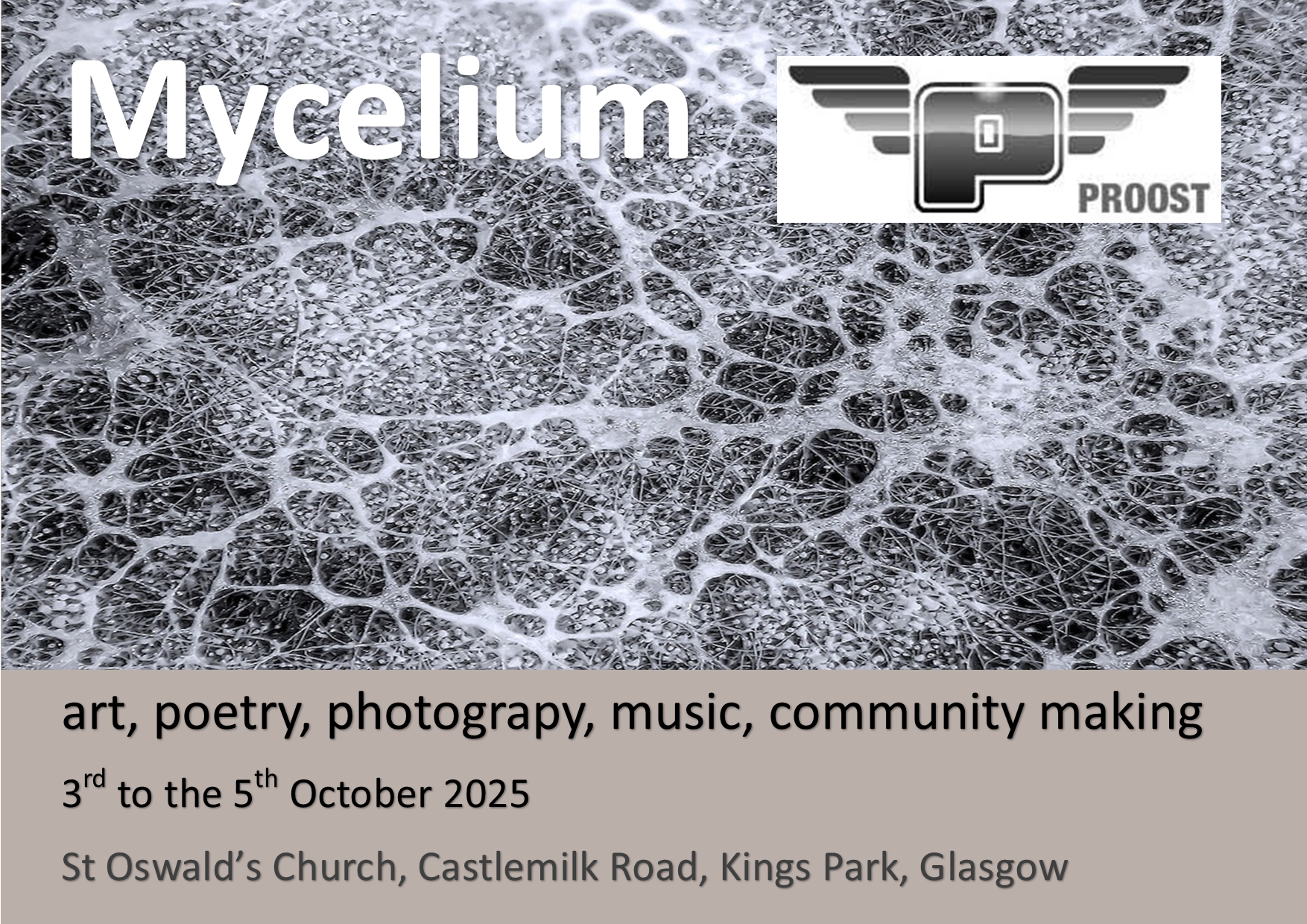
Here is a quick update on the Proost meet up for artists in Glasgow. First, the key details;
PROOST MEET UP, 2025
Date: 3rd October 2025 (6:00 PM) to 5th October 2025 (4:00 PM) Location:St Oswald’s Episcopal Church, King’s Park, 260 Castlemilk Rd, Glasgow G44 4LB
Hosted by: Proost, in partnership with local Episcopal and Church of Scotland Churches Cost: The gathering is free, with the aim of making this gathering as accessible as possible for all. Accommodation: Informal hosting options are available for those who need them, and we’re happy to provide guidance on nearby accommodation options to help you make your stay as comfortable as possible. Let us know how we can assist you!
WHAT IS IT ALL ABOUT?
Many of you will remember Proost as it used to be- a publishing platform established on the edge of what we used to call ’emerging church’ or ‘missional groups’ or ‘alt worship’. It gathered a community of creatives who made poetry, art, video, music, liturgy and much more. For many of us, it gave a sense of belonging and connection – and ways to collaborate with other artists in both gathered and dispersed events. We live in different times now, but if anything, creatives need these connections more than ever.
We need art that engages, that challenges, that allows us to go deeper.
We need to hear from people who are otherwise marginalised.
We need to speak of justice and peace, so challenge where appropriate.
We need to take allow our art to connect with the deep spirituality of the earth.
The landscape of faith and culture has changed a lot in the decades since Proost first came on to the scene. Communication technology has made publishing easier, yet at the same time so much harder because of the sheer volume of content being produced. Funding streams and generating income is a massive challenge. Against all this, we have a powerful tool called community.
This is our dream for a new Proost- the means by which we combine our voices, our creativity and our resources to transcend the limitiations imposed by our context in service of justice. We think this is a holy pursuit, made ever more urgent by the crises gathering around us- wars, climate breakdown, inequality and political/economic impotence.
Much of this discussion has been taking place via two podcasts…
… and we have made a start with some collaborations around Advent and Lent.
But we feel that community also needs to make physical connections. We need to come together in one place, to share stories, to make plans and art together.
WHAT WILL WE DO?
The idea is simple- choose a theme and then invite people to respond to it using their art – music, poetry, painting, dance, pottery, photography, animation, video – or anything else.
We will make space for as many contributions and expressions of creativity as we can comb together in the form of installation or performance. The only limitation is that you need to bring those contributions in person!
We are so grateful to St Oswald’s Episcopal Church (King’s Park, 260 Castlemilk Rd, Glasgow G44 4LB) in partnership with local Episcopal and Church of Scotland Churches for generously hosting this weekend.
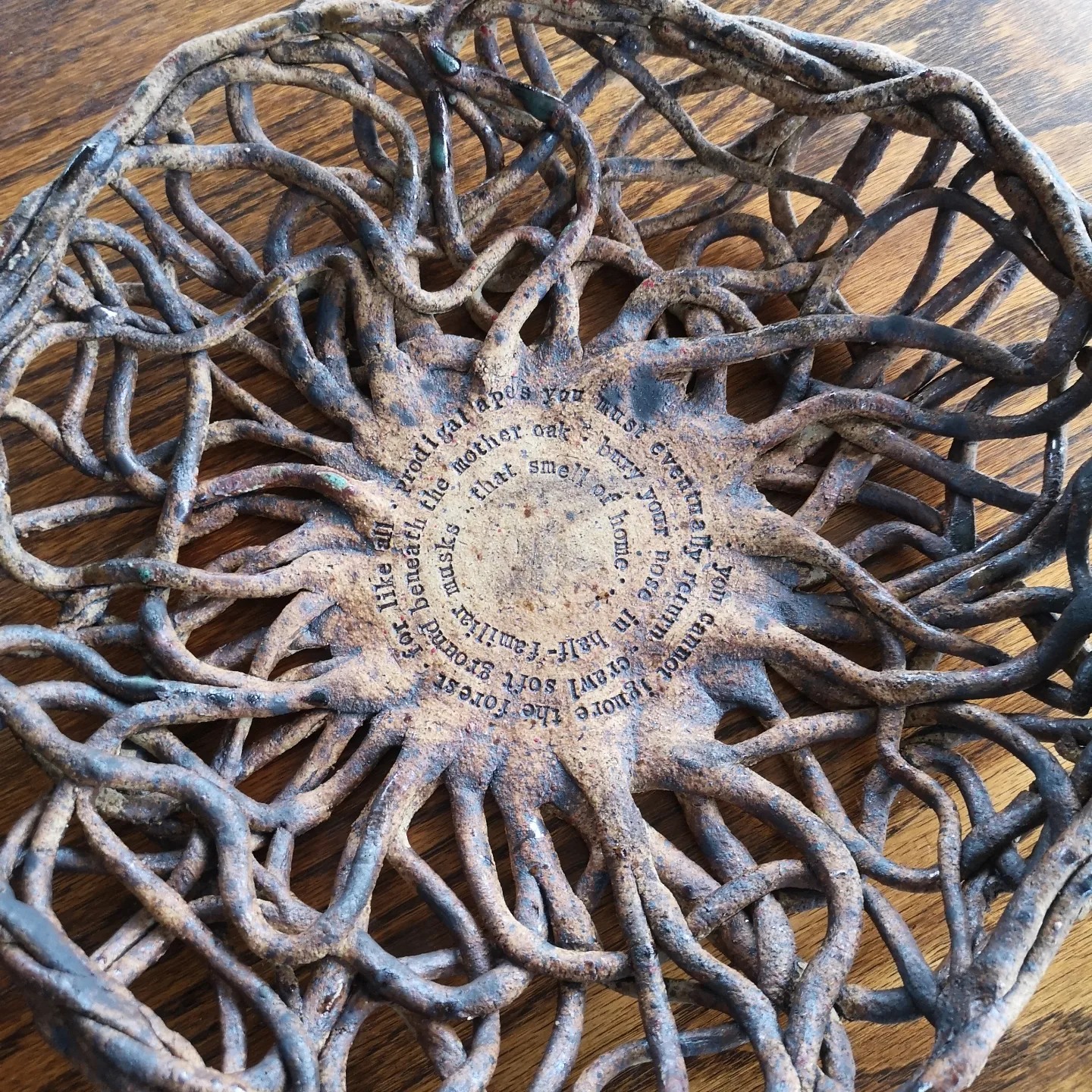
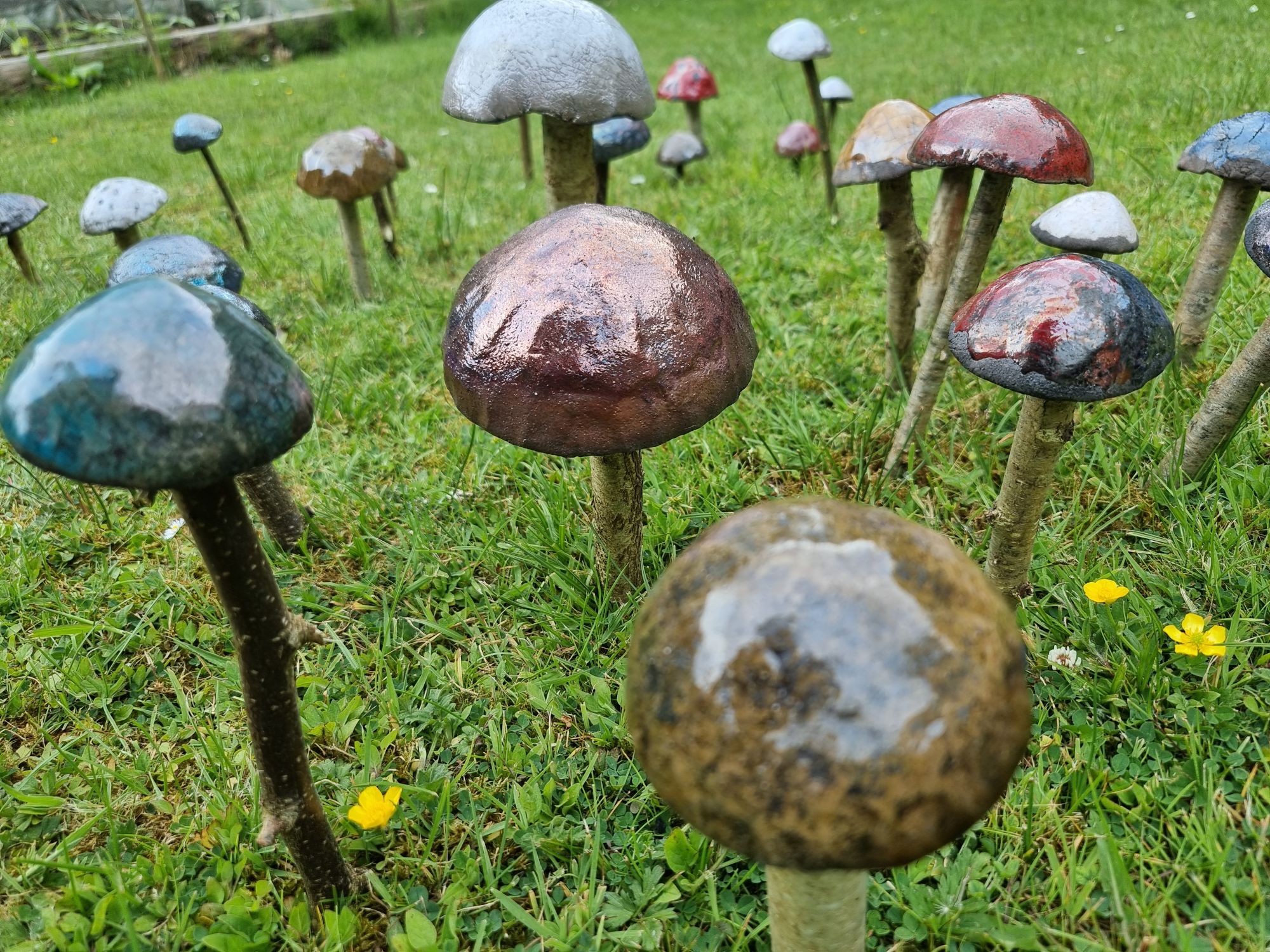
Installation space will be in and around the St Oswalds. (This will include a large mushroom-related ceramic offering!)
Performance opportunities will be via 1. A great big Ceilidh on Saturday night – dancing, hopefully interspersed with all sorts of other poems, songs and stories. 2. Sunday afternoon event. Both will be open to local people.
We want to keep Saturday day-time for discussion and chat amongst Proostians – working out together what seems important, and how this project might progress. There will be themed discussions led by different members of the team.
WHY MYCELLIUM?
This is the theme we have chosen for our meet up. Some of the reasons for this will already be in your heads, but here are some ponderings that might help unleash your own creative responses.
Soil science is advancing rapidly – we now need to stop thinking of soil as just inert dirt. It might be more accurate to regard it as a living entity all on its own – but if that is a little fanciful surely we need to understand that it is a complex ecosystem- one which almost all other land based life on the planet depends upon. Without soil, we die. Crucially, the role of mycelial networks in connecting, communicating and making communalities is increasingly being understood to be so much more important than previously thought.
Mycelium is the way that trees ‘talk’ to one another. Think about that- one life form relies upon another lifeform in order to share nutrients, warn of disease and so much more.
We modern humans tend to think about the natural world as being characterised by competition, the elimination of weakness and ‘survival of the fittest’. We have taken Darwinian ideas, misunderstood them and used them to justify our economics, our politics – even our spiritualities. The more we understand about mycelium, the more we need to think again.
Perhaps the ‘survival of the fittest’ might better be understood to mean that we survive best when we seek to fit with our context – when we seek connection and community.
What are we connecting with? Does mycelium only represent a way to understand human interrelatedness – with both each other and with the wider natural world? I would argue however that we might consider this connection to be much deeper than that.
These ideas have always been at the heart of the Christian story, not least the mystical traditions and the Celtic wisdom traditions, both of which have long emphasised that it is through God that all things live and have their being. In the Celtic understanding, God is to be found at the centre of everything, even us. We encounter him by going deeper.
Richard Rohr, in his magnificent book ‘The Universal Christ’ show us a different window into this way of understanding, in which the Christ is ‘another name for everything’ – the cosmic consciousness through which the universe expanded and came into being. We are all held in this commonality and invited to participate according to the deep truth of love.
As followers of Jesus, there seem to me to be so many other resonances here.
Unity and Oneness:
Jesus called for a unified community, where individuals, despite their differences, are “perfectly joined together” in their minds and judgments.
Body Analogy:
He used the image of a body with many parts, each playing a vital role, to illustrate the interconnectedness and interdependence of his followers.
Love for Neighbour:
Jesus emphasized the importance of loving one’s neighbour as oneself, which encourages cooperation and mutual support within a community. Compassion and love are a natural law that we need to be drawn towards.
Serving Others:
He demonstrated the importance of serving others, highlighting the value of helping those in need and working together for a common good.
Collaboration and Partnership:
Jesus encouraged his followers to work together, emphasizing the importance of partnership in living as agents of the Kingdom of God.
HOW TO GET INVOLVED?
We need ideas, songs, poems, film, images, dance, liturgies. We will ‘curate’ these in advance and include as many as we can. HOWEVER- this is about community, so we need you to bring your ideas, not just to send them. We will make the event together.
We have some very limited funding, and the offer of some accommodation. We don’t want money to be an obstacle for anyone.
This is the start of a new thing. Come and help shape it. On saturday we want to explore ideas together- to talk of Poesis and dream of how art and spirituality move togther and miight lead us forward.
This will not commit you to anything- we will keep you informed, that is all.
If you have ideas you want to talk through,or want to know more, or have questions, we would love to hear from you- you can get in touch via the website, or drop me a message via the comments below, or send me an e-mail at thisfragiletent@com
Today we have a poetry reading for you – with a difference. This one features a conversation with the poet who wrote the poem back on day 7, and then some stunning poetry from an old friend…
From the show notes for this pod;
“This episode features two Australian poets- Talitha Fraser and Stevie Wills, and is the first of what we hope to be a more regular immersion in poetry, and the story behind the poems.
Stevie lives with cerebral palsy which has affected her speech patterns, so listen carefully, because hers is a voice worth listening to! She speaks movingly about her long powerful poem which tells Mary’s story. It is a stunning piece that she was keen to allow to stand on its own. We recommend checking out her website to see/hear more of her work!
Talitha is a long term Proost person, having been a key part of previous poetry collection curation. She is active within feminist spaces and activism for indiginous rights in her adopted city of Melborne, although she was born in NZ. You can find out more about Talitha and her other projects here;
You may be aware that Rob and I have been podcasting as a means of making connections relevant to the revival of an old publishing platform called Proost. What this might look like is starting to take place- we are determined that whatever Proost is will depend on the community that comes together to make it happen. Our committment is to provide spaces for this community to happen. If you are interested in knowing more about this, feel free to drop me a message, or join our facebook group– it is a closed group, but this is simply to keep it a safe supportive place for those who need it.
This advent, we will be inviting artists to contribute to a collaborative daily offering
Some of these will be live poetry readings.
We would genuinely love to connect as many of you who want ot be part of this embryonic movement. There is a possibility here of the development of a very different kind of space for spirituality and creativity. It may be chaotic, but Rob and I are determined to make sure that it will be kind, supportive and fun.
Rob is a lovely man. He is so encouraging and enthusiastic about other people’s work – mine included. He had been following the long form ponderings on this blog about the renewal of religion (spool back through the feed – we are up to 7 posts in the series now) so he asked if we could chat through some of this on the Proost podcast.
Iniitialy I was reluctant, for these reasons;
I was not sure I could articulate my thinking in a chat. I tend to think by writing. In the end though, I decided I did not need to post it if it did not go well!
Was the Proost format an appropriate place for this discussion? As I thought about this though, it seemed to me that the Proost project is driven by the same thoughts and feelings
Finally, I am conscious that so many friends – including some who areninvolved in Proost – are still very much involved in organised religion. But then again, most of these have similar frustrations with elements of the old religion.
So we had the chat. In the end I enjoyed it – perhaps too much, as Rob had to slow me down! Being interviewed rather than being the interviewer is an interesting experience, and I was surprised how far the themes and issues unfolded. We will probably do one more as well. I will leave it to you to decide whether the podcast format helps to explore these complex issues more helpfully than written words…
I am just back from a late Autumn canoe trip on Loch Arkaig, a place of sublime beauty, lined with ancient woodland and high mountains. We stayed in a bothy maintained by the Mountain Bothy Association, who make it freely available to the wide community of walkers, climbers and paddlers. There were four of us, and amidst the usual profanity and age-related moans and grouns we spent a lot of time talking about things that mattered. (I made a short video about the woods, here.)
In many ways, this landscape captures the best of what the Scottish landscape and history has to offer. The huge expanse of the mountains around a twelve mile long loch. Wild boar, deer, eagles, Ospreys (who had left for warmer places when we were there.) The Caledonian pine forest there feels holy, in the way it demonstrates connectedness, but also what being there does to me deep inside my chest.
Approaching St Columba’s isle – Island Columbkill or Chalum Cille – Loch Arkaig
Out in the loch is a very small island with the remains of a chapel so old that no-one knows when it was built. It is known as St Columba’s chapel, and the island as St Columba’s island – who knows, it may well have a connection to one of the saint’s missionary journeys.
I always find myself wondering about what motivated Columba and his fellow Irish missionary monks. What problems were they trying to solve? Was it always about saving souls? Did they see themselves as right and the pagan world they set off towards as wrong? The assumption in the old stories always seems to be that these questions had obvious answers. Of course they were ‘right’, and of course those who had not encountered the Christian story needed to hear it. In a black and white world, colour is confusing. Better not to see it.
But perhaps I judge Columba (and his generation) too harshly, because their mission was not the same as those that came later – or at least I don’t think so. Theirs was a mission of peace to a world of tribal/clan conflict. What came later was much worse. Celtic Christianity developed and flowed amongst the culture and traditions of its time – perhaps even sitting alongside older spiritualities rather than replacing them. There is a much longer conversation to be had about this, but my point here is to wonder what might be the mission that religion would/could send us on now. What problems might/must we engage with? What cultural context might/must shape our mission?
It is worth saying right now that the religion we are largely leaving behind continues to make mission. I have been (rightly) critical of some – the legacy of which has left toxic stains across the world. Those kinds of missions had as much to do with cultural and economic conquest as they did with religion. They were a product of empire, a means of colonisation and subjugation. But despite this dark legacy, there have always been people motivated by their faith who have become activists of a different kind- peace makers, feeders of strangers, animal lovers, adventurers. Even now, if you look to the workforce of charities around the world – from our city streets to the furthest flung war zones – you will find that an outsized proportion who are there because of their religion. We should celebrate these people, and the way that faith has sent them on missions of healing and goodness.
My strong feeling is that people of faith have a duty – we might even say a religious obligation – to engage hopefully and critically with the context in which we are living. This means bringing as much passion, integrity and energy to bear as we can, illuminated by a set of principles not of this world (not of empire) but of another, sometimes known as ‘the Kingdom of God’.
This might mean opening our eyes to the spirit of our age, and exposing it to a different story- to the considerations of the Kingdom of God. At a time of widening inequlaity, of climate breakdown and mass extinction, of war-by-drone waged on defenseless children, we surely do not have to look very far…
This Kingdom of God always had a different set of priorities – above all, it was a call towards living in compassionate community with each other and with the beautiful world we are part of. In so many ways this simple, radical message was always at odds with the logic of empire, and as such, the counter-cultural part of the message was often reduced to a far less problematic priority of personal individual sins – particularly sexual sins.
Furthermore, the dualistic message that the old story was bound up in (saved/unsaved, evil/holy, sacred/profane) was never a good fit with the Jesus story, let alone the indigenous religion of the Jews. It was, however, a good fit with the logic of Roman exceptionalism (or all the other empire exceptionalisms that have followed since.) It has been so easy to forget this inside the small rooms we have made out of our personal religion – to imagine ourselves as special, and anyone outside our ‘chosen-ness’ as dwelling in darkness.
But this takes me back to the first post in this series, which is to wonder how a (religious) story might inspire action – or mission.
If we embraced that part of our tradition that calls us back towards connection to the earth – with our non human brothers and sisters – what missions might this inspire?
If we embraced that part of our tradition that calls us back towards radical inclusion of the outcast and outsiders, how might we use our homes and communal spaces?
If we embraced that part of our tradition that calls us back towards honouring the poor what will that mean for our comfort and our bank balances? When will we have enough? What will we share with those who have less and how will we share it?
If we embrace that part of our tradition that calls us to make peace with our enemies, then how will be relate to those around us? How will we hold the war-mongers to account?
And if these are the priorities of our religion as it seeks to make a mission in our broken and hurting world, then what collective rituals and practices might assist us, encourage us and inspire us? Where will we make our church, and what will it look like?
Mostly the mission this might send us on will be human-scale. Those who get to influence great events or act as major change agents have a rare and precious opportunity.
The rest of us use what power we can within our arms reach – and this is not a small thing. A mass movement of individuals can be more powerful than a King, but what might create this mass movement in an age of a million divisive voices screaming at us through all those little screens?
If not a religious story, committed to action that is as loving and truth-centred as we can make it.
Last night, I watched this series. All of it. I was transfixed, wide awake through the whole thing, so that I only went to bed in the small hours. It concerns itself with the dreadful story of the Magdelene Laundries, which were Catholic run institutions for ‘fallen women’, in which pregnant young girls or those regarded as promiscuous outside of marriage, were abused and incarcerated, forced to work long hours. All lost their children, many of whom were ‘sold’ for adoption in Ireland and across the world. Yet here I am in the middle of a series in which I am advocating for a new religious engagement.
Perhaps you think that unfair – and want ot defend all those fine Jesus-inspired ways that people try to serve and work towards good, but I would counter by asking this. When religion is given official status within society or culture – as arbiter, as moral ajudicator – has it ever gone well?
I find myself immediately thinking of how Christianity has given cover for so much brutality and exploitation within the British Empire, or how the Americans have made the same idolotrous mistakes with their version of Christian nationalism. Then we have to remember Hindu nationalism in India and Islamic state. I honestly can’t think of one positive example of what happens when religion is given power in an of itself, or perhaps more when it compromises with the power of empire.
This kind of religion seems to traffic in fear more than almost anything else. Fear of hell, fear of being ‘outside’, fear of getting things wrong, fear of saying the wrong thing, wearing the wrong clothes, being the wrong gender/race/sexuality. This from a religion whose holy book tells us not to fear at least 365 times.
Is the problem here religion, or power mongering? Is there an intrinsic problem with the way we humans ascribe control to a distant God, or do the problems start when religious institutions take on power for themselves, then foster and bolster it within the context of greedy and godless empire.
I would contend that religion has always struggled with this problem. Depending on where you look, it is both reactionary or revolutionary. It is a force of oppression, but also a force for liberation. Arguably, this was the whole Jesus project in a nutshell. He proposed a different kind of empire making, which he called ‘the kingdom of God’, with an upside-down, inside-out power structure that is very inconvenient for empire, so has mostly been tidied away ever since.
Having got that off my chest, what activities should a renewed and evolved church engage in?
How should it worship? How should it congregate? How would it share life? Would it evangelise – ever? How would it pray? How would it teach itself and share ideas and inspiration?
(The next image comes with a trigger warning for some of you!)
I should come clean right away and say that I am not going to try to answer these questions in any depth, rather just (tentatively) suggest broad areas of enquiry. The task has to be to work these things out in your own small community – bringing as much integrity, passion and creativity as possible. Have fun, make mistakes, learn from them, but in order to set out on this adventure, we have to be free. We have to give ourselves/be given permission to start afresh, letting go of the chains we inherited.
After all Jesus came to set us free did he not? Where the spirit of the Lord is, there is freedom, and it is for freedom that you have been set free. What then shall we do with this beautiful freedom of ours – with this wild living we have been given? Shall we get back in bed with the Pharasees, or sell ourselves to the Empire? Surely we can do better.
Many of us feel the need for a clean break from these aspects of our history but at the same time want to embrace the best examples we can find in our heritage, in turn forming them into new expressions, new collective gatherings. Our context and the overarching crises we are grappling with in our age demands this of us, because the alternative is despair. Which is another way of saying that (almost) anything goes – as long as our practices flow from the freedom we have embraced, grounded in love.
In this new landscape, concerns about correctness and orthodoxy have little currency. Instead I sense a deep longing for authenticity and compassion – towards others, towards our broken natural world and even to ourselves.
Worship installation, Greenbelt festival
Making (small) authentic community
There has been so much said (not least on this blog over the years) about the nature – formation, maintenance, leadership, challenges etc. – of community. It is something I have often idealised, but rarely experienced in truest form. It can also strip us bare and can even be a dangerous place- I have experienced both. But I would argue that community remains the place of encounter for humans.
What is certain is this- community and Church are not/have never been synonymous. Certainly we can experience communality in Church, but I would argue that we mostly experience what Peck calls ‘pseudo community’. We also carry the traditions of sharing ‘Communion’, which we have understood to be primarily about heaven and hell, not about the actual communing…
…and yet the writings about Church that we have inherited, and the forms it has taken since those early days, have (almost) always been collective over individual. Certainly there have been hermits, anchorites and pillar saints, but these have been exceptions to the norm- a fact that should offer a challenge to our modernist individualist westernist mindset. We are not islands alone and in through connections we make shared meaning.
Community deepens, validates, challenges, uplifts and celebrates. At best, it includes, gives us a home and allows us to become better versions of ourselves. Without community, humans sicken. In community, we flourish.
Community reflects our nature – as upright apes, as creatures of interdependence.
Community reflects our nature – as containers of one spirt, as part of the network of all living things. (We might also seek ways to reflect this broader non-human community within our human gatherings.)
Community allows small bands ordinary people to become more than the sum of their parts. Together, we can create an generative environment. We can conspire. We can collaborate, we can mix and match skills and abilities.
Community honours the traditions and practices of followers of Jesus from the very start. It is no surprise that the words of Jesus in that most profound sermon he gave as recorded in Matthew chapter 5 concern themselves overwhelmingly with rules for how to make loving community. It is almost as if, for Jesus, community was an end in itself.
Likewise, Paul’s great list of ‘fuits of the spirit’, as recorded in Galatians chapter 5 (love, joy, peace, forbearance, kindness, goodness, faithfulness, gentleness and self-control) are above all the gifts of good community.
Community is counter-cultural, particularly in an age which over-values individualism and forgets the collective.
Then we can rip each other apart, because community can be the best of us, but also the worst. After the trauma of the abuse of power within community settings, or an experience of divisive, exclusive and toxic community, it is tempting to recoil and go it alone, but we soon realise that this is not a long term solution. These experiences mean that we must eventually cautiously try to make safer, more healthy and whole forms of community, because this is the nature of our humanity.
So far, an argument for gathering together – but what has this to do with faith? Surely we humans gather in all sorts of ways, for all sorts of purposes? I am part of a cricket club for instance, and I love to blunder around at ceilidhs. I have also run therapeautic groups of different kinds in my past work as a mental health social worker. All of these things are good – in fact I would go as far as to argue that they contain things that might even be called sacred – so why do we need religion?
Perhaps we first need to concede the fact that we do not have a monopoly on meaningful, profound community making. Having said that though, not all communities are equal.
Not all communities come together around the guiding principles of love, peace and justice-making.
Not all communities seek to align themselves to – to celebrate, to conspire, to agitate, to protest and to demonstrate – the priorities of what Jesus called ‘the kingdom of God’. (Whatever that means!)
Not all are able to harness the power of ritual and season-celebrating. Not all offer means to hold each other in prayer through the glory and pain of life, sickness and death.
Not all communities are deliberately inclusive, particularly of those who have been marginalised and otherwise excluded.
Not all communities seek to confound the logic of empire by declaring the sacredness of all people.
Not all communities seek to break the logic of consumption by declaring the sacredness of the ‘first incarnation’ – the created world which holds us in communion with our non-human brothers and sisters.
Not all communities offer radical alternative ways to live life – collective, sustainable, deeply connected to the earth and the love that holds it all together.
Perhaps NO communities exist that are like this. But if not, then how we need them! Or we need to keep trying to make them… imperfect though they will surely be.
What is community, in this context? How is it different from those that have gone before? Perhaps it is not. There is nothing new under the sun, it has all been done before.
The key words here is authenticity. The community that it made has to belong to those who make it – it has to fit who they are are and what they stand for. How, where and when is then up for grabs. Uniquely in history, there is even an open question as to whether community has to locate itself within the same location.
Being big is hard. To paraphrase Jesus, it is harder for a large group of people to make community than for a camel to fit through the eye of a needle. Bigger groups require organisation which easily becomes unconvivial. As Illitch puts it, large institutions make it much harder for us to develop autonomous, creative intercourse among persons and between individuals and their environment.
Big requires big leaders, and this tends to bring in the power hungry.
Small is human, it is portable, it is resource-light and capable of mighty things.
Small can belong to a network – one that facilliatates rather than dictates. One that can cope with diversity and supports broad orthodoxy, mostly around principles rather than narrow rules or requirements. But even this is harder than just being… small.
Cross from Hermits cave, west of Scotland
Community practices
I set out on this journey by longing for a different kind of religion- one that was a lover of the earth and a seeker after justice and peace. These would be the priorites of a community that I would belong to, but you would have to work those things out for yourself.
As a lovers of the earth, we might seek ways to connect, to dwell within, to appreciate the wild. We might make a practice that includes nature within the way that we worship or meditate. We might seek to make the connection we sense towards all living things – through our shared am-ness, grounded in the god who loves things by becoming them – a lived, present reality.
This might inlfuence the rituals we make together in my community, the liturgy we might use, the songs we might sing. The poetry we will write, or the art we make together.
As people with awareness of climate injustice and of the harm we are doing to our ecosystems – our community might seek to live more simply, to consume less and grow more, to share what we have with others who need it more. We might look to the fields and woods around where we live and notice the lack of diversity and the unbalance. This might lead us to try to use our resources differently, and to use our collective voices to demand better economic and agriculural practices from our politicians and local businesses.
This might influence the way we shop, the way we travel, the places we go to on holiday, but it might also mean that we use our collective power to support local activism, or to work on local nature conservation projects. We will probably need help with this, so we might seek connection with others on the same path.
As people who appreciate the way that all people carry within the spirit of god, we might appreciate the dignity and beauty of all people. This might lead us towards concern for those who have been marginalised, dehumanised or excluded.
This might influence the way we seek to make friends, or the way we look to include people in our gatherings who are different – even if this means doing the difficult work of decolonising ourselves from the empire that has privileged us. We will probably need help with this, so we might seek connection with others on the same path.
The rest of it, we will make up as we go along. Perhaps we will share tables, make community art, attend protests, write to politicians, invite others to feasts.