Terrorism, religion and the group dynamic…

I spent much of today talking about terrorism. This is not usually part of what I do, but I was asked to attend a local awareness session. In the end it was rather fascinating.

What we tried to think about was the sorts of processes and relationships in our communities that might draw people into extremism, and right away, we people of faith have to concede that one of the most common drivers for this in the world at present is religion.

Many people would have in their mind a stereotypical terrorist, and they well be Muslim, male and aged around 25. There are real problems with these kinds of stereotypes of course, as I have spoken about previously here. There is also a real possibility that we exaggerate the potential threat, and this plays into all sorts of paranoid murky politics.

However, we now know that even our sleepy rural county of Argyll has been touched by terrorism. Several extremist groups have used outdoor centres/outward bound courses up here to breed team spirit, and the bombers who attacked Glasgow Airport a few years ago did so from a holiday home base in our area.

What brings people to the point of being able to justify the use of extreme violence? Of course this is not a new thing, and many would regard the drivers of inequality, imperialism and oppression as fertile breeding grounds. However, today we talked about some of the societal/group pressures that might draw people in;

Belonging

The need to be ‘saved’ from an old life, and released into a special calling, as part of an enlightened elite. So we see some people drawn into extremist groups out of situations of isolation, confused identity, drug addiction and poverty.

Crusade

People often see themselves as on a special mission, to right injustice and to live to a higher calling. There is an exclusiveness to this, and a tendency to see others as weaker, more contaminated, sinful, outsiders to the truth.

Narrowed world view

Extremists are united by a compelling narrative, often focussed on a single issue and simplified to black and white kind of thinking. In this narrative, there will be good guys and bad guys, those on the inside, those on the outside, and a call to fight back.

The drive to proselytise

The need to be bigger, more powerful, to convince others of the rightness of your cause, and to win converts. All other things are secondary and this end justifies all means.

Powerful, manipulative leadership

Leaders who convince, who have elevation over others and able to use hyper emotionality and  charismatic manipulation to bring cohesiveness and common purpose.

Distortions presented as fact

Leaders like this often present historical and theological perspectives, or downright distortions as fact. They emphasis certain aspects (for example eschatology, judgement, Jihad) over others (for example, forgiveness, grace, peace.) People are not encouraged to think for themselves, to test and debate issues, rather they are expected to achieve correct belief.

Removal and isolation

Before every act of violence, there seems to be something in common- a time of removal, sequestration. People are removed, or remove themselves from wider society, and focus on the purity and certainty of their cause, and the need for their final act.

Here is the challenge then- I invite those of you who have been involved in Christian churches to consider this list from that perspective. Those of you familiar with charismatic or fundamentalist denominations may find this list rather familiar. The point is, the group dynamics of religion that distort faith and breed a kind of hatred and destruction do not just belong to the other, they arise from who we are as humans.

Jesus seemed to understand this very clearly, and anyone who knows his teaching would see it as the antidote to all of the above. He seemed to reserve his anger almost exclusively for the kind of religion that valued the law (or religious understandings of the law) over people.

And yet we stand in the shadow of two thousand years of repeated examples of where the group dynamic within our churches has become toxic and released all sorts of hatred, judgementalism and even death as a result.


Doubts and loves dig up the world…

A year ago I wrote a piece about doubting the existence of God. It received quite a bit of traffic for a while as it seemed to hit a chord.

Many of us who have been part of an overly concreted doctrinal system of belief have struggled to acknowledge doubt. It is almost as if any small incorrect belief would form a crack in the whole edifice of faith that might bring the whole thing tumbling down. To avoid this apocalyptic end to everything we have built our lives upon we contort ourselves into all sorts of defensive positions.

In my case, this involved two main strategies-

  1. Do not go there. When you feel the approach of doubt, turn in the other direction. It is better not to ask the difficult questions as the answers might be too much to cope with. Distract yourself with narrower, safer issues.
  2. Dishonesty. Better not to talk about doubt as this might infect others as well as yourself. You also might find yourself ostracised by the fervency and inflexibility of others.

Eventually of course something has to give or we become like stagnant pools, unable to flow, unable to sustain any kind of life. Faith fixed and defended becomes something else called religion. And religion belongs in the text book not in the soul.

I was reminded of this again after listening to this from Giles Fraser;

For my own experience of faith is that belief and unbelief commonly nestle alongside each other. Indeed, I cant make any sense of a faith that doesn’t include unbelief as a powerful element. “My God, why have you forsaken me” is, after all, the cry of Jesus at the very centre of the Christian drama.

As with much that is of the soul rather than the brain, faith and doubt finds voice in poetry. Giles quotes a poem he read that forms part of a memorial for Israeli prime minister Yitzhak Rabin, murdered by a religious man because he sought peace.

From the place where we are right
Flowers will never grow
In the spring.

The place where we are right
Is hard and trampled
Like a yard.

But doubts and loves
Dig up the world
Like a mole, a plow.
And a whisper will be heard in the place
Where the ruined
House once stood.

Yehuda Amichai

Doubt…

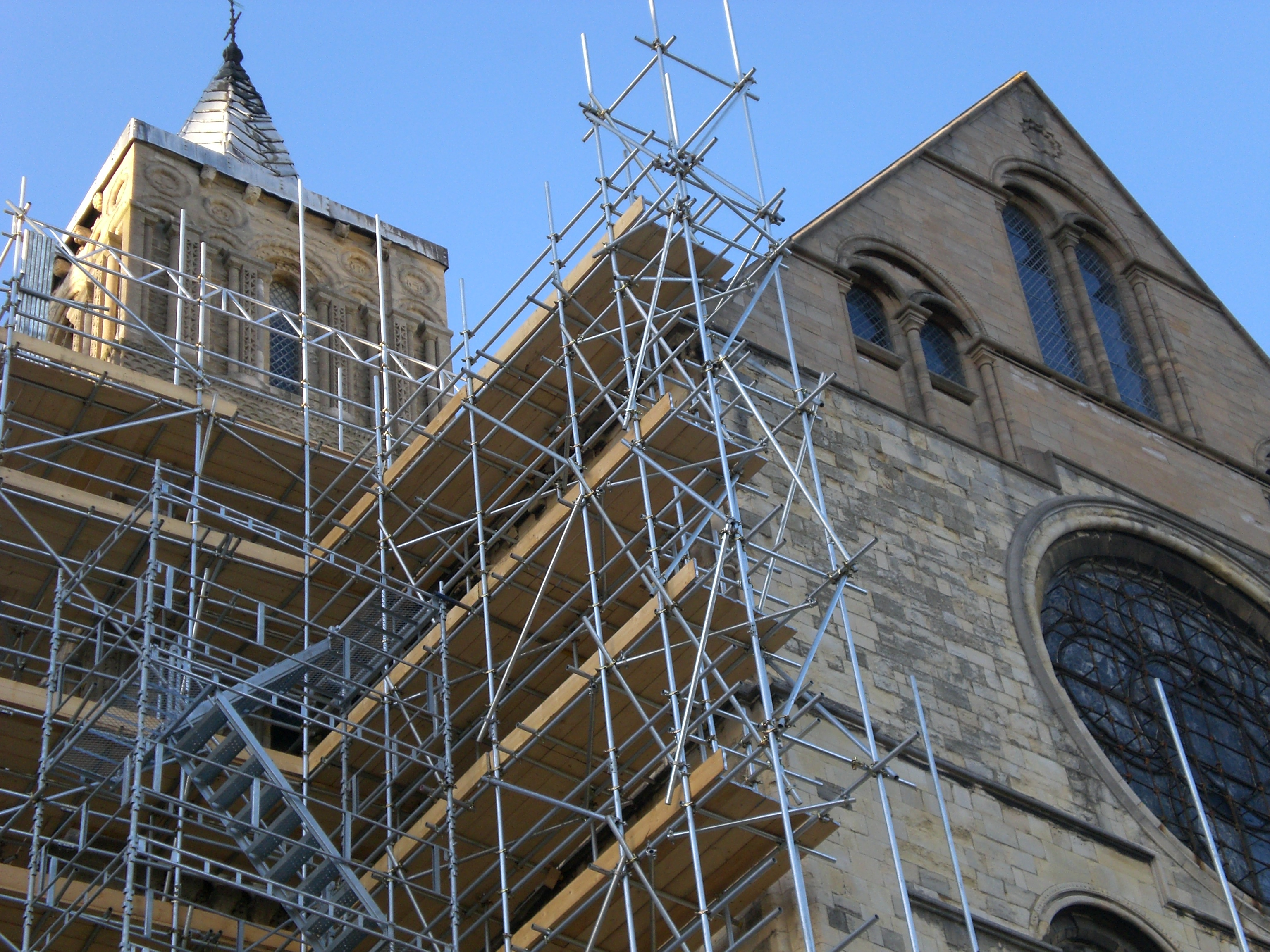
I stood before this edifice of faith

And it was magnificent –

The curve of the certain arch

The immovable pillars

The knowing eye in all this carving

The soaring ceiling shaped by countless songs of praise

~

But there was this penetrating drip of doubt

I could ignore it for a little while

Until the swelling laths shed horse hair plaster

And the stalactites point down from on high

The end of everything

~

Like any fool under falling stone all I could do was move

Out into the sunlight and the gentle rain

Looking backwards to see what might still be standing

Whether it might be anything more than just a

Magnificent ruin

~

But a ruin holds age with pride

Through the open vault light falls dappled into shadow

And the song of birds blows in on the wind

God the invisible. God the uncontainable…

Had a lovely time at our housegroup this evening.

I had more or less come to the conclusion that it was time to stop housegroup- that it was time to do something new. But instead of stopping all together, people decided that they would like to continue to meet monthly. So tonight Michaela spent a little more time preparing some simple mediations, and I sat in the corner and played guitar. It was lovely.

You could say that it was a ripple made by the Spirit.

And something about our discussions reminded me of this-

The blocks might be seen to represent our theology- or our value system. The means by which we make sense of the vastness of the universe and our tiny place within it.

But even though the thoughts we have are woven into some kind of system of apparent cohesion and even certainty, there is always something else- something indefinable and difficult to lay hold of.

Something that at times we yearn for, without knowing what it is.

Something that is beautiful and whole- something hopeful.

Something dangerous.

Something that some of us would call- God.

So as we stare at our construction of solid blocks of knowledge, there dancing in the middle of it all- playful and full of Joy- is this other thing. The blocks might describe some of it, but it is not contained by the blocks. The spaces between might seem to be it’s place of dwelling- but these too are transient and transparent.

Rather this thing that we seek- this God- is not contained. He is in and through and without.

The question is how we might respond to this capricious and undefinable God? How do we follow?

I know my own answers to this question- and they are to found in community with my friends. We follow together. We build our (temporary) blocks of understanding with small stones.

We build humbly because our answers are only partial.

But still we build- because within this communal dwelling there is not just us- but something other. Something indescribably beautiful.

Calvin on unbelief…

Quote of the day comes from a most unlikely source- John Calvin. Not my favourite source of inspiration I have to admit-

Here it is- with thanks to Fiona!

“The Godly heart feels in itself a division because it is partly imbued with sweetness from the recognition of the divine goodness, partly grieves in bitterness from its calamity; partly rests upon the promise of the gospel, partly trembles at the evidence of its own iniquity; partly rejoices at the expectation of life, partly shudders at death.

This variation arises from the imperfection of faith, since in the course of this present life it never goes so well with us that we are wholly cured of the disease of unbelief and entirely filled and possessed by faith.”

John Calvin, “Institutes of the Christian Religion,” book 3, chapter 2, paragraph 18

On standing in a place of (un)belief…

I have been thinking about that old polarity of faith/unbelief recently. This because of a few significant conversations with friends who have been grappling  with their faith, and also because it has long been an issue for me.

The old Evangelical way of understanding faith is all about assurance- we would quote Hebrews 11 v1-  Now faith is being sure of what we hope for and certain of what we do not see. Faith was something breathed into us by the Holy Spirit- it was about certainty, security, muscular purposefulness. Without faith it is impossible to please God.

Except it never felt that way. And so I wondered if God could ever be pleased with me.

Over the years I became more open about the  insecurities of my faith- and discovered that I was far from alone. Sure, I know some lovely people who have not a shadow of doubt- they would echo the words from Hebrews. Some seemed to relax into a beautiful kind of faith, which became a deep well of joy in their lives. To be with these people is a great blessing.

But many others, like me, experience faith as a fleeting presence- ebbing and flowing. Sometimes within grasp, at other times a million miles away.

More recently I have discovered that my faith, rather than being the polar opposite of doubt, can actually flourish in the presence of doubt. It is not that doubt cancels out faith- rather that the honest place of uncertainty and not knowing becomes the means through which I seek to humbly approach God. And sometimes, there he is…

I may well carry temperamental characteristics that skew me towards this kind of faith- but I also wonder if some of this (un)believing (a nod to Pete Rollins for this parenthetical trickery) has been fostered by engagement in all of that deconstruction that happened around the Emerging Church Conversation (Capital letters seemed appropriate!) (Perhaps I am overdoing the parenthesis a little now?)

We became very used to unravelling it all- questioning everything, shaking the theological tree right down to its roots. And once you start, everything is up for grabs. Substitutionary atonement? Biblical Authority? Hell? Virgin Birth? Holy Spirit wackyness? An Interventionist God? Everything has a question mark.

I think that those of us that went through this have a faith that in many ways is stronger- but at the same time is far less concrete- far less dogmatic and assured. What Pete Ward described as ‘Liquid Faith’ may well have the capacity to move like water flowing through our postmodern culture- but there is also a danger that it finds a crack and disappears out of sight- at least for a while…

But there comes a time when deconstruction is not enough- we need to start laying down some more big stones on which to place some of our smaller ones. Or if the brick wall analogy does not work for you- time to stop jumping up and down on the theological trampoline and to rest on it’s soft sprung surface.

I think our starting point in this constructing is becoming clearer. In the words of NT Wright-

And how long must it be before we learn that our task as Christians is to be in the front row of constructing the post‐postmodern world? The individual existential angst of the 1960s has become the corporate and cultural angst of the 1990s. What is the Christian answer to it? The Christian answer is the love of God, which goes through death and out the other side. What is missing from the postmodern equation is, of course, love.’

(Sorry forgotten where I got this quote from…)

Others leaders within this debate are increasingly beginning to commit themselves to foundational beliefs- and in some cases getting a bit of a kicking in the process. I am still working on this for myself, but I have been thinking about what might help me navigate within all this creative flow- in my state of (un)belief.

Here are some of the principles that make sense to me-

  • Cynicism– it is almost always a bad thing- corrosive like battery acid. And it is infectious too. I must strive to remain hopeful- which is to say, uncynical.
  • .
  • Choice- despite my resistance (cynicism?) towards the evangelical three card conversion trick, I continue to think that faith is a choice- we choose to believe, even in the presence of unbelief. That is not the same thing as ‘pretending’, it is about putting ourselves in the place of seeking, hoping and yearning for God, and learning to live in his ways.
  • .
  • Open to encounter- It is my continued hope, and sometime my experience, that God is to be found in the most unlikely of places- “Lovely in limbs and lovely in eyes not his.”  My reaction against the ways I formerly was told to expect to encounter God (primarily through preaching and ecstatic worship) has opened up the possibility of all sorts of other encounters. And I am going to stay open to them as much as I can.
  • .
  • Open to tradition- I strive too to learn from how others have understood God, both in the past, and recently. It is easy to either rely on a narrow, pre-selected set of references- the good guys, the stars of the Greenbelt festival speaking circuit. I must navigate further, and avoid the simplistic romanticisation of older men and women of faith also- the celtic saints also had feet of clay.
  • .
  • Faith encountered through praxis and ritual- Sometimes the shape given to faith by tradition, by ritual and by practice is vital. More than just dead habit, it may become the place in which faith is rediscovered.
  • .
  • Faith in community- sharing common encounters- Can faith ever exist in total isolation? Perhaps- if you are a pillar saint. But Jesus talked about his church. The essence of the followers of Jesus was discovered in the collective- in the sharing of stories and the life of love. In this way faith is tested and sometimes broken- but often shared and strengthened.
  • .
  • Transcendence– there is much that I do not know. Much that my head can not grasp nor make sense of. But there is often this singing in my spirit- there in all sorts of small things- art, small kids, new leaves, the smell of seaweed. These things often seem to transcend my own narrow experience, and open up the possibility of something much bigger, much more eternal. And this brings me again to God.
And may God find his way to us through the cracks of our unbelief.

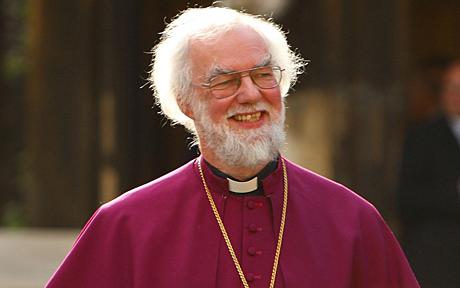
The Archbishop and the little girl…

Did anyone see this story over the weekend?

It seems that the father of a little girl called Lulu took objection to the teachers at her Scottish Church primary school ‘doing God’. Curiously Lulu was asked to write a letter to God, entitled “To God; how did you get invented?”

Lulu’s Dad, who is not a believer, cheekily forwarded the letter to the Scottish Episcopal church (no reply- sorry Andrew!) the Church of Scotland (no reply) the Catholic church of Scotland (a nice but complex answer) and finally to Lambeth Palace- and received this reply;

Dear Lulu,

Your dad has sent on your letter and asked if I have any answers. It’s a difficult one! But I think God might reply a bit like this –

‘Dear Lulu – Nobody invented me – but lots of people discovered me and were quite surprised. They discovered me when they looked round at the world and thought it was really beautiful or really mysterious and wondered where it came from. They discovered me when they were very very quiet on their own and felt a sort of peace and love they hadn’t expected.

Then they invented ideas about me – some of them sensible and some of them not very sensible. From time to time I sent them some hints – specially in the life of Jesus – to help them get closer to what I’m really like.

But there was nothing and nobody around before me to invent me. Rather like somebody who writes a story in a book, I started making up the story of the world and eventually invented human beings like you who could ask me awkward questions!’

And then he’d send you lots of love and sign off.

I know he doesn’t usually write letters, so I have to do the best I can on his behalf. Lors of love from me too.

+Archbishop Rowan

Lovely.

That word- ‘Faith’…

Now faith is confidence in what we hope for and assurance about what we do not see.
Hebrews 11:1-3

I think the word ‘faith’ is one that I overuse.

This is possibly because it can be a rather generous, non-specific word with which to describe personal, private belief. I use it in this way more as a badge of introspective spirituality rather than a declaration of religious conviction.

Because conviction, certainty and clarity of belief have simply never come easy to me. The words of Hebrews above easily rang out as evidence of my failure- my lack of faith. Others seem to have no such spiritual weakness. They are like St Paul. I am like St Thomas.

Today however, an analogy came to me.

I was thinking about another noble human characteristic- courage. Most of my generation have never had their measure of courage tested by war or extreme adversity- but we are all stirred by stories of those who have.

The spitfire pilots of the Battle of Britain who took to the skies against overwhelming odds. The men steeling themselves to climb a wooden ladder to almost certain death as the whistle blew to start an attack in the Somme.

And if these images are a little too martial for your tastes, then we might also mention the man who stood before a line of tanks in Tiananmen Square armed with nothing more than a flower, or those who push themselves beyond the outer limits of human endurance in the high Himalayas, or the polar icecaps.

Some of these people seem to be over blessed with courage. Or perhaps under concerned with fear.

And this courage can be like a force of nature- it can be transformative, inspirational and raise for us an ideal that we can all aspire to. Or at least admire from afar.

At the same time though, this kind of courage can be blind, foolish and self seeking. It can be abused by others (and ourselves) and is easily allied to causes far less noble. In this way, perhaps courage can be dangerous.

And it can also be deceptive- because courage is an entirely subjective experience. Who knows what measure of fear was overcome by the people who achieved such admirable feats in the face of adversity? Were they naive and uninformed? Dulled by some kind of narcotic? Driven by deeper demons?

Or was their courage merely a front- a means to force down the fear, and despite all their lack of confidence and self belief- to press ahead anyhow?

Does this work for you as an analogy of how faith might also be an active force in our lives?

In his book ‘How (not) to speak of God’ (which I loved) Pete Rollins talks about (a)theism. Contained in all our ideas about God is also the fact that what we know is incomplete, imperfect and error strewn. He would contend that the only honest way to approach God is to start from the point of (a)theism- where our theories about God are confronted with our unknowing.

I too have come to believe that belief in God is an amalgam of all these things-

Our faith and our doubt

Our knowledge and our uncertainties

Our crowning confidence and crippling fears about the future

Our theology and the place where theories fail

Our transcendent experiences of the divine and our plunges into Godless darkness

Times of declarative joyful certainty, and nights of lonely doubt

Times when the fragrance of the presence of God hangs in the air, and times when all is meaningless and barren

Times just to hold on to the hem of hope

And after it all, there is still

God.

Post charismatic Christianity?

I have just started this book, by Rob McAlpine.

I have blogged before about my own Charismatic background- here for example… So the title of this book grabbed me.

I have found myself wanting to re-examine much of my own Charismatic experience again- something I have avoided doing in any detail until recently. I suppose these experiences are full of all sorts of mixed feelings and emotions. They left me with such mixed baggage.

For me, the it began with a yearning for God in my formative years, that met the electric possibility of a God who was present and active and empowering through the Holy Spirit.

But there was always the hope for more, amid the hype and exaggeration, and the plain madness of some people and situations I found myself in. I was often an outsider- not able to experience fully what others were blown away by. And feeling attracted and repelled in equal measure.

As a worship leader, I could always hide behind a guitar… it was possible to be there, and to be seen to participate, but to only have the shape of participation, not the fullness of it.

As a young man- I thought I was alone in my doubts. I thought I lacked faith, and my sin was insulating me from God like a rubber blanket on a live cable.

There were also many times though when I caught glimpses of God. When I was as sure as I can be that he was there amongst us. There are many things that happened that I can not easily explain in any other way.

Here’s a quote from the book that captured some of my own experience;

They are tired of hearing the stories of the good old days, jaded from hearing too many prophecies about the great move of God that seems to be just around the corner, fed up with exaggerated or even fabricated stories of healings and miracles, and disillusioned with a view of spiritual formation that is lived through a weekly crisis moment at the front of the church…

Pg 17.

That is not to say that I want to reject or deny the work of the Spirit. May the Spirit have free reign to do with me as he will.

But I hope that it is possible to find my way to him, and his to me without all the baggage that has become so unhelpful to me.

And from my reading of this book so far- it seems that I am not alone.