Nationalism versus indigineity…

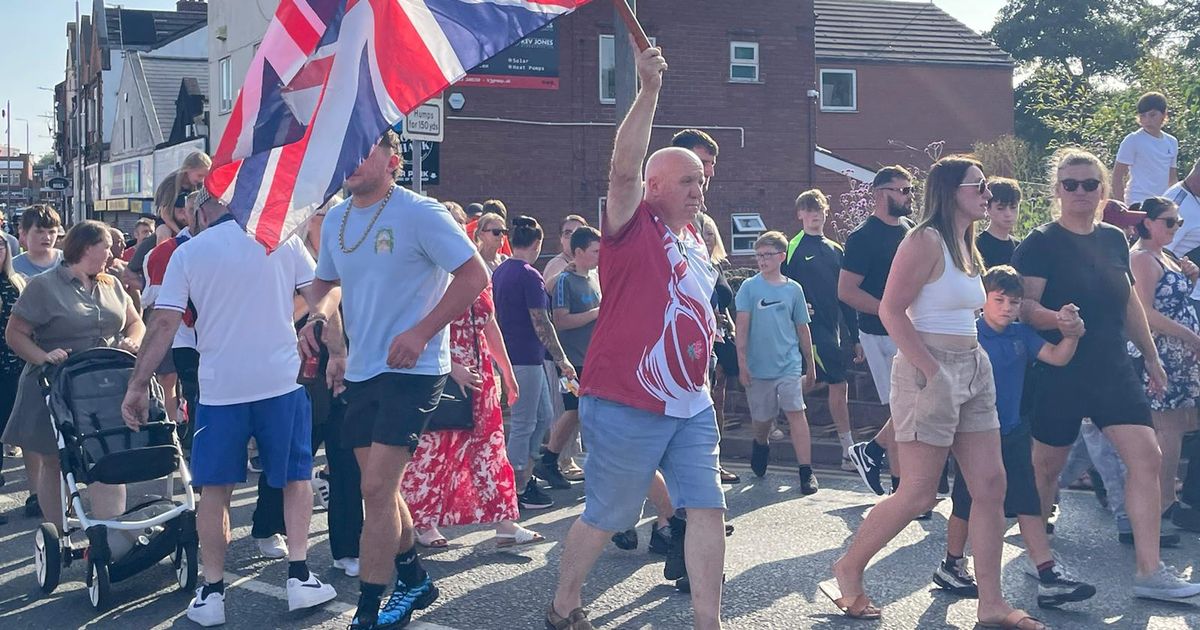
All this flag waving makes me feel deeply uncomfortable – disturbed even – and I have been trying to get a handle on why it affects me so much.

The latest version began as a right-wing ‘take our country back’ surge in England. It is easy to condemn it as barely disguised racism. I have written before about how it has been playing out in my place of birth in Nottinghamshire, urged on by local Reform MP Lee Anderson. It has become a toxic contagion, celebrating division but fueled by disaffection and a deep sense of injustice amongst working people who have been bombarded with stories and ideas that scapegoat and victimise excluded groups.

It makes me feel ill, but there is a disturbance beyond that about naitonalism itself.
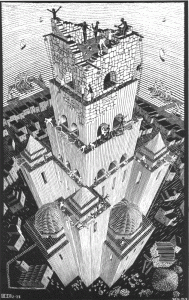
A few years ago – around the time of the rise of the Scottish National Party and the referendum on Scottish independence – I went to listen to a talk at Greenbelt festival. The speaker outlined a clever, provocative argument for nationalism being a kind of God-ordained goodness, drawing on biblical stories like the Tower of Babel and the way that Israel was chosen as special. Something inside me rebelled and I walked out before the end. Again, why was I so disturbed?

Surely there is indeed a good nationalism – proud nations that are a force for good, who welcome refugees and embrace them in their new homes? After all, I live in Scotland, so what did I find so difficult?

There is also this rather revealing question – Is any expression of caution or disquiet at the Scottish version of nationalism ever acceptable from an incomer like me? I have only rarely experienced direct anti-English hatred, but it is always there, just below the surface. This is quite understandable given our shared history in these lands, and the sense of unjustice felt in those parts not English, but let us not pretend that hatred is good, or that the sense of victimhood and tribalism it unleashes is healthy.

It is no accident that nationalism rises up in times of economic depression and difficulty because it has always been that way. It has so often been a political force used to galvanise mass movements against a feared other, either inside our outside the borders, or both. I know there are other much more positive versions of nationalism, based on pride and shared values, but can we point to a single version that was not in some way defined against the other?

I must be clear that sometimes nations or peoples have a legitimate struggle for freedom against oppression. Nationalism here becomes a rallying call – albeit a dangerous one. Many colonised nations have been forced to make that journey, and many in Northern Ireland, Scotland and Wales see themselves in the same place – struggling for freedom against an English colonial power. I hear that argument, but am not fully convinced by it. Colonial power, such as they still exist, are no longer bordered, they have become corporate. They serve the interests of a wealthy elite, not a crown. You do not fight this kind of colonialism by re-flagging it.

I think I walked out of that talk because Jesus was not Scottish, or English, or American. Those whom Jesus is recorded as being most angry with were the religious nationalists from his own nation so how dare we presume to co-opt him to a our national cause? The Biblical nationalists wanted a politcal messiah, not an advocate for the poorest and most broken. Certainly not one that pointed at the feared other and said we should love them – even the Romans invaders. Even the Samaritan apostates. Even the English. His solution was clearly NOT to proclaim a national revolution, but an entirely different kind of cross-border subversive nation called theKingdom of God.
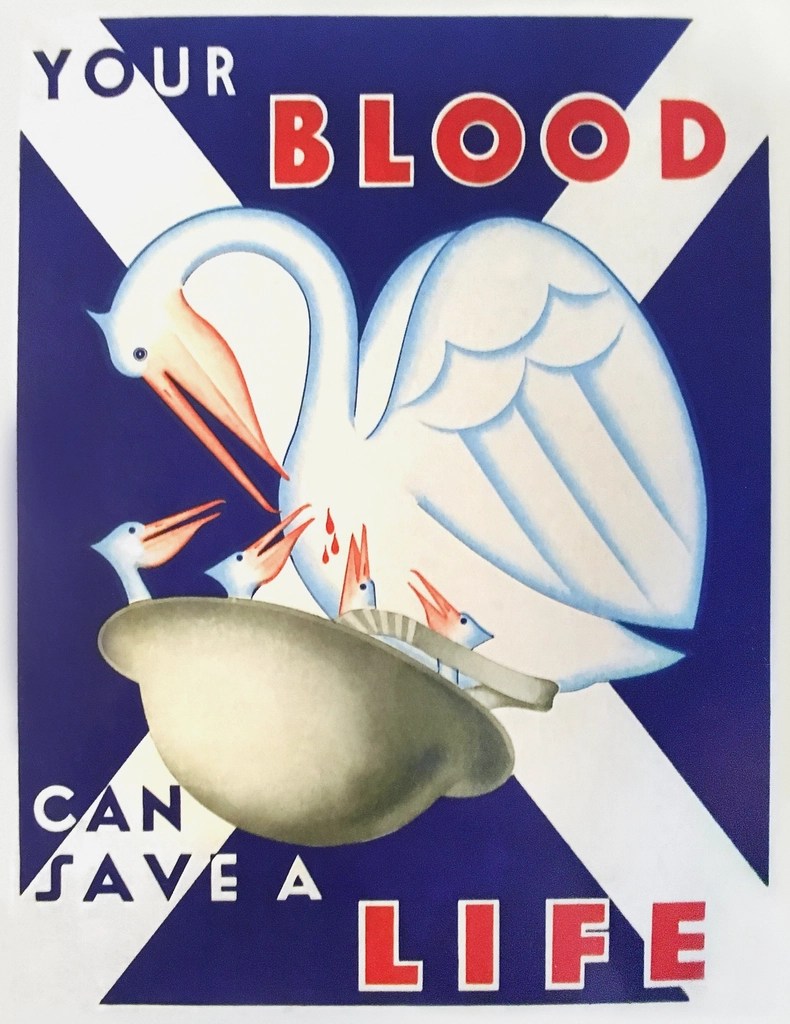
I should perhaps interject here that I am not talking about the nation state as an organisational unit, with tax power, social and welfare policies, justice systems and housing provision. I believe strongly in a civic exchange of rights between individual and state, which shapes our national and individual wellbeing. The role of the state in this vision of nationhood is not to disappear (behind the glorious rise of free market capitalism for example) but rather to be the place where the national good is carefully negotatiated and legislated. It is messy, full of compromise but (we hope) there is a progression based on the value of humanity and a desire to preserve the land in all its beauty and variety. It is quite possible that a smaller nation such as Scotland, set free from the clutches of a greater Britain could achieve these things more effectively. If so, bring it on.

Human civilisations have been around for hundreds of thousands of years, whereas nation states as we might understand them now, are an invention of the last few hundred years. When we define ourselves by our nationalism – often citing ancient precident – we mostly delude ourselve, and apply selective historical analysis. We tend to look at this kind of nationalism through the lens given to us be someone else who is using it to persuade, to sell, to co-opt us to their vision of the world. This is not necessarily a bad thing, but we should at least call it what it is.

Neither let us not pretend that nationalism is just about sensible self direction of economic or social policies. It always contains other, darker things too- perhaps only visible to outsiders, to edge walkers and poets. Boundaries look both outwards and inwards.

Photo by Adrien Olichon on Pexels.com

Perhaps my discomfort is also about my own somewhat confused national make-up. I was born in England, but had an Irish father and now live in Scotland. I have always found identity hard to define or own. This seems less to do with where my parents were from and more to do with my sense of being an outsider. My troubled background was never likely to gift me with a sense of belonging. There are many others just like me. When the flags go up and people get teary-eyed and start to shout-sing their anthems, we shrink inside.

I say this not to claim any victimhood – after all, I am a white, middle-class sis male. All the world belongs to me and my kind, so this really is not a just me puffing up my privilege.

The point here is to consider how nationalism draws lines on the land that cut between people. Nationalism is a way to look at the land and also at those who are on it and outside it. Even the more positive forms of nationalism – those which celebrate a place and pride in a shared heritage – have a shadow side, in that we tend to defind ourselves against other nations, other peoples. It becomes a way to simplify and stereotype, and what might seem benign can easily turn into something more unpleasant.

There is more though. I tried to express some of what I was feeling in this poem.

Nationality

I don’t believe in borders
Or the tyranny of maps
I fear the way they fence us in
And split the white from black
So I will not raise up Saltires
Nor wave the Union Jack
I will not sing those angry songs
My troops will not attack

What makes us what we are?
Whose stories are we telling?
What mix of blood pumps through these veins?
Whose products are we selling?
What shades of grey do we convey?
Whose history compelling?
Who pipes the tunes, who reads the runes?
In whose land are we dwelling?

Send them out then bring them home
Let roads be laid wide open
This way of love, the pilgrim path
Requires walls to be broken
Then we lay down in fold of ground
Where soil is warm and welcome
The crops we sow must surely grow
For the rains fill up the ocean

Perhaps we can turn now to another word. Here it is, with the dictionary definition – and as it is often used by a certain kind of flag waver. (Along with other words like ‘Judeo-Christian’ and ‘shared culture’.)

indigenous
/ɪnˈdɪdʒɪnəs/
adjective
1.originating or occurring naturally in a particular place; native.
“coriander is indigenous to southern Europe”
2. (of people) inhabiting or existing in a land from the earliest times or from before the arrival of colonists.
“she wants the territorial government to speak with Indigenous people before implementing a programme”

By strict application of this definition, I can never fully ‘belong’ to the place where I live. I can never say without qualification that I am ‘from’ there. I am always an incomer, a wanderer, an immigrant. Recently, I heard a different use of the word that felt very important. This came from Brian McLaren, during a talk he gave in Iona Abbey. He said something like this;

There are two kinds of people in this world- indiginous people and colonisers, but you can choose which one you want to be.

I know, I know there are all sorts of problems with this simplistic dialectical statement- not least that it seems to imply that I could impose my belonging in a way that sounds like colonialism, but in the context of his words they sang clear. He was talking about the way the Bible has been defined, decoded (or perhaps encoded) and packaged by colonisers, but if you look again at the stories and people inside it, they are all in fact about people who have been colonised. In fact, the Bible is better to be understood as the record of oppressed colonised people trying to make sense of their lives and what the divine meant in a colonised context. I could say a lot more about this, but for now, let me just describe what this meant to me.
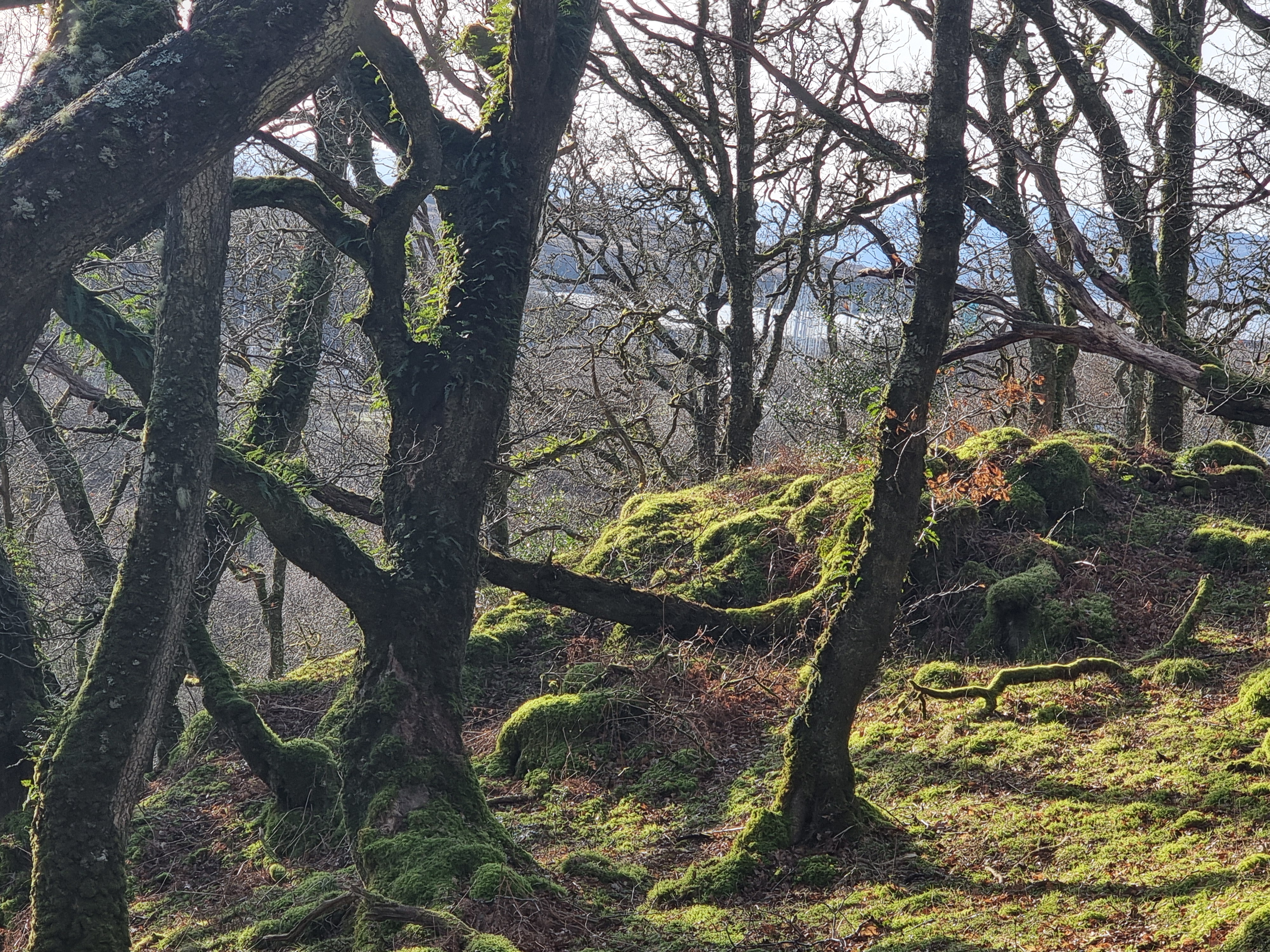
If Brian is right, I can choose to live as an inigenous person, seeking deep connection to the place where I live, to the people where I live and to the land and non-human occupiers of this land. I do not need to be invited or embraced politically or legally – I just need to learn to listen to the land and love it.

The invitation was always there. Even when I felt like a stranger. I say this because I have come to beleive that at the heart of everything that is and ever was is God, and she was always waiting with love.

In accepting this invitation to become indigenous, I also resist the pull towards colonial domination and exploitation. I try to live simply and in harmony. I try to listen rather than tell. I seek to forgive what I can, even in myself – even when I fail in my attempt to become indigenous.

I start where I am, right here. I try to offer hospitality to all who also arrive here, in the same way that the earth welcomes me.

I also look beyond the borders of my land and imagine a world in which there was no border, just people who are loved, and people who have not yet learned that this was always what their land was calling them to.


Scottishness and the search for self…

I read this lovely book recently;

untitled

I will not go into any detail about what it is about, except to say that if you love poetry, landscape and humanity you will love this book. It is a beautifully written travelogue/memoir and obituary of the great poet Norman McCaig.

One of the things that resonated with me was how the book tried to grapple with Scottishness. Up here we are heading towards a referendum on whether Scotland should exist as an entirely separate country to the United Kingdom. The old confused profusion of ideas around history, identity, sense place in landscape, feelings of old injustices to be avenged, or old alliances to be celebrated- it is all there  just below the surface.

Andrew Greig talks with such eloquence about Norman McCaig’s generation- McCaig was a conscientious objector in the second world war and had a deep suspicion of nationalism wherever he saw it. I share this feeling. I have an outsider’s discomfort with borders and in-groups. I struggle to think of anything positive that came out of nationalism- it has so much power to bring out the worst of what we are, but rarely the best. It throws up statues of lots of dead people.

However, there is another kind of Scottish identity in Greig’s book- as he moves from city to mountainside there is a profound sense of place- a love of landscape. A sense of one-ness with the roll and curve of the land. A sense of understanding that others too have been here, and in some sense are here still. I have had plenty of glimpses of this in my own adventures. There is a generosity as well as a cruelty to mountains- they do not care about accent.

There is also this lovely piece of writing that I thought I would reproduce here- which is another image that stuck in my mind. Greig starts to think about his father;

…it began as a yarn about how he and his classmates, in the early years of the last century, would challenge each other to walk for as long as possible carrying a penny gripped between thumb and forefinger, the arm hanging down. It may seem an easy thing to do laddie but  no matter how hard you try sooner or later it will drop. Muscular fatigue, numbness, something like that. And I thought, what a fantastically futile thing to do, and how deep and Scottish a teaching it must have been, yoking together money, endurance and the inevitability of loss.

Then my father went on to say how, still carrying his penny, as a boy he once stopped in a gale under a Scots Pine. He stood against it, thrilled – not a word he had much use for – to feel bark shift against his back. He said he’d imaged the tree a mast, and yearned to be sailing where the wind was blowing…

I love this simple little story- of how we get caught up in futile loops, and imagine them to be significant.

But how there is a wind in the trees, and if we would let it, it has the power both to root us where we are, and also to call us to something far beyond.

How the two are related.

And so it is that we can be Scottish (even I) and still both bigger, and much smaller.

Some commercials, and a little rant…

Thought I would give a couple of things a plug- information being viral and all…

The Scottish Network Churches asked us to spread information about a speaking tour in Scotland by Bishop Graham Cray, who (amongst other things) heads up the team responsible for the Church of England’s Fresh Expressions initiative. Might try to get to some of this…

The CofE has done so much to promote innovative and experimental forms of church- which has given leadership to many other denominations too- the Methodists, URC, Salvationists etc. It is encouraging indeed to see some of this coming north.

Here is the blurb-

How will we encounter God in all of life? And especially in those places where Christians most often cross paths with non-believers and have opportunity to influence society? Can we encourage Christians and church leaders to develop a personal vision for their own growth and effectiveness as disciples who are missionaries and as missionaries who are disciples? Should we provoke Christians and church leaders to possibly re-imagine life in the “gathered community” so that it effectively resources life on the front line of every day life?

LICC and Bishop Cray are “thought leaders” and have enormous practical wisdom to share and so to help us understand the theology, build principles, develop the practices, create the resources, to become Jesus’ disciples in the 21st Century. Mission Scotland hopes that exposure to this work will create an imagination for whole-life discipleship and a deep desire to engage with the questions and challenges we face as God’s people to make disciples, and to live as disciples.

The launch conference, which is the start of a series, is planned for November 28th, 2009 at St. Paul’s and St. George’s, Edinburgh. It is designed equally for church people and for church leaders. Both Mission Scotland and LICC see these events, not as stand-alone events, but as a linear discussion leading to changes in church life, and backed up with ideas and resources, changes in practice, leading to fresh confident expressions of Christians being the church, being disciples, being missionaries, wherever they are placed in Scottish culture and context.

Therefore for those who come this could become more of a journey than simply listening to one of God’s leading thinkers on His Church in Britain today.

FURTHER INFORMATION from Sarah-Jane Biggart; sarahjane.biggart@missionscotland.org.uk. 07734-101358

Also- for those of us that are interested in training and equipping leaders and visionaries for this kind of stuff, check out this training being offered by CMS.

resource

It is English based, rather than Scottish, but at least the units are bite sized, and based in Northern England rather than the deep south. It is not something that I feel I can commit to, but I mention it as I know of nothing else in Scotland that appears to offer the same level of practitioner-practical-network based learning (with apologies to ICC in Glasgow!)

Here is the blurb from Jonny Baker-

well we’re getting closer to resource starting for this year. the web site has had a makeover and looks pretty funky. resource is a course over a year of four weekends exploring themes of mission, culture, leadership, transformation, discipleship and church. each weekend is in a different location/context where we encounter a local community or two and hear their story and what they are up to, as well as some teaching, discussion and reflecting on how it all connects with our own context.

who’s it for? – this explanation is pretty good

how much is it? – each weekend is less than £100 though you have to sort accomodation. there is a bursary so if you’re strapped for cash still apply.

the weekends this year are in sheffield, london, leeds and southampton – and yes the london one is being hosted by grace and moot with a focus on alt worship and mission. you can either sign up for the whole thing or just come to individual weekeds. the whole thing is best because a big part of the learning is hanging with other people and sharing the journey together.

the first weekend is the last weekend in october in sheffield so book now! if you can’t pay now you can book and pay later.

(NOW FOR THE LITTLE RANT!

I am quite happy to be corrected if I am missing something, but it seems to me that north of the border we have a lot to learn from the old enemy in terms of renewing and refreshing expressions of church. It also seems to me that we have a particular need to build supportive partnerships in an age when Scottish Nationalism appears to be leading to a certain snobbish separatism in some parts- which I feel has no place at all amongst Christians. The tendency to build confidence and identity by denigrating the other is a dangerous and unpleasant human characteristic- and when we see this in the very heart of power, I start to feel very uncomfortable. So when we have anti English jokes made by leading politicians, allied to distorted and simplistic versions of history, and school ground popularist prejudice and abuse, then I think it is time for the people of God to stand aside and gently model a different way of being.

And if you think I have no right to say this because I have an English accent, then I ask you to consider our shared history in these islands- our mixed blood lines, and the inevitability of the misuse of power and wealth acquisition by the worst of what we are as humans. In this context, we Christians have a different responsibility- to shine light and to savour good things with salt, not to stand on narrow prejudices and perpetuate poison. There is a real chance that it will fester.

So perhaps one way we can be challenged is in the way we approach faith- how we collectivise our gatherings in a generous and graceful way- and how we can both learn from English brothers and sisters, and teach them from our experience.

Rant over.

Cartographers conspiring with Jesus?

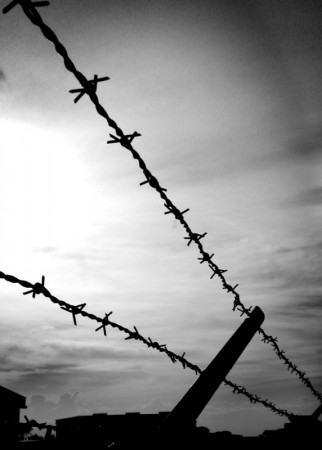
barbed_wire_fence-575x450

I have this thing about boundaries and borders.

They are such artificial things. They are constructs of history, of politics, of tribalism- both ancient and modern.

They seem to represent to worst of us- the attacking and defending, the in-outing, the asylum seeking and the last refuges of scoundrels.

They seem to me to be the visible manifestation of our o-so human characteristic of constructing walls to hide behind and throw stones from. We do it in the playground, and in our theology. We do it in our politics and over our suburban garden fences.

Safe behind these walls we construct, it is possible to make generalisations about the dwellers on the other side. It is likely that we will be skewed towards constructing a reality that is only partially based on fact, and serves to somehow strengthen the boundaries about us. If your failings are evident, mine submerge. If your history and culture can be caricatured and undermined, then ours will be all the stronger. If you are worth less, then what you have, I can take.

great-wall-badaling-2

There is a lot of discussion around at the moment about Britishness. Our (Scottish) prime minister has made it a central part of his message- perhaps (he says cynically) as a reaction to the rise of the Scottish National Party in his native land. Check out this programme on Radio 4, complete with interview with the Prime minister.

In this programme, there is a discussion about Scottish Nationalism. As an English/Irishman, living in Scotland, and trying to understand what it means to follow Jesus in this time and place, some of this debate troubles me.

welcome_to_scotland_214189a

If you have an English accent, you can’t say this stuff- you have no right.

You are from the other side of the fence you see- the oppressive, domineering, 1966-boasting, Redcoat-wearing, clearance making, absentee landlord side…

Except, I am the son of an Irish man, the result of his brief marriage to the daughter of a miner. I grew up in a northern England ravaged by the end of industry- in the middle of a miners strike and about as far removed from the City of London as it was possible to get and still be rained on.

All my life, I have been outside fences- perhaps this is the legacy of a particular kind of childhood, or a particular kind of personality. There are a lot of us though.

Anyway- back to Scottish nationalism. A couple of years ago, I listened to Doug Gay’s talk at Greenbelt entitledtowerofbabel ‘Breaking up Britain- how to be a Christian Nationalist’. I really struggled with it at the time, but it was provocative and well presented, and gave me much food for thought.

Doug spoke about the Tower of Babel story- as evidence that God chose to bless us with nationhood and cultures…

And how God chose to engage with one holy nation called Israel…

But I rather thought the point of the Babel story was about mankind getting too big for it’s boots- and the whole Israel thing- well it did not end well did it?

I have a number of difficulties too about nationalism-

  • I am really struggling to think of anything positive about a strong nation state- even one positive example from history
  • Nationalists rarely make good neighbours
  • Nationalism always tends to need to define itself AGAINST the other
  • Nationalists tend towards simplified versions of history
  • They tend to demonise the other in order to unite masses behind a flag
  • If celebration of our shared and separate cultures demands that we denigrate others, then I am not interested
  • Jesus seemed to have other priorities
  • He seemed to be more interested in transcending boundaries, and working for peace and reconciliation and healing of wounds

So, for those of us who agree with Tom Stoppard’s suggestion that nationhood is perhaps just a ‘conspiracy of cartographers’- perhaps we can hope that there may yet be a new way to celebrate our nationhood…

I love my adopted country of Scotland. But let us seek to tear down borders, not find new ways to erect them.