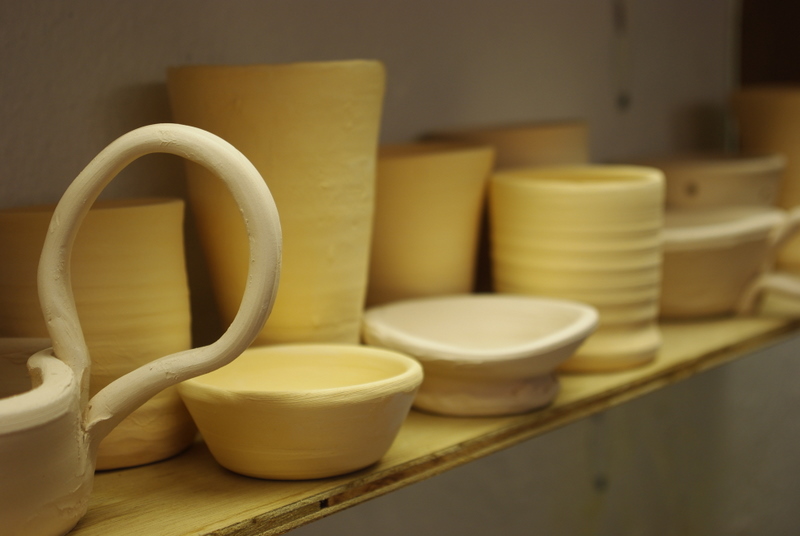
Art as evolution…

Over the past few years I have been grappling with a new craft. Even though we have run a business making pottery for about a decade, Michaela was the potter really whilst just worked around the edges, helping out with some of the donkey work. My areas of creativity were outside the use of actual clay. Then it all changed.

First, I began working with a different clay body- with much more ‘grog’ mixed in (ground down fired clay.) This was much more forgiving than the white stoneware clay that Michaela loves so much, more plastic and willing to hold shape – or at least I think so. Michaela might protest. These qualities of the grogged clay mean that building bigger vessels is that bit easier, but also this kind of clay also has the capacity to cope with so much more thermal shock, meaning that alternative firing methods are possible… so I started making big old pots and trying to fire them in pits dug in the garden, with mixed success!
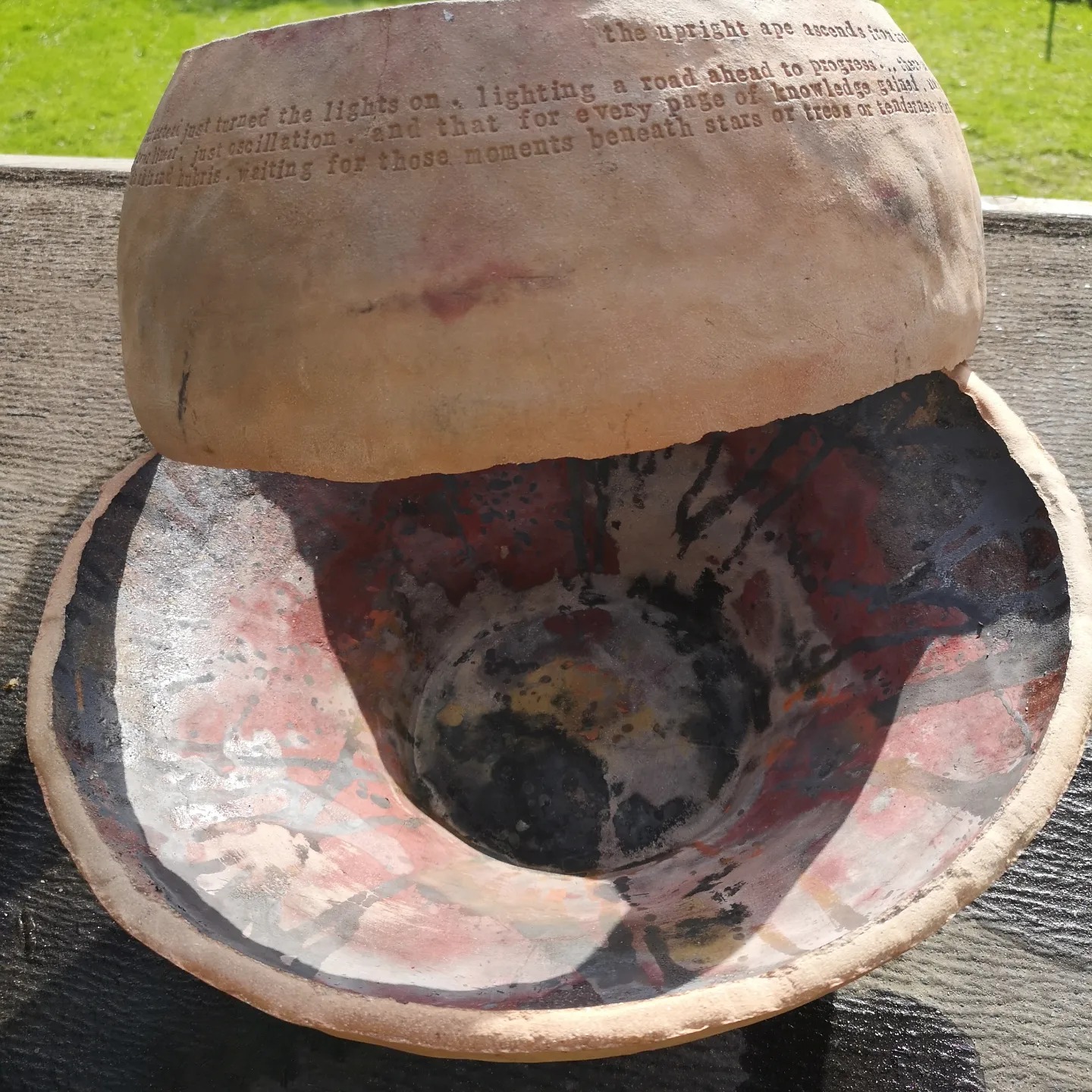
Then I discovered raku.

Time for a short introduction to clay firing.

Most pottery is fired in kilns, either electic, gas or more rarely, wood fired. All three methods introduce variations to the process and to how the glazes in particular react, due to the conditions created, for example the degree of oxygen present during the firing.

Using a purpose build kilns allows careful control of the temperature, which in the case of our electric kiln will step up around 100 degrees per hour, then cool down over a long period of time. This means that failures in the form of cracking (or even exploding) pots are minimised and colours from glazes are reliable and predictable.

There are other methods however, most of which require specialist clays. These include pit firing/barrel firing, saggar firing and most drramatic of all, raku firing.

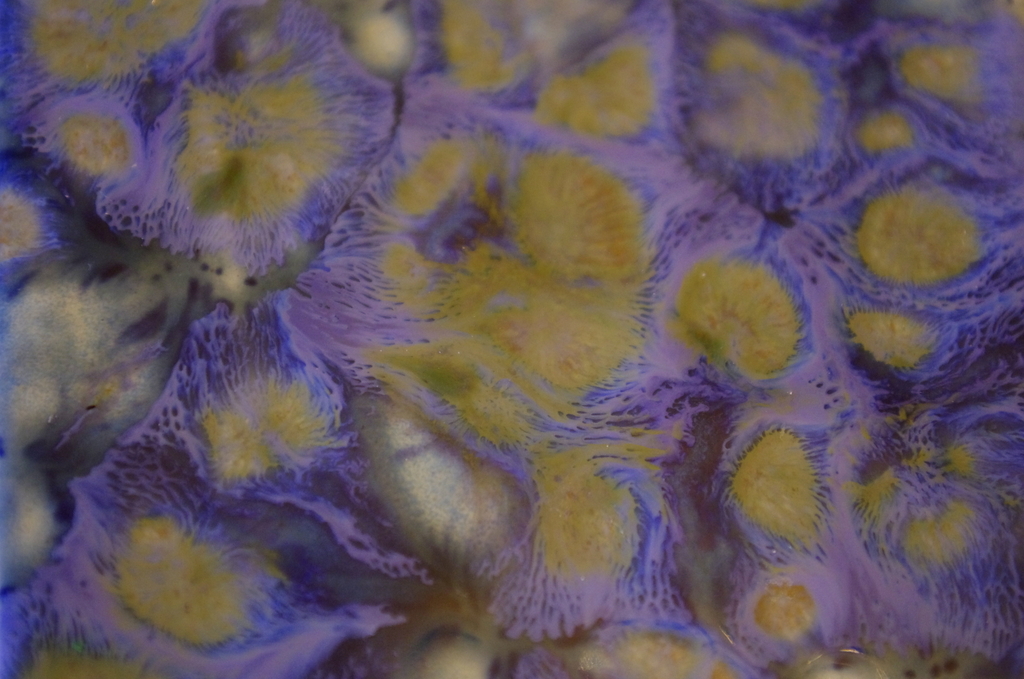
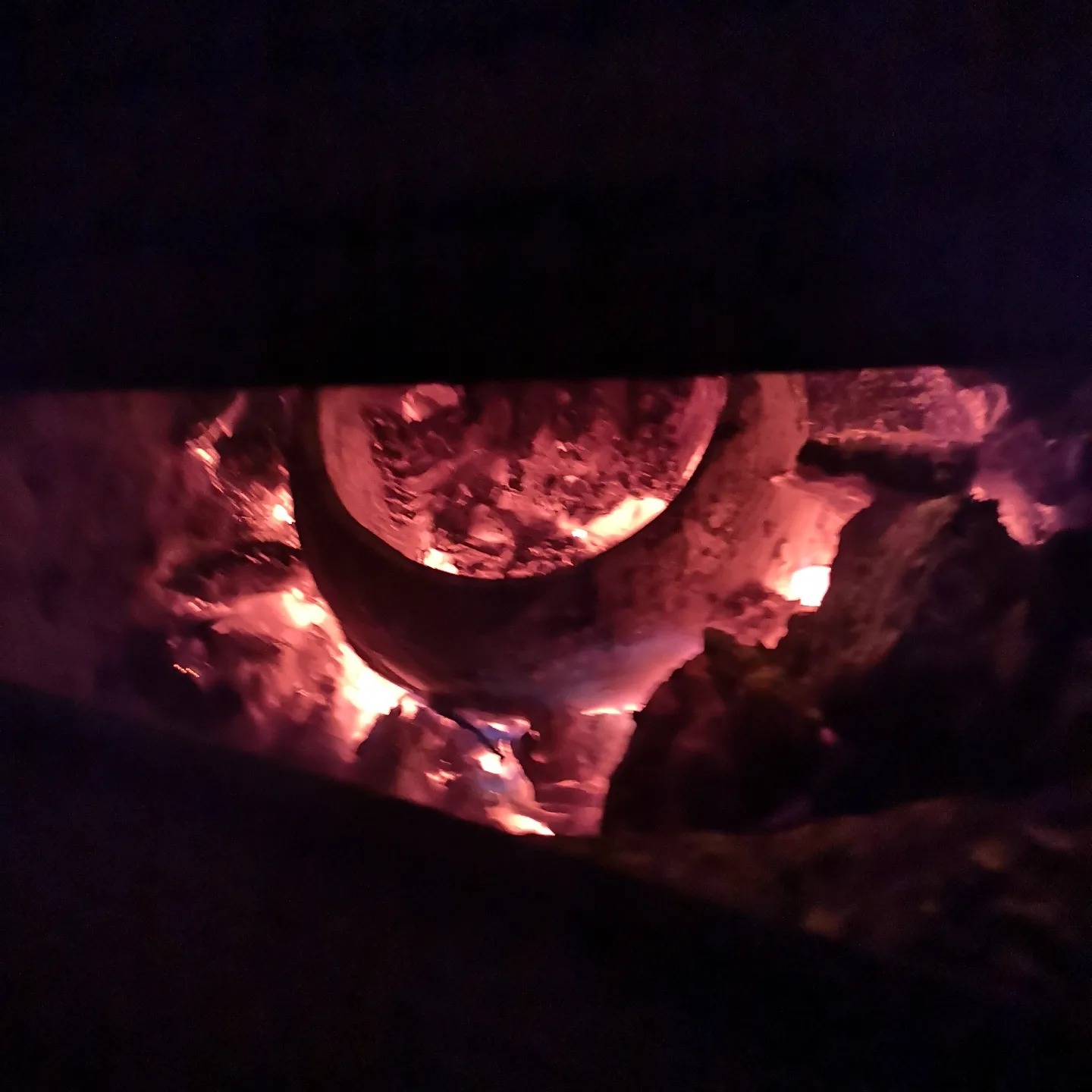
Raku, meaning ‘easy” in Japanese, involves heating up a previously fired pot to 1000 degrees in an insulated container- typically a barrel or a dustbin – using a gas burner. The pot is then removed and placed in a sealed contained along with combustable materials. The oxides and glazes applied to the pot will then react in the oxygen depleted conditions to form bright colours, crackles and textures.

The thing is about this kind of pottery, it is always shifting, changing – it never quite arrives at a destination. It is art by experiementation and evolution. Perhaps all art is like this, but let me explain what I mean.

Functional pottery might be understood as the means to perfect a process in order to create a usable shape. As such, potters are developing their shapes and glazes to make their versions of archetypal forms. There is art and beauty in this that is beyond my skills. I look in wonder at many of the things that people are able to make. I hold their mugs in my hands as if they were grails. This is not what I am trying to do.
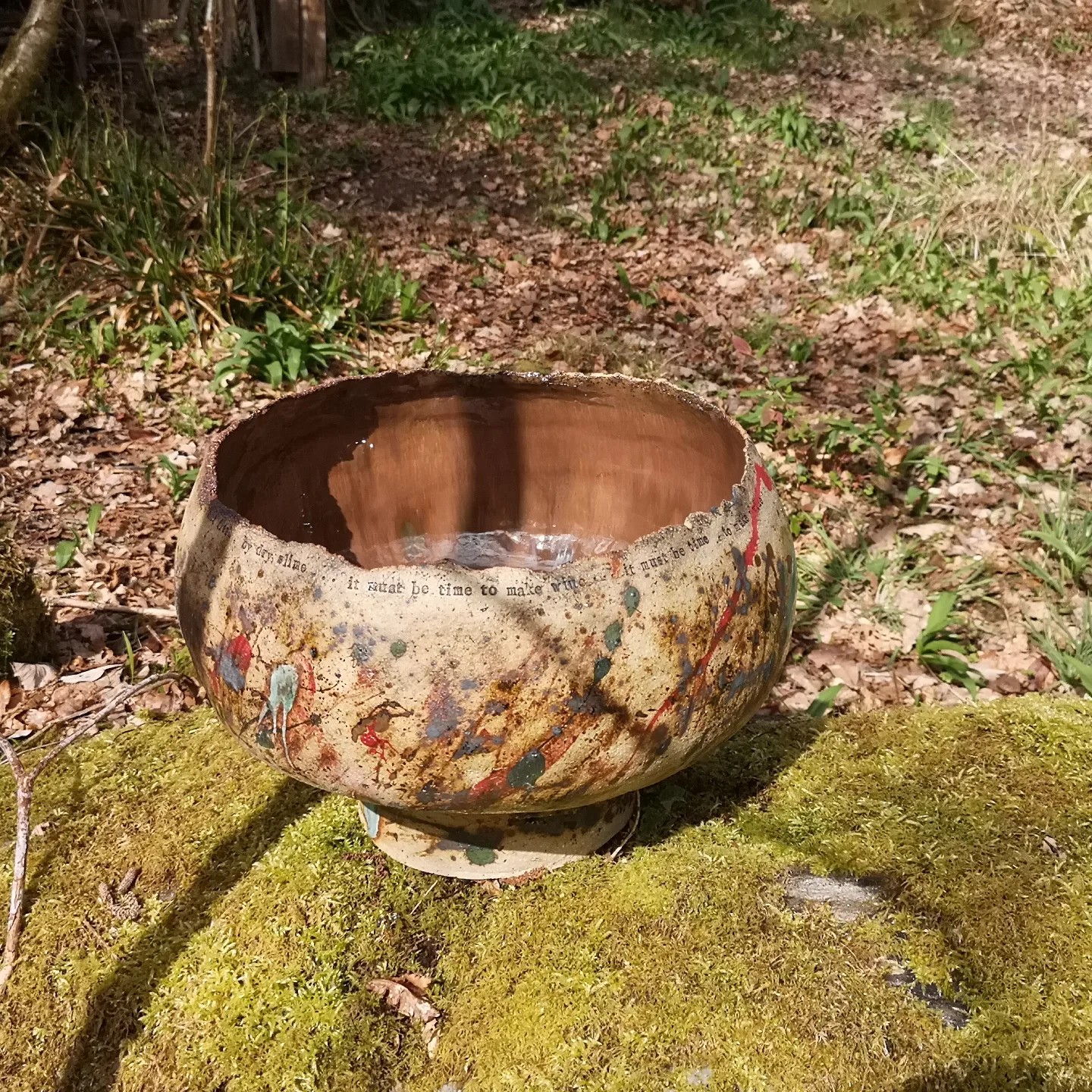
The pottery I am making is not really in puruit of shape or colour (even though both are essential elements) rather they are chasing after meaning. So when I make a pot, I am not asking if it is a ‘good’ pot, I am asking if it carrys any meaning for me. Has it told a story? Has it opened up a space or framed something that asks questions that I find important?
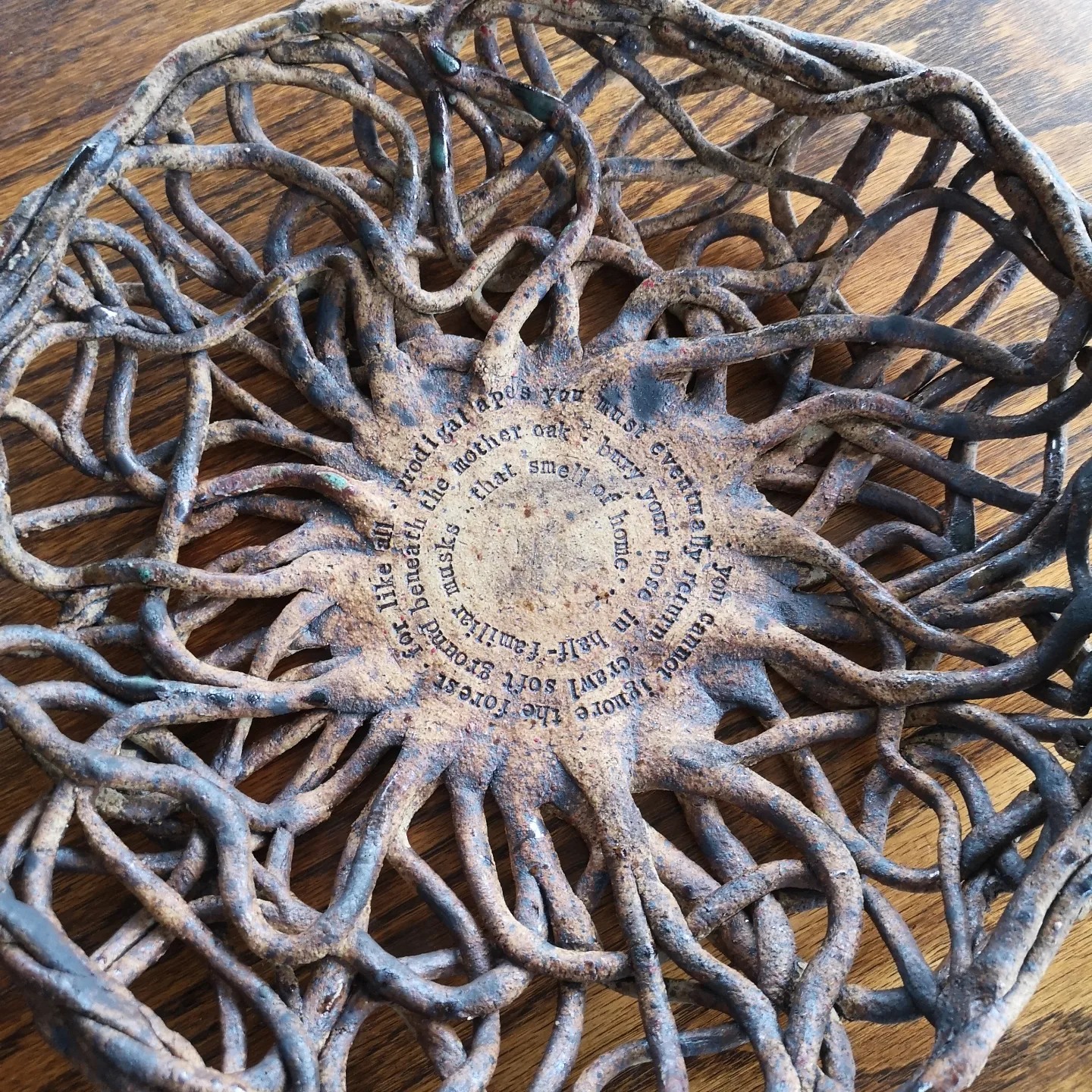
Let me tell you, this kind of art can drive you mad.

It is rarely sarisfied and never completed. There are no real reference points for comparison, other than whether someone is prepared to pay money for it.

The evolution thing I mentioned before suggests an ascendancy, in which we get ‘better’ and certainly I have learned through lots of mistakes and failures, so that I at least make different mistakes now rather than the same ones. I am also slightly more able to steer the chaos, but as I look back on some of the things I made previously, I wonder if I have gone in the wrong direction since. Perhaps I should have made more of the same?
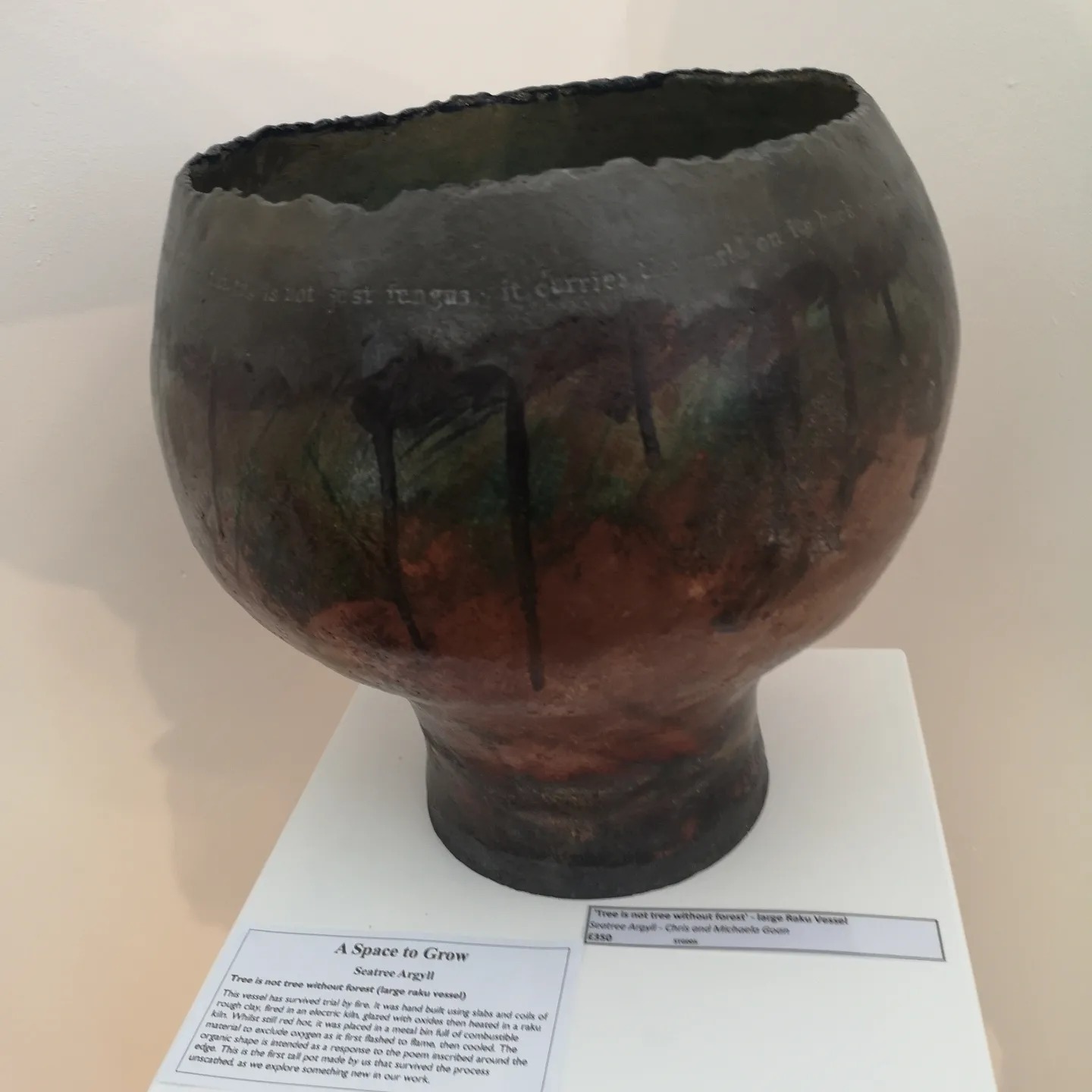
But who am I kidding… this is not an option. The quest I am on is always after meaning, and so I have to search for these in new shapes, new ideas.
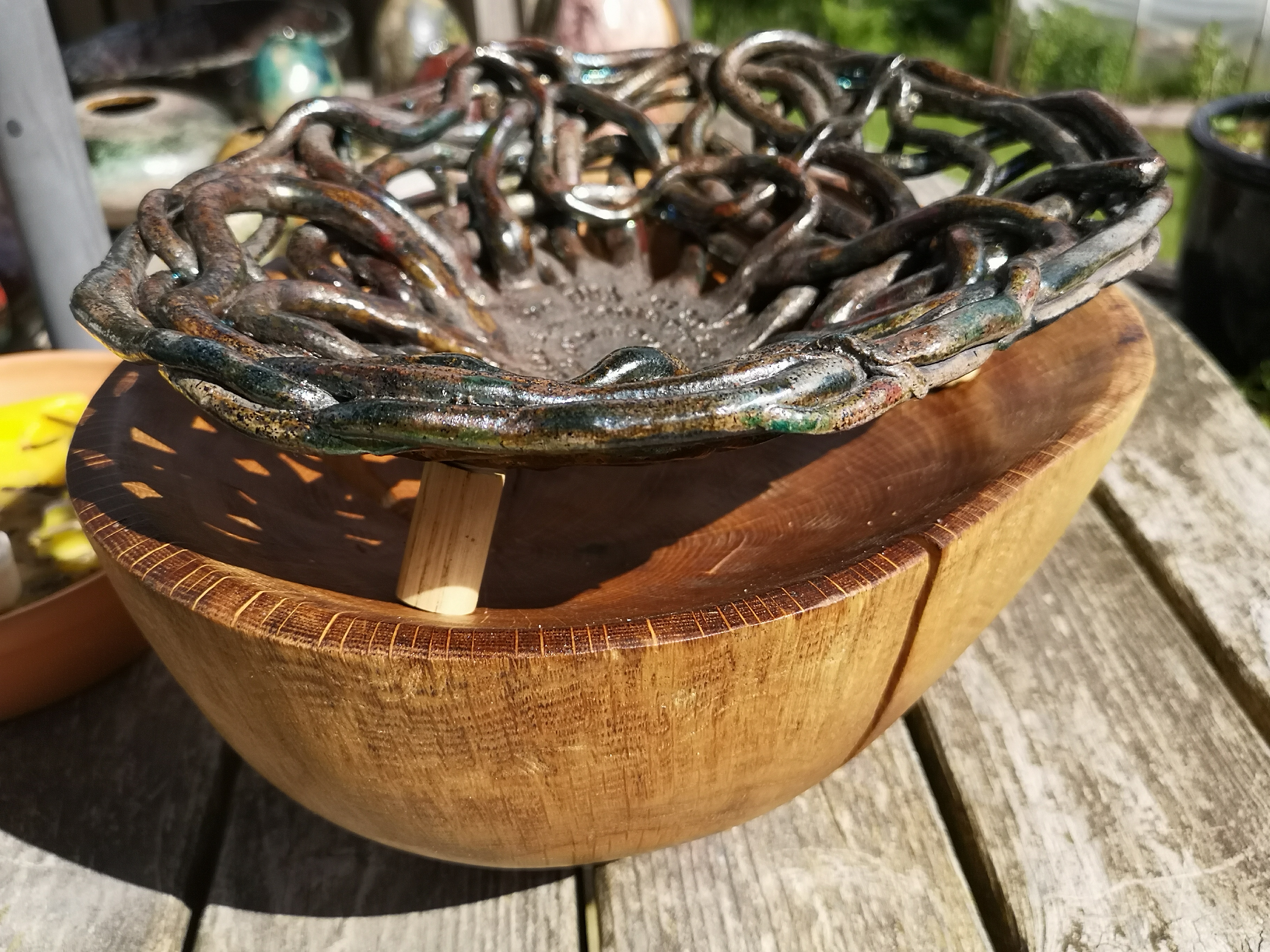
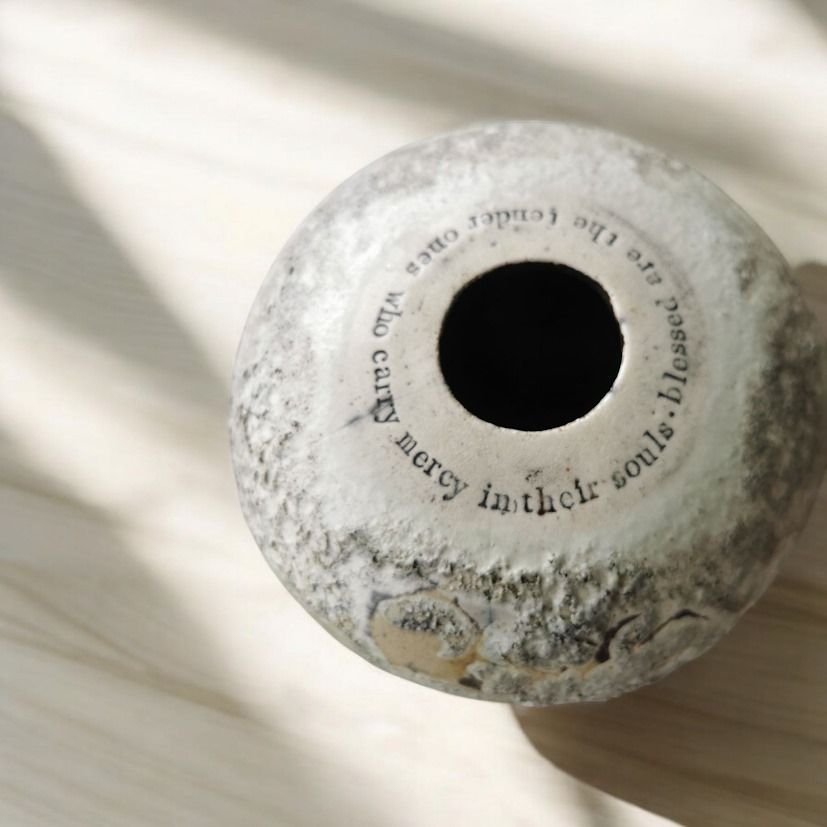
I have a secret weapon however, in that our pots use poetry. This alows me to set up an interplay between words, form and colour in such a way as to gather meaning more directly. In other words, I can cheat.
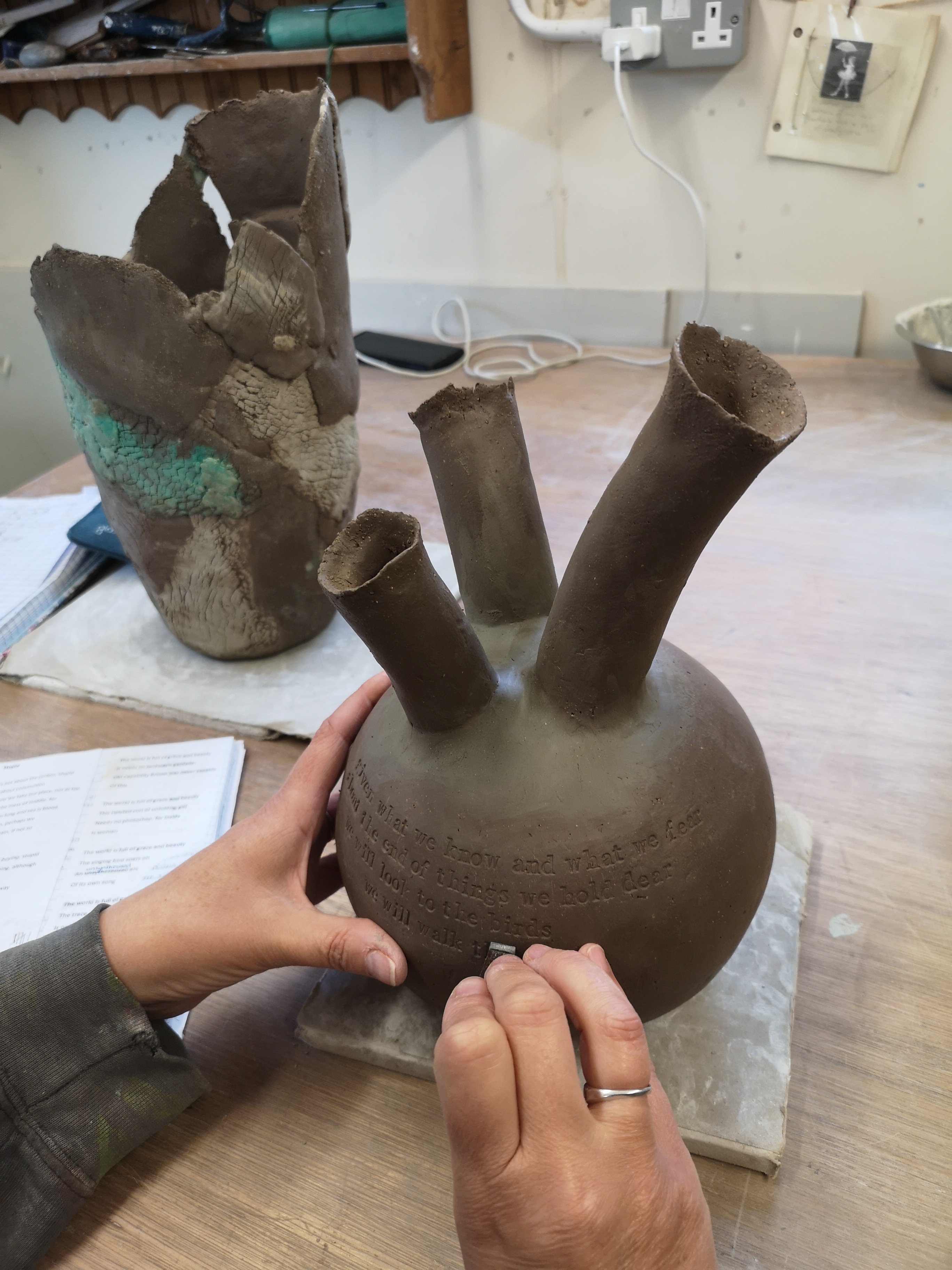
One last thing about this evolutionary quest- it is entirely addictive.

There may come a time when I am done with it – music was like this for me once – but for now, if a couple of days goes by without me spending significant amounts of time in pursuit of my clay meanings, I am anxious for a fix.
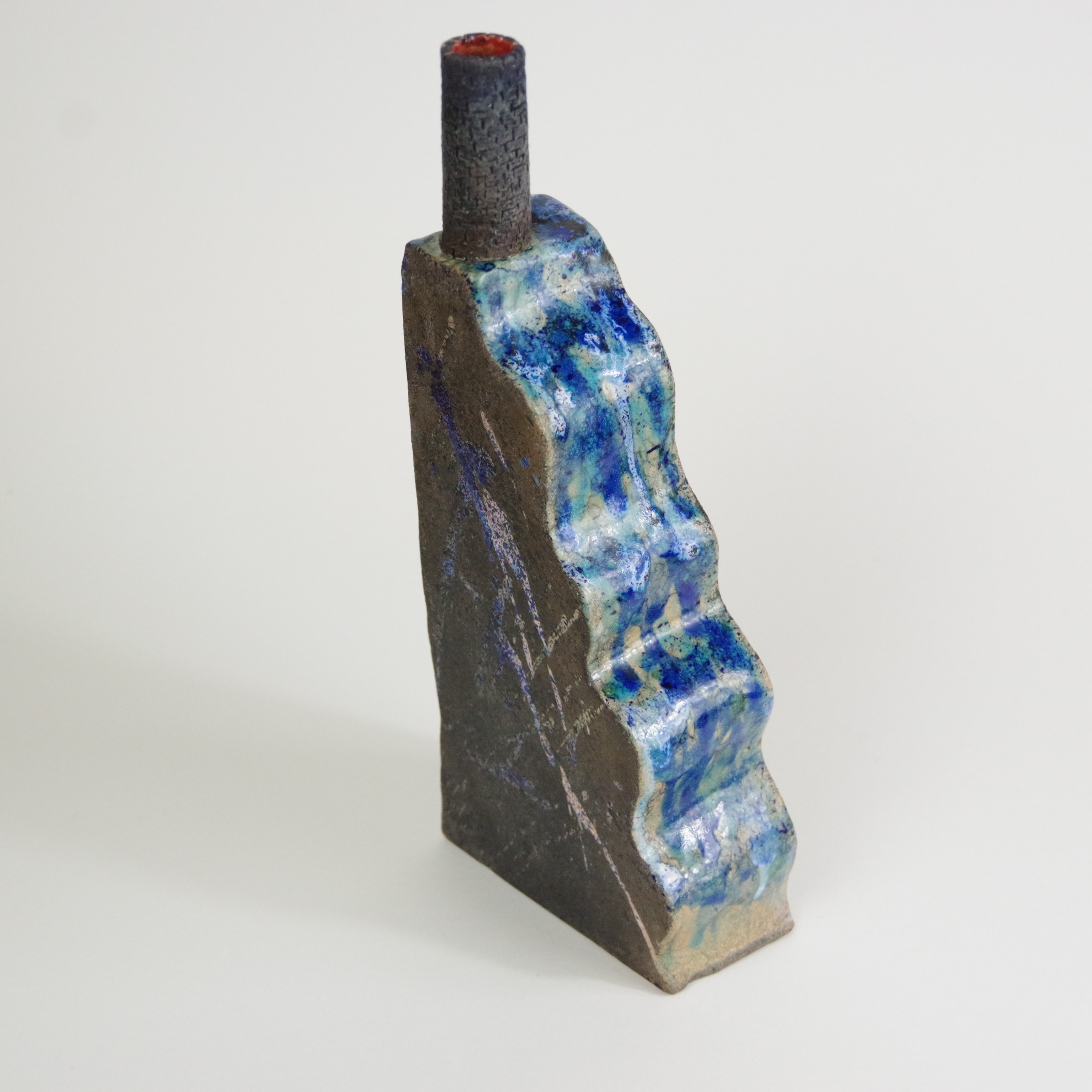
In the spirit of charity, it is possible you may be interested in helping out this addict in his continuing quest.

Some of our work is available in the website shop, here.

Much of our larger work is simply too big for us to make available through an on-line shop – It is not really ‘postable’ after all – these are more likely to be things we take to ceramics shows or place in galleries (and we work with some fantastic galleries!)

Perhaps the best way though might be to come and visit us. Drop us a line first and see what we have in our storage shed. There may well be a bargain or two to be had!
img-20241120-wa00062668580301732975181

Some local creativity…

crafts

This weekend we are participating in Cowal Open Studios (along with Pauline Beautyman and her lovely pottery.) Come along and have a look if you are local…

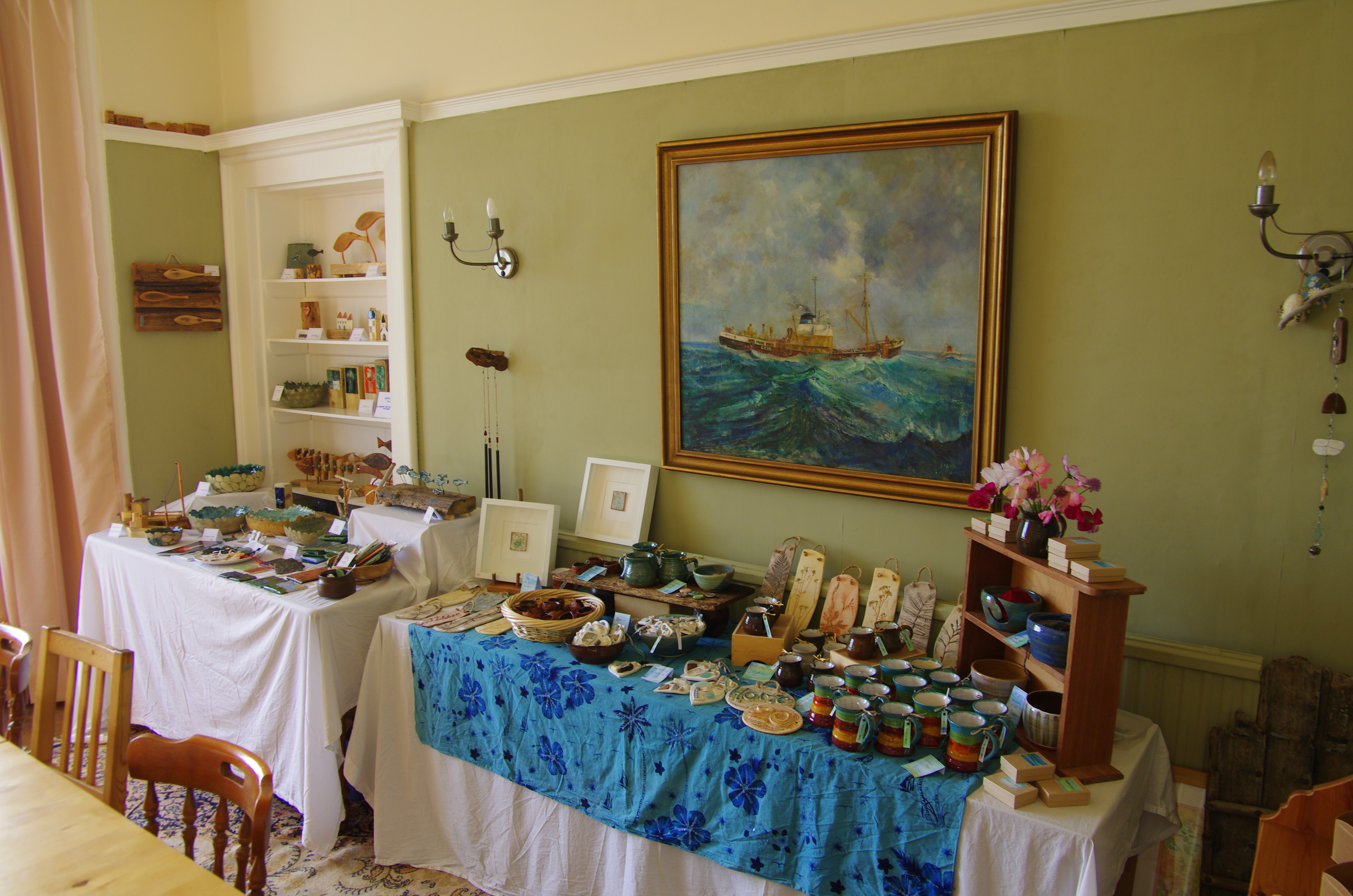
COS is a collection of artists/crafty people on the Cowal peninsular who have ‘open house’ this weekend, allowing people to come visit, talk about techniques, methods and even have a go (in the pottery in our case.)  Here is our dining room at the moment;

IMGP7069

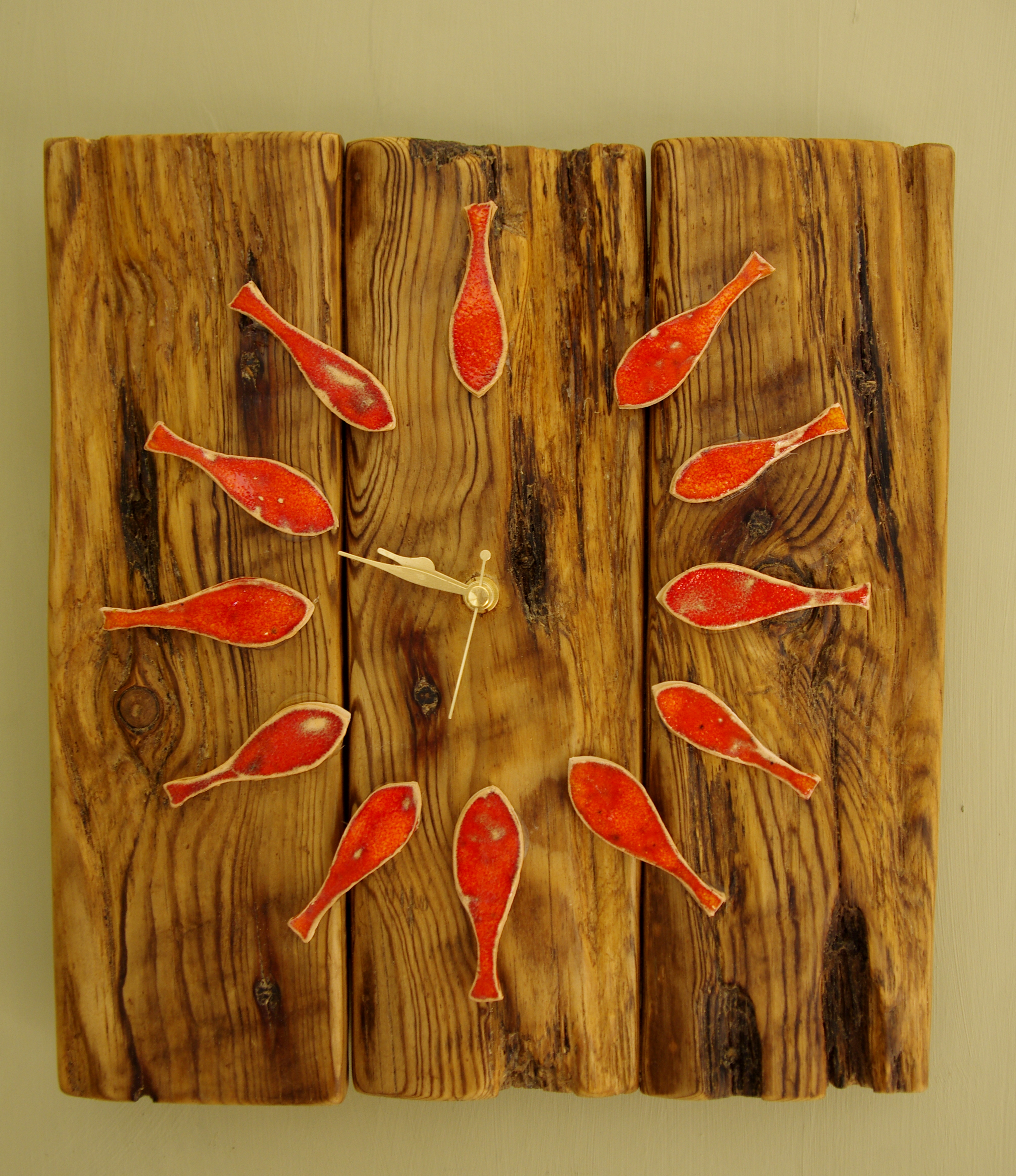
It is also a chance to sell some things. I could have sold this several times over it seems- messing about with some little ceramic fish and some battered old driftwood. Still, if you want one, I can always make more!driftwood clockIn terms of local arty stuff, I should also mention that next Thursday at 7.00 I am doing a poetry reading at our local bookshop, Bookpoint. Be lovely to see you there! I should post a poem in celebration really…

I do not really do celebratory poems but here is an old one anyway;


Life still flickers


I have heard it said that

Dead men walking

We are

Corporeal

Tenderised

Like veal

Blown by flies


But life still flickers

Faint but strong

Vibrating these hollow veins

And the voltage you make

Is a current

Wired to the nape

Of my neck


Because this thing we are

Is more than just

A bottle

For blood

So much more than just

Shapes

Mixed from mud


Beautiful creature

Sing, spirit-

Sing


Potting on boxing day…

glaze

We have had a lovely Christmas day. Just the 4 of us and a slow day listening to music, laughing a lot, eating too much and watching cheesy films. I had some lovely gifts (thanks everyone!) and enjoyed helping Will put together his new bike. Emily has been in great form too, making us all laugh like drains- mostly with her, occasionally at her.

There is only one potter in our family- and this is Michaela. However, she lets me play around with clay from time to time. Usually she gets a bit fidgety whilst looking over my shoulder but that is fine with me.

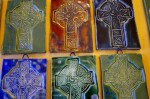
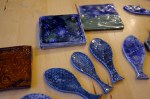
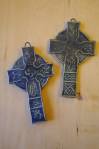
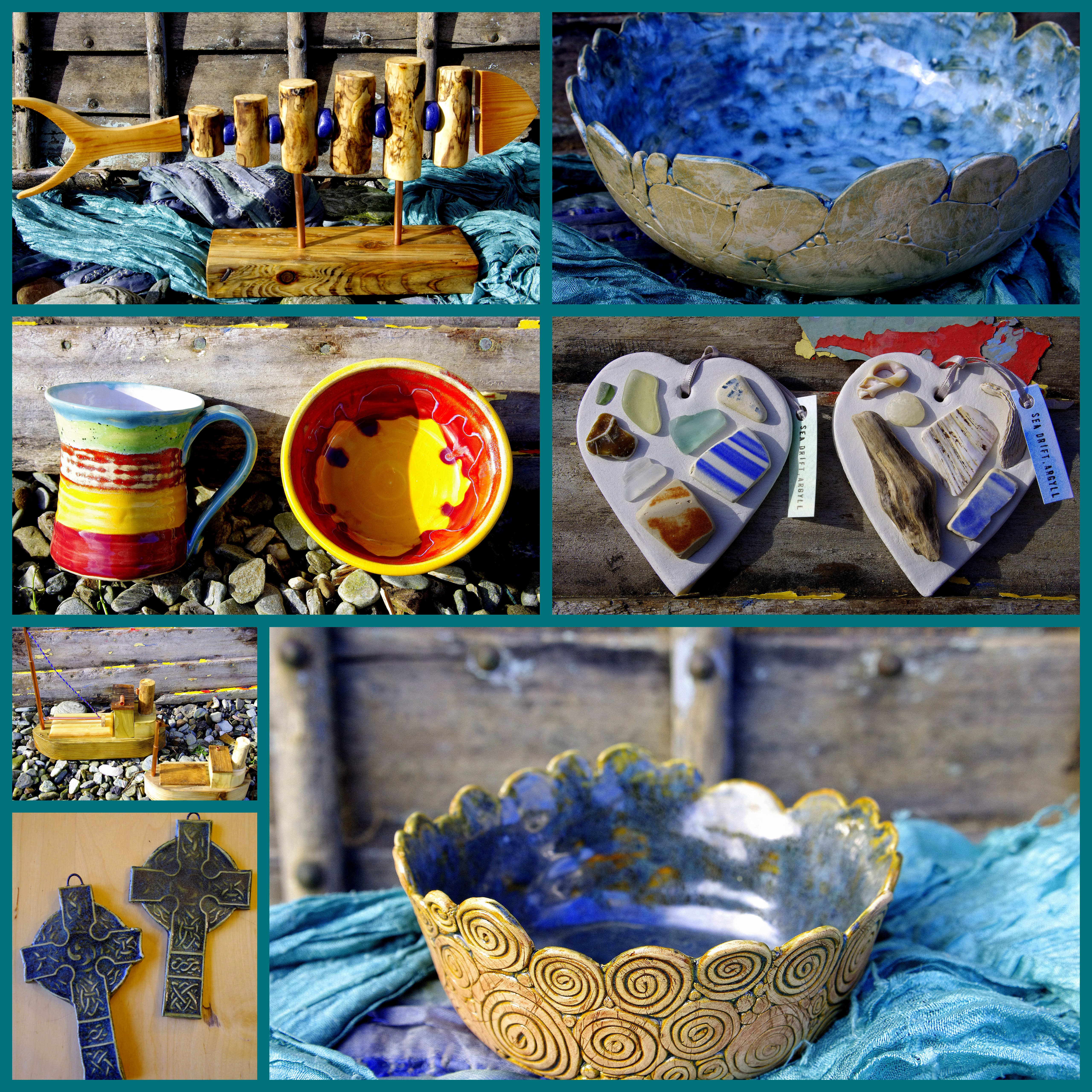
I enjoy mixing up ceramics with metal and wood to make things that speak of the sea. The glazes we use are mostly sea colours- you never quite know what magic will happen in the kiln though. I have also been using some shapes to impress into the wet clay to make celtic crosses and the like. What better way to spend Boxing day?

Here are a few of the things I have been making;

Patience rewarded… but…

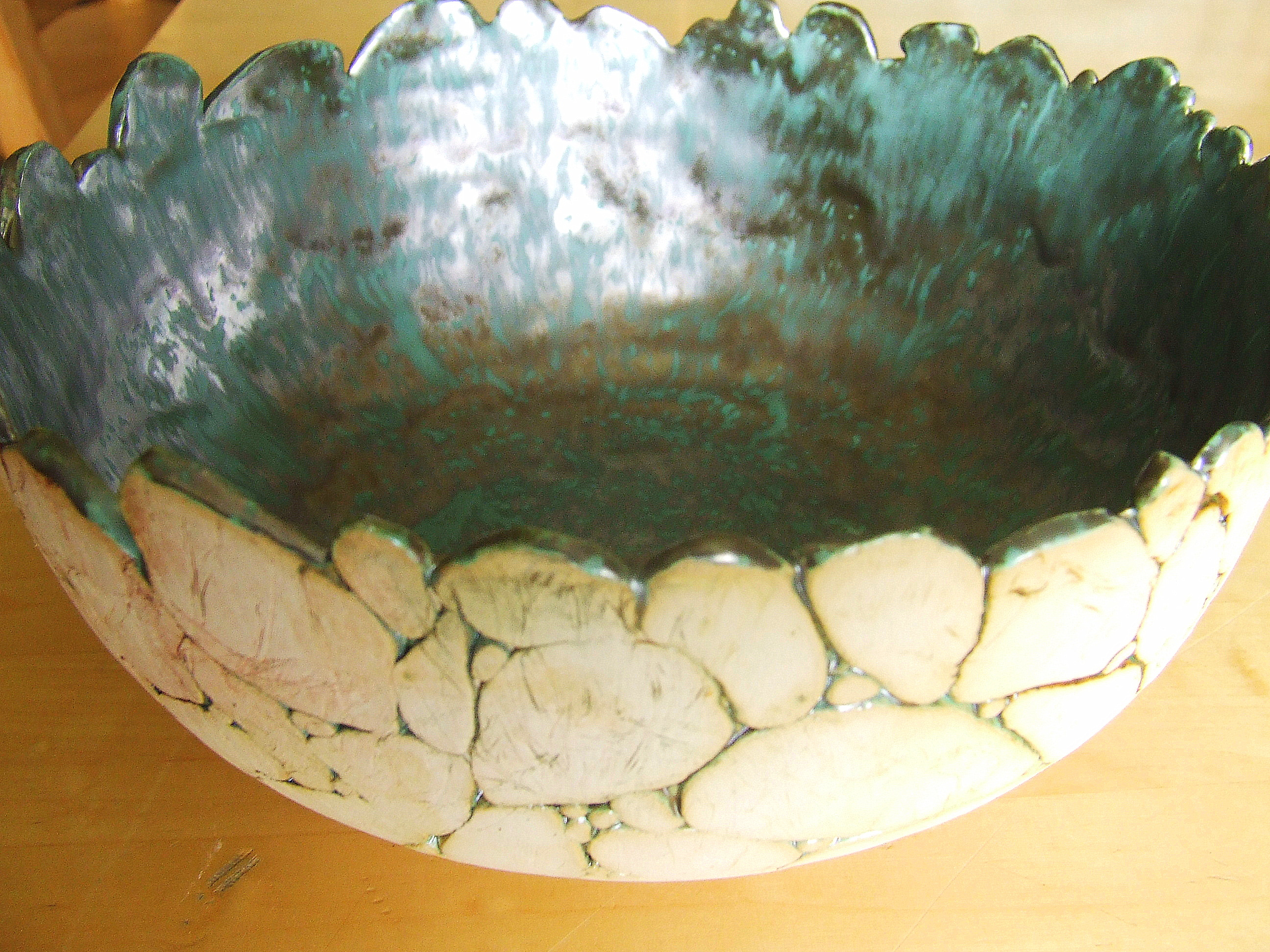
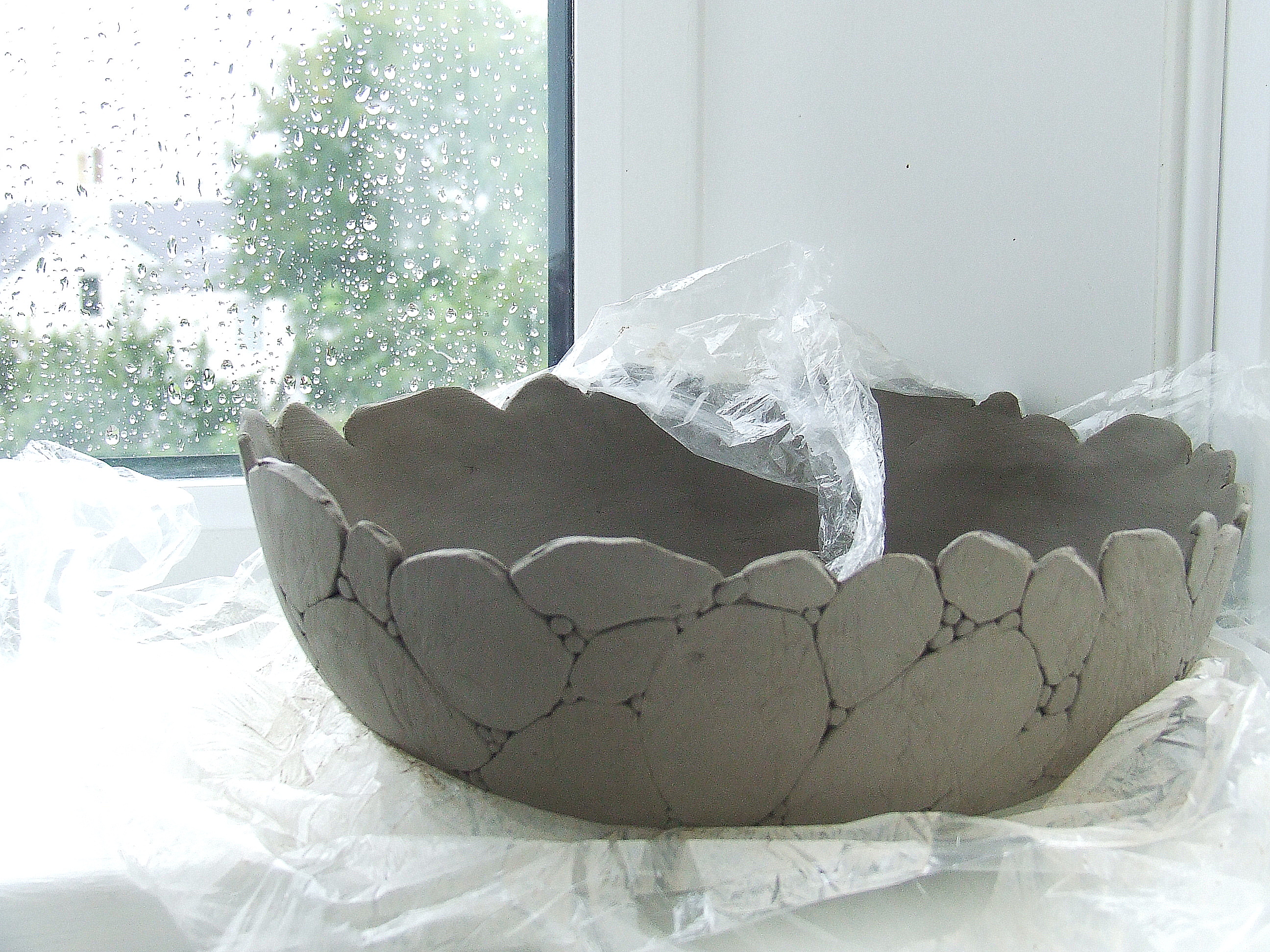
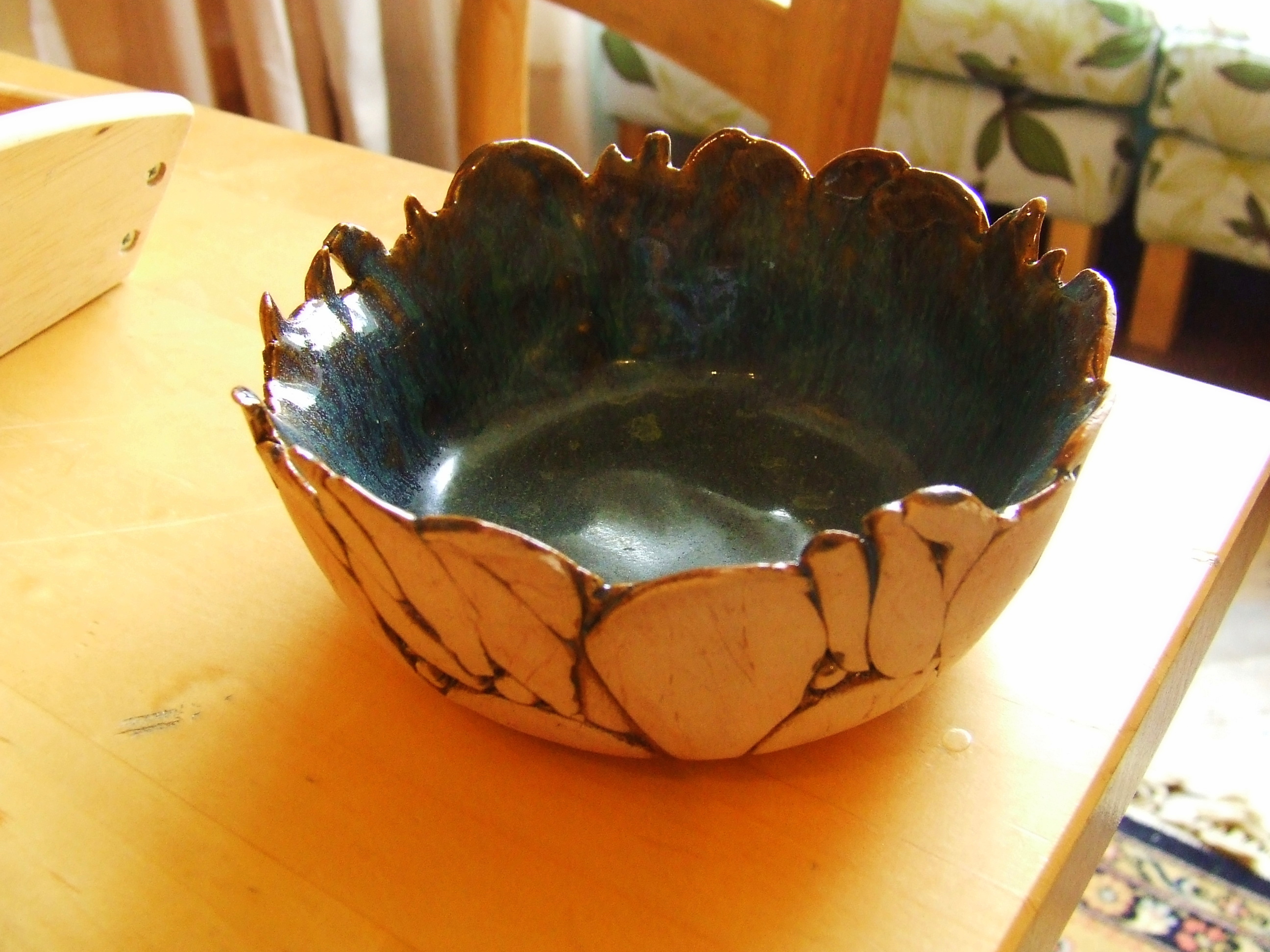
Following on from yesterdays post, here is Michaela’s pebble bowl.

DSCF8073


I love it.

But she hates it.

This is the other lesson from potting- what you see in your mind when you are creating something is not necessarily what you end up with. Your input – the skillful hands and the carefully nurtured imagination – has to be tested in the heat of the kiln. And this always has to involve the possibility of disappointment; failure even.

Although I wish my failures were as lovely…

The patience of the potter…

DSCF8067

It is a wild wet day here- the first storm of the autumn. Emily is home from university for some TLC (tonsillitis no doubt brought about by loss of sleep and excessive parties) and will is stretched out on a floor cushion in his onesy nursing a cold.

Michaela is potting. She has been making some large bowls based around pebble designs.

No matter how much you might like to rush the process of making pots, it is simply not possible. One of the most important skills employed seems to be a process of learning patience.

First you take a lump of raw clay. You then work the clay to ensure it is smooth and free of air bubbles (which would result in the pot exploding in the Kiln) then you use your hands and imagination to shape a pot. It takes Michaela several hours to get to this point;

DSCF8068

Next you have to wait for the pot to air dry- getting as much moisture out as possible. If you do this too fast, the pot with crack, if you do not do it enough it will be destroyed in the kiln. This can take around 4-5 days, depending on the thickness of the clay and the weather conditions.

Next you carefully stack your pots in the kiln, using ‘kiln furniture’ (carefully covered in bat wash so nothing sticks.) The kiln then as to warm up over several stages, taking around 11 hours to get up to around 1000 degrees centigrade.

Michaela and the kiln

It will then take another 10 hours to cool down sufficiently so that you can open the kiln. Some pots will have survived the firing, some may not. Even then, you do not have a completed pot- you have something that has been biscuit fired- it is hard and porous. Next you need to glaze the pot.

This involves brushing one or more glazes in liquid form on to the pot, carefully layering and sponging. This too can take an hour on some of the big pots. Many potters hate this stage as it is the least creative.

DSCF8066

Then the pot goes back in the kiln. Carefully stacked on bat-washed kiln furniture. Glaze sets like glass so if two pots touch they are like Siamese twins, only separated by risky surgery. Another 11 hours getting up to temperature, and the same to cool, and you open the kiln with excitement and trepidation.

The colours of the glazes are fickle- they often depend on subtle differences in temperature in different parts of the kiln. Sometimes Michaela has fired pots three times to get the right colour.

All of this is one of the reasons why I am no potter…

But I love watching the things work, helping out when I can, and I am so proud of Michaela’s pots.

I should add that for those of you who want to try your hand at pottery- Michaela and Pauline run courses– which are very busy-  I think the next few 4 session introductory courses are almost full. However, we will also be hopefully running to residential weekends over the winter- watch this space!

DSCF8069

Calling all crafters and potters…

netta potting

Michaela and Pauline have set the dates for their craft and pottery workshops in the coming year! If you are interested to see what they are up to, or fancy joining in the fun- see here.

I am very proud of what they have done with these workshops- they have a way of creating a safe space for people to be creative. Art and design can be so stuffy and exclusive- making us feel that we “can not”- they have a way of encouraging people to believe that they CAN.

This year they have extended the pottery options too here is what is planned;

Pottery for beginners course– £80: 4 weeks to learn basics of handbuilding, throwing a pot on the wheel, then firing and glazing your own work.
SPRING- March 6, 13, 20, 27
AUTUMN- September 4, 11, 18, 25.

Taster sessions– £20: One evening to get the flavour of working with clay;
April 17, 24
July 10, 17
August 21, 28

Go-to-pot Wednesdays– £160: 8 weeks to learn more about pottery and try out your own projects. Great for those who have already undertaken one of our other courses and want to go further.
SUMMER- May 1, 8, 15, 22, 28. June 5, 12, 19.
AUTUMN- October 2, 9, 16, 23, 30. November 6, 13, 20.

If you are on holiday at Sgath an Tighe (or in the vicinity) , it is usually possible to arrange sessions in the pottery with tuition. It makes for a lovely relaxed creative break…

Creative breaks…

IMGP3342

Work is progressing on our second B and B room (although this is a photo of the first!)  Just carpets and curtains to sort out now, and then we can get everything put together.

We are hoping to offer some weekends of themed ‘creative breaks’ over the next few months. These will be a chance to escape to lovely Dunoon and make something beautiful. It is amazing what we can achieve when given space to do so. This bowl was made by Issy in our pottery a couple of weeks ago, on her second ever attempt at moulding clay;

IMGP3544


The idea is that we will be setting out a list of creative weekends people can book in for, but also guests in the B and B, or our holiday cottage, will be able to get creative too- making some pots, or a range of other activities.

More info to come!

Pottery courses…

Michaela and Pauline have been running lots of craft course over the past few months, under the guise of Blue Sky Craft Workshops. (They have a FB page here, website is under construction.)

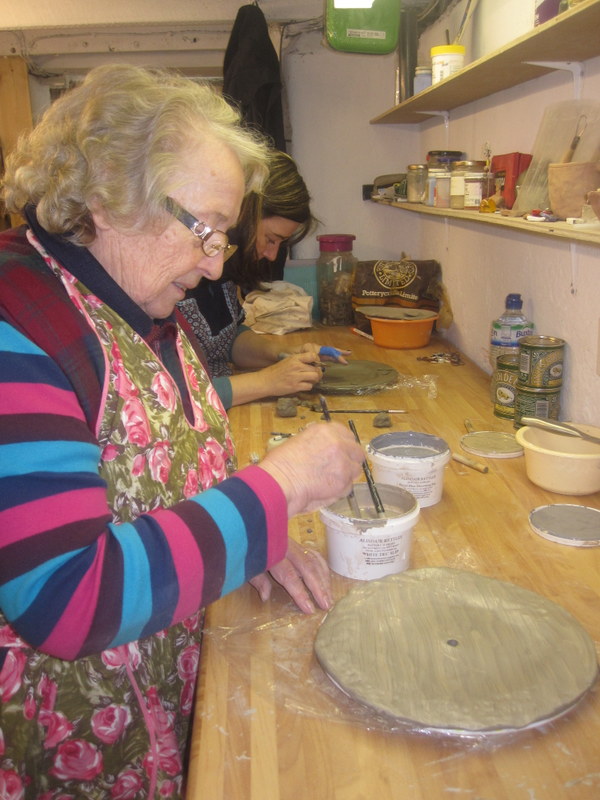
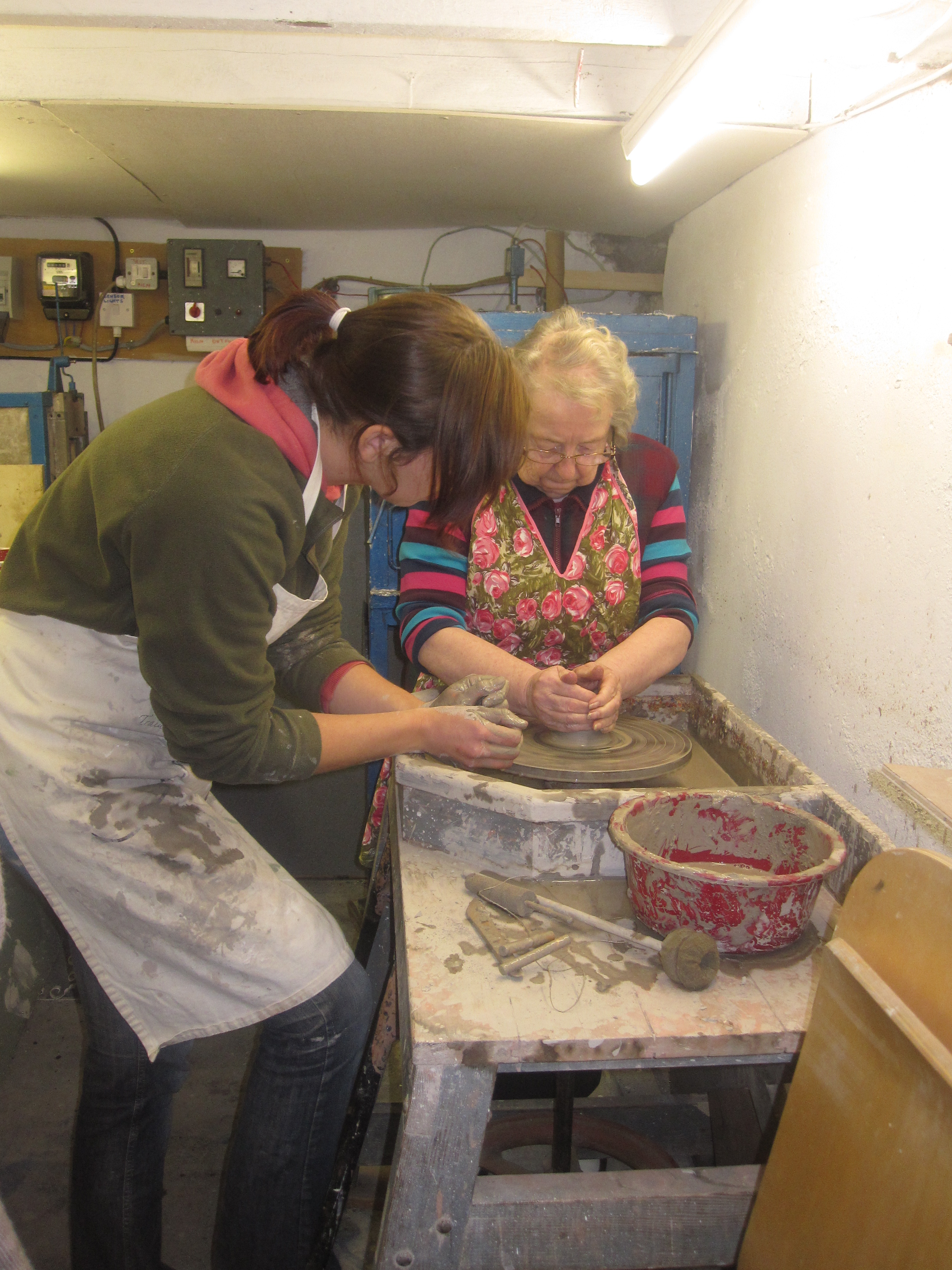
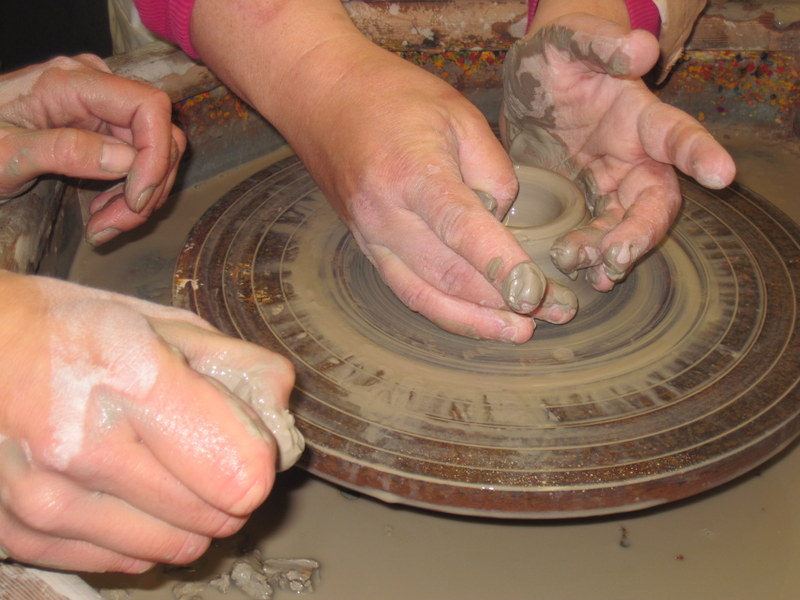
Recently they have run a whole series of introductory pottery courses- hand building, using the wheel and generally having fun with clay. These have been a roaring success- I was particularly pleased to see how much our lovely ‘Scottish Grannie’ Netta enjoyed her session yesterday- see the picture above and below.


Pottery in particular is one of those things that seems to transcend age class and gender- most people enjoy the feel of clay in their hands!

If you are interested in giving it a go, it might be worth considering a holiday break up here in Dunoon. It is often a lovely weather up here in the Autumn, as the Argyll forest gets all golden and busy with red squirrels preparing for winter;


Michaela took this photo yesterday morning from our house;


If you fancy a trip to see this place for yourself, we have a holiday annex which sleeps 4, and in the next couple of months will also have two en suite bed and breakfast rooms.

You can get in touch with us through our website here.

Or if you drop me a line, I can ask Michaela to add you to her mailing list for the wider craft workshops and it may well be possible to co-ordinate a wee trip here around them- felt making, learning how to use sewing machine, jewellery making, christmas cards, Christmas wrapping with a difference….

Pottery workshops, Sgath an Tighe…

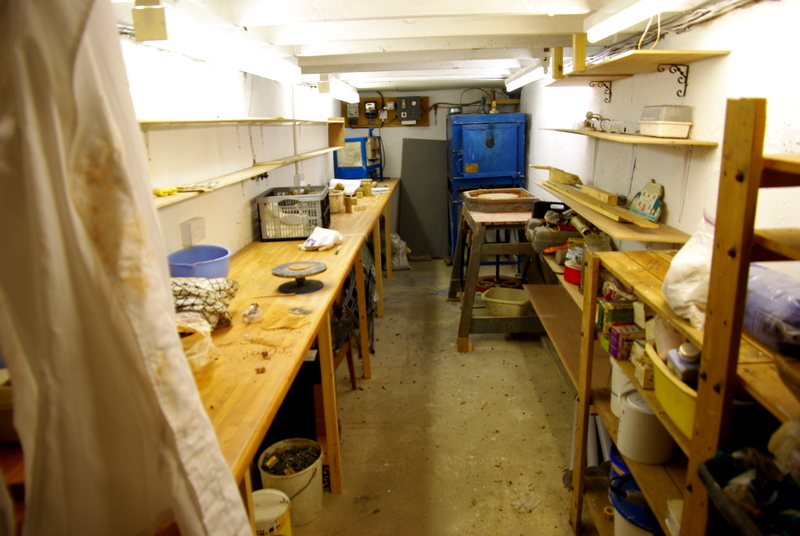
Last night Michaela and Pauline led the first workshop in the pottery in the cellar of our house.

It is really exciting to see this space coming alive- and to see beautiful objects being shaped out of what are essentially lumps of mud. Last night people spent some time at the potters wheel, and also made a slip decorated cake plate. Results were very impressive for first time potters!

Over the next few months we intend to spend time developing part of the old house into Bed and Breakfast, but already we have self catering accommodation available in our cosy annex.

If you are considering a break in Scotland, perhaps it might be worth combining this with some potting? We can tailor a residential potting experience!

If you contact us via our website, mention this blog and you will be eligible for a discount!

For locals, there are details of Michaela and Pauline’s craft courses here.

A few more photos from last night;

First firing of our Kiln…

Regular readers will know that about a year ago, I took a road trip down to Derbyshire to collect two kilns and a load of pottery equipment that we intended to install in our cellar. It turned out to be a lot harder than we thought as the big Kiln, weighing in at over half a ton, had to be extracted from an outbuilding at the end of a garden, carried in over and around rockeries, garden ponds and bushes and then lifted into the back of a hired van. Without a couple of Michaela’s uncles (both ex miners and used to moving big things) we simply would never have moved it.

When we got it all up here, the first challenge was getting it out of the van- stop forward some more friends, and we somehow got it on the ground without killing anyone. However, getting it down the cellar stairs was a whole different challenge.

I was discussing this problem when out for a curry with a group of blokes- one of whom, Dave, is in charge of the men who work on the hillsides keeping our electricity lines safe and functional. Dave sent round a couple of his workers, along with a winch, a ground anchor and a special sledge they use to move generators and the like into inaccessible places. They had the Kiln in the cellar in no time.

Then we discovered that the cost of wiring in the Kiln was not as simple as we had hoped, costing roughly 4 times what we had paid for the kilns and equipment! However Michaela and Pauline managed to get a grant towards this, and invested the earnings that they had already made through their craft workshops.

Meanwhile, I installed worktops, shelves, lighting, and we painted the whole cellar white to make it all a bit less murky.

After all this hard work, and kindness from friends, you will understand how exciting it was to fill the kiln with Pauline’s pots, and fire it up.

Pauline and Michaela will be running workshops soon- so if you are up for a combination of a break in Scotland and some pottery- let me know!